2025-08-25 05:51
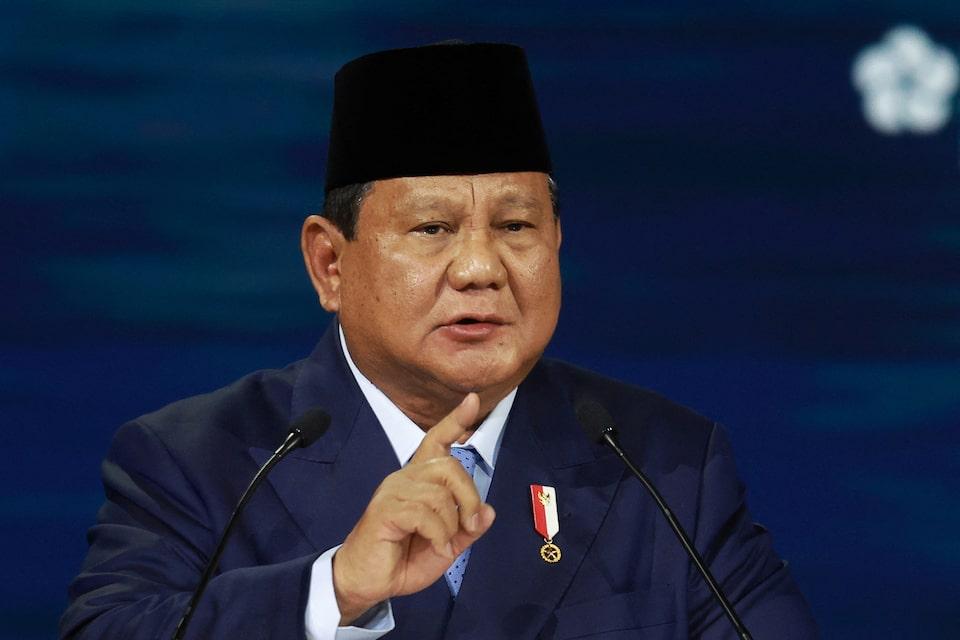
JAKARTA, Aug 25 (Reuters) - Indonesian President Prabowo Subianto has set up a new mineral industry agency that will oversee the development of rare earths and radioactive materials, the agency's new chief told reporters on Monday. "This agency will manage the strategic materials industry that relates to the defence industry, because strategic materials are quite important for the sovereignty of the nation, as well as important for the improvement of our economy," said agency chief Brian Yuliarto, who is also the higher education minister. Sign up here. He has previously said rare earth metals were often found in mineral processing by-products from nickel and tin. Indonesia has been seeking to process rare earths found in tin ore such as Monazite. Indonesia has large reserves of a number of critical minerals as well as deposits of rare earth elements, and it is a major producer of tin and nickel. https://www.reuters.com/world/asia-pacific/indonesia-sets-up-new-mineral-industry-agency-oversee-rare-earths-development-2025-08-25/
2025-08-25 05:43
KUALA LUMPUR, Aug 25 (Reuters) - Malaysian builder Gamuda and clean energy solutions provider Gentari will work together to develop around 1.5 gigawatts of renewable energy capacity to meet the power needs of hyperscale data centre players in the country, they said on Monday. Through their subsidiaries Gamuda Energy and Gentari Renewables, the companies will develop solar photovoltaic power plants paired with battery energy storage systems, they said in a joint statement. Sign up here. The hyperscale data centres are projected to require over 5 GW of reliable power by 2035, highlighting the urgent need to expand renewable energy capacity to meet the rising demand, the statement said. "Malaysia's digital economy is growing rapidly, bringing with it rising demand for reliable and sustainable power. Expanding renewable energy capacity is not only critical for meeting this demand but also key to driving long-term growth," said Low Kian Min, Gentari's chief renewables officer. Joshua Kong, Gamuda Energy director, added that with their combined strengths and bankability, they can support their data centre partners with a pipeline of renewable energy to ensure their facilities can operate with a reduced carbon footprint. https://www.reuters.com/sustainability/climate-energy/gamuda-gentari-jointly-develop-15-gw-renewable-energy-capacity-2025-08-25/

2025-08-25 05:37
KUALA LUMPUR, Aug 25 (Reuters) - A Malaysian court has granted a request by national energy firm Petronas and the Sarawak state-run company Petros for an adjournment in a case involving a dispute over gas rights in the state, Petronas said on Monday. The case in the High Court of Kuching, Sarawak, has been adjourned for one month to allow ongoing negotiations between the parties to continue, Petronas said in a statement. Sign up here. "The parties are still involved in discussions with an aim of bringing matters to resolution," Petronas said. Petronas did not give details of the court case in its statement, and did not immediately respond to a request for further information. Local media have reported that Petros is suing Petronas in Sarawak for allegedly supplying natural gas without a valid licence, and is seeking a court declaration that Petronas' 7.95 million ringgit ($1.9 million) payment demand under a bank guarantee was unlawful. Talks between Petronas and Petros over gas distribution rights in Sarawak have been deadlocked since last year. In May, the Sarawak government issued notices to a Petronas unit accusing it of operating without a proper licence, according to Petronas and local media reports. ($1 = 4.1970 ringgit) https://www.reuters.com/business/energy/petronas-says-it-will-continue-talks-with-petros-after-court-case-adjourned-2025-08-25/

2025-08-25 04:58
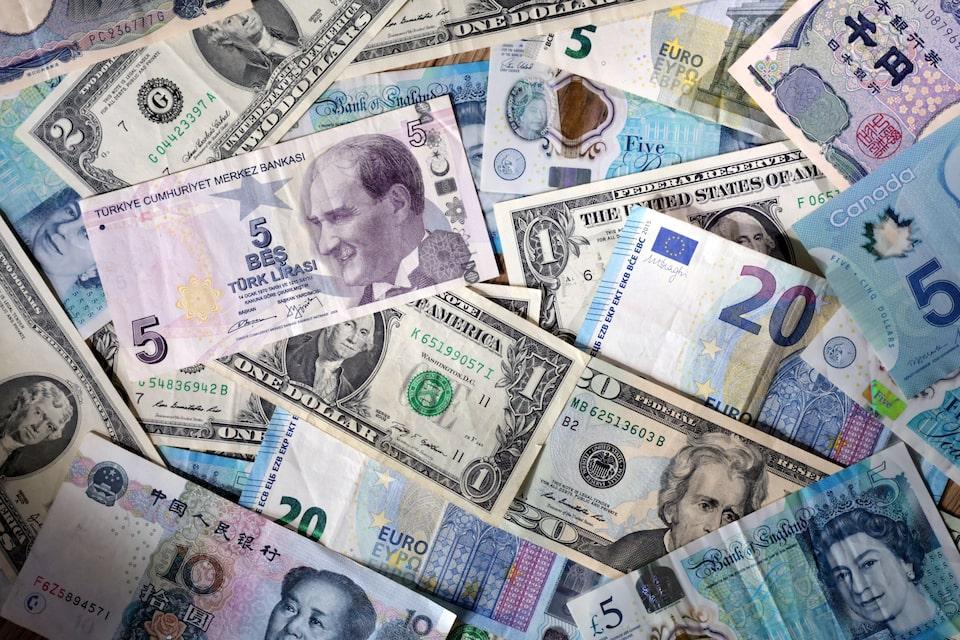
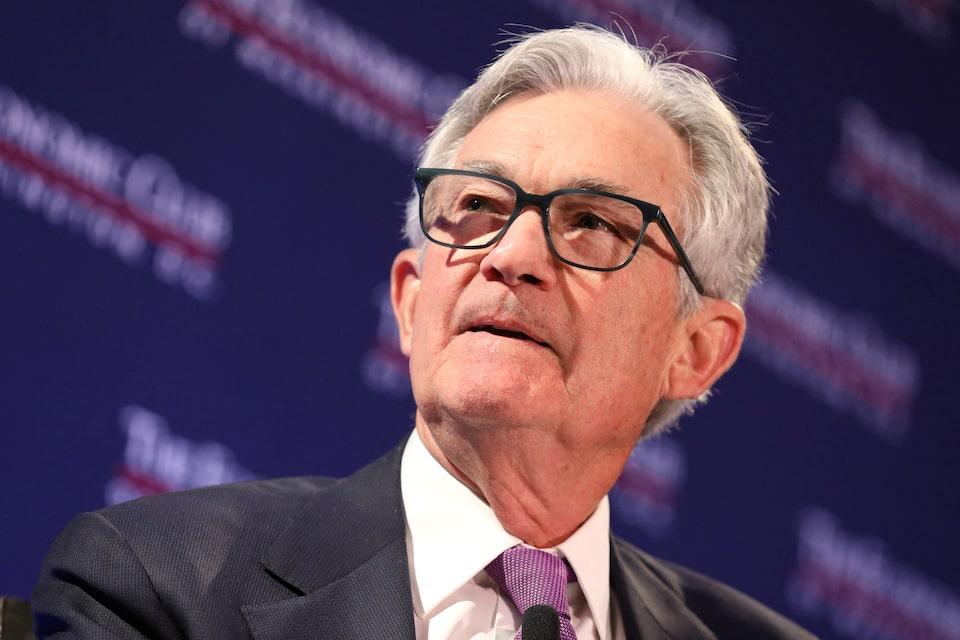
Powell opened door to September rate cut in Jackson Hole speech Odds of Fed cut in September more than 85% Euro touched four-week high against U.S. dollar on Friday Concerns over Fed independence also a drag for dollar TOKYO, Aug 25 (Reuters) - The U.S. dollar nudged higher on Monday, but struggled to recover from a steep fall spurred by a dovish pivot from Federal Reserve Chair Jerome Powell that opened the door for a rate cut in the world's largest economy next month. The euro was down 0.1% at $1.1701 but remained in touching distance of Friday's high of $1.174225, a level not seen since July 28. Sterling and the Swiss franc were both down about 0.1% as well. Sign up here. Powell, in a closely watched speech at the Fed's annual Jackson Hole symposium on Friday, signalled a possible interest rate cut at the U.S. central bank's meeting next month, saying that risks to the job market were rising, while also noting inflation remained a threat. Major brokerages, including Barclays, BNP Paribas and Deutsche Bank, now expect a 25-basis-point Fed rate cut in September following Chair Jerome Powell's remarks. Analysts at Bank of America, though, are sticking to their call for the Fed to keep rates unchanged next month, although they acknowledge risks have shifted towards a cut. "We see a risk that the Fed could make a policy error by cutting just as activity rebounds, with inflation headed to 3%," they said in a note. Traders are now pricing in 87% odds of a quarter-point cut on September 17, up from around 70% before Powell delivered his speech, according to CME's FedWatch tool. Key upcoming data points include the Fed's preferred inflation gauge, the PCE deflator, on Friday, and monthly payrolls figures for August, due a week later. In addition to expectations around the Fed's policy easing path, the dollar has also been weighed down by U.S. President Donald Trump's attacks on Powell and other Fed policymakers that raised concerns about the central bank's independence. Fed Governor Lisa Cook became Trump's latest target last week, and on Friday he said he would fire her if she did not resign over allegations about mortgages she holds in Michigan and Georgia. YUAN BOOST Elsewhere, the Chinese yuan leapt to the strongest level in a month, boosted by broad weakness in the dollar. Against the Japanese yen , the dollar nudged higher to 147.17 after slumping 1% on Friday. Bank of Japan Governor Kazuo Ueda said in Jackson Hole on Saturday that wage hikes were spreading beyond large firms and likely to keep accelerating due to a tightening job market. The remarks reinforced market expectations for the BOJ to resume raising rates soon, after it paused following a hike in January in order to gauge the effects of Trump's aggressive global tariffs. Homin Lee, senior macro strategist at Lombard Odier, sees the yen strengthening to the low 140s versus the dollar over a 12-month horizon, but expects it to be rangebound in the near term. "We assume the window for the Bank of Japan's next rate hike to be in January next year, not October," Lee said. "They'll probably keep the real interest rate very low in the negative territory until the end of the year, and only consider gradual rate hikes." Traders currently put the odds of a hike by the BOJ's October meeting at about a coin toss. In cryptocurrencies, ether fell nearly 4% on Monday after touching a record high of $4,955.14 over the weekend. Bitcoin was down about 1% to $111,702. https://www.reuters.com/world/africa/dollar-struggles-recover-powells-dovish-surprise-2025-08-25/
2025-08-25 04:33
Aug 25 (Reuters) - A look at the day ahead in European and global markets from Wayne Cole. Asian markets have so far managed a cautious cheer for Fed Chair Jerome Powell's seemingly dovish turn last week, with the Nikkei up and Chinese stocks extending their recent rousing run. Sign up here. Chinese blue chips have climbed almost 10% so far this month to reach ground not trod since mid-2022, even as domestic demand remains tepid and companies have no pricing power to speak of. That's the power of momentum. Why are shares going up? Because people are buying them. Why are they buying? Because they're going up. European and U.S. stock futures are in a more sober mood after Friday's euphoria, perhaps reflecting the realisation that things must be getting worse for the U.S. economy for the Fed to consider cutting rates even as inflation heads for 3% and above. The "why" matters. It's one thing to ease policy because inflation is cooling, but another thing entirely to have to ease to support the economy and head off an unwelcome rise in unemployment. Powell argued the inflationary impact of tariffs was likely to be a one-off rise in the price level, but that risks sounding like the "transitory" tag given to the initial spike in prices post-COVID. The Fed's favoured core PCE price index due on Friday is already expected to tick up to a 19-month high of 2.9%, and a 3.0% reading would cause some sticker shock for the long end of the Treasury curve. The Street also has to digest $183 billion in new supply this week, an outsized meal even for a market this big. Talking of outsized, Nvidia reports on Wednesday and needs to knock the lights out to justify its $4 trillion market cap - which is fast approaching the worth of the entire Nikkei index. Expectations are for a mere 48% rise in earnings per share on revenue of almost $46 billion, so the bar is high. Which could be why options imply the chance of a 6% move in the share price in either direction depending on the results. It was notable last week that tech stumbled a little as some began to wonder how much of hundreds of billions of dollars going into AI investment will ever make a return, or is this another dot-com bubble. There will be much interest in how exactly the proposed deal with President Trump works, where Nvidia pays the U.S. government 15% of its earnings on some chips sold to China in return for export permits. Details are scarce and analysts are not even sure that it's constitutional, but that's State Capitalism with American Characteristics for you. Key developments that could influence markets on Monday: - Ifo business survey for August. U.S. July new home sales, Chicago and Dallas Fed manufacturing surveys - Federal Reserve Bank of New York President John Williams and Fed Bank of Dallas President Lorie Logan speak https://www.reuters.com/world/china/global-markets-view-europe-2025-08-25/
2025-08-25 04:15
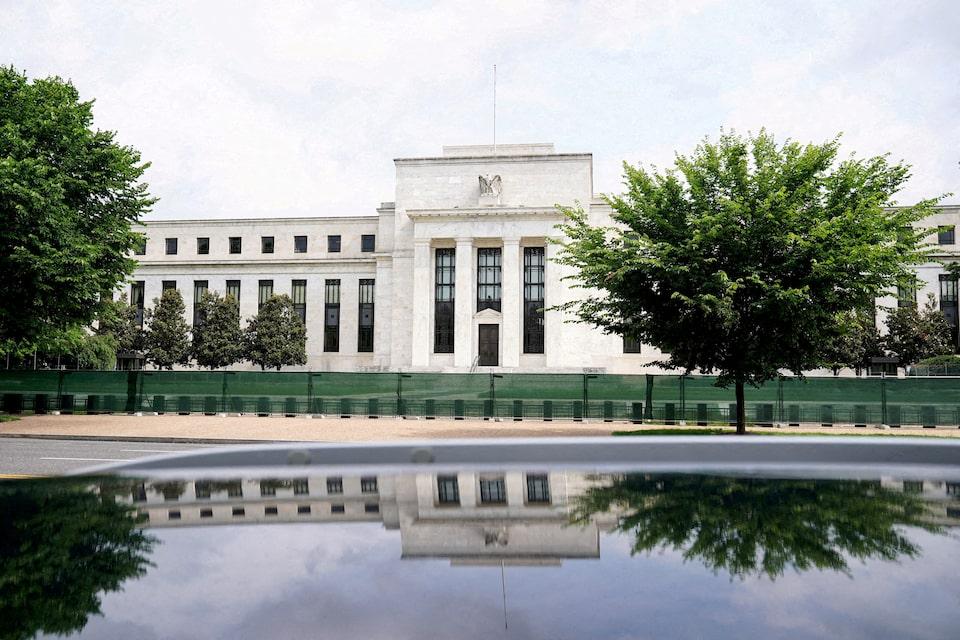
Fed capitulation would set dangerous precedent ECB, BOJ have faced questions about independence Central bank independence seen as crucial for price stability JACKSON HOLE, Wyoming, Aug 25 (Reuters) - Global central bankers gathered at a U.S. mountain resort over the weekend are starting to fear that the political storm surrounding the Federal Reserve may engulf them too. U.S. President Donald Trump's efforts to reshape the Fed to his liking and pressure it into interest rate cuts have raised questions about whether the U.S. central bank can preserve its independence and inflation-fighting credentials. Sign up here. Trump, frustrated by the legal protections given to the Fed's leadership and the long terms for Board of Governors members meant to outlast any given president, has put intense pressure on Chair Jerome Powell to resign and is pushing to oust another board member, Governor Lisa Cook. If the world's most powerful central bank were to yield to that pressure, or Trump finds a playbook for removing its members, a dangerous precedent would be set from Europe to Japan, where established norms for the independence of monetary policy may then come under new attack from local politicians. "The politically motivated attacks on the Fed have a spiritual spillover to the rest of the world, including Europe," European Central Bank policymaker Olli Rehn, from Finland, said on the sidelines of the Fed's annual symposium in Jackson Hole, Wyoming. That's why Rehn and colleagues were enthusiastically backing Powell to stand his ground, even after he signaled a possible rate cut in September. Powell was met by a standing ovation when he took the podium at the conference. 'NOT BE TAKEN FOR GRANTED' Conversations with a dozen central bankers from across the world on the sidelines of the Fed's getaway in the shadows of the Grand Teton Mountains revealed that a scenario in which the Fed sees its ability to counter inflation jeopardized by a loss of independence was taken as a direct threat to their own standing and to economic stability more broadly. It would likely entail major turmoil in financial markets, they said, with investors demanding a greater premium to own U.S. bonds and reassessing the status of Treasury securities as the lifeblood of the global financial system. Central banks around the world have already started preparing for the fallout, telling lenders on their watch to watch their exposure to the U.S. currency. More fundamentally, a Fed capitulation would end a regime that has brought relative price stability and has lasted at least since late Chair Paul Volcker vanquished high inflation 40 years ago. Since then, more and more central banks followed the Fed's model of political independence and a single-minded focus on their mandate - for most, keeping inflation near 2%. "It’s a reminder that independence should not be taken for granted," Bundesbank President Joachim Nagel, also a member of the ECB's Governing Council, said. "We have to deliver on our mandate and make clear that independence is the conditio sine qua non for price stability." POLITICAL FOOTBALL Markets so far have not registered deep concerns about the Fed's independence. U.S. equity markets are roaring, and there hasn't been the sort of jump in Treasury yields or inflation expectations that would be emblematic of the Fed's credibility being seen at risk. While Trump can name a new chair when Powell's term as the chief policymaker ends in May, he needs more departures among the Fed's seven-member board for his appointees to gain majority control. The Fed's network of 12 regional reserve banks, whose leaders take turns voting on interest rate policy, is a further counterweight, hired by local boards of directors as a way to distance them from Washington's influence. Yet Trump's soured relationship with the Fed, set in a country perceived to have strong institutional and legal traditions, has made other central bankers all too aware of how fragile their independence may be. Even the ECB, whose autonomy from the 20 governments of the euro zone is sanctioned by European Union treaties, has had to fight hard to prove it. It was accused of bankrolling governments when it launched its massive bond-buying scheme a decade ago with the aim of staving off deflation, and survived multiple court challenges seeking to block those purchases. Right- and left-wing parties in countries such as Italy, Germany and France have also periodically criticised the central bank. Other countries have turned the appointment of their national governor into a political football. Latvian central bank governor Martins Kazaks was criticised by national politicians for not catering to the government's wishes during his fractious reappointment process. Slovenia hasn't had a governor since January amid party bickering. In Japan, the late Prime Minister Shinzo Abe blasted then central bank governor Masaaki Shirakawa for doing too little to beat deflation, and hand-picked Haruhiko Kuroda in 2013 to take the helm when Shirakawa stepped down weeks before his term ended. Kuroda then deployed a massive asset-buying programme, which helped weaken the yen and reflate growth, but raised eyebrows among conventional central bankers for making the BOJ the main creditor of its own government. SETTING A BAD EXAMPLE Trump has said the end of Powell's term next May could not "come fast enough" and very publicly started the process of choosing a successor. "It's as if Trump learned from Abe," said one source familiar with the BOJ's thinking who declined to be named due to the sensitivity of the matter. In turn, Trump's moves could embolden governments around the world, particularly those with populist inclinations, to assert control over their central banks. That could set the stage for globally higher inflation rates and more volatile markets. "Taking over the Fed is one development that would set a very bad example for other governments," said Maury Obstfeld, a senior fellow at the Peterson Institute for International Economics and former chief economist at the International Monetary Fund. "How do you look at this happening in the United States, which was thought to be the bastion of institutional checks and balances and the rule of law, and not conclude that other countries are easier targets?" https://www.reuters.com/business/finance/worlds-central-bankers-fear-being-caught-feds-storm-2025-08-25/