2025-08-24 23:06
WELLINGTON, Aug 25 (Reuters) - New Zealand's central bank said on Monday it was proposing to reduce the minimum capital requirement for deposit takers, and had begun consultations. The central bank said in a statement that one key policy option is to reduce the minimum capital requirement for deposit takers to NZ$5 million ($2.93 million) from NZ$30 million. Sign up here. "This reduces barriers to entry," the statement said. It noted in the consultations document that any shift in regulation is not expected to cause significant economic change. The current, rising capital requirements were announced in 2019 and are being brought in slowly, with full implementation not expected before 2028. However, the requirements have been criticized by some politicians and parts of the public, who argue the requirements have reduced capital in the economy and borrowers have had to bear extra costs. In March, the central bank said it would be reviewing the requirements. "It's essential we strike the right balance - protecting depositors and the wider economy, while supporting competition and economic efficiency," Reserve Bank of New Zealand Governor Christian Hawkesby said in a statement. New Zealand Finance Minister Nicola Willis said she welcomed the opening of consultation on the Reserve Bank’s review of capital settings for banks and other deposit takers. The central bank hopes to reach a final decision by the end of the year. ($1 = 1.7056 New Zealand dollars) https://www.reuters.com/world/asia-pacific/new-zealand-central-bank-proposes-reducing-deposit-takers-capital-requirements-2025-08-24/

2025-08-24 22:46
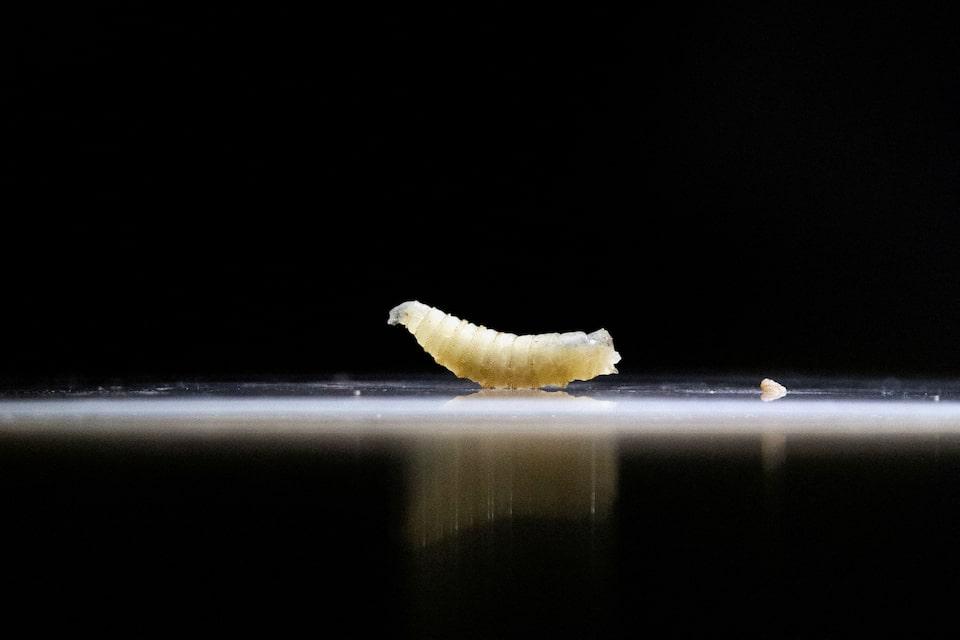
Maryland case represents the first sign of screwworm in the U.S. since a 2023 outbreak began in Central America The presence of screwworm, which can devastate cattle herds, will likely rattle beef and livestock markets USDA criticized by cattle producers for failing to take timely measures to prevent screwworm from entering the U.S. BUENOS AIRES/CHICAGO, Aug 24 (Reuters) - A case of the flesh-eating screwworm parasite has been identified in a person in Maryland who had traveled to the United States from Guatemala, according to four sources familiar with the situation. The person, who received treatment in Maryland, is the first confirmed case in the U.S. of New World screwworm, a parasite that eats cattle and other warm-blooded animals alive, since an outbreak began to escalate and move northward from Central America and southern Mexico late last year. Sign up here. Beth Thompson, South Dakota's state veterinarian, told Reuters on Sunday that she was notified of the case within the last week by a person with direct knowledge of the Maryland case. A second source, who asked not to be identified, said they had seen emails sent by an executive of the industry group Beef Alliance on August 20 to about two dozen people in the livestock and beef sectors, informing them that the U.S. Centers for Disease Control and Prevention had confirmed a human case of screwworm in Maryland in a person who had traveled to the U.S. from Guatemala. State veterinarians learned about the human case in Maryland during a call last week with the CDC, according to one source. A Maryland state government official also confirmed the case. CDC deferred questions to Maryland on a call with state animal health officials, Thompson said.“We found out via other routes and then had to go to CDC to tell us what was going on,” she said. “They weren’t forthcoming at all. They turned it back over to the state to confirm anything that had happened or what had been found in this traveler.” A CDC spokesperson and a spokesperson for the Maryland Department of Health did not immediately respond to requests for comment.The confirmed case comes just over a week after U.S. Department of Agriculture Secretary Brooke Rollins and other government officials traveled to Texas to announce plans to build a sterile fly facility there as part of efforts to combat the pest. WHAT ARE SCREWWORMS? Screwworms are parasitic flies whose females lay eggs in wounds on any warm-blooded animal. Once the eggs hatch, hundreds of screwworm larvae use their sharp mouths to burrow through living flesh, eventually killing their host if left untreated. The maggots' feeding is similar to a screw being driven into wood, giving the pests their name. Screwworms can be devastating in cattle and wildlife, and rarely infest humans, though an infestation in either an animal or a person can be fatal. Treatment is onerous, and involves removing hundreds of larvae and thoroughly disinfecting wounds. But infestations are typically survivable if treated early enough. The August 20 emails from the Beef Alliance executive, whose content was shared with Reuters, said the positive human case of New World screwworm in Maryland had been confirmed that day. A follow-up email from the same group said that due to patient privacy laws, there were no other details available. The person was treated and prevention measures were implemented in the state, the email said. A livestock economist at Texas A&M University had been asked to prepare a report for Rollins on the impacts to industry of the border closure to Mexican cattle, according to the emails, a measure that has largely been in effect since November to prevent the arrival of screwworm to the United States. The CDC was required to report the positive New World screwworm case to both Maryland health officials and the Maryland state veterinarian, one of the emails said, adding that the CDC also notified other agriculture stakeholders. "We remain hopeful that, since awareness is currently limited to industry representatives and state veterinarians, the likelihood of a positive case being leaked is low, minimizing market impact," the beef industry executive wrote. A representative for the Beef Alliance did not respond to requests for comment. IMPACT ON BEEF AND CATTLE FUTURES A confirmed screwworm case in the U.S. would likely rattle the beef and cattle futures market, which has seen record-high prices because of tight supplies, with the U.S. cattle herd at its smallest size in seven decades. The case and the lack of transparency around it could also present a political challenge for Rollins, who pledged repeatedly to keep screwworm out of the country. The USDA has set traps and sent mounted officers along the border, but it has faced criticism from some cattle producers and market analysts for not acting faster to pursue increased fly production. Rollins first announced plans for a sterile fly facility at Moore Air Force Base in Edinburg, Texas -- near where a production facility to combat screwworm operated during the last major outbreak 50 years ago -- in June, saying that the facility would take two to three years to come online.A spokesperson for the USDA did not immediately respond to a request for comment.Mexico has also taken efforts to limit the spread of the pest, which can kill livestock within weeks if not treated. The Mexican government said in July that it started to build a $51 million sterile fly production facility in the country's south. The sole operating plant is in Panama City and can produce a maximum of 100 million sterile screwworm flies each week. The USDA has estimated that 500 million flies would need to be released weekly to push the fly back to the Darien Gap, the stretch of rainforest between Panama and Colombia. Screwworms have been traveling north through Mexico from Central America since 2023. They are endemic in Cuba, Haiti, the Dominican Republic and countries in South America, according to the USDA. Mexico reported a new case about 370 miles south of the U.S. border in Ixhuatlan de Madero, Veracruz, in July. The USDA immediately ordered the closure of livestock trade through southern ports of entry, after previously halting imports in November and May. The U.S. typically imports over a million cattle from Mexico a year to fatten in feedlots and process into beef. Screwworms were eradicated from the United States in the 1960s when researchers began releasing massive numbers of sterilized male screwworm flies that mate with wild female screwworms to produce infertile eggs. The USDA has estimated a screwworm outbreak could cost the economy in Texas, the biggest U.S. cattle-producing state, about $1.8 billion in livestock deaths, labor costs and medication expenses. https://www.reuters.com/business/environment/first-human-screwworm-case-us-traced-person-maryland-who-traveled-guatemala-2025-08-24/
2025-08-24 22:14
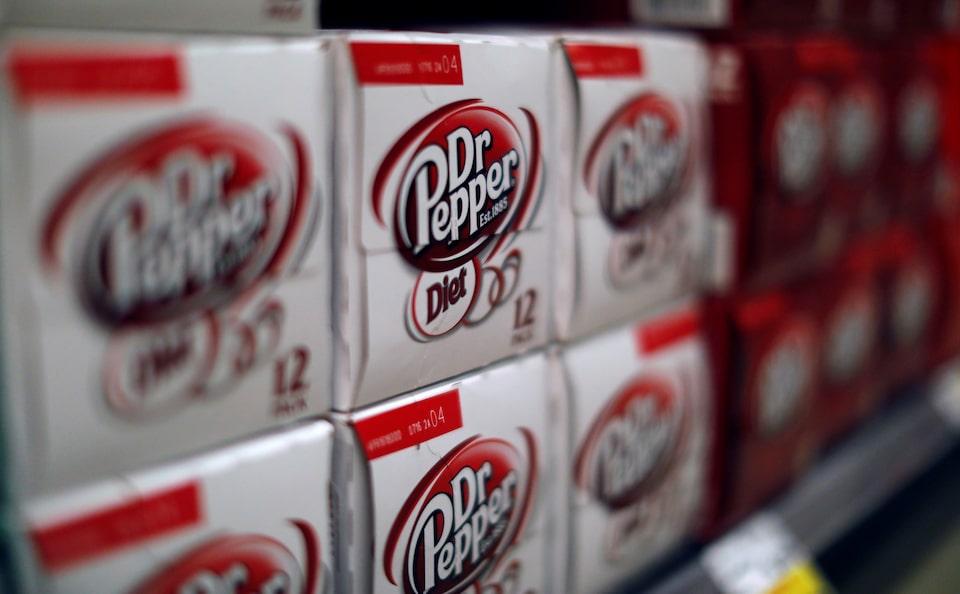
Aug 24 (Reuters) - Keurig Dr Pepper (KDP.O) , opens new tab is close to a roughly $18-billion deal to buy Dutch coffee company JDE Peet's (JDEP.AS) , opens new tab, the Wall Street Journal reported on Sunday, citing people familiar with the matter. After combining, the companies are planning to separate the beverage and coffee units, the report said. Sign up here. Reuters could not immediately verify the report. Keurig Dr Pepper and JDE Peet's did not immediately respond to requests for comment. JDE Peet's, known for its L'Or, Tassimo and Douwe Egberts brands, has a market valuation of about $15 billion, while Keurig Dr Pepper is valued at nearly $50 billion, according to LSEG data. JDE Peet's lifted its annual forecasts last month after reporting consensus-beating half-year adjusted operating earnings of 709 million euros ($831.09 million), thanks to sales growth that defied already-high coffee prices. Last year, Keurig Dr Pepper bought a 60% stake in energy-drink maker Ghost for $990 million, planning to purchase the rest in 2028, to spruce up its refreshment beverages portfolio. ($1 = 0.8531 euros) https://www.reuters.com/business/keurig-dr-pepper-nears-18-billion-deal-dutch-coffee-company-jde-peets-wsj-2025-08-24/
2025-08-24 21:45
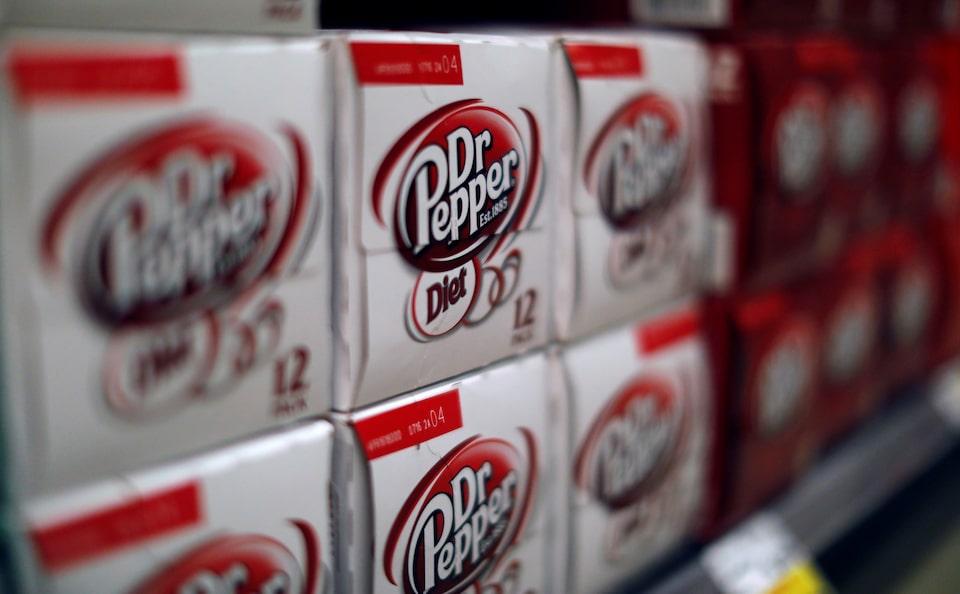
Aug 24 (Reuters) - Keurig Dr Pepper (KDP.O) , opens new tab is close to a roughly $18 billion deal for European coffee company JDE Peet's (JDEP.AS) , opens new tab, the Wall Street Journal reported on Sunday, citing people familiar with the matter. Reuters could not immediately verify the report. Sign up here. https://www.reuters.com/business/keurig-dr-pepper-nears-18-billion-deal-jde-peets-wsj-reports-2025-08-24/
2025-08-24 11:07
MOSCOW, Aug 24 (Reuters) - A fire at Russia's Novoshakhtinsk refinery was burning for the fourth day on Sunday after a Ukrainian drone strike, the acting governor of the region said. A fire was reported at in Novoshakhtinsk on Thursday. The refinery there sells fuel mainly for export, and has annual capacity of 5 million metric tons of oil, or around 100,000 barrels per day. Sign up here. Yury Slyusar, the acting governor of the Rostov region, said he had a meeting in Novoshakhtinsk. "The fire area at the Novoshakhtinsk oil products plant has now been reduced," he said on Telegram. "Since August 21, firefighters have been fighting a fire at the oil products plant... that was damaged as a result of an enemy attack." He said 412 people and 150 different pieces of equipment were being used in the emergency response, including fire fighting trains. https://www.reuters.com/business/energy/fire-russias-novoshakhtinsk-refinery-burns-fourth-day-after-drone-attack-2025-08-24/

2025-08-24 10:41
Ukrainian drone sparks fire at nuclear plant Nuclear reactor cuts capacity after attack Ukrainian drones strike Ust-Luga fuel export terminal Attacks come on Ukraine's Independence Day MOSCOW, Aug 24 (Reuters) - Ukraine launched a drone attack on Russia on Sunday, forcing a sharp fall in the capacity of a reactor at one of Russia's biggest nuclear power plants and sparking a huge blaze at the major Ust-Luga fuel export terminal, Russian officials said. Despite talk of peace by Russia and Ukraine, the deadliest European war since World War Two is continuing along the 2,000 km (1,250 mile) front line accompanied by missile and drone attacks deep into both Russia and Ukraine. Sign up here. Russia's defence ministry said at least 95 Ukrainian drones had been intercepted across more than a dozen Russian regions on August 24, the day that Ukraine celebrates its declaration of independence from the Soviet Union in 1991. The Kursk nuclear power plant, just 60 km (38 miles) from the border with Ukraine, said that air defences shot down a drone that detonated near the plant just after midnight, damaging an auxiliary transformer and forcing a 50% reduction in the operating capacity at reactor No. 3. Radiation levels were normal and there were no injuries from the fire which the drone sparked, the plant said. Two other reactors are operating without power generation and one is undergoing scheduled repairs. The United Nations' nuclear agency, the International Atomic Energy Agency, said it was aware of reports that a transformer at the plant caught fire due to military activity and stressed that every nuclear facility should be protected at all times. A thousand km north, on the Gulf of Finland, at least 10 Ukrainian drones were downed over the port of Ust-Luga in Russia's northern Leningrad region, with debris sparking fire at the Novatek-operated terminal - a huge Baltic Sea fuel export terminal and processing complex, the regional governor said. PLUME OF BLACK SMOKE Unverified footage on Russian Telegram channels showed a drone flying directly into a fuel terminal, followed by a huge ball of fire rising high into the sky followed by a plume of black smoke billowing into the horizon. "Firefighters and emergency services are currently working to extinguish the blaze," Alexander Drozdenko, governor of Russia's Leningrad region, said. There were no injuries, he added. According to Novatek (NVTK.MM) , opens new tab, the Ust-Luga complex, which opened in 2013, processes gas condensate into light and heavy naphtha, jet fuel, fuel oil and gasoil, and enables the company to ship oil products as well as gas condensate to international markets. Novatek produces mostly naphtha for Asia, including China, Singapore, Taiwan and Malaysia, as well as jet fuel with delivery to Istanbul. Rosaviatsia, Russia's civil aviation authority, said flights were halted for hours on end at several Russian airports overnight, including at the Pulkovo airport in the Leningrad region. Ukrainian drones also attacked an industrial enterprise in the southern Russian city of Syzran, the governor of the Samara region said on Sunday. A child was injured in the attack, according to the governor, who did not specify exactly what had been attacked. Earlier this month, the Ukrainian military said it had struck the Syzran oil refinery. The Rosneft-owned (ROSN.MM) , opens new tab refinery was forced to suspend production and crude intake after the attack, sources told Reuters. There was no immediate comment from Ukraine. Kyiv has said its strikes inside Russia are in response to Russia's continued attacks on Ukraine and are aimed at destroying infrastructure deemed crucial to Moscow's overall military efforts. https://www.reuters.com/world/europe/ukraine-drone-hits-russian-nuclear-plant-sparks-huge-fire-novateks-ust-luga-2025-08-24/