2025-08-24 09:13
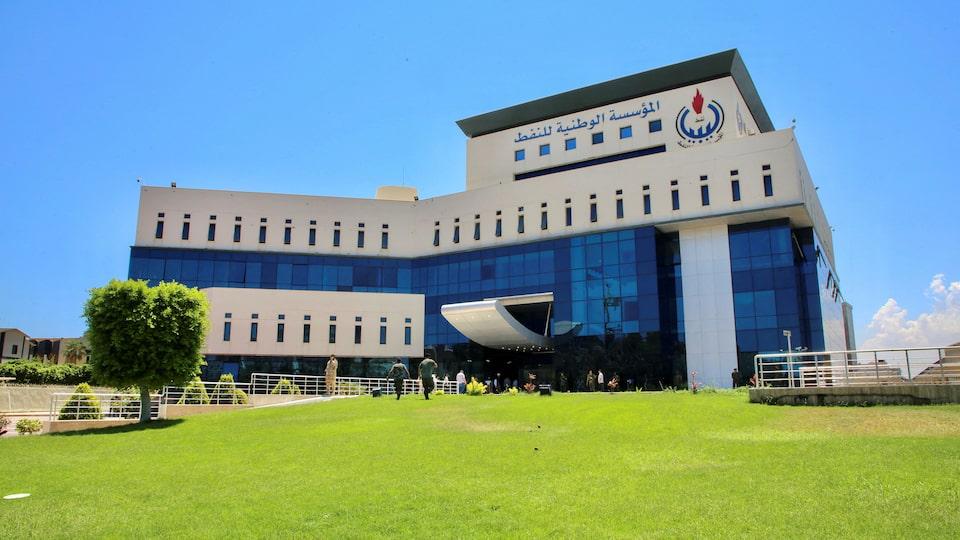
CAIRO, Aug 24 (Reuters) - Libya's state-run National Oil Corporation (NOC) said on Sunday it would soon host a Libyan-U.S. energy forum aimed at boosting partnerships and investment in the North African country's oil and natural gas sector. Libya is one of Africa's biggest oil producers but output has been disrupted repeatedly in the chaotic decade since 2014, when the country split between rival authorities in the east and west following the NATO-backed uprising that toppled Muammar Gaddafi. Sign up here. The event, for which no date has yet been set, will be held in partnership with U.S. company Freedom First and will be attended by representatives from leading U.S. energy firms along with Libyan investors and officials, an NOC statement said. NOC recently signed a memorandum of understanding with U.S. oil giant ExxonMobil (XOM.N) , opens new tab following a decade of inactivity in Libya due to security reasons. https://www.reuters.com/business/energy/libyas-noc-host-joint-us-energy-forum-boost-oil-gas-investment-2025-08-24/
2025-08-24 08:24
Vietnam to evacuate more than 586,000, army ready Kajiki strengthening, winds seen reaching 180 kph Sanya resort city plans for 'worst-case scenarios' HANOI/BEIJING, Aug 24 (Reuters) - Vietnam announced plans to evacuate more than half a million people and ordered boats to stay ashore, while the southern Chinese city of Sanya closed businesses and public transport on Sunday as both braced for an intensifying Typhoon Kajiki. The storm is forecast to "brush past" the southern coast of China's island province of Hainan from Sunday evening before heading for Vietnam, China's National Meteorological Center said. Sign up here. As of 0900 GMT, the storm had gained strength, with winds reaching 166 kph (103 mph), according to Vietnam's national weather forecast agency. It is likely to strengthen further with wind speeds as high as 180 kph, China's weather forecaster said. Authorities in Vietnam plan to evacuate more than 586,000 people from the central provinces of Thanh Hoa, Quang Tri, Hue and Danang, where the typhoon is forecast to make landfall early on Monday, state media reported. People in the projected path should not go outdoors after 1400 GMT on Sunday, and soldiers are standing by to help, the government said. Seven coastal provinces in Vietnam banned boats from leaving shore early on Sunday, Tien Phong newspaper reported. Vietnam Airlines cancelled at least 22 flights to and from central cities on Sunday and Monday. Vietjet Aviation said it was cancelling or delaying flights but did not provide details. China's Sanya, renowned for seafront resorts and sandy beaches, closed tourist attractions, shuttered businesses and suspended public transport. 'WORST-CASE SCENARIOS' China's weather agency forecast heavy rainfall and strong winds in Hainan and nearby Guangdong province and Guangxi region, with areas in Hainan set to receive as much as 320 mm (12.6 inches) of rain from Sunday to Monday. Sanya issued a red typhoon alert on Sunday morning - the highest in China's colour-coded warning system - and raised its emergency response to the most severe level, according to posts on the local government's WeChat account. City officials convened a meeting on Saturday evening, urging preparations for "worst-case scenarios", the government said. All classes and construction were suspended, and shopping centres, restaurants and supermarkets were closed from Sunday. Vessels have been ordered to stop operating in Sanya's waters. Since July, record rainfall has lashed China's north and south in what meteorologists have described as extreme weather linked to climate change. Natural disasters including flooding and drought caused 52.15 billion yuan ($7.28 billion) in direct economic losses in China last month, affecting millions of people and leaving 295 dead or missing, data from the Ministry of Emergency Management showed. The Vietnamese government likened the strength of Kajiki to that of Yagi, which battered the country less than a year ago, killing about 300 people and causing $3.3 billion of property damage. ($1 = 7.1651 Chinese yuan renminbi) https://www.reuters.com/sustainability/climate-energy/vietnam-plans-mass-evacuation-chinas-sanya-shuts-typhoon-kajiki-intensifies-2025-08-24/

2025-08-24 08:14
MOSCOW, Aug 24 (Reuters) - Ukrainian attacks on the Kursk nuclear plant create a threat to nuclear safety, Alexander Khinshtein, the regional acting governor said on Sunday. "They are a threat to nuclear safety and a violation of all international conventions," Khinshtein wrote on the Telegram messaging app. Sign up here. A drone attack on the Kursk nuclear plant on Sunday damaged an auxiliary transformer and led to 50% reduction in the operating capacity at unit three of the plant, the plant's press service said. (This story has been corrected to fix the spelling of nuclear in paragraph 1) https://www.reuters.com/world/europe/kursk-governor-says-ukrainian-attack-is-threat-nuclear-safety-2025-08-24/

2025-08-24 07:31
China says US protectionism hurts agricultural cooperation Farmers should not pay for trade war, says Chinese envoy Beijing criticises US farmland purchase curbs as political BEIJING, Aug 24 (Reuters) - U.S. protectionism is undermining agricultural cooperation with China, Beijing's ambassador to Washington said, warning that farmers should not bear the price of the trade war between the world's two largest economies. "It goes without saying that protectionism is rampant, casting a shadow over China-U.S. agricultural cooperation," said Xie Feng, according to the transcript of a speech published by the Chinese embassy on Saturday. Sign up here. Agriculture has emerged as a major point of contention between China and the U.S. as the superpowers are locked in a tariff war launched by President Donald Trump. China in March slapped levies of up to 15% on $21 billion worth of American agricultural and food products in retaliation for sweeping U.S. tariffs. Washington and Beijing this month extended a truce for 90 days, staving off triple-digit duties on each other's goods. U.S. agricultural exports to China fell 53% in the first half of the year from the same period in 2024, with a 51% decline in soybeans, Xie said in the speech to a soybean industry event in Washington on Friday. "American farmers, like their Chinese counterparts, are hardworking and humble," Xie said. "Agriculture should not be hijacked by politics, and farmers should not be made to pay the price of a trade war." The envoy said agriculture is a promising area of cooperation and a "pillar of bilateral relations". China has a comparative advantage in labour-intensive products, while the U.S. excels in land-intensive bulk commodities through mechanised, large-scale production, he said. Last month U.S. Agriculture Secretary Brooke Rollins said Washington would curb farmland purchases by "foreign adversaries," including China. The Department of Agriculture said it had fired 70 foreign contract researchers after a national security review intended to secure the U.S. food supply from adversaries including China, Russia, North Korea and Iran. Xie dismissed the U.S. concerns. "Chinese investors hold less than 0.03% of U.S. agricultural land, so where does the claim of 'threatening U.S. food security' even come from," he said, calling the U.S. restrictions a "political manipulation". U.S. soybean exporters risk missing out on billions of dollars worth of sales to China this year as trade talks drag on and buyers in the top oilseed importer lock in cargoes from Brazil for shipment during the key U.S. marketing season, traders say. https://www.reuters.com/world/us/china-says-rampant-us-protectionism-threatens-agricultural-ties-2025-08-24/

2025-08-24 05:26
Aug 24 (Reuters) - Ukrainian drone attacks overnight on several Russia's power and energy facilities forced capacity reduction at the Kursk Nuclear Power Plant and set a fuel export terminal in Ust-Luga on fire, Russian officials said on Sunday. A drone attack on the Kursk nuclear plant, not far from the border with Ukraine, damaged an auxiliary transformer and led to 50% reduction in the operating capacity at unit three of the plant, the plant's press service said. Sign up here. There were no injuries and a fire sparked by the attack was promptly extinguished, the plant's press service said. Radiation levels at the site and in the surrounding area have not exceeded normal limits, it added. About 10 Ukrainian drones were downed over the port of Ust-Luga in Russia's northern Leningrad region, with debris sparking fire at the Novatek-operated terminal - a huge Baltic Sea fuel export terminal and processing complex, regional governor said. "Firefighters and emergency services are currently working to extinguish the blaze," Alexander Drozdenko, governor of Russia's Leningrad region where the Ust-Luga port is located, said on the Telegram messaging app. There were no injuries, he added. According to Novatek (NVTK.MM) , opens new tab, the Ust-Luga complex, which opened in 2013, processes gas condensate into light and heavy naphtha, jet fuel, fuel oil and gasoil, and enables the company to ship oil products as well as gas condensate to international markets. Russian units destroyed a total of 95 Ukrainian drones overnight over 13 regions, including Leningrad and Samara, as well as the Crimean Peninsula, the defence ministry said. Rosaviatsia, Russia's civil aviation authority, said flights were halted for hours on end at several Russian airports overnight, including at the Pulkovo airport in the Leningrad region. Ukrainian drones also attacked an industrial enterprise in the southern Russian city of Syzran, Vyacheslav Fedorishchev, governor of the Samara region where Syzran is located, posted on Telegram, adding there were no casualties. He did not say what the targets were or whether there was any damage. Earlier this month, the Ukrainian military said it had struck the Syzran oil refinery. The Rosneft-owned (ROSN.MM) , opens new tab refinery was forced to suspend production and crude intake after the attack, sources told Reuters. There was no immediate comment from Ukraine. Kyiv has said its strikes inside Russia are in response to Russia's continued attacks on Ukraine and are aimed at destroying infrastructure deemed crucial to Moscow's overall military efforts. https://www.reuters.com/world/europe/ukraine-drone-attacks-spark-fires-russias-kursk-nuclear-plant-novateks-ust-luga-2025-08-24/

2025-08-24 04:23
BEIJING, Aug 24 (Reuters) - The southern Chinese city of Sanya, renowned for seafront resorts and sandy beaches, closed tourist attractions, shuttered businesses and suspended public transport on Sunday as it braced for an intensifying Typhoon Kajiki. The tropical cyclone was about 200 km (124 miles) southeast of Sanya on the island province of Hainan at 9 a.m. (0100 GMT), packing maximum sustained wind of 38 metres (125 feet) a second near its centre, the National Meteorological Center said. Sign up here. Kajiki is likely to strengthen as it moves northwest at approximately 20 km/h, with a peak wind speed as fast as 48 m/s, the state weather forecaster said. The storm could make landfall along the southern coast of Hainan from Sunday afternoon to evening, or skirt the southern coastline before heading toward Vietnam in the west. The Meteorological Center forecast heavy rainfall and strong wind in Hainan and nearby Guangdong province and Guangxi region, with areas in Hainan set to receive as much as 400 mm of precipitation. Sanya issued a red typhoon alert on Sunday morning - the highest in China's colour-coded warning system - and raised its emergency response to the most severe level, showed posts on the local government's Wechat account. City officials convened a meeting on Saturday evening, urging preparation for "worst case scenarios" and stressing the need for heightened vigilance to ensure no fatalities and minimal injuries, the government said. All classes and construction are suspended, and shopping centres, restaurants and supermarkets are closed from Sunday. Vessels have been ordered to cease operating in Sanya's waters. Officials said the lifting of restrictions would depend on the storm's impact. Sanya is one of China's most popular holiday destinations, attracting 34 million tourist visits in 2024, state news agency Xinhua reported. Since July, record rainfall has lashed China's north and south in what meteorologists described as extreme weather events linked to climate change, testing local government readiness and posing significant risk to lives and the economy. Natural disasters including flooding and drought caused 52.15 billion yuan ($7.28 billion) in direct economic loss in July, affecting millions of people and leaving 295 dead or missing, showed data from the Ministry of Emergency Management. (This story has been corrected to say Guangxi is a region, not a province, in paragraph 5) ($1 = 7.1651 Chinese yuan renminbi) https://www.reuters.com/sustainability/climate-energy/chinese-tourist-city-sanya-shuts-down-typhoon-kajiki-intensifies-2025-08-24/