2026-01-28 22:54
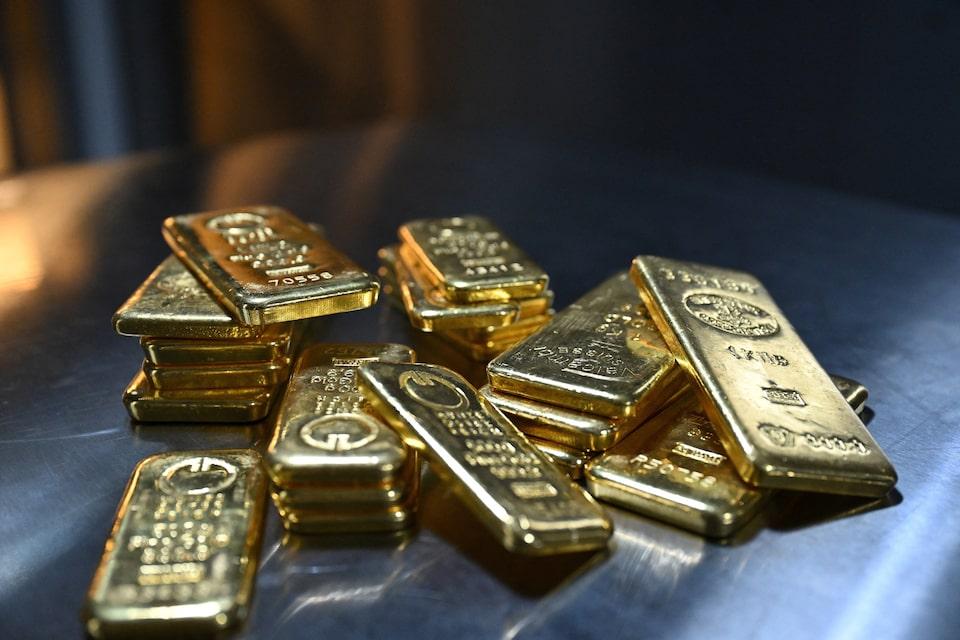
Spot gold up more than 27% so far in 2026 Spot silver hits record high of $120.45 Trump urges Iran to negotiate nuclear deal Jan 29 (Reuters) - Gold advanced to a record high close to $5,600 an ounce on Thursday, as investors sought refuge from escalating geopolitical tensions and weakening economic signals in the United States. Silver also benefited from the flight to safety, breaking above the $120 level. Sign up here. Spot gold was 2.1% higher at $5,513.09 an ounce by 1122 GMT, after earlier touching $5,594.82. The metal, which has hit new highs in nine straight sessions, was up 28% for the month so far. U.S. gold futures for February delivery were up 3.8% at $5,506.30 after hitting an all-time high of $5,626.80. "Gold's perfect storm continues with U.S.-Iran geopolitical tensions, a weak dollar and market expectations of more Fed rate cuts driving prices to endless record highs," said Jamie Dutta, market analyst at Nemo.money, adding that strong ETF inflows have also contributed to the rally. SPDR Gold Trust , the world's largest gold-backed exchange-traded fund, said its holdings on Wednesday rose to 35,043,181 ounces, the highest since May 2022. U.S. President Donald Trump pressed Iran on Wednesday to negotiate a nuclear deal, warning that Washington would respond more forcefully than it did in last year's attack on Iranian nuclear facilities. Tehran responded by threatening retaliatory action against the U.S., Israel and their allies. The U.S. Federal Reserve held rates steady on Wednesday, with investors now looking to Trump's announcement of a new central bank chair, and expecting the next interest rate cut to be in June. The U.S. dollar remained on shaky ground, after it hit a four-year low on Tuesday on comments from Trump brushing off its recent weakness. A weaker dollar makes greenback-priced gold more attractive to overseas buyers . Against an uncertain geopolitical and economic backdrop, "further gains are possible for (gold) which could rise above the $6,000 level and, after a period of consolidation, move towards $7,000 by year-end," said ActivTrades analyst Ricardo Evangelista. Spot silver was up 1% at $117.79 an ounce after hitting a record high of $120.45. It has gained nearly 64% so far this year as investors diversify away from gold, with persisting supply deficits and momentum buying providing further support. "Silver's squeeze means $130 is in sight with long-term industrial demand underpinning support," Nemo.money's Dutta added. Spot platinum climbed 1.4% to $2,735.15 an ounce, having hit a record high of $2,918.80 on Monday, while palladium eased 1% to $2,052.75. https://www.reuters.com/world/india/gold-extends-record-run-races-past-5400oz-2026-01-28/
2026-01-28 22:36
Ukraine's power system is under constant Russian attack Northern and eastern Ukraine face coldest winter in years Temperatures set to plunge again next week, forecasters say Solar plants could provide help, lawmaker says KYIV, Jan 28 (Reuters) - Life will be particularly tough for Ukrainians over the next three weeks due to plunging temperatures and a compromised energy infrastructure that has been pummelled by intense Russian attacks, depriving millions of light and heat, a senior lawmaker said on Wednesday. Despite progress in peace talks that has led to trilateral negotiations between Russia, Ukraine and the U.S. for the first time, Russia has stepped up bombardments beyond the front line that stretches across eastern and southern Ukraine. Sign up here. Temperatures of below -20 degrees Celsius (-4°F) are expected in the northern and eastern part of Ukraine next week, according to official forecasts, extremely low for the country. "The bad news is that there will indeed be frosts, and it will be difficult," Andriy Gerus, the head of the parliament's energy committee, told the national TV channel, Marathon. "The good news is that we need to hold out for three weeks, and then it will get easier," he added, citing predicted warmer temperatures and increased solar power from longer days. UKRAINE CALLS FOR 'ENERGY CEASEFIRE' The last two Russian missile and drone attacks on the capital Kyiv in January left about a million people without electricity and 6,000 apartment buildings without heating. After weeks of repairs, about 700 buildings still lack heat. Energy Minister Denys Shmyhal, writing on Telegram after a meeting devoted to energy on Wednesday, said 610,000 Kyiv households remained without power. That picture is replicated across the country, with northern and eastern Ukraine, home to major cities including Kyiv, Kharkiv, Chernihiv and Sumy, regularly targeted, resulting in power restrictions for industry and power cuts for consumers. Attacks on power stations, the energy transmission system and the gas sector have long been key elements of the full-scale invasion of Ukraine launched by Russia in February 2022. Moscow says it is seeking to undermine Ukraine's ability to fight. The head of Ukraine's largest private power producer DTEK told Reuters last week that Ukraine is nearing a "humanitarian catastrophe" due to the damage to its energy systems amidst the freezing temperatures, calling for a ceasefire on attacks on energy assets. Kyiv has targeted Russian oil processing infrastructure to reduce state revenues funding the war. DTEK on Wednesday said the situation had improved sufficiently to introduce from midnight a schedule of power cuts for the first time in weeks in the capital. Ukraine's solar energy association said around 1.5 gigawatts of new solar capacity was commissioned by Ukraine in 2025 and the total installed solar capacity in Ukraine exceeded 8.5 gigawatts, including residential installations. The volume is higher than the installed capacity of all three Ukrainian-controlled nuclear power plants of 7.7 gigawatts - and helped the country cope during repairs to those plants last summer - but output depends on the weather. President Volodymyr Zelenskiy said this month Ukraine's damaged energy system was meeting only 60% of the country's electricity needs this winter, with electricity generation capacity of 11 gigawatts against a need of 18 gigawatts. Maximum electricity imports from EU countries, combined with power cuts across entire regions, are allowing the system to remain balanced nevertheless. https://www.reuters.com/world/europe/ukrainians-face-tough-weeks-russia-targets-power-sector-during-freeze-2026-01-28/

2026-01-28 22:35
SANTIAGO, Jan 28 (Reuters) - Capstone Copper's (CS.TO) , opens new tab Mantoverde copper and gold mine in northern Chile said on Wednesday it presented a new contract offer to workers in a bid to end a strike that began in early January, after talks over new labor contracts broke down. The offer, which the union says is worse than a previous proposal, includes paying out the equivalent of $17,400 per worker, the company said. Sign up here. Members of Union 2 have been on strike since January 2 after formal negotiations broke down. The dispute has shown little signs of progress following the occupation of the mine's desalination plant by a group of striking workers more than 10 days ago. "This Wednesday, the company presented its new, finalized offer as a gesture of good faith to end the dispute," the mining company, owned by Canada's Capstone Copper, said in a statement. The company said the proposal also includes a 1% wage increase, along with other benefits, and called for "the immediate restoration of control over its facilities and the end of the blockade." The union said in a statement that the new proposal "represents a significant step backward" from a proposal made on January 8, both in permanent conditions and the termination bonus. It added that the proposal will be presented to union members on Thursday and a vote will be held within the next five days. In 2025, Mantoverde produced 62,308 tons of copper sulfide concentrate and 32,807 tons of copper cathodes, accounting for about 0.4% of global copper production. The work stoppage comes at a time when copper markets are highly sensitive to potential supply disruptions, with prices at record highs amid expectations of strong future demand. https://www.reuters.com/sustainability/sustainable-finance-reporting/chiles-mantoverde-makes-workers-new-offer-strike-continues-2026-01-28/

2026-01-28 22:16
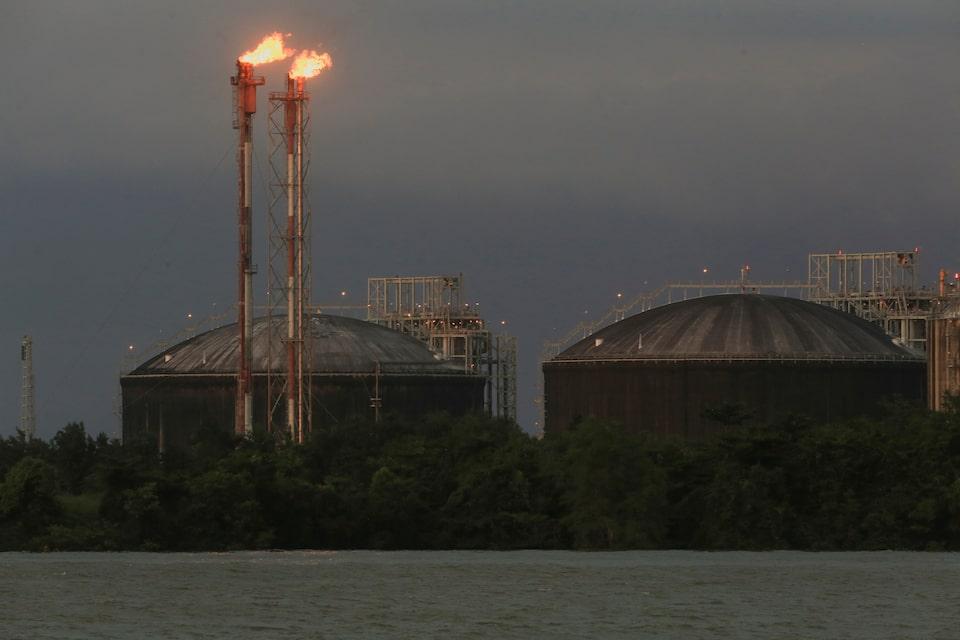
BP and Shell imported LNG from Trinidad amid U.S. winter storm Spot gas prices hit all-time highs due to increased demand and frozen wells Elba Island and Cove Point received unusual LNG imports for high-price opportunity HOUSTON/NEW YORK, Jan 28 (Reuters) - Several liquefied natural gas companies took the unusual step of importing natural gas into the U.S. over the past week in an apparent move to capture record prices that occurred as a brutal winter storm brought bitter cold to much of the country, according to analysts and ship tracking data from financial firm LSEG. BP (BP.L) , opens new tab and Shell (SHEL.L) , opens new tab, which together own 90% of Trinidad and Tobago's flagship Atlantic LNG plant, brought gas from Trinidad to U.S. plants amid the freeze, LSEG data showed. Sign up here. Spot gas prices soared in several regions across the country to all-time highs as demand for the fuel rose to near-record levels and homes and businesses cranked up their heaters while output dropped to a two-year low as oil and gas wells froze. Gas futures , meanwhile, surged 124% on Tuesday to a three-year high. Appearing to take advantage of that high-price opportunity, LNG companies sent cargoes to the Elba Island LNG terminal in Georgia, Cove Point in Maryland, Everett in Massachusetts and Canaport in New Brunswick, Canada, most of which came from Trinidad and Tobago, according to the LSEG data. Everett and Canaport are import terminals, but it is unusual to send cargoes to Elba Island and Cove Point, which generally export gas from the U.S. to the rest of the world. The U.S., which is now the world's largest LNG exporter, usually imports up to three cargoes a year from Trinidad to Everett because of pipeline infrastructure challenges, but very rarely to Cove Point and Elba which are exporters of LNG. On Wednesday, the Paris Knutsen is expected to arrive at Kinder Morgan's (KMI.N) , opens new tab Elba Island with a cargo from Trinidad and Tobago, according to LSEG ship tracking data. Elba Island stopped taking in gas from the U.S. grid over the weekend of January 24-25 as the winter storm raged across the U.S. Southeast. Before the weekend, Elba had been pulling in about 0.4 billion cubic feet per day (bcfd) of gas from the U.S. gas grid. Elba has the capacity to turn about 0.4-bcfd of gas into LNG. The unit of UK oil major Shell (SHEL.L) , opens new tab has contracts to both liquefy gas and regasify LNG at Elba Island. Shell said it was unable to comment before an earnings presentation due to take place next week. Cove Point, which also exports LNG, pulled in at least two cargoes so far this winter, one in December and one in January. Both cargoes came from Trinidad, according to LSEG data. The last time Cove Point took in a cargo was in December 2024, according to EIA data. BP-owned British Listener was nearing the U.S. on Wednesday with the superchilled gas having left Trinidad before dropping off some LNG in Colombia. BP said it does not comment on trading and shipping movements. "This shows the problem with the Jones Act because the most efficient thing would be to move LNG cargoes from the Gulf coast to the East coast," said Jason Feer, the head of business intelligence at shipping company Poten and Partners. The Act prevents U.S. LNG from being sold between U.S. ports. It is extraordinary to see the world's largest LNG exporter importing LNG, but with prices over $100 per mmbtu it made sense to bring in cargoes, said Feer. One billion cubic feet of gas can supply about 5 million U.S. homes for a day. https://www.reuters.com/business/energy/us-lng-plants-imported-cargoes-during-winter-storm-natural-gas-prices-hit-2026-01-28/
2026-01-28 22:13
Weak dollar burdens German export economy, Merz says Trump dismisses concerns over dollar's value Call for digital euro to reduce dollar dependence Jan 28 (Reuters) - Chancellor Friedrich Merz joined the head of Germany's main foreign trade association on Wednesday in voicing concern over the sharp weakening in the dollar, after it fell to a four-year low. "I have watched the dollar rate with concern, for some time," Merz told a news conference ahead of a meeting with his coalition partners in Berlin. "The dollar course is a considerable extra burden for the German export economy." Sign up here. Earlier, President Donald Trump brushed off concern about the level of U.S. currency, saying the value of the dollar was "great", when asked about recent falls, which at times took the dollar past the level of 1.20 to the euro. Merz's comments echoed similar remarks from Dirk Jandura, head of the BGA, Germany's wholesale and foreign trade association, who said the strength of the euro, which puts up the cost of German products, was causing exporters "great concern". "A strong euro makes German products more expensive on world markets and makes competitivity problems more severe," he told Reuters. "Especially for mid-sized exporters with narrow margins, it's a serious risk because they often can't dampen exchange risks." Germany's export-reliant economy has struggled in recent years, with growth scraping into positive territory last year after two years of recession. Exporters, facing growing competition from China and an increasingly uncertain world environment, have been hit as the euro has risen against the dollar. Merz and Finance Minister Lars Klingbeil both called for swift agreement over the creation of a digital euro, which they said would help consolidate the euro's position in global markets. "We want to push for the euro to be accepted as a leading currency in the world next to the dollar. That would also reduce our dependence on the dollar rate," he said. https://www.reuters.com/business/german-chancellor-merz-says-weak-dollar-burden-german-exports-2026-01-28/

2026-01-28 22:11
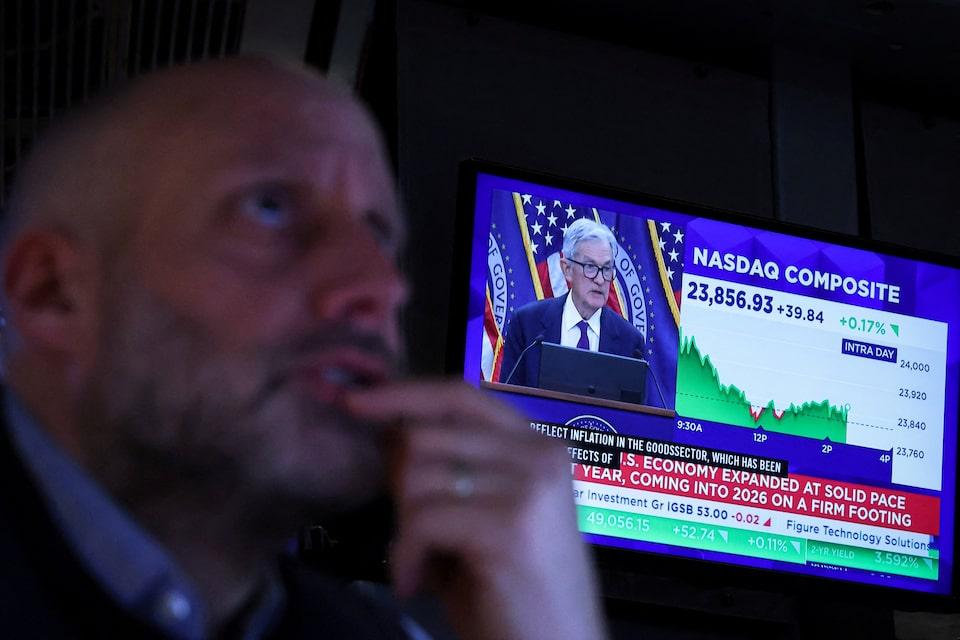
ORLANDO, Florida, Jan 28 (Reuters) - The dollar snapped higher and Wall Street wobbled on Wednesday, but not before the S&P 500 broke above 7,000 points for the first time, after the Federal Reserve kept interest rates on hold and flagged rising inflation risks. More on that below. In my column today I look at who the most likely candidates are to reduce their exposure to U.S. assets as a 'Sell America' narrative gathers momentum. Countries with big nominal holdings, or countries with outsized exposure to U.S. markets? Sign up here. If you have more time to read, here are a few articles I recommend to help you make sense of what happened in markets today. Today's Key Market Moves Today's Talking Points * Hawkish veer to Fed's steer "An absolute snoozefest." That's how TS Lombard's Dario Perkins summed up today's Fed meeting and Chair Jerome Powell's press conference, as the central bank kept rates on hold as expected. The steer was slightly hawkish - inflation remains elevated and the job market looks a bit sturdier - but there was little market reaction. Traders still expect another quarter point cut by July, but aren't fully pricing in another one after that. This fits with Powell's view that policy is probably at the higher end of the neutral range. Chances of the next move being a hike? No one's "base case", Powell says. * U.S. reaffirms 'strong dollar' policy U.S. President Donald Trump, Treasury Secretary Scott Bessent and others have weighed in on the dollar's travails, and investors are nervous the selloff snowballs into a rout. Policymakers seeing their currencies supercharge in value will be too. The dollar got some respite on Wednesday, but the selling pressure is likely to return. It is still overvalued on a long-term, fundamental basis, although by how much is open to question. The last 24 to 48 hours have seen huge swings in FX volatility. Investors should expect more of that too. * 3 out of 4 ain't bad U.S. tech results are rolling in, and so far, it's looking good - investors cheered Meta (META.O) , opens new tab, Tesla (TSLA.O) , opens new tab and IBM (IBM.N) , opens new tab, but not Microsoft (MSFT.O) , opens new tab. Belief in the economic transformative power of AI is broadly intact. But there are a few chinks of shade amid the blinding light. First, the downside of a productivity boom - job losses. Amazon (AMZN.O) , opens new tab and UPS (UPS.N) , opens new tab have announced huge layoffs, others will likely follow. Second, big tech has lagged in recent months, ceding market leadership to other sectors. Many leading tech stocks remain well off their all-time highs - a sign of fatigue, or room to play catch up? What could move markets tomorrow? Want to receive Trading Day in your inbox every weekday morning? Sign up for my newsletter here. Opinions expressed are those of the author. They do not reflect the views of Reuters News, which, under the Trust Principles , opens new tab, is committed to integrity, independence, and freedom from bias. https://www.reuters.com/business/retail-consumer/global-markets-trading-day-graphic-2026-01-28/