2025-08-23 20:42
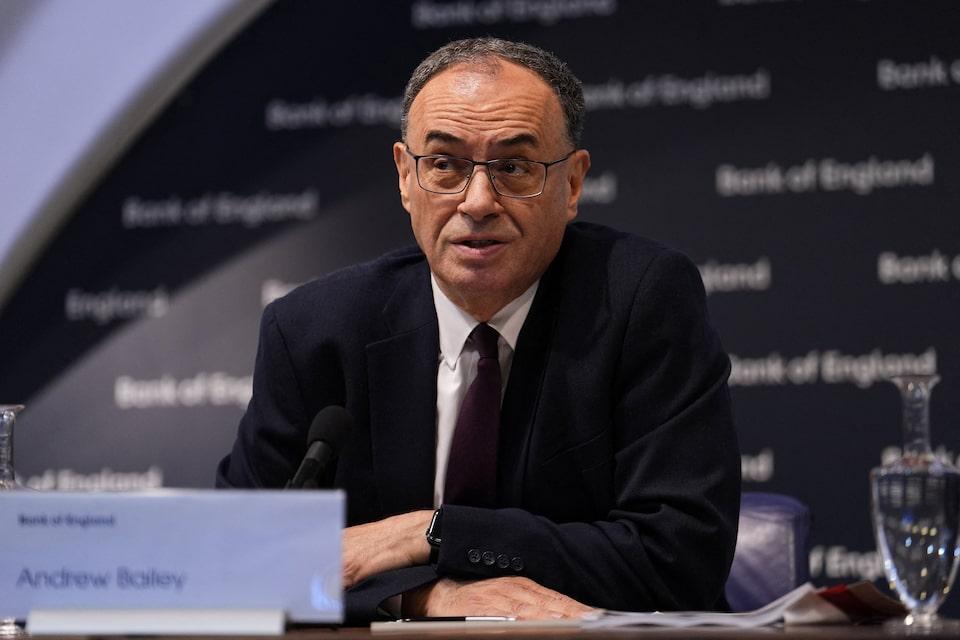
JACKSON HOLE, Wyoming, Aug 23 (Reuters) - Britain faces an "acute challenge" over its weak underlying economic growth and reduced labour force participation since the COVID-19 pandemic, Bank of England Governor Andrew Bailey said on Saturday. Speaking at an annual conference in Wyoming organised by the U.S. Federal Reserve, Bailey said an ageing population and an apparent illness-driven drop in working by younger Britons increased the need for efforts to boost economic productivity. Sign up here. "Going back to this question about potential growth rates, that puts even more emphasis on raising productivity growth," he said. "Ageing is not going to turn around in the foreseeable future." Bailey said the central bank had turned its focus away from long-term trends in unemployment to looking at levels of labour force participation instead. Official data shows that the percentage of 16-64 year olds active in Britain's labour market is lower than before the COVID-19 pandemic, unlike in other advanced economies. Bailey said there were big caveats around the data - including a low response rate and the possibility that the economically inactive might be more likely to take part in official surveys. But he said he did not think this factor explained all the decline. "Data caveats aside, this is a pretty sad story for the UK because ... we are well at the bottom of the league table," he said. Britain's Labour government has pledged to boost labour force participation and economic growth, but earlier this year its lawmakers rejected reforms to disability benefits which some analysts say discourage people from work. Data for the second quarter of 2025 showed that 21.0% of Britons aged 16-64 are neither in work nor actively seeking a job, down from a peak of 22.2% last year but above a low of 20.3% before the pandemic. Reduced labour force participation is one reason why some BoE policymakers fear that Britain's inflation rate - the highest in the Group of Seven advanced economies at 3.8% in July - may be slow to return to its 2% target. Bailey did not directly address the policy outlook in his remarks, made in a discussion about labour market challenges with European Central Bank President Christine Lagarde and Bank of Japan Governor Kazuo Ueda. https://www.reuters.com/world/uk/bank-englands-bailey-says-uk-has-acute-challenge-over-weak-growth-2025-08-23/
2025-08-23 14:29
JACKSON HOLE, Wyoming, Aug 23 (Reuters) - The European Central Bank is likely to keep interest rates on hold next month but discussions about further cuts may well resume in the autumn if the economy weakens, five sources told Reuters. ECB President Christine Lagarde said in July the euro zone's central bank was "in a good place" as it left its key rate at 2%, bringing a year-long cutting cycle to an end and leading investors to bet on a prolonged pause. Sign up here. Data since then showed the euro zone economy was proving more resilient than expected while inflation hovered at the ECB's 2% target, central bank officials in Europe and at the Federal Reserve's Jackson Hole Symposium said. Meanwhile tariffs imposed by U.S. President Donald Trump's administration on European Union imports, at 15% for most goods, were close to the ECB's own expectations and averted the most pessimistic scenarios, the central bank sources said. This meant that a rate cut on September 11 was now largely seen as unnecessary, barring a sudden worsening in incoming data such as a flash inflation reading for August and economic activity surveys, according to the sources. They all declined to be named because policy deliberations are confidential. Equally, the sources noted that the ECB's latest economic projections, which see inflation dipping below its 2% target next year before edging back to it, incorporate a further rate reduction. This meant that discussions about further monetary policy easing were likely to resume at the ECB's October 30 and December 18 meetings, particularly if U.S. tariffs started taking a toll on euro zone exports to its top trading partner or if hopes for an end to Russia's war in Ukraine were dashed, the sources added. An ECB spokesperson declined to comment. some chance of a further ECB rate cut, but not before the spring of next year. Investors have grown more optimistic about the euro zone's economic outlook after surveys showed business activity picked up pace over the summer, with new orders increasing in August for the first time since May 2024. Some policymakers cautioned this may be due to U.S. importers bringing forward orders from the euro zone to beat tariffs, which would imply a reversal in the coming months. https://www.reuters.com/business/finance/ecb-rate-cut-talk-may-resume-after-september-pause-sources-say-2025-08-23/

2025-08-23 12:43
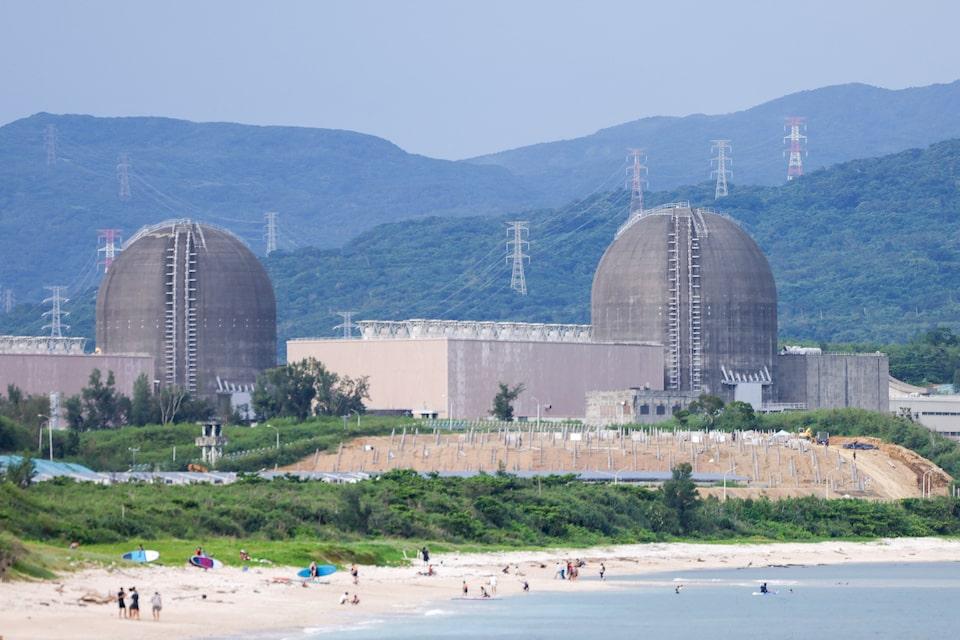
Opposition says nuclear power needed for stable supplies Government raises safety fears on earthquake-prone island President open to nuclear in future, if standards improve TAIPEI, Aug 23 (Reuters) - A referendum to push for the re-opening of Taiwan's last nuclear plant failed on Saturday to reach the legal threshold to be valid, though the president said the island could return to the technology in the future if safety standards improve. The plebiscite, backed by the opposition, asked whether the Maanshan power plant should be re-opened if it was "confirmed" there were no safety issues. The plant was closed in May as the government shifts to renewables and liquefied natural gas. Sign up here. The small Taiwan People's Party (TPP) proposed the referendum earlier this year, and with the backing of the much larger Kuomintang (KMT) passed the legislation for the vote, saying Taiwan needs reliable power supplies and not to be so reliant on imports. Around 4.3 million people voted in favour of the plant's re-opening in the referendum, a clear majority over the 1.5 million who voted against, figures from the Central Election Commission showed. But the motion needed the backing of one quarter of all registered electors - around 5 million people - to get through under electoral law, meaning the plant on Taiwan's southern tip will not re-open. Taiwan's government says there are major safety concerns around generating nuclear power in earthquake-prone Taiwan and handling nuclear waste. Taiwan President Lai Ching-te told reporters on Saturday evening that while the referendum had failed, he understood "society's expectations for diverse energy options". "If in the future, the technology becomes safer, nuclear waste is reduced, and societal acceptance increases, we will not rule out advanced nuclear energy," he added. In a separate vote on Saturday, electors rejected the recall of seven KMT lawmakers. A larger recall vote, to try and oust 24 lawmakers from the same party, also failed last month. Civic groups who had run the recall campaigns, with the backing of Taiwan's ruling Democratic Progressive Party (DPP), accused the lawmakers of being too close to China and intentionally trying to snarl government spending and legislation, charges the legislators strongly denied. Lai said Premier Cho Jung-tai had asked many times to resign after the failure of the recall votes in July, but he had asked Cho to stay on. There will be a cabinet reshuffle to make the team more efficient and governance more effective, Lai added. The two opposition parties together form a majority in parliament, though the DPP controls the presidency and hence the government in Taiwan's system. https://www.reuters.com/business/energy/taiwan-nuclear-plant-re-opening-vote-fails-approval-threshold-missed-2025-08-23/
2025-08-23 08:44
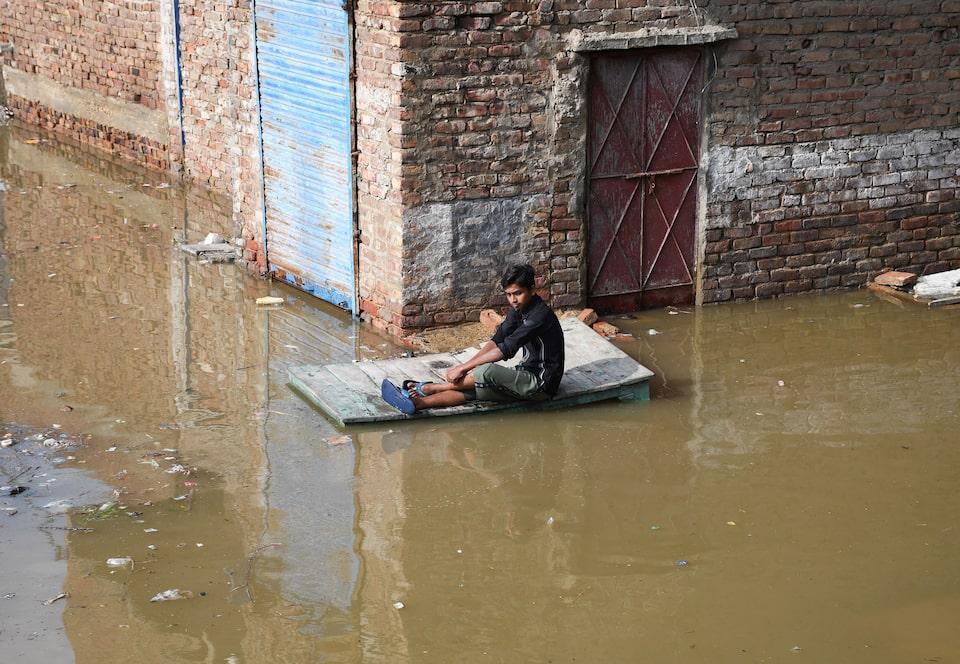
PESHAWAR, Pakistan, Aug 23 (Reuters) - A 7-km (4-mile) lake in northern Pakistan, created by a mountain mudslide, is threatening to burst and unleash potentially "catastrophic" floods downstream, officials warned on Saturday. The mud flow descended into the main Ghizer River channel and blocked it completely on Friday, creating the lake in Gilgit Baltistan province, the National Disaster Management Authority said. Sign up here. The blockage created a "dam-like structure" that poses a significant threat of bursting, it said in a situation report by its provincial office. The new lake "can cause a catastrophic flood", said Zakir Hussain, director general of the Provincial Disaster Management Authority. Four downstream districts - Ghizer, Gilgit, Astore and Diamer - face a serious threat, he told Reuters. Ghizer is north of the mountain districts in northwest Pakistan where floods triggered by the worst of this year's monsoon rains and cloudbursts have killed nearly 400 people since August 15. A video shared by the national authority on a WhatsApp group where it issues statements shows black mud sliding down the mountain before landing in the river. Reuters could not independently verify the video, which an official at the authority said was shot by residents. Similar mud flows landed in the river from different mountainsides, said provincial government spokesperson Faizullah Faraq. A shepherd on higher ground, the first to spot the mud flow crashing down, alerted villagers and local authorities, he said. As a result of the warning, he said, nearly 200 people in dozens of scattered houses tucked in the mountainsides and the river's surroundings were rescued. The lake has started discharging water, meaning the threat of a burst is receding, but flash floods in downstream districts cannot be ruled out until the lake is completely cleared, Faraq said. The communities downstream have been directed to stay on high alert and vacate areas along the river, he said. Floods across Pakistan have killed 785 since the monsoon started in late June, the national authority said, warning of two more rain spells by September 10. https://www.reuters.com/sustainability/climate-energy/pakistan-lake-formed-by-mountain-mudslide-threatens-catastrophic-floods-2025-08-23/
2025-08-23 08:21
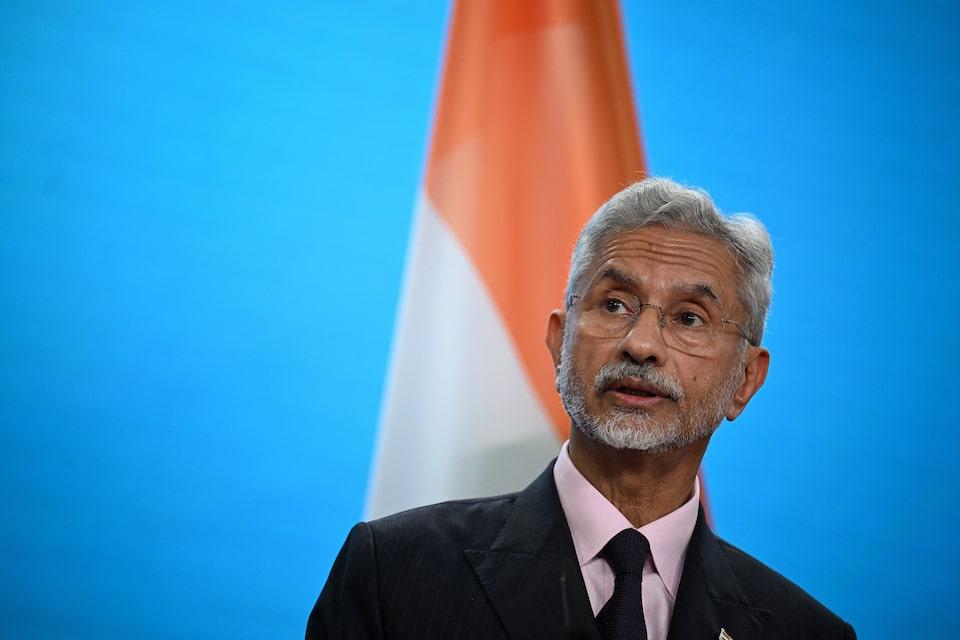
MUMBAI, Aug 23 (Reuters) - India's foreign minister said on Saturday that trade negotiations with Washington are continuing but there are lines that New Delhi needs to defend, just days before hefty additional U.S. tariffs are due to hit. Indian goods face additional U.S. tariffs of up to 50%, among the highest imposed by Washington, due to its increased purchases of Russian oil. A 25% tariff has already come into effect, while the remaining 25% is set to be enforced from August 27. Sign up here. A planned visit by U.S. trade negotiators to New Delhi from August 25-29 has been called off, dashing hopes that the levies may be lowered or postponed. "We have some redlines in the negotiations, to be maintained and defended," Indian Foreign Minister Subrahmanyam Jaishankar said at an Economic Times forum event in New Delhi, singling out the interests of the country's farmers and small producers. India-U.S. trade talks collapsed earlier this year due to India not agreeing to open its vast agricultural and dairy sectors. Bilateral trade between the world's largest and fifth largest economy is worth over $190 billion. "It is our right to make decisions in our 'national interest'," Jaishankar said. Analysts at Capital Economics said on Friday that if the full U.S. tariffs come into force and stick, the hit to India's economic growth would be 0.8 percentage points both this year and next. "The longer-term harm could be even greater as a high tariff could puncture India’s appeal as a global manufacturing hub." The Indian minister described U.S. President Donald Trump's policy announcements as "unusual". "We have not had a U.S. president who conducts his foreign policy so publicly as the current one and (it) is a departure from the traditional way of conducting business with the world," Jaishankar said. He also said Washington's concern over India's Russian oil purchases was not being applied to other major buyers such as China and European Union. "If the argument is oil, then there are (other) big buyers. If argument is who is trading more (with Russia), than there are bigger traders," he said. Russia-European trade is bigger than India-Russia trade, he added. The minister also said India's purchases of Russian oil had not been raised in earlier trade talks with the U.S. before the public announcement of tariffs. https://www.reuters.com/world/china/india-says-us-trade-negotiations-are-still-going-fresh-tariffs-loom-2025-08-23/
2025-08-23 07:58
LAGOS, Aug 23 (Reuters) - Nigeria LNG Ltd has inked 20-year gas supply contracts with NNPC Ltd and other oil firms for the supply of 1.29 billion standard cubic feet per day to support its liquefaction plants and expansion plans, according to a company statement. The agreements - which include extension options - also involve firms such as Shell Nigeria, Oando Group (OANDO.LG) , opens new tab, Aradel Holdings (ARADEL.LG) , opens new tab, and First E&P, and are expected to mitigate long-standing upstream gas shortfalls while propelling Nigeria’s energy transition and industrialisation efforts. Sign up here. The volumes will be gradually scaled up over time to supply the $10 billion Train-7 gas plant on Bonny Island in Rivers State, now 80% complete. Bayo Ojulari, NNPC Group CEO, said the contracts opened up opportunities for growth, collaboration, and shared prosperity. NLNG Managing Director Philip Mshelbila added that the deals addressed persistent gas supply issues caused by pipeline disruptions, including instances of vandalism and sabotage, and signalled NLNG’s strategy of diversifying its feedgas sources following the divestment of onshore assets by several international oil companies. NLNG is jointly owned by NNPC Ltd (49%), Shell Gas (25.6%), TotalEnergies (TTEF.PA) , opens new tab (15%), and Eni (ENI.MI) , opens new tab (10.4%). https://www.reuters.com/business/energy/nigeria-lng-inks-long-term-contracts-secure-gas-supply-2025-08-23/