2025-08-22 20:41
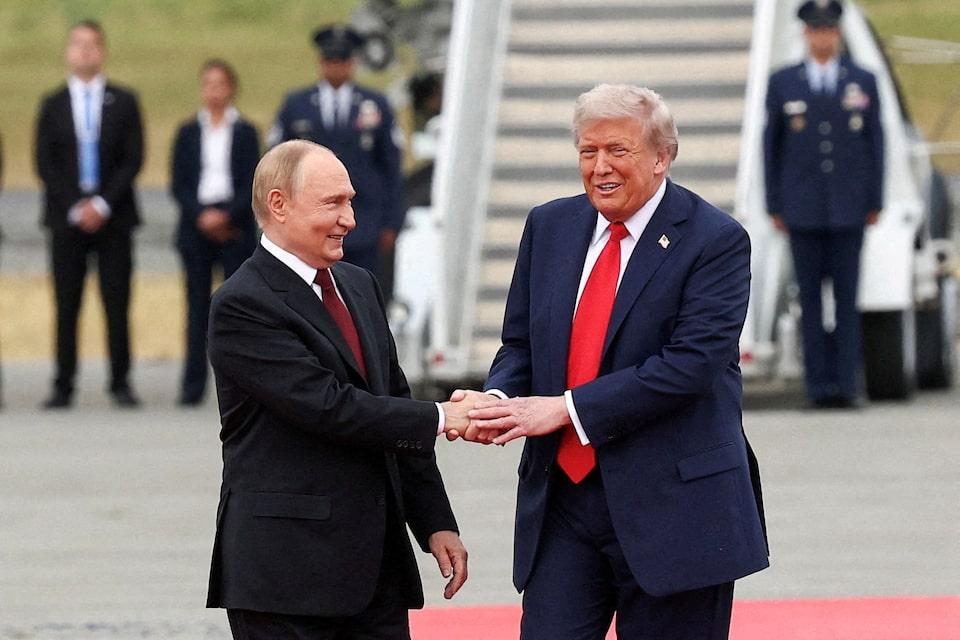
BNSF-CSX disclose new East-West routes Analysts see low apetite from BNSF to rush into a merger CSX shares drop 3.6% after announcement Aug 22 (Reuters) - CSX (CSX.O) , opens new tab and Berkshire Hathaway (BRKa.N) , opens new tab-owned BNSF on Friday announced new coast-to-coast services, a move that strengthens their freight connectivity but that tempers market expectations of an imminent merger between the two rail giants. Shares of CSX closed 3.6% lower after the announcement, but are up almost 8% so far this year. Sign up here. U.S. railroad leader Union Pacific (UNP.N) , opens new tab and Norfolk Southern (NSC.N) , opens new tab last month announced a surprise $85 billion merger proposal, fueling speculation that CSX and BNSF - the United States' two other major freight railroads - might explore a merger of their own. "This announcement signals BNSF's low appetite for a merger" in the near term, said BMO Capital Markets transportation analyst Fadi Chamoun. "Perhaps the company is not convinced on the merits of full-on consolidation and will be patient." If granted regulatory approval – a process that could take more than 18 months – the UP-Norfolk merger would create the first coast-to-coast freight rail operator in the United States. "We view the announcement today as confirmation that BNSF and CSX will wait to see how the Union Pacific/Norfolk Southern regulatory path unfolds from here," said Evercore Transport analyst Jonathan Chappell. Friday's announcement stems from ongoing commercial agreements between rail operators and predates last month’s merger announcement, according to a person familiar with the agreement. The new routes will link Southern California with Charlotte, North Carolina, and Jacksonville, Florida. Commercial agreements between freight rail operators are common in the industry, allowing companies to expand service offerings without undergoing structural changes. On July 21, CSX and Canadian Pacific Kansas City (CP.TO) , opens new tab launched the Southeast Mexico Express, a new east-west Class 1 corridor that connects shippers across Mexico, Texas and the southeastern United States. Union Pacific launched a similar domestic intermodal service earlier this month, connecting Southern California's Inland Empire with the Chicago area. CSX is also under activist pressure from Ancora, which is pushing for a merger or leadership change, and Toms Capital Investment Management's request to meet with the railroad operator's board. Better intermodal volumes helped CSX top analyst estimates for second-quarter profit in July. Railroad operators have always eyed linking the U.S. Atlantic and Pacific coasts by rail and this is especially true now, when the industry is struggling with labor constraints and higher operational expenses. Any merger, however, would require approval from the Surface Transportation Board, which reviews deals for potential impacts on pricing power and industry consolidation. https://www.reuters.com/business/csx-bnsf-railroad-pact-lessens-expectations-quick-merger-analysts-say-2025-08-22/
2025-08-22 20:38
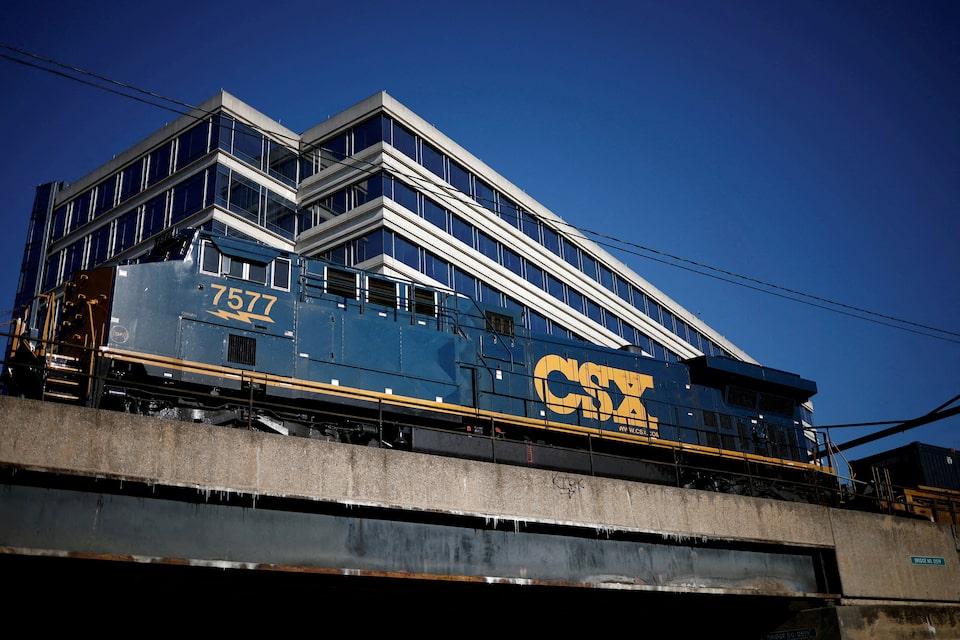
TSX ends up 0.99% at 28,333.13 Surpasses Thursday's record closing high Technology sector gains 2.59% Energy adds 2.33%, with Cenovus up 7.13% TORONTO, Aug 22 (Reuters) - Canada's major stock index rallied to another record high on Friday as investors sought to increase their ownership of shares in high-growth sectors like technology after Federal Reserve Chair Jerome Powell opened the door to interest rate cuts. The Toronto Stock Exchange's S&P/TSX composite index (.GSPTSE) , opens new tab ended up 277.70 points, or 0.99%, at 28,333.13, surpassing the record closing high it posted on Thursday. For the week, the index was up 1.53%, its third straight weekly gain. Sign up here. Powell pointed to a possible interest rate cut at the U.S. central bank's meeting next month, telling the Fed's annual Jackson Hole conference that risks to the job market were rising but also noting the continued threat of inflation and that a decision wasn't set in stone. "The market has been waiting for a solid signal from the Fed on this for a while now," said Philip Petursson, chief investment strategist at IG Wealth Management. "Today, clearly it got it and it's responding in kind." The TSX has advanced 14.58% since the start of the year, helped by a heavy weighting in the shares of gold mining companies. Safe-haven gold has benefited from economic uncertainty triggered by the global trade war. Canada will remove many retaliatory import tariffs on U.S. goods and intensify talks with the United States on striking a new trade and security relationship, Prime Minister Mark Carney said. Investors are rotating out of defensive sectors into the "growthier areas" such as energy, materials and technology, Petursson said. The technology sector (.SPTTTK) , opens new tab was up 2.59%, helped by a gain of 3.38% for the shares of e-commerce company Shopify Inc (SHOP.TO) , opens new tab. Energy (.SPTTEN) , opens new tab climbed 2.33% as the price of oil settled 0.22% higher at $63.66 a barrel. Cenovus Energy (CVE.TO) , opens new tab announced it will acquire MEG Energy (MEG.TO) , opens new tab in a C$7.9 billion ($5.68 billion) cash-and-stock deal, ending weeks of speculation that it would emerge as a white knight for MEG, which is facing a hostile takeover attempt. Shares of Cenovus jumped 7.13%, while MEG's shares ended 1.23% higher. The materials group (.GSPTTMT) , opens new tab, which includes metal mining shares, added 1.38%. https://www.reuters.com/markets/europe/tsx-hits-record-high-feds-powell-delivers-potential-rate-cut-signal-2025-08-22/
2025-08-22 20:34
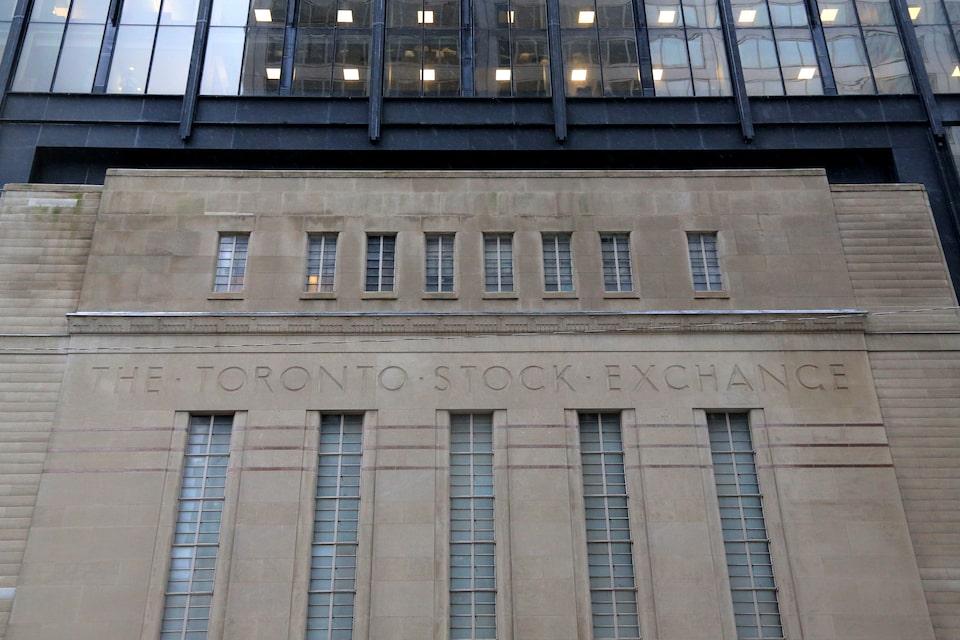
Indexes up: Dow 1.89%; S&P 1.52%; Nasdaq 1.88% Traders now see a near 90% chance of September rate cut S&P 500 snaps five-day losing streak Intuit falls after forecasting Q1 revenue growth below estimates Aug 22 (Reuters) - Wall Street's main indexes ended higher on Friday, with the blue-chip Dow hitting a record closing high, as investors piled into stocks after U.S. Federal Reserve Chair Jerome Powell hinted at a near-term interest-rate cut during his Jackson Hole Symposium speech. His comments paved the way for a potential rate cut at the Fed's September meeting, although Powell stressed the importance of jobs and inflation data due before then. Sign up here. "Powell did what central bankers do best at Jackson Hole — he kept the door open," said Nigel Green, chief executive of deVere Group. “A cut in September would reassure households and businesses that the central bank is not asleep at the wheel. Delaying only raises the odds of a harder landing." Traders boosted bets on a September rate cut after Powell's comments, now placing a nearly 90% chance of a reduction, versus about 75% before Powell's remarks. The Dow Jones Industrial Average (.DJI) , opens new tab rose 846.24 points, or 1.89%, to 45,631.74, surpassing its most recent record close on December 4, 2024. The S&P 500 (.SPX) , opens new tab gained 96.74 points, or 1.52%, to 6,466.91 and the Nasdaq Composite (.IXIC) , opens new tab gained 396.22 points, or 1.88%, to 21,496.54. Ten of the 11 S&P 500 sub-sectors traded higher, with consumer discretionary (.SPLRCD) , opens new tab the biggest gainer, up 3.18%. The Philadelphia SE Semiconductor Index (.SOX) , opens new tab soared 2.7%, while most megacap growth stocks also jumped. Tesla (TSLA.O) , opens new tab led gains with 6.2%. The rate-sensitive Russell 2000 Index (.RUT) , opens new tab surged 4.1%, hitting its highest level so far this year. With gains on Friday, the S&P 500 snapped a five-day losing streak after a broad selloff in heavyweight technology stocks pressured U.S. equities this week. For the week, both the S&P and Dow ended with gains, while the Nasdaq fell 0.6% as investors sold this week megacap tech stocks and rotated into less-pricey stocks. U.S. stocks have rebounded sharply from April lows - when markets were rattled by President Donald Trump's tariff announcements. Recently, indexes have been getting back up to record highs. A spate of resilient earnings, optimism around trade deals and growing chances of interest-rate cuts have been some of the main gain drivers, although some concerns persist. "Investors are cheering Powell's comments like it's the start of a rate-cut parade. But one cut won't move the needle on consumer spending. The bigger question is whether this marks a true pivot in Fed policy — or if rising tariffs will force it to slam the brakes before that shift even begins," said Zak Stambor, senior analyst for retail and ecommerce at Emarketer. Earlier in the day, UBS Global Wealth Management lifted its year-end target for the S&P 500 for the second time in two months, betting on corporate earnings strength, easing trade tensions and expectations of interest-rate cuts. Among other top movers, Intel gained 5.5% as the White House was expected to announce on Friday the acquisition of a 10% stake in the company. Coinbase (COIN.O) , opens new tab also soared 6.5% as investors scooped up crypto-related shares after Powell's speech. Intuit (INTU.O) , opens new tab dropped roughly 5% after the TurboTax-maker forecast first-quarter revenue growth below analysts' estimates due to weak performance at its Mailchimp marketing platform. Workday (WDAY.O) , opens new tab shed 3% after the human resources software provider provided an in-line outlook for the current quarter. Advancing issues outnumbered decliners by a 9.43-to-1 ratio on the NYSE. There were 590 new highs and 42 new lows on the NYSE. The S&P 500 posted 37 new 52-week highs and no new lows while the Nasdaq Composite recorded 166 new highs and 47 new lows. Volume on U.S. exchanges was 17.93 billion shares, compared with the 17.08 billion average for the full session over the last 20 trading days. https://www.reuters.com/business/dow-notches-record-high-wall-street-cheers-powells-speech-2025-08-22/
2025-08-22 20:32
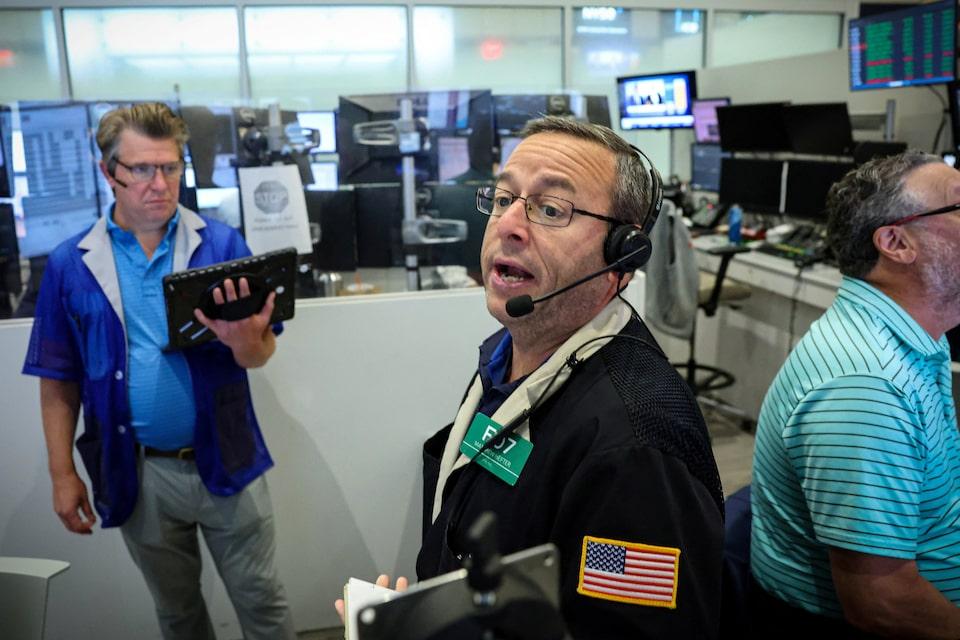
Powell hints at September rate cut on labor market concerns Speech cements market expectations of looser policy ahead Treasury yields drop, stocks extend gains NEW YORK, Aug 22 (Reuters) - Investors cheered Federal Reserve Chair Jerome Powell's Jackson Hole address, which gave a green light to buy risky assets on the hope the central bank is ready to cut rates, but took his dovish message with a note of caution as they see a risk of stagflation ahead and worry markets are over-optimistic. In his final address as Fed chair at the Jackson Hole, Wyoming, economic symposium, Powell hinted at a September interest rate cut but stopped short of committing, striking a careful balance between mounting job-market risks and lingering inflation worries. Sign up here. The speech on Friday came amid mounting pressure from the White House to ease monetary policy, which has raised market concerns that political influence will lead the U.S. central bank to become too aggressive in cutting rates in the future. "Powell definitely locked in that September rate cut and the certainty of that is rippling in a positive way across global markets," said Matthew Miskin, co-chief investment strategist at Manulife John Hancock Investments. "This still leaves, what happens after September? And I think that's where the markets are getting ahead of themselves," he said. The Jackson Hole address followed a weak July jobs report and significant downward revisions to earlier job figures that fueled bets the U.S. central bank will cut interest rates later this year from the current 4.25%-4.5% range. Those expectations, however, lost steam in recent weeks as a surge in wholesale prices in July fueled concerns that stubbornly high inflation would limit the Fed's ability to come to the market's rescue with hefty rate cuts. "People have been increasingly worried that we're kind of heading into a stagflationary story," said Drew Matus, chief market strategist at Metlife Investment Management, referring to a worrying mix of sluggish growth and relentless inflation. Matus added that investors were expecting inflation would "stick around for a little bit," but said the real question remains over how much the economy can grow. "I think we're going to get some growth, but it's not going to feel great," said Matus. Investors also noted that more data on inflation and the labor market are due ahead of the Fed's next meeting and could factor into rate decisions, potentially stalling any rally. "Looking over the next couple months, rate cuts alone won't be enough to sustain strength in stocks," said Tom Graff, chief investment officer at Facet. "If in fact the economy is stalling and the labor market continues to deteriorate, there are risks to this equity market rally.” RATE CUT BETS Others in the market said optimism was warranted. "If the Fed is going to move here and cut rates gradually and take their foot off the brake a little bit for the economy, I think it makes perfect sense that we're seeing a rebound," said Paul Eitelman, global chief investment strategist at Russell Investments. Rates futures traders assigned a 70% probability to a quarter-point interest rate cut in September ahead of Powell's speech. Late on Friday that stood at 80%, LSEG data showed. Rate-sensitive two-year U.S. Treasury yields dropped by about 10 basis points to 3.69%. Benchmark 10-year yields were down nearly eight basis points to 4.26%. Yields move inversely to prices. Wall Street's main indexes ended higher on Friday, with the blue-chip Dow hitting a record closing high. The S&P 500 (.SPX) , opens new tab gained 1.47% on the day, hovering near record high levels. Rate-sensitive stocks gained. Small caps, which typically rely on borrowing to fund their growth, surged, with the small-cap Russell 2000 (.RUT) , opens new tab rising 3.8%. Homebuilding shares also jumped, with the PHLX housing index (.HGX) , opens new tab up 4.6%. Powell's comments are "music to the market's ears," said Angelo Kourkafas, senior investment strategist at Edward Jones in St. Louis. "The fact that we are still looking for easing ahead provides some comfort that at least the elevated (equity) valuations and expectations are supported by the fact that we're looking at looser policy," he said. FED INDEPENDENCE CONCERNS Powell's address, however, sent the dollar sharply lower on concerns over a slowing economy, with worries around the independence of the Federal Reserve compounding the selloff. Lower interest rates can make the dollar less attractive to investors who may seek better returns in other currencies, reducing the demand for the greenback. The dollar index , which measures the greenback against a basket of currencies including the yen and the euro, was last down 1%. "Rate differentials are tilting against the dollar," said Karl Schamotta, chief market strategist at Corpay, adding traders were positioning for "asymmetric upside outside the U.S." The speech, Powell's final one as chair with his term ending in May, comes after relentless pressure from U.S. President Donald Trump on Powell to cut interest rates. Powell reiterated on Friday that Fed policy will remain strictly data-driven, never deviating from that approach. The pressures, however, ratcheted up earlier this week after Trump urged Fed Governor Lisa Cook to resign, a move that could allow him to appoint more dovish members to the Fed's rate-setting Federal Open Market Committee. On Friday, Trump said he would fire Cook if she doesn't resign following allegations over her mortgage loans. "Trump's words on Cook ... are once again raising concerns over the Fed's independence," said Helen Given, director of trading, Monex USA, Washington. https://www.reuters.com/business/finance/powell-fires-up-markets-some-investors-see-reason-caution-2025-08-22/
2025-08-22 20:28
LONDON, Aug 22 (Reuters) - Sona Asset Management is set to hire David Hill as its new chief financial officer, a source close to the matter told Reuters on Friday. Hill will likely join the investment firm from his CFO role at the $13.5 hedge fund Cheyne Capital, the person said. He brings over 20 years of experience, including 12 years in CFO roles, said the source. Sign up here. Sona Asset Management's chief financial officer Iain Colquhoun has left the firm, according to an email seen by Reuters on Friday. An email to Colquhoun's work address bounced back saying he no longer works for the firm and Reuters did not immediately respond to LinkedIn request. Hill will start his role at Sona Asset Management in October, the source said. He did not immediately respond to a request for comment on LinkedIn. A representative for Cheyne Capital did not immediately respond to a request for comment. Sona Asset Management, which oversees $13.6 billion, invests in bonds, as well as private credit and collateralised loan obligations, taking both long and short positions. A short trade is a bet that an asset will lose value. At Cheyne Capital, Hill was responsible for management accounting, budgeting, and financial reporting. He also served on the executive committee, overseeing strategy and planning, the source said. Before his job at Cheyne, he held roles as head of finance and later CFO at Finisterre Capital. Sona's departing CFO, Colquhoun, joined the hedge fund manager in June 2018, bringing with him 21 years of experience in fund operations, finance, and infrastructure, according to the firm's website. Last year, Sona Asset Management's Credit Master Fund returned 18.8%, benefiting from a surge in European companies needing to refinance their debt, Reuters previously reported. The firm's collateralized loan obligations (CLOs) platform made the top quartile of CLOs ranked by Deutsche Bank in 2024. These did not have specific annual percentage returns mentioned in the letter. During 2025, Sona Asset Management's assets under management have grown over $3 billion. https://www.reuters.com/markets/europe/sona-poised-hire-cheynes-hill-cfo-136-billion-manager-source-says-2025-08-22/

2025-08-22 20:03
MOSCOW, Aug 22 (Reuters) - President Vladimir Putin said on Friday that there was "light at the end of the tunnel" in Russia-U.S. relations and that the two countries were discussing joint projects in the Arctic and Alaska. The Russian president, answering questions during a visit to a nuclear research centre, said he was sure that U.S. President Donald Trump's leadership qualities would help in restoring relations from recent lows. Sign up here. "With the arrival of President Trump, I think that a light at the end of the tunnel has finally loomed. And now we had a very good, meaningful and frank meeting in Alaska," Putin said, referring to last week's summit. "The next steps now depend on the leadership of the United States, but I am confident that the leadership qualities of the current president, President Trump, are a good guarantee that relations will be restored." His comments signalled Russia's optimism that it can mend relations with the U.S. and strike business deals, despite the lack of clear progress towards ending the Ukraine conflict at his August 15 summit with Trump. Putin did not give details of possible U.S.-Russia cooperation in the Arctic but said there were "huge, huge" mineral reserves in the region and noted that Russian liquefied natural gas company Novatek was already operating there. "We are discussing, by the way, with American partners the possibility of working together in this area. And not only in our Arctic zone, but also in Alaska. And at the same time, the technologies that we possess, today no one but us possesses. And this is of interest to our partners, including those from the States," he said. Both Russia and the United States have said they see enormous economic opportunities if they can normalise relations after ties plunged to a post-Cold War low because of the war in Ukraine. https://www.reuters.com/world/putin-sees-light-end-tunnel-russia-us-ties-cooperation-arctic-alaska-2025-08-22/