2025-08-21 21:15
SANTIAGO, Aug 21 (Reuters) - Chile's finance minister Mario Marcel, considered a stabilizing and pragmatic figure in President Gabriel Boric's administration, resigned on Thursday amid a wider cabinet reshuffle. In a ceremony at the presidential palace in Santiago, Boric said Marcel was resigning due to personal reasons and replaced him with Economy Minister Nicolas Grau. Sign up here. "Our government is going to keep advancing with fiscal responsibility," Boric said, adding that his goal was to provide long-term stability to the country. "In this change, there's also continuity." A close political ally of Boric, Grau was the president of Chile's Federation of University Students from 2005 to 2006 during a time of widespread student protests. He later earned a master's degree in economy from the University of Chile and a doctorate in economy from the University of Pennsylvania. He then worked in academia and politics, including Boric's 2021 presidential campaign. As economy minister, Grau's purview included foreign investment and lithium contracts, an area he has faced criticism for due to delays in securing projects like a planned lithium cathode plant by Chinese metals group Tsingshan and automaker BYD. Grau, who resigned as economy minister on Thursday to take his new position, will be replaced by Alvaro Garcia. Boric also announced he was accepting the resignation of Esteban Valenzuela, the country's agricultural minister and replaced him with Maria Ignacia Fernandez. Both Grau and Marcel had served as ministers since the beginning of Boric's administration in 2022, surviving a number of cabinet reshuffles. After a polarizing election campaign during which Boric promised to upend Chile's free-market economic system, markets and investors breathed a sigh of relief when he picked Marcel, who was then serving as the head of the central bank. The economy quickly became a focal point of Boric's government as high inflation and tepid economic growth in the wake of the pandemic hampered his ambitious reforms. Marcel is attributed with stabilizing the economy and helping pass a number of the government's legislative victories, including a mining royalty and pension reform. Boric has seven months left in his administration and the country will host presidential elections in November. https://www.reuters.com/world/americas/chiles-boric-taps-close-ally-grau-finance-minister-after-marcels-surprise-exit-2025-08-21/

2025-08-21 21:01
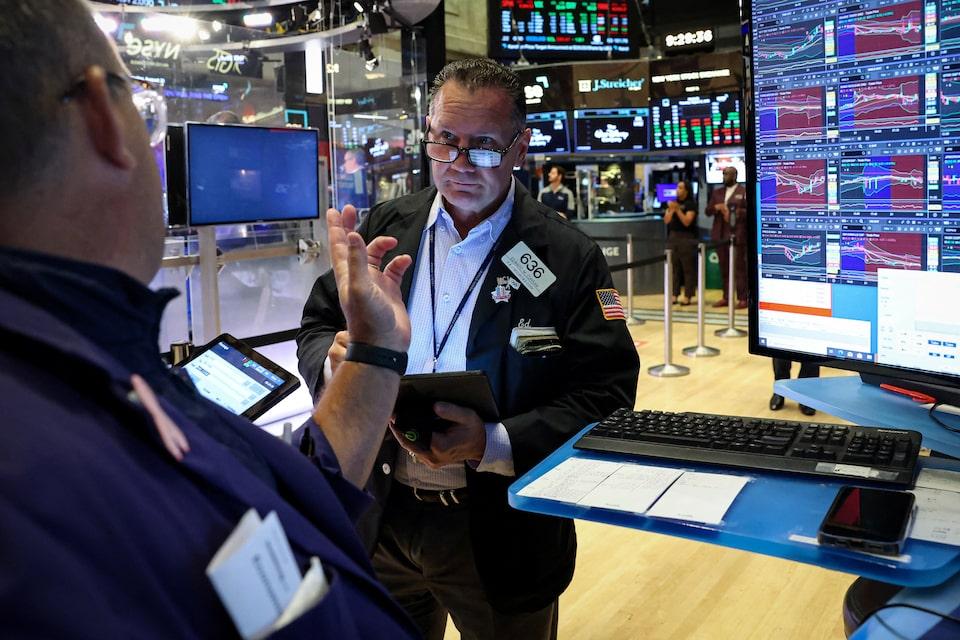
ORLANDO, Florida, Aug 21 (Reuters) - TRADING DAY Making sense of the forces driving global markets Sign up here. By Jamie McGeever, Markets Columnist U.S. stocks fell on Thursday and the dollar and Treasury yields rose, as solid factory data cast a bit more doubt on the Fed's readiness to lower interest rates next month. All eyes are now firmly on Fed Chair Jerome Powell's Jackson Hole speech on Friday. More on that below. In my column today, I look at the apparent contradiction between record inflows into U.S. assets from abroad, and the 125 basis points of Fed rate cuts traders are expecting by the end of next year. It doesn't add up. If you have more time to read, here are a few articles I recommend to help you make sense of what happened in markets today. Today's Key Market Moves Today's Talking Points: * Jackson Hole. Fed Chair Jerome Powell's eighth and final Jackson Hole speech is almost upon us. There may be three broad elements of his address to focus on: near-term policy signals, a new framework for the central bank, and a defense of his tenure. All three will be dissected, debated and debunked. The most important element for investors in the near term will be whether he leans toward a rate cut next month. These will be his first public remarks since weak jobs data three weeks ago made a September rate cut a virtual certainty, according to U.S. rate futures. Traders are no longer quite so certain, and rates futures markets are now barely attaching a one-in-four probability of a cut, the lowest since that payrolls shock three weeks ago. * Economic resilience. There were mixed signals in Thursday's sprinkling of U.S. employment, industry and activity indicators, but perhaps the most significant was the surprise strength in the manufacturing purchasing managers' index. The flash manufacturing PMI for July was 53.3. If confirmed by the final figure, this will be the highest in three years. Three Fed officials on Thursday signaled they are not ready to cut rates right now, and more figures like this PMI report will make the dovish case even harder to argue. The PMI surprises were not confined to the U.S. - the latest reports from Australia, Japan, India, the euro zone and Britain show that global business activity this month was strong too. * Trade. After a quiet few days for the global trade wars, investors got a reminder on Thursday of the brave new world ahead, as the US and European Union locked in a framework deal reached last month that includes a 15% U.S. tariff on most EU imports. In a 3-1/2-page joint statement, the two sides listed the commitments made, and senior EU officials said they are still pressing for lower duties on wine and spirits exports. One of the most controversial elements of the deal is European companies' apparent commitment to invest $600 billion in the U.S. through 2028. Watch this space. If America is in trouble, why do foreigners keep buying U.S. assets? Is the U.S. economic outlook so weak that it warrants multiple interest rate cuts? Or are U.S. markets pulling in huge inflows from abroad because the country's outlook is so attractive? Both can't be right, yet those are the respective narratives indicated by current pricing in the rates market and the latest capital flows data. Something doesn't quite add up. Much has been written this year about how foreign investors – spooked by U.S. President Donald Trump's unorthodox, populist policies – were going to reduce their exposure to U.S. markets and deploy that capital elsewhere. But that's not how it is panning out. Treasury International Capital (TIC) figures last week showed that foreign investors bought a net $192 billion of U.S. securities in June. This followed a record net purchase of $326 billion in May, swelled by the largest ever inflow from the private sector. Once U.S. investors' purchases of foreign assets are discounted, the net flow of long-term capital into U.S. securities in June was still a healthy $151 billion, taking the total for the second quarter to a record-matching $410 billion. Zooming out a little further, net inflows in the first half of this year stood at $643 billion, on course to match the record $1.3 trillion net inflow from 2022. And in the 12 months through June, a net $1.27 trillion was poured into U.S. stocks, Treasuries, agency and corporate debt. The end of American exceptionalism? It sure doesn't look like it. DE-DOLLARIZATION, WHERE ART THOU? Overseas demand for U.S. assets is clearly strong on an aggregate level. The explanation may be quite simple: capital continues to flood into the U.S. because that is where investors around the world believe they will see the strongest growth and thus earn the highest returns. "The flows picture is remarkably robust," says Robin Brooks, senior fellow at the Brookings Institution in Washington. "I don't think you can tell a 'de-dollarization' story or 'end of U.S. exceptionalism' story from these inflows." True, there is some justification for the de-dollarization narrative. The greenback is down 10% year to date, having recorded its worst start to a year in over half a century. But most of that slump was in the January-April period. In the last four months, the dollar index has been essentially flat. The dollar's weakness despite the influx of global capital certainly is a head-scratcher. Anecdotal evidence suggests this move partly reflects foreigners hedging more of their U.S. exposure, via currency options and derivatives. Short-term moves based on a dovish Fed outlook may be at play too. ULTIMATE HEAD-SCRATCHER But perhaps an even bigger head-scratcher is the disconnect between Fed expectations, the U.S. growth outlook, and capital flows. Traders expect the Fed to cut rates by around 125 basis points by the end of next year. That is, by far, the most dovish expectation for any G10 central bank. History suggests easing on this scale would only occur if there were a pretty sharp slowdown in economic growth. True, there are some red flags in the labor market, parts of 'Main Street' and U.S. public finances, even before factoring in tariff uncertainty. Yet, overall, the U.S. economy appears to be in reasonably decent shape. Economists at S&P Global Market Intelligence on Wednesday raised their 2025 and 2026 GDP growth forecasts to 1.7% and 2.4%, respectively. Is that an economy in need of six quarter-percentage point rate cuts over the coming 16 months, or is the growth outlook relatively rosy precisely because that level of monetary loosening is expected? That remains to be seen. For now, investors around the world continue to hoover up U.S. securities, which suggests they can't be all that pessimistic about the U.S. – or at least U.S. tech companies. It's worth noting that the TIC data showed the large inflows in May and June were mostly in so-called riskier equities rather than 'safer' Treasuries, suggesting foreigners may be more sanguine about Corporate America than the government. The end of U.S. exceptionalism may be around the corner, but it's a long bend. What could move markets tomorrow? Want to receive Trading Day in your inbox every weekday morning? Sign up for my newsletter here. Opinions expressed are those of the author. They do not reflect the views of Reuters News, which, under the Trust Principles , opens new tab, is committed to integrity, independence, and freedom from bias. https://www.reuters.com/business/global-markets-trading-day-graphic-2025-08-21/
2025-08-21 20:55
Israel to dispatch negotiators to talks once venue is set Remarks are PM's first on ceasefire proposal Hamas accepted At same time Israel proceeds with plans to seize Gaza City Gaza residents protest against war, call for ceasefire CAIRO/JERUSALEM, Aug 21 (Reuters) - Prime Minister Benjamin Netanyahu said on Thursday that Israel would immediately resume negotiations for the release of all hostages held in Gaza and an end to the nearly two-year-old war but on terms acceptable to Israel. It was Netanyahu's first response to a temporary ceasefire proposal put forward by Egypt and Qatar that Hamas accepted on Monday. Israel will dispatch negotiators to talks once a location is set, an Israeli official said. Sign up here. Speaking to soldiers near Israel's border with Gaza, Netanyahu said he was still set on approving plans for defeating Hamas and capturing Gaza City, the densely populated centre at the heart of the Palestinian enclave. Thousands of Palestinians have left their homes as Israeli tanks have edged closer to Gaza City over the last 10 days. "At the same time I have issued instructions to begin immediate negotiations for the release of all our hostages and an end to the war on terms acceptable to Israel," he said, adding: "We are in the decision-making phase." Israel's plan to seize Gaza City was approved this month by the security cabinet, which Netanyahu chairs, even though many of Israel's closest allies have urged the government to reconsider. His latest remarks underscore the Israeli government view that any deal ensures the release of all 50 hostages captured in Israel in October 2023 and still held by militants in Gaza. Israeli officials believe around 20 are still alive. The proposal on the table calls for a 60-day ceasefire and the release of 10 living hostages held in Gaza by Hamas militants and of 18 bodies. In turn, Israel would release about 200 long-serving Palestinian prisoners held by Israel. Once the temporary ceasefire begins, the proposal is for Hamas and Israel to begin negotiations on a permanent ceasefire that would include the return of the remaining hostages. PALESTINIAN PROTESTSIn a sign of growing despair at conditions in Gaza, residents staged a rare show of protest against the war on Thursday. Carrying banners reading "Save Gaza, enough" and "Gaza is dying by the killing, hunger and oppression," hundreds of people rallied in Gaza City in a march organised by several civil unions. "This is for a clear message: words are finished, and the time has come for action to stop the military operations, to stop the genocide against our people and to stop the massacres taking place daily," said Palestinian journalist Tawfik Abu Jarad during the protest. The Gaza health ministry said at least 70 people had been killed in Israeli fire in the enclave in the past 24 hours, including eight people in a house in Sabra suburb in Gaza City. A statement from the Palestinian Fatah movement said one of those killed in Sabra was a Fatah leader and former militant, along with seven members of his family. There was no immediate comment from the Israeli military. CEASEFIRE OR CAPTURE OF GAZA CITY? Even as the military begins its preparations to launch the assault on Gaza City, Israeli officials have indicated that there is time for a ceasefire to be reached. On Wednesday, the military called up 60,000 reservists in a sign the government was pressing ahead with the plan, despite international condemnation. Such a call-up is likely to take weeks. Netanyahu is under pressure from some far-right members of his coalition to reject a temporary ceasefire and instead to continue the war and pursue the annexation of the territory. Some Palestinian families in Gaza City have left for shelters along the coast, while others have moved to central and southern parts of the enclave, according to residents there. "We are facing a bitter, bitter situation, to die at home or leave and die somewhere else. As long as this war continues, survival is uncertain," said Rabah Abu Elias, 67, a father of seven. "In the news, they speak about a possible truce, on the ground, we only hear explosions and see deaths. To leave Gaza City or not isn't an easy decision to make," he told Reuters by phone. On Thursday, Israeli military spokesperson Avichay Adraee wrote on X that the military had started making what he said were initial warning calls to medical and international organisations operating in Gaza's north, telling them that Gaza City residents should start to prepare to move out of the city and towards the south. Adraee shared a recording of what he said was an Israeli officer telling a Gazan health ministry official that hospitals in southern Gaza should also prepare to receive patients from medical facilities in the north, who will be forced to evacuate. A Gaza health ministry official confirmed the phone call had taken place. The ministry rejected the Israeli request to shift medical resources south, warning it would cripple the already devastated health system and endanger over a million residents. It urged international bodies to intervene and protect lifesaving care. Two more people have died of starvation and malnutrition in Gaza in the past 24 hours, the ministry said on Thursday. The new deaths raised the number of Palestinians who have died from such causes to 271, including 112 children, since the war began. Israel disputes malnutrition and starvation figures posted by the Gaza health ministry. https://www.reuters.com/world/middle-east/netanyahu-says-israel-resume-gaza-negotiations-end-war-free-hostages-2025-08-22/

2025-08-21 20:50
CME's new spring wheat contract struggles with low trading volume, open interest Traders prefer MIAX contract due to familiarity, established use CME determined to give spring wheat futures "time to build" CHICAGO, Aug 21 (Reuters) - In a head-to-head contest in a small corner of agricultural futures markets, a legacy spring wheat contract that has traded for more than 140 years is fending off a challenge from a competing contract launched this spring by CME Group, the world's largest futures exchange. Spring wheat, grown in the northern Plains of the U.S. and Canada, is favored for bagels and frozen dough. The contract was introduced in 1883 on the Minneapolis Grain Exchange and has long set the price for premium-quality wheat used by North American millers and exported around the world. Sign up here. Compared to other commodities, trade in spring wheat contracts is relatively modest. But it is among the only major agricultural commodity derivatives not dominated by CME Group, which in recent decades has expanded from its 19th-century origins as the Chicago Mercantile Exchange into a $99 billion behemoth with acquisitions including the Chicago Board of Trade and Kansas City Board of Trade. Now, nearly 2 million contracts are traded daily for corn, soybeans, winter wheat and livestock. But CME's much smaller rival, Miami International Holdings, or MIAX, which bought the independent Minneapolis exchange in 2020 and moved it off of CME's electronic trading platform this summer, is winning the battle in spring wheat. "It's David versus Goliath," said Joe Nussmeier, a broker with Frontier Futures. Earlier this summer, CME’s spring wheat futures , saw hefty daily trading volumes of tens of thousands of contracts. Those volumes have faded to a few dozen a day, according to CME data. It also shows that open interest, which reflects the number of active contracts held by traders, has plummeted from a peak of nearly 2,100 contracts to around 600. Large grain handlers and millers including CHS, Archer-Daniels-Midland and Cargill's joint venture Ardent Mills, who represent the bulk of commercial trade in spring wheat, are sticking with MIAX. Traders said that most of the CME's early volume bump came from "market makers," or traders given an incentive by CME to trade the contract to boost market liquidity and facilitate trading for others. But those traders do not often take longer-term positions like commercial traders such as grain millers and elevators who use futures to hedge against the risk of owning large inventories of grain. "It does not feel like there's any commercial participation, and what the product needs to thrive is a commercially backed hedger, whether it be an end user or a grain elevator," said Nussmeier. CHS and ADM declined to comment. Ardent Mills did not immediately reply to requests for comment. LEGACY CONTRACT MIAX shares jumped 38% last Thursday, the day of its initial public offering on the New York Stock Exchange, valuing the exchange operator at about $2.5 billion. CME Group's new spring wheat contract is a near look-alike in terms of structure, and both were traded electronically on CME's Globex trading platform until June 30, when MIAX debuted its Onyx trading platform. Despite the new competition, trading in MIAX Minneapolis wheat futures has been steady at around 7,000 to 14,000 contracts per day this month after falling 31% in July, a drop traders said was due largely to technical problems associated with the shift to a new trading platform. Open interest has held around 60,000 to 70,000 contracts, close to historical levels. Cash markets are also backing MIAX as bids for spring wheat posted by grain elevators across the northern Plains largely remain tied to its contract, not CME's. "The legacy MIAX contract is still the favored contract," said Jeffrey McPike, a U.S. analyst with brokerage WASEDA Commodities. In July, three CME employees traveled to Fargo, North Dakota, to promote the new contract among a group of some 50 millers and traders gathered for Wheat Quality Council's annual spring wheat crop tour. CME-branded swag and a barbecue brisket dinner did not translate to more trade. John Ricci, CME's global head of agriculture products, said the exchange would give its spring wheat contract "time to build." https://www.reuters.com/business/niche-wheat-futures-market-rebooted-legacy-contract-fends-off-new-offering-giant-2025-08-21/

2025-08-21 20:34
US dollar up 0.4% US weekly jobless claims rise to highest since June Traders pricing in 79% chance of a quarter-point rate cut by September Aug 21 (Reuters) - Gold prices edged lower on Thursday as the dollar strengthened, while investors awaited U.S. Federal Reserve Chair Jerome Powell's speech at the Jackson Hole symposium for signals on U.S. policy direction. Spot gold fell 0.3% to $3,337.95 per ounce, as of 1:47 p.m. ET (1747 GMT). U.S. gold futures for December delivery settled 0.2% lower at $3,386.50. Sign up here. The U.S. dollar index (.DXY) , opens new tab was up 0.4%, making U.S. dollar-priced gold expensive for overseas buyers. Powell is expected to speak at the Jackson Hole conference about the economic outlook and the Fed's policy stance on Friday. "If (Powell) signals a rate decrease in September, I don't think much will happen because the market is already expecting that," said Marex analyst Edward Meir. "If he says we may decrease rates again in October, November or December, I think the dollar could weaken and gold could push higher," Meir added. Non-yielding gold typically performs well in a low-interest-rate environment. The Fed has kept rates unchanged since December, but traders see a 71% chance of a quarter-point cut by September, according to CME's FedWatch tool. The number of Americans applying for unemployment benefits jumped last week, marking the biggest increase in nearly three months. Meanwhile, the U.S. Justice Department plans to investigate Fed Governor Lisa Cook over mortgage fraud allegations, with a senior official urging Chair Jerome Powell to remove her from the board, Bloomberg News reported Thursday. Fitch Solutions' research company BMI on Wednesday revised its 2025 gold price forecast upward by $150 to $3,250 per ounce. "Prices will remain elevated in the coming weeks as the market braces for a U.S. Fed rate cut in September. Even then, we believe the upside for gold following the rate cut will be limited with most of it already priced in," BMI said in a note. Spot silver was up 0.6% at $38.10 per ounce, platinum rose 1.1% to $1,354.20 and palladium shed 0.6% to $1,107.41. (This story has been corrected to say the US dollar was up, not down, in the first bullet point) https://www.reuters.com/world/china/gold-slips-dollar-firms-ahead-powells-jackson-hole-speech-2025-08-21/

2025-08-21 20:31
NEW YORK, Aug 21 (Reuters) - BP's (BP.L) , opens new tab 440,000-bpd refinery in Whiting, Indiana, continued to flare after flooding disrupted its operations earlier this week, the company said. The facility continued to burn materials in the flare stacks to maintain safe operations, the company said in a social media post on Thursday, adding that floating barriers were placed in Lake Michigan as a precautionary measure due to wind and wave conditions. "There are no known impacts outside the refinery at this time," the company said. Sign up here. Operations at the Whiting refinery were affected earlier this week due to flooding caused by a severe thunderstorm overnight. BP attempted to restart the facility on Wednesday. The units taken offline due to flooding on Monday night could take several days to ramp up and the facility likely will not be operating at full rates until late next week, trading sources said on Thursday. The company did not respond to questions about the refinery's restart timeline. The Whiting refinery, the largest in the U.S. Midwest, produces a wide range of liquid fuels, including gasoline, diesel and jet fuel. https://www.reuters.com/business/energy/bps-refinery-whiting-indiana-continues-flare-days-after-severe-thunderstorm-2025-08-21/