2025-08-21 15:42
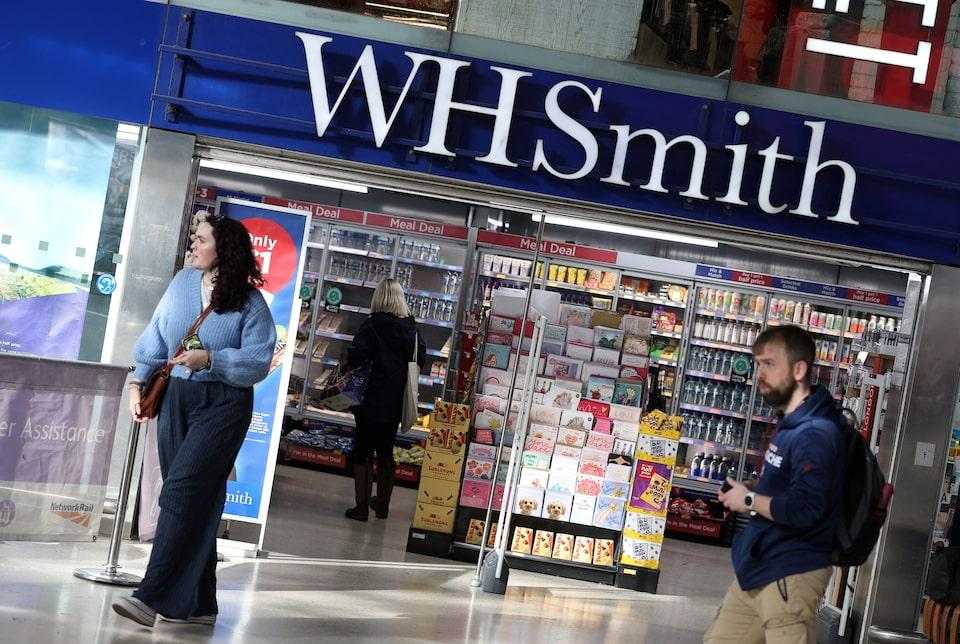
LONDON, Aug 21 (Reuters) - Hedge funds and speculators picked WH Smith (SMWH.L) , opens new tab as their top target for short selling in July, before the British travel retailer announced an accounting error on Thursday that sent its shares tumbling more than 45%. WH Smith lowered its annual profit outlook on Thursday after a review revealed earnings had been overstated in its North America division. Sign up here. Speculators in July picked WH Smith as their top target among UK and European small-cap stocks for bets on a share price drop, a research report from Hazeltree also on Thursday showed. Hedge funds that had to disclose such bets in August to the UK regulator's public filings because of their size included Citadel Advisors and Man Group (EMG.L) , opens new tab. Analysts have cut target prices for WH Smith's stock and have pointed to how mounting debt has weighed on the company's cash reserves, compounding pressures from global economic uncertainty affecting the travel sector. A financial review identified an overstatement of around 30 million pounds ($40 million) in expected headline trading profit, WH Smith said, mainly due to supplier income in North America being booked too early. WH Smith, which in June sold its UK high street business to become purely a travel retailer, has been rapidly expanding in North America, which contributed about 20% of group revenue in fiscal 2024. The retailer said it now expects group pre-tax profit for the year ending August 31 to be around 110 million pounds, compared to analysts' estimates of 156.9 million pounds, according to LSEG data. Entertainment ticket sales companies, luxury drinks companies and semi-conductor manufacturers saw large portions of their stocks borrowed for the purpose of shorting, Hazeltree's Shortside Crowdedness Report showed. It gathers data from 700 asset managers, covering 15,000 stocks globally. Citadel and Man Group declined to comment. WH Smith did not immediately respond. https://www.reuters.com/sustainability/boards-policy-regulation/hedge-funds-picked-wh-smith-top-short-before-share-slump-hazeltree-data-shows-2025-08-21/
2025-08-21 15:27
Risk appetite dampens ahead of Jackson Hole remarks Spot gold prices fall as dollar gains Euro zone business activity expanded in August, PMIs show NEW YORK/PARIS, Aug 21 (Reuters) - Global equities fell on Thursday on investor jitters around the Federal Reserve's three-day annual Jackson Hole symposium, as gold prices eased under pressure from a stronger U.S. dollar. The symposium started on Thursday, with traders awaiting Fed Chair Jerome Powell's speech on Friday for hints about the likelihood of a September U.S. rate cut. Sign up here. U.S. Treasury yields climbed. Oil futures advanced, bolstered by signs of strong U.S. demand and uncertainty over efforts to end the war in Ukraine. The U.S. dollar rose 0.43% against a basket of other currencies . The MSCI World Equity Index (.MIWD00000PUS) , opens new tab fell 0.38%. "Jitters over what's going to transpire tomorrow at Jackson Hole are certainly weighing on risk appetite a little bit with chair Powell's speech," said Adam Turnquist, chief technical strategist for LPL Financial. On Wall Street, the Dow Jones Industrial Average (.DJI) , opens new tab 0.34% to 44,785.50, the S&P 500 (.SPX) , opens new tab lost 0.40% to 6,370.17 and the Nasdaq Composite (.IXIC) , opens new tab retreated 0.34% to 21,100.31. Big-box retailer Walmart's (WMT.N) , opens new tab quarterly results dampened sentiment. Traders had ramped up bets for a September cut following a surprisingly weak payrolls report at the start of this month, and were further encouraged after consumer price data showed limited upward pressure from tariffs. But they lowered their expectations slightly following the release of minutes from the Fed's July meeting. By Thursday, markets were pricing in a 70.4% chance of a September rate cut, compared to 83% on Wednesday, according to LSEG data . The pan-European STOXX 600 (.STOXX) , opens new tab closed flat, and major bourses were mixed. The European Union said it would strive to ensure lower U.S. tariffs apply to its car exports retroactively, as the EU and U.S. detailed commitments made in a deal reached last month. Analysts attributed a pullback in tech stocks this week to concerns that AI investments were not delivering returns. Euro zone business activity accelerated in August, PMI data showed, with Germany registering its fastest growth since March and France's downturn easing. Stocks had been near recent highs during Asian trading, and Australia's benchmark (.AXJO) , opens new tab hit a new record. The 10-year U.S. Treasury yield added 3.2 basis points to 4.328%. The euro was down 0.4% at $1.1604. U.S. President Donald Trump intensified his effort to influence the Fed on Wednesday, calling on Governor Lisa Cook to resign on the basis of allegations made by one of his political allies about mortgages she holds in Michigan and Georgia. Cook said she had "no intention of being bullied to step down" from her position at the central bank. Deutsche Bank analysts in a research note attributed a rise in gold overnight to renewed concerns about the Fed's independence. "The news was a reminder of the lingering concerns over future Fed independence and risks of fiscal dominance, though the extent of the market reaction was fairly modest," Deutsche Bank said. State Street Markets' Tim Graf said that although central bank independence was considered "sacrosanct" by markets, it was not yet problematic. "Markets quite rightly look through this, price maybe a little bit of risk premium for sure, but it's not something that I think really upsets the apple cart too much," he said. Spot gold prices fell 0.25% to $3,338.51. U.S. gold futures settled 0.2% lower at $3,386.50. Elsewhere in commodities, Brent oil futures finished up 1.24% at $67.67 per barrel and U.S. crude settled up 1.29% to $63.52. https://www.reuters.com/world/china/global-markets-update-6-graphic-2025-08-21/
2025-08-21 12:58
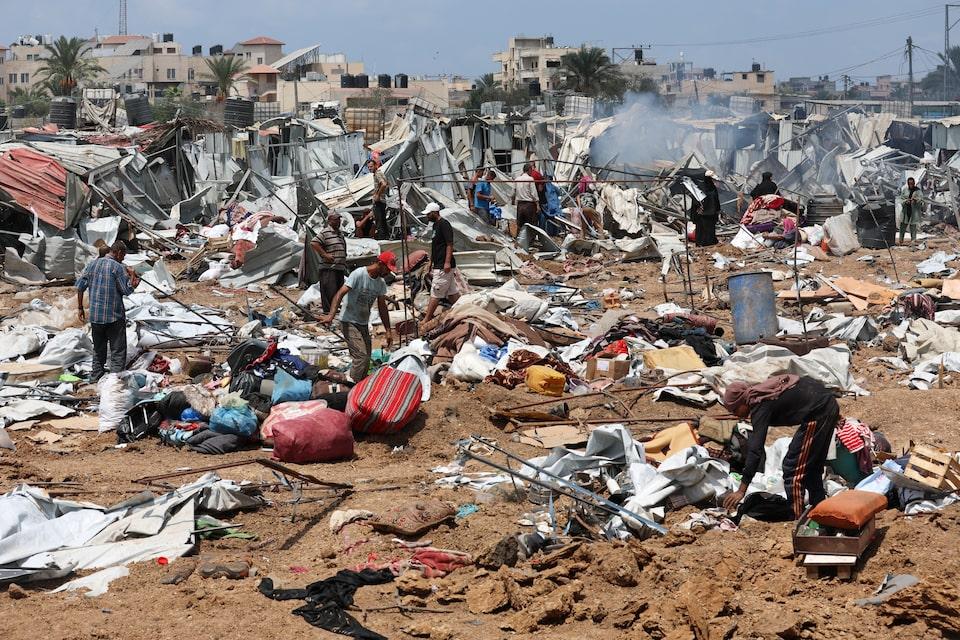
Israel calls up 60,000 reservists amid Gaza City offensive plans Hamas accepts ceasefire proposal; Israel yet to respond Thousands of Palestinians flee intensified shelling in Gaza City CAIRO/JERUSALEM, Aug 21 (Reuters) - The Israeli military maintained its pressure on Gaza City with heavy bombardments overnight, residents said, ahead of a Thursday meeting between Prime Minister Benjamin Netanyahu and his ministers on plans to seize the enclave's largest city. The military a day earlier called up 60,000 reservists in a sign that the government was pressing ahead with the plan, despite international condemnation. However, one military official said that most reservists would not serve in combat and that the strategy to take Gaza City had not yet been finalised. Sign up here. Calling up tens of thousands of reservists is also likely to take weeks, giving time for mediators to attempt to bridge gaps over a new temporary ceasefire proposal that Hamas has accepted, but the Israeli government is yet to officially respond to. The proposal calls for a 60-day ceasefire and the release of 10 living hostages being held in Gaza by Hamas militants and of 18 bodies. In turn, Israel would release about 200 long-serving Palestinian prisoners held by Israel. The Israeli government has restated that all of the remaining 50 hostages held by militants in Gaza must be released at once. Israeli officials believe that around 20 of them are still alive. In a sign of growing despair at conditions in Gaza, residents staged a rare show of protest against the war on Thursday. Carrying banners reading "Save Gaza, enough" and "Gaza is dying by the killing, hunger and oppression," hundreds of people rallied in Gaza City in a march organised by several civil unions. “This is for a clear message: words are finished, and the time has come for action to stop the military operations, to stop the genocide against our people and to stop the massacres taking place daily," said Palestinian journalist Tawfik Abu Jarad during the protest. GAZA CITY SEIZURE Netanyahu is scheduled to meet with some cabinet ministers on Thursday to discuss his plan to seize Gaza City, according to Haaretz and other Israeli media, without giving more details. The plan was approved this month by the security cabinet, which he chairs, even though many of Israel's closest allies have urged the government to reconsider. Netanyahu is under pressure from some far-right members of his coalition to reject a temporary ceasefire and instead to continue the war and pursue the annexation of the territory. In Gaza City, thousands of Palestinians have left their homes as Israeli forces have escalated shelling on the Sabra and Tuffah neighbourhoods. Some families have left for shelters along the coast, while others have moved to central and southern parts of the enclave, according to residents there. "We are facing a bitter-bitter situation, to die at home or leave and die somewhere else, as long as this war continues, survival is uncertain," said Rabah Abu Elias, 67, a father of seven. "In the news, they speak about a possible truce, on the ground, we only hear explosions and see deaths. To leave Gaza City or not isn't an easy decision to make," he told Reuters by phone. Israeli tanks have been edging closer to densely populated Gaza City over the past ten days. Israeli officials have said evacuation notices would be issued to Palestinians there before the military moves in. Later on Thursday, Israeli military spokesperson Avichay Adraee wrote on X that the military had started making what he said were initial warning calls to medical and international organisations operating in Gaza's north, telling them that Gaza City residents should start to prepare to move out of the city and towards the south. Adraee shared a recording of what he said was an Israeli officer telling a Gazan health ministry official that hospitals in southern Gaza should also prepare to receive patients from medical facilities in the north, who will be forced to evacuate. Reuters couldn't independently verify the authenticity of the call, although the Israeli military has in the past contacted officials and civilians in Gaza to warn them to relocate. Two more people have died of starvation and malnutrition in Gaza in the past 24 hours, the territory's health ministry said on Thursday. The new deaths raised the number of Palestinians who have died from such causes to 271, including 112 children, since the war began. Israel disputes malnutrition and starvation figures posted by the Gaza health ministry. https://www.reuters.com/world/middle-east/israel-maintains-military-pressure-gaza-city-ahead-planned-offensive-2025-08-21/
2025-08-21 12:51
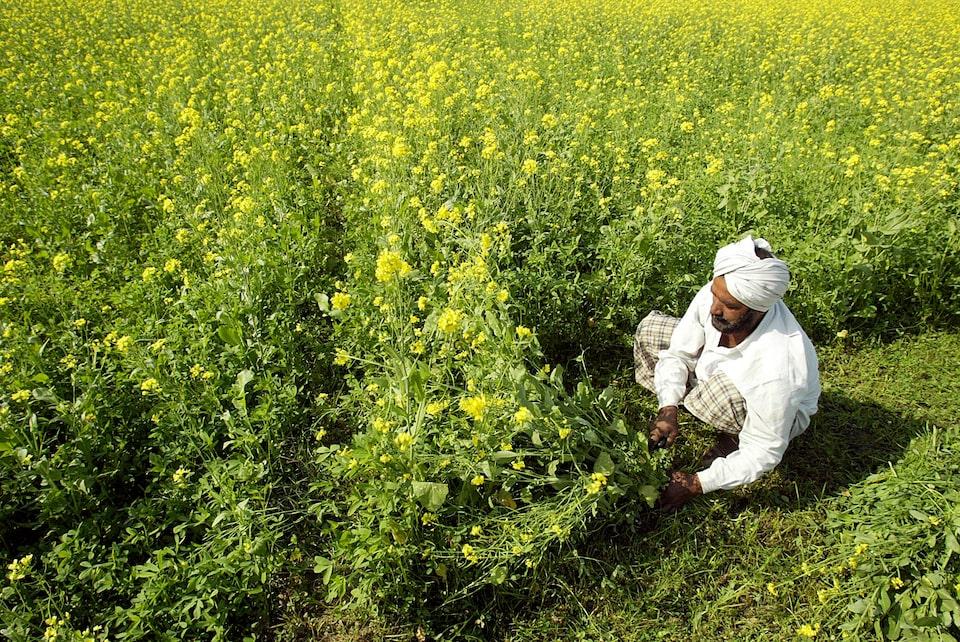
MUMBAI, Aug 21 (Reuters) - India bought canola oil for delivery in August for the first time in nearly five years, as local prices hit a 3-½-year high, making overseas purchases lucrative, industry officials told Reuters. A shipment of 6,000 tons of canola oil from the United Arab Emirates is expected to arrive at Kandla port in Gujarat this month, said Rajesh Patel, managing partner at GGN Research, an edible oil trader. Sign up here. India mainly buys palm oil from Indonesia and Malaysia, while it imports soyoil and sunflower oil from Argentina, Brazil, Russia and Ukraine. In July, rapeseed oil prices in the spot market surged to 167,000 rupees ($1,914.02) per ton — the highest since February 2022 and almost 34% above year-ago levels. "The price rally is creating an opening for imports, and we might see more coming in since the new local crop won't hit the market until March next year," said a Mumbai-based dealer with a global trade house. India's soyoil imports have also been rising, with some buyers substituting costlier rapeseed oil with the cheaper alternative, he said. ($1 = 87.2510 Indian rupees) https://www.reuters.com/world/india/india-imports-canola-oil-after-5-years-local-prices-surge-2025-08-21/
2025-08-21 12:42
STOCKHOLM, Aug 21 (Reuters) - Germany's Ecosia, a nonprofit search engine, said on Thursday it has submitted a proposal to assume a 10-year stewardship of Alphabet's (GOOGL.O) , opens new tab Google Chrome web browser. According to the proposal, Google would legally separate Chrome into a foundation, retaining ultimate ownership and intellectual property rights and give Ecosia operational responsibility for 10 years, Ecosia said. Sign up here. Ecosia plans to reinvest part of Chrome's profits in climate action under Ecosia’s governance, with the remainder returned to Google as compensation for the stewardship. Google did not immediately respond to a request for comment. Earlier in August, Perplexity AI made a $34.5 billion unsolicited all-cash offer for Chrome, a bid far above its own valuation as the startup reaches for the browser's billions of users pivotal to the AI search race. https://www.reuters.com/business/germanys-ecosia-proposes-stewardship-run-google-chrome-2025-08-21/

2025-08-21 12:40
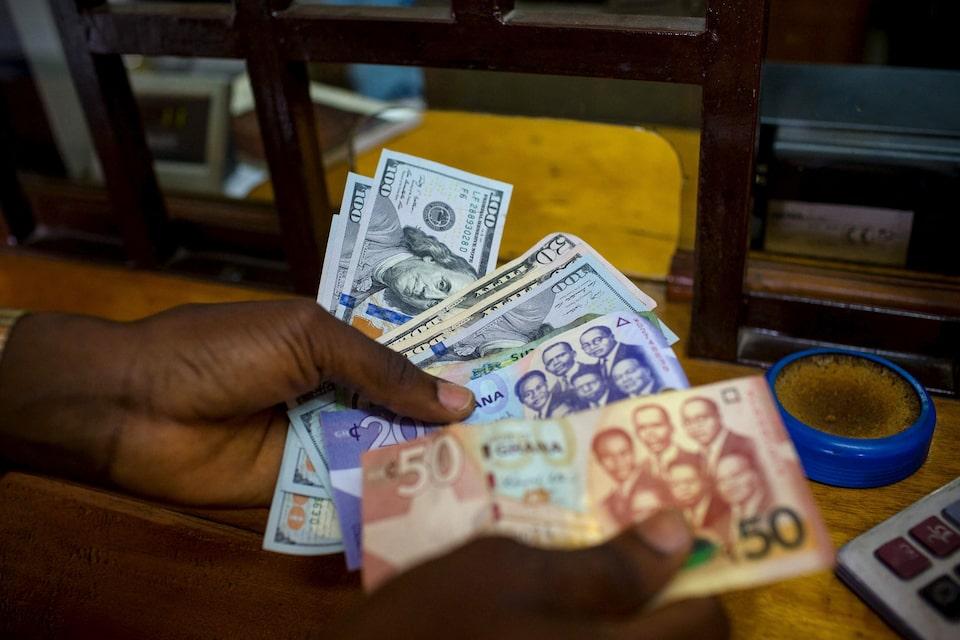
NAIROBI, Aug 21 (Reuters) - Ghana's cedi is expected to weaken against the dollar in the next week to Thursday, while the currencies of Kenya, Nigeria, Uganda and Zambia are expected to be broadly unchanged, traders said. KENYA Kenya's shilling is expected to be steady against the dollar over the next week. Sign up here. Commercial banks quoted the shilling at 129.00/40 per dollar, compared with last Thursday's close of 129.25/65. "For the next week, (it will be) stable, no change," said a trader at one commercial bank. NIGERIA Nigeria's naira is also expected to remain range-bound, with the central bank and exchange bureaus selling dollars to meet demand from importers and travellers. The naira was quoted around 1,533 to the dollar on the official market on Thursday, compared with last week's close of 1,534. It traded at about 1,540 on the street. "With inflation easing, speculative trading has been limited, causing the naira to trade in a tight range around 1,530," one trader said. "The naira is likely to stay in a narrow band between 1,520 and 1,560 next week." GHANA Ghana's cedi is expected to slip further on the back of strong corporate demand amid limited supply and a lack of continuous central bank liquidity support. LSEG data showed the cedi trading at 10.90 to the dollar on Thursday compared to 10.70 at last Thursday's close. "FX demand from local corporate accounts remains firm, particularly from the manufacturing, commerce and services sectors," one trader said. "We expect the cedi to slide further against the dollar in the coming week on account of this. Bids submitted at the intermittent central bank auctions are far outpacing the allocated amounts," the trader added. Chris Nettey, head of trading at Stanbic Bank Ghana, said he expected further weakness to persist until demand and supply reach equilibrium, something that could be supported by ongoing central bank reforms and an increase in intervention volumes. Meanwhile, the Bank of Ghana has instructed all banks to stop paying out foreign currency (FCY) to large corporates unless the transactions are fully backed by equivalent FCY cash deposits from the same institutions. It said FCY withdrawals by large corporates, including bulk oil distributors and mining firms, which are not directly funded by prior deposits, were putting pressure on the cedi and hampering efforts to ensure stability. UGANDA The Ugandan shilling is expected to trade in a stable range in the coming week, supported by subdued demand for dollars from merchandise importers following a traders' strike. Commercial banks quoted the shilling at 3,560/3,570 against the dollar at 1002 GMT on Thursday. This compares to last Thursday's close of 3,553/3,563. "We expect dollar appetite from merchandise importers to remain slow as activity slowly recovers from the strike," said an independent foreign exchange trader. Merchandise retailers in Uganda's capital, Kampala, and other areas staged a two-day strike this week, protesting against high taxes and what they describe as a "Chinese invasion" of their commercial activity. ZAMBIA Zambia's kwacha is likely to hold steady against the dollar next week, though rising demand for hard currency could exert mild downward pressure on the currency. On Thursday, the kwacha was quoted at 23.53 per dollar from 23.36 a week ago. "We expect the kwacha to trade within range, but could post some minor losses due to corporate greenback appetite," Zambia National Commercial Bank said in a note. https://www.reuters.com/world/africa/weekahead-africa-fx-ghanas-cedi-could-weaken-other-local-currencies-seen-stable-2025-08-21/