2025-08-21 07:45
OSLO, Aug 21 (Reuters) - Norway's DNO (DNO.OL) , opens new tab has restarted oil production at its Tawke and Peshkabir fields in Iraq's semi-autonomous region of Kurdistan, which were halted last month due to drone strikes in the area, the company said on Wednesday. Repeated drone attacks on oilfields in the region slashed crude output, including the production of other companies, by some 140,000 to 150,000 barrels per day, energy officials told Reuters last month. Sign up here. No people were injured, but surface processing equipment at Peshkabir and an oil storage tank at Tawke were hit, DNO said on Thursday. "On a test basis, DNO restarted production from Tawke in early August, while Peshkabir was restarted later in the month," DNO said in a statement along with its second-quarter earnings report. DNO's Oslo-listed shares rose 11% by 0734 GMT. While months-long repairs were still pending, the company has ramped up gross production on a test basis to 55,000 barrels of oil equivalent per day (boepd), about evenly split between the Tawke and Peshkabir fields, DNO added. The company, which holds a 75% stake in the Tawke license, where the Tawke and Peshkabir fields are, said it aimed to increase production in the Kurdistan region to 100,000 boepd in the long-term. Its partner Genel Energy has the remaining 25%. Gulf Keystone Petroleum (GKP.L) , opens new tab, another Kurdish oil producer, said on August 13 that it had resumed production at the Shaikan oilfield, which was also hit by drone attacks. https://www.reuters.com/business/energy/norways-dno-resumes-oil-output-kurdistan-fields-after-drone-strikes-2025-08-21/

2025-08-21 07:43
MOSCOW, Aug 21 (Reuters) - A fire has started following a drone at an industrial site strike in Russia's southern Novoshakhtinsk city, home to an oil refinery, authorities said on Thursday, as Ukraine stepped up attacks on Russia's energy infrastructure. "A fire broke out at one of the industrial enterprises in Novoshakhtinsk. Preliminarily, no one was hurt. Emergency services are working at the scene," said Yury Slyusar, the acting governor of the Rostov region, without specifying the target of the attack. Sign up here. Novoshakhtinsk refinery, which sells fuel mainly for export, has annual capacity of 5 million metric tons of oil, or around 100,000 barrels per day. Since the start of August, Ukraine has targeted a number of Russian oil refineries, including Novokuibyshevsk, Syzran, Ryazan and Volgograd. https://www.reuters.com/world/blaze-erupts-industrial-site-russias-novoshakhstinsk-after-drone-attack-2025-08-21/

2025-08-21 07:27
China industrial output weakest since November 2024 Fed rate cut repricing could drive USD higher - Analysts Investors eye annual Jackson Hole symposium later this week Aug 21 (Reuters) - Bearish bets on China's yuan hit their highest since mid-May, with analysts turning short for the first time amid mounting concerns over the economy, a Reuters poll showed on Thursday. China's economy lost steam in July, with retail sales rising just 3.7% year-on-year, well below the 5.9% growth expected in a Reuters poll. Sign up here. Industrial output grew 5.7%, its weakest pace since November 2024. New home prices fell 2.8% in July from a year earlier, extending a two-year stagnation, while fixed-asset investment rose just 1.6% in the first seven months of 2025, missing forecasts for 2.7%. Meanwhile, analysts held on to their bearish outlook for the South Korean won , unchanged since early May, while slightly trimming short positions on the Singapore dollar , a Reuters fortnightly poll of 11 respondents showed. Sentiment toward the Indonesian rupiah turned negative after flipping bullish, while short positions on the Taiwan dollar were trimmed. Bank Indonesia unexpectedly cut its benchmark 7-day reverse repurchase rate by 25 basis points on Wednesday. The poll responses were received before the rate decision. For the Indian rupee and Malaysian ringgit analysts pared back bullish positions. Philippine peso bearish bets were trimmed slightly, and Thai baht analysts trimmed bullish positions. ANZ analysts see India's growth momentum slowing with tepid household consumption and investment expected over the coming quarters, adding that export competitiveness faces headwinds from US tariffs. "Based on this outlook, we believe that the INR is likely to trade with a depreciation bias in the near-to-medium term, underperforming compared to its Asian peers." Meanwhile, Reuters reported China is considering allowing yuan-backed stablecoins for the first time to boost wider adoption globally. China is expected to discuss expanding yuan use and possibly stablecoins for cross-border trade at the Shanghai Cooperation Organisation Summit to be held Aug. 31-Sep. 1 in Tianjin. "Given potential Federal Reserve reluctance to deliver significant rate cuts at upcoming FOMC meetings (contingent on employment and inflation data), market repricing of rate cut expectations could drive the U.S. Dollar and Treasury yields higher, creating headwinds for emerging market currencies," said Poon Panichpibool, market strategist at Krung Thai Bank. Money markets reflect a 93% chance of a 25-basis-point Fed rate cut in September. The U.S dollar index has lost 0.8% in value in the last two weeks, but is on track to edge higher this week, up 0.4% so far. "We have had quite a strong sell-off in the USD for much of 1H 2025 and currencies now await macro cues from data. With both of Fed's inflation and employment mandate in a potential conflict, we could be in a period of consolidation," said Fiona Lim, senior forex strategist at Maybank Singapore. "Currencies such as KRW and TWD which gained the most in 1H of 2025 have the biggest room to retrace." Investors fretted about Federal Reserve independence after another attack from President Donald Trump ahead of remarks from Chair Jerome Powell at the annual Jackson Hole symposium later this week. The Asian currency positioning poll is focused on what analysts and fund managers believe are the current market positions in nine Asian emerging market currencies: the Chinese yuan, South Korean won, Singapore dollar, Indonesian rupiah, Taiwan dollar, Indian rupee, Philippine peso, Malaysian ringgit and the Thai baht. The poll uses estimates of net long or short positions on a scale of minus 3 to plus 3. A score of plus 3 indicates the market is significantly long U.S. dollars. The figures include positions held through non-deliverable forwards (NDFs). The survey findings are provided below (positions in U.S. dollar versus each currency): https://www.reuters.com/world/china/yuan-short-bets-hit-may-highs-chinas-economic-woes-weigh-emerging-market-2025-08-21/

2025-08-21 07:08
UK borrowing in April-July period 60 bln pounds Figure matches forecast by UK budget office Borrowing in July alone is smallest in three years Reeves is expected to raise taxes in her autumn budget LONDON, Aug 21 (Reuters) - Britain's public borrowing in the financial year so far has matched the forecasts that underpin the government's tax and spending plans, offering a bit of breathing space to finance minister Rachel Reeves before bigger challenges later this year. Borrowing in the April-to-July period totalled 60 billion pounds ($81 billion), up by almost 7% from a year earlier but in line with a forecast of 59.9 billion pounds published by the Office for Budget Responsibility earlier this year. Sign up here. However, since the forecast was made Prime Minister Keir Starmer's government has backtracked on plans to cut spending in the welfare system and elsewhere, and there are expectations that the OBR will lower its economic growth projections. That means Reeves is still likely to be raising taxes or cutting spending in her budget in the autumn - probably by more than 20 billion pounds, according to analysts - to remain on track to meet her fiscal rules and avoid unsettling investors. In July alone, the government borrowed 1.1 billion pounds ($1.5 billion), the lowest borrowing for the month in three years, Thursday's data showed. The OBR had pencilled in an overshoot of 2.1 billion pounds for July. A Reuters poll of economists showed a median forecast of a 2.6 billion-pound deficit. Over the first four months of the tax year, an increase in April in social security contributions paid by employers swelled the compulsory social contributions component of the public finances by more than 17% to almost 64 billion pounds. Receipts from income and capital gains taxes rose by 8.3% to over 100 billion pounds, helped by the ongoing freeze in the thresholds at which people must pay income tax. Government spending on debt interest in the April-to-July period jumped by more than a quarter to 41.4 billion pounds and the strain on the public finances was likely to grow. "Rising inflation points to increases in the cost of index-linked borrowing later this year. Gilt yields have also risen through August," Dennis Tatarkov, a senior economist at KPMG UK, said. He estimated Reeves in her autumn budget would need to plug a shortfall of 26.2 billion pounds to remain on course to meet her target of balancing day-to-day spending with tax receipts by the end of the decade. Media have reported that the finance ministry is considering ways to raise more money from the sale of homes. Earlier this month, the National Institute of Economic and Social Research, a think tank, projected the overshoot at 41 billion pounds. ($1 = 0.7435 pounds) https://www.reuters.com/world/uk/uk-borrowing-data-offers-some-respite-reeves-before-budget-challenge-2025-08-21/

2025-08-21 06:41
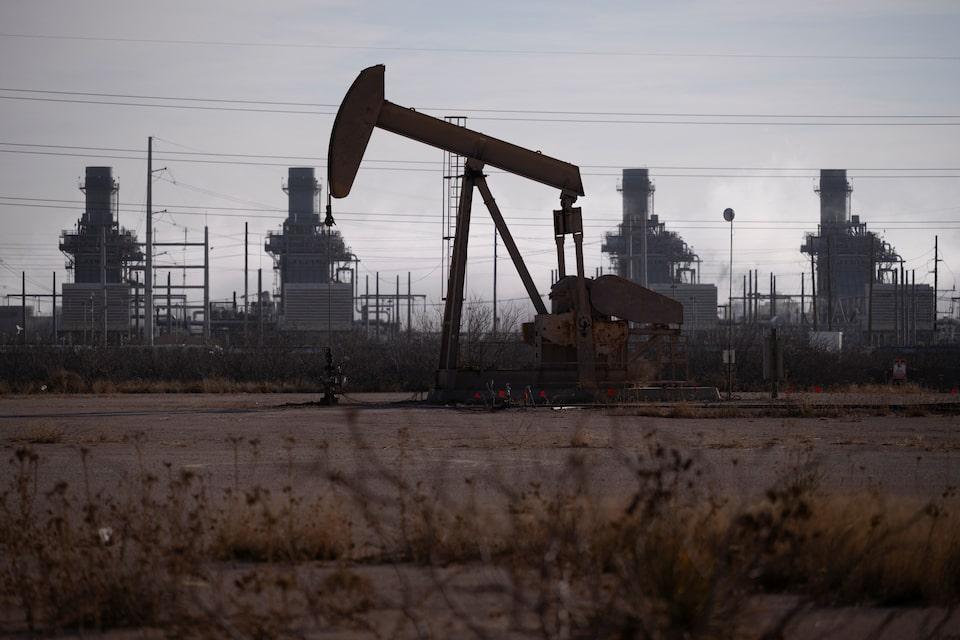
Brent, WTI rise for a second session US crude, gasoline stocks falls raise demand outlook Focus on talks on Ukraine peace deal TOKYO/SINGAPORE, Aug 21 (Reuters) - Oil prices extended gains on Thursday, bolstered by signs of strong demand in the U.S., with uncertainty over efforts to end the war in Ukraine also lending support. Brent crude futures hit a two-week high in early trade and were up 41 cents, or 0.61%, to $67.25 a barrel at 0637 GMT. U.S. West Texas Intermediate (WTI) crude futures rose 45 cents, or 0.72%, to $63.16 a barrel. Sign up here. Both contracts climbed over 1% in the prior session. U.S. crude inventories fell by 6 million barrels last week to 420.7 million barrels, the U.S. Energy Information Administration said on Wednesday, against expectations in a Reuters poll for a 1.8 million-barrel draw. Gasoline stocks dropped by 2.7 million barrels, versus expectations for a 915,000-barrel draw, the EIA said, indicating steady driving demand during the summer travel season. That was also seen in a jump in the four-week average for jet fuel consumption to its highest since 2019. "Crude oil prices rebounded as signs of strong demand in the U.S. boosted sentiment," Daniel Hynes, senior commodity strategist at ANZ, said in a note on Thursday. Hynes cautioned, though, that some "bearish sentiment remains evident as traders continue to monitor negotiations to end Russia's war against Ukraine." Traders and analysts expect oil prices to fall once a peace deal is reached, but any continued lack of concrete progress in negotiations could underpin the market. As U.S. and European military planners began exploring post-conflict security guarantees for Ukraine, Russia said on Wednesday that attempts to resolve security issues without Moscow's participation were a "road to nowhere". The drawn-out efforts to secure peace in Ukraine mean Western sanctions on Russian oil supply remain in place, and that the possibility of tougher sanctions and more tariffs on Russian oil buyers still hangs over the market. Russia, meanwhile, remains adamant it will keep providing crude to willing buyers, with Russian diplomats in India saying the country expects to continue supplying oil to India despite warnings from the United States. U.S. President Donald Trump has announced an additional tariff of 25% on Indian goods from August 27 because of their Russian crude purchases. The European Union has also sanctioned Indian private refiner Nayara Energy (ESRO.M3) , opens new tab, which is backed by Russian oil company Rosneft (ROSN.MM) , opens new tab. Indian refiners initially backed off buying Russian oil but company officials at state-run Indian Oil (IOC.NS) , opens new tab and Bharat Petroleum (BPCL.NS) , opens new tab have bought Russian crude for September and October delivery, resuming purchases after discounts widened. https://www.reuters.com/business/energy/oil-extends-gains-amid-signs-strong-demand-2025-08-21/
2025-08-21 06:25
LONDON, Aug 21 (Reuters) - Britain's borrowing in the current financial year so far has matched the official forecasts that underpin the tax and spending plans of finance minister Rachel Reeves, according to official data published on Thursday. Government borrowing in the April-to-July period totalled 60.0 billion pounds ($80.7 billion), in line with a forecast of 59.9 billion pounds published by the Office for Budget Responsibility earlier this year. Sign up here. However, since the forecast was made Prime Minister Keir Starmer's government has backtracked on plans to cut spending in the welfare system and elsewhere, and there are expectations that the OBR will lower its economic growth expectations. That means Reeves is still likely to be raising taxes or cutting spending in her budget in the autumn in order to remain on track to meet her fiscal rules and avoid unsettling financial markets. In July alone, the government borrowed 1.1 billion pounds ($1.48 billion), official data showed on Thursday. The OBR had pencilled in an overshoot of 2.1 billion pounds for July. A Reuters poll of economists showed a median forecast of a 2.6 billion-pound deficit. ($1 = 0.7435 pounds) https://www.reuters.com/world/uk/uk-borrowing-line-with-forecasts-challenges-await-reeves-2025-08-21/