2025-08-21 06:24
Fed's Jackson Hole symposium in Wyoming begins today Trump calls on Fed Governor Cook to resign over mortgage allegations Fed minutes show 'almost all' officials preferred leaving rates unchanged Aug 21 (Reuters) - Gold was little changed on Thursday as investors awaited cues on the Federal Reserve's policy outlook ahead of its annual Jackson Hole symposium, which starts later in the day. Spot gold was down 0.2% at $3,338.89 per ounce, as of 0603 GMT. U.S. gold futures for December delivery also lost 0.2% to $3,381.20. Sign up here. The U.S. dollar index (.DXY) , opens new tab rose 0.1%, making greenback-back priced gold expensive for overseas buyers. Fed Chair Jerome Powell is expected to speak on Friday at the August 21-23 event, with investors watching whether he backs measures to bolster the labor market or focuses on curbing inflation. "We don't think gold prices are going to rise significantly and believe they are consolidating at the moment," said Brian Lan, managing director, GoldSilver Central. "Even if interest rates are cut slightly, we might see a slight uptick in gold prices, and...the $3,400 mark is possible. If not, then prices may continue to consolidate or possibly notch a little lower, closer to $3,300," Lan added. Last month, Fed officials Michelle Bowman, vice chair for supervision, and Governor Christopher Waller voted for a quarter-point rate cut to address job market weakness, but their stance lacked broader support. The Fed has held rates steady since December, with investors expecting an 85% chance of a quarter-point cut in September, according to the CME's FedWatch tool. Gold typically performs well in a low interest rate environment and during times of heightened uncertainty. In politics, President Trump called on Fed Governor Lisa Cook to resign over alleged issues related to her mortgages in Michigan and Georgia, intensifying efforts to gain influence over the central bank. Elsewhere, Russia said attempts to resolve security issues relating to Ukraine without Moscow's participation were a "road to nowhere". Spot silver was down 0.1% at $37.86 per ounce, platinum fell 0.6% to $1,332.30 and palladium shed 0.5% to $1,108.26. https://www.reuters.com/world/china/gold-little-changed-investors-await-powells-remarks-jackson-hole-2025-08-21/

2025-08-21 06:22
MUMBAI, Aug 21 (Reuters) - The Indian rupee inched higher on Thursday as persistent dollar selling by foreign banks over the last few days that supported the currency and puzzled traders. The rupee was at 86.9750 to the U.S. dollar at 11:05 a.m. IST, up from 87.0650 on Wednesday. Sign up here. Foreign banks were on the offer in dollar/rupee again, extending the pattern seen over the past two sessions, traders said. The persistence of these flows has confounded markets regarding their origin, with many doubting they were exporter-related. One banker noted that portfolio inflows into equities and debt have been tepid, suggesting flows from custodian clients were unlikely. While the market was expecting the rupee to be rangebound, dealers said position adjustments or one-off large trades were the more probable drivers. That the rupee "is managing to hold up despite Jackson Hole event and the U.S. tariff overhang is surely surprising to many," said a currency trader at a Mumbai-based bank. U.S. Federal Reserve Chair Powell is set to speak on Friday at the Jackson Hole symposium where his remarks will be closely watched. His previous remarks at the meeting had previously shifted market expectations. Meanwhile, the August 27 deadline on which the additional 25% U.S. tariffs on Indian goods is implemented looms. If implemented, it would pose a fresh negative for the rupee. The currency last week had remained largely weak, making a low of 87.73. After giving good opportunity to exporters in the last week it is the turn of importers who are getting an opportunity to hedge their near-term payables, Anil Kumar Bhansali, head of treasury at Finrex Treasury Advisors, said. https://www.reuters.com/world/india/rupee-rises-with-foreign-banks-keeping-up-dollar-sales-confounding-market-2025-08-21/

2025-08-21 06:21
GDANSK, Aug 21 (Reuters) - Polish energy group Orlen (PKN.WA) , opens new tab on Thursday reported a near 74% rise in its second-quarter profit, with a strong upstream performance helping to offset the impact of lower refining margins and asset write-downs. The company's core profit adjusted for changes in value of its oil inventories, or EBITDA LIFO, reached 7.72 billion zlotys ($2.12 billion), a result achieved despite booking 1.49 billion zlotys in write-downs, mainly in the upstream and downstream segments. Sign up here. The oil refiner's upstream business reversed a massive loss from the previous year, as its results were no longer weighed down by a one-off 7.7 billion zloty write-down following a government windfall tax levied to fund energy price freezes. Orlen's energy business saw its core profit rise by 368 million zlotys year-on-year, which the company attributed to increased gas and electricity distribution. Its consumers & products division reported a 363 million zloty year-on-year increase, driven by higher sales of gas and electricity. However, profits at its downstream business fell by 561 million zlotys year-on-year, hit by a less favourable macro environment. The group's second quarter refining margin declined around 10% from the year before to $11.3 per barrel. The results were also impacted by a 217 million zloty provision the company booked in relation to an arbitration ruling that allows Russia's Gazprom (GAZP.MM) , opens new tab to retroactively raise gas prices. The company said in a presentation it expected its full-year LIFO-based EBITDA to be higher in 2025 than in 2024. ($1 = 3.6483 zlotys) https://www.reuters.com/business/energy/polands-orlen-q2-profit-jumps-upstream-gains-offset-write-downs-2025-08-21/

2025-08-21 06:18
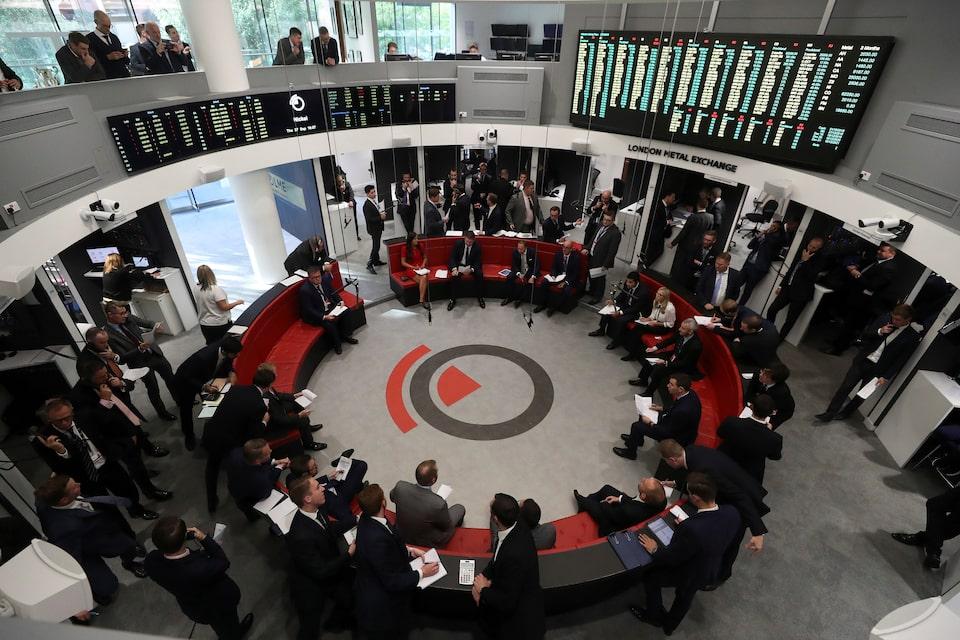
LONDON, Aug 21 (Reuters) - The aluminium market has just seen another big stocks rotation with 156,000 metric tons of metal flowing into London Metal Exchange warehouses over the last six weeks. But it's starting to look like the endgame of the stocks battle that has characterised LME aluminium trading for over a year. Sign up here. Financiers, traders, and warehouses are tussling over a diminishing volume of metal. Just about all the aluminium just delivered onto LME warrant was drawn down from existing LME off-warrant stocks in the same Malaysian location. The Port Klang stocks shuffle has had little impact on the bigger inventory picture. Total LME stocks, both registered and off-warrant, are still down by almost 300,000 metric tons from the start of the year at 717,000 tons. The absence of significant fresh deliveries in the most recent inventory churn helps explain why LME time spreads have failed to loosen despite the run of apparent "arrivals" showing up in the exchange's daily inventory reports. It also offers a clue as to why LME-registered storage capacity at Port Klang has been steadily shrinking. PORT KLANG ROUNDABOUT The aluminium stocks battle has been raging since May 2024, when 650,000 tons of metal were dumped into LME warehouses in Port Klang. The seller, reportedly trade house Trafigura , opens new tab, could earn more money from a rent-sharing deal with an LME warehousing company, in this case ISTIM UK Ltd, than any physical sale in an oversupplied market. The good news for the buyers was that this was Indian and not Russian metal, which had just been placed under U.S. and UK sanctions. The bad news was that the only way of breaking the pre-negotiated storage deal was to cancel the metal and transfer it to another warehouse operator. The subsequent rush to move aluminium generated a load-out queue reminiscent of those that plagued the LME in the 2010s. The queue at ISTIM's Port Klang warehouses stretched to 293 days at its peak in August 2024 and only disappeared in May this year. The latest stocks churn, occasioned by a squeeze on short-position holders in April-May, has ended back in ISTIM warehouses. But the volume is much reduced from last year and largely comprises Indian metal returning from off-warrant storage. Total stocks at Port Klang are up by just 41,000 tons since the end of May, despite the daily noise of the LME's stock reports. ISTIM doesn't seem to be expecting much more any time soon. The company has reduced the number of exchange-listed warehouse units in the Malaysian port from 22 to 13 over the last year. Although other operators have increased their presence, total LME storage capacity in Port Klang has shrunk by 15% since the start of 2025 and is half what it was in 2021, when ISTIM was storing over 800,000 tons of warranted aluminium. ALL CHANGE, NO CHANGE LME time spreads have barely reacted to the daily warranting action. The benchmark cash-to-three-month period continues to trade either side of level, unchanged from where it was two months ago. That's because nothing much has changed in the bigger scheme of things. Total LME inventory, both registered and off-warrant, rose by a modest 36,500 tons over June and July, barely denting a downtrend that has been running since May last year. Stocks continue to hover around three-year lows, and it's evidently going to take a bigger cash premium to halt the steady erosion of what was once an inventory mountain. The lack of fresh inflow may be down to the greater opportunities in a physical market that is adjusting both to a European phase-out of Russian imports and the hike in U.S. import tariffs to 50%. Regional premiums are diverging, and physical arbitrage offers more lucrative options than LME storage, particularly since warehouse operators such as ISTIM now lack the huge storage revenues that allow them to compete for fresh metal with physical buyers. It's also possible that there is simply not much freely available aluminium to fight over as China steps up imports. The country sucked in 1.25 million tons of primary metal, mostly Russian, in the first half of the year, with the pace of arrival accelerating further in July. Whatever the reason, the LME warehouse roundabout is losing momentum and will continue doing so until operators can draw more metal out of the physical supply chain. The opinions expressed here are those of the author, a columnist for Reuters. https://www.reuters.com/markets/europe/last-swing-lme-aluminium-stocks-roundabout-andy-home-2025-08-21/
2025-08-21 06:15
Funds receive more enquiries, platform trade volumes surge Some family offices eye crypto exposure around 5% of portfolios Hong Kong stablecoin legislation, U.S. GENIUS Act fuel demand Bitcoin climbs to new high above $124,000 in August HONG KONG/SINGAPORE, Aug 21 (Reuters) - Wealthy Asian families and family offices are ramping up their cryptocurrency investments, driven by the bullishness around digital assets, increased mainstream adoption and favourable regulatory developments in key markets. Wealth managers said they are receiving more enquiries, cryptocurrency exchanges have seen trading volumes surge and crypto funds are in huge demand as high-net-worth Asian investors seek more exposure. Sign up here. "We raised over $100 million in just a few months, and the response from LPs has been encouraging," said Jason Huang, founder of NextGen Digital Venture, referring to Limited Partners that represent high net-worth individuals. Huang launched a new long-short crypto equity fund, the Next Generation Fund II, in Singapore in late May, after winding down his first fund last year, which returned 375% in less than two years. "Our investors - mainly family offices and internet/fintech entrepreneurs, recognise the growing role of digital assets in diversified portfolios,” he said. Swiss investment bank UBS said some overseas Chinese family offices plan to raise their crypto exposure to around 5% of their portfolios. "Many second- and third-generation individuals of family offices are starting to learn about and participate in virtual currencies," said Lu Zijie, head of wealth management at UBS China. The surging interest comes on the back of strong cryptocurrency returns and favourable regulatory developments in the United States under President Donald Trump, such as the recently approved GENIUS Act. Bitcoin prices have been hitting record highs this month, surpassing $124,000. Hong Kong's recent passage of its stablecoin legislation has also fuelled a wave of crypto enthusiasm. "The momentum has definitely built, and I think it's a function of just general maturity of the asset class," said Saad Ahmed, head of Asia Pacific at crypto exchange Gemini. Wealth managers said the mindset among Asian clients has changed from merely wanting to have a small allocation to digital currencies a few years ago to now embracing it as a must-have in portfolios and exploring tools to optimise returns. "Last year, they (family offices) started to dip their feet into bitcoin ETFs...now they have begun to learn the difference of holding a token directly," said Zann Kwan, chief investment officer at Singapore-based Revo Digital Family Office. Lighthouse Canton, a Singapore-based wealth manager, said some more sophisticated family offices have started adopting market-neutral strategies, such as basis trades and arbitrage. Giselle Lai, associate investment director for digital assets at Fidelity International, said investors are increasingly treating bitcoin as a "portfolio diversifier" to hedge macro uncertainties, given its low correlation with stocks and bonds. Cryptocurrency exchanges have also benefitted from increased trading demand. The number of registered users at Hong Kong's HashKey Exchange surged 85% year-on-year by August 2025, the firm said. Total trading volumes at South Korea's three major exchanges grew 17% so far in 2025 over the same period of 2024, with average daily trading volumes rising more than 20%, according to research platform CryptoQuant. https://www.reuters.com/world/china/asias-wealthy-investors-seek-more-crypto-portfolios-2025-08-21/

2025-08-21 06:10
LITTLETON, Colorado, Aug 21 (Reuters) - U.S. power generation capacity is evolving at the fastest pace in decades, as utilities scramble to ensure that supplies keep up with rapidly growing electricity demand from data centers, AI applications, businesses, homes and electric vehicles. To help frame expectations on what power sources will likely be in play over the coming years, the U.S. Energy Information Administration (EIA) issues decade-out projections on generation capacity of the top power sources within the U.S. energy system. Sign up here. Those projections frequently change, and will be especially likely to alter course following the aggressive changes to U.S. government policy on renewable energy since U.S. President Donald Trump returned to office. Even so, it is instructive to lay out current expectations for the U.S. power generation mix through the next 10 years, and then compare future actual capacity additions to those projections over time. GAS CRUTCH Even before the Trump administration slashed support for solar and wind power development, the EIA projected that natural gas would remain the primary power source within the U.S. power system for at least another decade. Indeed, total projected gas-fired power capacity was expected to grow by 3% over the next decade to 523.3 gigawatts (GW) by the end of 2035, EIA data shows. Given the pressure that utilities are under to urgently boost power supplies just as incentives to develop clean power are stripped away, it is likely that the actual capacity growth for U.S. gas power will be higher. Even so, due to the much faster growth rate of clean power sources over the remainder of 2025 at least, gas is set to lose some ground within the overall U.S. power mix going forward. In 2025, gas-fired power accounts for around 42% of the overall power mix. That share is set to drop to around 38% by 2028, and then remain steady through 2035. Coal's share of the generation mix is set for a much steeper decline, from around 14% currently to 10% by the end of the decade. Total coal capacity is expected to shrink from around 167 GW currently to around 133 GW by 2035 as outdated plants close. Nuclear reactors and hydroelectric power stations are also set to lose generation share, from around 8% and 7% respectively right now to around 7% and 6% respectively by 2035. Total installed capacity of nuclear power within the U.S. generation mix is currently around 98.4 GW, and is expected to hold largely flat for the coming decade. Hydropower capacity is also slow moving, and is expected to increase only slightly from the current 84.2 GW by 2035. CLEANING UP EIA projects that solar, wind and battery storage systems will expand their respective generation shares notably by 2035, due to their currently much-faster growth rates. In 2025, both solar and wind power are estimated to have a roughly 13% share of the current generation mix. By 2028, however, solar farms are projected to account for an 18% share of the pie thanks to a combination of lower cost and quicker ramp up times compared to other generation options. Total utility-scale solar generation capacity is projected to rise from around 156 GW currently to around 255 GW, or by 64%, by 2035, EIA data shows. In contrast, wind farm capacity is expected to grow more slowly due to high component costs, limited expansion area and greatly diminished policy support in Washington, DC. Total wind capacity is currently estimated around 160 GW, and will rise by 15% or by 25 GW to 185 GW by 2035. Battery storage capacity is expected to outgrow all other parts of the power mix, with the current capacity of around 45 GW set to more than double to around 97.2 GW by 2035. Rapidly declining battery costs plus enduring policy support for batteries in utility systems are expected to sustain battery uptake even as the momentum of solar and wind power systems drops down a gear or two. REGIONAL TRENDS The scale of changes to projected capacity vary significantly by region, with the Southwest and Western U.S. expected to see the largest increases in overall generation capacity by 2035. The Western half of the U.S. is also projected to be home to the largest overall increases in solar and battery capacity, due to the greater solar radiation and higher amounts of suitable land for solar farms and battery networks in those regions. Around 55% of total solar capacity growth and 82% of battery capacity growth are projected to take place in the Southwest and Western U.S., EIA data shows. In contrast, around two-thirds of the projected increase in gas-fired power capacity is expected to occur in the Eastern half of the country. Just over 9 GW of the 14 GW of total projected new gas capacity is expected to be constructed in the Southeast and Northeast areas. Given the sharp cuts to incentives to add renewable power beyond 2025, utilities in the Southwest are also likely to dial up their gas capacity over the coming decade, especially if demand for data centers and air conditioning continues to grow. Coal capacity is currently projected to decline in all regions by 2035. But given the support for coal from the current administration, as well as the growing strain on power grids due to rising electricity demand, it is likely that some of the projected coal plant shutdowns will be postponed. That will likely result in coal maintaining a larger share of the U.S. generation mix a decade from now than currently projected. Gas's share of the U.S. mix is also more likely to overshoot than undershoot projections, especially given the anti-renewables stance of current policymakers which may steer more utilities to add gas over solar or wind. Even so, it is clear that overall capacity development momentum remains in favour of clean energy, especially solar and battery systems, and their continued growth looks certain in the years ahead even as federal policy support phases out. The opinions expressed here are those of the author, a columnist for Reuters. Enjoying this column? Check out Reuters Open Interest (ROI), your essential new source for global financial commentary. ROI delivers thought-provoking, data-driven analysis of everything from swap rates to soybeans. Markets are moving faster than ever. ROI can help you keep up. Follow ROI on LinkedIn , opens new tab and X , opens new tab. https://www.reuters.com/business/energy/charting-projected-us-power-capacity-mix-through-2035-2025-08-21/