2025-08-21 06:07
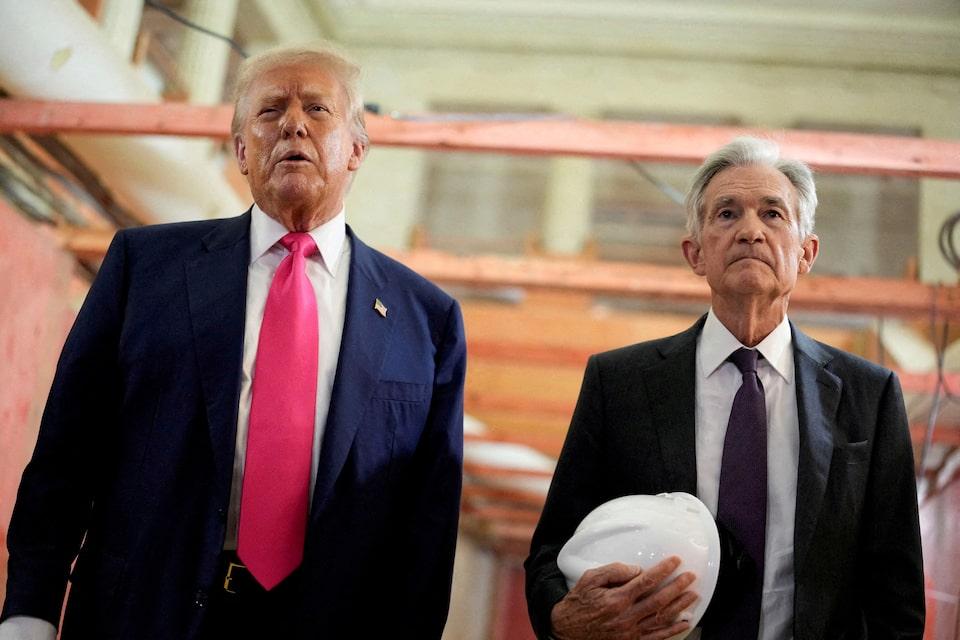
Fed symposium starts Thursday with focus on Powell's speech Friday Traders hungry for hints on whether Fed will cut rates in September Trump raises pressure on Fed with demand for Governor Cook to resign TOKYO, Aug 21 (Reuters) - The U.S. dollar hovered below a one-week high on Thursday and Asian stock markets were mixed as investors braced for three days of potentially market-moving news from the Federal Reserve's annual symposium in Jackson Hole. Central bankers from around the world will attend the event, which begins later in the day, with the key focus on Fed Chair Jerome Powell's speech on Friday as traders try to gauge the chances of a September rate cut. Underlying momentum for equities, which have been on a tear of late, remained strong with Australia's benchmark (.AXJO) , opens new tab rallying 0.9% to hit a record. Sign up here. Other indexes lost some ground but haven't strayed too far from recent highs. Japan's Nikkei (.N225) , opens new tab, which hit an all-time peak on Tuesday, drooped 0.6%. South Korea's KOSPI (.KS11) , opens new tab bounced 0.7%. It dipped to a six-week low on Wednesday, but is not too far off from a four-year high marked on July 31. "I remain an equity bull, and a buyer of dips, viewing this recent swoon as more of an example of some froth being taken off the top of the market," said Michael Brown, senior research strategist at Pepperstone. "Strong earnings growth, a resilient underlying economy, and calmer tone on trade, should all keep the path of least resistance higher, while any potential Fed easing would probably provide a helping hand as well." Mainland Chinese blue chips (.CSI300) , opens new tab gained 0.7%, although Hong Kong's Hang Seng (.HSI) , opens new tab slipped 0.1%. Pan-European STOXX 50 futures added 0.1%. Nasdaq futures pointed 0.1% higher, following a 0.7% slide for the Nasdaq Composite (.IXIC) , opens new tab overnight. S&P 500 futures were flat after the cash index (.SPX) , opens new tab slipped 0.2%. Fed Chair Powell has said he is reluctant to cut rates because of expected tariff-driven price pressures this summer. Traders ramped up bets for a September cut following a surprisingly weak payrolls report at the start of this month, and were further encouraged after consumer price data showed limited upward pressure from tariffs. However, a hotter-than-expected producer price reading last week complicated the policy picture. Minutes out overnight from the Fed's July gathering, when policymakers voted to keep rates steady, suggested that Fed Vice Chair for Supervision Michelle Bowman and Governor Christopher Waller were alone in pushing for a rate cut. That led traders pare back odds to 80% for a quarter-point Fed rate cut on September 17, down from 84% 24 hours earlier. They are currently pricing in a total of 53 basis points of easing over the rest of the year. President Donald Trump again exerted pressure on the central bank overnight and that pressure is set to remain a key focus for traders. His push for more control over the Fed unnerved investors earlier in the year, sending the dollar tumbling. After continuing his attacks on Powell earlier in the week for refraining from cutting rates this year, Trump on Wednesday targeted Fed Governor Lisa Cook, demanding she resign amid allegations of wrongdoing connected to mortgages on properties she owns in Georgia and Michigan. Cook said she had "no intention of being bullied to step down". "Trump's push to confirm Stephen Miran could add another vote for cuts in September, and if he was to successfully remove Cook, the Fed Board could end up with four members out of seven supporting his lower rates call," said Rodrigo Catril, a strategist at National Australia Bank. Trump nominated Council of Economic Advisers Chair Miran as a Fed governor earlier this month, following the surprise resignation of Adriana Kugler. The currency has largely taken the latest developments in stride. The dollar index was steady at 98.281 on Thursday, after grinding to its highest since August 12 at 98.441 a day earlier. U.S. two-year Treasury yields , which tend to be sensitive to monetary policy expectations, ticked up slightly to 3.7518% on Thursday, while 10-year yields were steady at 4.2926%. Japanese government bond yields edged higher, with the 20-year yield advancing to 2.655% for the first time since late 1999 and the 10-year yield rising to its highest since October 2008 at 1.610%. Investors are wary of increased fiscal spending amid pressure for the Japanese prime minister to step down. The dollar traded little changed at 147.38 yen . The euro and sterling were flat at $1.1645 and $1.3454, respectively. Gold eased 0.3% to around $3,338 per ounce. Oil prices edged higher as larger-than-expected declines in crude oil and fuel inventories in the U.S. supported expectations for steady demand. Brent crude futures were up 0.5% to $67.16 a barrel, after gaining 1.6% in the previous session. U.S. West Texas Intermediate (WTI) crude futures rose 0.5% to $63.05, after climbing 1.4% on Wednesday. https://www.reuters.com/world/china/global-markets-wrapup-2-2025-08-21/
2025-08-21 05:30
OSLO, Aug 21 (Reuters) - Oil field operator Aker BP (AKRBP.OL) , opens new tab and its partners have made a significant oil discovery that adds substantial new resources to their Yggdrasil field area of the North Sea, the companies said in a statement on Thursday. The Omega Alfa exploration campaign resulted in the discovery of a recoverable volume estimated at between 96 million and 134 million barrels of oil equivalent, Aker BP said. Sign up here. "Omega Alfa is among the largest commercial discoveries in Norway in a decade," Aker BP CEO Karl Johnny Hersvik said, adding that the companies will seek to unlock additional resources in the area. The discovery was made across three separate exploration licences. In two of those, Aker BP owns a 47.7% stake while Equinor (EQNR.OL) , opens new tab holds 40% and Poland's Orlen (PKN.WA) , opens new tab has the remaining 12.3%. In the third licence, Aker BP has 38.16%, Equinor 32%, Petoro 20% and Orlen 9.84%. https://www.reuters.com/business/energy/aker-bp-makes-significant-north-sea-oil-find-2025-08-21/
2025-08-21 05:12
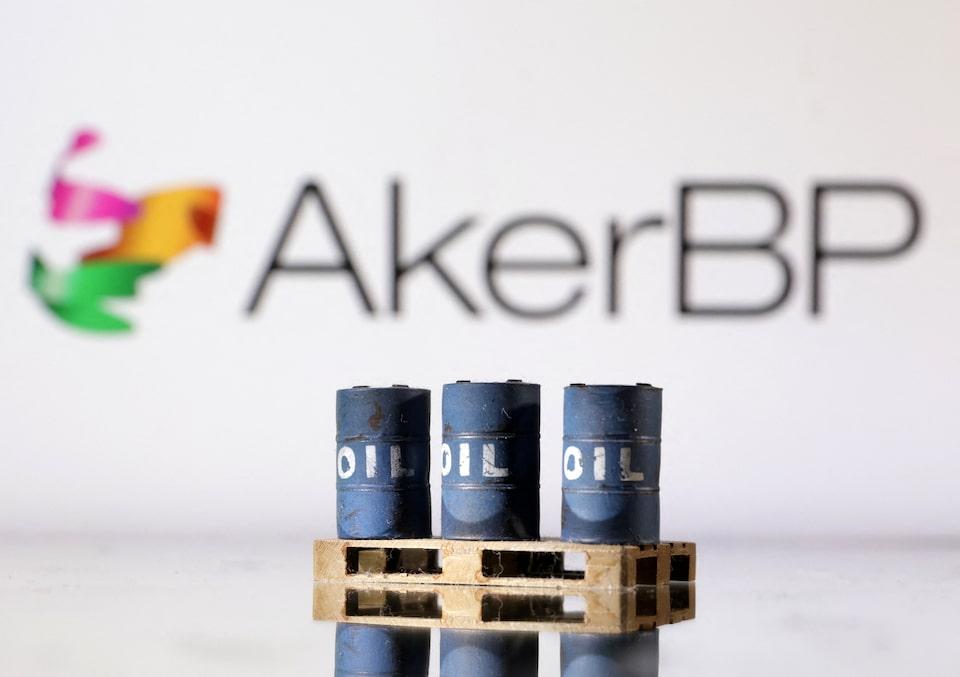
KYIV, Aug 21 (Reuters) - The supervisory board of the Ukrainian state energy company Energoatom has dismissed the company's head, Petro Kotin, the company said on Thursday. The decision took effect immediately, Energoatom said on the social media app Telegram, without giving any reasons for the move. Sign up here. Kotin had headed Energoatom since 2020. Prior to that, he served as director of the Zaporizhzhia nuclear power plant, Europe's largest. State-run Energoatom is the largest producer of electricity in Ukraine, meeting around 60% of the country's energy needs. https://www.reuters.com/business/energy/supervisory-board-dismisses-ceo-ukraines-nuclear-energy-firm-energoatom-2025-08-21/
2025-08-21 04:59
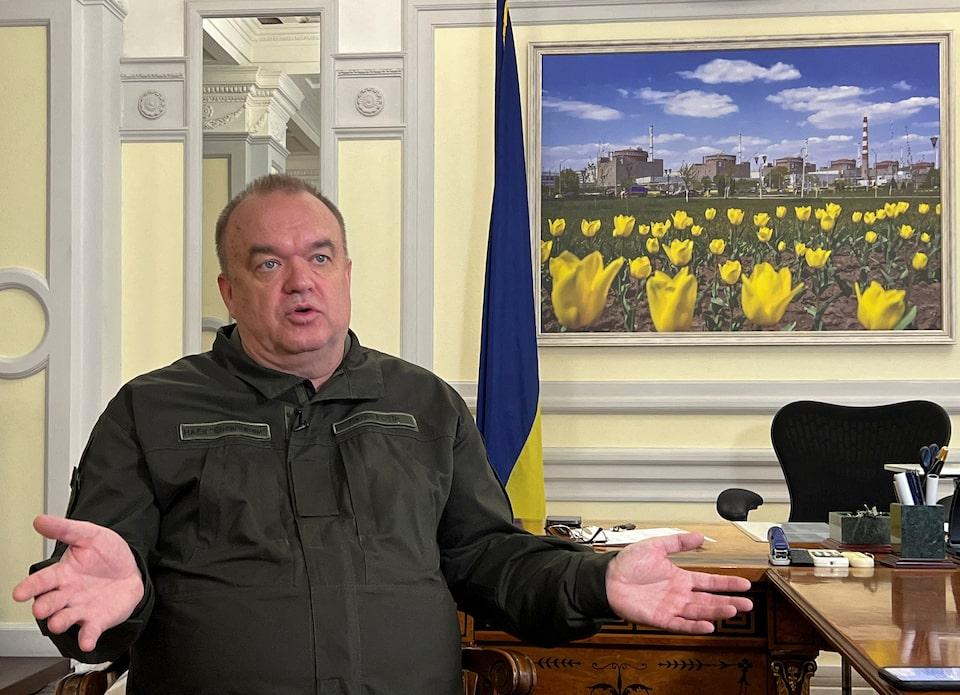
Tech stocks pull back sharply to start week, while other groups gain Investors wary amid seasonally tough period for stocks Powell's Jackson Hole speech could impact market expectations on interest rates NEW YORK, Aug 20 (Reuters) - U.S. technology shares are showing signs of vulnerability after a massive run, which has some investors pointing to overdone AI-driven gains while funds have taken steps to position away from the high-flying sector. Investors are looking to de-risk portfolios or lock in profits during a seasonally difficult period for stocks. Friday's looming speech by Federal Reserve Chair Jerome Powell at the annual Jackson Hole symposium is creating caution, investors said, with the potential for volatility if his comments fail to meet growing market expectations that the central bank is poised to cut interest rates. Sign up here. "When you have overcrowding and you have had such strong performance, it doesn't take much to see an unwind of that," said Keith Lerner, co-chief investment officer at Truist Advisory Services. "At the same time this week, everyone is waiting for the Fed, and there is repositioning ahead of that." The heavyweight S&P 500 tech sector (.SPLRCT) , opens new tab fell sharply for a second consecutive session on Wednesday, putting its decline on the week at about 2.5%, while the tech-heavy Nasdaq Composite (.IXIC) , opens new tab was off about 2% for the week. Shares of some highflyers, including Nvidia Corp(NVDA.O) , opens new tab and Palantir Technologies (PLTR.O) , opens new tab, were getting hit particularly hard. The pullback comes after a huge rally in which the tech sector soared over 50% through last week since the market's low for the year in April. That easily topped the 29% gain of the broader S&P 500 (.SPX) , opens new tab during that period and drove up valuations of tech stocks to lofty levels. Investors cited wariness about the artificial intelligence trade, which has been a key driver of tech stocks and the broader market as indexes have soared to record highs this year. Shares of Nvidia, the semiconductor giant that has symbolized the AI trade, have gained about 30% this year while shares of AI-focused data and analytics firm Palantir have roughly doubled year-to-date. Indeed, the tech sector's price-to-earnings ratio recently reached about 30 times expected earnings for the next 12 months, its highest level in a year, according to LSEG Datastream, while tech's share of the overall S&P 500's market value is nearly its highest since 2000. Recent cautionary signs included a study from researchers at the Massachusetts Institute of Technology that found that 95% of organizations are getting no return on AI investments, as well as comments by OpenAI CEO Sam Altman, who told tech news website the Verge last week that investors may be getting overexcited about AI. Since last week, some AI-linked shares have pulled back sharply: Nvidia has dropped about 5% while shares of Palantir have slumped some 16%. In Europe, stocks of so-called AI adopters have been under pressure over concerns over how powerful new AI models could disrupt the software sector. Still, some investors said, the caution is unlikely to be a sign that enthusiasm over AI is fizzling. “These are price corrections," said Andrew Almeida, director of investments at financial planning network XYPN. "But if you look at the big picture, it’s clear that more people will be investing more dollars in AI infrastructure. This is certainly not a ‘reckoning’ with the AI theme." JACKSON HOLE SEEN AS CRITICAL Investors also could be paring back their stock exposure during a traditionally rocky period for equities. August and September rank as the worst-performing months on average for the S&P 500 over the past 35 years, according to the Stock Trader's Almanac. "Valuations were stretched, these names have not taken a breather, and we're going into a tougher season for stocks," said King Lip, chief strategist at Baker Avenue Wealth Management. Other sectors such as consumer staples (.SPLRCS) , opens new tab, healthcare (.SPXHC) , opens new tab and financials (.SPSY) , opens new tab were up on the week, while relative strength for the equal-weight S&P 500 (.SPXEW) , opens new tab signaled to some investors a possible start of broadening of gains beyond the massive tech stocks that have led indexes higher. Powell's upcoming speech comes as Fed fund futures on Wednesday were indicating an 84% chance that the central bank will cut rates at its next meeting on September 16-17. Investors will be watching to see if Powell gives any indication that the central bank is on track for such a move or if he pushes back on the market's expectation for easing, which could spark volatility. Tech stocks tend to carry higher valuations which could make them sensitive to higher-than-expected interest rates going forward. "There are a lot of people who have overweighted tech, and it has worked for them," said Chuck Carlson, chief executive officer at Horizon Investment Services. "They don't want to get caught on the wrong side of that if in fact, the Fed doesn't do anything in September. So I think that is also causing (investors) to maybe not necessarily get out of tech, but to reduce the overweight a little bit." https://www.reuters.com/business/us-tech-stock-stumble-shows-vulnerability-ai-trade-2025-08-20/
2025-08-21 04:58
Trump's Fed attacks chip away at investor confidence Investors worry about Fed independence All eyes on Powell's speech at Jackson Hole on Friday Markets pricing in US rate cut next month Kiwi near 4-month lows after rate cut, more in store SINGAPORE, Aug 21 (Reuters) - The U.S. dollar drifted on Thursday as investors fretted about the Federal Reserve's independence after yet another attack from President Donald Trump ahead of remarks from Chair Jerome Powell later this week that could influence the outlook for rates. Trump called on Fed Governor Lisa Cook to resign on the basis of allegations made by one of his political allies about mortgages she holds in Michigan and Georgia, intensifying his effort to gain influence over the U.S. central bank. Sign up here. Cook said she had "no intention of being bullied to step down" from her position at the central bank. Trump has also told aides he is considering trying to fire Cook, the Wall Street Journal reported on Wednesday. "It has the potential to raise questions around the Fed's oversight and regulatory functions but it has little to no near-term monetary policy implications," said Prashant Newnaha, senior Asia-Pacific rates strategist at TD Securities. That explained the relatively subdued reaction in the currency markets to the news as the dollar initially dipped but was mostly calm in listless trading in Asian hours. The Japanese yen held onto gains made in previous sessions and was little changed at 147.36 per dollar, while the euro was steady at $1.1646. The dollar index , which measures the U.S. currency against six other peers, was steady at 98.301, on course for a 0.4% rise this week. Sterling last fetched $1.3454, hovering near a one-week low. Data on Wednesday showed inflation hit its highest in 18 months in July, with markets not fully pricing the next rate cut until well into next year. Trump has repeatedly criticised Powell for being too slow to cut rates, stoking investor worries about the central bank's independence and its credibility. Investors expect Trump will replace Powell with a more dovish appointment when his term ends in May. Trump earlier this month said he would nominate Council of Economic Advisers Chairman Stephen Miran to serve out the final few months of a vacant Fed seat after Adriana Kugler unexpectedly resigned. Kristina Clifton, a senior economist at the Commonwealth Bank of Australia in Sydney, said if Cook resigns it would create another opening for Trump to appoint a Fed Governor who will vote to lower interest rates. "Perceived political interference in the Federal Reserve can undermine its independence, steepening the yield curve and denting the dollar's safe haven status." POWELL SPEECH The main focus this week has been on whether Powell will push back against market expectations for a rate cut at the Fed’s September 16-17 meeting when he speaks on Friday at the Jackson Hole meeting, following a weak jobs report for July. "Markets are adamant that recent labour market data necessitates some policy calibration and are expecting Chair Powell to tip his hat in that direction," TD's Newnaha said. The benchmark U.S. 10-year yield was steady 4.291% , while the two-year yield, which is more sensitive to the monetary policy, was at 3.749% . The gap between 2- and 10-year yields was at 54 bps . However, the curve's steepening trend remained intact as the market expects the Fed to resume its rate-cutting cycle as soon as the September meeting. Traders are pricing in an 82% chance of a 25-basis-point rate cut next month, CME FedWatch tool showed. While the odds have lowered from last week after hotter than expected producer price inflation tempered expectations, investors are still pricing in over 50 bps of easing this year. Some analysts cautioned that markets could end up being disappointed by Powell's speech, noting that the impact of Trump's tariffs on inflation remains unclear. In other currencies, the New Zealand dollar was nursing steep overnight losses at $0.58205 after diving 1.2% to its lowest level since April. New Zealand's central bank cut interest rates on Wednesday as expected but left the door wide open to yet more easing if needed. The Australian dollar eased 0.13% to $0.64245, hovering near a two-week low. https://www.reuters.com/world/middle-east/currencies-steady-investors-ponder-fed-independence-await-powell-speech-2025-08-21/
2025-08-21 04:42
A look at the day ahead in European and global markets from Kevin Buckland The Federal Reserve has the full attention of global markets, not least because the U.S. central bank's highly anticipated Jackson Hole symposium kicks off later today. Sign up here. Central bankers from around the world will attend, and investors are likely to hang on every word they utter. But chief among them all is Jerome Powell's speech on Friday - his last one at the annual gathering as Fed chairman. Like his predecessors, he's likely to use the opportunity to guide how his tenure is recorded in the history books, particularly considering how harshly he's been attacked by President Donald Trump for refraining from rate cuts this year. What investors are waiting to hear though are any hints for a September cut, and they ramped up bets for easing on the back of a surprisingly soft payrolls report earlier this month. The inflation picture remains hard to read though, with recent consumer price data showing little impact from Trump's aggressive tariffs, but hotter-than-expected producer prices suggesting higher costs could seep into sticker prices in coming months. Market-implied odds of a quarter-point cut on September 17 currently stand at 80%, down from 84% a day ago. That's after Fed minutes from last month's gathering suggested Fed Vice Chair for Supervision Michelle Bowman and Governor Christopher Waller were the only ones pushing for a rate cut at the meeting. The other reason the Fed is so much in focus is Trump's growing influence over the direction of monetary policy. The U.S. President's latest target is Fed Governor Lisa Cook, demanding her resignation over allegations made by one of his political allies about mortgages she holds in Michigan and Georgia. If Trump were to oust Cook, that would add to his picks on the Fed's board, with Council of Economic Advisers Chair Stephen Miran set to replace Adriana Kugler following her surprise resignation. Bowman and Waller, of course, are both Trump appointees. And Trump could end up with four of the board's seven members supporting his demands for lower rates. Earlier this year, Trump's threats to fire Powell before his term as governor ends in May of next year unsettled investors, driving big declines in the dollar. The U.S. currency has taken the latest developments in stride, though. And Asian stocks were broadly mixed, generally adjusting to recent sharp rallies or selloffs. Japan's Nikkei (.N225) , opens new tab, for example, continued to retreat from a record peak reached earlier in the week, while South Korea's KOSPI (.KS11) , opens new tab bounced back strongly from its tumble to a six-week low a day earlier. Wall Street's tech selloff was largely shaken off, with for example Japan's heavyweight chip-testing equipment maker Advantest (6857.T) , opens new tab by far the biggest gainer by index points on the Nikkei. Of course, other than sky-high valuations, Trump is being touted as a reason for the rout, with this administration looking into taking equity stakes in chip firms such as Intel (INTC.O) , opens new tab, weeks after unprecedented revenue-sharing deals with Nvidia (NVDA.O) , opens new tab and AMD (AMD.O) , opens new tab. Retailers will get some attention as well today, with Walmart (WMT.N) , opens new tab releasing earnings and providing a barometer on the health of the U.S. consumer. Target (TGT.N) , opens new tab tumbled on Wednesday after the company named insider Michael Fiddelke as CEO and retained annual forecasts that were lowered in May. Key developments that could influence markets on Thursday: - Jackson Hole symposium opens - U.S. weekly jobless claims, existing home sales for July, Philadelphia Fed's business index - Walmart results - Flash PMIs for euro zone, France, Germany, Britain https://www.reuters.com/world/china/global-markets-view-europe-2025-08-21/