2026-01-28 18:33
HONG KONG, Jan 28 (Reuters) - A team of Hong Kong scientists has developed an artificial intelligence weather-forecasting system to predict thunderstorms and heavy downpours up to four hours ahead, compared with the range of 20 minutes to two hours now. The system will help governments and emergency services respond more effectively to increasingly frequent extremes of weather linked to climate change, the team from Hong Kong University of Science and Technology said on Wednesday. Sign up here. "We hope to use AI and satellite data to improve prediction of extreme weather so we can be better prepared," said Su Hui, chair professor of the university's civil and environmental engineering department, who led the project. The system aimed to predict heavy rainfall, Su told a press conference to describe the work published , opens new tab in the Proceedings of the National Academy of Sciences in December. Its model applies generative AI techniques, injecting noise into training data so that the system learns to reverse the process in the effort to produce more precise forecasts. Developed in collaboration with China’s weather authorities, it refreshes forecasts every 15 minutes and has boosted accuracy by more than 15%, the team said. Such work is crucial because the number of typhoons and episodes of wet weather Hong Kong and much of southern China faced in 2025 far exceeded the seasonal norm, scientists said. The city issued its highest rainstorm warning five times last year and the second highest 16 times, setting new records, its observatory said. Both China's Meteorological Administration and Hong Kong's Observatory are working to incorporate the model into forecasts. The team's new AI framework, called the Deep Diffusion Model based on Satellite Data (DDMS), was trained using infrared brightness temperature data collected between 2018 and 2021 by China’s Fengyun‑4 satellite. Satellites can detect cloud formation earlier than other forecasting systems such as radar, Su added. The data was combined with meteorological expertise to capture the evolution of convective cloud systems and later validated with spring and summer samples from 2022 and 2023. https://www.reuters.com/sustainability/climate-energy/hong-kong-scientists-launch-ai-model-better-predict-extreme-weather-2026-01-28/

2026-01-28 16:54
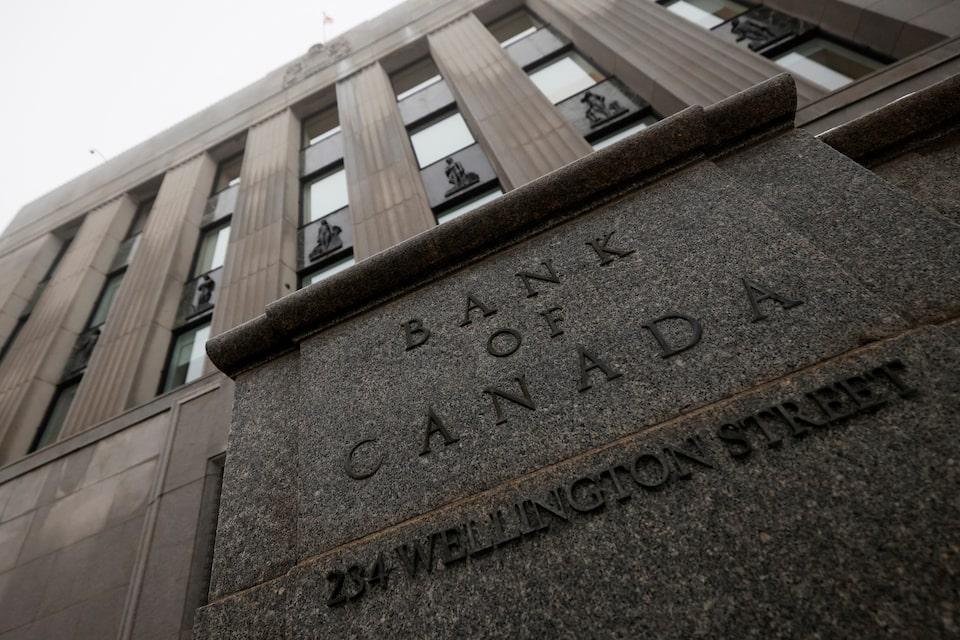
Bank of Canada cites trade uncertainty as big risk this year Maintained its forecast for modest growth in 2026 and 2027 Governor says inflation to hover around 2% for next two years Macklem says Jerome Powell doing a good job leading the Fed OTTAWA, Jan 28 (Reuters) - The Bank of Canada on Wednesday held its policy rate at 2.25%, as widely expected, and Governor Tiff Macklem said a high level of trade uncertainty made it difficult to predict when and how rates might next change. Macklem said the threat of the U.S. Federal Reserve losing its independence contributed to uncertainty. U.S. President Donald Trump's administration opened a criminal investigation of U.S. central bank chief Jerome Powell and Trump has demanded he cut rates. Sign up here. In a quarterly monetary policy report, Canada's central bank maintained its forecast for modest growth in 2026 and 2027 and said inflation would hover around the 2% target. Wednesday's decision was the second rate hold in a row. Businesses will take time to adjust to the effect of U.S. tariffs, it said, noting that hiring intentions remain soft. "While Council judges the current policy rate is appropriate based on our outlook, the consensus was that elevated uncertainty makes it difficult to predict the timing or direction of the next change in the policy rate," Macklem said in his opening remarks after the rate announcement. Economists and markets are divided on where monetary policy is headed this year. Many economists expect there could be another cut to support an economy grappling with Trump's tariffs. Money markets though are pricing in no cuts through 2026, but bets tilt toward a hike in the last quarter. "Geopolitical risks are elevated and the upcoming review of the Canada-United States-Mexico Agreement is an important risk to the outlook," Macklem said. Money market bets did not change much after the decision. The Canadian dollar firmed after the decision with the loonie trading up 0.28% to C$1.3535 against the U.S. dollar, or 73.88 U.S. cents. "I find their wording to be that they see risk," said Doug Porter, chief economist at BMO Capital Markets. "They see a wide range of outcomes that the economy could see this year, and one of those would likely entail a lower interest rates," Porter said. Canada's economy has held up relatively well amid tariffs on critical sectors such as steel, autos and aluminum. The bank says 2025 growth was 1.7%, up from the earlier projection of 1.2% in October. The growth outlook for 2026 remains 1.1%, while 2027 was revised a notch down to 1.5% from 1.6% projected last year. Macklem reiterated that the risks to inflation going up due to tariffs would likely be offset by downward pressure on prices due to excess supply. Household spending is expected to continue growing modestly, supported by past rate cut and rising disposable incomes, Macklem said, adding that the central bank expected modest strengthening in business investment. The BoC expressed hope that the restructuring the economy was going through due to tariffs would support some recovery in productive capacity. "But it will all take time," Macklem said. FED INDEPENDENCE Macklem, along with several other major central bank bankers, earlier this month issued a joint statement in support of Powell after the Trump administration threatened him with a criminal indictment. The Fed will also announce its decision on Wednesday and is expected to hold interest rates steady in a pause that investors see lasting beyond Powell's final meetings in March and April. https://www.reuters.com/world/americas/bank-canada-holds-rates-says-hard-predict-future-moves-2026-01-28/
2026-01-28 16:53
Bessent says Trump's policies strengthening fundamentals Treasury chief's comments boosted dollar Bessent says not worried about inflation WASHINGTON, Jan 28 (Reuters) - The U.S. has a strong dollar policy and that means setting the right fundamentals, U.S. Treasury Secretary Scott Bessent said on Wednesday, while denying that Washington was intervening in currency markets to support the Japanese yen. Asked on CNBC if the U.S. was intervening to strengthen the yen, Bessent said, "Absolutely not." Sign up here. Pressed if that was something the U.S. planned to do, Bessent said, "We don't comment other than to say we have a strong dollar policy." Bessent's remarks boosted the dollar's value against a basket of currencies on Wednesday, sending it up from a four-year low touched in the prior session. The dollar index , which measures the U.S. currency's strength against a basket of peers, rose 0.5% to 96.391. The index sank as low as 95.86 on Tuesday, its weakest since February 2022, after U.S. President Donald Trump brushed off this month's slide, emboldening dollar bears. The dollar index is down nearly 2% for the year, after falling 9.4% last year. Trump said on Tuesday the value of the dollar was "great", when asked if he thought it had declined too much. Traders took this as a signal to intensify dollar selling, ahead of a Federal Reserve policy decision later on Wednesday. The dollar has been under pressure due to uncertainty about U.S. interest rates and tariffs, threats to the independence of the Federal Reserve and rising fiscal deficits. Gold, a safe-haven asset that generally rises when the dollar weakens and does not yield interest, climbed on Wednesday, surpassing $5,300 per ounce for the first time. Bessent expressed confidence that Trump's tax and deregulation policies were making the U.S. attractive for investors, bringing in trillions of dollars. "Over time the prices on the screen can fluctuate over six months, a year," Bessent said. "If we have sound policies the money will flow in, and we are bringing down our trade deficits so they, automatically that should lead to more dollar strength over time." Bessent repeated his forecast that the U.S. economy would perform well this year, but said he was not worried about that growth triggering inflation. Productivity and wage growth do not necessarily lead to higher inflation, he said, adding that declining rents could lead to drops in measured inflation in time. https://www.reuters.com/world/asia-pacific/bessent-says-us-has-strong-dollar-policy-absolutely-not-intervening-support-yen-2026-01-28/
2026-01-28 16:35
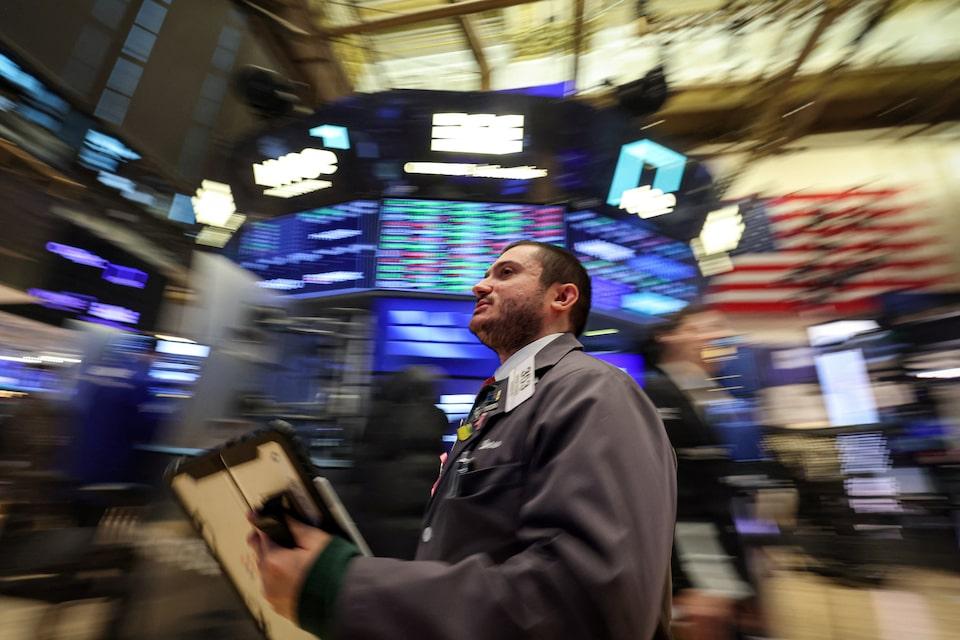
Jan 28 (Reuters) - The S&P 500 breached the 7,000-point mark for the first time on Wednesday, driven by unrelenting optimism over artificial intelligence and expectations of strong Big Tech earnings as well as monetary policy easing. The benchmark index's ascent between successive 1,000-point additions has quickened in recent years, reflecting mounting investor confidence in the U.S. economy and corporate America. Sign up here. It took about three years for the S&P 500 to rise to 5,000 points from 4,000, but only about nine months to jump from 5,000 to 6,000, which it reached in November 2024. The index (.SPX) , opens new tab was last up 0.3% at 6,999.71 points, and headed for its sixth consecutive day of gains, its longest winning streak since October. "You could definitely have a continuation on the rally in equities if the earnings season shows that AI expenditure is bringing in revenues," said Jeff Leschen, managing director at Bramshill Investments. "Expected rate cuts by the Fed could also be a tailwind," he added. AI HYPE BOOSTS STOCKS AI-linked optimism has been one of the key drivers of U.S. markets, pushing tech giants including Nvidia (NVDA.O) , opens new tab, Microsoft (MSFT.O) , opens new tab and Alphabet (GOOGL.O) , opens new tab higher. Technology stocks account for nearly 50% of the S&P 500. Expectations of interest rate cuts by the U.S. Federal Reserve have also buoyed risk appetite, with traders betting on two 25-basis point reductions in 2026 after the central bank lowered interest rates thrice last year. The Fed is, however, widely expected to hold interest rates at its meeting later in the day. Markets have rebounded to record highs following bouts of selloff earlier this month on worries related to the U.S.–NATO friction over Greenland, tariff uncertainty and doubts over the U.S. central bank's independence. Analysts expect profit for S&P 500 companies to increase 15.5% in 2026, an improvement from a 13.2% growth forecast for 2025, according to data compiled by LSEG. Tech earnings, powered by AI boom, are largely expected to drive U.S. corporate growth in the fourth quarter, with the sector's profit projected to rise about 27%, compared with an estimate of a 9.2% increase overall for S&P 500 companies, LSEG data showed. Revenue growth from the tech sector in the quarter was pegged at about 18%, compared with the estimate of a 7.3% rise for the S&P 500, the data showed. The S&P 500 has rebounded nearly 45% from its lows in April 2025, when U.S. President Donald Trump's tariffs had roiled global markets. https://www.reuters.com/business/finance/sp-500-crosses-7000-points-first-time-lifted-by-ai-optimism-2026-01-28/
2026-01-28 12:57
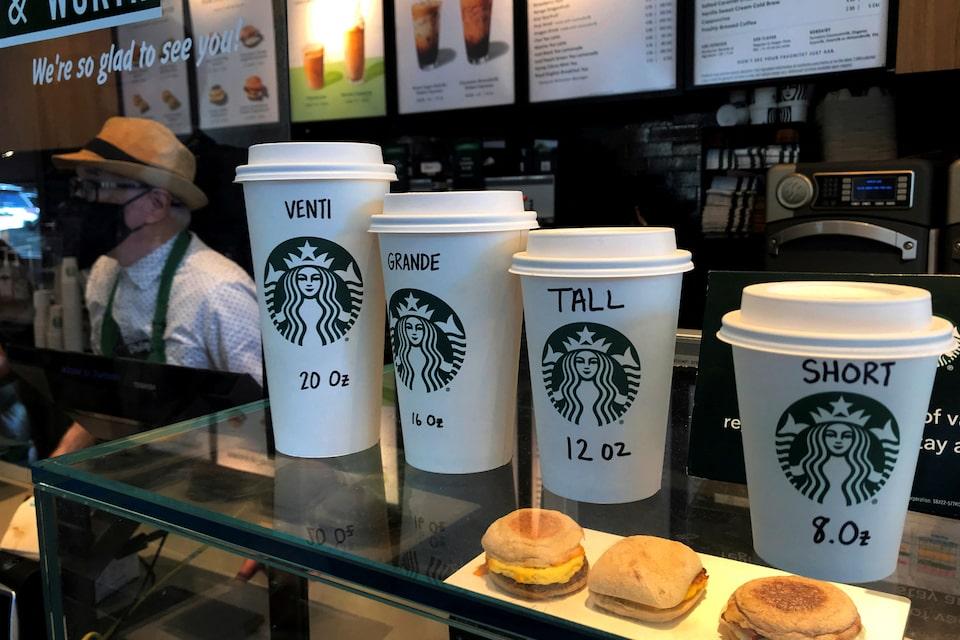
Jan 28 (Reuters) - Starbucks (SBUX.O) , opens new tab reported a bigger-than-expected rise in first-quarter comparable sales on Wednesday, as demand rebounded in the U.S. after nearly two years in early signs of success of CEO Brian Niccol's turnaround efforts. The company's shares rose 5% in premarket trading after it also reinstated its full-year targets ahead of its first investor day under Niccol on Thursday in New York. Sign up here. Niccol has focused on reviving the company's coffeehouse culture in the U.S. to bring back consumers and fend off newer rivals. Starbucks has trimmed nearly 30% of its offerings in U.S. stores at the end of 2025 as part of simplifying its menu. Over the last year, the company has shed items such as olive-oil infused beverage line Oleato, and several "frappuccino" beverages to focus on its key lattes. Comparable sales rose 4% in North America, marking their first gains in nearly two years. The company has shed hundreds of underperforming stores, including its flagship Seattle roastery, and has also tried to lower back-end operational costs. In the reported quarter, customer traffic was also up on key promotional days such as the annual Red Cup day in December, as well as its holiday merchandise collection item, the Bearista Cold Cup in November, according to data from Placer.ai. The company reported a 4% rise in quarterly global comparable sales, compared with estimates of 2.25%, according to data compiled by LSEG. Starbucks expects fiscal 2026 global same-store sales to grow 3% or higher, compared with estimates of a 2.94% rise. The company expects fiscal 2026 adjusted profit to be $2.15 to $2.40 per share, the mid-point of which is below estimates of $2.35. https://www.reuters.com/world/china/starbucks-beats-first-quarter-global-comparable-sales-estimate-2026-01-28/
2026-01-28 12:57
Jan 28 (Reuters) - Argentina's Treasury requested a New York court on Wednesday to suspend the discovery process in relation to state-owned oil company YPF's nationalization case, calling it illegitimate and intrusive. Argentina is seeking to overturn the $16.1 billion awarded by a U.S. District judge to two former shareholders of YPF, Petersen Energia Inversora and Eton Park Capital Management, for alleged losses stemming from YPF's nationalization. Sign up here. UK-based Burford Capital (BURF.L) , opens new tab is funding the litigation and would receive much of the award. Argentina's Treasury said in a statement shared on X that it has filed a formal request with the Southern District Court of New York to suspend the discovery process ordered by the court and also to withdraw the request for contempt against Argentina requested by the plaintiffs. Burford had requested information about Argentina's Central Bank's gold reserves, the Treasury added. "The discovery process initiated by the plaintiffs and ordered by the court has been completely distorted and transformed into a tool of illegitimate harassment, intended to hinder the normal functioning of the Argentine State," the institution said. It added that President Javier Milei's administration, which came to power in December 2023, has fully complied with the legal process and has delivered the relevant information requested by the court, and called the current discovery requests intrusive and disproportionate. Argentina has claimed that the case against the country for seizing control of state-owned oil company YPF didn't belong in the U.S. and has argued that the case should have been heard by local judges under local law. https://www.reuters.com/legal/government/argentina-requests-suspension-illegitimate-discovery-process-ypf-case-us-court-2026-01-28/