2025-08-19 11:45
Kiruna Church will inch 3 miles down Arctic roads Part of massive city relocation as mine expands Sami community fears for impact on traditions, livelihood KIRUNA, Sweden, Aug 18 (Reuters) - Sweden's landmark Kiruna Church will begin a two-day trip to a new home on Tuesday, inching down an Arctic road to save its wooden walls from ground subsidence and the expansion of the world's largest underground iron ore mine. Workers have already jacked up the 600-ton, 113-year-old church from its foundations and hefted it onto a specially built trailer - part of a 30-year project to relocate thousands of people and buildings from the Lapland city. Sign up here. Mine-operator LKAB has spent the last year widening the road for the journey which will take the red-painted church - one of Sweden's largest wooden structures, often voted its most beautiful - 5km (3 miles) down a winding route to a brand new Kiruna city centre. The journey will save the church, but take it from the site where it has stood for more than a century. "The church is Kiruna's soul in some way, and in some way it's a safe place," Lena Tjarnberg, the vicar of Kiruna, said. "For me, it's like a day of joy. But I think people also feel sad because we have to leave this place." For many of the region's indigenous Sami community, which has herded reindeer there for thousands of years, the feelings are less mixed. The move is a reminder of much wider changes brought on by the expansion of mining. "This area is traditional Sami land," Lars-Marcus Kuhmunen, chair of the local Gabna Sami community, said. "This area was grazing land and also a land where the calves of the reindeer were born." If plans for another nearby mine go ahead after the move, that would cut the path from the reindeer's summer and winter pastures, making herding "impossible" in the future, he said."Fifty years ago, my great-grandfather said that the mine is going to eat up our way of life, our reindeer herding. And he was right." SYMBOL OF TRANSFORMATION The church is just one small part of the relocation project. LKAB says around 3,000 homes and around 6,000 people need to move. A number of public and commercial buildings are being torn down while some, like the church, are being moved in one piece. Other buildings are being dismantled and rebuilt around the new city centre. Hundreds of new homes, shops and a new city hall have also been constructed. The shift should allow LKAB, which produces 80% of the iron ore mined in Europe, to continue to extend the operation of Kiruna for decades to come. The state-owned firm has brought up around 2 billion tonnes of ore since the 1890s, mainly from the Kiruna mine. Mineral resources are estimated at another 6 billion tonnes in Kiruna and nearby Svappavaara and Malmberget. LKAB is now planning the new mine next to the existing Kiruna site. As well as iron ore, the proposed Per Geijer mine contains significant deposits of rare earth elements, a group of 17 metals critical to products from lasers to iPhones and green technology key to meeting Europe's climate goals. Europe - and much of the rest of the world - is currently almost completely dependent on China for the supply and processing of rare earths. In March this year, the EU designated Per Geijer as a Strategic Project which could help speed up the process of getting the new mine into production. Around 5km down the road, Kiruna's new city centre will also be taking shape. "The church is ... a statement or a symbol for this city transformation," mayor Mats Taaveniku told Reuters. "We are right now half on the way. We have 10 years left to move the rest of the city." https://www.reuters.com/world/wooden-church-sets-off-slow-swedish-road-trip-escape-mining-subsidence-2025-08-18/

2025-08-19 11:36
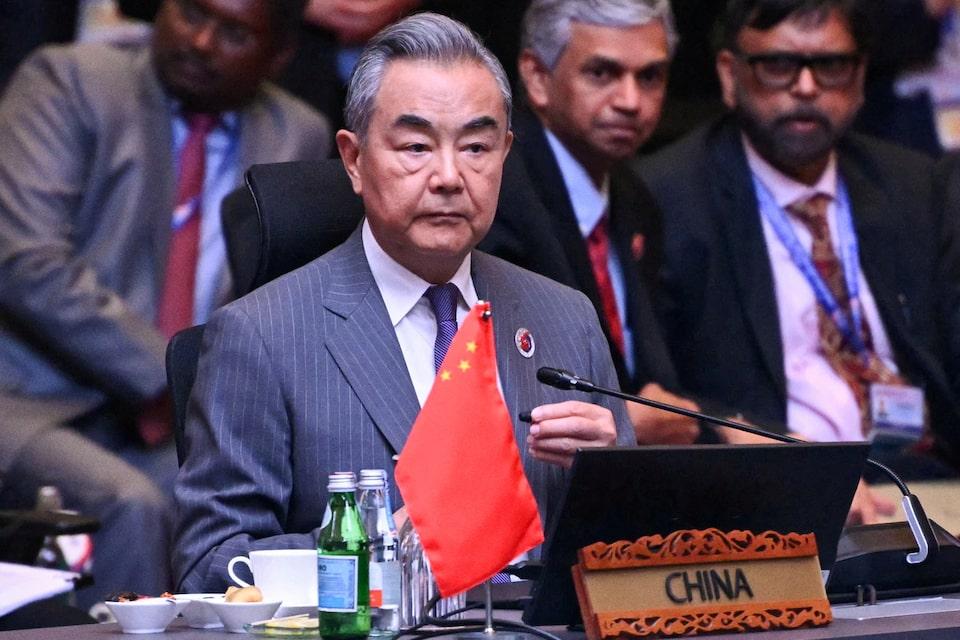
Wang Yi visits India for border talks, meets Doval, PM Modi China promises to expedite export licenses for India NEW DELHI, Aug 19 (Reuters) - There is an upward trend in India-China relations and Beijing has promised to address New Delhi's needs on rare earths, a top Indian official and a source said on Tuesday, as the neighbours rebuild ties that were damaged by a 2020 border clash. Chinese Foreign Minister Wang Yi is visiting India for the 24th round of border talks with Indian National Security Advisor Ajit Doval and is also due to meet Prime Minister Narendra Modi on Tuesday, days before Modi travels to China for the summit of the Shanghai Cooperation Organisation. Sign up here. "There has been an upward trend. Borders have been quiet. There has been peace and tranquillity," Doval told Wang as he opened the talks. "Our bilateral engagements have been more substantial." "The new environment that has been created has helped us in moving ahead in the various areas that we are working on," he said. Wang told Doval that "the stable and healthy development of China-India relations is in the fundamental interests of the two countries' people," according to a readout of the meeting released by China's foreign ministry. The two sides "should enhance mutual trust through dialogues and expand cooperation," Wang said, and should aim for consensus in areas such as border control and demarcation negotiations. Earlier on Tuesday, an Indian source said that China had promised to address three key Indian concerns. Wang, the source said, had assured Indian Foreign Minister Subrahmanyam Jaishankar that Beijing is addressing India’s need for fertilisers, rare earths and tunnel boring machines. The Indian foreign and mines ministries did not respond immediately to Reuters requests for comment. China's commerce ministry also did not immediately respond to a request for comment. It was not immediately clear whether China had agreed to approve export licenses faster or grant blanket exemptions for India. China has previously committed to speeding up export licenses for Europe and the U.S. without actually dismantling the control regime. China's exports of rare earths and related magnets jumped in June after these agreements and as the commerce ministry worked through a huge backlog of applications. However, rare earth magnet exports to India were still down 58% compared to January levels, according to Chinese customs data. June is the last month for which country-level data is available. India has the world's fifth-largest rare earth reserves, at 6.9 million metric tons, but has no magnet production and relies on imported magnets, mainly from China. https://www.reuters.com/world/china/china-pledges-address-indias-rare-earth-needs-indian-source-says-2025-08-19/
2025-08-19 11:34
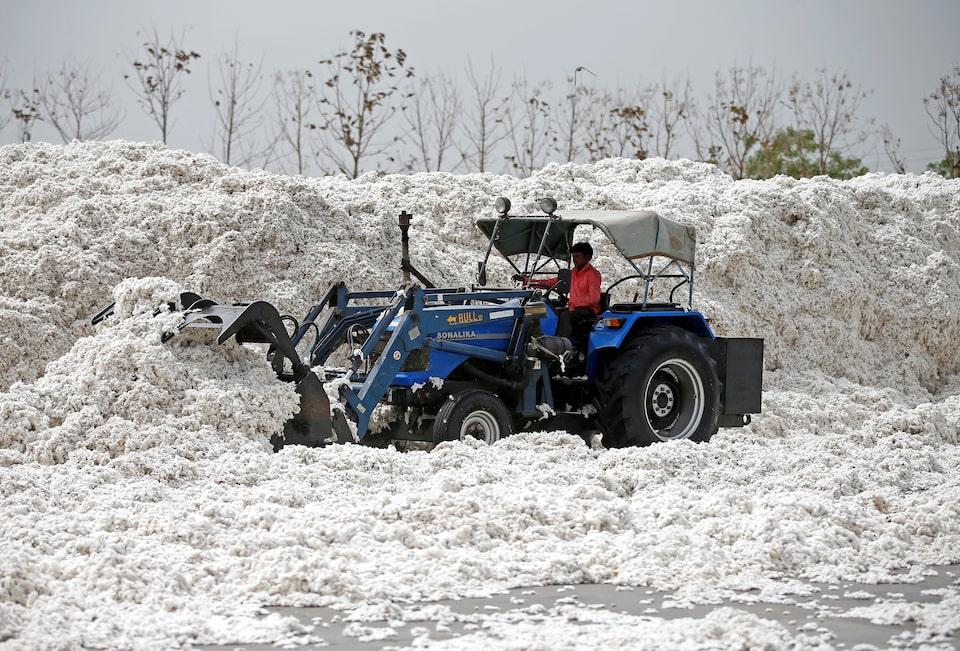
India suspends 11% cotton import duty until Sept. 30 Move follows U.S. tariff hike to 50% on Indian goods Industry sought relief; waiver may be extended Signals India's bid to stay competitive vs China, Bangladesh NEW DELHI, Aug 19 (Reuters) - India has suspended an 11% import duty on cotton until September 30, in a move seen as a signal to Washington that New Delhi is willing to address U.S. concerns on agricultural tariffs, while also easing pressure on its garment industry. The temporary suspension, announced late on Monday, could benefit U.S. cotton growers and provide relief to India's apparel sector, which faces tariffs of nearly 60% on shipments to the United States from later this month. Sign up here. A planned visit by U.S. trade negotiators to New Delhi from August 25-29 has been called off, delaying talks on a proposed bilateral trade agreement and dashing hopes of relief from an additional 25% U.S. tariff on Indian goods from August 27. President Donald Trump earlier this month announced an extra tariff on Indian goods as punishment for New Delhi's purchases of Russian oil, doubling the total duty to 50% on U.S. imports of Indian goods from later this month. Indian exports had previously faced levies of 0-5%, with duties on some textiles ranging between 9% and 13% before Trump raised tariffs in April. The United States is the biggest market for India's garment exporters, who say steep tariffs are leading to order cancellations and making them uncompetitive against Bangladesh and Vietnam, which have U.S. duties of 20%, and China at 30%. India's labour-intensive sectors, including textiles, footwear, engineering goods and shrimp, have been jolted by U.S. tariffs, and are now seeking alternative markets. "The largest beneficiary of the duty free import will be the U.S., the second largest supplier to India," said Ajay Srivastava, founder of Global Trade Research Initiative, a New Delhi-based think tank, adding India already allows duty-free cotton imports from Australia within a quota. Cotton imports more than doubled to $1.2 billion in the 2024/25 fiscal year to March, from $579 million a year earlier, led by $258 million from Australia, $234 million from the United States, $181 million from Brazil and $116 million from Egypt, Srivastava said. The sharp rise in U.S. tariffs comes just as India was emerging as a stronger alternative for American garment buyers, with Bangladesh facing political uncertainty and companies seeking to diversify supply chains beyond China. Industry bodies such as the Confederation of Indian Textile Industry (CITI) had urged the government to scrap the cotton import duty to help make the sector more competitive. Reuters earlier reported that some Indian exporters were scrambling to explore manufacturing options overseas to offset the impact of the higher tariffs. India’s garment sector was already grappling with a labour crunch and limited production capacity. The prospect of exporters relocating production abroad poses a further challenge to the government’s "Make in India" manufacturing drive. Industry officials now expect the government to extend duty-free cotton imports beyond September. https://www.reuters.com/world/india/india-suspends-cotton-import-duty-signal-us-relief-garment-industry-2025-08-19/
2025-08-19 11:31
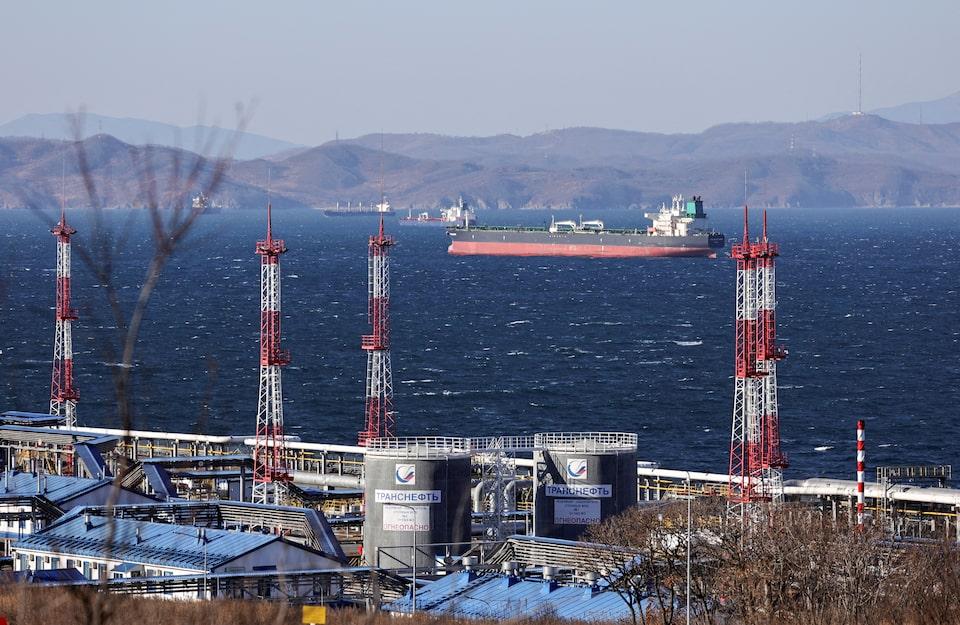
China buys 15 Russian oil cargoes for October-November delivery Indian demand for Russian oil declines as discounts narrow in July Trump threatens retaliatory tariffs against Russian oil buyers SINGAPORE, Aug 19 (Reuters) - Chinese refineries have purchased 15 cargoes of Russian oil for October and November delivery as Indian demand for Moscow's exports falls away, two analysts and one trader said on Tuesday. India has emerged as the leading buyer of Russian seaborne oil, which has sold at a discount since some Western nations shunned purchases and imposed restrictions on Russian exports over Moscow's 2022 invasion of Ukraine. Sign up here. Indian state refiners paused Russian oil purchases last month, however, as those discounts narrowed. And U.S. President Donald Trump is also threatening to punish countries for buying Russian crude. China had secured 15 Russian Urals cargoes for October–November delivery by the end of last week, said Richard Jones, a Singapore-based crude analyst at Energy Aspects. Each Urals cargo ranges in size from 700,000 to 1 million barrels. Kpler senior analyst Xu Muyu wrote in an August 14 report that China has likely purchased about 13 cargoes of Urals and Varandey crude for October delivery, along with at least two Urals cargoes for November. The additional Russian Urals supply could curb Chinese refiners' appetite for Middle Eastern crude, which is $2 to $3 per barrel more expensive, Xu said. This, in turn, could add further pressure to the Dubai market which is already losing momentum as seasonal demand fades while competition from arbitrage supply intensifies, she added. A trade source agreed with Kpler's estimate, adding that the cargoes were booked mostly at the beginning of this month by Chinese state-owned and independent refineries. China, the world's top oil importer and largest Russian oil buyer, primarily buys ESPO crude exported from the Russian Far East port of Kozmino due to its proximity. Its year-to-date imports of Urals crude stood at 50,000 barrels per day, Kpler data showed. Urals and Varandey crude are typically shipped to India, Kpler data showed. Indian state-refiners have backed out Russian crude imports by approximately 600,000 to 700,000 bpd, according to Energy Aspects' Jones. "We do not expect China to absorb all of the additional Russian volumes, as Urals is not a baseload grade for Chinese majors," he said, referring to Chinese state refineries which are not designed to solely process the Russian grade. Chinese refiners will also be wary about the possibility of U.S. secondary sanctions if Trump's push for a Ukraine peace deal breaks down, he added. Trump said on Friday he did not immediately need to consider retaliatory tariffs on countries such as China for buying Russian oil but might have to "in two or three weeks". https://www.reuters.com/business/energy/chinese-refiners-sweep-up-russian-oil-after-indian-demand-falls-analysts-say-2025-08-19/
2025-08-19 11:31
Traders gauge promising signals toward ending Russia-Ukraine war Fed's Jackson Hole symposium in focus for policy hints Odds of Fed rate cut in September at 83% SINGAPORE, Aug 19 (Reuters) - The dollar dipped against major peers on Tuesday as markets assessed the outcome of a summit between leaders from the U.S., Europe and Ukraine, while awaiting policy cues from an annual Federal Reserve symposium later this week. The euro and sterling rose about 0.2% each to $1.1686 and $1.3524, respectively. The Swiss franc rose 0.3% and the Japanese yen ticked higher as well. Sign up here. U.S. President Donald Trump told his Ukrainian counterpart Volodymyr Zelenskiy on Monday that the United States would help guarantee Ukraine's security in any deal to end the war with Russia. Both Trump and Zelenskiy said they hoped Monday's gathering would eventually lead to three-way talks with Putin. The developments did little to give clear direction to foreign exchange markets while European equities gained and oil prices slid on Tuesday. Given that European energy costs are relatively low and undisrupted, developments related to the Russia-Ukraine war are unlikely to be major market movers, said Samy Chaar, chief economist at Lombard Odier. Many investors are away for summer holidays in the northern hemisphere contributing to thinner market liquidity. Analysts at MUFG reckon that if the talks prove successful in ending the conflict in Ukraine, it could provide more support for European currencies that have already outperformed this year. JACKSON HOLE WATCH On the macro front, markets are awaiting the Federal Reserve's annual symposium in Jackson Hole for any clues on the likely path of interest rates. Fed Chair Jerome Powell is due to speak on the economic outlook and the central bank's policy framework. Powell is not expected to lock himself onto a monetary path before seeing August’s round of data even though money market expectations of a rate cut next month remain above 80%, according to CME's FedWatch tool. "The market is expecting signs that a cut in September is a done deal. I am not sure the market is going to get that," Chaar said. The minutes of the Fed's July meeting are due later on Wednesday and could offer insight into policymakers' thinking about the trajectory of interest rates albeit the meeting took place before a weak labour market report prompted markets to price in cuts more aggressively. "With inflation essentially stuck over the past year, the tariff passthrough that we still expect, and the labor supply story keeping the unemployment rate historically low, we still think there is a strong case for the Fed to remain on hold," analysts at BofA Global Research said in a note. Cryptocurrencies were an exception to the otherwise mellow mood in markets, with bitcoin falling about 1% to notch a third straight day of declines after hitting a record high last week while ether was down 1.2% as well. https://www.reuters.com/world/middle-east/dollar-slips-markets-digest-ukraine-summit-await-fed-comments-2025-08-19/
2025-08-19 11:04
FY25 profit $10.16 bln misses estimates FY dividend of $1.10/share lowest since 2017 but better than expected Demand for commodities resilient despite tariff uncertainty, BHP says Net debt target raised to between $10 billion and $20 billion Aug 19 (Reuters) - BHP (BHP.AX) , opens new tab said annual profit fell to the lowest in five years as sluggish demand from China weighed on iron ore prices and flagged a cut in capital and exploration spending but declared a bigger-than-expected final dividend, sending its shares higher. The world's largest listed miner also raised its debt target and said it would consider acquisitions in commodities such as copper and potash. Sign up here. It posted a $10.16 billion underlying profit for the year ended June 30, down 26% from last year , opens new tab and below the Visible Alpha consensus of $10.22 billion. BHP cut its final dividend but by less than analysts had forecast. It said it will pay shareholders $0.60 per share, from $0.74 a year earlier, taking the year's total to $1.10, its lowest since 2017, but well ahead of a Visible Alpha consensus of $1.01. The Sydney-listed company's shares were up 1% in early trading, compared to a 0.7% dip on the broader market (.AXJO) , opens new tab, as investors welcomed the payout. "Inflationary pressures across the cost base have largely normalised, although pockets of pressure persist in some areas and overall cost levels remain materially higher than pre-pandemic benchmarks," said Citi analysts. "We expect the higher div payout ratio to be taken as a modest positive." A combination of more product being shipped from Australia, Brazil and South Africa and lower steel production in top consumer China, pressured iron ore prices for much of the financial year, affecting earnings for top miners including BHP and Rio Tinto (RIO.AX) , opens new tab, (RIO.L) , opens new tab. BHP's average realised price for iron ore fell by 19% during the year, though that was partly offset by stronger prices for copper, its second-biggest profit driver. Still, the miner said it expects demand for its commodities to remain resilient even as the global economy faces an uncertain environment due to "shifting trade policies". "Policy uncertainty, particularly around tariffs, fiscal policy, monetary easing, and industrial policy, has been elevated and continues to influence investment and trade flows. Despite these dynamics, commodity demand remained resilient," Chief Executive Mike Henry said in a statement. BHP raised its net debt target range to between $10 billion and $20 billion, from between $5 billion and $15 billion, saying the decision was a result of technical analysis and not a sign of increased appetite for mergers and acquisitions activity. The company would consider acquisitions in target growth areas like copper and potash but only of assets which were reasonably-priced and high quality, and "the overlap between those factors is a rare thing", Henry said on a call with reporters. BHP said it plans to spend $11 billion on growth projects and exploration over the next two years, up from $9.79 billion in fiscal 2025. However, it said the spending will slow down to an average $10 billion each year between 2028 and 2030. In July, the mining giant flagged a delay and a cost overrun of up to $1.7 billion at its key Jansen potash project in Canada, and also exited its interest in the $942 million Kabanga nickel project in Tanzania. On Tuesday, it said it had agreed to sell copper assets in Brazil for up to $465 million. https://www.reuters.com/world/china/iron-ore-sinks-bhp-fy-profit-5-year-low-dividend-boosts-shares-2025-08-18/