2025-08-18 21:00
Trump says U.S. would help Europe provide security for Ukraine Zelenskiy welcomes 'strong signal' from Trump European leaders push for ceasefire ahead of any peace deal WASHINGTON, Aug 18 (Reuters) - U.S. President Donald Trump told President Volodymyr Zelenskiy on Monday that the United States would help guarantee Ukraine's security in any deal to end Russia's war there, though the extent of any assistance was not immediately clear. Trump made the pledge during an extraordinary summit at the White House, where he hosted Zelenskiy and a group of European allies days after Trump met with Russian President Vladimir Putin in Alaska and months after a disastrous Oval Office meeting that saw Trump and Vice President JD Vance publicly criticize the Ukrainian leader. Sign up here. A peace deal appeared far from imminent, however. Just before the talks began, Russia's Foreign Ministry ruled out the deployment of troops from NATO countries to help secure a peace deal, adding complications to Trump's offer. Both Trump and Zelenskiy said they hoped Monday's gathering would eventually lead to three-way talks with Putin. The Kremlin has not yet publicly accepted such a meeting, and it remains to be seen whether Putin, whose forces have been slowly grinding forward in eastern Ukraine, is prepared to sit down with Zelenskiy or make meaningful concessions. In a social media post late on Monday, Trump said he had called Putin and begun arranging a meeting between Putin and Zelenskiy, to be followed by a trilateral summit among the three presidents. A source from the European delegation said Trump had told European leaders that Putin suggested he meet with Zelenskiy directly first. The last direct talks between Russia and Ukraine took place in Turkey in June. Putin declined Zelenskiy's public invitation to meet him face-to-face there and sent a low-level delegation instead. Kremlin aide Yuri Ushakov said in audio remarks on Telegram on Monday that Trump and Putin had discussed "the possibility of raising the level of representatives from the Ukrainian and Russian sides — that is, those representatives participating in the mentioned direct negotiations." Meanwhile, European leaders - who rushed to Washington in support of Ukraine - urged Trump to insist that Putin agree to a ceasefire in the 3-1/2-year-old war before any talks can advance. Trump previously backed that proposal but reversed course after meeting with Putin on Friday, instead adopting Moscow's position that any peace agreement be comprehensive. Trump told reporters in the Oval Office that he liked the concept of a ceasefire but the two sides could work on a peace deal while the fighting continued. "I wish they could stop, I'd like them to stop," he said. "But strategically that could be a disadvantage for one side or the other." Later in the day, German Chancellor Friedrich Merz and French President Emmanuel Macron both voiced support for a ceasefire as a prerequisite to any direct talks with Russia. "I can't imagine that the next meeting would take place without a ceasefire," said Merz, seated with Trump and other leaders. "So let's work on that and let's try to put pressure on Russia." Macron also said European leaders would eventually need to be included in any peace talks. "When we speak about security guarantees, we speak about the whole security of the European continent," he told Trump. Trump and Zelenskiy spoke in private before joining the rest of the European leaders for more than two hours of multilateral talks. FRIENDLY TONE AFTER FEBRUARY DISASTER Trump and Zelenskiy's meeting was starkly different in tone from their Oval Office encounter in February, which ended abruptly when Trump and Vance publicly upbraided Zelenskiy as not being grateful enough. This time, the meeting appeared far more convivial, despite the U.S. president's movement toward Russia in recent days. Zelenskiy struck a deferential tone, giving thanks at least eight times during his opening remarks to the media. Zelenskiy was also backed by the leaders of Britain, Germany, France, Italy, Finland, the European Union and NATO, who traveled to Washington to demonstrate solidarity with Ukraine and push for strong security guarantees for the country in any post-war settlement. Trump greeted Zelenskiy warmly upon his arrival outside the White House, expressing admiration for Zelenskiy's black suit, a departure from his typical military clothes. When a reporter asked Trump what his message was to the people of Ukraine, he said, "We love them." Zelenskiy thanked him, and Trump put his hand on Zelenskiy's back in a show of affection before the two men went inside to the Oval Office. Zelenskiy described his direct talks with Trump as "very good" and said they had spoken about Ukraine's need for U.S. security guarantees. "This is very important, that the United States gives such a strong signal and is ready for security guarantees," Zelenskiy said. Trump said European countries would be "a first line of defence because they're there, but we'll help them out." TRUMP UPS PRESSURE Trump has pressed for a quick end to Europe's deadliest war in 80 years, and Kyiv and its allies worry he could seek to force an agreement on Russia's terms after the president on Friday rolled out the red carpet - literally - for Putin, who faces war crimes charges from the International Criminal Court. Officials in Ukraine said Russian attacks overnight on Ukrainian cities killed at least 10 people, including a toddler, in what Zelenskiy called a "cynical" effort to undermine talks. Trump has rejected claims that the Alaska summit was a win for Putin, who has faced diplomatic isolation since Russia's invasion of Ukraine in 2022. "I know exactly what I'm doing, and I don't need the advice of people who have been working on all of these conflicts for years, and were never able to do a thing to stop them," Trump wrote on social media. Trump's team has said both sides must compromise. But the president has put the burden on Zelenskiy, saying Ukraine should give up hopes of regaining Crimea, annexed by Russia in 2014, or of joining the NATO military alliance. Zelenskiy has already all but rejected the outline of Putin's proposals from the Alaska meeting. Those include handing over the remaining quarter of its eastern Donetsk region, which is largely controlled by Russia. Any concession of Ukrainian territory would have to be approved by a referendum. The war has killed or wounded more than a million people from both sides, including thousands of mostly Ukrainian civilians, according to analysts, and destroyed wide swaths of the country. https://www.reuters.com/business/aerospace-defense/trump-tells-zelenskiy-us-would-help-with-ukraines-security-peace-deal-2025-08-18/

2025-08-18 20:53
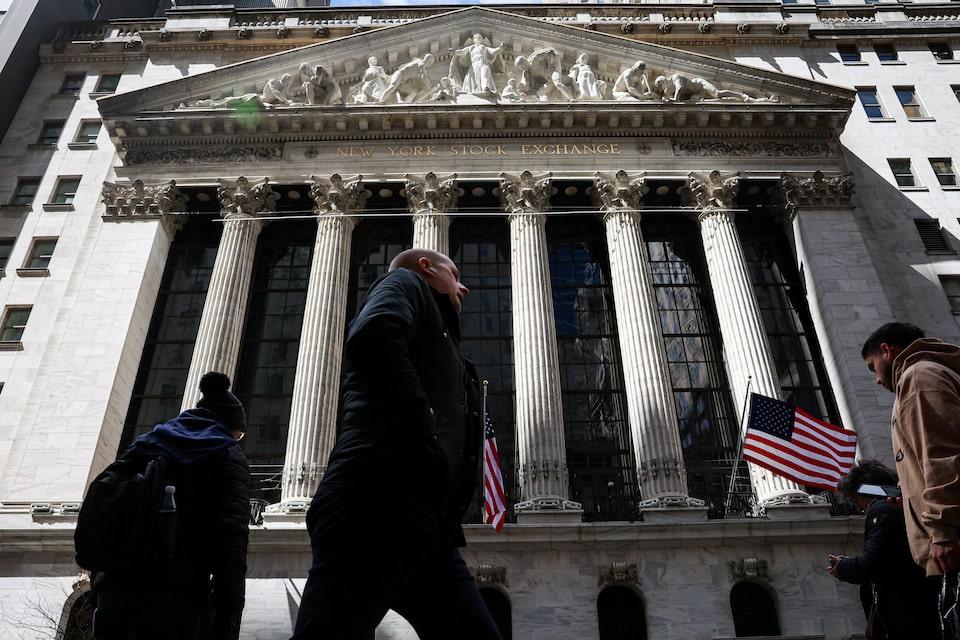
US, European stocks steady as Ukraine talks continue Oil rises as US, Ukraine, Europe hold talks Dollar nudges higher before Jackson Hole meeting NEW YORK/LONDON, Aug 18 (Reuters) - Wall Street and European shares ended flat to modestly lower on Monday ahead of a key central bank gathering later in the week that likely will determine the future path of U.S. interest rate policy. Investors also focused on the meeting between Ukraine's Volodymyr Zelenskiy and President Donald Trump. The U.S. leader said on Monday the United States would help Europe in providing security for Ukraine as part of any deal to end Russia's war in Ukraine. Both heads of state are also pushing for a trilateral meeting with Russian President Vladimir Putin. Sign up here. Financial markets, however, reacted little to news out of the Ukraine talks. "I don't really see anything big in this or anything new or tangible," said Marc Chandler, chief market strategist at Bannockburn Forex in New York. "For Ukraine and the EU, their argument is basically Russia took Crimea and it wasn't good enough for them. Now they're trying to take more of Ukraine. And even now with all these negotiations going on, Russia is trying to make a bigger offensive push." The Zelenskiy meeting followed the Alaska summit with Putin, which did not result in an agreement. Trump after the Alaska talks with Putin appeared more aligned with Moscow on seeking a full peace deal instead of a ceasefire first. The S&P 500 (.SPX) , opens new tab closed little changed on Monday, but remained within striking distance of its all-time high hit on Friday. The pan-European STOXX 600 index (.STOXX) , opens new tab ended the day slightly higher after reaching its strongest level since March last week, which left the MSCI All Country World Index (.MIWD00000PUS) , opens new tab also slightly lower, but not far from its record high touched on Friday. Earlier in the Asian session, indexes in Japan and Taiwan hit record peaks, while a gauge of Chinese stocks (.SSEC) , opens new tab reached its highest level in a decade. Another key focus for the week is the Federal Reserve's August 21-23 Jackson Hole symposium, where Chair Jerome Powell is due to speak on the economic outlook and the central bank's policy framework. U.S. rate futures market has priced in an 85% chance of a quarter-point rate cut at the Fed's meeting on September 17, and is pricing further easing by December. "Fed Chair Jerome Powell will likely signal Friday that risks to employment and inflation are becoming more balanced, which would imply lowering policy rates toward neutral," wrote Andrew Hollenhorst, chief U.S. economist at Citi in a research note. "But he will stop short of committing to a cut next month, awaiting jobs and inflation data for August." The prospect of lower borrowing costs globally has overall underpinned stock markets, and Japan's Nikkei (.N225) , opens new tab climbed to a fresh record high. MSCI's broadest index of Asia-Pacific shares outside Japan (.MIAPJ0000PUS) , opens new tab, ended flat on Monday having scaled a four-year peak last week. In Europe, Germany's DAX (.GDAXI) , opens new tab eased 0.2%. Britain's FTSE (.FTSE) , opens new tab was up 0.2%. ROBUST EARNINGS In the United States, the rally in stocks has been underpinned by a solid earnings season as the S&P 500 EPS grew 11% on the year and 58% of companies raised their full-year guidance. "Earnings results have continued to be exceptional for the mega-cap tech companies," said analysts at Goldman Sachs. This week's results will provide some color on the state of consumer spending in the country, with Home Depot, Target, Lowe's and Walmart all reporting. In bond markets, the yield curve steepened, with the gap between two-year and 10-year Treasury yields hitting 57.8 basis points . That's the largest gap since mid-July. Rates on the long end of the curve rose much faster than those on the front end, suggesting higher inflation expectations. In the FX market, wagers on more Fed easing have weighed on the dollar, which dropped 0.3% against a basket of currencies on Monday and last stood at 98.114 . The dollar rose 0.4% versus the yen to 147.82 , while the euro fell 0.3% to $1.1667 . In commodity markets, gold was flat at $3,333 an ounce after losing 1.9% last week. Oil prices rose in the aftermath of the meeting between Trump and Zelenskiy, which did not really yield meaningful results . Brent was up 1% at $66.52 a barrel, while U.S. crude stood at $63.34 per barrel, up 0.9%. https://www.reuters.com/world/china/global-markets-wrapup-8-graphics-2025-08-18/
2025-08-18 20:32
RIO DE JANEIRO, Aug 18 (Reuters) - State-run oil firm Petrobras (PETR3.SA) , opens new tab is worried about an upcoming change in Brazil's reference oil price that determines some taxes and royalties drillers pay, as it could weaken the economic viability of projects in offshore post-salt fields and in its onshore business, CEO Magda Chambriard said on Monday. Chambriard added that oil in its post-salt fields is worth less than crude in its pre-salt fields. Sign up here. Pre-salt oil fields are massive reserves under a hard salt undersea layer. Post-salt are ones above that layer. Petrobras wants to revitalize oil production in the post-salt fields in northern Rio de Janeiro state, and also onshore, and the change hurts that move, Chambriard said during an interview with local outlet Eixos. "There is still a lot of oil to be produced, but it needs to be economically viable, so it worries me a lot," Chambriard said. Oil regulator ANP changed the criteria to set the reference price in a July meeting, after years spent discussing the matter. The move should increase tax collection and also royalties, boosting Brazil's government coffers. A month before the change was announced, Brazil's Mines and Energy Minister Alexandre Silveira said the change - to take effect September 1 - would bring about 1 billion reais ($184.05 million) in extra money to the federal government by the end of the year. ($1 = 5.4333 reais) https://www.reuters.com/business/energy/petrobras-worried-about-upcoming-change-brazils-reference-oil-price-ceo-says-2025-08-18/

2025-08-18 20:27
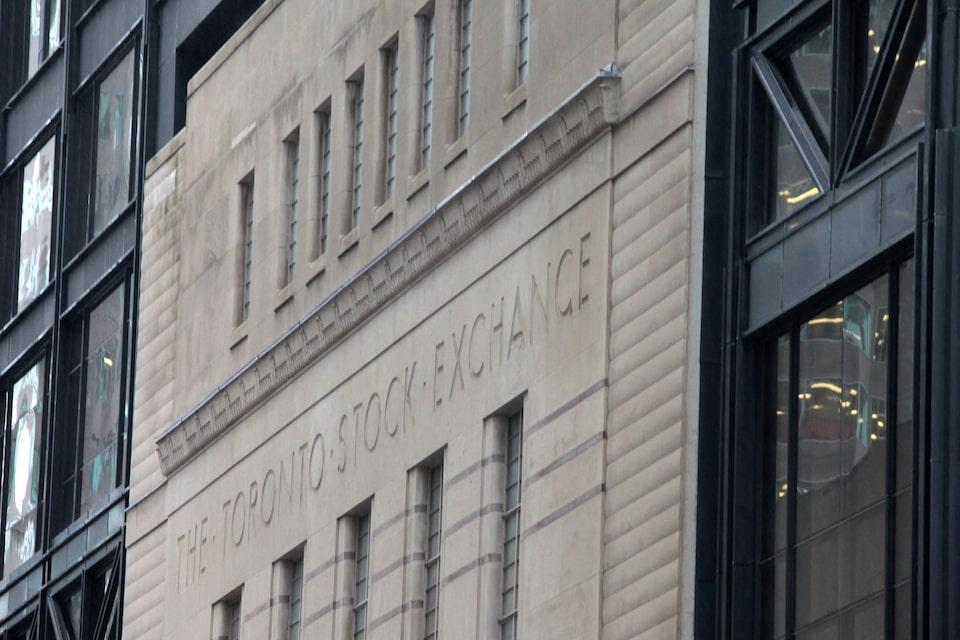
TSX ends up 0.1% at 27,922.85 Consumer staples sector rises 1.4% Telco stocks rise for eighth straight day Air Canada shares fall nearly 3% Aug 18 (Reuters) - Canada's main stock index edged higher on Monday as consumer-related shares notched gains and investors awaited Canadian inflation data that could guide expectations for a Bank of Canada interest rate cut. The Toronto Stock Exchange's S&P/TSX composite index (.GSPTSE) , opens new tab ended up 17.36 points, or 0.1%, at 27,922.85, with the index trading not far off the record closing high it posted last Wednesday. Sign up here. Canada's consumer price index report for July is due on Tuesday, with economists expecting the annual rate of increase in consumer prices to ease to 1.8% from 1.9% in June. "If we get a very light inflation number, that might suggest a Bank of Canada rate cut, which would be positive for every stock basically just about," said Lorne Steinberg, president, Lorne Steinberg Wealth Management Inc. The Canadian central bank has left its benchmark rate on hold at 2.75% since March but has left the door open to further rate cuts if upward price pressures from trade disruptions are contained. Consumer staples (.GSPTTCS) , opens new tab rose 1.4% and consumer discretionary (.GSPTTCD) , opens new tab added 0.8%, while the communication services index (.GSPTTTS) , opens new tab was up for an eighth straight day. "We're looking for some improvement finally to (telecommunication company) earnings going forward, and so for us the sector is very cheap and the dividend yields are sustainable," Steinberg said. The energy (.SPTTEN) , opens new tab sector was down 0.4% even as the price of oil settled nearly 1% higher at $63.42 a barrel. The materials group (.GSPTTMT) , opens new tab also lost ground, ending 0.3% lower, as gold and copper prices dipped. Shares of Air Canada (AC.TO) , opens new tab fell nearly 3% as the third day of a flight attendants' strike led to the company suspending its third-quarter and full-year 2025 guidance. https://www.reuters.com/world/americas/tsx-ends-higher-consumer-related-shares-post-gains-2025-08-18/
2025-08-18 20:25
WASHINGTON, Aug 18 (Reuters) - The U.S. Department of Agriculture will no longer support solar and wind projects on productive farmland, said Agriculture Secretary Brooke Rollins in a post on X on Monday. The move is the latest in a series of actions by the administration of President Donald Trump to stall development of wind and solar energy, which Trump says are unreliable, expensive, and dependent on Chinese supply chains. Sign up here. "Millions of acres of prime farmland is left unusable so Green New Deal subsidized solar panels can be built. This destruction of our farms and prime soil is taking away the futures of the next generation of farmers and the future of our country," Rollins said on X. The USDA has provided over $2 billion for renewable energy projects, like solar and wind, through its Rural Energy for America Program, according to the agency website. The agency has also supported clean energy projects for rural electric cooperatives. The USDA did not immediately respond to a request for comment. About 424,000 acres (1,715 square kilometers) of rural land were affected by wind turbines and solar farms in 2020, less than 0.05% of the nearly 900 million acres used for farmland, according to a 2024 USDA study. Most of that land stayed in agricultural production after the development of the solar or wind projects, the study found. The administration of former President Joe Biden supported solar and wind projects in rural areas and on farms as part of its effort to cut climate-harming emissions and make clean energy more affordable. https://www.reuters.com/sustainability/climate-energy/usda-ends-programs-solar-wind-projects-farms-2025-08-18/

2025-08-18 19:23
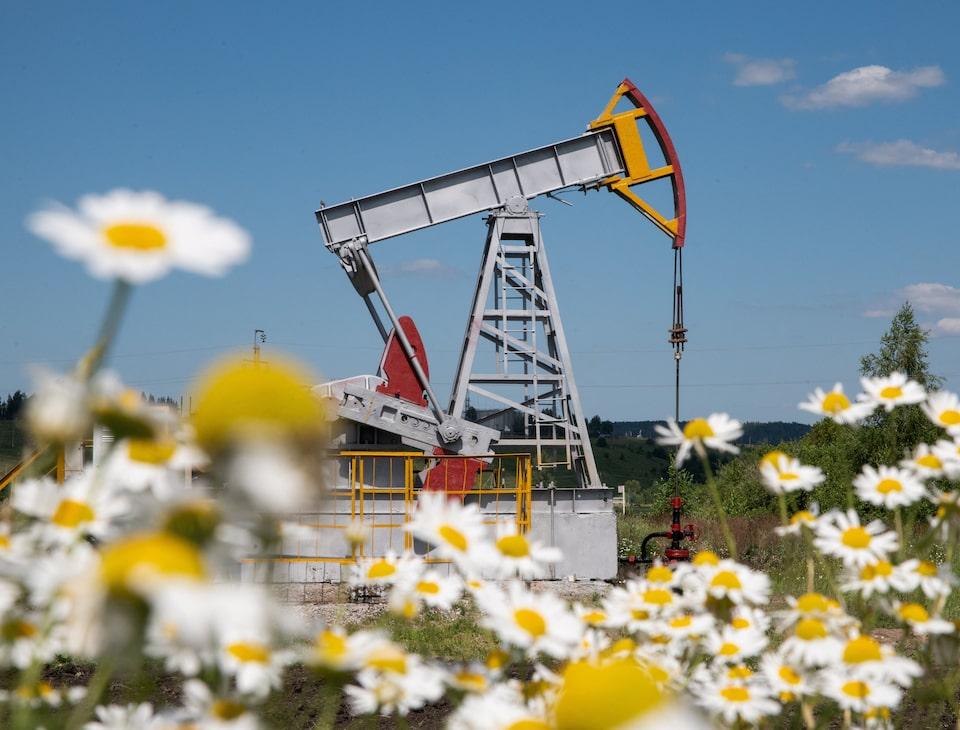
Zelenskiy and European leaders meet with Trump US adviser says if India wants to be a US strategic partner, it has to act like one Drone attacks disrupt Russian crude flows to Hungary and Slovakia through the Druzhba pipeline NEW YORK, Aug 18 (Reuters) - Oil prices settled 1% higher on Monday after talks between U.S. President Donald Trump and his Ukrainian counterpart in the wake of an inconclusive U.S.-Russia summit in Alaska on Friday. Brent crude futures settled 75 cents, or 1.14%, higher at $66.60 a barrel. U.S. West Texas Intermediate crude gained about 62 cents, or 0.99%, to $63.42. Sign up here. Last week, Brent eased by 1.1% while WTI dropped 1.7%. Trump and Ukrainian President Volodymyr Zelenskiy met on Monday at the White House to discuss a path to ending Russia's war in Ukraine. Speaking to reporters in the Oval Office with Zelenskiy seated beside him, Trump expressed hope that Monday's summit could eventually lead to a trilateral meeting with Russian President Vladimir Putin, adding that he believes Putin wants the war to end. Trump told Ukraine on Monday to give up hopes of getting back annexed Crimea or joining NATO, emerging more aligned with Moscow on seeking a peace deal instead of a ceasefire first after his meeting with Putin on Friday. "I don't try to speculate on the outcome," said UBS analyst Giovanni Staunovo. "Now the market's focus is whether a date for the trilateral meeting will be announced." The Alaska summit ended with no agreement to resolve or pause the war, though Trump emerged from talks more aligned with Moscow on seeking a peace deal rather than a ceasefire first. Ukraine on Monday stepped up attacks on Russia's energy infrastructure. Its drones struck an in Russia's Tambov region, leading to the suspension of supplies via the , providing some support to oil prices. Meanwhile, White House trade adviser Peter Navarro said India's purchases of Russian crude were funding the war in Ukraine and had to stop, reviving concerns about supply flows. "India acts as a global clearinghouse for Russian oil, converting embargoed crude into high-value exports while giving Moscow the dollars it needs," Navarro said. Priyanka Sachdeva, senior market analyst at brokerage Phillip Nova, said: "The U.S. adviser's sharp words on India's Russian crude imports, paired with postponed trade talks, revive concerns that energy flows remain hostage to trade and diplomatic frictions, even as peace prospects in Ukraine brighten." Investors are also watching for clues on U.S. interest rates from Federal Reserve Chairman Jerome Powell's comments at this week's Jackson Hole meeting. Elsewhere, Hamas agreed to a 60-day ceasefire proposal with Israel that includes the release of half the hostages held in Gaza and Israel's release of some Palestinian prisoners, an Egyptian official source said on Monday. https://www.reuters.com/business/energy/oil-prices-settle-higher-investors-focus-trump-zelenskiy-meeting-2025-08-18/