2026-01-28 10:53
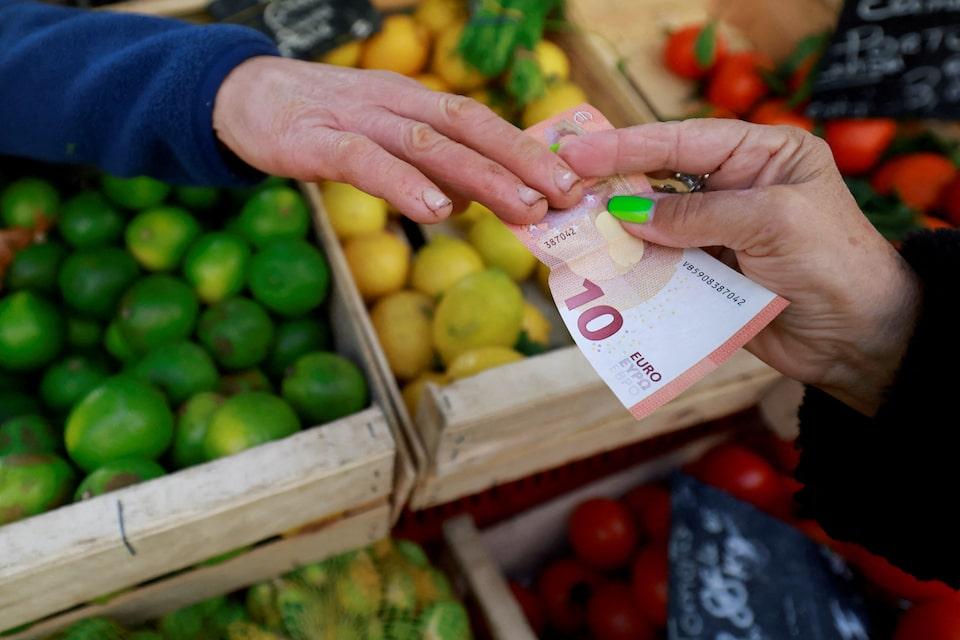
LONDON, Jan 28 (Reuters) - Britain's Office for National Statistics said on Wednesday that it plans to go ahead next month with changes to how it collects grocery price data, which may lead to a small reduction in the reported rate of consumer price inflation. For several years, the ONS has been working on using supermarkets' own data from checkouts - covering more than a billion items a month - instead of prices recorded manually from supermarket shelves or websites. Sign up here. This data, which represents about half of British grocery sales, will now be incorporated into the official consumer price and retail price inflation numbers for February onwards, the ONS said. "The price charged at the till, not the price shown on the shelf, will feed into our inflation statistics," ONS Deputy Director for Prices Transformation Mike Hardie said. "It will also allow us to better capture the impact of a wider range of promotions, such as store discount cards, on average price inflation," he added. Many British supermarkets reserve their biggest discounts for customers who sign up for free loyalty cards which allow retailers to track their spending habits. If the new grocery scanner data had been used from January 2019 to June 2025, it would have lowered the average CPI rate by 0.03 percentage points and changed the published rate most months by at least 0.1 percentage points, the ONS said. The impact of the change appears smaller for prices collected in the first half of 2025 compared with those gathered from 2022 to 2024, Hardie added. The rising cost of living has been a major issue for British households since Russia's full-scale invasion of Ukraine in February 2022 sent household energy bills soaring and added to rising food prices. British inflation was 3.4% in December - the highest in the Group of Seven advanced economies - though the BoE expects it to return to near its 2% target in April or May this year. As well as changes to how it collects grocery prices, the ONS said it would also add an extra collection day for prices of video games and overnight hotel stays from next month onward. Big month-to-month swings in these prices - due to new video game releases and one-off events boosting hotel prices - has contributed to volatility in the headline inflation data. https://www.reuters.com/world/uk/uk-statistics-offices-grocery-price-changes-likely-lower-cpi-rate-slightly-2026-01-28/

2026-01-28 10:48
LONDON, Jan 28 (Reuters) - Options traders have turned overwhelmingly negative towards the dollar this week, after President Donald Trump brushed off the U.S. currency's 2.5% slide this month, pushing the cost of derivatives to buy other currencies to the highest in months on Wednesday. Three-month risk reversals for the euro , which reflect the difference in the price of options to buy the currency and the price of those to sell it, shot to 1.38 percentage points, their highest since last April's five-year peaks and up from around 0.28 a week ago. Sign up here. The euro itself hit $1.20 for the first time since mid-2021 on Wednesday Sterling three-month risk reversals reached -0.04, still showing some bullishness towards the dollar, but this was the highest since last May. They were at -0.475 at the start of January. The pound, meanwhile, has also risen to its strongest against the dollar since July last year . "Participants in the rest of the world continue to trim exposure to U.S. assets, in reflection not only of the increased policy volatility that continues to emanate on the trade front from Washington DC, but also amid speculation that the Trump administration might be pursuing what one could reasonably call a ‘less strong dollar’ policy," Pepperstone senior research strategist Michael Brown said in a note. He added that the "bye America" trade has been a dominant theme for currencies. Trump said on Tuesday the value of the dollar was "great", when asked whether he thought it had declined too much. The Japanese yen is set for its strongest monthly performance against the dollar since last April, as speculation of joint Japanese-U.S. official intervention to support the Japanese currency persists. Three-month risk reversals have hit -2.0 , down from -0.575 at the beginning of the year. Unlike risk reversals for the euro and sterling, a more negative risk reversal for the yen reflects more bullishness towards the currency and more negativity towards the dollar. https://www.reuters.com/business/dollar-options-traders-turn-bearish-bye-america-selloff-deepens-2026-01-28/
2026-01-28 10:48
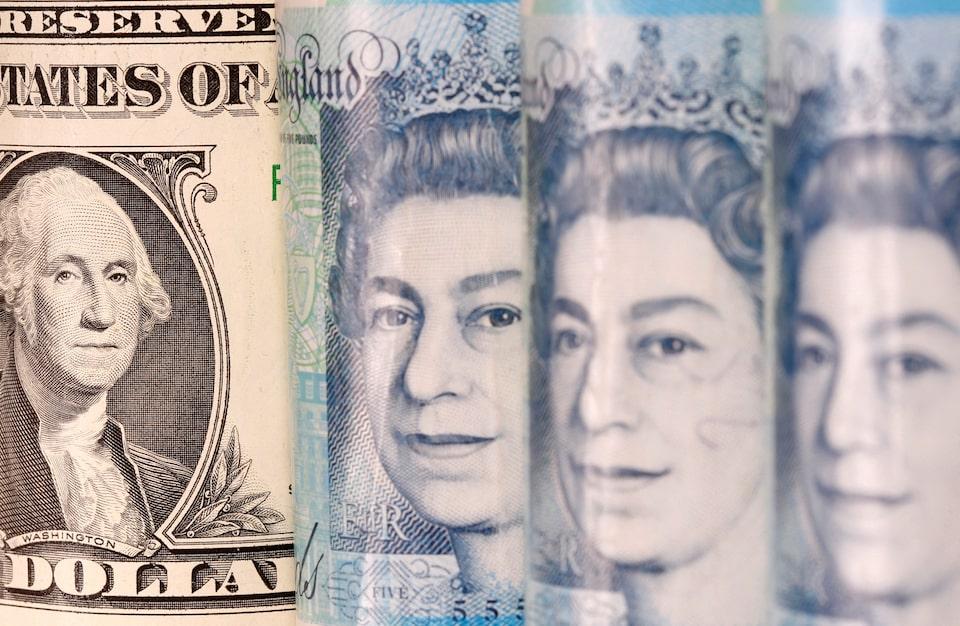
LONDON, Jan 28 (Reuters) - The pound dipped on Wednesday after surging to a four-month high the previous day as comments from U.S. President Donald Trump deepened investors' concerns about the dollar. Sterling was last down 0.44% at $1.3784. It rose more than 1.2% on Tuesday to $1.3867, its highest level since September 2021. Sign up here. Trump said the value of the dollar is "great" when asked about its recent steep falls on Tuesday, adding to a sense among investors that the administration is happy with a cheaper currency, which makes U.S. exports more competitive. The dollar index , which tracks the currency against its major peers, fell around 1.2% to its lowest since February 2022 on Tuesday at 95.57. Analysts on Wednesday said the fall in the pound was a natural reaction after the steep rally the previous day and the 2.6% increase so far this year, which has been aided by stronger economic data in recent weeks. "There's a little bit of taking stock," said Chris Turner, global head of markets at lender ING. "I think 0.4% (lower) is very small compared to the four big figures we've had over the last week," he said, referring to a rise of four cents in the pound. The euro was little changed against the pound on Wednesday at 86.92 pence. It has fallen very slightly versus sterling this year. The focus in currency markets has been firmly on the dollar, which has fallen 2.1% this year after dropping more than 9% in 2025. Trump's erratic economic policymaking and pressure on the Federal Reserve to lower interest rates have weighed on the outlook for the currency, despite the relative strength of the U.S. economy. Turner said signs that the United States and Japan could be coordinating to boost the yen against the dollar had been a key catalyst for the latest selling in the U.S. currency. https://www.reuters.com/business/pound-gives-back-some-gains-after-hitting-four-year-high-trump-comments-2026-01-28/
2026-01-28 10:28
FRANKFURT, Jan 28 (Reuters) - Germany's financial regulator BaFin said on Wednesday there was a risk that markets could question the role of the U.S. dollar - currently hovering near a four-year low - as the global reserve currency. The warning comes a day after U.S. President Donald Trump said the value of the dollar was "great" when asked if he thought the currency had declined too much. His comments added to the pressure on the greenback, which hit a four-year low before edging back up. Sign up here. Mark Branson, president of BaFin, outlining key risks it had identified for 2026, said generally the potential for sudden price corrections in financial markets was high. "There also remains the risk that markets will question the role of the U.S. dollar as the global reserve currency," Branson said. BaFin said U.S. dollar risks for German banks were "manageable". European banks are dependent on short-term refinancing in dollars in order to meet their liabilities. "Bottlenecks or abrupt increases in costs, such as those that occur in times of stress...can trigger liquidity bottlenecks," BaFin said. Branson said regulators were particularly interested in looking at the refinancing profile of larger banks that are most exposed to the dollar. https://www.reuters.com/sustainability/boards-policy-regulation/german-regulator-bafin-sees-risk-that-markets-question-dollars-role-2026-01-28/
2026-01-28 10:14
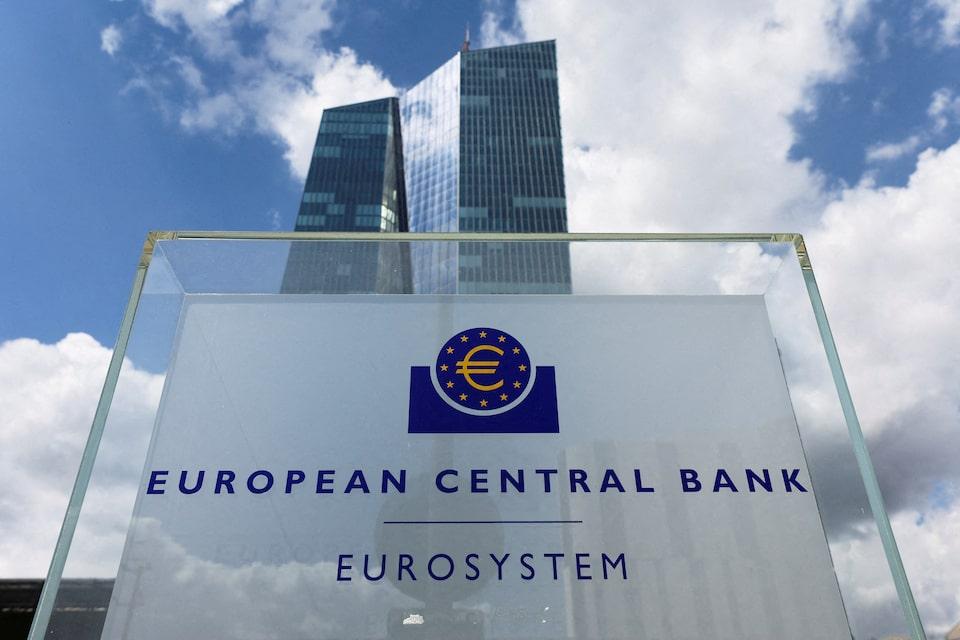
PARIS, Jan 28 (Reuters) - European Central Bank policymakers flagged growing concerns over the euro's quick appreciation against the dollar, warning on Wednesday that it could drag inflation down even as price growth is already set to undershoot the ECB's 2% target. The dollar was heading for its biggest weekly fall since last April on Wednesday, hitting 1.20 against the euro overnight, its lowest since 2021, on worries over U.S. economic policy and a flight to safer assets like gold. Sign up here. "We are closely monitoring this appreciation of the euro and its possible implications for lower inflation," said French central bank chief, Francois Villeroy de Galhau, adding it was a key factor guiding monetary policy "in the months ahead." He said the weaker U.S. dollar against the euro reflected lower confidence amid unpredictable U.S. economic policy. While the ECB has no exchange rate target, the currency does impact interest rate policy as key imports, like energy, are denominated in dollars and a stronger euro lowers costs. FURTHER EURO GAINS COULD MEAN POLICY REVISIT ECB Vice President Luis de Guindos said last summer an exchange rate of 1.20 versus the dollar was acceptable but levels beyond that could become more complicated. Austrian central bank chief Martin Kocher, meanwhile, said persistent euro appreciation could force the ECB to revisit its policy stance. Further euro appreciation could "create of course a certain necessity to react in terms of monetary policy," Kocher told the Financial Times. Longer-term inflation expectations have not moved much this week and financial markets see interest rates unchanged this year, even if there was now a one-in-four chance of a cut by the autumn. Policymakers have argued in recent weeks that policy was perfectly aligned with the outlook and no interest rate debate was likely in the near term. https://www.reuters.com/world/europe/ecb-policymakers-flag-weak-dollar-concerns-2026-01-28/
2026-01-28 07:48
Euro hits key milestone against the dollar Dollar facing broad selling pressure Euro up 2.1% so far in Jan LONDON, Jan 28 (Reuters) - The euro has hit a new milestone against the dollar, highlighting the single currency's renewed push higher as sentiment towards the greenback sours. Here's a look at what's behind the euro's to just over $1.20, its highest level since 2021 . Sign up here. WHY DO WE CARE ABOUT THE EURO HITTING $1.20? Well, traders like big round numbers and $1.20 marks the latest milestone for a currency that surged roughly 13% last year -- its best year versus the greenback since 2017. European Central Bank Vice President Luis de Guindos signalled it as a pain threshold last year. But the path to $1.20 has been rocky -- the euro neared the level in September before easing as the dollar recovered. Still, since falling to lows not far from just $1 a year ago, the euro has strengthened, helped also by European fiscal stimulus led by heavyweight Germany. Historically, the $1.20 level is just above the single currency's average since it was established in 1999. But it's much lower than the $1.60 it touched in 2008. WHY IS IT SO STRONG? The main reasons are well known: U.S. President Donald Trump's confrontations with allies over trade, Greenland and attacks on the Federal Reserve have weakened the dollar. The euro's latest gains came as speculation around joint U.S.-Japanese intervention to stem yen weakness pushes the dollar down broadly. Trump said on Tuesday the dollar's value was "great", when asked whether he thought it had declined too much. Efforts to boost euro zone security and long-term growth efforts, especially in Germany, and a wish to diversify away from the dollar have helped. COMPANIES MUST BE FEELING PAIN? Indeed. The impact of renewed currency strength, making exports more expensive abroad, could start to show up in upcoming earnings. Companies in the STOXX 600 index (.STOXX) , opens new tab derive 60% of their revenues from abroad, of which the U.S. accounts for nearly half, Goldman Sachs estimates. Equity investors have so far largely overlooked the impact of currency strength given an overall brighter economic outlook. Yet European earnings are expected to have shrunk last year. Barclays reckons last year's euro rise explained about half of earnings-per-share downgrades. IS THE ECB WORRIED? ECB officials typically care more about the speed and scale of FX moves rather than the level. The ECB is monitoring how a weakening dollar could impact euro area inflation, the ECB's François Villeroy de Galhau said. They are likely to pay attention since the euro jumped around 2% last week -- its biggest weekly jump since April, when Trump's sweeping Liberation Day tariffs sparked global turmoil. Its rise since last summer has been more gradual than its surge last spring, which should ease some concern. Further euro appreciation may put downward pressure on import prices. The ECB already expects to miss its 2% inflation target this year and next. COULD EURO REPLACE DOLLAR AS TOP RESERVE CURRENCY? The euro's stellar rise reflects increased positive sentiment, but it doesn't mean the euro is about to replace the dollar soon. The dollar accounts for just under 60% of global currency reserves, versus the euro's 20% share. U.S. dominance in global trade and commerce and its deep capital markets mean this is not likely to change any time soon. ECB President Christine Lagarde argues that erratic U.S. economic policy means the euro could play a greater global role, but that would require the bloc to resume a long-stalled process to complete its financial architecture. https://www.reuters.com/business/why-euros-rise-120-is-big-deal-2026-01-28/