2025-08-17 14:25
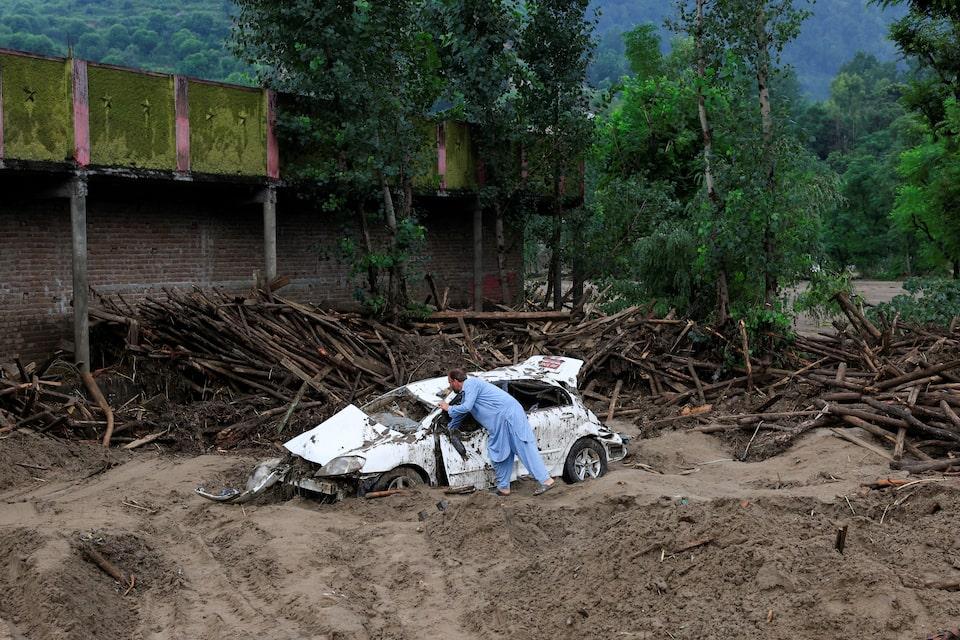
Cloudburst in Buner causes over 150 mm of rain in an hour Global warming shifts monsoon path 100 km west, official says Provincial chief minister pledges to rebuild and compensate victims in Buner BAYSHONAI KALAY, Pakistan, Aug 17 (Reuters) - Aziz Ahmed, a local schoolteacher in Buner, northwestern Pakistan said the thunder accompanying recent torrential rains was so loud he thought the "end of the world had come". Water, rocks and trees were swept down the mountainside after two days of intense monsoon rains, burying people and homes in their path. Sign up here. “You can say that those who survived have gone mad,” said Ahmed, pointing to a house where just one family member still lived. By Sunday morning, the death toll from the rains across the mountainous north of Pakistan had risen to at least 337 people, with most killed in flash floods, according to the National Disaster Management Authority. In Buner, a three-and-a-half-hour drive from the capital Islamabad, 207 lives were lost and others are still missing. Officials said that Buner was hit by a cloudburst, a rare phenomenon where more than 100 mm (4 inches) of rain falls within an hour in a small area. In Buner, there was more than 150 mm of rain within an hour on Friday morning. Syed Muhammad Tayyab Shah, who leads risk assessment at the authority, said that global warming had changed the pattern of the annual monsoon, pushing it around 100 km west of its normal path. More heavy rain was expected across Pakistan until early September, officials said. Ali Amin Gandapur, chief minister of Khyber Pakhtunkhwa, who visited Buner on Sunday, vowed to rebuild infrastructure, compensate victims, and move those living in dangerous places to homes in safer spots. “We can’t bring back the dead, but what we can do, I pledge will be carried out,” said Gandapur. In the remote village of Bayshonai Kalay, the smell of rotting corpses hung in the air on Sunday, as locals waited for heavy machinery to arrive to remove debris. Muhammad Sher said that five houses had existed immediately around where he was standing, with some 30 homes lost in total. He said that some 40 of the villagers’ bodies had been found, including his cousin’s, which had been washed around two kilometers away. “This was a natural disaster which came and wiped out our entire village," Sher said. "Some people were taken away, some were saved, and there was a lot of chaos." https://www.reuters.com/business/environment/flash-floods-devastate-buner-pakistan-after-rare-cloudburst-kills-hundreds-2025-08-17/
2025-08-17 13:12
MOSCOW, Aug 17 (Reuters) - Russia's Federal Security Service (FSB) said that it had prevented a Ukrainian drone attack on the Smolensk nuclear power plant in western Russia on Sunday. The Soviet-era Smolensk nuclear power station, about 330 km (200 miles) southwest of Moscow near the border with Belarus, has three RBMK reactors - the same basic design as the reactors at the Chernobyl nuclear power station. Sign up here. The FSB, the main successor to the Soviet-era KGB, said that Russian radio-electronic warfare systems intercepted a Ukrainian drone over the territory of the Smolensk nuclear power station. "Electronic warfare forces intercepted an aircraft-type UAV - a Ukrainian-made 'Spis' attack UAV - over the territory of the Smolensk Nuclear Power Plant," the FSB said in a statement. "The Ukrainian armed forces continue provocations in the form of an attempted attack by unmanned aerial vehicles on Russian nuclear energy facilities." The Smolensk nuclear power station said it was operating as normal. There was no reported damage to any of the reactors or key operating infrastructure. Russian state news agency RIA Novosti published pictures which showed what it said were parts of the drone. Russia's defence ministry said the Ukrainian drone had been heading towards the Smolensk nuclear power station, Interfax reported. Reuters was unable to immediately verify battlefield reports from either side. There was no immediate comment from Ukraine on the Russian reports. https://www.reuters.com/world/europe/russia-says-it-prevented-ukrainian-drone-attack-smolensk-nuclear-power-plant-2025-08-17/

2025-08-17 10:46
BEIJING, Aug 17 (Reuters) - At least 10 people died in a flash flood in northern China, state media reported on Sunday, with two others still missing, as the East Asian monsoon continues to unleash atmospheric chaos across the world's second-largest economy. The banks of a river running through the grasslands of Inner Mongolia burst at around 10 p.m. (1400 GMT) on Saturday, the report said, washing away 13 people camping on the outskirts of the city of Bayannur, a major agricultural hub. Sign up here. A search and rescue operation involving more than 700 people is underway, according to state news agency Xinhua. One person has been rescued. China has suffered weeks of extreme weather since July, battered by heavier-than-usual downpours with the monsoon stalling over its north and south. Weather experts link the shifting pattern to climate change, testing officials as flash floods displace thousands and threaten billions of dollars in economic losses. Bayannur is an important national grain and oil production base, as well as a sheep breeding and processing centre. At the other end of the country, a three-and-a-half-month fishing suspension in the southern province of Hainan ended on Saturday, state media reported, after agricultural affairs officials ordered ships to shelter in port owing to persistent, heavy rain. In the southwestern province of Sichuan, severe weather on Friday killed two people and injured three others at a beer festival in the city of Mianzhu, after a truss fell on them, according to a local police report on Saturday. The deluge in Inner Mongolia follows a deadly downpour in Beijing - just under 1,000 km (621 miles) away - late last month which killed at least 44 people and forced the evacuation of more than 70,000 residents. The central government announced last week 430 million yuan ($59.9 million) in fresh funding for disaster relief, taking the total allocated since April to at least 5.8 billion yuan. https://www.reuters.com/sustainability/climate-energy/northern-china-flash-flood-kills-10-xinhua-reports-2025-08-17/

2025-08-17 09:03
KAMPALA, Aug 17 (Reuters) - Uganda has inaugurated its first large-scale gold mine, a $250 million Chinese-owned project in the country's east that will also refine the bullion to 99.9% purity, according to a statement from the president's office. The landlocked east African country, which has a variety of minerals including copper, cobalt and iron ore, wants to expand its mining industry and position itself as a major gold producer and exporter. Sign up here. Last year Uganda raised $3.4 billion from gold exports, according to central bank data, about 37% of the country's total export revenue. The figure includes the re-export of gold brought into the country, with nearly all its domestic production from small-scale artisanal miners. While its gold export earnings have increased in recent years, it is still far behind Africa's largest bullion producer Ghana, which raised $11.6 billion from shipments of the metal last year. "In order to wake up in the minerals sector, we must have full value addition for all minerals like gold, lithium, tin among others," President Yoweri Museveni said in a statement issued late on Saturday. The Wagagai Gold Mining Project, owned by Wagagai Mining (U) Limited and covering just over nine square kilometres in Busia district, was inaugurated by Museveni on Saturday. The plant, which has started operations, is expected to process 5,000 tons of gold ore per day and produce about 1.2 metric tons of refined gold a year, according to the statement. That compares to Uganda's total domestic production of just 0.0042 tons in 2023. Uganda will use the revenue generated by exporting gold to develop assets such as power stations and the country's railway, Museveni said. Landlocked Uganda is currently constructing a 2.7 billion euro ($3.16 billion) standard gauge railway to reduce the cost of transporting its exports and imports via neighbouring Kenya. ($1 = 0.8549 euros) https://www.reuters.com/world/africa/uganda-targets-higher-exports-with-first-large-scale-gold-mine-2025-08-17/

2025-08-17 06:24
Aug 17 (Reuters) - The Israeli military said it had targeted an energy infrastructure site that was used by the Iran-aligned Houthis south of the Yemeni capital Sanaa early on Sunday, with Israeli media saying the Haziz power station had been hit. The military said in a statement that the strikes were in response to repeated attacks by the Houthis against Israel, including launching missiles and drones towards its territory. Sign up here. Israeli media reported earlier that the attack on the Haziz power station near the capital was carried out by the Israeli navy. Houthi-run Al Masirah TV said that the power station was hit by an "aggression", knocking some of its generators out of service. It did not indicate the source of the attack. Teams were able to contain a resulting fire, Al Masirah reported, citing the deputy prime minister. At least two explosions were heard earlier in Sanaa, residents said. Israel has been bombing Yemen in response to Houthi attacks on Israel. The Yemeni group has been firing missiles towards Israel, most of which have been intercepted, in what they describe as support for Palestinians during the war in Gaza. The United States and the UK have also previously launched attacks against the Houthis in Yemen. In May, the U.S. announced a surprise deal with the Houthis where it agreed to stop a bombing campaign against them in return for an end to the group's attacks on shipping in the Red Sea, though the Houthis said the deal did not include sparing Israel. https://www.reuters.com/world/middle-east/israel-says-it-targeted-energy-infrastructure-site-used-by-houthis-near-yemeni-2025-08-17/

2025-08-17 06:22
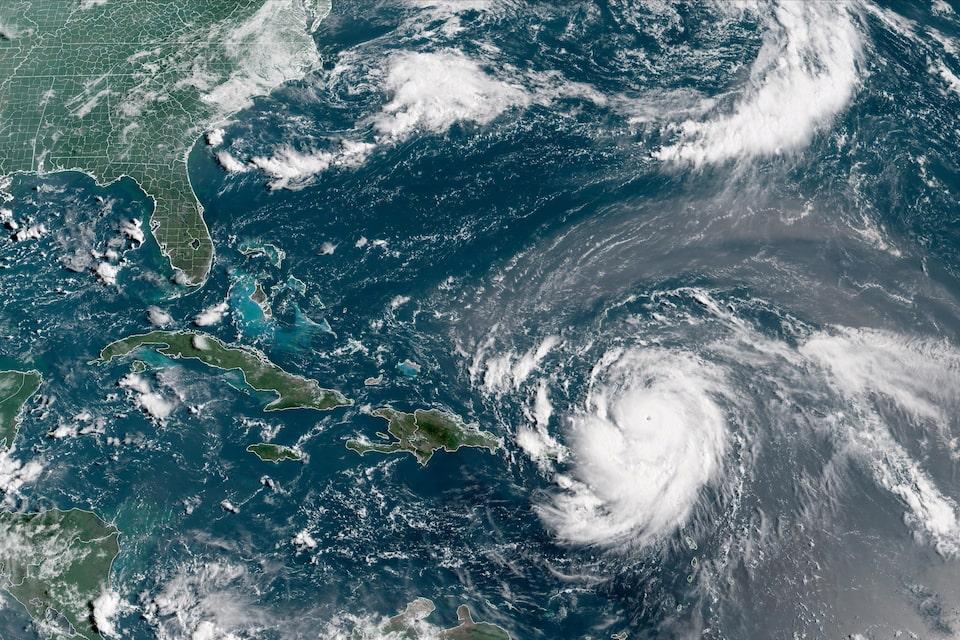
Aug 17 (Reuters) - Erin, the first hurricane of the 2025 Atlantic season, has been downgraded to Category 3, the U.S. National Hurricane Center said early on Sunday, as the storm's wind speed eased slightly. The hurricane was about 330 miles (530 km) east-southeast of Grand Turk Island packing maximum sustained winds of 125 mph (205 kph). Sign up here. It had been gauged as high as a catastrophic Category 5 with maximum sustained winds of 160 mph (240 kph), then downgraded to a Category 4. It had earlier been forecast to strengthen into this week. The meteorological services of France and the Netherlands discontinued tropical storm watches for St. Martin, St. Barthelemy and Sint Maarten, the NHC said. On Sunday, Erin was moving west-northwest at nearly 14 mph (22 kph) with a decrease in forward speed expected on Sunday and a turn to the north on Monday and Tuesday, the NHC said. Erin was forecast to pass to the east of the Turks and Caicos islands and the southeastern Bahamas on Sunday night and Monday. Swells generated by Erin will continue to affect parts of the northern Leeward Islands, the Virgin Islands, Puerto Rico, Hispaniola and the Turks and Caicos Islands for the next couple of days, the NHC said. These swells will spread to the Bahamas, Bermuda, the east coast of the United States, and Atlantic Canada during the early and middle portions of the week. Rough ocean conditions will likely cause life-threatening surf and rip currents, the NHC said. The Bahamas, which provides some meteorological services for the Turks and Caicos Islands, issued a Tropical Storm Watch for the British islands to its southeast. Erin has also raised concerns about wildfire risks if human-caused sparks ignite parched vegetation and strong dry winds fan the flames. BMS Group Senior Meteorologist Andrew Siffert said these conditions could arise if Erin grows into a powerful offshore storm fueled by colliding warm and cold air rather than tropical seas. Insurance-linked securities manager Twelve Securis said on Friday that Erin was forecast to remain far enough offshore to spare the U.S. East Coast from significant impacts. https://www.reuters.com/business/environment/erin-downgraded-category-3-hurricane-nhc-says-2025-08-17/