2025-08-15 05:41
Global stocks gain after producer price wobble U.S. retail data also expected later on Friday Markets awaiting US-Russia meeting in Alaska LONDON, Aug 15 (Reuters) - Global stocks traded near record highs on Friday as investors awaited talks between Donald Trump and Vladimir Putin over Ukraine in Alaska and for U.S. retail data that may give clues on the health of the world's biggest economy. The MSCI All Country World Index (.MIWD00000PUS) , opens new tab consolidated recent gains as European stocks edged higher in early trading (.STOXX) , opens new tab. The index was last up 0.2% at 953.54, just shy of the record level of 954.21 set on Wednesday. Sign up here. Wall Street futures were broadly flat. , The White House has said the Trump-Putin meeting will take place at 11 a.m. Alaska time (1900 GMT), with the U.S. president's hopes of a ceasefire agreement on Ukraine uncertain. Trump has said a second summit involving Ukrainian President Volodymyr Zelenskiy could follow if the talks go well. "There's still a small degree of risk premium in European markets because of the war. Any type of resolution will ultimately pare that back," said Shaniel Ramjee, co-head of multi-asset at Pictet Asset Management, adding that oil and other commodity prices could also react. "But I think that the market has learnt not to expect too much from these negotiations. Ultimately, Zelenskiy and the Europeans are not invited. They will need to be involved in any final negotiation." Investors are also training their sights on U.S. retail data due later, after an unexpected spike in producer price data on Thursday renewed inflation concerns and pared market expectations for Federal Reserve rate cuts this year. "What it did was to get rid of all the chat about a 50 basis point cut (in September)," said Mike Houlahan, director at Electus Financial Ltd in Auckland. The 10-year U.S. Treasury yield was flat at 4.29%, after the previous day's 5 basis point rise in the aftermath of the PPI data. The dollar index , which tracks the greenback against a basket of six major currencies, was last trading down 0.3% at 97.897. Japanese GDP data released on Friday showed the economy expanding by an annualised 1.0% in the April-June quarter, beating analyst estimates. The dollar weakened 0.6% against the yen to 146.875 . In commodities markets, Brent crude was down 0.6% at $66.46 per barrel. Gold was broadly flat at $33,337 per ounce. Cryptocurrency markets stabilised after bitcoin touched a record $124,480.82 on Thursday. The digital currency was last up 0.9%. https://www.reuters.com/world/china/global-markets-wrapup-4-2025-08-15/
2025-08-15 05:24
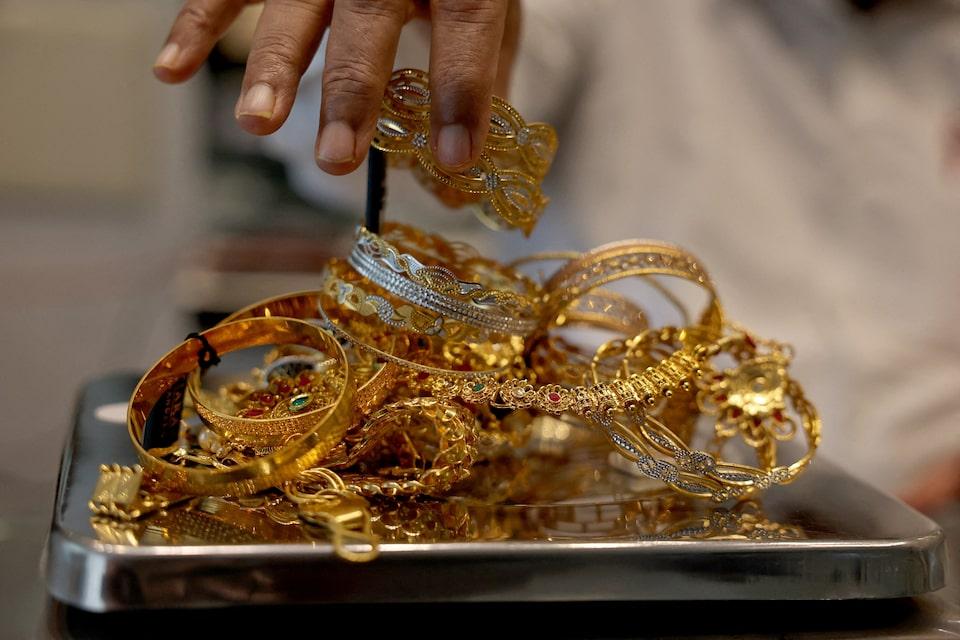
Markets await outcome of Trump-Putin summit Gold down 1.8% so far this week US producer inflation heats up as goods, services prices soar Aug 15 (Reuters) - Gold prices gained on Friday, helped by a pullback in the dollar, although bullion was headed for a weekly fall as hotter-than-expected U.S. inflation data dented expectations for a super-sized 50-basis-point (bps) Federal Reserve rate cut. Spot gold rose 0.2% to $3,341.90 per ounce as of 0653 GMT. Bullion has lost 1.5% for the week. U.S. gold futures for December delivery gained 0.1% to $3,387.60. Sign up here. "Gold is still grappling with the aftermath of the PPI jump, which raised questions over just how far the Fed may be inclined to reduce rates this year," said Tim Waterer, chief market analyst at KCM Trade. U.S. producer prices index (PPI) rose 3.3% year-on-year in July, beating forecasts of a 2.5% gain, Labor Department data showed on Thursday. Weekly jobless claims came in lower than expected at 224,000 versus estimates of 228,000. Separately, U.S. consumer prices increased only marginally in July, bolstering hopes of a Fed rate cut. However, the PPI reading tempered hopes for an aggressive easing cycle, making it less likely that the Fed would opt for a 50 bps reduction at its next meeting. "If this spike in wholesale prices turns into a trend which then translates into CPI gaining pace, expectations for U.S. rate cuts could be scaled back, which may hinder gold's performance from a yield perspective," Waterer said. St. Louis Fed President Alberto Musalem said a half-point rate cut in September was not warranted, a day after Treasury Secretary Scott Bessent said it was possible. Non-yielding gold thrives in a low-interest-rate environment. Offering some respite to gold, the dollar (.DXY) , opens new tab fell 0.2%, making gold less expensive for other currency holders. On the geopolitical front, investors are downplaying the chances of a major breakthrough on ending the war in Ukraine from Friday's meeting between Donald Trump and Vladimir Putin, despite some signs of progress. Elsewhere, spot silver gained 0.1% to $38.02 per ounce, platinum rose 0.5% to $1,363.90, and palladium lost 0.2% to $1,143.25. https://www.reuters.com/world/china/gold-set-weekly-drop-us-data-dims-large-fed-rate-cut-hopes-2025-08-15/
2025-08-15 04:48
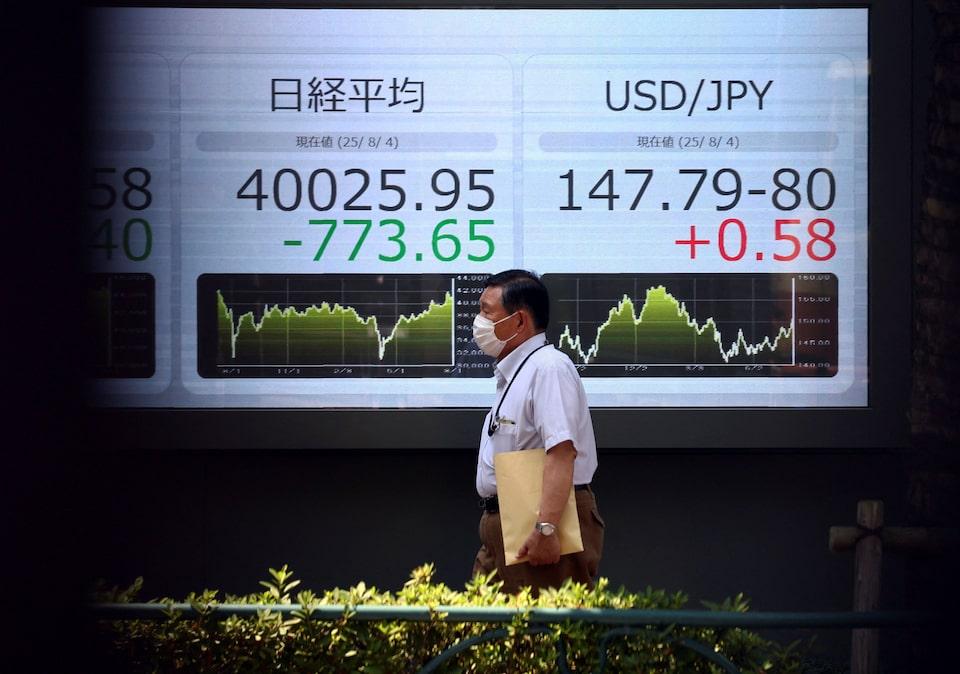
A look at the day ahead in European and global markets from Gregor Stuart Hunter Did you really think that the mighty U.S. stock market was going to be stopped in its tracks by a measly PPI print, even if it was a blowout? Sign up here. Despite the jump in wholesale prices, S&P 500 futures clung to a gain of 0.2% in Asian trading, even as Nasdaq futures slipped for a third consecutive day. The yield on the U.S. 10-year Treasury bond was down 2 basis points at 4.2732%. One consequence of the hot PPI print is that the market has given up on hopes of a jumbo 50 basis point rate cut from the Federal Reserve, according to the CME Group's FedWatch tool. But traders are still pricing in a 92.1% probability of a 25 basis point rate cut at its September meeting, compared with a 100% likelihood of a cut yesterday. In Asia, data from the region's two biggest economies showed Japan's economy running hot last quarter to keep shelves stocked ahead of Donald Trump's tariff deadline, while China indicated renewed signs of slack. Hong Kong stocks (.HSI) , opens new tab fell 1.2% after the release of weaker-than-expected Chinese economic data for July including retail sales and industrial production, while the large-cap CSI 300 (.CSI300) , opens new tab gained 0.5% as traders speculated that the data may justify extra stimulus. Markets in India and South Korea are closed for public holidays. The Nikkei 225 (.N225) , opens new tab rebounded 1.2% after snapping a six-day winning streak on Thursday with its biggest one-day selloff since April 11, as Japanese GDP data showed the economy expanding by an annualised 1.0% in the April-June quarter, beating analyst estimates and providing more signals to the Bank of Japan, which next meets on September 19. The dollar weakened 0.3% against the yen to 147.64 . In commodities markets, Brent crude was down 0.1% at $66.79 per barrel, not far from a two-month low reached on Wednesday, ahead of a meeting in Alaska between U.S. President Donald Trump and Russian leader Vladimir Putin on Friday. "The first meeting doesn’t seem like a major market-moving event - it’s more to set up a second meeting, which will likely be more important," said Marc Velan, head of investments at Lucerne Asset Management in Singapore. "If a ceasefire is reached, expect a positive reaction in the euro and a weaker dollar; the opposite if a ceasefire fails." Key developments that could influence markets on Friday: EU data: Euro zone reserve assets for July UK debt auctions: Reopening of 1-month, 3-month and 6-month government debt auctions https://www.reuters.com/world/china/global-markets-view-europe-2025-08-15/

2025-08-15 02:41
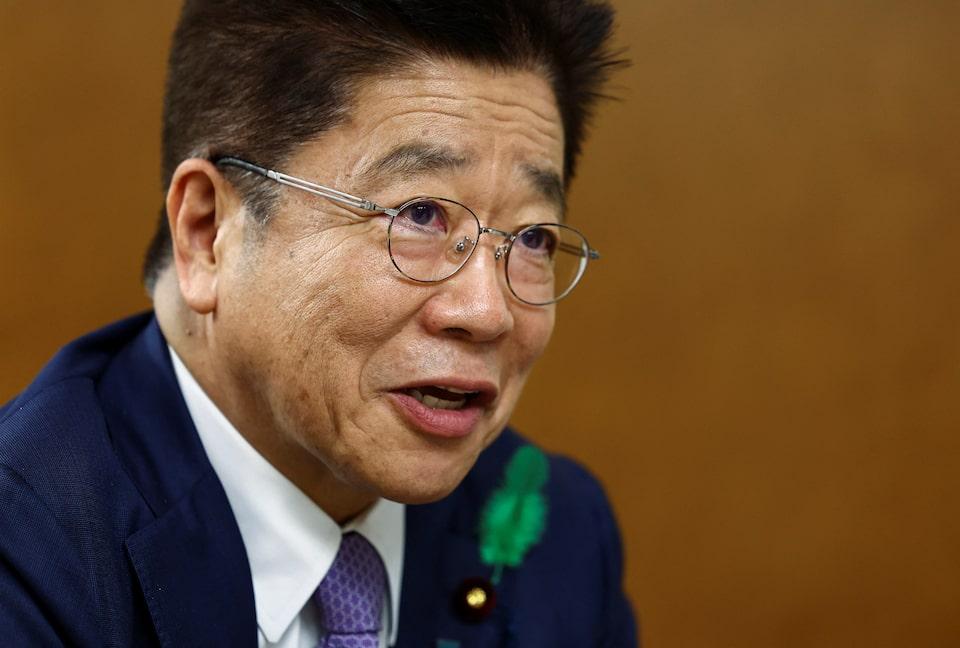
TOKYO, Aug 15 (Reuters) - Japan's Finance Minister Katsunobu Kato said on Friday the government must closely watch the economic and price backdrop behind recent business sector calls for the central bank to raise interest rates. But specific monetary policy decisions were up to the Bank of Japan, he said at a news conference. Sign up here. Kato declined to comment when asked about U.S. Treasury Secretary Scott Bessent's remarks that the BOJ is likely to raise rates and that it was behind the curve in tackling inflation risks. The remarks by Bessent helped push up the yen and Japanese government bond (JGB) yields, as some market players saw an increasing chance of a near-term rate hike by the BOJ. Economic revitalisation minister Ryosei Akazawa said Bessent's comments were not intended to pressure the BOJ into raising borrowing costs. "He absolutely was not calling on the BOJ to raise rates," and was rather predicting it could do so as the bank was behind the curve in addressing inflationary risks, Akazawa told a separate news conference. https://www.reuters.com/business/finmin-says-japan-must-watch-economic-backdrop-calls-boj-rate-hike-2025-08-15/
2025-08-15 00:47
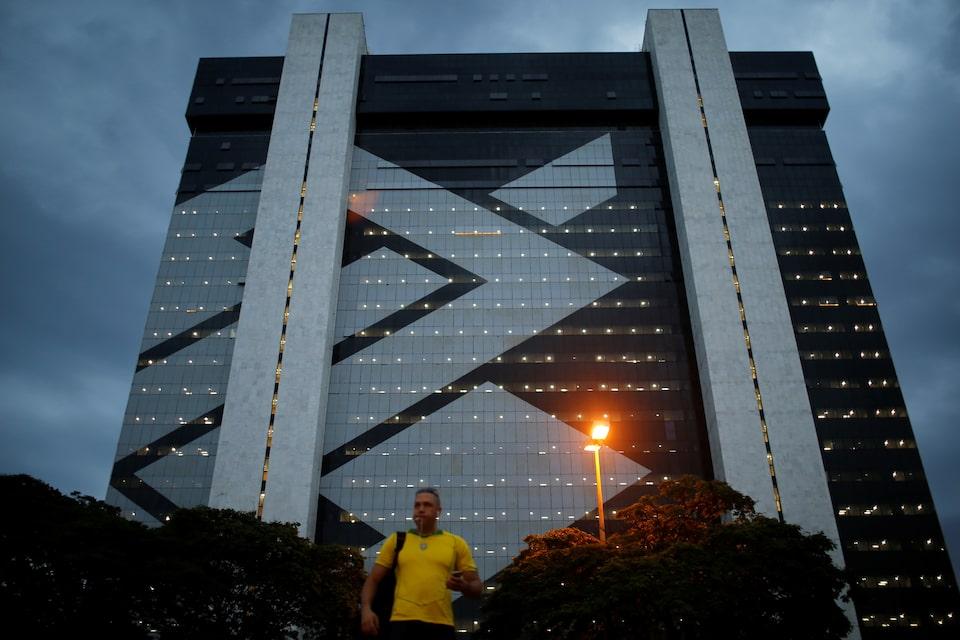
SAO PAULO, Aug 14 (Reuters) - Brazilian state-run lender Banco do Brasil SA (BBAS3.SA) , opens new tab on Thursday reported a 60% slide in second-quarter adjusted net profit, and it announced a sharp cut to its full-year outlook and dividend payout. Net profit came in at 3.8 billion reais ($702.4 million), below the 5 billion reais expected in an LSEG poll. Sign up here. "2025 is a year of adjustments for growth acceleration," Chief Executive Tarciana Medeiros said in the earnings statement. Banco do Brasil, which was the last among Brazil's largest listed banks to release results, posted a return on equity of 8.4%, down from 21.6% a year earlier and 16.7% in the first quarter. In a separate filing, Banco do Brasil cut its 2025 shareholder payout to 30% of its profit, down from the previous range of 40% to 45%, attributing the move to factors including the results, cash needs and capital projections. The earnings follow a challenging first quarter, when higher-than-expected delinquency in its key agribusiness loan portfolio and regulatory changes hurt earnings. The bank's shares have fallen more than 30% since the first-quarter report, which had led the lender to suspend some of its initial 2025 projections. Banco do Brasil resumed forecasts for those metrics on Thursday, projecting full-year adjusted net profit between 21 billion and 25 billion reais, far below its initial range of 37 billion to 41 billion reais provided at the start of the year. The mid-point of the fresh range, 23 billion reais, also falls short of the 26.8 billion reais expected by analysts polled by LSEG. The lender also cut the estimate for its credit portfolio growth to between 3% and 6% this year, from its previous expectation of between 5.5% and 9.5%. ($1 = 5.4101 reais) https://www.reuters.com/business/finance/banco-do-brasil-quarterly-profit-slides-slashes-yearly-outlook-dividend-2025-08-14/
2025-08-15 00:37
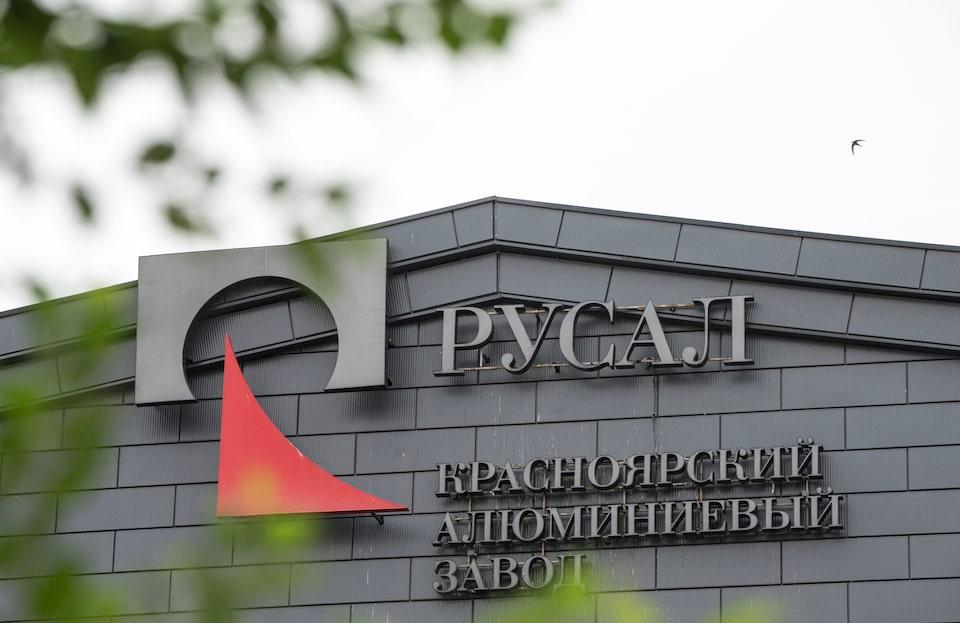
Aug 15 (Reuters) - Rusal (RUAL.MM) , opens new tab, reported a first-half net loss on Friday, as rising costs, higher interest expenses and foreign exchange fluctuations weighed on the Russian aluminium producer's earnings. The Hong Kong-listed company, the world's largest aluminium maker outside China, swung to a net loss of $87 million for the six-month period ended June 30, from a profit of $565 million last year. Sign up here. Rusal has faced sustained pressure for more than three years from the fallout of Western sanctions on Russia over the war in Ukraine. While not directly sanctioned, the company has seen some Western buyers avoid new contracts for Russian metal. Finance expenses surged by $408 million, reflecting higher interest on bank and company loans, bonds and other charges, while a foreign exchange loss added $181 million to the bottom-line hit. Cost of sales jumped about 40% to $6.11 billion, driven by increased volumes of primary aluminium sales and higher alumina and raw material prices, as well as elevated electricity and transport costs. Still, Rusal's revenue rose 32% to $7.52 billion due to higher sales of primary aluminium and alloys. https://www.reuters.com/markets/asia/russian-aluminium-giant-rusal-swings-first-half-loss-expenses-surge-2025-08-15/