2025-08-14 20:35
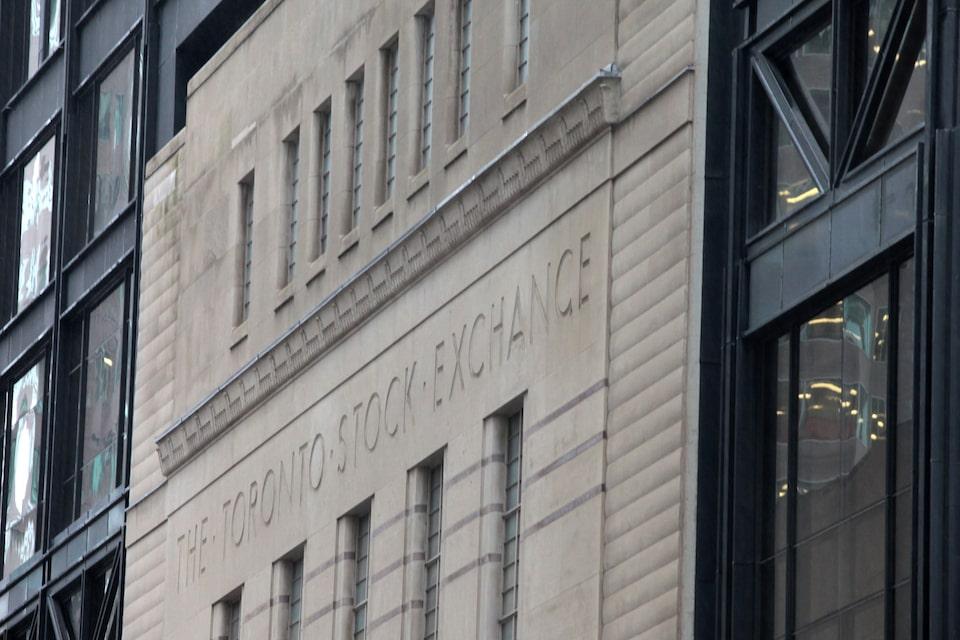
TSX ends down 0.3% at 27,915.99 Technology sector falls 3.1% Bird Construction tumbles 15.4% on earnings miss Defensive sectors notch gains Aug 14 (Reuters) - Canada's main stock ended lower on Thursday, led by declines for industrial and technology shares, as a large increase in U.S. producer prices complicated the inflation outlook for the Federal Reserve ahead of a major economic gathering next week. The S&P/TSX composite index (.GSPTSE) , opens new tab was down 77.44 points, or 0.3%, at 27,915.99, after posting on Wednesday a record closing high. Sign up here. "Markets are waiting to see what the central bankers have to say at Jackson Hole next week, and we're in that lull after most of the quarterly earnings results have come out, although not all of them," said Brian Madden, chief investment officer at First Avenue Investment Counsel Inc. The Kansas City Federal Reserve's annual symposium in Jackson Hole, Wyoming is due to be held August 21-23. The event is often attended by the world's most influential monetary policymakers. U.S. producer prices increased by the most in three years in July. The data is likely to bolster concerns among Fed policymakers that rising inflation remains a risk, intensifying debate over the rationale for an interest rate cut next month. The technology sector (.SPTTTK) , opens new tab fell 3.1%, its second-straight day of declines, and industrials ended 1.1% lower. Bird Construction (BDT.TO) , opens new tab shares tumbled 15.4% after the company's quarterly profit missed estimates. "While the index is down overall, there's a bit of a defensive rotation going on within the market," Madden said. Defensive stocks, such as telecom companies, utilities and real estate tend to pay high dividends and be less economically sensitive than the broader market. The communication services index (.GSPTTTS) , opens new tab rose 0.8%, the utilities group (.GSPTTUT) , opens new tab was up 0.2% and real estate (.GSPTTRE) , opens new tab ended 0.3% higher. Energy (.SPTTEN) , opens new tab also posted gains, rising 0.4%, as the price of oil settled 2.1% higher at $63.96 a barrel ahead of a meeting on Ukraine between U.S. President Donald Trump and his Russian counterpart Vladimir Putin. https://www.reuters.com/world/americas/tsx-pulls-back-record-high-investors-turn-focus-jackson-hole-2025-08-14/
2025-08-14 20:32
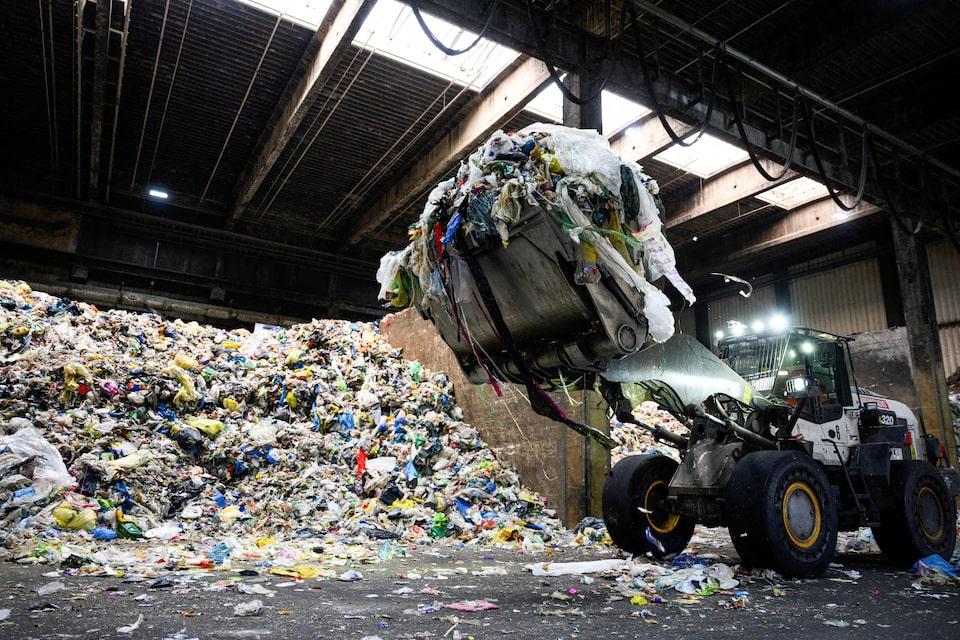
Talks at risk of ending with no deal Race for compromise on final day Oil producing nations oppose virgin plastics curbs GENEVA, Aug 14 (Reuters) - Talks to create the world's first legally binding treaty to tackle plastic pollution hung in the balance late on Thursday as countries scrambled to bridge deep divisions over the extent of future curbs on a final day of negotiations in Geneva. Late Thursday night, countries awaited a new text which could be the basis for further negotiations after delegations who want an ambitious plastics treaty threw out the one proposed on Wednesday. Sign up here. States pushing for a comprehensive treaty, including Panama, Kenya, Britain and the European Union, shared frustration that key articles on the full life cycle of plastic pollution from the production of polymers to the disposal of waste, as well as the harm to health, had been removed entirely from the text. Oil-producing nations are against curbs on the production of virgin plastics derived from petroleum, coal, and gas, while others want it to be limited and to have stricter controls over plastic products and hazardous chemicals. "It's proving unlikely all countries will be able to bridge their differences," said Zaynab Sadan of the World Wildlife Fund (WWF), adding that agreement was as far away as it had ever been in nearly three years of talks. "A treaty that covers the full life cycle of plastics and can evolve with science is a vital step. A weak, static agreement serves no one," EU Commissioner Jessika Roswall said in a statement. "The next few hours will show whether we can rise to the moment," she added. Panama described Wednesday's draft text as "repulsive" and called for a complete rewrite. Saudi Arabia, which is resisting major curbs, said nothing could be agreed until the treaty's scope is clearly defined. More than 1,000 delegates have gathered in Geneva for the sixth round of talks, after a meeting of the Intergovernmental Negotiating Committee (INC-5) in South Korea late last year ended without a deal. On Thursday, advocacy groups held a banner and chanted urging against a "weak treaty" as they waited for delegates to arrive in the U.N. plenary hall in Geneva for further discussions. The OECD warns that without intervention, plastic production will triple by 2060, further choking oceans, harming health, and exacerbating climate change. "It will be very important to spend every single hour of the last day of negotiation finding a good text that can deliver on the promise to end plastic pollution," said Giulia Carlini, a Senior Attorney for the Environmental Health Program of the Center for International Environmental Law (CIEL). COMPROMISE Norwegian Minister of Climate and Environment Andreas Bjelland Eriksen, co-chair of the High Ambition Countries group, told Reuters that all parties need to compromise. "We are willing to discuss all articles, three, six, for example, to be able to create the package that can be good enough for everyone," he said, pointing to potential openness to re-discussing restrictions on chemicals and production. "We're optimistic ... We think this can be really good for our industry, society, and for the environment," Ross Eisenberg, president of America's Plastic Makers, which is part of the American Chemistry Council, told Reuters. The Council, which supports a deal without limits on plastic production, warned that the U.S. might not ratify a treaty containing provisions to ban chemicals or restrict plastic production. However, Colombian lawmaker Juan Carlos Lozada urged that no deal would be better than a watered-down deal. Some 300 businesses, including Unilever (ULVR.L) , opens new tab, have pressed for an ambitious treaty that harmonizes rules globally. "If we don't get that degree of harmonization, we risk further fragmentation ... and higher costs," Ed Shepherd, senior global sustainability manager at Unilever, told Reuters. https://www.reuters.com/sustainability/climate-energy/countries-race-late-breakthrough-deadlocked-plastic-pollution-talks-2025-08-14/
2025-08-14 20:27
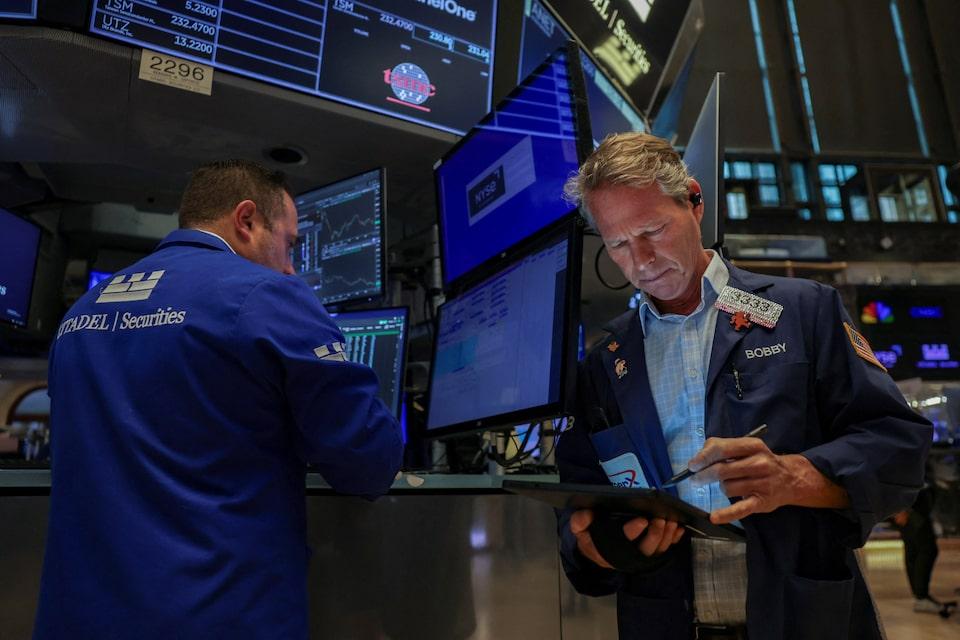
Indexes: Dow -0.02, S&P 500 +0.03%, Nasdaq -0.01% Intel rallies on news of govt eyeing stake Producer inflation rises more than expected in July Markets reduce Fed rate-cut expectations for 2025 Deere, Tapestry flag strains from US tariffs NEW YORK, Aug 14 (Reuters) - Wall Street's main indexes were mixed on Thursday with S&P 500 edging up to a closing high, while the Dow Jones and Nasdaq were flat, after a hotter-than-expected producer prices report dampened expectations of potential interest-rate cuts. A Labor Department report showed producer prices increased the most in three years in July due to a surge in the costs of goods and services, suggesting a broad pickup in inflation was imminent. Sign up here. Traders trimmed their Fed rate-cut expectations for the rest of the year to about 56.7 basis points, according to data compiled by LSEG, compared with around 63 bps before the report. But they are still fully pricing in a quarter-percentage-point cut in September. "The implication is that the Fed is going to offer a 25-(basis point) cut in September. But it will be a hawkish cut. It's way too early still for the Fed to wish to guide the market towards an extended easing cycle," said Thierry Wizman, global FX and rates strategist at Macquarie Group. "The next important thing will be the Expenditures Price Index later this month. If there are signals that there's inflation broadly in services, the market will take that adversely." A separate report on Thursday showed the number of Americans filing new applications for jobless benefits fell last week. The Dow Jones Industrial Average (.DJI) , opens new tab closed 11.01 points, or 0.02%, down to 44,911.26, the S&P 500 (.SPX) , opens new tab gained 1.96 points, or 0.03%, to 6,468.54 - a new closing high - and the Nasdaq Composite (.IXIC) , opens new tab lost 2.47 points, or 0.01%, to 21,710.67. On Thursday, seven of the 11 S&P 500 sectors declined. Recent data reflecting labor market weakness and a moderate rise in consumer prices had strengthened expectations that the central bank will potentially lower interest rates next month. However, Thursday's report fanned concerns that U.S. tariffs on imports could start to impact prices in the coming months and dampen a rally in U.S. stocks that had helped the benchmark S&P 500 (.SPX) , opens new tab and tech-heavy Nasdaq (.IXIC) , opens new tab log record highs over the past two sessions. "U.S. stocks are pricy," said Sam Stovall, chief investment strategist CFRA Research. The S&P 500 index is trading at a price-to-earnings ratio of 23 based on forward estimates, or a near-40% premium to its 20-year average, he said. The hotter-than-expected PPI report now has investors pulling petals from a daisy saying "They (the Fed) will cut rates, they won’t cut rates," he added. St. Louis Fed President Alberto Musalem, a voting member on the Federal Open Market Committee this year, said a half-point rate cut at the Fed's September meeting is not warranted, a day after Treasury Secretary Scott Bessent said it was possible. Intel Corp (INTC.O) , opens new tab rose 7.4% as Bloomberg News reported the Trump administration is in talks with Intel to have the U.S. government potentially take a stake in the chipmaker, the news organization reported on Thursday, citing people familiar with the plan. Cisco Systems (CSCO.O) , opens new tab declined 1.6% after the network equipment manufacturer's broadly in-line forecast did little to encourage investors. Deere & Co (DE.N) , opens new tab fell 6.8% after the farm-equipment maker reported a lower quarterly profit and tightened its annual profit forecast, while Tapestry (TPR.N) , opens new tab plunged 15.7% after the Coach handbag maker forecast annual profit below estimates. Both companies warned of tariffs impacting their businesses. In geopolitics, focus will be on President Donald Trump's upcoming meeting with Russia's President Vladimir Putin as he seeks to achieve a halt to the Ukraine conflict. Declining issues outnumbered advancers by a 2.29-to-1 ratio on the NYSE. On the Nasdaq, declining issues outnumbered advancers by a 2.14-to-1 ratio. The S&P 500 posted 15 new 52-week highs and one new low while the Nasdaq Composite recorded 78 new highs and 78 new lows. Volume on U.S. exchanges was relatively light, with 16.3 billion shares traded, compared to an average of 18.3 billion shares over the previous 20 sessions. https://www.reuters.com/world/us/wall-street-ends-flat-sp-hits-another-closing-high-rate-cut-bets-waver-2025-08-14/
2025-08-14 20:25
Aug 14 (Reuters) - Warren Buffett's Berkshire Hathaway (BRKa.N) , opens new tab has acquired 5 million shares in UnitedHealth Group (UNH.N) , opens new tab, a regulatory filing showed on Thursday, sending the health insurer's stock up 7% in extended trading. Billionaire investor Buffett owned about 1.18 million shares in UnitedHealth between 2006 and 2009, before selling his entire stake in 2010 amid a broader retreat from health insurers. Sign up here. The investment comes as UnitedHealth faces soaring medical costs, federal investigations, the fallout of the killing of a top executive and a cyberattack last year. The healthcare conglomerate has signaled prolonged pain with a new, far lower profit forecast as it sees billions of additional costs in the upcoming quarters. Shares of the Dow component have slumped 46% so far this year. https://www.reuters.com/business/healthcare-pharmaceuticals/buffetts-berkshire-acquires-5-million-shares-unitedhealth-2025-08-14/
2025-08-14 20:24
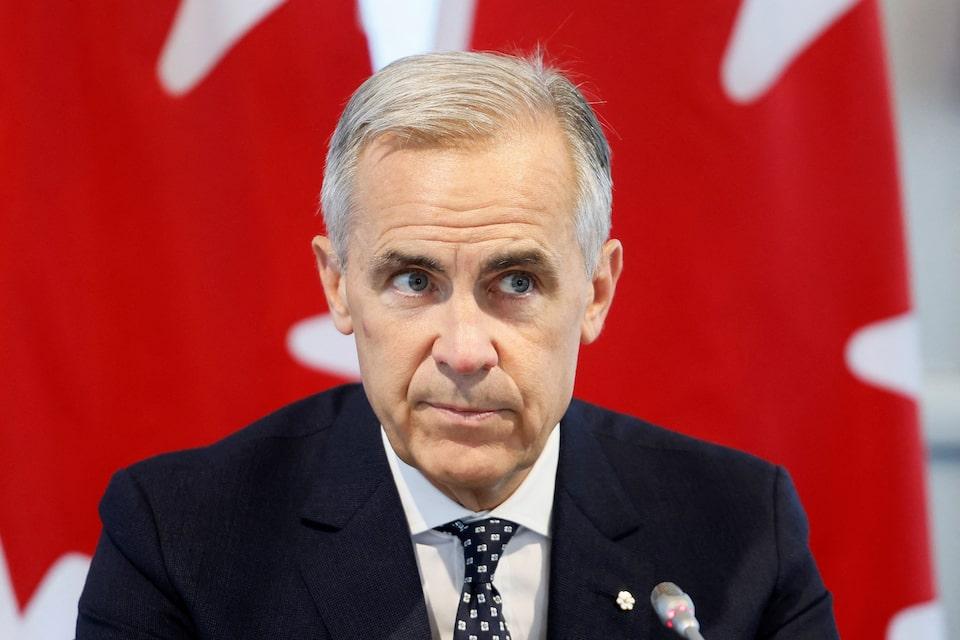
OTTAWA, Aug 14 (Reuters) - Canada is focusing on a series of measures to support canola farmers hit by China's latest tariffs, Prime Minister Mark Carney said on Thursday, but did not give specific details. In a post on X, Carney also said Ottawa would advance a constructive dialogue with China to address trade concerns while diversifying its foreign trade. Sign up here. https://www.reuters.com/markets/commodities/canada-looking-support-canola-farmers-hit-by-china-tariffs-says-carney-2025-08-14/
2025-08-14 20:22
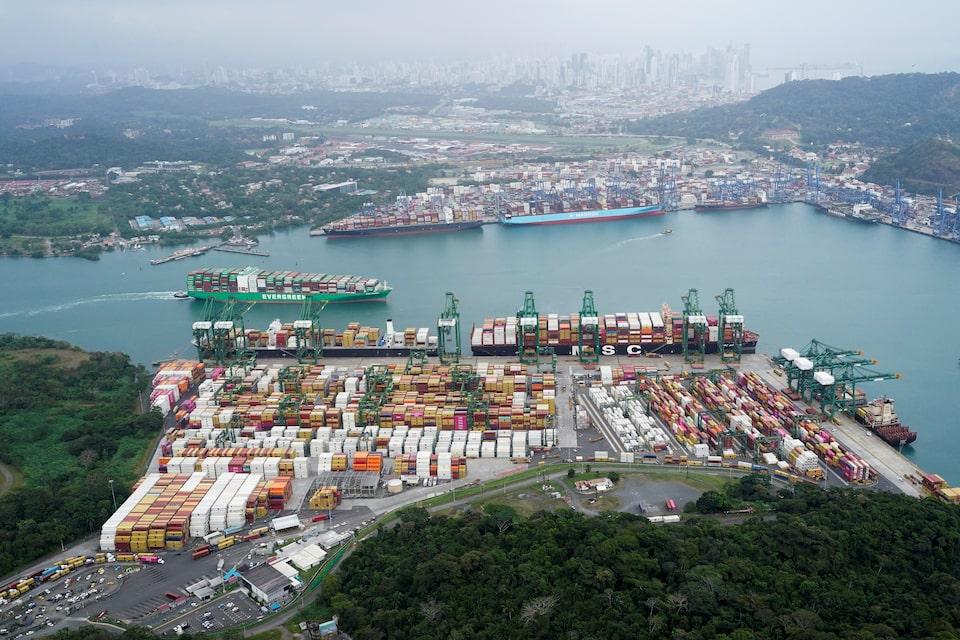
Separate tender for LPG pipeline also in preparation Canal to invest $8.5 bln in next five years to update infrastructure Rio Indio reservoir project being challenged at Supreme Court PANAMA CITY, Aug 14 (Reuters) - The Panama Canal will soon begin consultations with companies about launching a competitive tender in the first quarter of next year offering two new ports for construction and operation within its zone, a source involved in the preparations said on Thursday. The ports are part of a broad expansion plan being organized by the waterway's administration. It aims to increase services related to cargo handling, including trans shipment, storage and gas transportation, and to secure fresh water for operations. Sign up here. "There is a large demand for facilities and terminals," said Ricaurte Vasquez, head of the waterway, at a conference on Thursday, without elaborating on details. The Panama Canal Authority did not immediately reply to a request for comment. Its top executives have previously said the waterway plans to invest some $8.5 billion in the next five years to update and expand its infrastructure. A key project included in the planning, the construction of a large dam to contain the Indio river and create a new water reservoir, will be discussed at Panama's Supreme Court after affected communities filed a lawsuit against it last month. Another tender to offer a project to build a liquefied petroleum gas pipeline within the canal zone also is in preparation and could be launched next year, the source added. U.S. President Donald Trump this year threatened to take over the Panama Canal amid criticism of what his government has called the increasing influence of China over the Central American country. Meanwhile, Panama's President Jose Mulino has moved to end a 25-year concession to Hong Kong-based CK Hutchison (0001.HK) , opens new tab for the operation of two key separate ports outside of the canal zone amid criticism of the contract's terms. CK Hutchison said on Thursday that a $22.8 billion deal with a group led by BlackRock (BLK.N) , opens new tab and shipping firm MSC to sell most of its global port business, including the two ports in Panama, had a "reasonable chance" of going through. https://www.reuters.com/world/americas/panama-canal-launch-tender-construction-operation-two-ports-source-says-2025-08-14/