2026-02-11 10:55
Feb 11 (Reuters) - The Federal Reserve will hold its key benchmark rate steady for the rest of Fed chair Jerome Powell's tenure through May but cut immediately afterward in June, according to a Reuters poll of economists, who also said policy under his likely successor, Kevin Warsh, risked being too loose. Over 70% of economists, who are mostly from banks and financial institutions, also said they were concerned about a serious erosion of Fed independence after Powell's term ends. Sign up here. But they were split on whether that had changed since U.S. President Donald Trump, who has repeatedly criticised Powell for not cutting rates rapidly, nominated Warsh last month. The poll results come amid widespread confusion about Warsh's views on policy. Earlier writings and speeches suggested a preference for more restrictive policy, while recent statements, including optimism about AI-driven productivity being disinflationary, imply a bias toward cutting borrowing costs. Also, many economists said they needed to wait to hear more from Warsh during his expected nomination hearings before taking further judgment on Fed independence. About three-quarters of forecasters, 75 of 101, in the February 5-10 Reuters survey predicted the Fed would keep the fed funds rate on hold for a second straight meeting next month, as hinted in January. That was a bigger majority than 58% last month. By the end of next quarter, the rate will fall to a 3.25-3.50% range, according to nearly 60% of economists, with the reduction most likely at the June meeting. In last month's poll, there was no consensus on where the federal funds rate would be then. "The Fed will cut twice this year under Warsh (but) it's not necessarily due to a clear economic argument," said Stephen Juneau, U.S. economist at Bank of America. "If the Fed continues to cut, those will come at a time when we should have more expansionary fiscal policy than we did last year. It could be a recipe for overdoing it," he said. U.S. economic growth was forecast to have slowed to 2.9% on a seasonally adjusted annualized basis in the last quarter of 2025, slower than 4.4% in Q3. Growth was forecast between 2% and 2.4% through this year, above the Fed's estimated non-inflationary rate of 1.8%. The full-year average for 2026 was revised up to 2.5% from 2.2% last year, poll medians showed, the third consecutive upgrade in Reuters monthly polls. Inflation was expected to average well above the Fed's 2% target through this year. A majority of forecasters expect at least two rate cuts this year, broadly unchanged from January, with still no clear consensus on exactly where rates will be by end-year. WARSH SEEN TOO LOOSE WITH POLICY Almost all economists who answered an additional question, 49 of 53, said Warsh was more likely to set policy too loose rather than too tight. "It's very clear Warsh will push for additional easing this year. Now the question is whether he'll push for a couple more rate cuts, depending on how the economy evolves, or whether he'll push for a lot more," said Oscar Munoz, chief U.S. macro strategist at TD Securities. "He's been historically hawkish during Democratic administrations and not so much during Republican ones. In theory, it shouldn't really matter who is the president of the U.S. for you to formulate policy ... But there is some concern his view is not really reflecting the current state of the economy." Some of the economic forecasts from the poll, which include the unemployment rate staying steady around 4.5% this year, argued against the need for several more rate reductions. "Trump has an expectation Warsh will come through with what he would like to see," said James Knightley, chief international economist at ING. "But, we've got to remember he is just one vote amongst 12 and he would still need to convince a lot of very sceptical or reluctant other Fed officials to do what the president is expecting of the incoming new Fed chair." (Other stories from the Reuters global economic poll) https://www.reuters.com/business/fed-hold-rates-through-may-warsh-may-be-too-loose-with-policy-economists-say-2026-02-11/

2026-02-11 10:44
Indexes: Dow fell 0.13%; S&P 500 ~flat, Nasdaq off 0.16% US job growth accelerates in January, unemployment falls Software and brokerage stocks fall with AI disruption in focus Moderna falls after FDA declines to review new flu vaccine Robinhood slumps after Q4 revenue misses expectations Feb 11 (Reuters) - The Nasdaq and the Dow fell slightly on Wednesday, while the S&P 500 made no progress in either direction as a stronger-than-expected employment report eased worries about the economy but also fueled bets that the Federal Reserve could slow its interest-rate cuts. Wall Street's three main indexes had started the session on a strong note, with the S&P 500 and the Nasdaq hitting their highest level in more than a week after the closely watched payrolls report showed much faster than expected U.S. job growth in January while the unemployment rate fell to 4.3%. Sign up here. However, gains subsided as traders dialed back on bets for rate cuts. While traders are still banking on at least one 25-basis-point cut in June, the probability that rates would hold steady that month crept up to 41% from 24.8%, according to the latest data from CME Group's FedWatch tool. Julia Hermann, global market strategist at New York Life Investments, said that investors digested changes to rate cut bets "quite well" because they interpreted the strong jobs report as good news for the economy. "This is constructive news in that the economy is not in dire need of rate cuts because the jobs market has been showing some new signs of life," she said. "It comes down to the sweet spot of hiring being strong enough to show us the economy is resilient but not so strong as to derail expectations for future Fed easing." Investors will next turn their attention to the January Consumer Price Index (CPI) inflation report, which is due out on Friday. The Dow Jones Industrial Average (.DJI) , opens new tab fell 66.74 points, or 0.13%, to 50,121.40, the S&P 500 (.SPX) , opens new tab lost 0.34 points to finish at 6,941.47 and the Nasdaq Composite (.IXIC) , opens new tab lost 36.01 points, or 0.16%, to 23,066.47. The Dow's biggest percentage decliner was International Business Machines (IBM.N) , opens new tab. It's biggest gainer was Caterpillar (CAT.N) , opens new tab, which rose 4.4% after Argus Research sharply raised its price target for the stock to $820 from $625. Among the S&P 500's 11 major industry sectors, eight gained ground. Financial services (.SPSY) , opens new tab and communications services (.SPLRCL) , opens new tab both finished down more than 1% while energy (.SPNY) , opens new tab led gains with a 2.6% rally followed by defensive consumer staples (.SPLRCS) , opens new tab, which rose 1.4%. Technology was a mixed bag with chip stocks rallying sharply and software stocks tumbling to snap three sessions of gains after last week's steep selloff fueled by fears of AI-fueled disruption. The Philadelphia semiconductor index (.SOX) , opens new tab rallied 2.3%, while the S&P 500 software index (.SPLRCIS) , opens new tab finished down 2.6%. Software giant Microsoft (MSFT.O) , opens new tab lost 2.2% and was the biggest drag on the S&P 500 followed by Alphabet (GOOGL.O) , opens new tab, which was off 2.4% and weighed heavily on the communications services index. Brokerage firms that already fell on Tuesday after startup Altruist announced AI-enabled tax-planning features extended their declines on Wednesday with Charles Schwab (SCHW.N) , opens new tab, and Ameriprise Financial (AMP.N) , opens new tab falling more than 3% while LPL Financial (LPLA.O) , opens new tab lost 6%. The rate-sensitive S&P 500 bank index (.SPXBK) , opens new tab finished down 2.6%. Robinhood (HOOD.O) , opens new tab shares tumbled 8.9%, leading declines in the financial services index, after the retail brokerage missed fourth-quarter revenue expectations. Generac (GNRC.N) , opens new tab shares rallied 17.9%, making it the S&P 500's biggest percentage gainer, after its fourth-quarter results. Humana (HUM.N) , opens new tab shares fell 3.3% after the health insurer forecast 2026 profit below Wall Street estimates. Moderna (MRNA.O) , opens new tab shares dropped 3.5% after the U.S. Food and Drug Administration decided not to review the company's application for approval of its influenza vaccine. Advancing issues outnumbered decliners by a 1.13-to-1 ratio on the NYSE where there were 884 new highs and 147 new lows. On the Nasdaq, 1,826 stocks rose and 2,937 fell as declining issues outnumbered advancers by a 1.61-to-1 ratio. The S&P 500 posted 99 new 52-week highs and 24 new lows while the Nasdaq Composite recorded 123 new highs and 232 new lows. On the volume front, 20.86 billion shares changed hands on U.S. exchanges compared with the 20.79 billion moving average for the last 20 sessions. https://www.reuters.com/business/us-stock-futures-pause-ahead-january-employment-data-2026-02-11/

2026-02-11 10:01
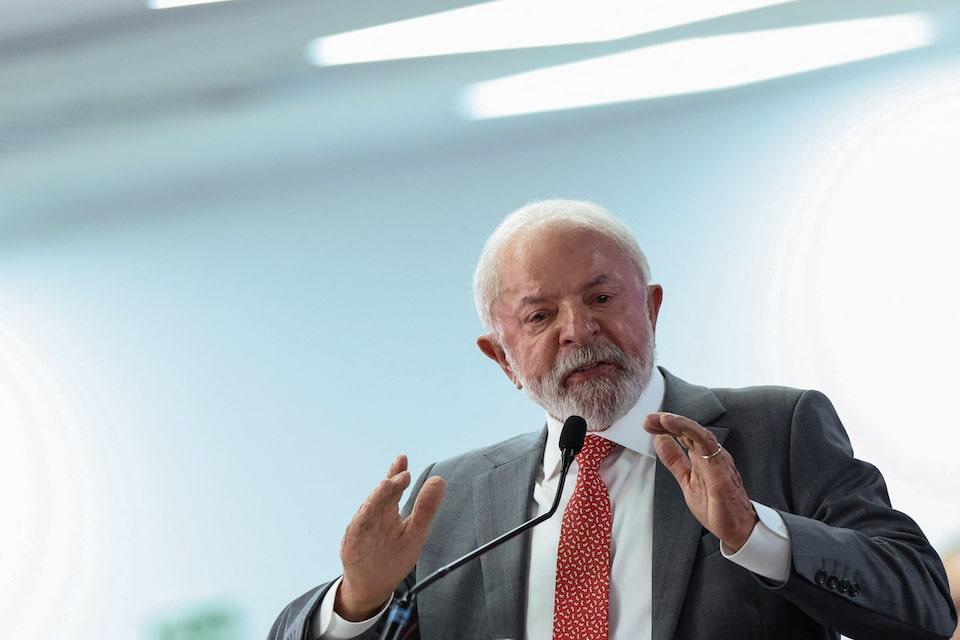
Middle-class tax breaks took effect in January paychecks Lula looking to expand appeal beyond his lower income base Solid job market, falling inflation put Lula ahead in polls BRASILIA, Feb 11 (Reuters) - A middle-class tax break that nearly halves the number of Brazilians paying income taxes is adding to economic tailwinds that give President Luiz Inacio Lula da Silva an edge in early opinion polls as he gears up to run for reelection. The measure, one of his hallmark promises from the 2022 campaign, reflects an effort to widen the leftist leader's appeal beyond his traditional lower-income base. Sign up here. It is likely to add steam to an economy that is, though not booming, at least helping Brazilians stretch their paychecks further. Unemployment is at a record low, the median wage is at a record high and inflation - especially for food - has cooled enough that interest rates are set to start falling next month. That has helped shore up support for Lula, who leads likely challengers by four to seven percentage points in recent polls simulating head-to-head scenarios for October's election. Adding to that brightening backdrop is the new income tax exemption for monthly salaries up to 5,000 reais ($960) - over three times Brazil's minimum wage - starting with January payroll deductions. PILATES, TRAVEL PLANS Advertising professional Vitoria Santos, 30, plans to spend the extra 300 reais that just landed on her monthly paycheck on Pilates exercise classes. "It's a meaningful amount that really makes a difference," Santos said. "For some people, it covers the electricity bill for the month, the internet bill, helps pay for travel plans or a gym membership." Because the extra disposable income will flow mainly to lower-income households that tend to spend extra money rather than save, according to statistics, the government expects the measure to inject around 28 billion reais ($5.4 billion) into the economy this year. However, many economists are skeptical of the policy's long-term benefits, arguing Brazil should expand its tax base to deal with soaring public debt. "It's bad economic policy, but it wins votes," said Fabio Kanczuk, a former central bank director and now head of macroeconomics at Asa Investments. He questioned the wisdom of a tax break for Brazil's middle class, which diverts resources into consumer spending that could have boosted economic productivity or more effectively reduced inequality. Kanczuk said the stimulus is likely to quickly turn into consumption, including via credit expansion, as banks anticipate stronger household income. He estimated a boost of 0.2 percentage points to economic growth this year, with a similar effect on inflation. SHRINKING TAX BASE Roughly 11.3 million of the 25.4 million Brazilians who paid income tax last year, about 44%, are estimated to have dropped off the rolls, the tax authority told Reuters. Another 5.7 million received tax reductions, as the discounts were extended to incomes up to 7,350 reais. The shrinking income tax base underscores how heavily Latin America's largest economy relies on taxing consumption over goods and services. It also reflects the priority Lula is giving to more affluent Brazilians after pouring public spending in recent years into programs that largely helped the poor, including cash transfers, assistance for the low-income elderly and disabled, cooking gas subsidies and financial aid for high schoolers. In recent years, the more affluent middle class has shifted strongly toward Lula's opponents on the political right. Over the past year, Finance Ministry sources said the government has calibrated policy to reach middle-income households, such as subsidized mortgages for families earning up to 12,000 reais a month and buying homes valued at up to 500,000 reais. Senator Flavio Bolsonaro, the son of Lula’s predecessor, who is seen as his main opponent, has signaled an economic agenda favoring tax cuts and a smaller role for the state. SPENDING BOOST Previously, Brazil granted an income tax exemption on monthly wages up to 3,036 reais, or two times the minimum wage. The reform taking effect this year has broadened relief. The full exemption now applies to workers earning slightly above three times the minimum wage. Brazilians making up to 4.5 times the minimum wage have collected partial discounts. That upper threshold includes workers such as Emerson Marinho, a 51-year-old postal worker, whose deduction from his latest paycheck fell by 110 reais. "It's extra money I can put toward food," Marinho said. "I have two children and that represents two full weeks covering fruit and vegetables at home. It really does matter." To offset lost revenue, the government introduced a minimum income tax on monthly earnings above 50,000 reais, and a 10% withholding tax on corporate dividends sent abroad. The shifting tax burden is expected to reduce income inequality in Brazil by 1.1%, according to a study by the Budget and Financial Oversight Consultancy in the lower house of Brazil's Congress. Bruno Funchal, CEO of Bradesco Asset Management and a former Treasury secretary, warned that policies boosting consumption and public spending were part of an "unsustainable" growth model that has pushed interest rates to a nearly 20-year high. He argued Brazil should instead be cutting its debt and encouraging long-term investments, but recognized such an abrupt policy shift was unlikely ahead of the October vote. "In elections, there is generally a tendency to avoid prescribing bitter medicine that will eventually be necessary," he said. ($1 = 5.21 reais) https://www.reuters.com/world/americas/income-tax-break-adds-lulas-economic-tailwinds-ahead-brazil-election-2026-02-11/
2026-02-11 07:45
SINGAPORE, Feb 10 (Reuters) - China's coal output is expected to rise 35 million metric tons to 4.86 billion tons in 2026, a major coal industry group said on Tuesday, the slowest pace this decade despite projections of a second consecutive fall in annual imports due to top supplier Indonesia halting spot exports. Production by the world's biggest producer, consumer and importer of coal is set to rise 0.7% this year, while imports are set to fall 5.1% to 465 million tons, China Coal Transportation and Distribution Association (CCTD) said. Sign up here. "News of Indonesia's reduction in production quotas and the reinstatement of export tariffs has created expectations of a significant decrease in Indonesian coal imports," the CCTD said. Miners in Indonesia have halted spot coal exports after the government proposed deep production cuts to shore up plunging prices. China will dip into its inventories this year as the pace of consumption will exceed supply growth, the association said. "If imported coal experiences a more significant reduction, domestic production can still increase." China's coal-fired power generation fell in 2025 for the first time in a decade as its growing renewable fleet helped meet a 5% increase in power demand to a record high. Proposals to build new coal-fired power plants are surging, but China is still on track for a peak in emissions by 2030, analysts say. "Coal plants are shifting from primary power suppliers to flexibility providers," consultancy Wood Mackenzie said in a statement, adding that portions of the coal fleet are transitioning to reserve status. Utilisation rates of coal-fired power have declined from 60% in 2011 to 48.2% in 2025, the statement said, adding that the consultancy expects utilisation to decline to 32% by 2035. https://www.reuters.com/sustainability/boards-policy-regulation/chinas-2026-coal-output-set-slowest-growth-this-decade-despite-lower-imports-2026-02-11/

2026-02-11 07:34
LISBON, Feb 11 (Reuters) - Portuguese Interior Minister Maria Lucia Amaral has resigned amid criticism from opposition parties and local communities over what they describe as the authorities' slow and failed response to devastating Storm Kristin two weeks ago. The office of President Marcelo Rebelo de Sousa said late on Tuesday that he accepted the minister's resignation at the request of Prime Minister Luis Montenegro, after Amaral said she "no longer had the personal and political conditions necessary to carry out the role". Sign up here. The president's office said Montenegro will temporarily take over the interior portfolio until a successor is appointed. Storm Kristin swept across central mainland Portugal early on January 31, with winds topping 200 kph (124 mph) and heavy rains causing widespread damage to thousands of homes, factories and critical infrastructure, and killing at least six people. The government estimates more than 4 billion euros ($4.76 billion) are needed for direct reconstruction costs. Amaral's resignation is the first since the centre-right minority government took office about eight months ago. The leader of far-right Chega party, Andre Ventura, wrote on X that the resignation proved the government's incapacity to deal with adversities, adding Montenegro was losing control of the government. "How long will it take to resolve the other 'casting errors' of this government?" he asked. Socialist Party leader Jose Luis Carneiro told reporters late on Monday that Montenegro was "the first person responsible" for the government's failure to respond to the storms. Portugal and Spain have faced a series of storms in recent weeks. Following the devastation of Storm Kristin, successive tempests Leonardo and Marta also brought heavy rain, strong winds, flooding and further damage. Portugal is now feeling the indirect effects of Storm Nils, which is not expected to directly hit the country, according to the Portuguese Institute of the Sea and the Atmosphere. ($1 = 0.8408 euros) https://www.reuters.com/sustainability/climate-energy/portugals-interior-minister-resigns-over-storm-response-2026-02-11/

2026-02-11 07:30
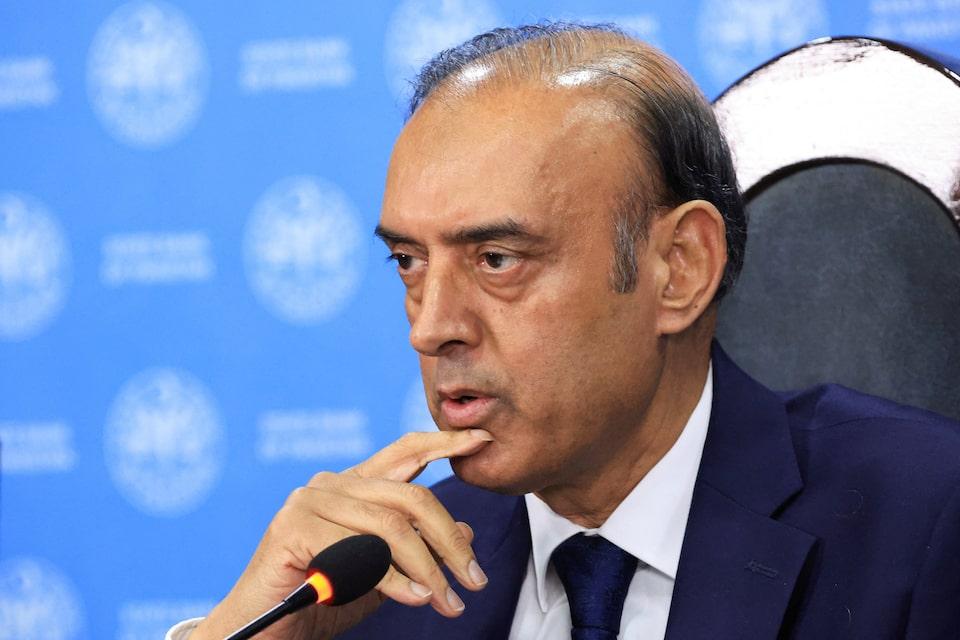
Chief says recovery is broad-based despite export weakness Policy rate held at 10.5% after 1,150 bps of cuts since 2024 Structural reforms key to sustaining growth Reiterates Inflation to peak mid-year, policy focused on medium term KARACHI, Feb 11 (Reuters) - Pakistan's central bank chief expects the economy to grow as much as 4.75% this fiscal year, pushing back against a recent downgrade by the International Monetary Fund. Governor Jameel Ahmad, in written responses to Reuters, argued the recovery is broader and more durable than headline export data suggest. Sign up here. The State Bank of Pakistan (SBP) raised its FY26 growth forecast to 3.75–4.75% at its January meeting, 0.5 percentage point higher than its previous range, despite a contraction in exports in the first half of the year and a widening trade deficit. The governor said differences in projections were not unusual and reflected timing issues, including the IMF's incorporation of flood-related assessments in its latest outlook. "All these sources and indicators, along with FY26-Q1 data, point to a broad-based recovery in all three sectors of the economy," he said. He added that the central bank believed that agricultural activity had remained resilient despite floods and "it is even performing better than its targets." He added that financial conditions had eased significantly following a cumulative 1,150‑basis‑point cut in the policy rate since June 2024, and that the full impact was still feeding through. This, he said, was supporting growth while preserving price and economic stability. The central bank last month held its benchmark rate at 10.5%, defying expectations for a cut. The divergence with the IMF comes at a delicate moment for Pakistan, which is emerging from a balance-of-payments crisis under a $7 billion IMF programme. EXPORT DRAG, REMITTANCE CUSHION Pakistan's previous growth spurts have often led to currency pressure and a decline in foreign exchange reserves, making the sustainability of the current rebound a key question for investors. Ahmad said high-frequency indicators and 6% growth in large-scale manufacturing in July–November point to strengthening demand, while agriculture has remained resilient despite last year's floods, he said. While exports declined in the first half of the fiscal year, Ahmad said the fall reflected low global prices and border disruptions rather than softer activity. He said the current account deficit should stay within 0–1% of GDP, as strong remittances offset the wider trade gap and lift reserves above programme targets, with further gains expected due to Eid festival-related inflows. "Additionally, if the government decided to tap global capital markets for any debt issuance, then that would be on the upside of our current assessment," he said. Pakistan plans to issue panda bonds, a yuan-denominated debt sold in China's domestic market around the upcoming Lunar New Year, as part of efforts to diversify external financing and broaden its investor base. He said the central bank has been consistently purchasing dollars in the interbank market to strengthen foreign exchange buffers, with data published regularly. He said that while economic stability has improved, structural reforms remain key to sustaining stronger growth and improving productivity. https://www.reuters.com/world/asia-pacific/pakistan-central-bank-chief-expects-broader-recovery-than-imf-forecast-2026-02-11/