2025-08-14 05:36
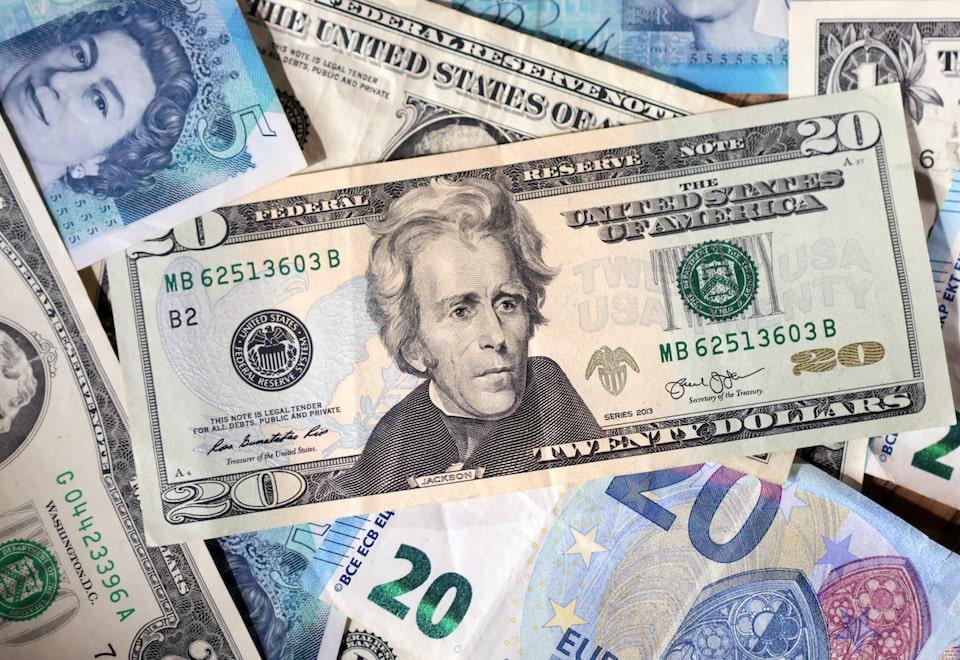
Traders now tip small chance of super-sized 50 bps Fed cut next month Bessent urges rapid Fed cuts, early BOJ hike, buoying yen vs dollar Bitcoin powered by improved risk sentiment, favourable regulatory changes Aussie dollar rises to multi-week high on upbeat jobs data TOKYO, Aug 14 (Reuters) - The U.S. dollar languished at multi-week lows versus major peers on Thursday as traders ramped up bets for the Federal Reserve to resume reducing interest rates next month. The greenback fared worst against the yen after U.S. Treasury Secretary Scott Bessent suggested the Bank of Japan needs to hike rates again soon, while the Fed cuts aggressively. Sign up here. Rising expectations for monetary easing combined with increasing institutional cryptocurrency investment powered bitcoin to a fresh record peak. Australia's dollar gained after data showed the labour market to be surprisingly resilient. That was a different story than the U.S., where Fed rhetoric has turned broadly more dovish on signs of a cooling labour market, while President Donald Trump's tariffs are yet to add to price pressures in a significant way. Traders see a Fed rate cut on September 17 as a near certainty, according to LSEG data, and even lay around 7% odds on a super-sized half-point reduction. "For the markets, it's not even a matter of if the Fed cuts interest rates in September, it's a question of how much," said Kyle Rodda, an analyst at Capital.com. "Signs of a downturn in the labour market have pushed futures to bake in a series of rate cuts before the end of the year." The Fed also continues to be under intense political pressure to ease. Trump has repeatedly criticised Fed Chair Jerome Powell for not cutting rates sooner, even threatening to oust him before Powell's term expires in May. Treasury Secretary Scott Bessent on Wednesday called for a "series of rate cuts," and said the Fed could kick off the policy easing with a half-point cut. Bessent also said the BOJ had gotten "behind the curve" by delaying rate hikes. "Bessent's comments are having a strong impact on USDJPY," said Norihiro Yamaguchi, an economist at Oxford Economics. At the same time, "gains in the yen are being accelerated by low liquidity in the market as fewer market participants are around this week" due to the Obon holiday, he said. The U.S. dollar dropped as much as 0.7% to 146.35 yen on Thursday, its weakest since July 24. Sterling edged up enough to reach its highest since July 24 at $1.3590. The euro hovered at $1.1703, just below Wednesday's peak of $1.1730, a level last seen on July 28. Meanwhile, a weaker U.S. dollar, the spectre of political interference in central bank policy, and the increase in investor risk appetite amid Fed easing prospects all converged to buoy bitcoin to its first record peak since July 14. The world's leading cryptocurrency pushed as high as $124,480.82 in the latest session, before last changing hands at around $123,000. Bitcoin was already underpinned by increased institutional money flows this year in the wake of a spate of regulatory changes spearheaded by Trump, who has billed himself the "cryptocurrency president." In the latest move, an executive order last week paved the way to allow crypto assets in 401(k) retirement accounts. "Corporate treasuries like MicroStrategy and Block Inc. continue to buy bitcoin," said IG analyst Tony Sycamore. "Technically, a sustained break above $125,000 could propel bitcoin to $150,000." The Australian dollar advanced as much as 0.4% to the highest since July 28 at $0.65685, although it later trimmed those gains to stand at $0.6552. Australian employment rebounded in July as firms took on more full-time workers, pulling the jobless rate down from a 3-1/2-year high. The upbeat report implied there was less urgency for the Reserve Bank of Australia to follow up this week's rate cut with another in September. https://www.reuters.com/world/africa/dollar-struggles-fed-rate-cut-bets-build-bitcoin-soars-record-2025-08-14/
2025-08-14 05:16
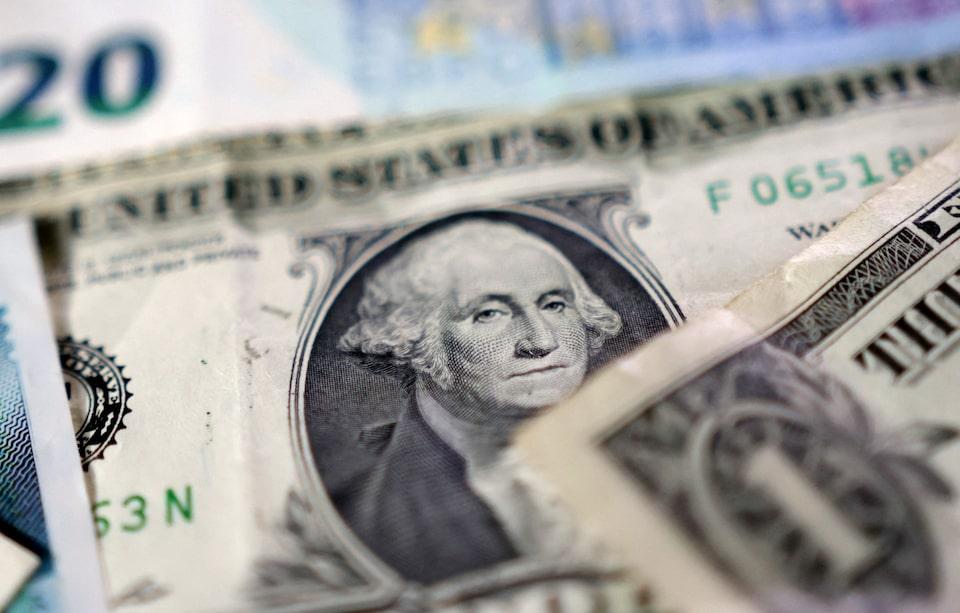
Dollar under pressure from Fed rate-cut bets Risk-on rally pauses ahead of US producer price data Commodities markets subdued ahead of Friday's US-Russia summit LONDON/SINGAPORE, Aug 14 (Reuters) - Traders ramped up Fed rate cut bets on Thursday, pinning the dollar near multi-week lows, while a global stock rally paused as investors awaited data on U.S. producer prices later in the day that may show how tariffs are impacting inflation trends. MSCI's global share index (.MIWD00000PUS) , opens new tab flatlined, after hitting all-time peaks for the two previous sessions, while an equivalent gauge of Asian equities outside Japan (.MIAPJ0000PUS) , opens new tab lingered near its loftiest level since September 2021. Sign up here. Futures markets signaled Wall Street stocks were set for a muted start, having led global shares higher all week and hit records on Tuesday and Wednesday (.SPX) , opens new tab. This blistering global rally has been fueled by strong U.S. tech earnings and speculation that Federal Reserve rate cuts will help protect businesses and households from the impact of White House tariffs. Traders now see a September cut as almost certain, per CME's FedWatch tool, and the U.S. administration is continuing to pressure the Fed to ease more quickly. Treasury Secretary Scott Bessent said on Wednesday that the Fed funds rate, which has been in a range of 4.25%-4.5% since December, should be as much as 175 bps lower. Monthly U.S. jobs data came in surprisingly weak on Aug. 1, but a U.S. producer prices report later on Thursday could shift the market's focus towards the risks of tariffs taking inflation too high for the Fed to cut rates, investors said. About 70% of global investors expect U.S. stagflation to become the dominant market narrative within three months, a Bank of America survey found this week. "Inflation is starting to come through. It's not massive yet but that could certainly continue in coming months and amplify that part of the story," Russell Investments global chief investment strategist Paul Eitelman said. U.S. Treasury markets show investors are growing queasy about the damage higher-for-longer inflation could wreak on longer-dated debt, by eroding the real value of bonds' fixed-interest coupons over time. Two-year Treasury yields, which track monetary policy bets, traded at 3.67% on Thursday, down from about 3.95% at the beginning of August. But yields on 30-year Treasuries, which are the most sensitive to inflation expectations, are now 112 bps higher than the two-year notes, with the yield differential having risen from about 95bps on Aug. 1. SOGGY DOLLAR The U.S. dollar was struggling to make headway from a two-week low against a basket of major currencies on Thursday and Japan's yen made broad based gains, hitting its strongest in three weeks at 146.38 per dollar. This came after Bessent said the Bank of Japan would raise interest rates because it was behind the curve in dealing inflation risks. The BOJ has so far justified keeping borrowing costs ultra-low because its underlying inflation measure that focuses on domestic demand and wages is below its target and it wants more clarity on how U.S. tariffs will impact exporters. The euro stood at $1,16722, nudging off the previous day's two-week high while European government debt largely tracked moves in Treasuries. Germany's 10 year yield was down 2 bps at 2.66%. EYES ON UKRAINE Commodities markets were subdued ahead of Friday's summit between U.S. President Donald Trump and his Russian counterpart Vladimir Putin. Trump on Wednesday threatened "severe consequences" if Putin did not agree to peace in Ukraine and has also floated the idea of a second summit that would include Ukrainian President Volodymyr Zelenskiy. Brent crude, the global oil marker, traded at around $65.86 a barrel on Thursday, just off a two-month low and down from almost $70 in early August. Spot gold prices , which tend to rise when investors focus on geopolitical risks, fell about 0.5% to $3,3925 per troy ounce. Goldman Sachs analysts wrote in a note to clients that lack of progress towards a Ukraine ceasefire could lead to renewed White House sanctions on Russian oil but this would only cause a "limited risk" of supply disruptions. J.P. Morgan strategists said a peace deal could lift the euro against the dollar but warned that the bar for achieving a ceasefire was high. https://www.reuters.com/world/china/global-markets-wrapup-3-2025-08-14/
2025-08-14 04:34
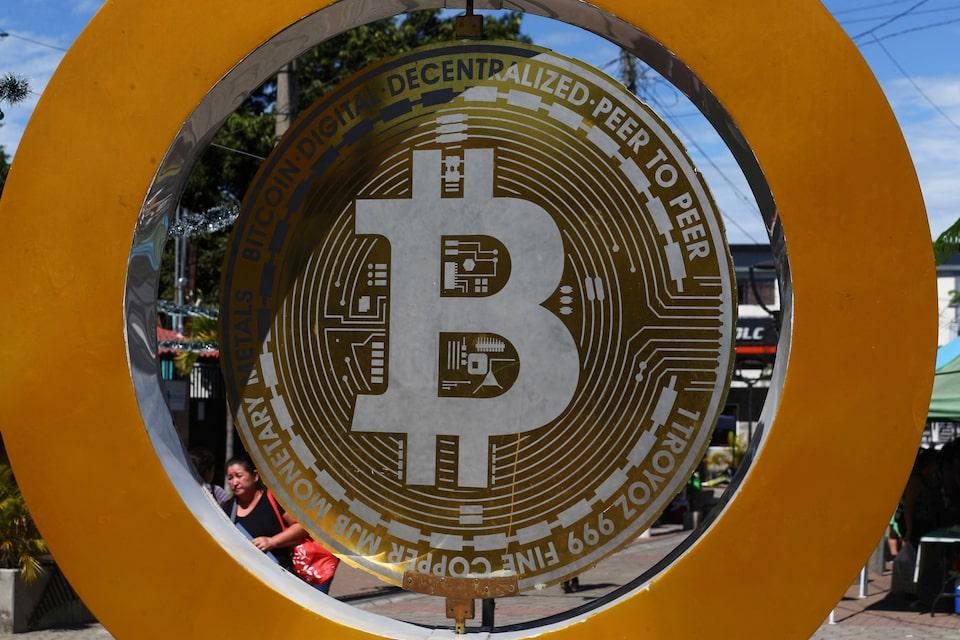
A look at the day ahead in European and global markets from Ankur Banerjee You know markets are fully risk-on when cryptocurrencies are on a tear, with bitcoin joining global stocks to scale a record peak as the near certainty of U.S. interest rate cuts bolsters risk sentiment and weighs on the dollar. Sign up here. The world's best-known cryptocurrency, bitcoin , has a lot going for it: prospects of lower interest rates, a more favourable regulatory environment, and bullish inflows from institutional investors. Ether too has been on the charge, hovering near its highest since November 2021, becoming the token of choice for those looking for more active returns. In fact, ether is up 42% this year, outstripping the 32% gain for bitcoin. Stocks in Asia were taking a bit of a breather after a blistering rally this week. Japanese shares fell after hitting a record high, while tech-heavy Taiwan and South Korean shares eased after recent highs. Investors are wagering that the Federal Reserve will resume cutting interest rates from next month, with traders starting to even price in odds of a 50 basis points cut after comments from Treasury Secretary Scott Bessent. "If we'd seen those numbers in May, in June, I suspect we could have had rate cuts in June and July. So that tells me that there's a very good chance of a 50 basis-point rate cut," in September, Bessent said in an interview on Bloomberg Television. Fed Chair Jerome Powell, who has been regularly lambasted by U.S. President Donald Trump, is expected to speak at a central bank research conference in Wyoming next week and the focus will be on his tone on policy path. Bessent also said the Bank of Japan will likely be raising interest rates as it is behind the curve in dealing with the risk of inflation, leading to strong gains in the yen , which stayed around its strongest level in three weeks. Investor focus during European hours will be on a swathe of economic data that will offer a glimpse of the tariff uncertainties and the impact of the duties on the economy. Key developments that could influence markets on Thursday: Economic events: Euro zone flash GDP for Q2, UK prelim GDP for Q2 https://www.reuters.com/world/china/global-markets-view-europe-2025-08-14/
2025-08-14 04:17
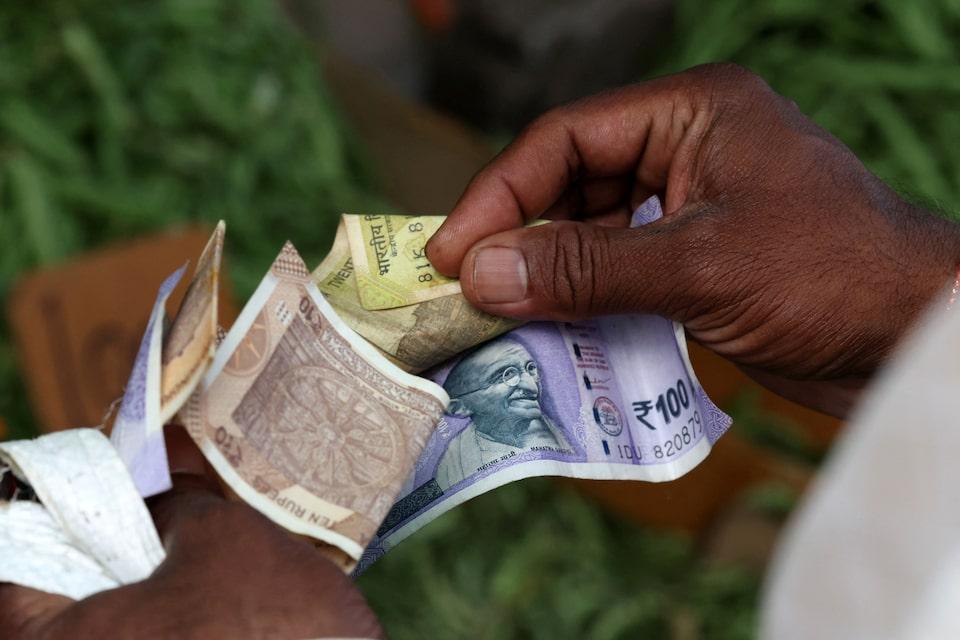
MUMBAI, Aug 14 (Reuters) - The Indian rupee is expected to open largely unchanged on Thursday, holding on to the last session's unexpected recovery, with traders awaiting the outcome of a key meeting between U.S. President Donald Trump and Russian President Vladimir Putin. The 1-month non-deliverable forward indicated the rupee will open in the 87.44-87.46 range versus the U.S. dollar, flat from Wednesday's level of 87.44. The local currency had its best day in more than a month on Wednesday, thanks to a softer dollar and position adjustments. Sign up here. "The recovery yesterday was against the trend and caught a few by surprise," a senior banker at a private bank said. "Today should be quiet with a mild upside bias (on dollar/rupee)," he added. "Most interbank desks are in wait-and-watch mode with positions light heading into a potentially risk-filled weekend." Indian financial markets are shut on Friday, when Trump and Putin are scheduled to meet in Alaska to negotiate an end to the war in Ukraine. For India, the meeting holds added significance after Trump criticised its purchase of Russian oil and imposed an extra 25% tariff on its goods effective August 27, doubling the rate to 50% - the highest U.S. tariff on a country alongside Brazil. "At a 50% tariff rate, several Indian industries would face significant headwinds, particularly those for which the U.S. is their largest export market," said Lim Ze Hao, an analyst at CreditSights. On Wednesday, Trump threatened "severe consequences" if Putin did not agree to peace in Ukraine, while adding that a second meeting, possibly involving the Ukrainian president, could follow swiftly. A conciliatory outcome could help calm jitters and support the rupee, while a combative outcome may renew pressure on the currency by triggering equity flows and heightening concerns over U.S. trade policy towards India. KEY INDICATORS: ** One-month non-deliverable rupee forward at 87.58; onshore one-month forward premium at 11 paise ** Dollar index at 97.72 ** Brent crude futures up 0.5% at $65.9 per barrel ** Ten-year U.S. note yield at 4.23% ** As per NSDL data, foreign investors sold a net $302.1 million worth of Indian shares on August 12 ** NSDL data shows foreign investors sold a net $76.5 million worth of Indian bonds on August 12 https://www.reuters.com/world/india/rupee-cling-recovery-before-long-weekend-featuring-trump-putin-meet-2025-08-14/
2025-08-14 02:13
Jobs bounce 24,500 as expected, jobless rate dips to 4.2% Full-time jobs jump 60,000 as more women get work Labour market resilience not a bar to further rate cuts SYDNEY, Aug 14 (Reuters) - Australian employment rebounded in July as firms took on more full-time workers, data showed on Thursday, pulling the jobless rate down from a 3-1/2 year high and calming concerns the labour market was about to fall over. The upbeat report implied there was less urgency for the Reserve Bank of Australia to follow up this week's rate cut with another in September, and nudged the local dollar up 0.3% to a two-week high at $0.6566 . Sign up here. Yet policy makers have indicated more easing is likely should inflation continue to cool as expected and markets remain fully priced for a further quarter point easing to 3.35% in November. "The data are reassuring in that they suggest conditions are not deteriorating quickly," Sean Langcake, Head of Macroeconomic Forecasting for Oxford Economics Australia. "Nevertheless, weak economic momentum and global uncertainty will be strong headwinds for the labour market to overcome through the rest of the year." Figures from the Australian Bureau of Statistics showed net employment rose 24,500 in July from June, when it added a meagre 1,000. That was dead in line with market forecasts, while full-time jobs more than recovered a June drop with a jump of 60,500. In a relief for the economic outlook, the jobless rate eased back to 4.2%, from 4.3%, which had been the highest reading since November 2021. The participation rate ticked down to 67.0%, while hours worked rose 0.3% after a pullback in June. The ABS noted female full-time jobs jumped by 40,000 in July and their participation rate rose a record high of 63.5%. The central bank had expected unemployment to rise to around 4.3% this quarter, which is still low by historical standards, and stay there for the foreseeable future. Leading indicators of labour demand have been solid with vacancies still almost 50% above pre-pandemic levels, while there were 1.8 unemployed per vacancy compared to 3.1 back in early 2020. Business surveys are generally upbeat and consumer spending has picked up in the last couple of months as lower borrowing costs and past tax cuts feed through to incomes. RBA Governor Michele Bullock has also flagged the likelihood of at least another 50 basis points of total easing should core inflation continue to moderate from its current 2.7% pace to the mid-point of the central bank's target band of 2% to 3%. While unemployment is low, there is little sign of wages being an inflationary threat with annual pay growth holding at 3.4% in the second quarter, well below its 2023 peak of 4.2%. https://www.reuters.com/world/asia-pacific/australia-jobs-rebound-july-unemployment-dips-major-relief-2025-08-14/
2025-08-14 01:58
Japan has 'inflation problem', Bessent says Bessent says have spoken to BOJ chief Ueda Ueda has brushed aside view BOJ was behind the curve Food inflation raises worries within BOJ of second-round effect TOKYO, Aug 14 (Reuters) - The Bank of Japan will likely be raising interest rates as it is behind the curve in dealing with the risk of inflation, U.S. Treasury Secretary Scott Bessent told Bloomberg Television, in his most explicit comment on Japan's monetary policy. The remarks contrast with those of BOJ Governor Kazuo Ueda, who has repeatedly brushed aside the view the central bank was being too slow in raising rates and could be late in forestalling too-high inflation. Sign up here. Bessent said U.S. Treasury yields are feeling the impact of overseas developments, with the 30-year yield getting dragged up by rising long-term bond yields in Japan and Germany. "There's definitely leakage from — the Japanese have an inflation problem," Bessent said in the interview with Bloomberg Television on Wednesday. Bessent mentioned that he had spoken with BOJ Governor Kazuo Ueda. "My opinion, not his — they're behind the curve. So they're going to be hiking," he added, though he made no comment on how soon a rate hike could come. The comments by Bessent come as rising food and raw material costs keep Japan's core inflation above the central bank's 2% target for well over three years, causing some BOJ policymakers to worry about second-round price effects. Governor Ueda has signalled readiness to keep raising rates but justified going slow on the view that "underlying inflation," which focuses on domestic demand and wages, remains short of the BOJ's target. The slow pace of the BOJ's policy normalisation has been blamed by some analysts for the yen's persistent weakness, which in turn has pushed up the cost of imports and broader inflation. The BOJ next meets for a rate review in September before holding another one in October, when the board conducts a quarterly review of its growth and inflation forecasts. Bessent, who oversees Washington's trade and exchange-rate talks with Tokyo, has repeatedly signalled his preference for tighter Japanese monetary policy. In its exchange-rate report to Congress in June, the U.S. Treasury Department said the BOJ should keep tightening monetary policy, which would support a "normalization of the yen's weakness." In an interview with the Nikkei newspaper published on Monday, Bessent said the currency "will take care of itself" as long as the BOJ focused on "economic fundamentals, inflation and growth." The BOJ last year exited a decade-long, massive stimulus programme and raised short-term interest rates to 0.5% in January on the view Japan was close to durably hitting its 2% inflation target. At its policy meeting in July, the BOJ kept rates steady but revised up its inflation forecasts and offered a less gloomy outlook on the economy, keeping alive market expectations for a rate hike this year. "I don't think we're behind the curve, or that the risk of us being behind the curve is large," Ueda told a news briefing after the July policy meeting. The governor said that while wages and service-sector inflation were rising, the pace of gains weren't alarming. A Reuters poll last month showed a majority of economists expect another rate hike by year-end. https://www.reuters.com/business/bessent-says-boj-is-behind-curve-inflation-likely-hike-rates-bloomberg-interview-2025-08-14/