2025-08-13 20:23
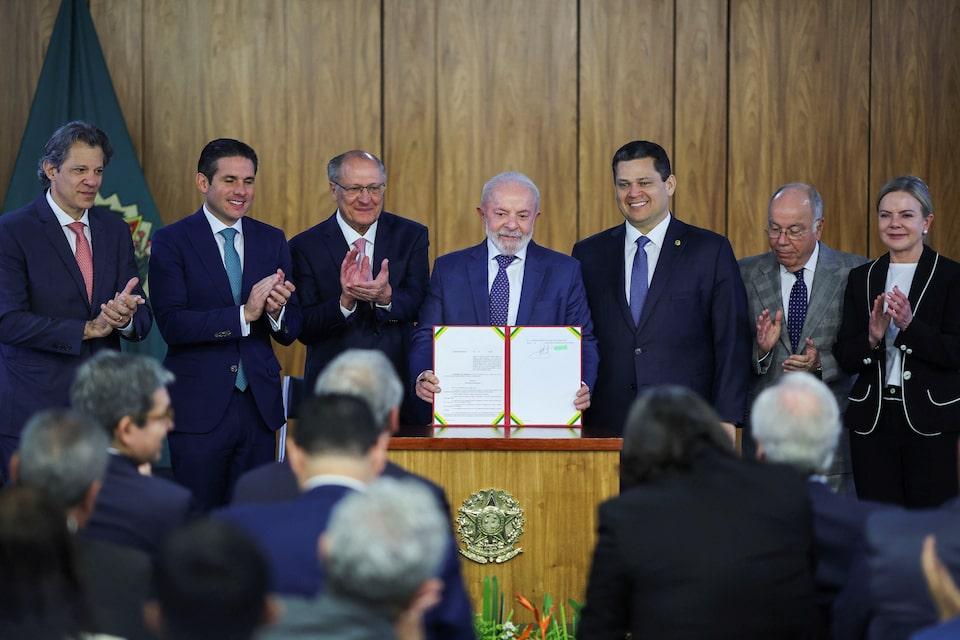
Brazil among hardest hit by Trump tariffs Aid plan centered on $5.5 billion credit line Lula says no retaliation for now BRASILIA, Aug 13 (Reuters) - Brazil's government unveiled on Wednesday a long-awaited aid package for companies hurt by steep U.S. tariffs, centered on credit lines for exporters and government purchases of products that face greater hurdles in finding alternative markets. U.S. President Donald Trump hiked duties on several goods from Brazil to 50% from 10% earlier this month. Although some sectors were exempted from the steeper levies, the move is still set to hurt industries such as coffee, beef, seafood, textiles, footwear and fruit. Sign up here. Brazilian President Luiz Inacio Lula da Silva had already signaled his administration would not immediately retaliate against the tariff hike, instead prioritizing support for the most affected sectors. "We will insist on negotiating ... but our sovereignty is untouchable," Lula told an event in Brasilia, saying he was open to talks on topics such as ethanol trade. "We are not announcing reciprocity measures. We don't want, at first, to do anything that could justify worsening our relations," the leftist leader added. The centerpiece of the aid plan is a 30 billion-real ($5.55 billion) credit line via the existing Export Guarantee Fund (FGE), which is managed by state development bank BNDES, according to a statement. The government will also make additional contributions totaling 4.5 billion reais to strengthen some funds supporting aid for smaller companies, it added. The measures are part of an executive order signed by Lula, which takes effect immediately but must be approved by Congress within four months to remain in force. MAJOR HIT Brazil was among the nations hardest hit by Trump's tariffs. Washington exempted key goods such as aircraft, orange juice, oil and pulp from the higher rate, but products like coffee and beef, of which Brazil is a major U.S. supplier, are now subject to the full rate, which took effect last week. Trump imposed the levies on U.S. imports from Brazil largely in response to a Brazilian legal case he has accused of being a "witch hunt" against former President Jair Bolsonaro, his right-wing ally who is on trial for allegedly plotting to overturn the 2022 election after his supporters overran government buildings. Supreme Court Justice Alexandre de Moraes who is overseeing the case said that he would continue to do his job and that Brazil's top court would not submit itself to foreign coercion and that it would guard the country's constitution. Brazil's new aid program also eases the tax burden on exporters to help them remain competitive in the U.S., a measure in place through the end of next year that the government estimated it would cost 5 billion reais in foregone revenue. The plan extends the timeframe for using tax credits under the "drawback" regime, which reimburses import taxes on inputs used in the production of exported goods. Separately, it also backs government purchases of goods previously destined for the U.S. market, which will be redirected to public school and hospital meals. ($1 = 5.4014 reais) https://www.reuters.com/world/americas/brazil-unveils-aid-package-exporters-hit-by-us-tariffs-2025-08-13/
2025-08-13 20:19
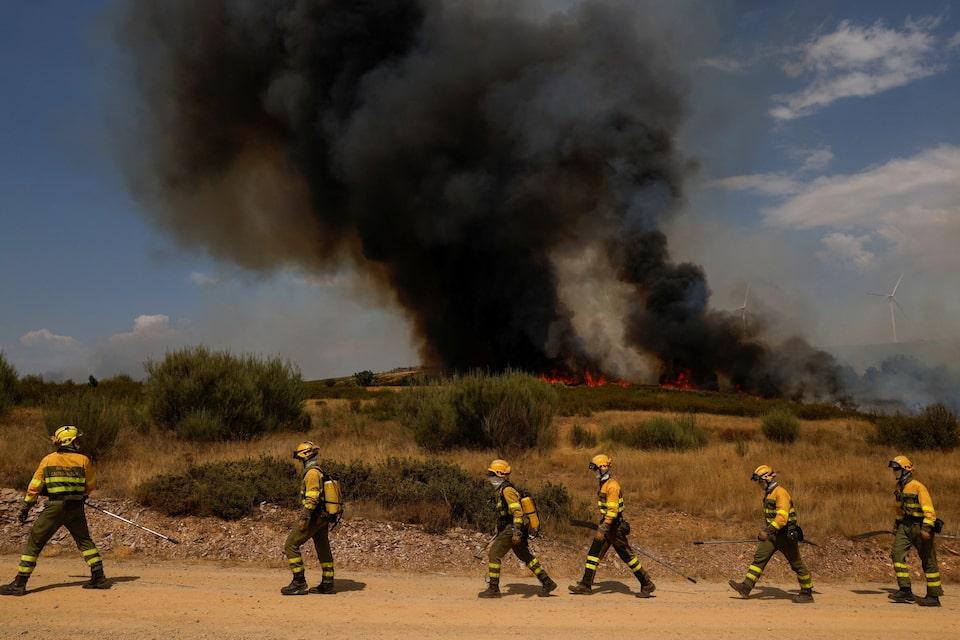
MADRID, Aug 13 (Reuters) - Spain is seeking help from its European partners to tackle wildfires raging across the country, Interior Minister Fernando Grande-Marlaska said on Wednesday. In particular, it requested two Canadair planes, he said in an interview with local media Cadena SER. Sign up here. "At the moment we don't need the two Canadair planes urgently, but, given the weather forecast, we want to have those planes in our national territory as soon as possible so they can be used, should they be necessary," he said. While for now it isn't necessary, the country is ready to seek more help from its European allies, such as more firefighters, he added. In Spain, a volunteer firefighter died from severe burns and several people were hospitalised as state weather agency AEMET warned that almost all of the country was at extreme or very high risk of fire. Spain was in its 10th day of a heatwave that peaked on Tuesday with temperatures as high as 45 degrees Celsius (113 degrees Fahrenheit), and which AEMET expected to last until Monday, making it one of the longest on record. https://www.reuters.com/business/environment/spain-seeks-help-european-partners-tackle-wildfires-2025-08-13/
2025-08-13 19:55
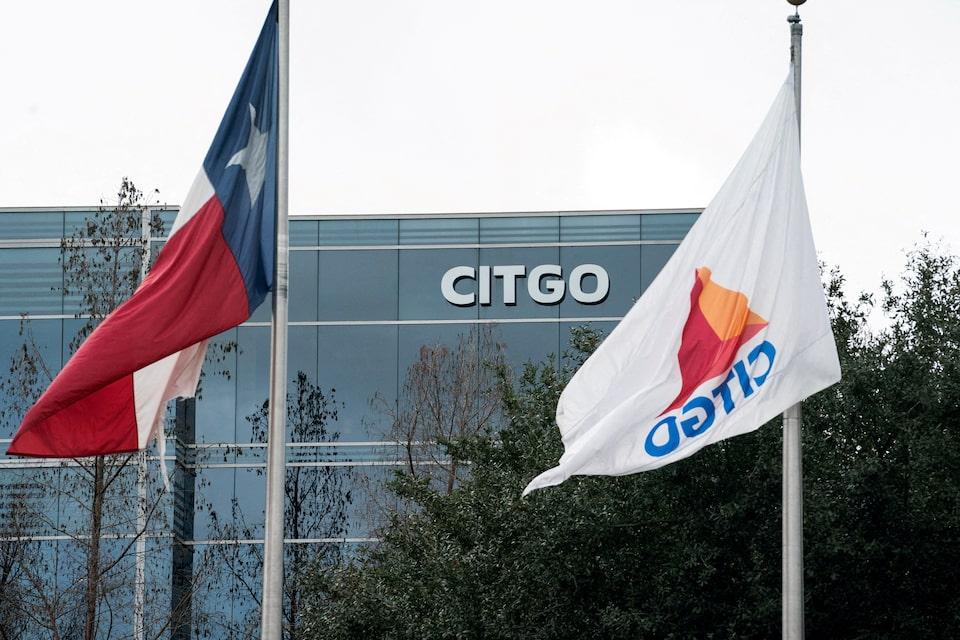
Judge, court officer overseeing auction leaving options open Elliott's bid competing with Gold Reserve group and Vitol unit Citgo data room reopened for bidders to improve offers HOUSTON, Aug 13 (Reuters) - An affiliate of hedge fund Elliott Investment Management has raised its bid for the parent of Venezuela-owned refiner Citgo Petroleum to a total value of $8.82 billion, according to a filing providing an update on the U.S. court-organized auction. The complex auction of PDV Holding, meant to repay 15 creditors for debt defaults and expropriations by Venezuela and state oil company PDVSA, was relaunched in January after a year-long bidding process ended amid arguments over Citgo's worth and parallel legal cases. Sign up here. Citgo is the seventh-largest U.S. refiner. A court officer supervising the auction in Delaware last month recommended a $7.4-billion offer by a group led by miner Gold Reserve (GRZ.V) , opens new tab as the winner of the current bidding round, ahead of a hearing next week to decide the winner. But the officer has continued receiving and discussing "unsolicited bids" from groups, including Elliott's affiliate Amber Energy and a unit of commodities house Vitol, that have been in the race for Citgo's parent since last year, according to filings. A data room with key information on Citgo has remained open for bidders to consult, sources close to the negotiations said. The improved offers are arriving amid objections to the Gold Reserve group's bid, which covers the claims of 11 creditors but does not include a provision to pay holders of a Venezuelan defaulted bond collateralized with Citgo equity. Vitol, Amber Energy, and Gold Reserve declined to comment. A procedural conference scheduled for Wednesday was postponed so the court officer can decide how to proceed to the final sale. In contrast with the Gold Reserve group's offer, the bids by Amber Energy and Vitol include provisions to pay the holders of PDVSA 2020 bonds, court filings showed. But only Amber's offer, submitted last week, seems to have the support for now of at least a portion of the bondholders, a key agreement to avoid further obstacles and injunctions in the sales process, according to a letter filed on Tuesday by one of the creditors in the auction, Red Tree Investments. "Red Tree believes that Amber Energy is the highest bidder for the PDVH shares under Delaware law and should be selected as the winning bidder," the company said in the filing. Red Tree is affiliated with a holder of Venezuelan bonds, Contrarian Funds. Its $3.7-billion offer was selected in April as the floor bid for the current round, but the company decided not to pursue its own bid, it told the court. Gold Reserve on Wednesday objected to Amber's bid in a filing and said the real price of its offer is $5.86 billion if the payment to the bondholders is excluded from its total value. The offer by Vitol's unit, submitted in late June and identified in court filings as "Bidder B," includes a purchase price of $8.45 billion. But other terms, including non-cash considerations, were redacted. Court officer Robert Pincus told the court last week that the bidder had not provided proof of some key agreements, including payment to the bondholders. The PDVSA 2020 bond rose 0.5 cent on Wednesday to trade at 91 cents on the dollar. It traded near par in early April. https://www.reuters.com/legal/legalindustry/elliott-affiliate-raises-bid-citgo-parent-competition-heats-up-2025-08-13/
2025-08-13 19:49
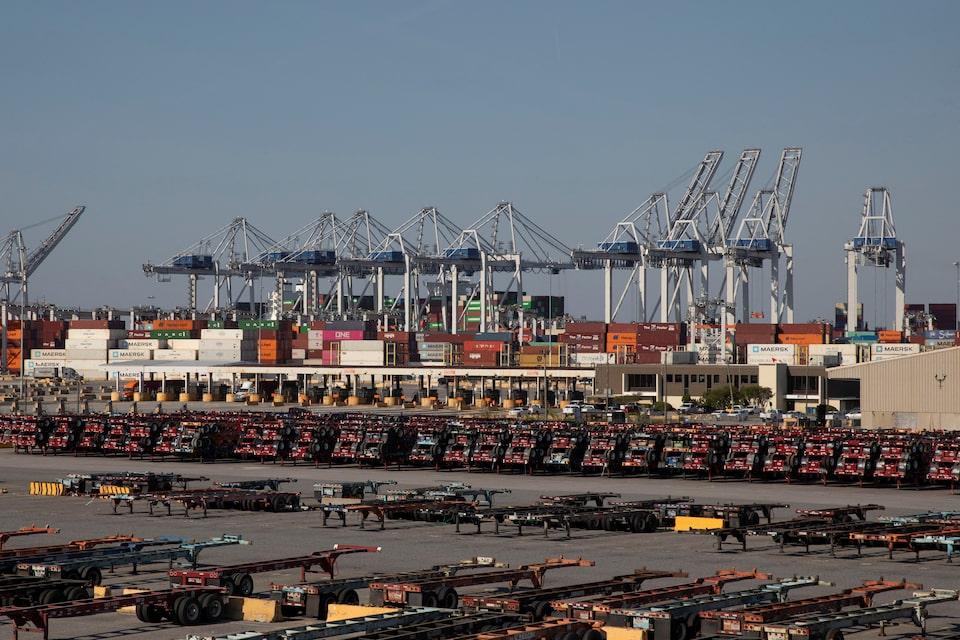
Port of Los Angeles imports up 8% year-on-year in July Many holiday goods are already in the US August imports relatively steady but down from a year ago LOS ANGELES, Aug 13 (Reuters) - Ocean imports to the United States may have peaked in July after retailers raced to bring in goods from China and elsewhere to avoid potentially hefty tariffs on holiday-related products, logistics executives said on Wednesday. Containerized imports to the Port of Los Angeles, the nation's busiest and a bellwether for U.S. trade, jumped 8% to 544,000 20-foot equivalent units (TEUs) in July from the same month of 2024. The port hit a monthly volume record in July. Sign up here. "Much of this volume was fueled by importers hustling to bring in cargo ahead of potential tariff hikes later this month and beyond," Gene Seroka, the port's executive director, said on Wednesday. Many importers have already completed their Christmas shopping, said Zachary Rogers, lead author of the Logistics Managers' Index, a leading U.S. economic indicator. "Everything is already here for the holiday season," he said. President Donald Trump's tariff policies, particularly short-lived 145% levies on goods from China, have wreaked havoc on U.S. imports as buyers either gorged on or starved themselves of goods to avoid higher import duties. The United States and China earlier this week extended their tariff truce by another 90 days, easing the uncertainty clouding the retail peak season for stocking stores with holiday goods. Still, it appears major shippers like Walmart (WMT.N) , opens new tab, Target (TGT.N) , opens new tab and Home Depot (HD.N) , opens new tab already have departed from the traditional holiday-import pattern that tended to peak from August to October by stocking up early. August imports thus far appeared stable but still down from August 2024, due to importers' inventory buildup, Seroka said. "I don't expect a flood of cargo, despite all of the trade announcements coming out of Washington." https://www.reuters.com/business/us-container-imports-may-have-peaked-july-chief-busiest-seaport-says-2025-08-13/
2025-08-13 19:33
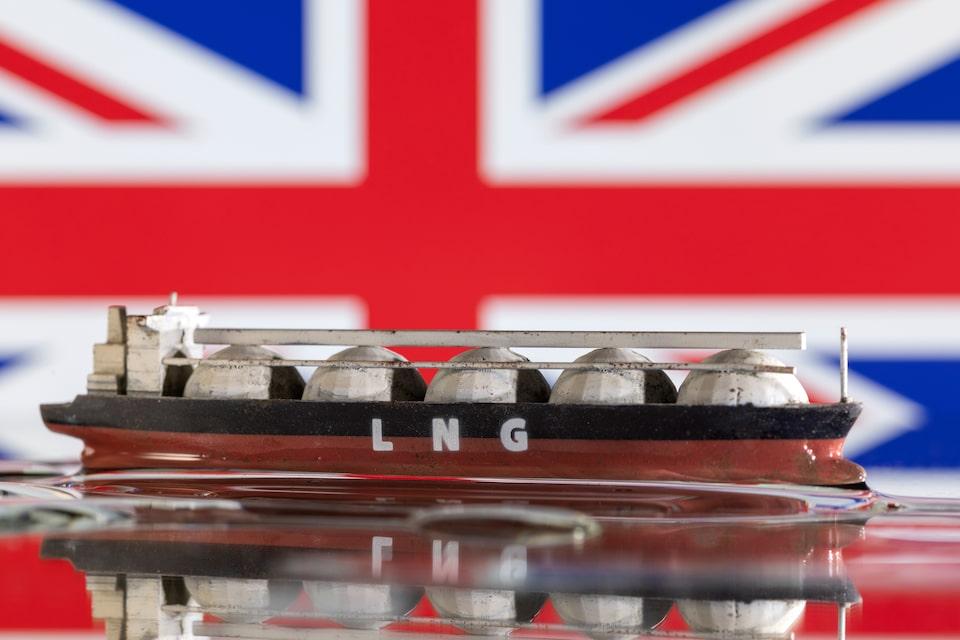
Aug 13 (Reuters) - British Gas owner Centrica (CNA.L) , opens new tab and Energy Capital Partners are in talks to buy the Isle of Grain LNG terminal from National Grid (NG.L) , opens new tab in a deal valued at about 1.5 billion pounds ($2.03 billion), the Financial Times reported on Wednesday. Centrica declined to comment on the FT report, while National Grid and Energy Capital did not immediately respond to Reuters' requests for comments. Sign up here. National Grid, which owns and operates Britain's high-voltage electricity transmission network, had said last year it was seeking to sell its Grain LNG terminal, Europe's largest such facility, as part of its efforts to streamline operations. FT said a deal could be announced shortly. Centrica announced in July it had signed an agreement to acquire a 15% equity stake in Britain's new nuclear project, Sizewell C. The company also reported a drop in its first-half profit. Hong Kong's CK Infrastructure Holdings (1038.HK) , opens new tab was among the interested parties for the terminal, but has reportedly dropped its pursuit, Bloomberg News reported earlier this month. LNG has become a vital source of gas for Europe, especially after the Russia-Ukraine conflict and as the subsequent Western sanctions on Russia disrupted energy markets. The resulting price surge continues to weigh on British consumers. ($1 = 0.7373 pounds) https://www.reuters.com/business/energy/centrica-frontrunner-buy-national-grids-lng-terminal-2-billion-deal-ft-reports-2025-08-13/
2025-08-13 19:19
US inflation data in line with expectations adds to rate cut bets Trump considers lawsuit against Powell over renovations Bessent says could see series of Fed rate cuts - Bloomberg interview NEW YORK, Aug 13 (Reuters) - The dollar slipped for a second straight session on Wednesday, a day after a U.S. inflation reading increased expectations of a Federal Reserve rate cut next month and renewed pressure from President Donald Trump for lower rates added to the sell-off. The dollar index , measuring the currency against a basket of peers, fell 0.2% to 97.856, its lowest since July 28, extending its 0.5% drop on Tuesday. Sign up here. U.S. consumer prices increased marginally in July, data showed on Tuesday, in line with forecasts and as the pass-through from Trump's sweeping tariffs to goods prices has so far been limited. Investors priced in near certainty the central bank would ease rates next month, according to LSEG data. On Wednesday, Treasury Secretary Scott Bessent called for a "series of rate cuts," and said the Fed could kick off the policy rate easing with a 50 basis point cut. The day before, U.S. President Donald Trump, who has repeatedly criticised Fed Chair Jerome Powell for not easing rates sooner, had added to the pressure on the Fed. White House spokeswoman Karoline Leavitt said that the president was considering a lawsuit against Powell in relation to his management of renovations at the central bank's Washington headquarters. "I think there is quite significant pressure on the Fed from the political side of Washington to get moving on interest rates," Shaun Osborne, chief currency strategist at Scotiabank, said. Michael Pfister, FX analyst at Commerzbank, said these political developments carried echoes of autocratic countries, where heads of statistics agencies or central banks are replaced and critical data series often discontinued or manipulated. "I'm not saying that this will necessarily happen here. But the developments of the last few days and weeks do not exactly fill me with optimism about the future, or the U.S. dollar," Pfister said. Trump also hit out at Goldman Sachs (GS.N) , opens new tab CEO David Solomon, saying the bank had been wrong to predict U.S. tariffs would hurt the economy. Trump questioned whether Solomon should lead the Wall Street institution. RATE CUT RUMINATIONS Atlanta Federal Reserve President Raphael Bostic on Wednesday said nearly full U.S. employment offers the central bank the "luxury" of not rushing to make any policy adjustments. Meanwhile, Chicago Federal Reserve President Austan Goolsbee on Wednesday said the U.S. central bank is grappling with understanding whether tariffs will push up inflation just temporarily or more persistently. The dollar's recent stumble threatens the brief recovery it had made since early July, following a roughly 10% decline in the first half of the year. "We haven't seen anywhere near enough strength for the dollar generally to signal a reversal in what is still a pretty significant bear trend," Scotiabank's Osborne said. The dollar's weakness supported the euro and sterling . The single currency was last up 0.2% to $1.1698, briefly hitting its highest since July 28. Similarly, the British currency rose 0.5% to $1.3567, briefly hitting its highest since July 24. Britain's jobs market weakened again, though wage growth stayed strong, according to data on Tuesday, underscoring why the Bank of England is so cautious about cutting interest rates. The Australian dollar was up 0.2% to $0.6541, while the New Zealand dollar rose 0.3% to $0.5973. The Reserve Bank of Australia on Tuesday cut interest rates as expected, and signalled further policy easing might be needed to meet its inflation and employment goals as the economy lost some momentum. In cryptocurrencies, ether rose about 3% to touch a near four-year high of $4,748.77, before paring gains to trade up about 2% at $4,705.67. https://www.reuters.com/world/middle-east/dollar-slips-further-anticipation-mounts-fed-interest-rate-cut-2025-08-13/




