2025-08-13 16:27
Benchmark S&P 500, Nasdaq hit record European shares gain Oil prices drop, gold rises Nikkei attains record high above 43,000 Dollar falls to two-week low NEW YORK, Aug 13 (Reuters) - An index of global equity markets reached a new record for the second straight day on Wednesday, propelled partly by bullish sentiment on Wall Street as investors positioned for a likely interest rate cut from the U.S. Federal Reserve. The MSCI All Country World Index (.MIWD00000PUS) , opens new tab rose to as high as 954.21, hitting a record high after reaching a new peak in the previous session. Sign up here. The benchmark S&P 500 and the Nasdaq hit new record highs for the second straight session as well and the Dow was also advancing. Healthcare, consumer discretionary and financials stocks were leading gains while industrials and consumer staples were the main drag. The Dow Jones Industrial Average (.DJI) , opens new tab rose 0.57%, the S&P 500 (.SPX) , opens new tab rose 0.16% and the Nasdaq Composite (.IXIC) , opens new tab rose 0.16%. European stocks (.STOXX) , opens new tab advanced 0.47%, while Japan's Nikkei (.N225) , opens new tab rose for the sixth straight day, breaking the 43,000 level for the first time and hitting a fresh high. MSCI's broadest index of Asia-Pacific shares outside Japan (.MIAPJ0000PUS) , opens new tab rose 1.6%. "It's largely just a continuation from what we saw yesterday, with inflation obviously being the driver of the rally," said Garrett Melson, portfolio strategist at Natixis Investment Managers Solutions in Boston. U.S. inflation readings, which on Tuesday showed the consumer price index rising slightly less than forecast in the year through July, indicated President Donald Trump's import tariffs had yet to filter down to consumer prices. That helped Wall Street scale new heights, supported by the increasing likelihood that the Federal Reserve will cut interest rates next month. "It's hard to really glean any sort of trends from that report other than maybe just some noise. I think on the whole, it's better than feared and that was enough to kind of spur expectations that the Fed has kind of the green light to go in September," Melson added. Traders are pricing in a nearly 100% chance of a Fed cut in September, up from about 57% a month ago, according to the CME FedWatch tool. Also boosting market optimism was Trump's signing of an executive order pausing triple-digit levies on Chinese imports for another 90 days. Treasury Secretary Scott Bessent said he thought an aggressive half-point cut was possible given recent Bureau of Labor Statistics revisions showing job growth had slowed to a crawl in May, June and July, though initial estimates had shown stronger employment growth that Fed officials used to argue that the labor market remained in good shape. U.S. Treasury bond prices rose across the board, with the 2-year note yield, which typically moves in step with interest rate expectations for the Fed, dropping 6.1 basis points to 3.67%. The yield on benchmark U.S. 10-year notes fell 6.2 basis points to 4.231%. The dollar weakened 0.47% to 147.14 against the Japanese yen and was down 0.3% to 0.804 against the Swiss franc . The euro was up 0.37% at $1.1716. The dollar index , which tracks the greenback against a basket of major peers, fell for a second day to its lowest in two weeks. It was last down 0.33% at 97.70. Oil prices fell ahead of Trump's meeting with Russian President Vladimir Putin. Brent crude futures dropped 1.21% to $65.33 a barrel, while U.S. West Texas Intermediate crude futures fell 1.4% to $62.29 a barrel. Spot gold rose 0.51% to $3,361.82 an ounce. U.S. gold futures rose 0.43% to $3,363.40 an ounce. https://www.reuters.com/world/china/global-markets-update-5-2025-08-13/

2025-08-13 12:59
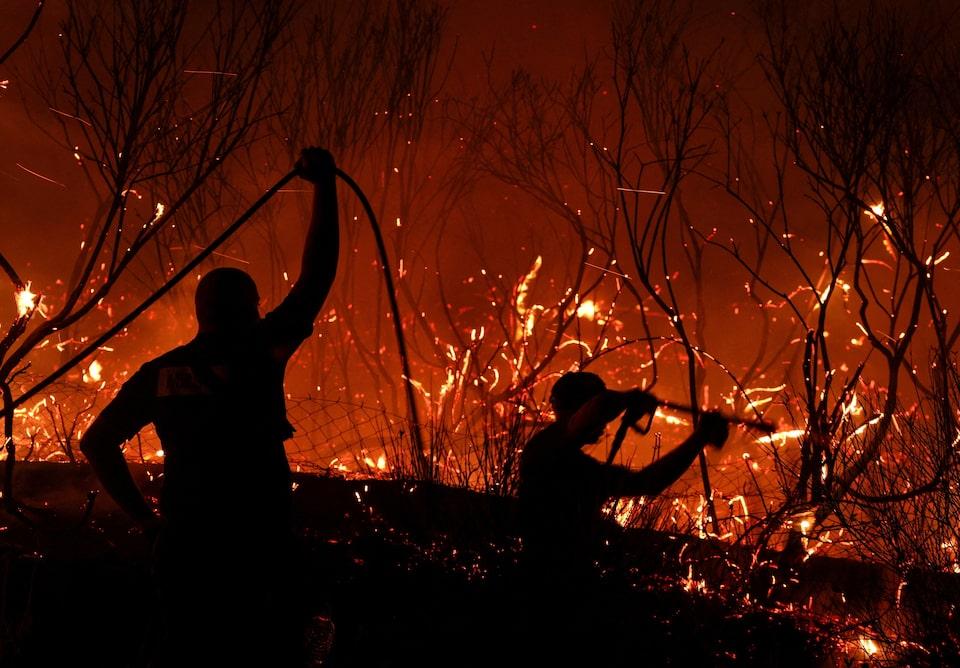
About 7,700 people evacuated near Greek city of Patras Volunteer firefighter died and several hospitalised in Spain Pope Leo moves St. Peter's Square weekly audience indoors due to heat PATRAS, Greece,/MADRID, Aug 13 (Reuters) - Wildfires fanned by a heatwave and strong winds continued to rage across southern Europe on Wednesday, burning houses, farms and factories and forcing the evacuation of thousands of residents and tourists. Flames and dark smoke billowed over a cement factory that was set alight by a wildfire that swept through olive groves and forests and disrupted rail traffic on the outskirts of the Greek city of Patras, in the northern Peloponnese west of Athens. Sign up here. "What does it look like? It looks like doomsday. May God help us and help the people here,” said Giorgos Karvanis, a volunteer who had come from Athens to Patras to help. Authorities ordered residents of a town of about 7,700 people near Patras to evacuate on Tuesday and issued new alerts on Wednesday, advising residents of two nearby villages to leave their homes. On the Greek islands of Chios, in the east, and Cephalonia, in the west, both popular with tourists, authorities told people to move to safety as fires spread. In Spain, a volunteer firefighter died from severe burns and several people were hospitalised as state weather agency AEMET warned that almost all of the country was at extreme or very high risk of fire. The 35-year-old man had been attempting to create firebreaks near the town of Nogarejas, in the central Castile and Leon region, when he was trapped in the blaze, regional officials said. Firefighters hosed down blazing houses and warehouses in villages in Castile and Leon, where more than 5,000 people were evacuated. The leader of the Galicia region in the northwest, Alfonso Rueda, called the situation there "complicated" and said the weather was not helping. Six active fires were affecting a combined 10,000 hectares (38 square miles) in Galicia's Ourense province. SUSPECTED ARSON Spanish Environment Minister Sara Aagesen told SER radio station that many fires across the country were suspected to be intentionally caused by arsonists due to their "virulence", but added it was too early to say how many. In Albania, Defence Minister Pirro Vengu said it was a "critical week", with several major wildfires burning across the country. In the southern city of Delvina, evacuees returned to their homes but authorities remained vigilant. Attempts to douse the fires have been hampered by a heatwave across large parts of the continent. Spain was in its 10th day of a heatwave that peaked on Tuesday with temperatures as high as 45 degrees Celsius (113 degrees Fahrenheit), and which AEMET expected to last until Monday, making it one of the longest on record. Pope Leo moved his weekly audience from St. Peter's Square to an indoor venue in the Vatican, "to stay a little bit out of the sun and the extreme heat" as Italy's health ministry issued extreme heat warnings for 16 cities on Wednesday, with temperatures forecast to peak at 39C (102F) in Florence. https://www.reuters.com/sustainability/climate-energy/wildfires-fanned-by-heatwave-rage-across-europe-burning-houses-factories-2025-08-13/
2025-08-13 12:43
Indonesia expands role of military in agriculture and health Thousands of soldiers tasked with boosting agricultural productivity Rights groups fear Indonesia moving back towards military rule JAKARTA, Aug 13 (Reuters) - Indonesia has set up 100 army battalions to help with agriculture projects under President Prabowo Subianto's food security initiative, an official said on Wednesday, underscoring the growing role of the military in civilian life. Since being inaugurated as president last year, Prabowo, a former special forces commander, has expanded the role of the military, including using soldiers to deliver his flagship free school meals project and to manufacture medicines for public use. Sign up here. The battalions, consisting of thousands of soldiers, will be installed across Indonesia to work on agriculture and health projects, especially in remote areas, Brigadier General Wahyu Yudhayana, army spokesperson told Reuters. "Our roles are as the enablers, to fill the gap when the projects are not delivered due to certain limitations or problems," Yudhayana said. Indonesia passed a change to legislation in March that allows the military a bigger role in government, a move that has raised fears among rights groups of a return to authoritarianism. Yudhayana said the battalions would work to make idle land productive, improve irrigation systems and increase food production. Some have voiced concern that the military lacks farming expertise, but Yudhayana said the agriculture ministry would train the soldiers, equipping them with the required skills. Made Supriatma, a visiting fellow at the ISEAS-Yusof Ishak Institute in Singapore, said it was the first time in its democratic era that Indonesia had set up military units dedicated to agriculture and farming. Rather than enlist soldiers, the government should have improved agricultural productivity by empowering farmers, he argued. "This is a serious threat to democracy because these people will create their own structure. The military will have more roles," he said. https://www.reuters.com/world/asia-pacific/indonesia-boosts-role-military-food-security-initiative-2025-08-13/

2025-08-13 12:24
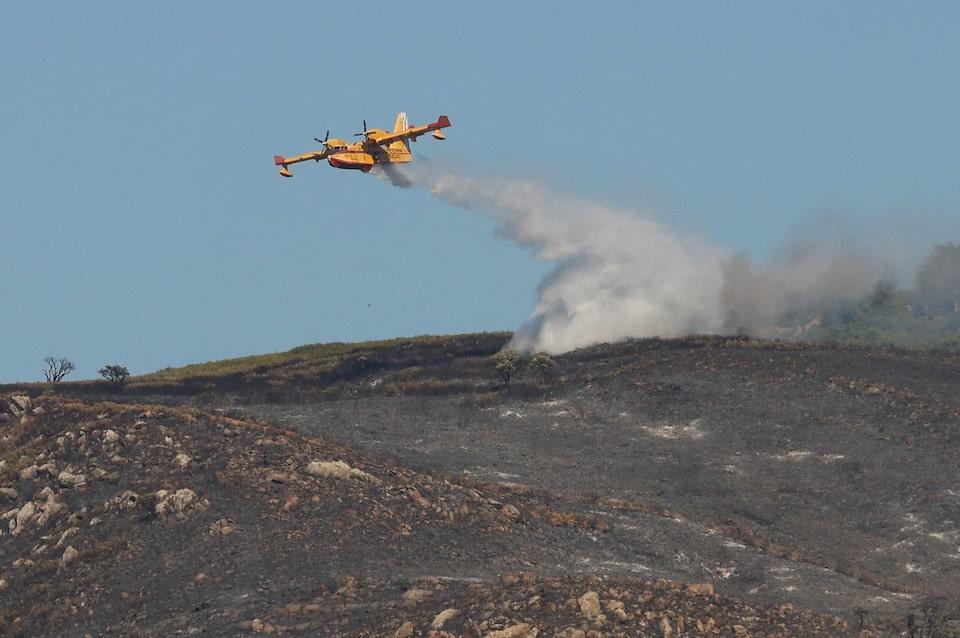
Strong winds and heatwave hamper firefighting efforts Environment minister says arsonists may have started several fires More than 5,000 people evacuated in Castile and Leon region 'Extreme' risk of wildfires forecast for Wednesday MADRID, Aug 13 (Reuters) - A volunteer firefighter died from severe burns and several people were hospitalised in dozens of wildfires that raged across Spain on Wednesday, fuelled by strong winds and scorching heat. At least six large fires were still out of control, according to regional emergency services. Sign up here. "The fire situation remains serious. Extreme caution is essential," Prime Minister Pedro Sanchez said on X. Wildfires have so far burned almost 99,000 hectares (245,000 acres) in Spain this year and extreme heat is making the situation worse. A 10-day heatwave is expected to last until Monday, state weather agency AEMET said, forecasting an "extreme" risk of wildfires on Wednesday. "We are at the most challenging point of the season," AEMET said on X. The man who was killed was a 35-year-old volunteer firefighter who had been attempting to create firebreaks near the town of Nogarejas, in the central Castile and Leon region, when he was trapped in the blaze, regional officials said. That fire had two active fronts that were still out of control, as weather services forecast another day of strong winds and thunderstorms. More than 5,000 people have been evacuated in the region and efforts were focused on preventing the flames from reaching smaller towns. Environment Minister Sara Aagesen told SER radio station that many fires across the country were suspected to be intentionally caused by arsonists due to their "virulence", but added it was too early to say how many. On Monday, another fire killed a man working at a horse stable on the outskirts of Madrid and reached some houses and farms before it was contained. The leader of the Galicia region in the northwest, Alfonso Rueda, called the situation there "complicated" and said the weather wasn't helping. Six active fires were affecting a combined 10,000 hectares in Galicia's Ourense province. https://www.reuters.com/sustainability/climate-energy/volunteer-firefighter-dies-spain-wildfires-rage-2025-08-13/
2025-08-13 12:13
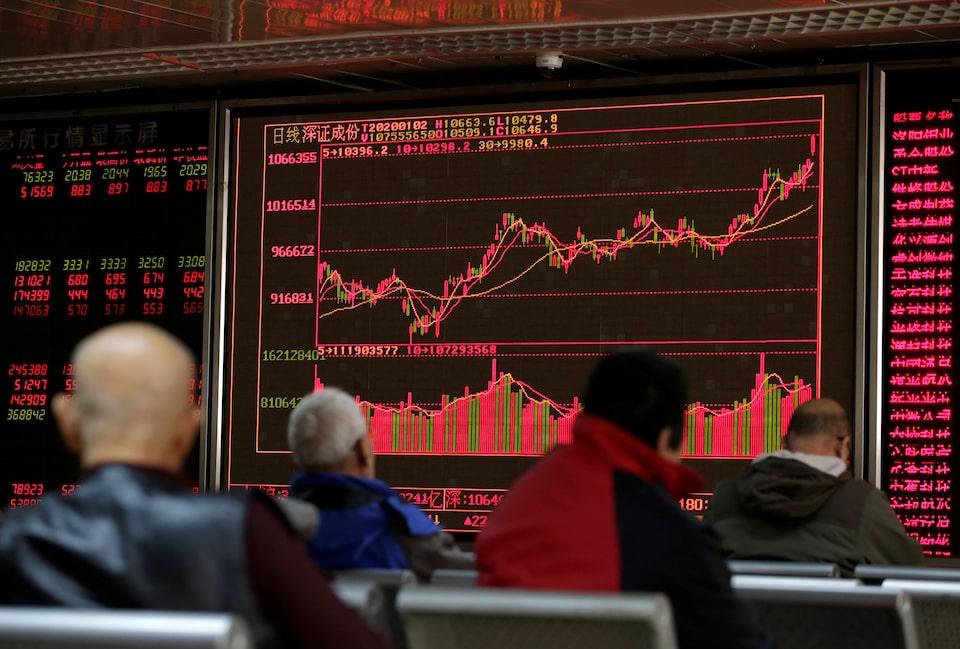
NEW YORK, Aug 13 (Reuters) - This year's popularity of emerging market assets is showing no sign of let-up as international investors poured a combined $55.5 billion into EM stock and bond portfolios in July, the second-largest monthly total in four years. The total compared with $42.8 billion in June and $47.6 billion in July 2024, according to data on Wednesday from the Institute of International Finance. July's total was the largest net inflow since $63.5 billion in September and the second-largest since June 2021. Sign up here. The data showed Chinese debt attracted a net $30.8 billion, the most since March, while another $10 billion that went into non-Chinese EM stocks was the largest amount since December 2023. The strong numbers were backed by performance, with MSCI's 24-country EM stock index (.MSCIEF) , opens new tab up 17% this year, compared to the S&P 500's (.SPX) , opens new tab 9.5% advance. EM debt in dollars is up 8% (.JPMEGD) , opens new tab while local currency debt (.JPMGBIEMTRD) , opens new tab gained over 11% through July. "Flows into high-carry currencies have been persistent," said Jonathan Fortun, a senior economist at the IIF, a banking trade group. "This has been particularly visible in markets like Brazil, Mexico, and South Africa, where elevated real rates have combined with more stable exchange rates to deliver strong total returns." He said "passive allocations" have amplified the trend, with local government bond ETFs registering steady inflows, reflecting a growing comfort with currency risk given this year's weakening of the dollar. Despite a dollar rebound in July, the EM currency index (.MIEM00000CUS) , opens new tab is up nearly 6% this year. The greenback has lost almost 8% against its main developed market peers (.DXY) , opens new tab and the weakness has spilled into August too. Importantly, a weak U.S payrolls number last week tilted expectations towards as many as three rate cuts from the Federal Reserve before the end of the year. "The weaker dollar has also bolstered carry trade performance, with investors able to capture high local yields without facing the same level of (currency) depreciation risk seen in past cycles," said Fortun. MORE GAINS COMING Overall, EM equities saw a $16.3 billion inflow, the most since September, and $39.2 billion funnelled into debt, the most since March. The report highlighted equity inflows to South Korea which more than offset flows out of Taiwan. The Seoul benchmark (.KS11) , opens new tab is up about 33% so far this year while the won has gained more than 6% against the dollar. Foreign ownership of South Korean stocks has risen steadily since mid April according to Goldman Sachs, yet at 29.6% it remains below the recent peak of 32% from July 2024. https://www.reuters.com/markets/us/em-portfolios-see-second-biggest-monthly-inflow-four-years-iif-data-shows-2025-08-13/
2025-08-13 12:12
Aug 13 (Reuters) - Hudbay Minerals (HBM.TO) , opens new tab said on Wednesday Mitsubishi Corp (8058.T) , opens new tab will buy a 30% stake in its Copper World project in Arizona for $600 million, boosting financing and strategic backing for the U.S. copper mine. The deal is expected to close later this year, or early next year. Sign up here. WHY IT'S IMPORTANT Last month, U.S. President Donald Trump imposed a 50% tariff on copper pipes, wiring and other semi-finished products, but exempted refined copper cathodes and raw materials such as ores. Hudbay said its "Made in America" copper production will strengthen the domestic supply chain. CONTEXT Copper World, which is being constructed in Pima County, Arizona, comprises four open-pit copper mines in the first phase, with more planned for later. The mine is expected to produce 85,000 tonnes of copper per year over an initial 20-year lifetime. MARKET REACTION U.S.-listed shares Hudbay rose nearly 17% in the premarket trading. Analyst Shane Nagle of National Bank Financial said the $600 million Mitsubishi joint venture is a “significantly accretive” deal that underscores the scarcity of shovel-ready copper projects globally and the importance of investing in the U.S. critical minerals supply chain. BY NUMBERS Mitsubishi will pay $420 million initially upon the closing and remaining $180 million will be paid within 18 months after the deal is complete. Copper World will facilitate a $1.5 billion investment into the U.S. critical minerals supply chain, the company said. https://www.reuters.com/markets/asia/hudbay-minerals-sell-30-stake-arizona-copper-mining-project-600-million-2025-08-13/