2026-01-28 06:00
LONDON, Jan 27 (Reuters) - Zinc failed to perform to script last year and the galvanising metal continues to surprise in the first days of 2026. A market that was supposed to transition to oversupply in 2025 was instead rocked by a ferocious squeeze in October and is this week trading at three-year highs on the London Metal Exchange (LME) . Sign up here. Global mine production is growing at a fast clip, but the flow-through to the refined metal segment of the supply chain is taking much longer than expected because all the surplus is stuck in China. LME zinc stocks have risen from October's depleted levels thanks to a burst of Chinese exports. But the inventory rebuild has lost momentum in recent weeks, implying the Western market needs more sustained Chinese supply to rebalance. MINE SUPPLY ON TRACK Zinc's bear narrative is predicated on rising mine production and on that score things are running to plan. Global mine output jumped by 6.5% year-on-year in the first 10 months of 2025, according to the International Lead and Zinc Study Group (ILZSG). Boliden's (BOL.ST) , opens new tab Tara mine in Ireland has returned to action after closing mid-2023 due to low prices, while Ivanhoe Mines' (IVN.TO) , opens new tab Kipushi operation in the Democratic Republic of Congo has been steadily ramping up. Meanwhile, Russia's Ozernoye mine has also entered full production after a one-year delay caused by a combination of a November 2023 fire and a lack of spare parts due to Western sanctions over its war in Ukraine. The impact is clear to see in China's sharply increased imports of raw materials. Inbound volumes of zinc concentrates surged 30% year-on-year to an annual record of 5.33 million metric tons in 2025. The turnaround in the zinc concentrates market allowed China to lift output of refined zinc to the tune of 8.4% in the first 10 months of 2025, according to ILZSG's latest figures , opens new tab. CHINA TRADE SHIFTS Global refined zinc production, however, rose by just 2.9% over the same period because smelter output outside of China fell by 2.2% relative to 2024. Lower metal production in Brazil and Kazakhstan was compounded by the permanent closure of Toho Zinc's (5707.T) , opens new tab Annaka operation and the temporary suspension of operations at the Seokpo smelter in South Korea. That imbalance in smelter performance has left Western markets dependent on Chinese exports to plug the supply-chain gaps. China's trade in refined zinc started shifting in the fourth quarter of last year, when the country became a net exporter for the first time since 2022. Exports jumped to 42,800 tons in November, the highest monthly tally in almost 20 years, as Chinese smelters shipped metal to LME warehouses in Hong Kong, Singapore and Taiwan to profit from a historic spike in the cash premium to over $300 per ton. But as the LME tightness passed, exports dropped back a gear to 27,000 tons in December. PARTIAL STOCKS REBUILD China's late-year export surge helped LME warehouse stocks recover from under 50,000 tons in October to 131,000 tons at the end of December. Since then, however, the upward momentum has faded with exchange inventory, both registered and off-warrant, currently sitting at 138,000 tons. Moreover, the amount of cancelled warrants in the system, denoting metal that is earmarked for physical load-out, has crept steadily higher to 12,100 tons, almost 11% of registered tonnage. That suggests the Western market is still running short of zinc and needs more Chinese supply to meet demand, even if the latter has been running at subdued levels. On paper the global zinc market is in a growing supply surplus but with all the surplus metal trapped in China, it will need higher LME prices to entice it out. Bears were caught out by zinc's east-west disconnect last year. With LME three-month zinc trading above $3,300 per ton for the first time since January 2023, they may need to be patient before this market conforms to expectations. Andy Home is a Reuters columnist. The opinions expressed are his own Enjoying this column? Check out Reuters Open Interest (ROI), , opens new tab your essential new source for global financial commentary. Follow ROI on LinkedIn, , opens new tab and X. , opens new tab And listen to the Morning Bid daily podcast on Apple , opens new tab, Spotify , opens new tab, or the Reuters app , opens new tab. Subscribe to hear Reuters journalists discuss the biggest news in markets and finance seven days a week. https://www.reuters.com/markets/commodities/zinc-market-continues-defy-bear-expectations-2026-01-27/
2026-01-28 06:00
Reuters Open Interest (ROI) is your essential source for global financial commentary. LAUNCESTON, Australia, Jan 28 (Reuters) - It's a fairly safe bet to say that China's steel production has passed its peak, after 2025 output dropped to a seven-year low. What is less certain is whether the decline will be gentle or accelerate, and what this means for producers and exporters of iron ore, the key raw material. Sign up here. China produced 960.1 million metric tons of crude steel last year, according to official data, down 4.4% from the 1.005 billion tons in 2024. It was the first time since 2019, when output reached 996 million tons, that production dropped below the 1 billion ton mark. This may seem like a soft outcome, but context is important in assessing the steel market in China, which accounts for more than half of global production. The first is that the decline is largely a managed process, with the authorities in Beijing working to ensure that the steel industry addresses over-capacity. It could be argued that this process is working as data from consultancy Mysteel showed an average of 54% of steelmakers were profitable last year, versus 36% in 2024. The authorities have also encouraged steel exports, which rose to a record high of 119.02 million tons in 2025, up 7.5% from the prior year. While China's steel exports have faced import tariffs and restrictions in some countries, such as India, it's also the case that many countries without domestic steel sectors welcome the ability to buy cost-competitive Chinese steel. Another factor is that while China's steel production is expected to continue to ease modestly over 2026, output in other Asian countries is ramping up. India's steel demand jumped to 150 million tons in the 2025 fiscal year from 136.3 million in the prior year, and the industry's capacity is expected to expand to 300 million tons a year by 2030. Other smaller producers such as Vietnam are also lifting demand, with steel consumption expected to rise to around 32 million tons by 2030, up from around 25 million in 2025. IRON ORE OUTLOOK The shifting of steel production from China to other developing Asian nations could end up being positive for iron ore exporters. It's also likely that China will remain the dominant buyer for several years to come, even if volumes do start to ease in line with lower steel production. China imported a record high 1.26 billion tons of iron ore in 2025, up 1.8% from the prior year. Higher imports were recorded in the second half of the year as inventories were rebuilt after port stockpiles dropped to an 18-month low. Inventories monitored by consultants SteelHome increased from 130.1 million tons at the start of August to end the year at 148.8 million tons, and they have continued to climb in the new year, reaching 157.3 million tons in the week to January 23. The rise in iron ore stockpiles is keeping imports robust, with consultants DBX Commodities estimating seaborne arrivals of 119.7 million tons in January, steady on the all-time high of 119.8 million from December. Imports are also being supported by softer domestic output in China, with official data showing 2025 production of 983.7 million tons, down 2.8% from a year earlier. Iron ore prices have been stable in recent months, with the Singapore Exchange futures contract ending at $105.70 a ton on Tuesday, having traded in a range between $100 and $109 since August last year. Prices may come under pressure later in 2026 as output from the 120-million-tons-a-year Simandou complex in Guinea ramps up, but for now robust China demand and increasing steel output in developing Asia are keeping iron ore above $100 a ton. Enjoying this column? Check out Reuters Open Interest (ROI), your essential new source for global financial commentary. ROI delivers thought-provoking, data-driven analysis of everything from swap rates to soybeans. Markets are moving faster than ever. ROI can help you keep up. Follow ROI on LinkedIn , opens new tab and X , opens new tab. The views expressed here are those of the author, a columnist for Reuters. https://www.reuters.com/markets/commodities/china-passes-steel-output-peak-developing-asia-still-climbing-2026-01-28/
2026-01-28 06:00
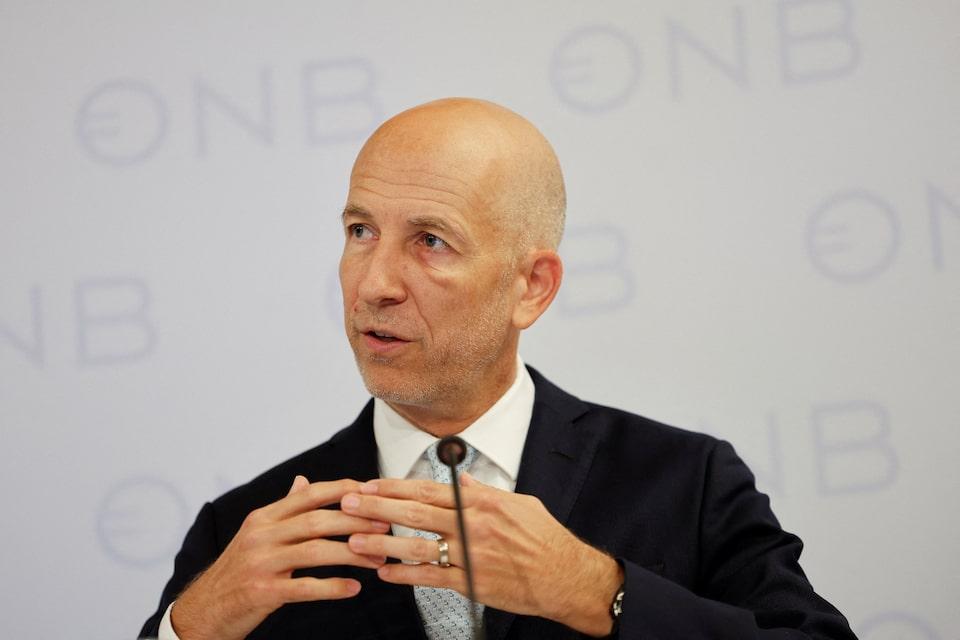
Jan 28 (Reuters) - The European Central Bank may need to consider another interest rate cut if further gains in the euro begin to weigh on the bank's inflation outlook, Austrian central bank governor Martin Kocher told the Financial Times. Recent gains against the dollar were "modest" and did not require a response, Kocher said in an interview published on Wednesday, warning that sharper appreciation could lower inflation projections and force the ECB to act. Sign up here. "If the euro appreciates further and further, at some stage this might create of course a certain necessity to react in terms of monetary policy," Kocher added. A stronger euro would reduce import prices and erode competitiveness against U.S. competitors, he said. Despite this, Kocher said the euro zone economy had been more resilient than expected and he was "cautiously optimistic" about growth this year, the newspaper added. Speaking ahead of ECB's February 4 meeting, he said there was no immediate need to change rates but stressed the importance of keeping "full optionality" amid uncertainty, it said. https://www.reuters.com/world/europe/ecb-may-need-fresh-rate-cut-if-euro-strengthens-kocher-tells-ft-2026-01-28/
2026-01-28 05:54
SOUTH GOA, India, Jan 28 (Reuters) - The chief executive of Japan's top liquefied natural gas (LNG) buyer JERA said on Wednesday that the company is considering how to utilize its portfolio beyond Japan. Speaking at the India Energy Week conference, Izumi Kai also added that JERA needs more flexible LNG contracts, and to handle shipping by themselves to manage market uncertainty. Sign up here. https://www.reuters.com/business/energy/jera-considering-how-utilise-gas-portfolio-beyond-japan-says-ceo-2026-01-28/

2026-01-28 05:40
Fed leaves rates unchanged, sees 'elevated' inflation and stabilizing job market US dollar supported after Bessent affirms strong dollar policy Dollar fell Tuesday following Trump comments ECB officials signal risk to inflation outlook from stronger euro NEW YORK, Jan 28 (Reuters) - The U.S. dollar held gains against the euro and the yen on Wednesday after the U.S. Federal Reserve kept interest rates steady, citing still-elevated inflation alongside solid economic growth, and gave little indication in its latest policy statement of when borrowing costs might fall again. The euro was 1% lower against the dollar at $1.19163, while the greenback was up 1.1% against the yen at 153.90 yen . Sign up here. The dollar index , which measures the U.S. currency's strength against a basket of peers, rose 0.8% to 96.667. The index sank as low as 95.86 on Tuesday, its weakest since February 2022, after U.S. President Donald Trump brushed off this month's slide, emboldening dollar bears. "The Fed did nothing and did it with conviction," Karl Schamotta, chief market strategist with payments company Corpay in Toronto, said. "In voting along 10-2 lines and subtly upgrading its assessment of labor market conditions, the central bank clearly telegraphed a desire to stay on the sidelines for now," he said. The statement from the policy-setting Federal Open Market Committee offered no hint about when another reduction in borrowing costs might come, noting that "the extent and timing of additional adjustments" to the policy rate would depend on incoming data and the economic outlook. "What the market will be glad to see here is that there is no sign of bowing down to Trump from the core of the committee. They are standing firm," Kyle Chapman, FX markets analyst at Ballinger Group in London, said. "The rate path this year is wide open here, but I don't see any reason to cut until at least the summer. The economy looks solid, equities are soaring, inflation is sticking around that 2.5-3.0% range - why ease further now?," Chapman said. BESSENT BUMP The dollar rebounded earlier in the session after Treasury Secretary Scott Bessent reaffirmed the United States' preference for a strong dollar. The United States has a strong dollar policy and that means setting the right fundamentals, Bessent said on Wednesday, while denying that the U.S. was intervening in currency markets to support the Japanese yen. The dollar index is down nearly 2% for the year, after falling 9.4% last year. Trump said on Tuesday the value of the dollar was "great", when asked if he thought it had declined too much. Traders took this as a signal to intensify dollar selling, ahead of a Federal Reserve policy decision later on Wednesday. "The retracement/rebound in the USD is pretty logical, really, given that Bessent pushed back about as hard as you can imagine on the idea that the Trump Administration are seeking to engineer a softer USD, as well as putting to bed the market chatter that the Treasury were also seeking to prop up the yen," said Michael Brown, market analyst at online broker Pepperstone in London. The dollar has been under pressure due to several factors: expectations of continued Federal Reserve rate cuts, tariff uncertainty, policy volatility including threats to Fed independence and rising fiscal deficits, all of which have eroded investor confidence in U.S. economic stability. On Tuesday, the euro topped $1.2 for the first time since 2021, the pound hit 4-1/2-year highs, while the yen is set for its strongest monthly performance against the dollar since April, supported by speculation of joint Japanese-U.S. official intervention to support the Japanese currency. ECB OFFICIALS VOICE CONCERN The dollar's recent weakness may offer some respite to Japanese officials, but it is already a source of concern for others. Two European Central Bank officials said on Wednesday the strength of the euro could influence monetary policy. Austrian central bank governor Martin Kocher told the Financial Times the ECB may have to consider another interest-rate cut if the strength of the euro starts to affect the outlook for inflation. Bank of France Governor François Villeroy de Galhau said in a LinkedIn post that policymakers were "closely monitoring the appreciation of the euro and its potential impact on lower inflation." The euro was last down 1.1% at $1.1907, but not far from the $1.2084 high, its strongest level since June 2021, touched in the prior session. https://www.reuters.com/business/dollar-crumbles-after-trump-remarks-euro-yen-sterling-surge-2026-01-28/
2026-01-28 05:32
A look at the day ahead in European and global markets from Tom Westbrook Sometimes markets do listen to Donald Trump. After a long, grinding decline in foreign exchange volatility, the currency market has been lit up by a wave of dollar selling. Sign up here. When Trump sounded nonchalant about it, telling a reporter that the dollar was "doing great," selling turned into a rout that sent the euro over $1.20 for the first time in more than 4-1/2 years and the Swiss franc to a 10-year top. There's a modest rebound underway, but the risk of dollar exposure in the Trump era is growing ever clearer. Geopolitics, Trump's policies, Washington wanting a lower exchange rate and worries over Fed independence all helped drag the dollar index down more than 9% last year. And now with fresh nerves about his unsettling Greenland diplomacy, as well as hints the U.S. is willing to act with dollar selling to help Japan boost its yen -- investors want to hedge. As TD Securities analyst Prashant Newnaha put it -- imagine holding Treasuries at 4%, but losing 10% on the dollar as a foreign investor. Reuters reported last week that Australia's second-biggest pension fund, Australian Retirement Trust, is reducing dollar exposure through hedging, while hanging on to its U.S. investments. That sort of view helps explain how stocks have marched on to record peaks despite the swings in FX. The falling dollar helped gold to a new high above $5,200 an ounce and has lifted the Australian dollar over 70 cents. Rates are giving the Aussie an extra boost and after data on Wednesday showed hotter-than-expected underlying inflation in December, markets put the chance of a rate hike next week at more than 70%. All of Australia's "Big Four" banks now forecast a hike. Central banks in the U.S. and Canada are seen keeping rates on hold later on Wednesday, leaving the focus on how Fed Chair Jerome Powell handles questions on the central bank's independence. Earnings are due for Meta and Tesla after U.S. markets close. Key developments that could influence markets on Wednesday: - U.S. Federal Reserve meeting - Bank of Canada meeting - After-market earnings at Meta (META.O) , opens new tab and Tesla (TLSA.O) , opens new tab https://www.reuters.com/world/china/global-markets-view-europe-2026-01-28/