2025-08-13 10:50
BENGALURU, Aug 13 (Reuters) - Indian gold loan financier Muthoot Finance (MUTT.NS) , opens new tab reported a bigger-than-expected 90% surge in first-quarter profit on Wednesday, aided by higher loan demand as prices of the precious metal soared. Muthoot Finance reported a profit of 20.46 billion rupees ($233.91 million) for the April-June quarter, above analysts' estimate of 16.24 billion rupees, per data compiled by LSEG. Sign up here. Gold prices hit multiple record highs during the quarter. This benefits gold financiers as higher prices increase the collateral value, allowing borrowers to secure larger loans for the same amount of gold. Additionally, tighter lending in the unsecured segment prompted people to shift to gold loans as an alternative source of funds, analysts said. Muthoot Finance's standalone loan assets under management rose 42% year-on-year to 1.2 trillion rupees at the end of the quarter, and interest income jumped about 53% to 55.92 billion rupees. "We are well-positioned to sustain strong growth through fiscal 2026 and beyond," Managing Director George Alexander Muthoot said in a statement. The company also approved equity infusion of 5 billion rupees and 2 billion rupees in its units, Muthoot Money and Muthoot Homefin, respectively. ($1 = 87.4710 Indian rupees) https://www.reuters.com/world/india/indias-muthoot-finance-beats-quarterly-profit-view-strong-loan-growth-2025-08-13/

2025-08-13 10:49
Vestas second quarter profit lags forecast Orders dropped in Q2, but are up for Q3 Keeps 2025 outlook despite US trade policy uncertainty Shares down 2.3%, up 16% year-to-date COPENHAGEN, Aug 13 (Reuters) - Danish wind turbine maker Vestas (VWS.CO) , opens new tab swung to a profit in the second quarter from a loss a year before, maintaining its financial outlook for 2025 on expectations it could overcome the impact of U.S. policy uncertainty. Vestas reported an April-June operating profit before one-off items of 57 million euros ($66.56 million) on Wednesday, below the 89 million expected by analysts but up from a loss of 185 million euros in the corresponding period of 2024. Sign up here. Risk from tariffs and U.S. shifts on renewables policy was offset by good order momentum in Europe, the Middle East and Africa, as well as by local production and an ability to pass on costs, the company said. Several analysts indicated that the lower-than-expected quarterly operating profit was not a major concern. The U.S. is the biggest national market after the EMEA region for Vestas, which also sells widely in Asia and is the largest wind turbine maker outside of China. The company's order intake for new wind turbines declined 44% year-on-year to 2,009 megawatts (MW) in the second quarter, but still beat an average forecast among analysts of 1,860 MW. The order intake has since rebounded, including in the U.S. where renewable developments continue despite efforts by President Donald Trump to curtail incentives for wind and solar energy, CEO Henrik Andersen told Reuters. "Already now at this time in the third quarter, we are higher in order intake ... than we were for the full order in the second quarter," Andersen said. Vestas kept its 2025 forecast unchanged for an operating profit margin before special items of 4%-7% and revenue of 18 billion to 20 billion euros, up from 17.3 billion euros in 2024. While tariffs remain an uncertainty, Vestas' local production made it less vulnerable to measures imposed by the United States, Andersen said. The company expects to pass on tariffs to customers, which will ultimately raise the price of electricity, he added. The company's shares traded down 2.3% by 1029 GMT, and are up 16% year-to-date. "There is of course some regulatory uncertainty in the U.S., but right now Trump is not interfering with setting up wind turbines. However, the future is still uncertain," Sydbank analyst Jakob Pedersen said. ($1 = 0.8564 euros) https://www.reuters.com/sustainability/climate-energy/vestas-swings-second-quarter-profit-keeps-outlook-2025-08-13/
2025-08-13 10:41
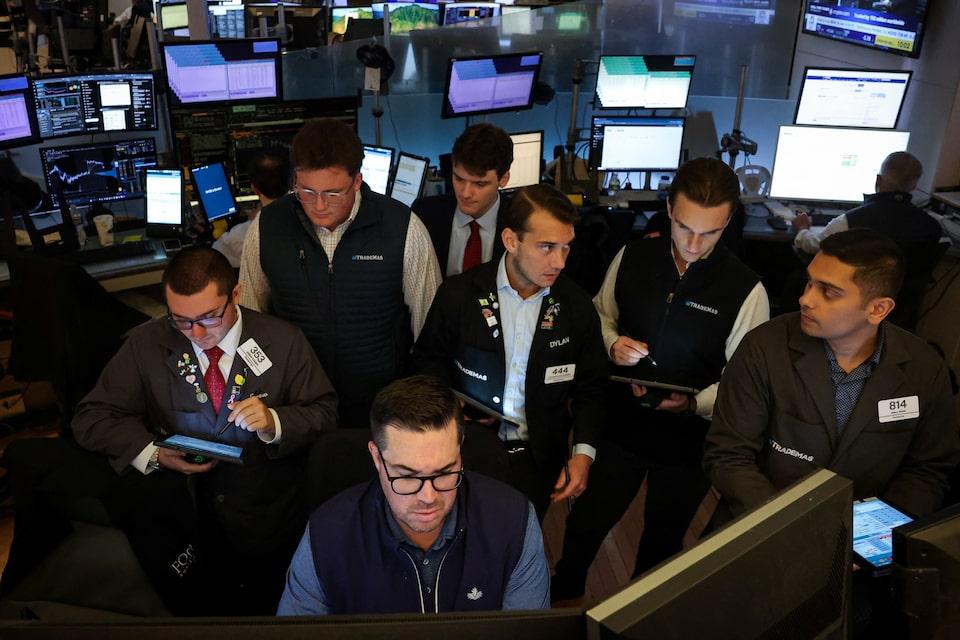
LONDON, Aug 13 (Reuters) - What matters in U.S. and global markets today By Mike Dolan , opens new tab, Editor-At-Large, Finance and Markets Sign up here. U.S. July inflation data didn't sound the all clear on tariffs but also didn’t send an unequivocal signal about the longer-term impacts either – and that seemed to be enough to goose Fed easing expectations, spur Wall St stocks to new records and sink volatility gauges. Futures markets are now fully convinced another quarter point rate cut is coming next month and they're almost halfway priced to three cuts by the end of the year. The S&P 500 and Nasdaq raced more than 1% higher on Tuesday, the VIX "fear index" sank to the lowest of the year and futures are up again ahead of today's bell. * Bond market volatility cratered to its lowest in more than 3-1/2 years, even as "core" inflation rose back above 3% for the first time in five months, as Treasury yields fell across the curve and the dollar index ebbed to its weakest in more than a fortnight. President Trump again lambasted Fed chair Jerome Powell for not cutting rates more quickly and threatened a "major lawsuit" against him, while also hitting out at Goldman Sachs boss David Solomon and its chief U.S. economist Jan Hatzius for the bank's research on tariffs and forecasts. * Treasury Secretary Scott Bessent talked about the Fed possibly cutting rates 50 basis points next month "to make up for the delay" and was hopeful the latest Trump appointee to the Fed board, White House advisor Stephen Miran, could be confirmed by the Fed's September meeting. Meantime, the White House said the plan was to continue publishing monthly employment statistics even though Trump's pick to head the embattled Bureau of Labor Statistics, E.J. Antoni, said this month that the BLS should suspend monthly payrolls releases until data problems were fixed - and rely instead on quarterly reports. * Once again, tech stocks led the charge higher on Wall Street on Tuesday. Alphabet shares rose 1.2% as Perplexity made a $34.5 billion cash offer to buy the company's Chrome browser and Intel climbed 5% after Trump met CEO Lip-Bu Tan and praised him, after claiming only last week that Tan was compromised due to Chinese links. European and Asia shares were higher, with Japan's Nikkei hitting a record high, and eyes are now shifting to the U.S.-Russia summit in Alaska on Friday for clues about a possible Ukraine ceasefire. Make sure to check out today's column, where I consider whether the now government-blessed "stablecoin" explosion will juice or destabilise the economy. Today's Market Minute * U.S. authorities have secretly placed location tracking devices in targeted shipments of advanced chips they see as being at high risk of illegal diversion to China, according to two people with direct knowledge. * Perplexity AI made a $34.5 billion unsolicited all-cash offer for Alphabet's Chrome browser on Tuesday, a bid far above its own valuation as the startup reaches for the browser's billions of users pivotal to the AI search race. * Investors have faced several counterintuitive swings this year, including the dollar's plunge and record highs in bitcoin and U.S. stocks. Now, writes ROI columnist Jamie McGeever, we can add another to that list: the stellar outperformance of Latin American currencies against the dollar. * Overcapacity has made its way into China’s domestic market, with price wars leading to collapsing profitability and accelerating deflation. The government has responded by launching a so-called “anti-involution” program. It’s had some early wins, but this could be a lengthy battle, claims Emmer Capital Partners Ltd founder Manishi Raychaudhuri. * The pace of new capacity of U.S. solar, wind and battery systems has slowed nationally and in key states this year, weighing on sentiment surrounding clean energy. But, writes ROI columnist Gavin Maguire, climate trackers can take heart from the continued growth outside Texas and California. Chart of the day Wall Street "fear gauges" are plunging, with the VIX index measuring one-month implied volatility in the S&P500 plumbing its lowest levels of the year and the equivalent Treasury market MOVE index at its lowest since January 2022. Today's events to watch * Richmond Federal Reserve President Thomas Barkin and Atlanta Fed President Raphael Bostic and Chicago Fed President Austan Goolsbee both speak * U.S. corporate earnings: Cisco Systems Want to receive the Morning Bid in your inbox every weekday morning? Sign up for the newsletter here. You can find ROI on the Reuters website , opens new tab, and you can follow us on LinkedIn , opens new tab and X. , opens new tab Opinions expressed are those of the author. They do not reflect the views of Reuters News, which, under the Trust Principles , opens new tab, is committed to integrity, independence, and freedom from bias. https://www.reuters.com/business/finance/global-markets-view-usa-2025-08-13/
2025-08-13 10:24
MUMBAI, Aug 13 (Reuters) - The Indian rupee gained the most in more than a month on Wednesday as softer U.S. inflation data bolstered hopes of a Federal Reserve rate cut in September, weighing on the dollar. The local currency unit gained 0.31% - its highest intraday gain since July 3 - and closed at 87.4400, compared to Tuesday's close of 87.7125. Sign up here. U.S. inflation data released on Tuesday showed consumer prices rose modestly in the world's largest economy in July, with impact from recent tariffs staying limited. This provided a boost to emerging market currencies including the Indian rupee, as the odds for a September rate cut from the Fed climbed to 94%. Markets are now pricing in 60 basis points of cuts this year, lifting risk appetite among investors. Investor confidence in the dollar was further dented after the White House said President Donald Trump was weighing legal action against Fed Chair Jerome Powell over his handling of renovations at the central bank's headquarters. The dollar index was down 0.4% at 97.645 at 1544 IST. “For the USD/INR pair, the outlook is bearish for the next couple of days," said Jigar Trivedi, senior currency and commodity analyst at Reliance Securities. The uncertainty over U.S. tariffs remains the dominant drag on sentiment, Trivedi said, adding that the upcoming Trump-Putin summit in Alaska on Friday is a key risk event that could sway the currency’s direction. The stakes of the meeting, which aims to explore a resolution to the war in Ukraine, are high for the rupee. Market participants expect any resolution to the conflict to have a bearing on additional tariffs that President Trump has imposed on Indian goods in response to New Delhi’s continued purchases of Russian oil. Meanwhile, most Asian currencies advanced, with the Indonesian rupiah and the Malaysian ringgit up 0.6% and 0.5%, respectively, and the South Korean won rising 0.5%. https://www.reuters.com/world/india/indian-rupee-rises-most-month-broad-dollar-weakness-2025-08-13/

2025-08-13 07:59
Aug 13 (Reuters) - Swiss dental implant maker Straumann (STMN.S) , opens new tab on Wednesday reported first half earnings below market expectations, impacted by negative foreign exchange movements and a weaker performance in North America. The group, which specialises in tooth replacement and orthodontic solutions, reported core earnings before interest and taxes (EBIT) of 358 million francs in the first half, below consensus estimates of 365 million francs. Sign up here. "The Swiss franc keeps strengthening versus all the key currencies in which we are doing business," CEO Guillaume Daniellot told Reuters in an interview. The currency, seen as a safe haven amid economic turmoil, has appreciated around 12% against the U.S. dollar year-to-date. North America sales totalled 170.7 million francs in the first half of the year, down 0.9%, and slightly below estimates at 172.4 million. The North American market, Straumann's second biggest, generates around 28% of its sales. Straumann has shown resilience to changing U.S. tariff policies as 80% of the products it sells in the United States are manufactured domestically. However, the company's key challenger implants are produced in Brazil and in Europe. The group's total sales grew to 1.35 billion Swiss francs ($1.67 billion)in the period, broadly in line with analysts' expectations of 1.36 billion francs in a Vara consensus. Straumann confirmed its 2025 sales forecast, saying it aims to achieve organic revenue growth in the high single-digit percentage range. Shares in Straumann were down 4.2% as of 0758 GMT. ($1 = 0.8063 Swiss francs) https://www.reuters.com/business/healthcare-pharmaceuticals/straumann-h1-earnings-miss-market-expectations-2025-08-13/
2025-08-13 07:56
NEW YORK, Aug 13 (Reuters) - Bullish, a cryptocurrency exchange operator that counts billionaire Peter Thiel amongst its backers, said its U.S. initial public offering was priced above its indicated range at $37 per share. The offering raised $1.11 billion for Bullish based on 30 million shares sold and valued the company at $5.41 billion. Sign up here. Bullish was earlier aiming to price its offering between $32 and $33 per share. The share sale comes as IPOs are bouncing back following a dry spell for U.S. equity capital markets that lasted for more than two years. Stablecoin issuer Circle Internet (CRCL.N) , opens new tab upsized its initial IPO in early June on strong investor demand and its shares have increased more than 400% since then. Shares of design software maker Figma (FIG.N) , opens new tab surged 250% in its market debut just over two weeks ago. With its listing, Bullish joins a burgeoning list of crypto players that have tapped public markets this year, buoyed mainly by crypto-friendly regulations under the Trump administration. In July, U.S. President Donald Trump signed a law to create a regulatory regime for dollar-pegged cryptocurrencies known as stablecoins, marking a huge win for crypto supporters who have long lobbied for such a regulatory framework in a bid to gain greater legitimacy for an industry that began in 2009 as a digital Wild West famed for its innovation and speculative chaos. Bullish, which is led by former New York Stock Exchange president Tom Farley, operates an exchange that offers spot crypto trading, futures and derivatives trading, and also owns media outlet CoinDesk. It is expected to start trading on NYSE under the ticker symbol "BLSH" on Wednesday. Institutional investors including BlackRock and Cathie Wood's Ark Investment Management have committed to buy upto $200 million worth of shares from Bullish's offering. JPMorgan, Jefferies, and Citigroup are the lead underwriters for the IPO. https://www.reuters.com/technology/coindesk-owner-bullish-prices-ipo-above-range-raise-over-11-billion-2025-08-13/