2025-08-13 07:03
Chinese crushers buy Brazilian beans amid US-China trade war Chicago soybean futures near 5-year lows amid trade uncertainty US soybeans around $40/ton cheaper than Brazilian for October shipment SINGAPORE/BEIJING, Aug 13 (Reuters) - U.S. soybean exporters risk missing out on billions of dollars worth of sales to China this year as trade talks drag on and buyers in the top oilseed importer lock in cargoes from Brazil for shipment during the key U.S. marketing season, according to traders. Chinese importers have finished booking soybean cargoes for September, taking around 8 million metric tons, all from South America, three traders told Reuters. Sign up here. For October, Chinese buyers have secured about 4 million tons - half of their expected requirement - also from South America, the traders said. "China's heavy Q3 soybean purchases suggest the industry has built up inventories ahead of potential Q4 supply risks," said Wang Wenshen, an analyst at Sublime China Information. Last year, Chinese oilseed importers bought around 7 million tons from the U.S. for shipments during the two months. The risk of a prolonged absence of Chinese purchases for the U.S. crop year starting in September amid unresolved trade tensions could add pressure on Chicago futures trading not far from five-year lows, traders said. Typically, most Chinese purchases of U.S. soybeans are shipped between September and January, before Brazilian supplies take over after South America's harvest. Chinese buyers are expected to complete this year's October bookings by early next month, said a trader at an international firm in Singapore. China has been cutting its dependence on U.S. agricultural products since the trade war under President Donald Trump's first term. Last year, China imported roughly 105 million metric tons of soybeans. Of that, 22.13 million tons came from the U.S., worth $12 billion. TRADE TENSIONS CLOUD OUTLOOK On Sunday, Trump urged China to quadruple its soybean purchases ahead of a tariff truce deadline, a target that analysts said was unfeasible as it would require China to buy almost exclusively from the U.S. The next day, the two sides extended their tariff truce by 90 days. However, three traders told Reuters the extension by itself was unlikely to spur purchases, as Beijing's tariff on U.S. soybean imports remains at 23% - making them uncompetitive. China could resume buying U.S. soybeans if an agreement to reduce duties is reached. "One possible scenario is that if both sides reach a deal in November, China could resume buying U.S. soybeans, potentially extending the U.S. export window and putting pressure on Brazil's new-crop sales," said Johnny Xiang, founder of Beijing-based AgRadar Consulting. Excluding tariffs, U.S. soybeans for October shipment are around $40 per ton cheaper than Brazilian cargoes being bought by China, two traders said. China has plentiful soybeans on hand after stepping up imports with purchases hitting record highs in recent months. https://www.reuters.com/world/china/us-losing-out-china-soybean-sales-brazil-fills-key-supply-period-2025-08-13/

2025-08-13 07:01
US consumer price index rose 0.2% last month US and China extend tariff truce by 90 days Mild US inflation data lifts Fed rate-cut bets Aug 13 (Reuters) - Gold edged higher on Wednesday, supported by a weaker dollar after mild U.S. inflation data cemented bets for an interest rate cut in September, while investors awaited this week's U.S.-Russia talks over the war in Ukraine. Spot gold was up 0.3% at $3,355.30 per ounce, as of 0651 GMT. U.S. gold futures for December delivery gained 0.2% to $3,405.50. Sign up here. "The fall in the USD enabled a moderate bounce in the gold price, with the precious metal oscillating around the $3,350 level ahead of the Trump-Putin meeting on Friday," said Tim Waterer, chief market analyst at KCM Trade. "If the meeting in Alaska doesn't resolve anything and the war in Ukraine continues, gold could be making a push back towards $3,400 once again." The summit between U.S. President Donald Trump and Russian President Vladimir Putin "is a listening exercise for the president," the White House said on Tuesday, tempering expectations for a quick Russia-Ukraine ceasefire deal. Data released on Tuesday showed that the U.S. Consumer Price Index (CPI) rose 0.2% in July, following a 0.3% increase in June. On a year-over-year basis, the CPI climbed 2.7%. The dollar index extended declines, making greenback-denominated assets more affordable to holders of other currencies. Markets are pricing in about a 90% chance of a Federal Reserve rate cut in September, with at least one additional reduction expected by the end of the year. Non-yielding gold thrives in a low-interest-rate environment. Easing trade tensions in the market, the United States and China have extended a tariff truce for another 90 days, staving off triple-digit duties on each other's goods. Investors are now awaiting more U.S. economic data due later this week, including the U.S. Producer Price Index, weekly jobless claims, and retail sales. Elsewhere, spot silver climbed 1.2% to $38.35 per ounce, platinum gained 1% to $1,348.70 and palladium rose 0.8% to $1,138.04. https://www.reuters.com/world/china/gold-gains-soft-us-data-pressures-dollar-fuels-rate-cut-bets-2025-08-13/

2025-08-13 06:53
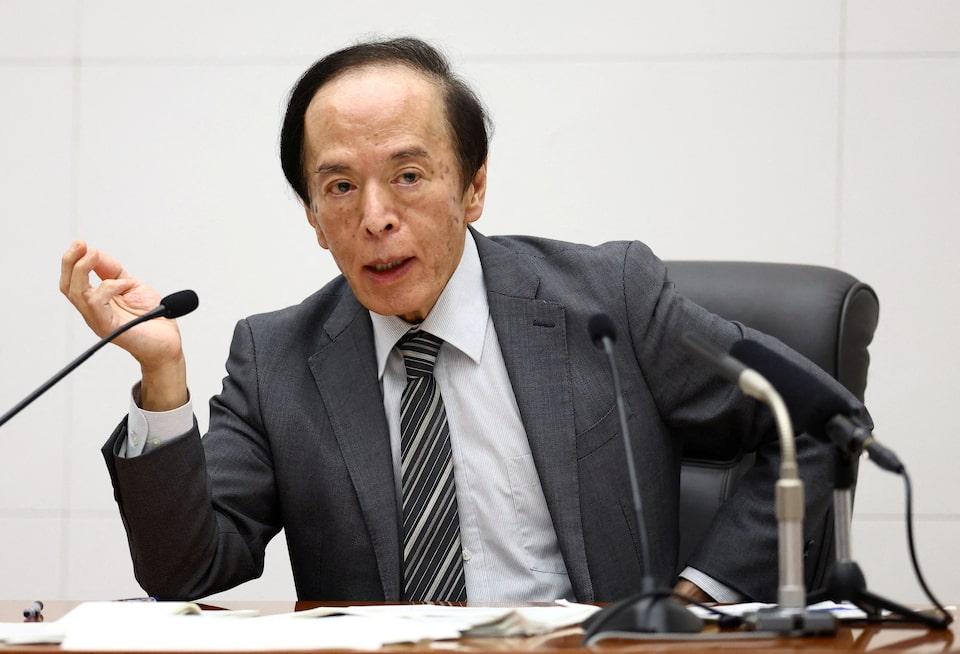
Some in board call for tweak to BOJ's focus on 'underlying' inflation Calls for communication change reflects mounting price pressure Government panel member warned BOJ may be 'behind the curve' BOJ may shift communication as rate hike draws near TOKYO, Aug 13 (Reuters) - Pressure is mounting within the Bank of Japan to ditch a vaguely defined gauge of inflation as worries about second-round price effects prompt some board members to call for a more hawkish communication of policy and a clearer path to future rate hikes. BOJ Governor Kazuo Ueda has justified going slow on rate hikes by explaining that "underlying inflation," which focuses on the strength of domestic demand and wages, remains short of the central bank's 2% target. Sign up here. The trouble is that there is no single indicator that gauges "underlying inflation", making it a target for critics who say the BOJ is overly reliant on an obscure reading to guide monetary policy despite both headline inflation and core measures exceeding its target for years. Now, even some members of the BOJ board - worried that second-round price effects were becoming embedded in pricing behaviour and public perceptions of future inflation - are calling for a change to the bank's communication to a more hawkish one that focuses on headline inflation, which hit 3.3% in June. "We're at a phase where we should shift the core of our communication away from underlying inflation to actual price moves and their outlook, as well as the output gap and inflation expectations," one member said, according to a summary of opinions at the bank's July policy meeting. Another member said the BOJ must put more emphasis on upside risks to prices, and consider tweaking its communication to one that is based on the view Japan will hit 2% inflation. Some members of the government's top economic council also warned this month the BOJ might be too complacent of mounting price pressure, a clear nudge to the central bank to steer a more hawkish policy path in the wake of growing public alarm over persistent inflation. "I'm worried that monetary policy is already behind the curve," one panel member was quoted as saying at a meeting last week, adding that prolonged price rises were already affecting people's livelihood and their inflation expectations. OCTOBER POLICY TILT? The BOJ exited a decade-long, radical stimulus programme last year and raised short-term interest rates to 0.5% in January on the view that Japan was on the cusp of sustainably hitting its 2% inflation target. While the central bank has signalled its readiness to raise rates further, the economic impact of higher U.S. tariffs forced it to cut its growth forecasts in May and complicated decisions around the timing of the next rate increase. With Japan having agreed on a trade deal with the U.S. in July, the BOJ has shed some of its gloom over the economic outlook. Of the BOJ's nine board members, Naoki Tamura, Hajime Takata and Junko Koeda have highlighted the risk of persistent rises in food prices leading to broader-based, sustained inflation. To be sure, there is no consensus within the board yet on whether a communication overhaul is needed, with one member quoted as saying in the summary that underlying inflation remained an "important concept in guiding policy." But the fact some members openly called for a tweak to the dovish communication highlights the board's growing attention to broadening inflationary pressure that may pave the way for rate hikes in coming months and into 2026, some analysts say. Annual core consumer inflation hit 3.3% in June, exceeding the BOJ's 2% target for well over three years, due largely to a 8.2% spike in food costs. Such price pressures led the board to revise up its core inflation estimates last month, and cast doubt on the BOJ's view that underlying inflation - measured by a mix of proxies such as public expectations of future price moves - has yet to reach 2%. The BOJ may gradually phase out the concept of underlying inflation from its communication, as it gears up for the next rate hike that could happen as soon as in October, said veteran BOJ watcher Naomi Muguruma. "I think many BOJ officials are beginning to realise that the idea doesn't fit quite well with reality," she said. "We might hear less of this concept when the timing of the next rate hike draws near." https://www.reuters.com/business/boj-faces-pressure-ditch-obscure-inflation-gauge-clear-path-tighter-policy-2025-08-13/
2025-08-13 06:49
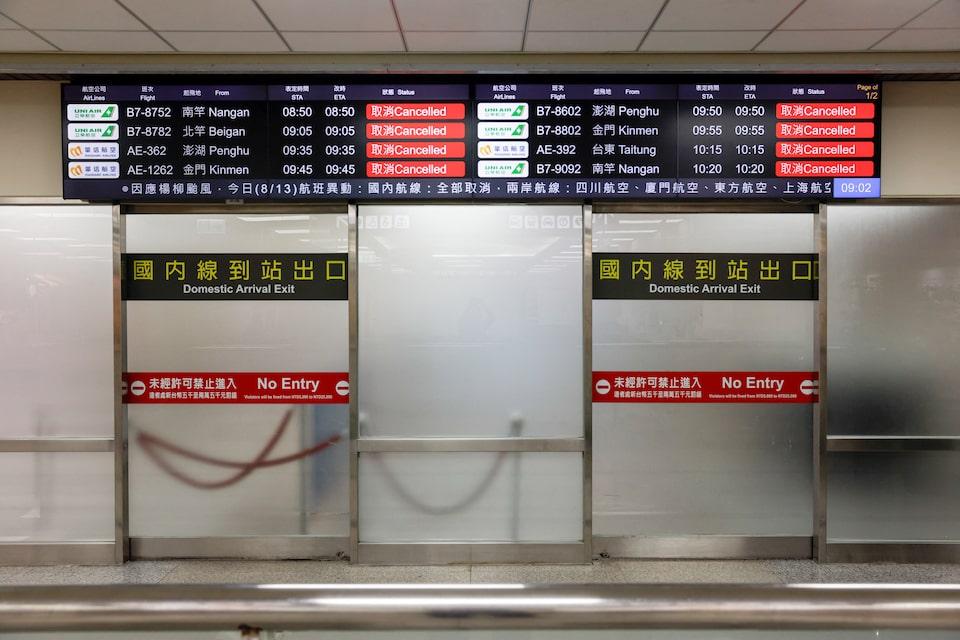
TAIPEI, Aug 13 (Reuters) - Typhoon Podul hit Taiwan's sparsely populated southeast coast on Wednesday packing winds of up to 191 kph (118 mph), as a large swathe of southern and eastern parts of the island shut down and hundreds of flights were cancelled. Taiwan is regularly hit by typhoons, generally along its mountainous east coast facing the Pacific. Sign up here. Podul slammed into the southeastern city of Taitung around 1 p.m. (0500GMT), Taiwan's Central Weather Administration said. "Destructive winds from typhoon expected. Take shelter ASAP," read a text message alert issued to cellphone users in parts of Taitung early on Wednesday. The alert warned people of gusts above 150 kph (93 mph) in the coming hours. Nine cities and counties announced the suspension of work and school for Wednesday, including the southern metropolises of Kaohsiung and Tainan. In the capital Taipei, home to Taiwan's financial markets, there were blustery winds but no impact. Authorities are also working to evacuate those whose homes were damaged by a July typhoon that brought record winds and damaged the electricity grid in a rare direct hit to Taiwan's west coast. The government said more than 5,500 people had been evacuated ahead of the typhoon's arrival. All domestic flights were cancelled on Wednesday - 252 in total - while 129 international ones were axed too, the transport ministry said. Taiwan's two main international carriers China Airlines (2610.TW) , opens new tab and EVA Air (2618.TW) , opens new tab said their cancellations were focused on routes out of Kaohsiung, with some flights from the island's main international airport at Taoyuan stopped as well. After making landfall, the storm is expected to hit Taiwan's much more densely populated western coast before heading for China's southern province of Fujian later this week. As much as 600 mm (24 inches) of rain was forecast in southern mountainous areas over the next few days, the Central Weather Administration said. More than a year's rainfall fell in a single week this month in some southern areas, unleashing widespread landslides and flooding, with four deaths. https://www.reuters.com/business/environment/typhoon-podul-slams-into-southern-taiwan-hundreds-flights-cancelled-2025-08-13/
2025-08-13 06:41
Interest in yuan-denominated settlements from China likely to continue DBS's CIPS settlement flows up 30% y/y in 2024 Bank seeks to grow FI clearing capabilities, enhance ROE SINGAPORE, Aug 13 (Reuters) - DBS Group (DBSM.SI) , opens new tab, Southeast Asia's largest lender by assets, is seeing growing interest from Chinese exporters to settle trades in renminbi (RMB), or yuan, particularly with counterparts in Latin America and the Middle East, a senior executive said. "Right now, you see the Chinese exporters, some are beginning to ask and say, I'm going to sell in RMB, please settle in RMB," said Han Kwee Juan, speaking to Reuters in his first media interview since becoming DBS's group head of institutional banking in January. Sign up here. "Is that a trend that will continue? I think that it's something that they will continue to ask for as they trade more with the rest of the world, outside of the U.S.," he said. The shift comes as decades of unwavering faith in the U.S. dollar's dominance in global trade and capital flows faces scrutiny. Major emerging market economies are stepping up efforts to trade in local currencies, underscoring efforts to reduce reliance on the dollar in the global financial system. However, Han said that most settlements outside of China remain "largely in dollars". The bank's subsidiary, DBS China, has been a member of China's Cross-Border Interbank Payment System (CIPS) since 2015. China launched CIPS in 2015 to promote the yuan's usage in international trade. It allows global banks to clear cross-border yuan transactions directly onshore, instead of through clearing banks in offshore yuan hubs. DBS's settlement flows through the CIPS clearing system grew 30% year-on-year in 2024, Han said, though he maintained that the shift toward more yuan-denominated settlements remains gradual. In a wide-ranging interview, Han spoke of how businesses are dealing with the uncertainty over Trump's tariffs and outlined DBS's growth strategy in the current economic environment. "One of the things that we have been growing this year is we have been growing our capability for FI clearing," he said. "We have been quite purposeful in terms of investment that we have made in the clearing capabilities." The bank is also looking to capitalise on its institutional banking business to drive its return on equity, which currently stands at 17%, Han said. Last week, DBS posted a quarterly profit that beat estimates, sending its shares to a record high. "By being able to work with the customers holistically, not just with lending, but also with advisory and as well as cash management, enables us to not only just look at lending or (net interest income) as a source of revenue, but really growing our fee-based revenues," Han said. https://www.reuters.com/business/finance/dbs-sees-rising-demand-yuan-settlements-chinese-exporters-2025-08-13/

2025-08-13 06:40
Vestas second quarter profit lags forecast, orders down Keeps 2025 outlook despite US trade policy uncertainty COPENHAGEN, Aug 13 (Reuters) - Wind turbine maker Vestas (VWS.CO) , opens new tab on Wednesday reported a smaller-than-expected rise in operating profit for the second quarter but maintained its financial outlook for the year as it expected to absorb the impact of U.S. policy uncertainty. Vestas reported an April-June operating profit before one-off items of 57 million euros ($66.56 million), below the 89 million euros expected by 22 analysts in a poll compiled by the company, but up from a year-ago loss of 185 million euros. Sign up here. "In the quarter, we had good order momentum in EMEA, but political uncertainty impacted key markets," CEO Henrik Andersen said in a statement, adding that the company was working to address challenges. The largest wind turbine maker outside of China kept its 2025 forecast unchanged for an operating profit margin before special items of 4%-7% and revenue of 18 billion to 20 billion euros, slightly up from 17.3 billion euros in 2024. There remained considerable uncertainty over tariffs, especially in the United States, Vestas said. Wind turbines include components and materials sourced globally, making the sector vulnerable to trade tariffs. U.S. President Donald Trump has issued executive orders and bills that curtail the use of incentives for wind and solar energy, which dominate the queue of new power generation waiting to connect to the electric grid. Vestas said its second quarter wind turbine orders dropped by 44% in megawatts (MW), as orders fell in some core markets such as the U.S.. While rising tariffs will likely raise costs, Vestas expected this would also lead to higher electricity prices. ($1 = 0.8564 euros) https://www.reuters.com/sustainability/climate-energy/wind-turbine-maker-vestas-second-quarter-profit-lags-forecast-keeps-outlook-2025-08-13/