2025-08-12 20:58
HOUSTON, Aug 12 (Reuters) - A Chevron-chartered (CVX.N) , opens new tab tanker docked at Venezuelan state company PDVSA's Jose terminal on Tuesday, positioning it to be the first to export crude to the United States under a new license Chevron received in July, LSEG tracking data showed. The U.S. Treasury Department late last month authorized Chevron to operate in the sanctioned OPEC nation again, export its oil and do swaps with PDVSA through a restricted license banning any payments to Venezuela's government. Sign up here. Chevron suspended loading of Venezuelan crude in April ahead of its prior license's expiration on May 27. The Bahamas-flagged tanker Canopus Voyager arrived in Venezuelan waters last week and will load Hamaca heavy crude, which is produced by a joint venture between Chevron and PDVSA. At least five other vessels that Chevron had used to transport Venezuelan crude to the U.S. were near or navigating toward the South American country's waters on Tuesday, the LSEG data showed. Vessel MediterraneanVoyager was near the Bajo Grande port in Venezuela's western region waiting for authorization to load Boscan heavy crude, while Nave Cosmos, Sea Jaguar, Ionic Anax and Nave Neutrino signaled Aruba, a popular location for ship-to-ship transfers of Venezuelan crude, the LSEG data showed. Chevron did not reply to questions about the tankers, instead saying that it conducts business in compliance with laws, and sanctions frameworks. PDVSA did not immediately reply to a request for comment. https://www.reuters.com/business/energy/chevron-chartered-tanker-docks-venezuela-load-oil-after-new-us-license-2025-08-12/
2025-08-12 20:37
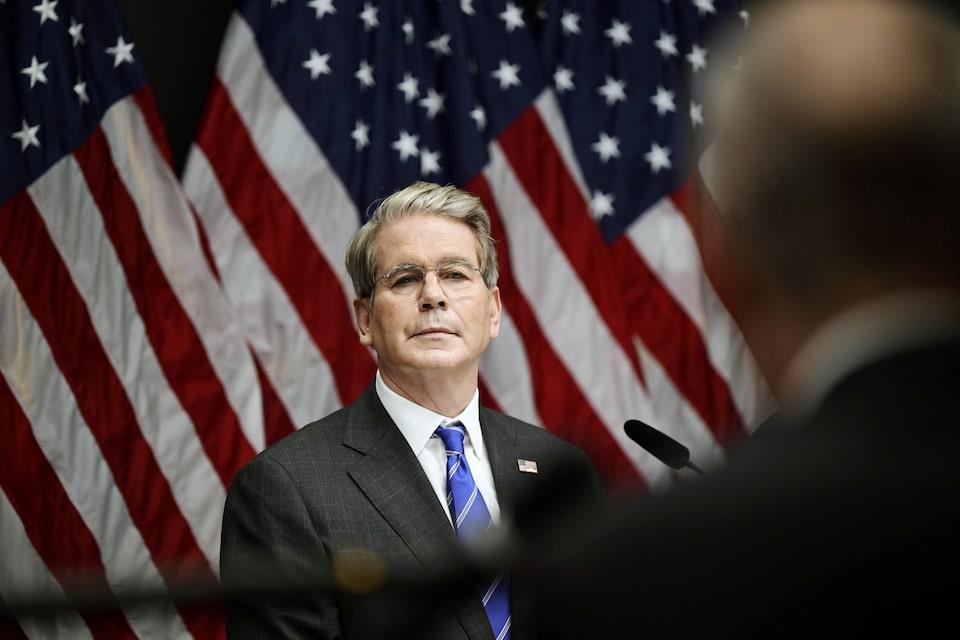
WASHINGTON, Aug 12 (Reuters) - U.S. trade officials will meet again with their Chinese counterparts within the next two or three months to discuss the future of the economic relationship between the two countries, Treasury Secretary Scott Bessent said on Tuesday, a day after the Trump administration extended a pause on sharply higher U.S. tariffs on Chinese imports for another 90 days. In an interview on Fox Business Network's "Kudlow," Bessent said the U.S. will need to see "months, if not quarters, if not a year" of progress on fentanyl flows before it considers reducing tariffs on China. Sign up here. https://www.reuters.com/world/china/us-trade-team-will-meet-chinese-officials-next-2-3-months-bessent-says-2025-08-12/
2025-08-12 20:31
Aug 12 (Reuters) - CoreWeave (CRWV.O) , opens new tab topped Wall Street estimates for second-quarter revenue on Tuesday, driven by accelerating demand for the Nvidia-backed (NVDA.O) , opens new tab AI cloud computing firm's services. The company offers access to data centers and Nvidia chips, which are highly coveted for by enterprises to train and run large AI models amid intense competition. Sign up here. CoreWeave, which currently has 33 AI data centers up and running across the U.S. and Europe, focuses solely on GPU-based operations. The company's operating expenses jumped to $1.19 billion in the quarter, compared to $317.7 million a year. Livingston, New Jersey-based CoreWeave's shares fell 6% in trading after the bell. The stock has gained nearly three-fold since its March IPO. Revenue backlog was $30.1 billion as of June 30, the company said. CoreWeave reported revenue of $1.21 billion for the second quarter, compared with analysts' average estimate of $1.08 billion, according to data compiled by LSEG. https://www.reuters.com/business/coreweave-beats-quarterly-revenue-estimates-sturdy-ai-demand-2025-08-12/
2025-08-12 20:29
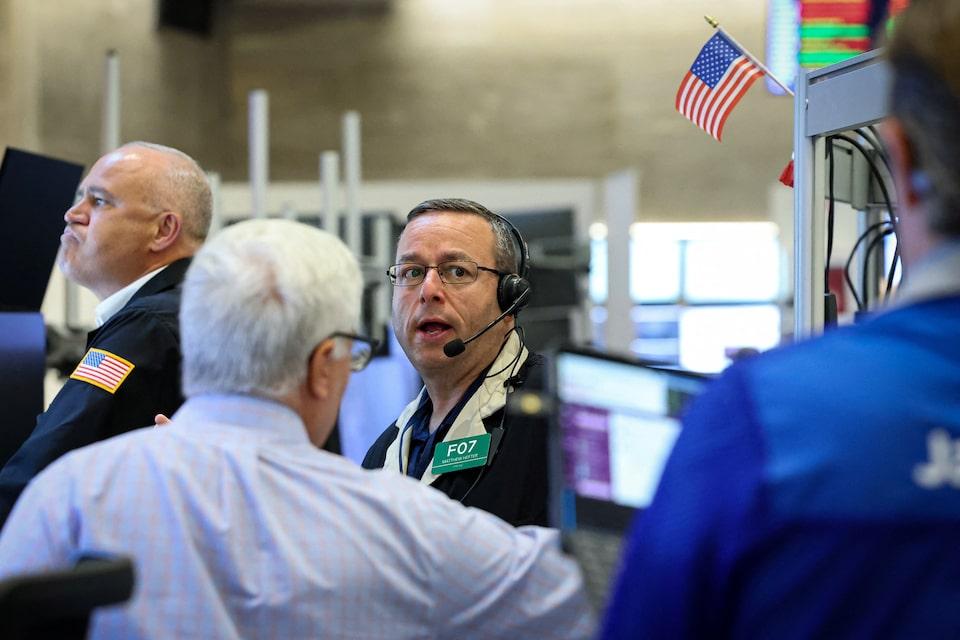
Indexes up; Dow 1.1%, S&P 500 1.13%, Nasdaq 1.39% US core inflation jumps by 3.1% in July Bank shares rally on rate cut hopes Alphabet up after Perplexity offers $34.5 billion for Chrome browser NEW YORK, Aug 12 (Reuters) - The S&P 500 and the Nasdaq scored record closing highs on Tuesday, as news that July inflation rose broadly in line with expectations bolstered bets on a Federal Reserve interest rate cut next month. The Labor Department said the Consumer Price Index (CPI) rose 0.2% on a monthly basis in July, while annual inflation came in slightly below forecasts, drawing calls from U.S. President Donald Trump to lower interest rates. Sign up here. Yields on shorter-dated Treasury bonds - a reflection of interest rate expectations - slipped and rate futures showed traders are giving an 88.8% chance that the Fed could lower rates by about 25 basis points in September. "The CPI data is supportive for equities overall, getting some good news with the Fed looking more on track to cut in September and potentially more transitory inflation," said Katherine Bordlemay, co-head of client portfolio management, fundamental equities at Goldman Sachs Asset Management. "The first thing I'd guide is continue to lean into the theme of the big are getting bigger. We continue to have conviction around mega-tech and technology." Alphabet (GOOGL.O) , opens new tab shares rose 1.2% as Perplexity made a $34.5 billion cash offer to buy the company's Chrome browser. Intel Corp (INTC.O) , opens new tab climbed 5.6% after Trump said he met its CEO, Lip-Bu Tan, on Monday, praising Tan and calling the meeting "very interesting." Last week, Trump demanded Tan's immediate resignation, calling him "highly conflicted" over his ties to Chinese firms. The Dow Jones Industrial Average (.DJI) , opens new tab rose 483.52 points, or 1.10%, to 44,458.61, the S&P 500 (.SPX) , opens new tab gained 72.31 points, or 1.13%, at 6,445.76 and the Nasdaq Composite (.IXIC) , opens new tab advanced 296.50 points, or 1.39%, to 21,681.90. The quality of economic data remains a concern weeks after Trump fired the head of the Bureau of Labor Statistics following downward revisions to previous months' nonfarm payrolls counts. Markets are monitoring developments around Trump's nominee, E.J. Antoni, to the bureau commissioner post and potential candidates for the Fed's top job. "This is still early innings of this process and just as the Fed will be beginning to cut rates in the autumn, that's when the inflation data will probably start to be registering some of these more direct tariff price increases and it's going to complicate the rate-cutting decision," said John Velis, a macro strategist at BNY. Relief came as the U.S. and China extended their tariff truce until November 10, staving off triple-digit duties on each other's goods. U.S. stocks have rallied in recent weeks on the back of strong tech earnings, easing trade tensions, and increased rate cut expectations. Inflows into U.S. stocks last week were the largest in two years, BofA Global Research data showed. The Russell 2000 index (.RUT) , opens new tab, tracking small-cap companies, advanced almost 3%. An index tracking airline stocks (.SPLRCALI) , opens new tab surged 8.87%, its biggest one-day rise in over a month after data showed airfares rose 4% in July. Bank stocks rallied, with the S&P 500 Banks index (.SPXBK) , opens new tab up 2.1%, as analysts said a steepening yield curve could help bank earnings as lenders could borrow cheap and lend at a higher rate. Cardinal Health (CAH.N) , opens new tab dropped 7% after the drug distributor said it will buy healthcare management firm Solaris for $1.9 billion. Advancing issues outnumbered decliners by a 4.26-to-1 ratio on the NYSE. There were 484 new highs and 60 new lows on the NYSE. On the Nasdaq, advancing issues outnumbered decliners by a 2.69-to-1 ratio. The S&P 500 posted 27 new 52-week highs and 12 new lows while the Nasdaq Composite recorded 104 new highs and 96 new lows. Volume on U.S. exchanges was 16.40 billion shares, compared with the 18.3 billion average for the full session over the last 20 trading days. https://www.reuters.com/business/sp-500-nasdaq-end-record-closing-highs-moderate-inflation-lifts-rate-hopes-2025-08-12/
2025-08-12 20:29
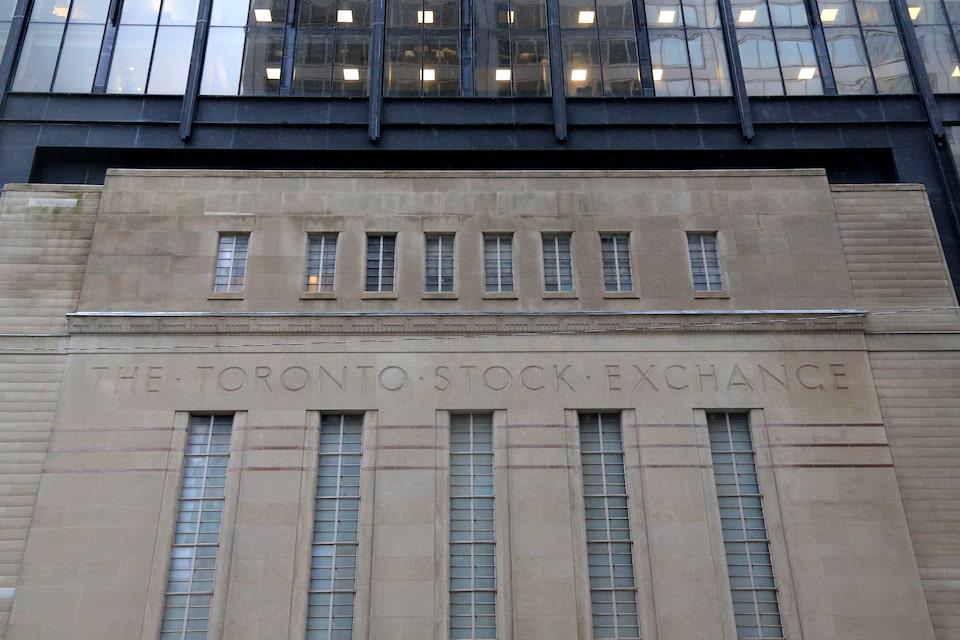
TSX ends up 0.5% at 27,921.26 Edges above last Wednesday's record closing high Nine of 10 major sectors notch gains Financials add 0.7%, materials end 0.9% higher Aug 12 (Reuters) - Canada's main stock index posted on Tuesday a new record high, with financial shares participating in broad-based gains as U.S. inflation data reinforced expectations that the Federal Reserve would cut interest rates in September. The S&P/TSX composite index (.GSPTSE) , opens new tab ended up 146.03 points, or 0.5%, at 27,921.26, edging past the record closing high it posted last Wednesday. Sign up here. U.S. consumer prices increased marginally in July, though rising costs for services such as airline fares and some tariff-sensitive goods like household furniture caused a measure of underlying inflation to post its largest gain in six months. "Inflation is on the rise, but it didn't increase as much as some people feared," said Ellen Zentner, chief economic strategist for Morgan Stanley Wealth Management. "In the short term, markets will likely embrace these numbers because they should allow the Fed to focus on labor-market weakness and keep a September rate cut on the table." Canada sends about 75% of its exports to the United States, much of which are exempt from U.S. tariffs under a continental trade pact, so its economy could benefit if the Fed moves to stimulate growth. The heavily weighted financials sector (.SPTTFS) , opens new tab rose 0.7%, with shares of Brookfield Corp (BN.TO) , opens new tab up 1.9%. Real estate was up 1.1%, while the materials group (.GSPTTMT) , opens new tab, which includes metal mining shares, added 0.9% as gold and copper prices moved higher. Altus Group AIF.TO , opens new tab is exploring a potential sale after receiving inbound acquisition interest, two people familiar with the matter said. Shares of the software and data analytics provider focused on the real estate industry jumped 9.5%xxx. Nine of 10 major sectors ended higher. The exception was utilities, which lost 0.1%. Gildan Activewear Inc (GIL.TO) , opens new tab shares fell 3.7% after a report that the apparel manufacturer is nearing a deal to acquire Hanesbrands (HBI.N) , opens new tab. https://www.reuters.com/world/china/tsx-rises-record-high-as-us-inflation-data-supports-fed-rate-cut-bets-2025-08-12/
2025-08-12 20:20
WASHINGTON, Aug 12 (Reuters) - The U.S. Department of Energy said on Tuesday it has made an initial selection of 11 companies for a pilot program seeking to develop high-tech test nuclear reactors and get at least three of them to begin operating in less than a year. WHY IT'S IMPORTANT As artificial intelligence and data centers boost power demand, the U.S. is aiming to develop small nuclear reactors which developers say will be cheaper to build per Megawatt of output than today's large reactors because the parts could be replicated in factories. Sign up here. The department's move comes after President Donald Trump issued executive orders in May seeking to speed permitting of nuclear reactors and reform the Nuclear Regulatory Commission, an independent agency. The orders allow the Energy Department to authorize the test reactors, without the NRC. KEY QUOTE “President Trump’s Reactor Pilot Program is a call to action,” said James Danly, deputy energy secretary. “These companies aim to all safely achieve criticality by Independence Day, and DOE will do everything we can to support their efforts.” COMPANIES SELECTED The department selected the following companies: Aalo Atomics., Antares Nuclear, Atomic Alchemy, Deep Fission Inc., Last Energy., Oklo (OKLO.N) , opens new tab , Natura Resources LLC, Radiant Energy, Terrestrial Energy, and Valar Atomics. The department said each company will be responsible for all costs associated with designing, manufacturing, constructing, and decommissioning their test reactors. HURDLES Small modular and so-called "advanced" nuclear reactors have been talked about in the U.S. for years, but the only ones operating are in China and Russia. Hurdles include getting permits for plants that generate electricity for the grid, developing commercial levels of a new fuel some of the reactors plan to use called high-assay low-enriched uranium, and developing factories for the reactors when none of the plants are yet operating. https://www.reuters.com/business/energy/us-selects-11-firms-program-fast-track-small-nuclear-test-reactors-2025-08-12/