2025-08-12 18:42
Aug 12 (Reuters) - Stablecoin giant Circle (CRCL.N) , opens new tab surpassed expectations for second-quarter revenue in its maiden quarterly results since going public, sending its shares up 5% on Tuesday. Higher circulation of its USDC stablecoin and stronger subscription services helped the New York-based company cement a rally that has pushed its stock to more than five times its initial public offering price. Sign up here. Stablecoins, which are digital tokens backed by low-risk assets such as the U.S. dollar or Treasuries, have drawn increasing investor attention, especially since the Genius Act was passed last month. The momentum has helped companies such as Circle, which issues USDC - the second-biggest stablecoin by market value after Tether. After "our IPO and the Genius Act, we're seeing an acceleration of interest, with major institutions all leaning in," Chief Financial Officer Jeremy Fox-Geen said in an interview. USDC in circulation grew 90% as of June 30, compared to a year earlier. Circle expects it to grow at a compounded annual rate of 40% through the years. The token was also being used for cross-border transactions, including remittances both between individuals and businesses, CEO Jeremy Allaire said. The company's revenue and reserve income grew 53% year-over-year to $658 million, thanks to a jump in the interest it earns from the cash and short-term investments backing its USDC stablecoins. Revenue from subscription and services also rose, Circle said. Analysts were expecting revenues of $644.7 million, according to estimates compiled by LSEG. The company's net loss was $482 million, primarily due to two non-cash charges related to its IPO, including costs for employee stock awards that vested when the company went public and a higher valuation of its convertible debt following a rise in its share price. 'PILLAR OF STABLECOINS' Circle on Tuesday also said it will roll out Arc, a public blockchain designed specifically for stablecoin transactions, this fall as it pushes to build the technological infrastructure for digital payments. "They're really trying to become the pillar of stablecoins in the U.S.," said David Bartosiak, stock strategist at Zacks Investment Research. "Circle can use what they have already done to establish themselves as a trusted mover." However, the company was currently not looking to strike many deals, even as the massive jump in its stock price has given it the ability to do so, CEO Allaire said. "We're careful and deliberate. I don't think our strategy here is to go try and do big, complex acquisitions to throw additional business lines." https://www.reuters.com/business/stablecoin-issuer-circle-tops-revenue-estimate-first-quarterly-result-since-ipo-2025-08-12/

2025-08-12 16:08
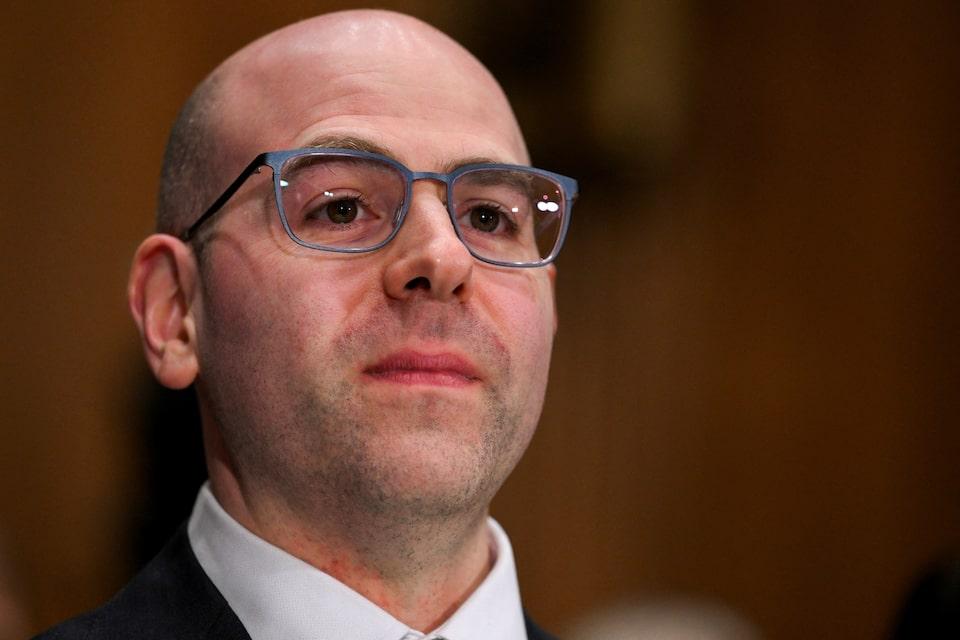
Miran has advocated for increased presidential control of Fed Board Miran to replace Fed Governor Adriana Kugler if confirmed Miran dismisses tariffs as cause of significant inflation Aug 12 (Reuters) - President Donald Trump's nominee to the Federal Reserve Board of Governors on Tuesday said the U.S. central bank's independence was 'of paramount importance' but declined to elaborate further, citing his coming approval process in the Senate. "I've always been clear that the independence of the Fed is of paramount importance," Stephen Miran, who is currently chair of the White House Council of Economic Advisers and who last year laid out a case for increasing presidential control of the Fed Board, told CNBC. "But...I do have the nomination going in front of the Senate and I really can't speak about that and get ahead of the Senate process." Sign up here. Miran has called for a complete overhaul of the Fed's governance, making the case in a paper he co-authored last year for the Manhattan Institute for increasing presidential control of the Fed Board, including by shortening members' terms. He also wants to end the "revolving door" between the executive branch and the Fed, and nationalize the Fed's 12 regional banks. If confirmed by the Senate, he would take over from former Fed Governor Adriana Kugler following her surprise resignation earlier this month, as she returns to her tenured professorship at Georgetown University. He would become one of seven members on a Fed Board now helmed by Jerome Powell, against whom Trump repeatedly rails over the central bank's refusal to lower interest rates as Trump demands. Two other governors were appointed by Trump during his first term and the other three are Biden appointees. But the vacancy Miran would fill extends only to January 31. Trump said Miran would hold the seat while he and his advisers search for a successor to Powell, whose term as Fed chair expires next May. Miran, asked to respond to inflation data released earlier on Tuesday, said the president's tariff policies are not resulting in meaningful inflation. The Consumer Price Index advanced 2.7% year-on-year in July but an underlying measure was up 3.1% at the fastest since January. "I do think that inflation has been well behaved, particularly since the president took office," he said. The majority of Fed officials had until recently been concerned that tariffs would exacerbate inflation and that worry has been the main driver in their decision not to lower rates. But a weak jobs report for July has changed that narrative, and rate futures markets now expect rate cuts to start next month. Asked if he believed he would be confirmed by the Senate in time for the next Fed meeting in mid-September, Miran said: "That's up to the Senate, and...I can't speak for them." https://www.reuters.com/business/miran-calls-fed-independence-paramount-declines-elaborate-cnbc-2025-08-12/
2025-08-12 15:55
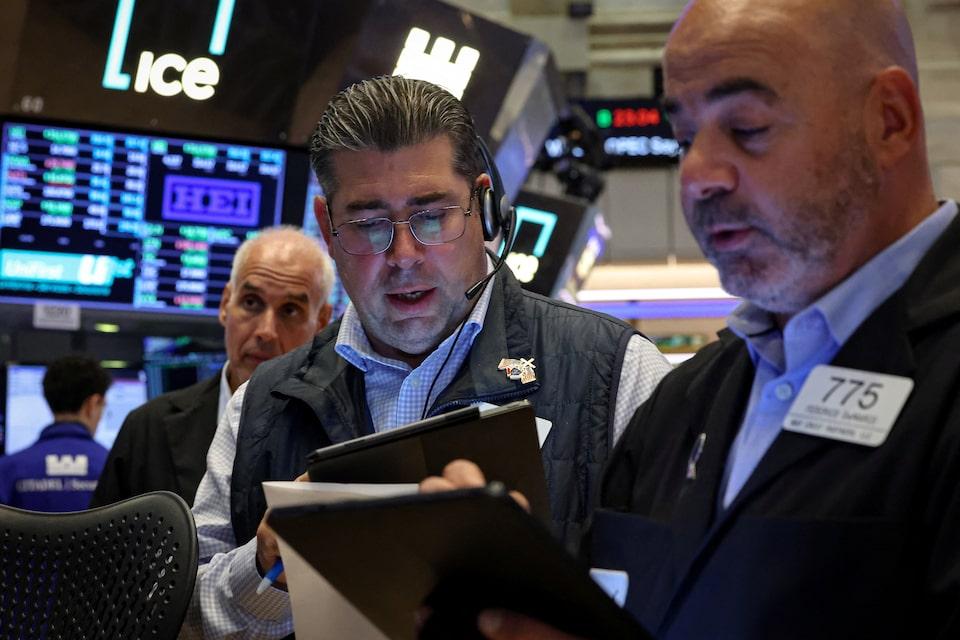
Wall Street indexes advance after CPI print Short-term Treasury yields drop as tariff inflation fears ease, rate cut bets build UK gilts under pressure as wage data signals inflation pain Investors await Trump-Putin summit on Friday NEW YORK/LONDON, Aug 12 (Reuters) - World shares rallied on Tuesday as U.S. consumer prices data failed to shake market expectations of an impending Federal Reserve interest rate cut in September, even as a trade war truce between Washington and Beijing helped buoy sentiment. Wall Street's main indexes were all advancing after losing ground in the prior session, with financials, communication services, energy, industrials and materials driving gains. The Dow Jones Industrial Average (.DJI) , opens new tab rose 0.89%, the S&P 500 (.SPX) , opens new tab rose 0.56%, and the Nasdaq Composite (.IXIC) , opens new tab rose 0.60%. Sign up here. European stocks (.STOXX) , opens new tab nudged higher, rising 0.19%. MSCI's gauge of stocks across the globe (.MIWD00000PUS) , opens new tab rose 0.56% to 943.41. U.S. Labor Department data showed that the consumer price index rose 2.7% in 12 months through to July, which was slightly below the 2.8% rate that economists polled by Reuters had forecast. "There was upside risk to inflation and the market was bracing for that in some respects," said James St. Aubin, chief investment officer at Ocean Park Asset Management in Santa Monica, California. "The report today, all things considered, was fairly benign. I don't think there was anything to write home about but it certainly took the worst-case scenario off the table." Asian equities had rallied overnight after U.S. President Donald Trump signed an executive order pausing triple-digit levies on Chinese imports for another 90 days. MSCI's broadest index of Asia-Pacific shares outside Japan (.MIAPJ0000PUS) , opens new tab gained 0.19%. Markets on Tuesday traded on short-term relief, however, as the softer-than-expected consumer price data firmed up bets for U.S. rate cuts. Traders are pricing in a 92% chance of a Fed cut in September, according to the CME Fedwatch tool. Short-term U.S. Treasury bond prices rallied moderately, with the yield on two-year notes, which track interest rate expectations, down 1.1 bps at 3.743%. Longer-dated bond prices were lower. The yield on benchmark U.S. 10-year notes rose 3.5 basis points to 4.308%. Investors had been on tenterhooks about this batch of inflation data because it had followed a surprisingly weak jobs report on August 1, and had the potential to make concerns about U.S. stagflation a dominant global narrative. Trump has nominated White House adviser Stephen Miran to temporarily fill a vacant board seat at the U.S. central bank, stirring up speculation about presidential interference in monetary policy. The U.S. and China have engaged in a tit-for-tat tariff duel throughout the year, culminating in trade talks in Geneva, London and Stockholm since May that focused on bringing tariffs down from triple-digit levels. Chinese exports jumped 7.2% year-on-year in July, beating the consensus forecast of economists polled by Reuters, but the nation's factory gate prices dropped by the most in two years in a further sign of manufacturers struggling to sell goods at home. In currency markets, the dollar weakened 0.05% to 148.085 against the Japanese yen and was down 0.5% against the Swiss franc . The euro rose 0.43% against the dollar at $1.166550. The pound rose 0.5% against the dollar to $1.34990 as traders anticipated the Bank of England lagging behind other non-U.S. central banks in implementing rate cuts. The BoE cut benchmark borrowing costs by a quarter-point to 4% last week after a tightly balanced vote between members of its monetary policy committee, who also broadly agreed that the risks of an upward wages-and-prices spiral remained present. Ten-year gilt yields rose by 5 bps to 4.624%. In commodities, spot gold prices were flat at $3,344.60 per ounce after dropping nearly 1.6% on Monday in response to Trump announcing there would be no tariffs on imported gold bars. Brent crude oil traded down 0.14% to $66.55 a barrel ahead of the August 15 meeting between Trump and Russian President Vladimir Putin, aimed at negotiating an end to the war in Ukraine. U.S. crude fell 0.53% to $63.62 a barrel. https://www.reuters.com/world/china/global-markets-wrapup-5-2025-08-12/
2025-08-12 15:49
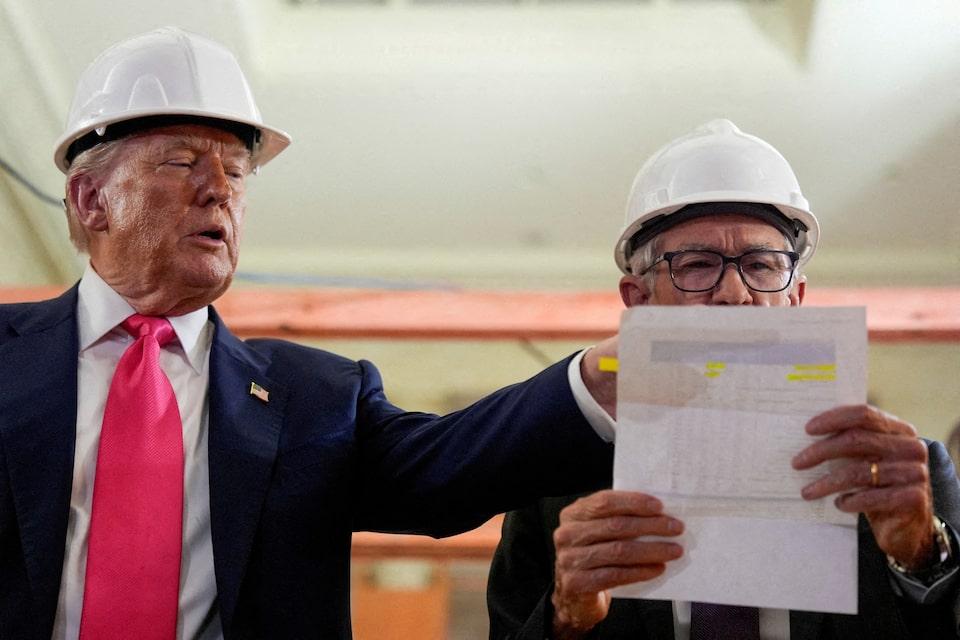
WASHINGTON, Aug 12 (Reuters) - U.S. President Donald Trump on Tuesday reiterated his call for the U.S. Federal Reserve to lower benchmark rates, and cited "a major lawsuit" against Fed Chair Jerome Powell over renovations of the central bank's buildings. "Jerome 'Too Late' Powell must NOW lower the rate," Trump wrote on his social media platform. "I am, though, considering allowing a major lawsuit against Powell to proceed because of the horrible, and grossly incompetent, job he has done in managing the construction of the Fed Buildings." Sign up here. https://www.reuters.com/legal/government/trump-cites-major-lawsuit-against-feds-powell-again-urges-rate-cut-2025-08-12/
2025-08-12 15:18
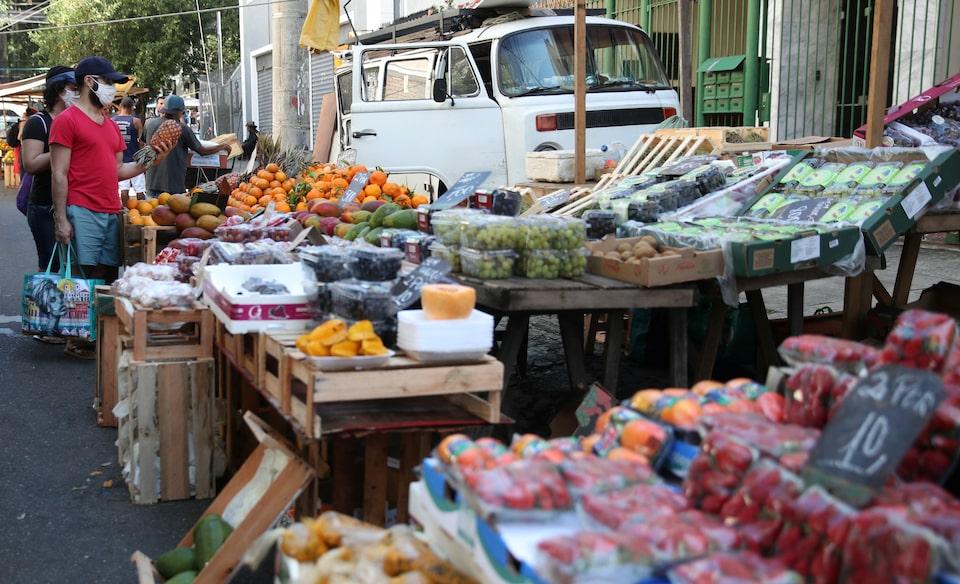
RIO DE JANEIRO, Aug 12 (Reuters) - Brazil's consumer coffee prices fell 1.01% in July, the first drop in 18 months, according to data from the country's Broad National Consumer Price Index (IPCA) published on Tuesday. During the preceding year and a half, coffee was one of the main drivers of inflation in Brazil, the world's second largest coffee market, according to the Brazilian Institute of Geography and Statistics (IBGE). Sign up here. The retail price drop followed a decline in prices paid to farmers after the harvest of the 2025 crop, which is now in its final stages in Brazil. The reported decline in consumer coffee prices in Brazil for the month of July follows volatility in international markets, driven by issues such as the decision by U.S. President Donald Trump to impose a 50% tariff on Brazilian goods. While products such as orange juice were exempt from the measures, others including coffee, eggs and beef were not. Last week, coffee futures in New York rose 8% as investors grew concerned that the tariffs could hinder trade between the world's largest coffee consumer, the United States, and the globe's biggest producer and exporter, Brazil. It is too early to tell if Trump's decision to hike tariffs against Brazilian goods could lead to lower prices of staples including coffee, IBGE manager Fernando Goncalves told Reuters. "It could be an effect of increased supply, and it's not possible to say or confirm that it's related to the tariff hike. The tariff hike only began this month," he said. https://www.reuters.com/world/americas/brazil-consumer-coffee-prices-fall-july-first-time-18-months-2025-08-12/

2025-08-12 13:23
SAO PAULO, Aug 12 (Reuters) - Brazil's inflation undershot market expectations in July, data from statistics agency IBGE showed on Tuesday, with a monthly drop in food prices providing some relief even as the annual rate remained well above the central bank's target. Consumer prices in Latin America's largest economy rose 0.26% in July, the agency said, ticking up from 0.24% in the prior month but below the 0.37% increase forecast by economists polled by Reuters. Sign up here. Prices were up 5.23% in the 12 months through July, IBGE added, down from 5.35% in the previous month. Market participants had expected the annual rate to come in at 5.33%. Brazil's central bank in July interrupted an aggressive tightening cycle that had added 450 basis points to its benchmark interest rate, bringing it to nearly a 20-year high of 15%, in a bid to tame persistent inflation. Policymakers at the central bank have vowed to bring inflation back to the official 3% target, forecasting borrowing costs to remain at a "very restrictive" level into next year. The official goal has a tolerance band of plus or minus 1.5 percentage points, but the upper end of that range has now been exceeded for 10 consecutive months. Andres Abadia, chief Latin America economist at Pantheon Macroeconomics, said the July figures indicate that restrictive monetary policy is starting to deliver results. "Headline pressures are easing gradually," he noted. The monthly price rise was driven by higher housing costs as electricity prices surged, IBGE said. On the other hand, closely watched food and beverage prices fell for the second month in a row. Apparel and communication costs were also down. https://www.reuters.com/world/americas/brazils-inflation-undershoots-forecasts-july-amid-high-interest-rates-2025-08-12/