2025-08-12 10:10
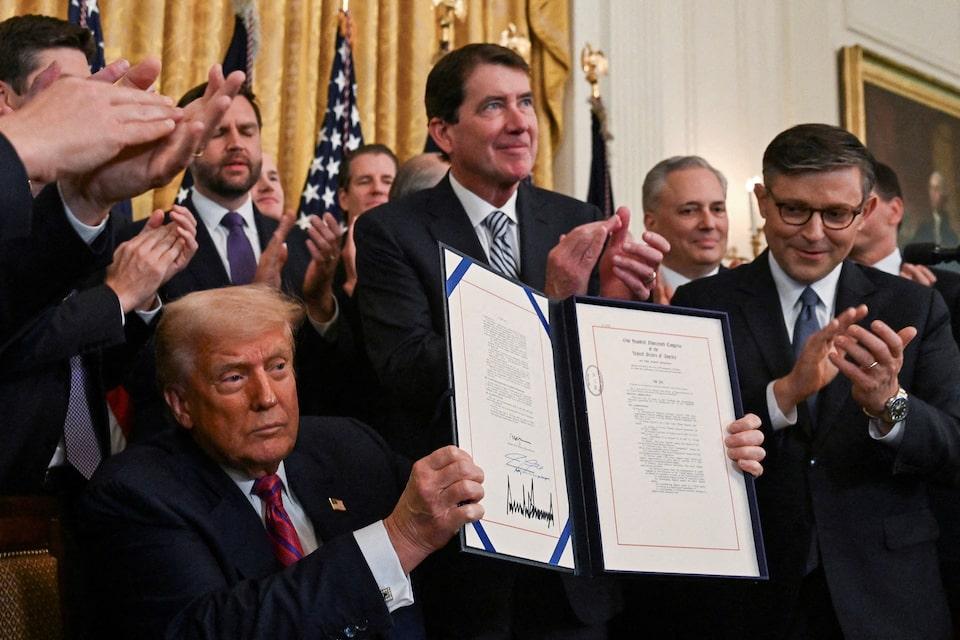
GENIUS Act sets federal rules for stablecoins Stablecoin use cases vary from retail to cross-border payments Private blockchains may appeal to banks for stablecoin issuance Aug 12 (Reuters) - Financial companies from Bank of America (BAC.N) , opens new tab to Fiserv (FI.N) , opens new tab are preparing to launch their own dollar-backed crypto tokens now that a new U.S. law has established the first-ever rules for stablecoins, but experts warn the path forward could be anything but simple. U.S. President Donald Trump on July 18 signed the GENIUS Act into law, setting federal rules and guidelines for cryptocurrency tokens pegged to the U.S. dollar known as stablecoins. This U.S. law, the first designed to facilitate crypto usage, could pave the way for the digital assets to become an everyday way to make payments and move money, experts said. Sign up here. The use of stablecoins, designed to maintain a constant value, usually a 1:1 U.S. dollar peg, has exploded in recent years, notably among crypto traders moving funds to and from other tokens, such as bitcoin and ether. Now, a slate of companies are entertaining their own stablecoin strategies to capitalize on the promise of instant payments and settlement that stablecoins offer. Payments on traditional banking rails can take several days to arrive, or take even longer across international borders. Among the companies considering stablecoins are Walmart and Amazon, the Wall Street Journal reported in June. Walmart and Amazon did not immediately respond to requests for comment. However, the new law will not immediately open the floodgates, experts said. The newfound opportunity to dabble in stablecoins can lead to numerous tricky considerations for firms, both strategic and technical. Companies have to embark on a lengthy process to deploy their own stablecoins, or decide whether it makes more sense to integrate existing stablecoins, like issuer Circle's (CRCL.N) , opens new tab USDC, into their business. Companies first have to decide the purpose of their stablecoins. For example, a retail platform could make a stablecoin available to customers to buy goods, which could appeal to crypto-savvy users. Some companies could use them internally for cross-border payments, given that stablecoins can enable near-instant payments, often with lower fees. How a company plans to use a stablecoin could affect whether it creates a stablecoin or works with a partner. "The intended use is going to matter a lot," said Stephen Aschettino, a partner at Steptoe. "Is this something really designed to drive customers to engage with the issuer, or is the issuer's primary motivation to have a stablecoin that is more ubiquitous?" For nonbanks, stablecoins will bring new compliance costs and oversight requirements, given that the GENIUS Act requires issuers to comply with anti-money laundering and "know your customer" (KYC) requirements. "Those that already have robust KYC risk management and regulatory change management programs or working towards implementing these program elements may have a competitive advantage," said Jill DeWitt, senior director of compliance and third-party risk management solutions at Moody's. One group likely to enjoy that advantage is banks, which are no strangers to screening for sanctions-related risks and verifying the identities of their customers. Bank of America and Citigroup (C.N) , opens new tab are actively considering issuing their own stablecoins, the CEOs of both banks said in earnings calls last month. Others like Morgan Stanley (MS.N) , opens new tab are closely monitoring stablecoin developments. JPMorgan Chase (JPM.N) , opens new tab CEO Jamie Dimon said the bank will be involved in stablecoins, without giving details. Banks need to weigh several factors before going live with stablecoins, including how holding the tokens might affect liquidity requirements, said Julia Demidova, head of digital currencies product and strategy at FIS. Banks holding assets like stablecoins on their balance sheets might be required to hold more capital under current U.S. bank rules. "The GENIUS Act is great, but if the bank is treating their stablecoin on the balance sheet under prudential banking regulation, you still need to look at the risk weight of the asset," she said. Another crucial question is how to issue stablecoins. Like other cryptocurrencies, stablecoins are created on a blockchain, a digital ledger that records transactions. Hundreds of blockchain networks exist today, two of the most popular being ethereum and solana. Both are considered public or "permissionless" blockchains because all transactions on those networks are available for anyone to see. Still, it is unclear which attribute companies issuing stablecoins would prioritize. Banks, in particular, could opt for their own private, or "permissioned," blockchains instead, Demidova said. "The banks would desire and demand that very clear governance and structure," she said. "In that permissionless environment, you don't have the governance and controls in place." Others like Nassim Eddequiouaq, CEO of Bastion, a provider of infrastructure for companies to issue their own stablecoins, see merits to permissionless blockchains. "We've seen a tremendous amount of interest for existing blockchains that have seen user adoption, that have been battle tested at scale, including during activity spikes," he said. Although the GENIUS Act has been signed into law, its effective date is potentially several years off, with federal banking regulators expected to issue rules in the meantime to fill in certain gaps. The Office of the Comptroller of the Currency, for instance, is expected to issue rules to outline several risk management and compliance requirements. Under the new U.S. framework, the Treasury Department will have to issue a rule on foreign stablecoin regulatory regimes and their compatibility with the new U.S. framework. "These things are going to have to phase in," said Aschettino. (This story has been refiled to fix a typo in paragraph 22) https://www.reuters.com/legal/government/companies-plan-stablecoins-under-new-law-experts-say-hurdles-remain-2025-08-12/
2025-08-12 10:01
U.S. futures, dollar subdued ahead of CPI UK gilts under pressure as wage data signals inflation pain Asian markets rally after further U.S.-China tariff pause Japan's Nikkei, Australia's ASX scale record peaks RBA cut rates as expected, still cautious on future easing LONDON/SINGAPORE, Aug 12 (Reuters) - Global stocks were subdued and the dollar was flat on Tuesday as market enthusiasm about Washington and Beijing extending their tariff truce to November was tempered by jitters about U.S. inflation data later in the day. Asian equities rallied after U.S. President Donald Trump signed an executive order overnight pausing triple-digit levies on Chinese imports for another 90 days. Sign up here. That propelled Tokyo's exporter-heavy Nikkei (.N225) , opens new tab to an all-time peak, while European stocks (.STOXX) , opens new tab nudged higher, as Trump's latest tariff climbdown allayed fears about China flooding non-U.S. markets with cheap goods to keep its factories humming. But the upcoming U.S. CPI data was more important to the direction of markets, investors said, because it comes just after a surprisingly weak jobs report on August 1 and as businesses increasingly report inflationary pressures. "If we see an inflation print that is above consensus that is going to make it very difficult for the Federal Reserve to cut interest rates," Foresight Group fund manager Mayank Markanday said. "We are probably going to see more data validating fears that (U.S.) stagflation is a key risk," he added, referring to an economic scenario of slowing growth and rising inflation that has not been prevalent in the U.S. since the 1970s. Investors are currently pricing in at least two rate cuts in 2025, adding to pressure on the dollar, which has also been weighed down by policy uncertainty and Trump's personal attacks on Federal Reserve Chair Jerome Powell for keeping monetary policy tight. Futures trading in New York signalled the S&P 500 share index and the tech-heavy Nasdaq 100, which are both near record highs thanks to rate cut bets and strong tech earnings, would trade steadily ahead of the CPI print , . CURRENCIES ON GUARD A gauge tracking the dollar's progress against major currencies including the euro and Japan's yen traded flat on Tuesday, with sterling and the euro also little moved on the day. The pound rose 0.4% against the Australian dollar, however, as traders anticipated the Bank of England lagging behind other non-U.S. central banks in implementing rate cuts. The Reserve Bank of Australia cut its main cash rate by a quarter point to a two-year low of 3.60% on Tuesday. Hours later, official UK labour data showed that British earnings growth was still running at 5%, two percentage points above the level economists view as consistent with the Bank of England's inflation goal and despite an economic slowdown. The BoE cut benchmark borrowing costs by a quarter point to 4% last week after a tightly balanced vote between members of its monetary policy committee, who also broadly agreed that the risks of an upward wages-and-prices spiral remained present. TRADE RELIEF China's blue-chip stocks (.CSI300) , opens new tab rose 0.5% on Tuesday and Australian shares (.AXJO) , opens new tab also gained. The U.S. and China have engaged in a tit-for-tat tariff duel throughout the year, culminating in trade talks in Geneva, London and Stockholm since May that focused on bringing tariffs down from triple-digit levels. Chinese exports jumped 7.2% year-on-year in July, beating the consensus forecast of economists polled by Reuters, but the nation's factory gate prices dropped by the most in two years in a further sign of manufacturers struggling to sell goods at home. The latest truce extension also cleared the way for investors to focus on how inflationary U.S. trade levies implemented so far have been and the potential for rising prices to keep the Fed on hold and exacerbate pressure on Powell. Trump has nominated White House advisor Stephen Miran to temporarily fill a vacant board seat at the U.S. central bank, stirring up speculation about presidential interference in monetary policy. U.S. Treasuries were little moved on Tuesday ahead of the consumer prices data, with benchmark yields flat at around 4.279% and those on two-year notes, which track interest rate expectations, one basis point (bp) higher at 3.764%. UK 10-year gilt yields added four bps to 4.609% as Tuesday's wage data raised inflation expectations and swept some rate cut bets out of British fixed-income markets . In commodities, spot gold prices edged up to $3,352 after dropping nearly 1.6% on Monday in response to Trump announcing there would be no tariffs on imported gold bars. Oil was modestly higher ahead of the August 15 meeting between Trump and Russian President Vladimir Putin, aimed at negotiating an end to the war in Ukraine. The talks follow increased U.S. pressure on Russia, raising the prospect of penalties on Moscow if a peace deal is not reached. Elsewhere, cryptocurrency bitcoin was modestly lower at $118,680 while ethereum rose by 1% to $4290. https://www.reuters.com/world/china/global-markets-wrapup-3-2025-08-12/
2025-08-12 09:45
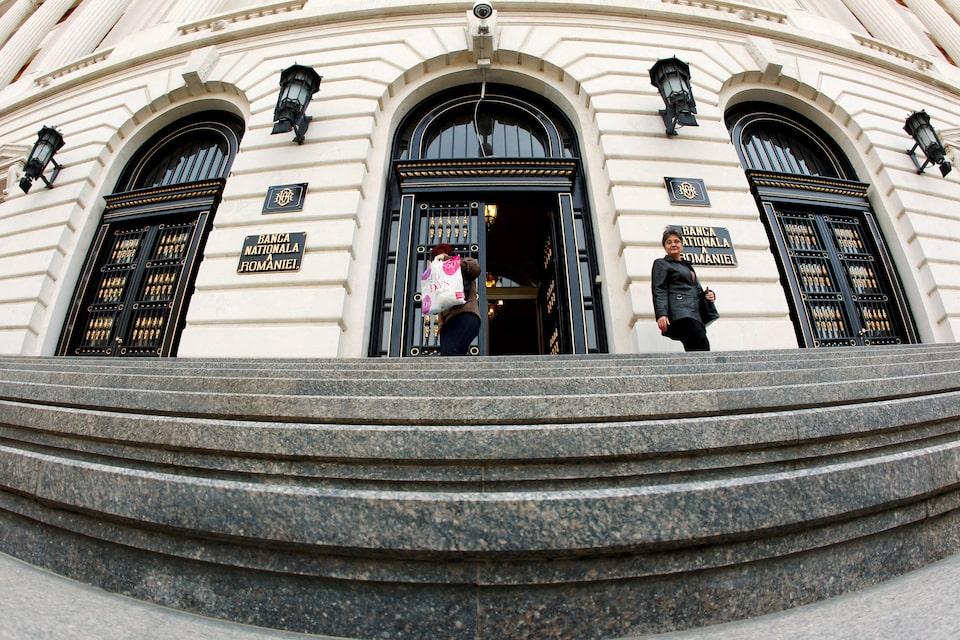
BUCHAREST, Aug 12 (Reuters) - Romania's central bank nearly doubled its annual inflation forecast for this year on Tuesday, but it expects a return to target in 2026 and will keep interest rates steady for now, Governor Mugur Isarescu said. The bank expects inflation to be running at 8.8% in December, compared with its previous forecast of 4.6% as tax hikes and higher electricity prices drive up prices. Sign up here. Inflation should peak at 9.6%-9.7% in September, the bank said, and it forecast the headline rate to then fall to 3.0% by the end of 2026, compared with the 3.4% previously expected. Earlier on Tuesday, new data - not included in the central bank's forecasts - showed that annual inflation jumped to 7.84% in July, well above a Reuters poll forecast of 6.40% and the highest level since October 2023. The surge came after a government-imposed electricity price cap ended in June. Romania's two-month-old broad coalition government has also raised value-added tax and excise duties as of this month to help narrow the widest budget deficit in the EU and prevent a ratings cut from the lowest rung of investment grade. Isarescu said electricity prices and tax hikes will add at least 2 and 4 percentage points respectively to inflation this year. On the demand side, however, he said there were disinflationary pressures. "We are confident that this time fiscal policy will do its duty by ... depressing demand," Isarescu said. He added the government could avert a recession this year by speeding up its absorption of EU funds. The central bank held its benchmark interest rate at the EU's joint-highest level of 6.5% earlier this month and Isarescu said a cut this year - after some previous initial easing - was not possible. Asked if a rate hike was possible, Isarescu said, "We hope not." He added that a rate hike would be risky as monetary policy was partly aimed at avoiding recession risks. https://www.reuters.com/markets/europe/romanian-central-bank-expects-inflation-surge-will-keep-rates-hold-governor-says-2025-08-12/
2025-08-12 07:57
BEIJING, Aug 12 (Reuters) - China on Tuesday announced a preliminary anti-dumping duty on canola imports from Canada, a statement from the commerce ministry said. The provisional rate would be set at 75.8% and be effective from Thursday, the statement said. Sign up here. China, the world's largest canola importer, sources nearly all of its imports from Canada but those supplies are now likely to be priced out by the provisional duties. Beijing announced the probe last September and it was initially set to conclude next month with a possible six-month extension, in response to Ottawa’s tariffs on Chinese-made electric vehicles. The Canadian embassy in Beijing did not immediately respond to a request for comment from Reuters. Canadian exports totalled C$5.0 billion in 2023, the last full year before the investigation began. https://www.reuters.com/markets/commodities/china-imposes-preliminary-anti-dumping-duty-canadian-canola-imports-2025-08-12/

2025-08-12 07:39
Traders watch for signs of tariff pressures in US CPI data Aussie dips after widely expected RBA rate cut Sterling supported by British jobs data TOKYO/LONDON, Aug 12 (Reuters) - Currency markets were in a holding pattern on Tuesday ahead of U.S. inflation data - important for Federal Reserve policy expectations - with traders' caution capping the pound's gains after UK jobs data and the Australian dollar's losses. A moderate reading on U.S. price pressures could cement bets for a Fed rate reduction next month, which increased after last week's soft payrolls data. Sign up here. But if signs emerge that U.S. President Donald Trump's tariffs are stoking inflation, that could pressure the central bank to stay on hold, though the bar for that is higher. That in turn would fuel further tensions with Trump, who has urged the Fed to cut rates. Economists polled by Reuters expect core CPI to have risen 0.3% in July, pushing the annual rate higher to 3%, and traders currently put the odds of a quarter-point rate cut on September 17 at about 89%, and are fully pricing two such cuts by year end. "The $1 million question for the market (is) does CPI today matter for the Fed in September and beyond," said Kenneth Broux, head of corporate research FX and rates at Societe Generale. He said given market pricing, "it's a big ask for today’s CPI and the one next month to challenge the dovish set-up". Ahead of the data, due at 1230 GMT, the dollar was up 0.2% against the yen at 148.43 , while the euro was marginally softer at $1.1609. Sterling was among the bigger movers, up 0.2% on the dollar at $1.3460 after data that showed Britain's jobs market weakened further, albeit more slowly, while wage growth stayed strong - the latter underscoring why the Bank of England is so cautious about cutting interest rates. The numbers ought not to cause the Bank of England to accelerate the speed of its rate cuts. The BoE cut rates only last week in a tight 5-4 vote. Sanjay Raja, chief UK economist at Deutsche Bank, said there were "marginal positives" in the data and there was nothing to suggest labour market loosening was accelerating, but he added "we aren't out of the woods yet". He expects the BoE to continue loosening policy gradually. The Australian dollar fetched $0.6493 , down 0.3%, after the Reserve Bank of Australia's widely-expected decision to cut rates by a quarter point. The central bank cited a slowdown in inflation and a looser labour market, though it was cautious on prospects for further easing. "We remain of the view that a follow-up cut in November is more likely than not, with the cash rate to then stay at 3.35% for an extended period," said Adam Boyton, head of Australian economics at ANZ, in a note. Currency markets largely ignored Trump's decision to in sharply higher tariffs on Chinese imports for another 90 days, as widely expected. With the U.S.and China seeking to strike a deal averting triple-digit import tariffs, a U.S. official told Reuters that chip makers Nvidia and AMD had agreed to allocate 15% of China sales revenues to the U.S. government, aiming to secure for semiconductors. China's yuan was flat at 7.195 per dollar in offshore trading . Cryptocurrency bitcoin was flat around $118,400, after climbing as high as $122,308.25 on Monday, taking it close to the all-time peak of $123,153.22 from mid-July. https://www.reuters.com/world/middle-east/currency-markets-brace-us-inflation-data-2025-08-12/
2025-08-12 07:36
MELBOURNE, Aug 12 (Reuters) - Peabody Energy (BTU.N) , opens new tab is set to reveal on August 19 whether it will continue with its $3.78 billion bid for Anglo American's (AAL.L) , opens new tab Australian coking coal mines, as time ticks down for it to renegotiate a lower price for the deal. The U.S. miner last year agreed to buy the mines in Queensland's Bowen Basin, the world's top coking coal region, as part of its move into becoming a coking coal producer. Sign up here. But in March, the Moranbah North mine was closed due to high gas levels, leading Peabody to trigger a clause that allows a party to break or renegotiate a deal if a significant negative event occurs between signing and completion. In this case, it gave a 90 day consultation process which expired on August 3. Since it has not reached a revised agreement with the seller, Peabody intends to provide an update on August 19, it said at its results. "We believe a last minute deal has become less likely, and our base case now is that this goes to arbitration," Jefferies said in a note on Monday. The broker estimates a $316 million value hit if the Moranbah North mine is able to be ramped back to full capacity within three months from Sept 1. Anglo says the event does not qualify as significant since damages and downtime are likely to be limited. CEO Duncan Wanblad has said it is confident in its legal position, is prepared to rerun a sale process and next steps were up to Peabody. Part of the standoff is because it is unclear when the mine will be able to restart while the state regulator assesses its safety. The regulator did not provide a timeline when contacted by Reuters but said the mine was undergoing a "staged approach" to reentry as it prioritised worker safety. For Anglo, any arbitration would push back its restructure, and may raise concerns around mine management and choice of buyer. Another process would attract strong interest from previous bidders but would push back completion of a sale into 2026, Wanblad said. For Peabody, ending the deal would ease the pressure of looming repayments to a $2 billion dollar bridge loan due from late November. Peabody posted a second quarter loss as coal prices fell by a third from a year earlier. Peabody did not immediately comment outside office hours. https://www.reuters.com/business/energy/peabodys-decision-38-billion-bid-anglo-american-mines-looms-next-week-2025-08-12/