2025-08-12 00:36
Extension prevents US, China tariffs from snapping higher Trump says China has been 'dealing quite nicely' Trade analysts see extension easing path to Trump-Xi meeting WASHINGTON/BEIJING, Aug 12 (Reuters) - The United States and China have extended a tariff truce for another 90 days, staving off triple-digit duties on each other's goods as U.S. retailers get ready to ramp up inventories ahead of the critical end-of-year holiday season. U.S. President Donald Trump announced on his Truth Social platform on Monday that he had signed an executive order suspending the imposition of higher tariffs until 12:01 a.m. EST (0501 GMT) on November 10, with all other elements of the truce to remain in place. Sign up here. China's Commerce Ministry issued a parallel pause on extra tariffs early on Tuesday, also postponing for 90 days the addition of U.S. firms it had targeted in April to trade and investment restriction lists. "The United States continues to have discussions with the PRC to address the lack of trade reciprocity in our economic relationship and our resulting national and economic security concerns," Trump's executive order stated, using the acronym for the People's Republic of China. The tariff truce between Beijing and Washington had been due to expire on Tuesday at 12:01 a.m. EDT (0401 GMT). The extension until early November buys crucial time for the seasonal autumn surge of imports for the Christmas season, including electronics, apparel and toys at lower tariff rates. The new order prevents U.S. tariffs on Chinese goods from shooting up to 145%, while Chinese tariffs on U.S. goods were set to hit 125% - rates that would have resulted in a virtual trade embargo between the two countries. It locks in place - at least for now - a 30% tariff on Chinese imports, with Chinese duties on U.S. imports at 10%. There was relief on the streets of China's capital, where officials are grappling with the challenge Trump’s trade policy poses to the economy’s long-standing, export-oriented growth model. "I don't think either China or the United States wants to see their relationship continue to deteriorate," said Wang Mingyue, a 39-year-old professional working in robotics. "That's why both are taking the current approach, but the game and confrontation may not be over yet - so there's still risk." Markets showed optimism for a breakthrough between the two superpowers, with Asian stocks rising and currencies mostly steady, after treading water for weeks. Trump told CNBC last week that the U.S. and China were getting very close to a trade agreement and he would meet Xi before the end of the year if a deal was struck. TRADE 'DETENTE' CONTINUED The two sides announced a truce in their trade dispute in May after talks in Geneva, Switzerland, agreeing to a 90-day period to allow further talks. They met again in Stockholm, Sweden, in late July, and U.S. negotiators returned to Washington with a recommendation that Trump extend the deadline. Treasury Secretary Scott Bessent has said repeatedly that the triple-digit import duties both sides slapped on each other's goods in the spring were untenable and had essentially imposed a trade embargo between the world's two largest economies. "It wouldn’t be a Trump-style negotiation if it didn’t go right down to the wire," said Kelly Ann Shaw, a senior White House trade official during Trump's first term and now with law firm Akin Gump Strauss Hauer & Feld. She said Trump had likely pressed China for further concessions before agreeing to the extension. Trump pushed for additional concessions on Sunday, urging China to quadruple its soybean purchases, although analysts questioned the feasibility of any such deal. Trump did not repeat the demand on Monday. "What is he going to offer in exchange?" said Xu Tianchen, senior economist at the Economist Intelligence Unit in Beijing. "China says: 'you should allow us to buy more high-tech goods,' but the U.S. is reluctant." Xu said Trump's refusal to ease his 20% tariff on Chinese goods over fentanyl flows suggested both sides believed they could continue to withstand the trade shock. "If (Trump) escalates, he will struggle to gain an upper hand over China, which has many cards to play," Xu said. China's exports to the U.S. fell an annual 21.7% last month, according to the country's latest trade data, while shipments to Southeast Asia rose 16.6% over the same period as manufacturers sought to pivot to new markets and capitalise on a separate reprieve that allowed trans-shipment to the U.S. Separate U.S. data released last week showed the trade deficit with China shrank to its lowest in more than 21 years in June. Still, analysts expect the world’s two largest economies to reach an agreement before long, as their deep interdependence makes pursuing alternative markets unattractive over the long term. Ryan Majerus, a former U.S. trade official now with the King & Spalding law firm, said the news would give both sides more time to work through long-standing trade concerns. “This will undoubtedly lower anxiety on both sides as talks continue, and as the U.S. and China work toward a framework deal in the fall," he said. Washington has also been pressing Beijing to stop buying Russian oil to pressure Moscow over its war in Ukraine, with Trump threatening to impose secondary tariffs on China. https://www.reuters.com/world/china/us-china-extend-tariff-truce-by-90-days-staving-off-surge-duties-2025-08-12/

2025-08-12 00:31
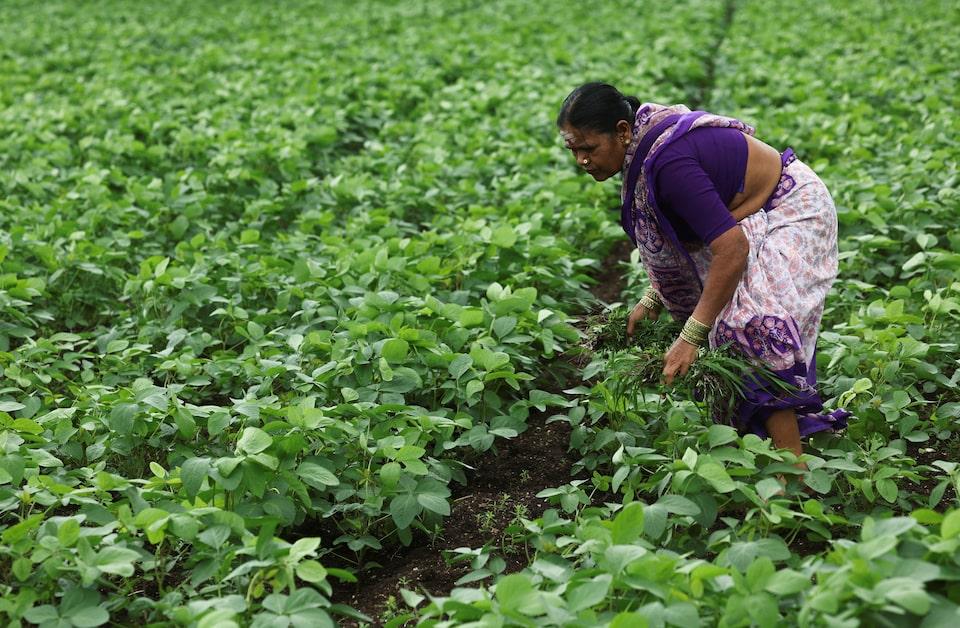
India diverts rice, corn to achieve ethanol blending targets Grain-based ethanol-making yields protein-rich byproduct DDGS Cheaper DDGS replaces oilmeals, reducing oilseed prices Oilseed price drop prompts farmers to shift to other crops Lower oilseed output to lift India's edible oil imports NASHIK, India, Aug 12 (Reuters) - India's drive to produce more ethanol is leading its farmers to switch away from growing oilseeds, undermining government efforts in the world's largest buyer of cooking oils to reduce costly imports. Helped by record corn and rice harvests, New Delhi is using more of the grains to make ethanol and meet its target of blending 20% of the biofuel additive with gasoline. The process, however, produces Distillers Dried Grains with Solubles (DDGS), a protein-rich byproduct that is flooding the animal feed market. Sign up here. The DDGS glut is weakening demand for oilmeals, depressing oilseed prices and prompting farmers in the South Asian nation to plant more corn and rice in place of soybeans and groundnuts - despite New Delhi's push to grow more of the oilseeds to ease imports. DDGS production in India has soared some 13-fold over the past two years to an estimated 5.5 million tons by 2025, according to industry officials. "DDGS is a pain in the neck," said Aashish Acharya, vice president at Patanjali Foods Ltd (PAFO.NS) , opens new tab, a leading soybean processor. "Feed makers are substituting oilmeals with DDGS since it is cheaper." The shift is visible in government sowing data. As of August 8, oilseed acreage - including soybean and groundnut - was down 4% from last year, while corn area jumped 10.5% to a record high. Madhukar Londhe, a farmer in Nashik in the western state of Maharashtra, said he had cut his soybean area to one acre from six, planting the rest with corn - which has the added benefit of providing fodder from its stalks for his five milking cows. Nearly two dozen farmers in the area that Reuters spoke to said they had made a similar switch. "Soybean prices were too low, so I couldn't even cover my costs in the past two years. Corn did better for me last year, so I've decided to grow more of it," Londhe said. RISING IMPORTS The reduction in oilseed planting is a concern for a country that spent more than $17 billion on edible oil imports last year and is making concerted efforts to reduce that dependence. Rising demand for fried foods and sweets by a growing and increasingly prosperous population has driven consistent growth in edible oil consumption at 3%-4% annually, said B.V. Mehta, executive director of the Solvent Extractors' Association of India. Edible oil imports have climbed to 16 million tons in 2023-24 from 4.4 million tons two decades ago, making India the world's largest buyer of vegetable oils such as palm oil from Indonesia and Malaysia and soyoil and sunflower oil from Argentina, Brazil, Russia, and Ukraine. New Delhi aims to boost domestic edible oil production to 25.45 million tons by 2030–31 from 12.7 million tons now, enough to meet 72% of projected demand, an effort that Mehta said is being hindered by the surge in DDGS supply. A New Delhi-based senior dealer with a global trading house who declined to be named as he is not authorised to speak with media said he expects imports to rise above 20 million tons in six or seven years, due in part to the DDGS disruption. Given the tightening global supplies of edible oils, India's additional imports will drive prices even higher, said a Kuala Lumpur-based official with a leading palm oil-producing company. MEAL GLUT, OIL DEFICIENCY India, the No. 3 importer and consumer of crude, recently hit its goal of lifting ethanol blending in gasoline to 20%. Two years ago, before India began using corn and rice on a large scale due to short supply of its main ethanol feedstock sugarcane, its blending rate was just 12%. Even before rising ethanol production began to create excess DDGS, India struggled with surplus oilmeals. Per capita demand for animal feed is much lower than the global average as a significant portion of its 1.4 billion population is vegetarian for religious and cultural reasons and most meat-eaters do so only occasionally. That led India to export surplus oilmeals to countries such as South Korea, Vietnam, Thailand, and Bangladesh. However, oilmeal exports got tougher every year as prices rose in order to support oilseed farmers. This year, some countries that import Indian meal have committed to buying more from the U.S., meaning they will buy less from India, said a Mumbai-based dealer with a global trading house. Ajay Jhunjhunwala, an oil miller in Lucknow in northern India, estimates that of this year's DDGS output, only around half will be consumed domestically. Exports are growing but are still relatively small. India's DDGS exports surged to 354,110 tons last year from just 16,556 tons in 2022. Distilleries are trying to export the surplus to markets including Bangladesh and Vietnam - longtime U.S. DDGS customers. Millers and distillers are pushing for incentives to facilitate exports of both oilmeals and DDGS. India's Agriculture Minister Shivraj Singh Chouhan said in July the government would support oilseed farmers by procuring their harvest at a state-fixed price. The Indian government did not respond to a request for comment on rising supplies of DDGS. "DDGS has exaggerated the problem of surplus meal," oil miller Jhunjhunwala said. "Unless that problem is fixed, increasing domestic oilseed production and edible oil supplies is difficult," he said. https://www.reuters.com/sustainability/climate-energy/indias-ethanol-drive-imperils-its-push-edible-oil-self-sufficiency-2025-08-12/
2025-08-12 00:27
SAO PAULO, Aug 11 (Reuters) - Brazilian cosmetics maker Natura (NATU3.SA) , opens new tab on Monday posted a second quarter net profit swung back into the black, in an earnings report that excluded Avon International, a major business arm that Natura is looking to sell off. Net profit for the three months through the end of June landed at 195 million reais ($35.8 million), reversing the 859 million real net loss it logged from the same period last year. Sign up here. Natura said in its earnings report it had decided to reclassify its Avon International unit, which aggregates its Avon businesses outside Latin America, as an asset "held for sale". Natura has been "weighing alternatives" for Avon International, which generated about 20% of Natura's total net revenue in the first quarter and had been posting lower margins than the group's Latin American operations. Due to the reclassification, the unit was not included in the second-quarter earnings report. Avon businesses in the Dominican Republic and Central America were also reclassified under this label, Natura said. Excluding the reclassified business, Natura's core earnings - as measured by recurring earnings before interest, taxes, depreciation and amortization (EBITDA) - stood at 795.6 million reais in the second quarter, up 4.5% year-on-year. Revenues nevertheless dipped 1.7% to 5.7 billion reais, below the 7.5 billion reais predicted by analysts polled by LSEG. It was not immediately clear if the numbers were comparable, due to the reclassification. ($1 = 5.4421 reais) https://www.reuters.com/world/americas/natura-swings-profit-q2-avon-international-held-sale-2025-08-11/

2025-08-11 23:42
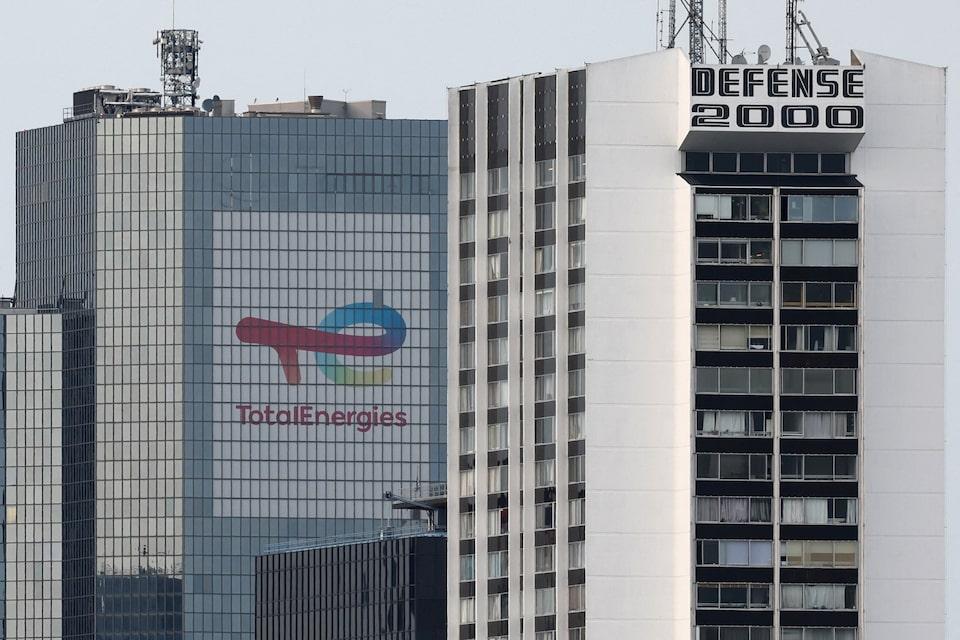
NextDecade awaits supplemental environmental approval for Train 4 TotalEnergies invests $300 million for 10% stake in Train 4 TotalEnergies declines long-term contract for NextDecade's proposed Train 5 Aug 11 (Reuters) - U.S. liquefied natural gas developer NextDecade (NEXT.O) , opens new tab will receive up to $1.8 billion in equity commitments from TotalEnergies (TTEF.PA) , opens new tab and Global Infrastructure Partners (GIP) to finance a fourth liquefaction plant at its Rio Grande LNG export project in Texas, the company said on Monday. The move brings NextDecade one step closer to a positive financial decision on the 5.4 million metric tons per annum (mtpa) facility, known as Train 4. A liquefaction plant converts natural gas to a liquid, allowing its transport over long distances. Sign up here. NextDecade is awaiting a final order on the remand for the project from the Federal Energy Regulatory Commission; FERC has completed the final environmental impact statement and its staff last week recommended the project be allowed to proceed. Based on FERC's published schedule, it anticipates a final order on the remand by November 20, NextDecade said on Monday in an email response to Reuters. TotalEnergies will contribute about $300 million for a 10% stake in the Train 4 joint venture, while a GIP affiliate will invest up to $1.5 billion for a 50% interest, which will fall to 30% once certain return thresholds are met, NextDecade said. NextDecade, through its subsidiaries, will provide up to $1.2 billion for a 40% interest, which could rise to 60% after GIP reaches agreed returns, according to the filing. TotalEnergies has a long-term agreement with NextDecade to purchase 1.5 million metric tons of LNG from Train 4 but has declined to invest or purchase the superchilled gas on a long-term contract from NextDecade's proposed Train 5 export facility. NextDecade has entered into a fixed-price contract for the construction of Train 4 with Bechtel for $4.77 billion, but the price is only valid until September 15, according to the company. NextDecade is building its Rio Grande LNG facility with a capacity of 17.6 mtpa, and is developing Trains 4 and 5 with a combined additional capacity of 10.8 mtpa. The projects are expected to assist the U.S. remain as the largest LNG exporter in the world. (This story has been corrected to say 'a final order on the remand,' not 'a final order to proceed with the project,' in paragraph 3, and 'in an email response to Reuters,' not 'in a regulatory filing,' in paragraph 4) https://www.reuters.com/business/energy/nextdecade-secures-18-billion-totalenergies-gip-rio-grande-lng-project-2025-08-11/
2025-08-11 23:16
Indexes down: Dow 0.45%, S&P 500 0.25%, Nasdaq 0.3% Investors eye inflation data for outlook on rates Chip companies face revenue-sharing demand from US government Intel CEO visits White House, report says TKO Group up after $7.7-billion US rights deal for UFC NEW YORK, Aug 11 (Reuters) - Wall Street's main indexes ended lower on Monday as investors anxiously await inflation data this week to assess the outlook for interest rates and eye U.S.-China trade developments. Investors expect the recent shakeup at the U.S. Federal Reserve and signs of labor market weakness could nudge the central bank into adopting a dovish monetary policy stance later this year, fueling much of the optimism. Sign up here. July's consumer inflation report is due on Tuesday, and investors anticipate that the Fed will lower borrowing costs by about 60 basis points by December, according to data compiled by LSEG. "The inflation data is starting to embody the more direct tariff impacts on the consumer, raising concern that inflation will remain sticky," said Eric Teal, chief investment officer at Comerica Wealth Management. "Lower inflationary readings and slower growth numbers are needed to support the case for lower rates." The Dow Jones Industrial Average (.DJI) , opens new tab closed 200.52 points, or 0.45%, lower to 43,975.09, the S&P 500 (.SPX) , opens new tab lost 16.00 points, or 0.25%, to 6,373.45 and the Nasdaq Composite (.IXIC) , opens new tab lost 64.62 points, or 0.3%, to 21,385.40. Shares of Nvidia (NVDA.O) , opens new tab and Advanced Micro Devices (AMD.O) , opens new tab were volatile through the day, ending 0.35% and 0.28% lower respectively. A U.S. official told Reuters the semiconductor majors had agreed to give the United States government 15% of revenue from sales of their advanced chips to China. Analysts said the levy could hit the chipmakers' margins and set a precedent for Washington to tax critical U.S. exports, potentially extending beyond semiconductors. Separately, U.S. President Donald Trump signed an executive order extending a pause in sharply higher U.S. tariffs on Chinese imports for another 90 days, a White House official said. Enabling semiconductor sales to China was an integral issue in the agreement Washington and Beijing signed this year, which expires on Tuesday. Trump lauded China's cooperation in talks at a White House press conference on Monday. Traders took a step back after the S&P 500 (.SPX) , opens new tab and the Nasdaq (.IXIC) , opens new tab last week logged their strongest weekly performances in more than a month. Citigroup and UBS Global Research became the latest brokerages to raise their year-end targets for the benchmark S&P 500. Micron Technology (MU.O) , opens new tab raised its forecast for fourth-quarter revenue and adjusted profit, boosting its shares 4%. Intel (INTC.O) , opens new tab rallied 3.5% after a report said CEO Lip-Bu Tan arrived at the White House on Monday. Trump had called for his removal last week. TKO (TKO.N) , opens new tab surged 10% after Paramount (PSKY.O) , opens new tab bought the rights from the live entertainment company to exclusively distribute UFC events for the next seven years in a deal valued at around $7.7 billion. Declining issues outnumbered advancers by a 1.18-to-1 ratio on the NYSE. There were 251 new highs and 98 new lows on the NYSE. On the Nasdaq, declining issues outnumbered advancers by a 1.24-to-1 ratio. The S&P 500 posted 15 new 52-week highs and 17 new lows while the Nasdaq Composite recorded 73 new highs and 121 new lows. Volume on U.S. exchanges was relatively light, with 15.5 billion shares traded, compared to an average of 18.3 billion shares over the previous 20 sessions. https://www.reuters.com/markets/us/wall-street-stocks-end-down-inflation-data-china-trade-focus-2025-08-11/

2025-08-11 23:05
LONDON, Aug 12 (Reuters) - British consumers raised their spending in July as unusually warm weather at the start of the month boosted clothing sales but demand cooled along as temperatures dropped and some of the increase reflected higher food prices. The British Retail Consortium - representing mostly larger stores - said on Tuesday that spending was 2.5% higher in cash terms than in July last year, slower than June's 3.1% increase. Sign up here. Separate figures from Barclays showed that overall consumer spending rose by 1.4% compared with a fall of 0.1% in June. "Food sales did well in early July thanks to warm weather and a packed sporting schedule, though this momentum failed to hold for the rest of the month," BRC Chief Executive Helen Dickinson said. "Rising food inflation meant increased spending was more a result of higher prices than improved demand," she added. The BRC's measure of food spending rose by 3.9% in July compared with a 1.4% increase for other goods. Barclays' figures showed a 0.9% increase in grocery spending and a 4.2% rise in clothing sales - its biggest rise since September last year - which it too linked to the warm weather. Britain's Met Office said July was the fifth-warmest in records dating back to 1884. Economists are watching to see if households dip into high savings levels to support spending at a time of job losses and slowing wage growth. Bank of England Governor Andrew Bailey last week said consumers had been more cautious than the BoE had expected. The BoE forecast that consumer price inflation will rise to 4% in September - double its 2% target - while it predicts food price inflation will peak at 5.5% by the end of the year, up from 4.5% in June. Around 1-2 percentage points of the increase in food price inflation was due to a higher minimum wage and increased employers national insurance contributions ordered by British finance minister Rachel Reeves, the BoE said. https://www.reuters.com/business/retail-consumer/uk-consumers-spent-more-clothes-temperatures-soared-july-data-shows-2025-07-15/