2025-08-11 20:05
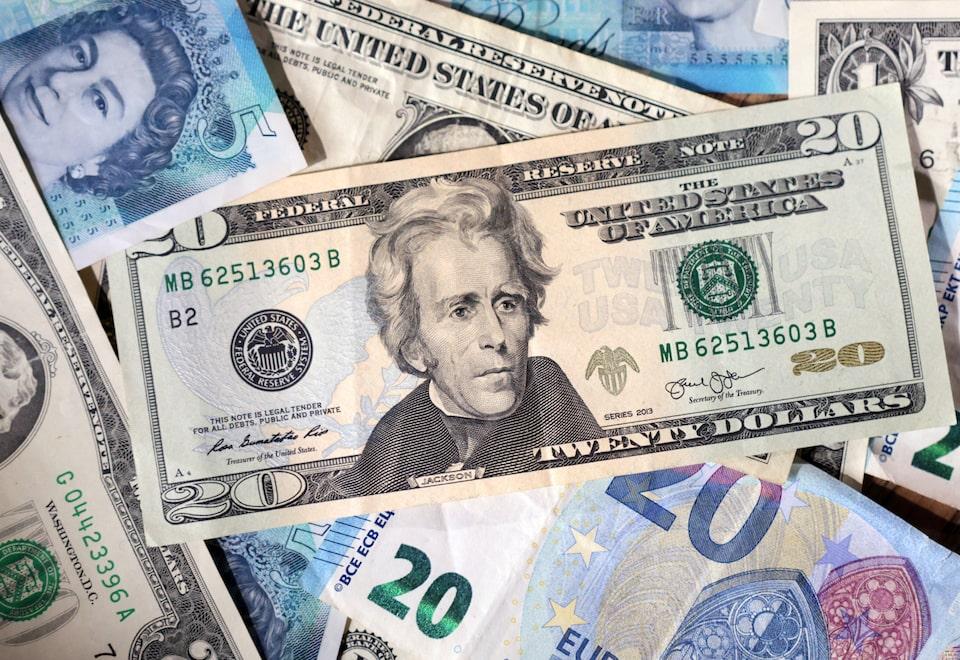
U.S. dollar index up 0.3% Trump signs order extending China tariff deadline for 90 days, official says Bitcoin closes in on record high, ether up NEW YORK, Aug 11 (Reuters) - The U.S. dollar firmed across the board on Monday, a day before the release of a U.S. inflation report that could help determine whether the Federal Reserve lowers borrowing costs next month. The dollar index was up 0.3% at 98.52 after last week's 0.4% fall. Against the yen, the U.S. currency traded at 148.085 , up 0.2%. Japanese markets were closed on Monday for the Mountain Day holiday. Sign up here. The euro was down 0.3% at $1.16123, while sterling was down 0.2% at $1.34335. "The buck is trading a little firmer against all peers, though the moves are overall modest in nature," said Michael Brown, market analyst at online broker Pepperstone in London. "A very modest hawkish repricing of Fed policy expectations appears to be helping the move along, likely driven by participants squaring up some positions ahead of the risk that tomorrow's CPI print presents," he said. The dollar softened last week as investors adjusted their expectations for interest rate cuts from the Fed after soft data on U.S. jobs and manufacturing. Fed officials have sounded increasingly uneasy about the labor market, signaling their openness to a rate cut as soon as September. Cooling inflation could cement bets for a cut next month, but if signs emerge that U.S. President Donald Trump's tariffs are fuelling price rises, that might keep the Fed on hold for now. "It's important to note ahead of tomorrow's data that the bar for a hawkish surprise is higher," said Francesco Pesole, FX strategist at ING. Pesole added that a 0.3% monthly rise in core CPI would give the Fed room to lower interest rates, given the deterioration in the labor market. Economists polled by Reuters expect core CPI to have risen 0.3% in July, pushing the annual rate higher to 3%. Money market traders are pricing in around a 90% chance of a rate cut next month, while 58 basis points of easing are priced in by year-end, implying two quarter-point cuts and around a one-in-three chance of a third. The dollar was little swayed by Trump signing an executive order extending a pause in sharply higher U.S. tariffs on Chinese imports for another 90 days, a move that some market participants said was expected. With the United States and China seeking to close a deal averting triple-digit goods tariffs, a U.S. official told Reuters that chip makers Nvidia (NVDA.O) , opens new tab and AMD (AMD.O) , opens new tab had agreed to allocate 15% of China sales revenues to the U.S. government, aiming to secure export licences for semiconductors. The Australian dollar fetched $0.6515 , trading down 0.2% ahead of a rate decision on Tuesday, in which it is widely expected that the Reserve Bank of Australia will cut rates by 25 bps to 3.60%, after second-quarter inflation came in weaker than expected and the jobless rate hit a 3-1/2-year high. Cryptocurrencies rose, with bitcoin up 1.1% at $119,679, not far from its July 14 record of $123,153.22, after Trump's executive order on Thursday freed up cryptocurrency holdings in U.S. retirement accounts. Ether rose 1.9% to $4,298.23, its highest since December 2021. https://www.reuters.com/world/china/dollar-edges-up-with-us-inflation-report-tap-2025-08-11/
2025-08-11 19:43
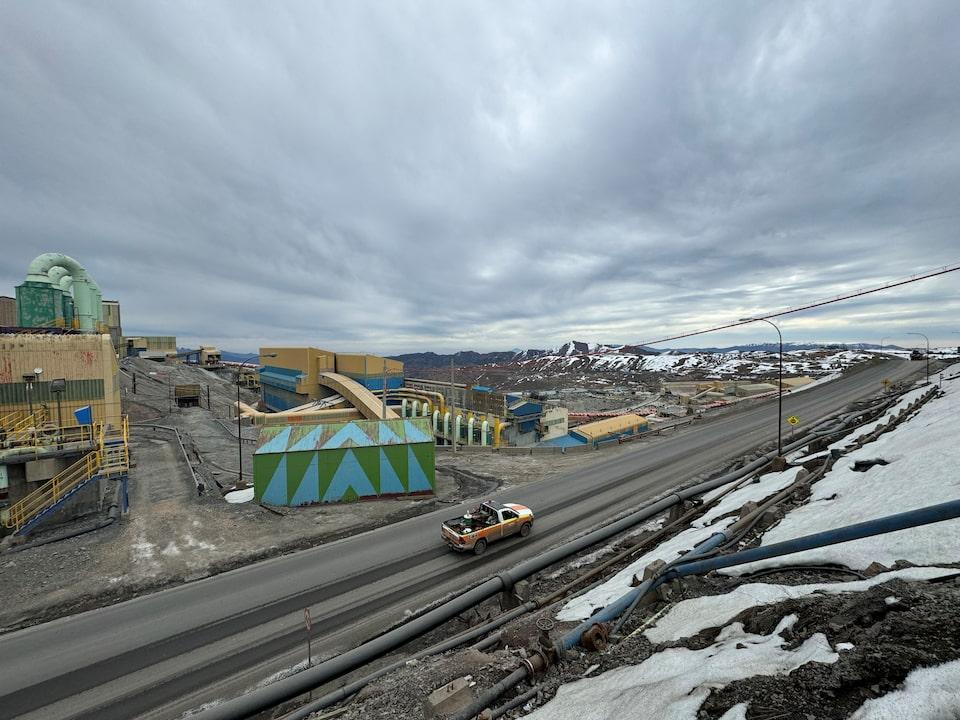
SANTIAGO, Aug 11 (Reuters) - Copper production from Chilean state-run miner Codelco ticked up 17% year-over-year in June, data from copper commission Cochilco showed on Monday, climbing to 120,200 metric tons. Codelco is the world's largest miner of the red metal. Sign up here. Meanwhile production at BHP's (BHP.AX) , opens new tab Escondida mine, the world's largest copper mine, slid 33% to 76,400 tons. At Collahuasi, another major copper mine jointly run by Glencore (GLEN.L) , opens new tab and Anglo American (AAL.L) , opens new tab, output fell 29% to 34,300 tons. https://www.reuters.com/world/americas/copper-output-chiles-codelco-climbs-17-june-2025-08-11/
2025-08-11 19:07
SANTIAGO, Aug 11 (Reuters) - Chilean state copper miner Codelco said on Monday that the general manager of its El Teniente mine, where a recent collapse killed six workers, will leave his position as part of a "mutual agreement." The mine's current operations manager, Claudio Sougarret, will take over from Andres Music beginning on Tuesday on an interim basis as the mine restarts production, Codelco said. Sign up here. Codelco over the weekend began a partial restart of underground mining activity, after such operations were halted following the Aug. 31 collapse. The company on Monday said its smelter was awaiting copper concentrate to be able to restart. https://www.reuters.com/world/americas/chiles-codelco-replaces-el-teniente-manager-after-deadly-accident-2025-08-11/
2025-08-11 18:59
Trump and Putin to meet on Friday in Alaska UBS lowers Brent crude forecast on higher supply OPEC July oil output hike limited by Iraqi cuts HOUSTON, Aug 11 (Reuters) - Oil settled flat on Monday after falling more than 4% last week, as investors looked towards talks this week between the U.S. and Russia over the war in Ukraine. Brent crude futures settled up 4 cents, or 0.06%, at $66.63 a barrel. U.S. West Texas Intermediate crude futures settled up 8 cents, or 0.13%, at $63.96. Sign up here. U.S. President Donald Trump said on Friday he would meet Russian President Vladimir Putin on August 15 in Alaska to negotiate an end to the war in Ukraine. The talks follow increased U.S. pressure on Russia, raising the prospect of tighter penalties on Moscow if a peace deal is not reached. Trump said on Monday both Ukraine and Russia would have to cede land to each other to end the war and that his talks with Putin would be aimed at taking the temperature on a possible deal. "The recent sell-off in crude has paused as markets await Friday’s high-stakes meeting," StoneX analyst Alex Hodes said in a note on Monday. Trump set a deadline of last Friday for Russia, which invaded Ukraine in February 2022, to agree to peace or have its oil buyers face secondary sanctions. At the same time, Washington is pressing India to reduce purchases of Russian oil. Oil prices have fallen in recent days as market participants lowered supply disruption estimates, probably because the U.S. imposed an extra tariff only on India rather than all buyers of Russian oil, said UBS analyst Giovanni Staunovo. UBS has lowered its year-end Brent crude forecast to $62 a barrel from $68, citing higher supply from South America and resilient output from sanctioned countries. Indian demand had fallen short of expectations of late, the bank said, adding it expected OPEC+ to pause its production increases unless larger unexpected supply disruptions emerge. OPEC's oil output rose further in July after an OPEC+ agreement to raise production, a Reuters survey found on Friday, although the hike was limited by Iraq making additional cuts and by drone attacks on Kurdish oilfields. "The balance right now is between OPEC not raising production as much as anticipated versus the possibility that there will be a Ukraine ceasefire deal, and Russian oil might start to flow freely. That balance has oil bouncing around like a yo-yo right now," said Phil Flynn, a senior analyst with Price Futures Group. Elsewhere, an Exxon Mobil-led consortium began crude production four months earlier than expected at a fourth floating production, storage and offloading vessel in Guyana, Exxon said on Friday. Separately, data from the National Bureau of Statistics on Saturday showed China’s producer prices fell more than expected in July. https://www.reuters.com/business/energy/oil-settles-flat-ahead-us-russia-talks-2025-08-11/
2025-08-11 18:48
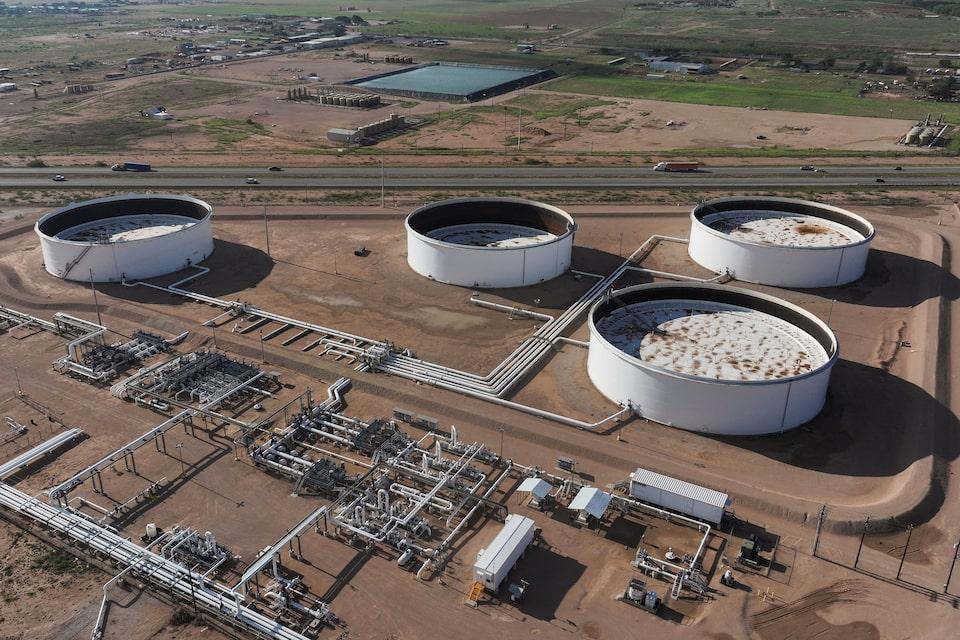
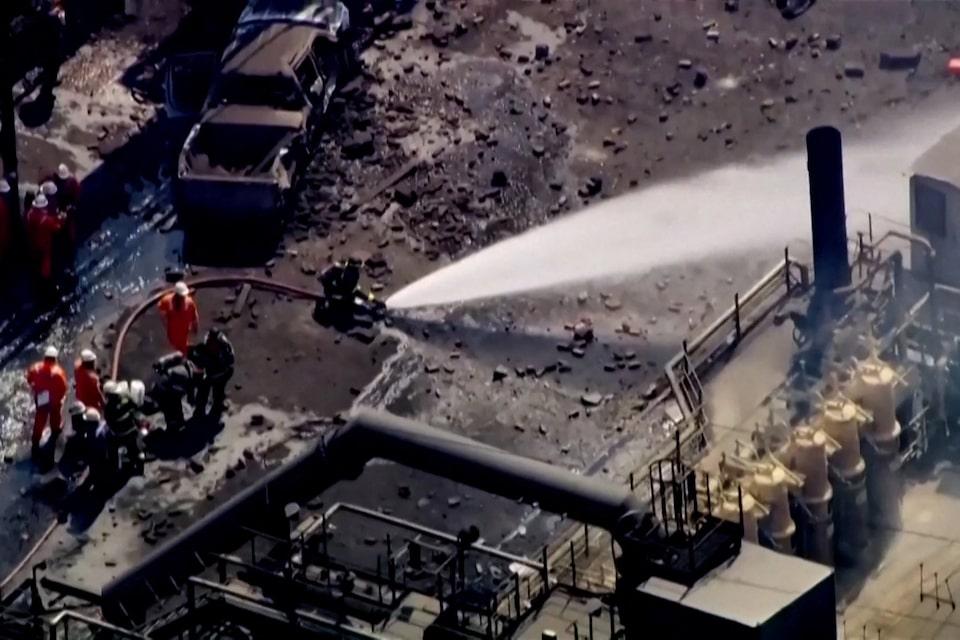
Aug 11 (Reuters) - An explosion at a U.S. Steel plant near Pittsburgh on Monday has killed one person and injured multiple others, with at least two people missing, police said, as fire crews could be seen battling flames while heavy smoke rose from the facility. The explosion occurred at about 11 a.m. at the U.S. Clairton Coke Works plant, which is owned by U.S. Steel, a subsidiary of Nippon Steel (5401.T) , opens new tab. Sign up here. Allegheny County Police spokesman Jim Madalinsky said at least two people were missing, as well as reporting the one fatality and multiple injuries. The extent of the injuries was not known, but news accounts said that several people were taken to hospital burn units. There was no word yet on a possible cause of the explosion. Clairton Mayor Rich Lattanzi in a phone interview with Reuters from the site described the scene. "I don't know if people are trapped," Lattanzi said. "There are ambulances and police and news media everywhere. It's a horrible day for Clairton. We're praying for everyone involved. We're just praying this isn't as bad as it looks." Pennsylvania Governor Josh Shapiro posted on X that his administration was in touch with local officials in Clairton as they responded to the explosion. "The scene is still active, and folks nearby should follow the direction of local authorities," he wrote, asking readers to join him in prayer for the Clairton community. An official told CNN that some people were trapped under the rubble, and emergency crews were working to reach them. The Clairton Coke Works, located on the Monongahela River south of Pittsburgh, is the largest coke manufacturing facility in the United States. Coke is produced by heating coal at high temperatures. It is used in blast furnaces as part of the process of making steel. Clairton Plant operates 10 coke oven batteries and produces approximately 4.3 million tons of coke annually. The facility serves customers in the commercial coke market as well as U. S. Steel's steelmaking facilities. In June, Nippon Steel, Japan's biggest steelmaker, closed its $14.9 billion acquisition of U.S. Steel after an 18-month struggle to obtain U.S. government approval for the deal, which faced scrutiny due to national security concerns. https://www.reuters.com/world/us/explosion-us-steel-plant-leaves-one-dead-two-missing-multiple-injured-2025-08-11/
2025-08-11 18:42
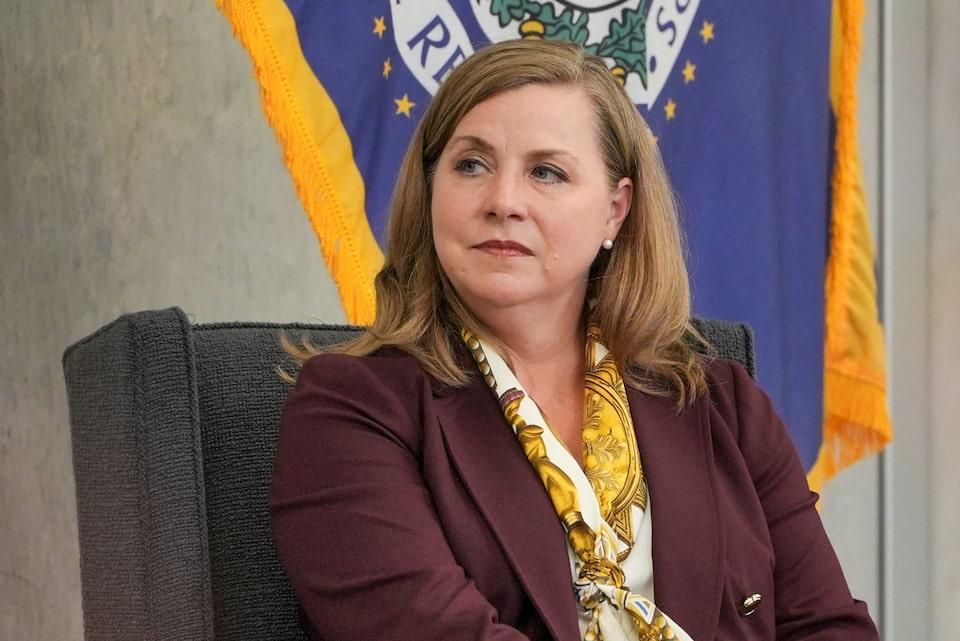
WASHINGTON, Aug 11 (Reuters) - Both Federal Reserve vice chairs, Michelle Bowman and Philip Jefferson, as well as Dallas Fed President Lorie Logan are under consideration to serve as the next chair of the U.S. central bank, Bloomberg News reported on Monday, citing two administration officials. U.S. Treasury Secretary Scott Bessent is leading a search for a successor to Fed Chair Jerome Powell, whom President Donald Trump has pushed all year, in vain, to cut rates. Sign up here. Candidates previously known to be on his list include National Economic Council director Kevin Hassett, former Fed Governor Kevin Warsh and current Fed Governor Christopher Waller, with the list expanded recently to also encompass St. Louis Fed President James Bullard and Marc Sumerlin, a former economic adviser to President George W. Bush. Hassett, Warsh, Waller and Bowman have all signaled support for lower rates, with Waller and Bowman both dissenting in July against the Fed's decision to leave rates unchanged. Logan, by contrast, has consistently been more hawkish, most recently signaling her skepticism about lowering interest rates while inflation remains elevated. Jefferson has never given any indication of differences between his and Powell's policy views. https://www.reuters.com/world/us/fed-vice-chairs-dallas-fed-president-being-considered-next-chair-bloomberg-2025-08-11/