2025-08-08 11:33
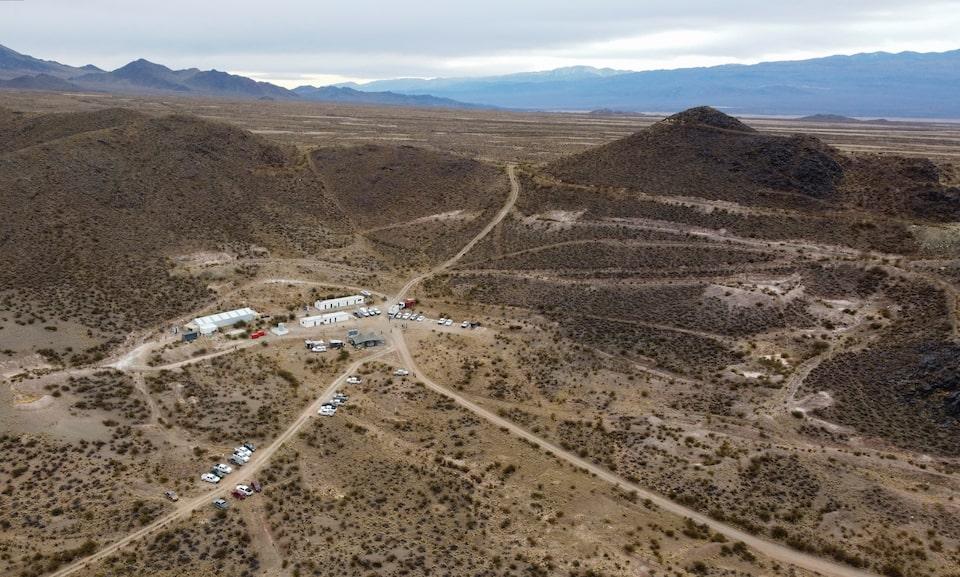
MOSCOW, Aug 8 (Reuters) - Russia's nuclear power monopoly Rosatom has started development of the Shirondukuyskoye uranium deposit in eastern Siberia, planning to produce the first uranium there in 2028, the company's mining division said on Friday. The deposit - located close to the city of Krasnokamensk near the border with China and Mongolia, which is dubbed the "uranium capital of Russia" - has estimated reserves of 8,000 tons of uranium and 40,000 tons of molybdenum. Sign up here. "The development of the Shirondukuyskoye deposit is an important stage in the development of Russia's uranium mining industry," the division said in a statement. "Its mineral resource base will not only support planned uranium production volumes but also ensure the long-term development of Krasnokamensk," it added. Russia is only the world's sixth largest uranium producer but controls about 44% of global uranium enrichment capacity. Russia imports uranium from other countries, mostly from Kazakhstan. Rosatom plans to increase domestic uranium production to 4,000 tons by 2030 from 2,796 tons in 2024. Rosatom said that with Shirondukuyskoye, as well as the two nearby Argunskoye and Zherlovoye deposits, going into operation, uranium output could be increased by 2,000 tons per year. Russia is currently boosting the share of nuclear energy in its energy production. The share of nuclear is projected to reach 25% by 2045 from 20% currently, according to Rosatom. https://www.reuters.com/business/energy/russias-rosatom-starts-development-uranium-deposit-eastern-siberia-2025-08-08/

2025-08-08 11:28
Tata Motors' profit drops 63% JLR impacted by U.S. export halt in first quarter Maintains JLR guidance despite tariff impact Aug 8 (Reuters) - Indian automaker Tata Motors (TAMO.NS) , opens new tab posted a 63% slump in quarterly profit on Friday, its fourth straight quarter of decline, as U.S. tariffs hurt businesses that were already reeling from weak sales at home and in its luxury car segments. Tata Motors, India's top seller of electric cars and commercial vehicles, has been battling weak urban demand at home. Overseas, its profit-driving luxury unit Jaguar Land Rover logged a sales drop of 11% due to a temporary halt in U.S. exports and the phase-out of older Jaguar models. Sign up here. Quarterly volumes and revenue took a hit from a 27.5% U.S. tariff on UK- and EU-made cars, along with the planned phase-out of legacy Jaguar models ahead of a new launch, Tata Motors said on Friday, adding that the tariffs dealt a direct blow to profitability and cash flow. U.S. duties wiped 254 million pounds ($341.33 million) off its quarterly earnings, Tata Motors said. However, it kept its JLR forecast unchanged, saying a U.S.-UK trade deal signed in May would sharply cut the tariff hit. The pact lets the UK export 100,000 cars a year to the U.S. at a 10% duty, instead of the 25% faced by other countries. The company reported a profit of 39.24 billion rupees ($447.8 million) in the April-June quarter, down from a restated 105.14 billion rupees a year earlier that includes a 49.75-billion-rupee one-time gain. Excluding the gain, profit was down 30.5% year-on-year. Tata Motors expects demand to remain challenging but aims to boost performance as clarity on tariffs emerges and festive demand picks up, Chief Financial Officer P.B. Balaji said. With a planned demerger in October 2025 to split its commercial and passenger vehicle businesses, the company is focused on delivering a strong second-half performance, he added. Quarterly revenue fell 2.5% from a year earlier as sales slowed, mirroring trends at domestic rivals Maruti Suzuki India (MRTI.NS) , opens new tab and Hyundai Motor India (HYUN.NS) , opens new tab. ($1 = 87.6200 Indian rupees) ($1 = 0.7442 pounds) https://www.reuters.com/world/india/indian-automaker-tata-motors-quarterly-profit-plunges-tariffs-slow-sales-bite-2025-08-08/

2025-08-08 11:27
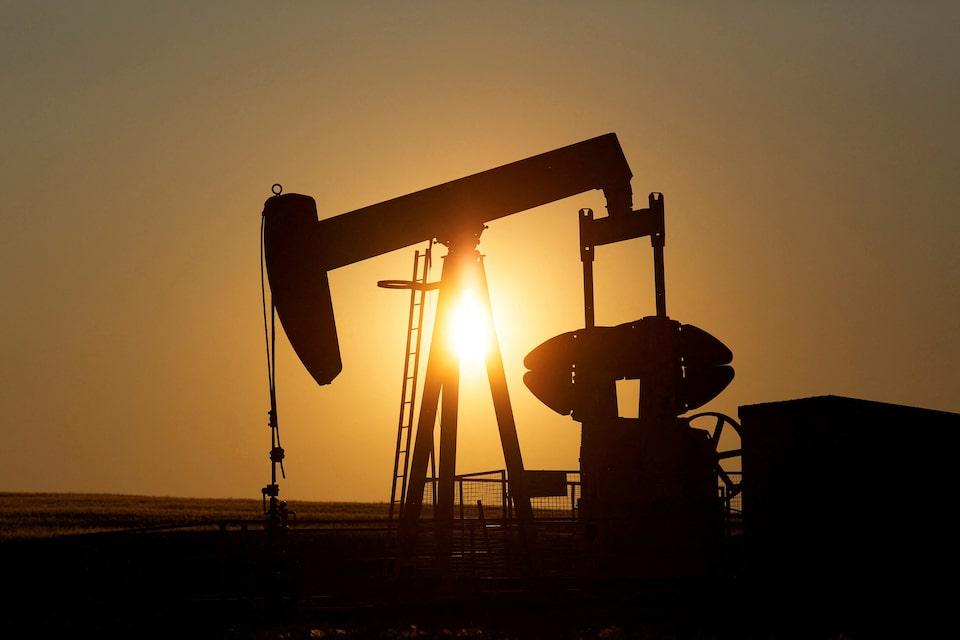
Latest tariffs raise concerns over economic activity Trump threatens further sanctions on buyers of Russian oil Putin and Trump to hold meeting in coming days, says Kremlin LONDON, Aug 8 (Reuters) - Oil prices edged higher on Friday but was poised for the steepest weekly losses since late June on a tariff-hit economic outlook and a potential meeting between U.S. President Donald Trump and Russian counterpart Vladimir Putin. Brent crude futures were up 52 cents, or 0.78%, at $66.95 a barrel by 1104 GMT. U.S. West Texas Intermediate crude futures rose 43 cents, or 0.67%, to $64.31. Sign up here. Brent was on track to be down 3.9% over the week while WTI was set to finish 4.5% lower than last Friday's close. Higher U.S. tariffs against a host of trade partners went into effect on Thursday, raising concern over economic activity and demand for crude oil, ANZ Bank analysts said in a note. The latest tariffs arrive against a backdrop of an already weaker than expected U.S. labour market and Thursday's announcement by the Kremlin that Putin and Trump would meet in the coming days as trade tensions rise between the U.S. and Russia's oil customers. Trump this week threatened to increase tariffs on India if it kept buying Russian oil, which the market viewed as putting further pressure on Russia to reach a deal with the U.S., said independent analyst Tina Teng. Trump also said China, the largest buyer of Russian crude, could be hit with tariffs similar to those levied against Indian imports. The potential meeting raises expectations of a diplomatic end to the war in Ukraine, which could lead to eased sanctions on Russia, with Russian stocks rallying after the news. "There could be a meeting between Trump and Putin in the near future, which could indicate that Trump is adopting a wait-and-see approach with regard to further sanctions against Russia and its allies," Commerzbank analysts said in a note. However, some analysts remain cautious. "The Russian leader is expected to insist on having his territorial demands granted, a hard sell for the invaded country, while his U.S. counterpart will push for a ceasefire," said PVM analyst Tamas Varga. "No breakthrough is anticipated, and the U.S. following through on its threat to impose secondary sanctions on those dealing in Russian energy - including China and India - remains a possibility." https://www.reuters.com/business/energy/oil-set-steepest-weekly-losses-since-june-2025-08-08/
2025-08-08 11:27
Aug 8 (Reuters) - India’s Reliance Infrastructure (RLIN.NS) , opens new tab said on Friday its New Delhi power distribution units will recover 284.83 billion rupees ($3.25 billion) in unpaid dues after the Supreme Court upheld their claims in a ruling earlier this week. The dues stem from historical tariff shortfalls, where electricity prices approved by regulators did not fully cover the cost of supply. Sign up here. Under a court-approved mechanism, the amount will be recovered from consumers over four years starting April 2024, likely through higher electricity tariffs. On Wednesday, the Supreme Court ordered electricity regulators across India to clear deferred costs and unpaid dues owed to power distribution companies. The court also instructed state regulators to conduct audits and submit recovery roadmaps. Reliance Infra is part of the Anil Ambani-run Reliance Group. He is the younger brother of billionaire Mukesh Ambani. In New Delhi alone, three distribution companies — including a unit of Tata Power (TTPW.NS) , opens new tab — had accumulated 272 billion rupees in unpaid dues as of the fiscal year ended 2021 and had to be paid within four year starting April 2024, according to the court document. The Delhi Electricity Regulatory Commission will oversee the recovery process, which is expected to result in increased electricity bills for consumers in the national capital. ($1 = 87.6300 Indian rupees) https://www.reuters.com/sustainability/boards-policy-regulation/indias-reliance-infra-recover-325-billion-unpaid-power-dues-new-delhi-consumers-2025-08-08/

2025-08-08 11:11
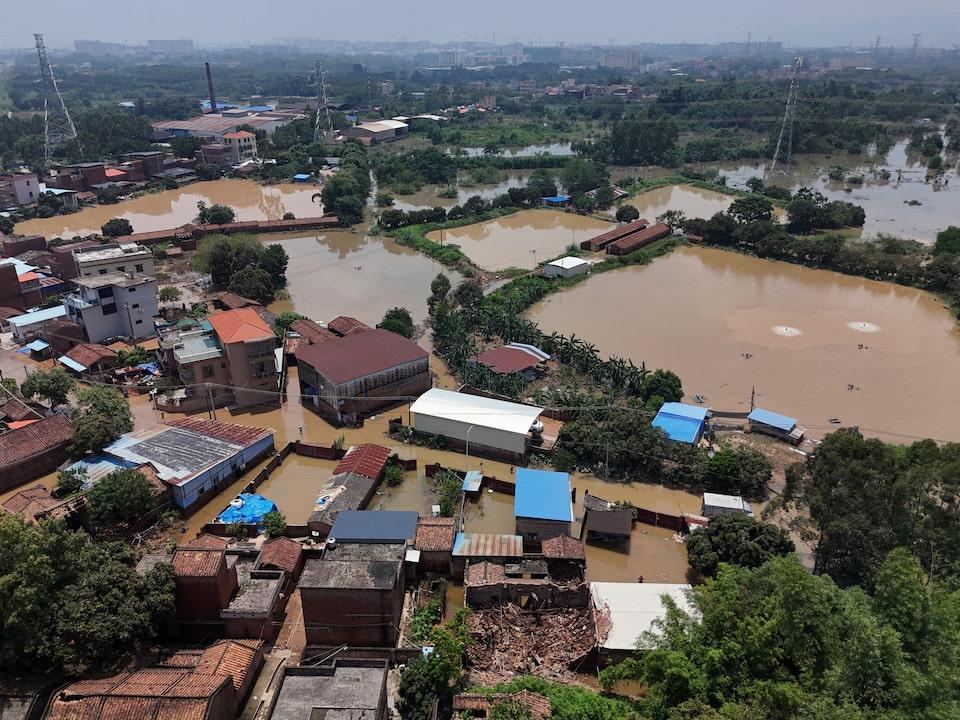
China's Guangdong province hit by record rainfall Residents in hard-hit village complain about aid response China announces multimillion-dollar disaster relief package GUANGZHOU, China, Aug 8 (Reuters) - The several hundred residents of Pingtou, a village in China's sub-tropical south, have seen plenty of typhoons and rainstorms over the years. But nothing prepared them for this week's flooding - the worst there in generations. Knee-deep brown water still covered the main road into the village, in Guangdong province, on Friday as residents dragged damaged furniture and home appliances out of their homes, at least four of which collapsed in the downpour earlier this week. Sign up here. "The older folks here say that in the 100 years we've been here, they've never experienced such flooding," said one villager aged in his 50s who asked to use only his surname Zhong. Floodwaters have never before entered his two-storey house, but this time they surged in, wrecking many of his belongings. Water marks on the walls of nearby houses were more than a metre (3.3 feet) high. It was not immediately clear if anyone had been killed in the village. A record 622.6 mm (24.5 inches) of rain fell on Guangzhou, the provincial capital from August 2-6 - almost three times average monthly rainfall for the city in August. At least seven people were killed due to flooding there, state media said. China has been battling with record rainfall in its north and south as well as prolonged heatwaves in its interior. The government announced on Thursday 430 million yuan ($59.9 million) in fresh funding for disaster relief, taking the total allocated since April to at least 5.8 billion yuan. But in Pingtou, villagers said they were not getting enough support from local authorities to deal with the aftermath. Zhong said he was told by officials that there was no relief aid available to deal with the floods. "There was not even a bottle of mineral water provided to us," he said. 'NO ALERTS' Across Guangdong, 75,000 people were evacuated as a precaution, but several residents of Pingtou told Reuters there had been no alerts about flooding in the area - leaving them ill-prepared. On the night of the heaviest downpour on Tuesday in Pingtou, 73-year-old Zhang was woken up by her worried daughter-in-law in the middle of the night and rushed over to the relative safety of her son's two-storey home. When the family woke the next day, the roof of Zhang's house had caved in. "I'd been living in that house for more than 50 years," said Zhang, as she stared at her household items coated in the debris left by the receding waters. Just outside Pingtou, fish and duck farmer Hu Songlin said the deluge had swept away the fish in his ponds, estimating the immediate losses at about 120,000 yuan. "Now we won't be able to earn a single cent," his wife Hua said. Experts have linked China's erratic weather - including floods and droughts - to climate change. "We say that global warming can lead to heavier rainfall, but there's only so much water," said Johnny Chan, a professor at the City University of Hong Kong's School of Energy and Environment. "So if one area has more rain, another area will have less rain. So what we're seeing is that there will be places which are becoming wetter and there will be places which will become much drier." ($1 = 7.1827 Chinese yuan renminbi) https://www.reuters.com/sustainability/climate-energy/chinese-villagers-hit-by-worst-floods-generations-say-they-had-no-warning-2025-08-08/
2025-08-08 11:07
Argentina has not produced copper since 2018, despite rich deposits San Juan's compensation program could boost infrastructure development Planned copper projects could boost mining exports to $15.4 billion by 2030 SAN JUAN, Aug 8 (Reuters) - Argentina holds rich copper deposits in the mountainous north along the Chilean border, but, unlike its mining powerhouse neighbor, has not built power lines and roads needed for new projects backed by miners such as BHP and Rio Tinto. President Javier Milei's austerity campaign to clamp down on inflation and debt means the South American country is up against bigger challenges than most countries to build the infrastructure needed by mines worldwide. Sign up here. Unconventional ideas, such as sharing infrastructure between miners or paying for it with royalties, will likely be part of the solution. "The government said it won't provide any funding, but that doesn't mean it isn't responsible for getting things done," said Roberto Cacciola, president of Argentina's mining chamber, who is urging authorities to step up efforts to ensure infrastructure gets built. Argentina exports gold, silver, and lithium but has not produced copper since 2018. Milei's administration, as well as governors who control local development, are banking on copper to help stabilize the country's volatile economy, just as mining companies worldwide seek to boost output to cover a looming supply gap for the metal widely used in construction and electric vehicles. A federal official said the government is assessing infrastructure needs nationwide and identifying ways the private sector could play a role. Eight copper projects in Argentina could bring total mining export value to $15.4 billion by 2030, according to a government forecast. That would more than triple last year's figure and make the sector one of the country's largest net foreign exchange earners. Copper projects alone could reel in $5.2 billion by 2030, if they reach the government's projection of producing 521,000 metric tons a year. The copper projects are concentrated in the northern province of San Juan, which some call the "Vaca Muerta of copper," an allusion to Argentina's shale oil and gas field the size of Belgium. San Juan enacted a compensation program in 2022 that could help get infrastructure built. It allows mining companies that develop road or energy infrastructure to be repaid with mining royalties if provincial legislators deem the project a "public utility." Miners normally pay royalties to governments. The Vicuna project, from global miner BHP (BHP.AX) , opens new tab and Canada's Lundin (LUN.TO) , opens new tab, hopes to use the provision, said Vicuna's Argentina director Jose Morea. "That speeds up investments that the private sector is currently in a position to make ... which the provincial government would probably have to defer otherwise," he said in an interview. Vicuna consists of two mines, Filo del Sol and the more advanced Josemaria, which could become one of the region's first projects to start production. The $5-billion mine will need a 220-kilometer (137-mile) road - a distance of about two or three hours by car - to reach operations at an altitude of 4,200 meters (13,780 feet) in the Andes Mountains. It will also require a high-voltage power transmission line at a scale that could support a large city. SHARING INFRASTRUCTURE Some miners are exploring other ways to reduce costs. McEwen Mining's (MUX.TO) , opens new tab Los Azules is looking at sharing infrastructure with nearby projects and has consulted the Inter-American Development Bank about infrastructure loans. Some business leaders want the government to turn over more projects, such as railways and road maintenance, to the private sector through public tenders or public-private partnerships, said Nicolas Munoz, a copper supply analyst at consultancy CRU. "It's feasible to think that private companies will assume these costs and see a business opportunity," Munoz said. There are already signs of interest from the mining sector, such as global miner Rio Tinto (RIO.L) , opens new tab, which recently took over U.S.-based Arcadium's lithium mines in Argentina and is developing another of its own in the country. According to a public register of lobbyist meetings, Rio held a meeting with Argentina's mining secretary in June after expressing interest in bidding for the state's Belgrano Cargas railway, which the government said in February it would privatize. Rio Tinto did not have an immediate comment. Rio Tinto is also backing McEwen's Los Azules and Aldebaran's Altar copper projects through shares owned by its leaching technology arm, Nuton. Some governors are still looking to the federal government to take part of the burden. Governor Gustavo Saenz of Salta, where Canada's First Quantum Minerals (FM.TO) , opens new tab wants to develop the Taca Taca copper mine, said aqueducts, roads, and gas pipelines will pay off. "We need them to give us ... everything necessary so that those who want to come and invest can do so," he said this week at the Argentina Copper 2025 conference in San Juan. https://www.reuters.com/business/energy/argentinas-copper-dreams-need-infrastructure-who-will-build-it-2025-08-08/