2026-01-27 20:20
Nigerian ex-oil minister given 'life of luxury' in London, prosecutors say Alison-Madueke was minister for petroleum resources from 2010-15 She is standing trial alongside her brother and an oil executive The three defendants deny all the charges LONDON, Jan 27 (Reuters) - Former Nigerian oil minister Diezani Alison-Madueke took bribes including luxury goods and the use of high-end properties from industry figures interested in lucrative oil and gas contracts, British prosecutors said at her corruption trial on Tuesday. Alison-Madueke was minister for petroleum resources between 2010 and 2015 under then-president Goodluck Jonathan and was also briefly president of the Organization of the Petroleum Exporting Countries, the first woman to hold either role. Sign up here. The 65-year-old is now one of the most high-profile former energy officials to stand trial for alleged corruption, having been charged in 2023 with five counts of accepting bribes and a charge of conspiracy to commit bribery, which she denies. Prosecutor Alexandra Healy told jurors at London's Southwark Crown Court that Alison-Madueke "enjoyed a life of luxury in London", where she often stayed, provided by those interested in contracts with Nigerian state-owned companies. ACCUSED OF ACCEPTING USE OF PRIVATE JET Healy said Alison-Madueke was given the use of high-end properties and vast quantities of luxury goods by people who "clearly believed she would use her influence to favour them". There was no evidence Alison-Madueke awarded contracts to someone who should not have had one, but it was improper for her to have accepted benefits from those doing business with government-owned entities, Healy said. Alison-Madueke sat in the dock alongside oil industry executive Olatimbo Ayinde, 54, who is charged with one count of bribery relating to Alison-Madueke and a separate count of bribery of a foreign public official. Alison-Madueke's brother, 69-year-old Doye Agama, is charged with conspiracy to commit bribery relating to Agama's church and is listening to the trial by video link for medical reasons. Ayinde and Agama also deny the charges against them. Alison-Madueke is accused of accepting various financial benefits from individuals in the Nigerian oil industry between 2011 and 2015. They include the use of a chauffeur-driven car and a private jet. She is also alleged to have had her son's school fees paid by Nigerian businessman Benedict Peters, who is named on the indictment but is not facing trial. NIGERIA'S OIL WEALTH Kolawole Aluko, another Nigerian businessman who is named in one charge but is not standing trial, spent more than 2 million pounds ($2.75 million) on items for Alison-Madueke at Harrods alone, Healy told the court. Alison-Madueke frequently stayed with her family in a mansion outside London provided for her by Aluko, who had bought the property through a company for 3.25 million pounds and paid for bills, staff and refurbishments, Healy added. Ayinde is charged with bribing Alison-Madueke between 2012 and 2014 and also bribing the then-managing director of the state-owned Nigerian National Petroleum Corporation, Emmanuel Ibe Kachikwu, who is also not on trial, in 2015. Healy said that, after Jonathan was replaced as president by Muhammadu Buhari in 2015, Ayinde paid a "substantial bribe" to Kachikwu to ensure her friend continued to work in the NNPC. Nigeria is one of the world's largest producers of oil and the largest in Africa, extracting around 1.53 million barrels per day in December according to a Reuters survey, which is around 1.4% of global supply. But mismanagement and corruption, among other factors, have hampered development and prevented its oil wealth from benefiting wider Nigerian society. Healy told the jury that, while it might seem unusual for allegations of bribing Nigerian officials to be heard in London, it reflected the links to Britain the three defendants had. She said corruption "undermines the proper functioning of the global market" and it was important to stop conduct in Britain which could further corruption elsewhere. ($1 = 0.7266 pounds) https://www.reuters.com/world/africa/nigerias-ex-oil-minister-alison-madueke-stands-trial-uk-bribery-charges-2026-01-27/

2026-01-27 20:04
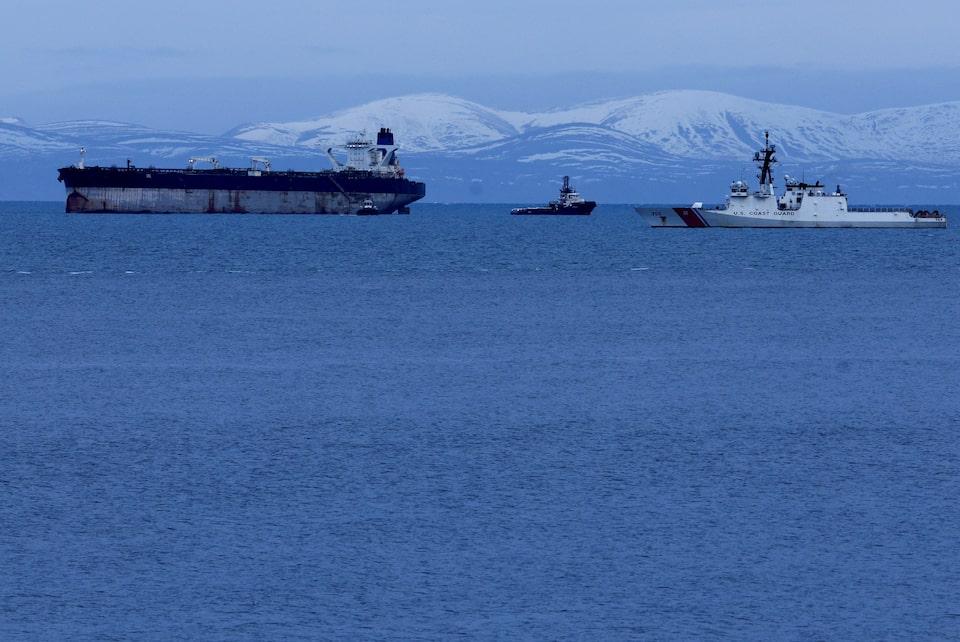
LONDON, Jan 27 (Reuters) - The captain of a Venezuela-linked crude oil tanker seized by the U.S. this month has been taken from British territorial waters and is now aboard a U.S. Coast Guard vessel, a lawyer for the captain's wife said on Tuesday. The U.S. Coast Guard and U.S. military special forces, bearing a judicial seizure warrant, apprehended the Russian-flagged Marinera in the Atlantic near Iceland on January 7 after pursuing it for more than two weeks as part of Washington's efforts to block Venezuelan oil exports. Sign up here. After its capture, the tanker was moved to a location off the coast of Scotland. Despite legal attempts to stop their removal, Captain Avtandil Kalandadze, a Georgian, and the boat's first officer were taken from Scottish jurisdiction to the U.S. Coast Guard vessel Munro, Aamer Anwar, the lawyer for Kalandadze's wife, Natia Dzadzama, said. COURT ORDER REVOKED On Monday, a Scottish court issued an interim order preventing the captain's removal pending a judicial review of his detention, but the order was revoked early Tuesday after the court heard Kalandadze was already outside British territorial waters, Anwar said. "Our client's judicial review can no longer be enforced now her husband has, in essence, been abducted by the U.S. government on Scottish and British territory," he said in a statement. A British government spokesperson said at the request of U.S. authorities, crew members had been allowed to disembark for onward travel and would be processed in line with appropriate immigration and legal requirements. "Deterring, disrupting and degrading the Russian shadow fleet is a priority for this government. Alongside our allies, we are stepping up our response to shadow vessels – and we will continue to do so," the spokesperson added, referring to ships that transport oil under sanctions. There was no immediate comment from the U.S. Coast Guard or the Scottish government. Anwar said the other 26 crew of the Marinera, formerly known as the Bella-1, had been processed at a British army centre in Inverness. Five had chosen to travel to the United States, while the others chose alternative travel arrangements to their home countries, Anwar said. Last week, Russian Foreign Minister Sergei Lavrov said Moscow had expected the U.S. to free the crew members, which he said included two Russians, as well as Ukrainians, Georgians and Indians. https://www.reuters.com/world/americas/captain-seized-venezuela-linked-tanker-now-aboard-us-vessel-wifes-lawyer-says-2026-01-27/
2026-01-27 19:58
Jan 27 (Reuters) - Italian oil and gas company Eni (ENI.MI) , opens new tab is in talks with privately held Mercuria Group over a potential partnership in commodity trading, Bloomberg News reported on Tuesday, citing people familiar with the matter. Eni and Switzerland-based commodity trading firm Mercuria declined to comment. The negotiations are ongoing, and a partnership agreement may not be finalized, the report added. Sign up here. Bloomberg News reported earlier this month that Mercuria posted a profit of $1.3 billion last year as it paid almost no tax. Vitol, another Swiss commodity trading firm, struck a deal with Eni in 2025, acquiring stakes in the Italian company's West African oil and gas assets to strengthen its foothold in the upstream sector. https://www.reuters.com/business/energy/italys-eni-talks-with-mercuria-over-trading-partnership-bloomberg-news-reports-2026-01-27/
2026-01-27 19:50
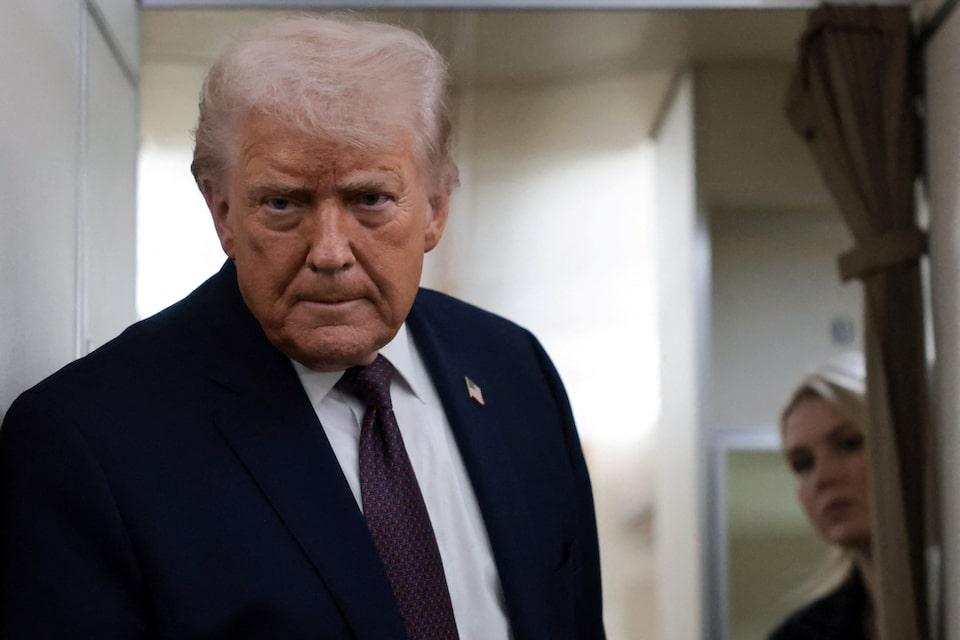
Farmers stressed by weak crop prices, high costs Biofuel quota delays hit Iowa's biodiesel industry Iowa has competitive races for US Congress in midterm elections CLIVE, Iowa, Jan 27 (Reuters) - U.S. President Donald Trump rallied supporters in Iowa on Tuesday as he worked to shore up support in a Midwestern political battleground just south of Minnesota, where a confrontation was escalating over federal immigration agents' aggressive tactics. Voters nationwide are worried about consumer prices. In the farm states, mounting stress in the agricultural economy is testing the patience of farmers and renewable-fuel producers. Sign up here. While the Republican president tries to convince voters he is bringing costs down, his White House is embroiled in a crisis in neighboring Minnesota. On Saturday, federal immigration agents shot and killed 37-year-old U.S. citizen Alex Pretti during a protest in Minneapolis, sparking widespread demonstrations and calls for independent investigations. Pretti was the second American to be fatally shot by federal immigration officers this month in Minneapolis, where Trump has deployed thousands of armed and masked agents. In largely rural Iowa, concerns about affordability are mixed with growing anxiety over weak crop prices and high costs for fertilizers, farm equipment and other inputs. These worries, along with uncertainty about trade with China, threaten to erode his support across the U.S. farm belt. Iowa is the nation’s largest producer of corn, hogs and ethanol. It also hosts key congressional races in November. "Whoever wins the presidency has a hard time with the midterm," Trump told the audience. "I'm here because I love Iowa, but I'm here because we're starting the campaign to win the midterms." A VISIT TO THE RURAL HEARTLAND Trump won Iowa in each of the last three presidential elections. Some of the rural voters who were his most loyal supporters are now struggling to make ends meet. Like many farmers, 56-year-old Iowa corn and cattle farmer Lance Lillibridge said he has been hit hard by a trade war with China and rising costs of seeds and fertilizer, and he hopes the administration will pursue another multibillion-dollar farm bailout. “Right now everything’s just terrible; I’ve never been so cash poor in my entire life,” Lillibridge said, describing himself as a Trump supporter, “for the most part.” Even as Trump made his case on the economy, the U.S. dollar sank to a near four-year low against a basket of currencies, with traders on Tuesday citing concerns including the prospect of another U.S. government shutdown, White House intervention in central bank policy and Trump's ongoing tariff threats. "On the economy, they don't have a plan; there's nothing to announce," said Michael Strain, director of economic policy studies at the conservative American Enterprise Institute think tank. "They're not going to roll back tariffs, they're not going to say we're going to reduce the deficit. They're not going to say that attacking the Fed is counterproductive and puts upward pressure on inflation, and they don't have a plan to make housing more affordable." A Reuters/Ipsos poll that closed on Sunday showed that 30% of Americans approved of Trump’s handling of the rising cost of living, while 59% disapproved, including nine in 10 Democrats and one in five Republicans. Trump’s Republicans are defending narrow congressional majorities in November’s elections, when incumbent presidents’ parties typically lose seats. Iowa will host two highly competitive races for U.S. House of Representatives seats held by Republican Representatives Mariannette Miller-Meeks and Zach Nunn. DIFFICULTY IN THE U.S. FARM BUSINESS Strain in the U.S. farm economy has been mushrooming, from unsold tractors to agribusiness companies reporting shrinking earnings. Abundant grain supplies have weighed on markets, with crop prices weak for a third straight year. Also stressing farmers, the administration has delayed final biofuel-blending quotas for 2026. The quotas are known as renewable volume obligations, or RVOs. It has also not finalized tax guidance for renewable-fuel credits known as 45Z, and efforts have stalled on a long-standing priority for corn growers: securing congressional approval for year-round sales of gasoline blended with 15% ethanol. Trump said on Tuesday that Republican congressional leaders were working on legislation to allow the ethanol-blended gasoline year-round. "They are very close to getting it done," he said. The policy delays have hit Iowa’s biodiesel industry particularly hard. Iowa’s biodiesel plants produced 244 million gallons in 2025, down 31% from 2024, the Iowa Renewable Fuels Association said. At full capacity, the state’s plants can produce more than 400 million gallons a year. Scott Irwin, an agricultural economist at the University of Illinois, said that while Trump’s trade policies have hurt crop farmers, the administration has eased regulations and kept fuel prices lower to maintain support. “As long as Trump and a Republican Congress are willing to backfill a significant amount of crop losses with special programs, his support will remain solid,” Irwin said. https://www.reuters.com/world/us/trump-heads-iowa-farm-stress-biofuel-delays-test-support-2026-01-27/
2026-01-27 19:39
Preparations mark a shift from previous plan to grant individual licenses to companies Volume of individual requests has delayed progress on oil plans Exports recovering as Vitol, Trafigura sell oil to US, others HOUSTON/WASHINGTON, Jan 27 (Reuters) - U.S. officials are working to issue a general license soon that would lift some sanctions on Venezuela's energy sector, four sources familiar with the preparation said on Tuesday, a shift from a previous plan to grant individual exemptions to sanctions for companies seeking to do business in the country. Following the U.S. capture of Venezuelan President Nicolas Maduro earlier this month, U.S. officials have said Washington would ease sanctions imposed on Venezuela's energy industry to facilitate a $2 billion oil supply deal between Caracas and Washington and an ambitious $100 billion reconstruction plan for the country's oil industry. Sign up here. Many partners and customers of state oil company PDVSA, including producers Chevron (CVX.N) , opens new tab, Repsol (REP.MC) , opens new tab and ENI (ENI.MI) , opens new tab, refiner Reliance Industries (RELI.NS) , opens new tab, and some U.S. oil service providers, have applied for individual licenses in recent weeks to expand output or exports from the OPEC member. The large number of individual requests to the U.S. government has delayed progress on plans to expand exports and get investment moving quickly into the country, two of the sources said. The U.S. Treasury Department, the White House and Venezuela's oil ministry did not immediately reply to requests for comment. Venezuela's entire energy industry was designated by the Treasury's Office of Foreign Assets Control as subject to U.S. sanctions in 2019 after Maduro's first re-election, which Washington did not recognize. The sanctions have varied over the last seven years, depending on each U.S. administration, being modified through a series of executive orders and licenses exempting some producers and customers from the measures. Under former U.S. President Joe Biden, a broad license exempted many companies from the sanctions, allowing them to export Venezuela's oil. That facilitated higher crude production and exports until the first quarter of last year, when President Donald Trump began his second term. Trump's administration revoked the authorization as a way to put pressure on Maduro, and ordered the companies to wind down transactions. In December, he also ordered a blockade of all sanctioned vessels going in or out of the country, reducing Venezuela's oil exports to 500,000 barrels per day that month from 952,000 bpd in November. Oil exports averaged 850,000 bpd last year, pushed up by higher crude production, according to PDVSA documents and ship tracking data. The state firm is now struggling to reverse output cuts it had to implement in early January after the U.S. blockade led to a massive accumulation of inventories. U.S. licenses granted to trading houses Vitol and Trafigura this month to supply up to 50 million barrels of Venezuelan oil to the U.S. and other destinations have already allowed the country to drain some 11.3 million barrels of stocks, the data and documents showed. But millions of barrels remain in onshore tanks and vessels. More licenses are needed to accelerate the pace of exports, promote output increases in oilfields where equipment is available, boost domestic refining and repair deteriorated infrastructure and unstable power supply, which are seen by oil executives as urgent tasks. The general license in preparation might include privileges for U.S. firms over other foreign participants, one of the sources said, as part of Trump's policy of putting American companies first. A sweeping reform of Venezuela's main oil law that would also facilitate oil and gas investments, output and exports was approved in an initial vote last week and is expected to receive a final green light from the National Assembly as soon as next week, sources said on Tuesday. https://www.reuters.com/business/energy/us-issue-general-license-soon-lifting-some-sanctions-venezuelan-oil-industry-2026-01-27/
2026-01-27 17:25
Regional banks most vulnerable due to net interest margin exposure Stablecoin law expected to boost dollar-pegged token usage Lobbying intensifies over stablecoin federal rules on Capitol Hill Jan 27 (Reuters) - U.S. dollar-backed crypto tokens known as stablecoins could pull around $500 billion in deposits out of U.S. banks by the end of 2028, Standard Chartered estimated on Tuesday - new analysis that could intensify a fight between banks and crypto companies over legislation to set rules for the digital asset sector. Regional U.S. banks would be most exposed to a loss in deposits due to stablecoins, said Geoff Kendrick, global head of digital assets research at Standard Chartered. Sign up here. The analysis was based on lenders' net interest margin income - the difference between what a bank earns on loans and what it pays out on deposits. "U.S. banks ... face a threat as payment networks and other core banking activities shift to stablecoins," Kendrick said in the research note. U.S. President Donald Trump last year signed into law a bill creating a federal regulatory framework for stablecoins, which is widely expected to lead to greater general use of the dollar-pegged tokens. Proponents say stablecoins can be used to send and receive payments instantly, although they are most often used for trade in and out of other crypto tokens, such as bitcoin. That bill prohibited stablecoin issuers from paying interest on cryptocurrencies, but banks say it left open a loophole that would allow for third parties - such as crypto exchanges - to pay yield on tokens, creating new competition for deposits. Banking lobbyists have argued that unless Congress closes that loophole, banks will see an exodus of deposits, the primary source of funding for most lenders, potentially threatening financial stability. Crypto companies have pushed back, arguing that barring them from paying interest on stablecoins would be anti-competitive. A hearing to debate and vote on crypto legislation in the Senate Banking Committee was postponed earlier this month, in part due to disagreement over how lawmakers should address banks' concerns. Kendrick said the total amount of bank deposits at risk from stablecoin adoption hinges on whether issuers hold their reserves in the banking system. If stablecoin issuers keep a large share of their reserves in U.S. banks, it would reduce the potential deposit flight, he wrote. Still, the two largest stablecoin issuers - Tether and Circle - hold most of their reserves in U.S. Treasuries, "so very little re-depositing is happening," Kendrick said. https://www.reuters.com/sustainability/boards-policy-regulation/us-banks-may-lose-500-billion-stablecoins-by-2028-standard-chartered-warns-2026-01-27/