2025-08-06 12:00
Yverdon-Les-Bains, Switzerland, Aug 6 (Reuters) - Swiss cheese producers are bracing for a steep drop in U.S. sales after President Donald Trump announced a 39% tariff on Swiss imports due to take effect on Thursday. Swiss President Karin Keller-Sutter and Business Minister Guy Parmelin have travelled to Washington for meetings with American officials in a last-ditch effort to negotiate down the tariffs, which took Switzerland by surprise. Sign up here. Switzerland was left reeling by the news, especially after the government thought it had clinched a deal for a lower level of duties, and companies had promised investments in the U.S. The United States is an important market for Swiss cheese, buying 11% of Swiss cheese exports like Gruyere and Emmentaler last year, according to Swiss customs data. Gruyere, Switzerland's largest cheese industry, sees 40% of its production shipped abroad, with a third of that destined for the United States. Anthony Margot, a fifth-generation cheese maturer, said immediately after the tariff was announced on Friday, he started receiving calls from "very concerned" customers in the U.S. hoping a deal could be done. "The taxes are enormous. Gruyere is a niche product that's already very expensive to begin with, and unfortunately, people who can still afford Gruyere in the United States will have to pay more for it," Margot told Reuters. Cheesemakers would also look to expand into other markets to compensate, but this would be difficult, he said. "We can't replace a market like the United States overnight," said Margot in his maturing cellar, where hundreds of wheels of cheese age for several months before being sold. Gruyere producers have already responded by reducing production by 3%, boosting marketing investments, and preparing to increase prices for U.S. consumers. Producers' association 'Interprofession du Gruyere' estimates that annual exports to the U.S., averaging 4,000 tons, may drop by 1,000 tons due to the new tariffs. That would reduce revenue by up to 15 million francs ($18.6 million), manager Olivier Isler said. "The Gruyère sector is the most important cheese sector in Switzerland," said Isler who runs a cheese-making factory in nearby Pringy. "It's a hard blow. "We thought we’d be among the least taxed countries, but in the end, we're in the group of the most heavily taxed countries," said Isler. ($1 = 0.8071 Swiss francs) https://www.reuters.com/business/swiss-cheesemakers-fear-us-sales-if-hit-by-tariffs-2025-08-06/

2025-08-06 11:45
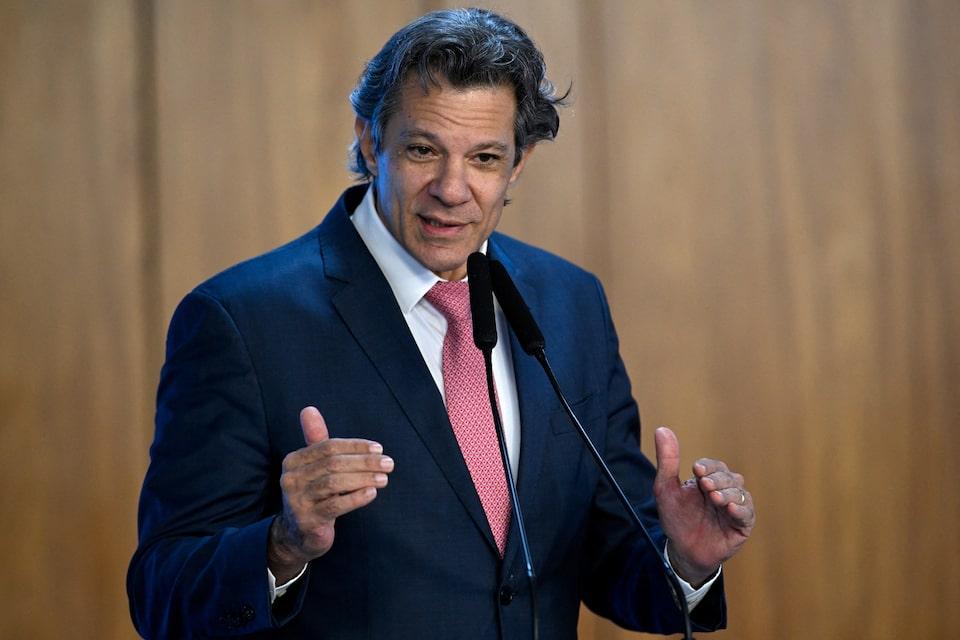
SAO PAULO, Aug 6 (Reuters) - Brazil's Finance Minister Fernando Haddad said on Wednesday he will hold a call next week with U.S. Treasury Secretary Scott Bessent, as the country seeks to negotiate trade after President Donald Trump imposed a 50% tariff on several goods from Brazil. "It will be on Wednesday, and depending on how the talks go it could advance to an in-person meeting," Haddad told reporters. Sign up here. https://www.reuters.com/world/americas/brazils-haddad-speak-bessent-after-steep-us-tariffs-2025-08-06/
2025-08-06 11:45
Shares drop due to inflated earnings from player transfers Bayer cuts 12,000 jobs amid restructuring efforts Roundup litigation provisions reach $7.4 billion FRANKFURT, Aug 6 (Reuters) - Investor concerns that Bayer's (BAYGn.DE) , opens new tab earnings were inflated by soccer player transfer fees rather than supported by its core healthcare and agriculture businesses helped send its shares plummeting nearly 5% to a one-month low on Wednesday. The German maker of pharmaceuticals and crop protection products reported in unscheduled preliminary results last week that second-quarter operating income, adjusted for some items, came in at a better-than-expected 2.1 billion euros ($2.43 billion). Sign up here. In a more detailed disclosure on Wednesday, however, it said those results included higher revenue from its German Bundesliga team Bayer Leverkusen resulting from player transfers. Bayer shares were down 4.7% at 0958 GMT. Fresh details in Wednesday's disclosure indicating that Bayer's performance was also more the result of established blood thinner Xarelto than newer drugs with longer patent protection contributed to the stock selloff as well. "The detail of the beat being somewhat related to Xarelto and the sale of a footballer could be disappointing to some," JPMorgan analysts said in a note. British media reported in June that Premier League champions Liverpool had agreed a fee of 136.3 million euros to sign Bayer Leverkusen attacking midfielder Florian Wirtz. Bayer's finance chief Wolfgang Nickl, however, would not provide details on the transfer earnings on Wednesday. "If we have these transfers, we need to compare the book value with the prices that we get, and that can lead to an extraordinary result on several players, and that was just recorded last quarter," he said during a call with journalists. JOB CUTS, ROUNDUP PROVISIONS Bayer also said it has now cut around 12,000 full-time positions since the start of a restructuring programme aimed at speeding up decision-making and reducing managerial and administrative positions. A previous tally for jobs slashed in 2024 was at 7,000. The total number of global employees at the end of June stood at close to 90,000 when counted in full-time equivalents, according to its quarterly report. Bayer, which is burdened by U.S. lawsuits claiming its Roundup weedkiller causes cancer, has said it is holding off on breaking up the diversified group even as some investors call for a sale of the consumer health unit or separate stock market listing for its crop science division. It reiterated that it would have to stop U.S. production of key Roundup ingredient glyphosate unless lawmakers, courts or regulators help it further stave off the costly litigation. Bayer said last week it had added 1.2 billion euros to its provisions for the Roundup litigation. Total Roundup litigation provisions totalled $7.4 billion, or 6.3 billion euros, it said on Wednesday. ($1 = 0.8636 euros) https://www.reuters.com/business/world-at-work/bayer-investors-concerned-soccer-transfers-inflated-earnings-shares-drop-2025-08-06/
2025-08-06 11:35
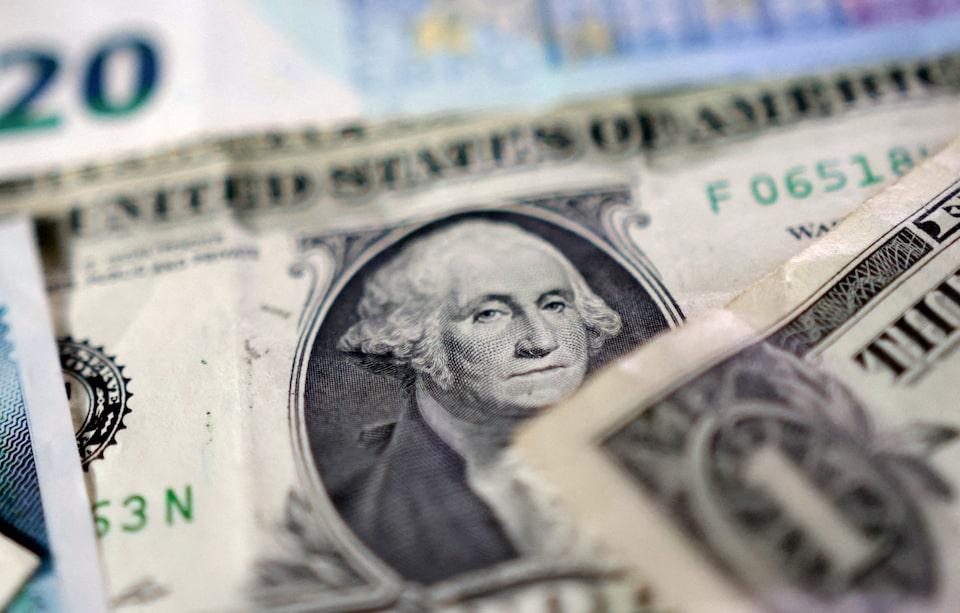
SINGAPORE/LONDON, Aug 6 (Reuters) - The dollar stuck to its recent trading range on Wednesday, with investors choosing to stay on the sidelines after another round of weak U.S. data and as President Donald Trump prepared to fill a coming vacancy on the Federal Reserve's Board of Governors. Trump said on Tuesday he will decide on a nominee to replace outgoing Fed Governor Adriana Kugler by the end of the week and had separately narrowed the possible replacements for Fed Chair Jerome Powell to a short list of four. Sign up here. Data on the same day showed the U.S. services sector activity unexpectedly flatlined in July while input costs climbed by the most in nearly three years, underscoring the hit from Trump's tariffs on the economy, which have also begun to bite corporate earnings. Still, traders were hesitant to take on fresh positions ahead of the Fed developments. Concerns are mounting that partisan loyalty could invade the staid world of central bank policy. The dollar was last flat against the yen at 147.55, while the euro edged up 0.3% to $1.16065. Sterling reversed earlier losses to trade up 0.1% at $1.3324. "Trump’s open attacks on the Bureau of Labor Statistics over payroll revisions have not had much market impact, but it will be interesting to see whether the selected Fed chair candidate echoes that narrative. If so, it could ignite fears of a disconnect between Fed policy and official data - a scenario we see as decidedly dollar-negative," ING strategist Francesco Pesole said in a note. TREASURY YIELDS RISE While moves in the dollar have been more subdued this week, the currency has yet to recover from its steep losses on Friday, when it clocked its largest one-day percentage fall in nearly four months following an alarming jobs report. Trump fired BLS commissioner Erika McEntarfer last week, after the July employment report. Against a basket of currencies, the dollar dipped 0.2% to 98.547 , some way off Friday's peak of 100.25 hit before the nonfarm payrolls figures. Traders continue to price in a 91% chance of a Fed rate cut in September, with about 58 basis points worth of easing expected by the year-end. But data such as Tuesday's services ISM report underscore the fine line the Fed has to tread, as policymakers weigh rising price pressures from Trump's tariffs against signs of a weakening U.S. economy. "The services ISM has obviously got that kind of stagflationary whiff about it ... that's obviously a bit of a two-edged sword in terms of what does that mean for policy," said Ray Attrill, head of FX research at National Australia Bank. "At the moment, I think we're sort of the view that maybe there's a bit too much confidence in the market about the certainty of a September move." U.S. Treasury yields rose, leaving the 10-year note up 4.2 basis points on the day at 4.238% and two-year notes up 2 bps at 3.74%, after a $58 billion auction of 3-year notes , which was seen as somewhat soft by analysts, with demand equivalent to 2.53 times the notes on sale. More supply hits the market this week with $42 billion in 10-year notes on Wednesday and $25 billion in 30-year bonds on Thursday. Among other currencies, the Australian and New Zealand dollars both rose 0.6% to $0.6506 and $0.5933, respectively. https://www.reuters.com/world/middle-east/dollar-holds-firm-investors-await-trumps-fed-governor-decisions-2025-08-06/
2025-08-06 11:31
Bajaj Auto's EV output constained by rare earth shortage Bajaj to meet only 50%-60% of planned e-scooters deliveries in Q2 Production affected ahead of key festive season ramp-up Aug 6 (Reuters) - Bajaj Auto (BAJA.NS) , opens new tab will not meet its electric vehicles delivery target in the second-quarter as the Indian automaker grapples with a shortage of rare earth magnets, a senior executive said on Wednesday. "At this point in time, it looks like we might be able to deliver about 50%-60% of our (electric) two-wheeler plan for this quarter and about 70%-80% of the (electric) three-wheeler plan," Bajaj Auto's chief financial officer Dinesh Thapar told reporters in a post-earnings call. Sign up here. The automaker is working on a host of alternatives to soften the production blow, including using motors made with more abundant light rare earths, rather than heavy rare earths, he said. China, which controls 90% of the global production of rare earths, banned its export in April, forcing automakers, including Bajaj Auto's peer TVS Motor, to search for alternatives amid a scramble for supplies. Bajaj "should be in a position" to de-risk itself from China's ban by March 2026, Thapar said. The output slump at India's second-largest electric scooter manufacturer comes at a time when most automakers boost production during a lucrative festive period that begins late August. "Even if we unlock a lot of supply after this, there's certainly likely to be an impact in terms of the festive loading that we would have liked," Thapar said. Earlier in the day, Bajaj Auto beat quarterly profit estimates on Wednesday, helped by an boost in exports as it resumed overseas shipments of its premium KTM motorcycles. It also attributed the higher profit to improving margins at its e-scooter business Chetak and electric three-wheeler Gogo. The company reported a profit of 20.96 billion rupees ($239 million) for the April-June period, while analysts had expected 20.42 billion rupees, according to data compiled by LSEG. Bajaj Auto shares closed 0.6% lower on the day. ($1 = 87.6770 Indian rupees) https://www.reuters.com/world/india/indias-bajaj-auto-flags-lower-than-planned-ev-output-rare-earths-crunch-2025-08-06/
2025-08-06 11:27
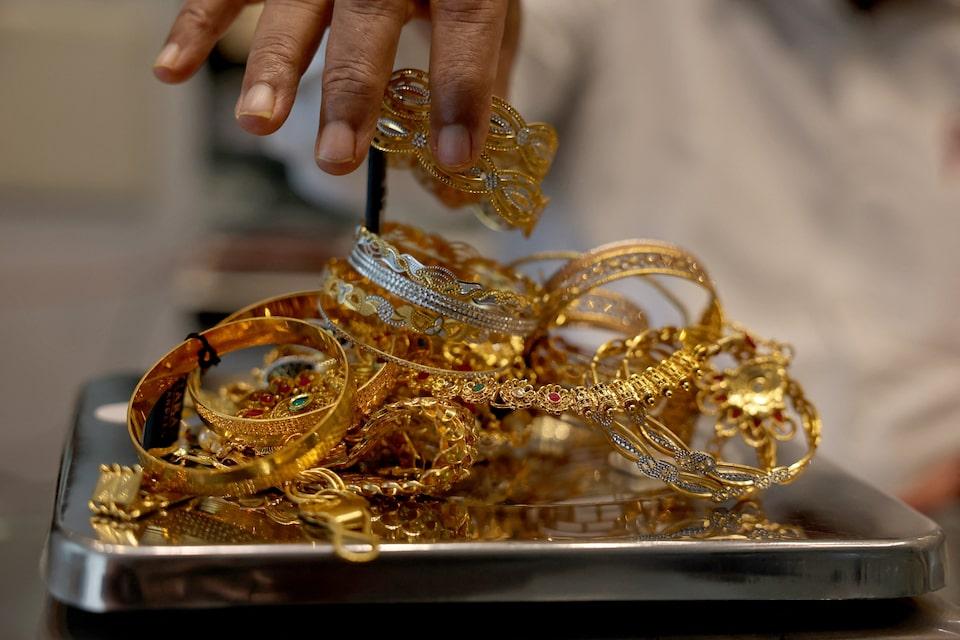
10-year Treasury yields rise after four days of falls Trump set to fill Fed board vacancy by end of week Traders see 87% chance of Fed rate cut in September Perth Mint's July gold sales fall by 33% Aug 6 (Reuters) - Gold prices eased on Wednesday as U.S. Treasury yields inched higher, while investors remained cautious ahead of President Donald Trump's Federal Reserve appointments. Spot gold was down 0.5% at $3,362.54 per ounce by 1047 GMT, after hitting a nearly two-week high on Tuesday. U.S. gold futures also fell by 0.5% to $3,417.30. Sign up here. Yields on benchmark 10-year Treasuries rose after four straight days of declines, reducing the appeal of non-yielding bullion. "Investors will be keeping a close eye on developments regarding White House appointments to the Federal Reserve and any trade-related news, both of which have the potential to influence market sentiment," said Ricardo Evangelista, senior analyst at ActivTrades. Trump said on Tuesday he will announce a nominee this week for an upcoming vacancy on the Fed's Board of Governors. He also confirmed that the shortlist of potential successors to Chair Jerome Powell has been narrowed to four candidates. Markets anticipate an 87% chance of a September rate cut, CME FedWatch , opens new tab shows, after Friday's weak jobs report that prompted Trump to fire the commissioner of the U.S. Bureau of Labor Statistics, adding to policy uncertainty. Trade tensions continue, with Trump renewing his threat to hike tariffs on Indian goods over the country's purchases of Russian oil. Gold, long seen as a safe haven in times of political and economic uncertainty, typically performs well in a low-interest-rate environment. Despite the day's pullback, Evangelista at ActivTrades said there was scope for further gains in gold, with a near-term target of $3,400, citing persistent demand driven by tariff frictions, concerns over growth and inflation, and sustained weakness in the dollar. On the physical markets, Perth Mint reported that gold product sales in July dropped by 33% from the previous month and silver sales fell to a six-month low. Spot silver prices eased 0.1% to $37.80 per ounce, platinum edged up 0.1% to $1,321.86 and palladium fell 0.3% to $1,171.47. https://www.reuters.com/world/china/gold-dips-treasury-yields-rise-with-market-waiting-trumps-fed-pick-2025-08-06/