2025-08-06 11:26
MUMBAI, Aug 6 (Reuters) - The Reserve Bank of India's inflation and growth outlook suggest the current policy rate may mark the end of the easing cycle, six analysts said on Wednesday, after the central bank held rates steady and kept its growth forecast unchanged. The RBI has trimmed its key policy rate by 100 basis points since February. Sign up here. While a Reuters poll had predicted one more 25 basis points cut this cycle, some analysts are now reassessing that view. "Given the characterisation of monetary policy in the August meeting and the growth and inflation forecasts, we do not find much scope for an immediate rate cut," said Samiran Chakraborty, chief economist at Citi. The bank, which had earlier expected a 25 basis points cut in August, now sees the repo rate holding at 5.50% this cycle, up from its previous forecast of 5.25%. The RBI retained its Jan–March inflation outlook at 4.4% and projects a rise to 4.9% in April–June 2026. India's retail inflation fell to a more than six-year low of 2.1% in June and is expected to hit a record low in July. Data is due to be released on August 12. However, RBI Governor Sanjay Malhotra said the sharp fall in headline inflation was driven by volatile food prices and is likely to pick up toward year-end. "One year ahead, factoring in the April–June inflation forecast at 4.9% and the repo rate at 5.5%, the real rate buffer will narrow significantly. The terminal rate is likely to stay at 5.5% this year," said Radhika Rao, senior economist at DBS Bank. Analysts at Capital Economics, Bank of Baroda, Kotak Securities and Edelweiss Mutual Fund also said the central bank may have ended its easing cycle. "There is little in today's policy announcement to change our view that the easing cycle has come to an end," said Shilan Shah, deputy chief emerging markets economist at Capital Economics. https://www.reuters.com/world/india/rbis-inflation-growth-outlook-may-mean-end-easing-cycle-some-analysts-say-2025-08-06/

2025-08-06 11:25
Aug 6 (Reuters) - (This is an excerpt of the Health Rounds newsletter, where we present latest medical studies on Tuesdays and Thursdays. To receive the full newsletter in your inbox for free sign up here.) An experimental flu-fighting drug combination that includes a compound found in chocolate is more effective than the current most commonly used influenza treatment, researchers reported in PNAS , opens new tab. Sign up here. In test tubes and in animal experiments, the combination of theobromine and arainosine was more effective than Roche’s (ROG.S) , opens new tab Tamiflu against even the deadliest flu strains, including bird flu and swine flu, the researchers said. Theobromine is a stimulant naturally found in cacao plants. Its name is derived from the Greek words for “food of the gods.” Theobromine plus arainosine – a synthetic compound that interferes with the ability of cells to repair themselves – together target proteins on the virus that serve as pathways for ions to travel in and out. Without functioning ion channels, the virus can’t survive. Existing drugs typically target a viral protein that mutates frequently, rendering treatments less effective over time, the researchers said. “We’re not just offering a better flu drug,” study leader Isaiah Arkin of Hebrew University in Jerusalem said in a statement. “We’re introducing a new way to target viruses... that may help us prepare for future pandemics.” Because many viruses, including coronaviruses, also rely on ion channels, this new approach could form the basis of future antiviral strategies, the researchers said. COLORECTAL CANCER DIAGNOSES SURGE WITH EARLIER SCREENINGS U.S. diagnoses of early-stage colorectal cancers rose steeply among 45- to 49-year-olds during 2019 to 2022, after new guidelines called for screening in that age group, according to new research from the American Cancer Society published in JAMA. The surge included a 50% relative increase from 11.7 to 17.5 cases per 100,000 people of that age from 2021 to 2022, researchers found. The increase in diagnoses was largely attributable to detection of early-stage tumors, which increased by 18.8% annually from 2019 to 2022 for colon cancers and by 25.1% per year for rectal cancers. The finding , opens new tab “is promising news because the uptick of cases is likely due to first-time screening in the wake of new recommendations for younger average-risk adults to begin testing for colorectal cancer earlier,” study leader Elizabeth Schafer of the ACS said in a statement. Earlier detection of these cancers often leads to better outcomes for patients, health experts say. The recommended age to begin colorectal cancer screening was lowered to 45 from 50 years by the ACS in 2018 and by the United States Preventive Services Task Force in 2021. A second study , opens new tab in JAMA found that colorectal cancer screening among U.S. adults 45-49 years of age increased by 62% from 2019 to 2023. “It’s not only thrilling to see the increase in colorectal cancer screening among younger adults, but also how it likely ties into rises in earlier stage diagnosis as noted in the other ACS led paper,” Jessica Star of the ACS, who led the second study, said in a statement. “However, we still have a long way to go. Screening for colorectal cancer in ages 45-49 remains suboptimal and has not increased equitably by both" education and insurance coverage status. A third paper , opens new tab in JAMA reports on a randomized trial testing various methods for encouraging more screening. Among 20,500 participants, sending an unsolicited stool test kit by mail was the most effective way to boost screening rates for adults ages 45 to 49 years. However, those authors said, “overall screening rates were low, underscoring the need for more effective strategies to engage this age group.” (To receive the full newsletter in your inbox for free sign up here) https://www.reuters.com/business/healthcare-pharmaceuticals/health-rounds-flu-drug-with-compound-found-chocolate-tops-tamiflu-early-study-2025-08-06/

2025-08-06 11:21
S&P 500 futures up 0.4%, Stoxx up 0.2% Dollar drifts, oil rebounds after four sessions of decline Chip names fall in US premarket Euro and sterling steady against dollar SYDNEY/LONDON, Aug 6 (Reuters) - World shares nudged higher on Wednesday as traders bought after recent falls on soft U.S. data and worries about tariffs, while benchmark U.S. Treasury yields edged up from one-month lows. Europe's broad STOXX 600 index was only marginally higher (.STOXX) , opens new tab but most Asian benchmarks rose earlier in the day, and S&P 500 futures were up 0.2%. Sign up here. The health of the U.S. economy is one major focus for markets, and Wall Street closed lower on Tuesday after data showed services sector activity unexpectedly flatlined in July. That reinforced the message from Friday's soft jobs data, which caused markets to significantly increase bets on the Federal Reserve cutting rates in September. "There's this tug of war going on between the more concrete signs that we have seen that the U.S. economy is slowing and the fact that rate cuts are coming which removes some of the pressure on valuations," said Samy Chaar, chief economist at Lombard Odier. Traders are also choosing the positive message from the current situation with U.S. tariffs. "The market is more focused on the fact that we're not getting maximalist tariffs, but I wonder if it isn't focusing enough on the fact that we are still getting something moderate, and more could be coming, pharmaceuticals for example," Chaar said. U.S. President Donald Trump on Tuesday said he would announce tariffs on semiconductors and chips in the next week or so, while the U.S. would initially impose a "small tariff" on pharmaceutical imports before increasing it substantially in a year or two. He said the U.S. was close to a trade deal with China and he would meet his Chinese counterpart Xi Jinping before the end of the year if an agreement was struck. However, he threatened to further raise tariffs on goods from India over its Russian oil purchases. Tech and semiconductors were a theme of the day regardless of tariffs. Shares of AI server maker Super Micro (SMCI.O) , opens new tab fell 17.2% in premarket trading after it missed fourth-quarter estimates, while chip firm Advanced Micro Devices (AMD.O) , opens new tab dropped 5.5%. [.N] Chip foundry giant TSMC (2330.TW) , opens new tab shares fell 2%. Overall, the picture from earnings was a positive one. The S&P500 is on track for 10% earnings per share growth in the quarter, on HSBC's calculations, while earnings for Europe's Stoxx 600 are up 4% year on year, on Deutsche Bank's, better than expected. In the government bond market, Treasury yields edged up after a $58 billion auction of three-year notes went poorly, but still hovered near multi-month lows. More supply will hit the market this week, with $42 billion in 10-year notes on Wednesday and $25 billion in 30-year bonds on Thursday. Two-year Treasury yields rose 1 basis point to 3.73%, having risen 3.5 bps overnight, while benchmark 10-year yields ticked up 4 bps to 4.23%. Fed funds futures imply a 94% chance of a rate cut next month, with at least two cuts priced in for this year, according to the CME's FedWatch. Investors are waiting for Trump's pick to fill a coming vacancy on the Fed board of governors. Trump said the decision will be made soon, while ruling out Treasury Secretary Scott Bessent as a contender to replace current chief Jerome Powell, whose term ends in May 2026. With European yields rising slightly less than Treasuries', European currencies gained. The euro was 0.3% higher at $1.1606 sterling was 0.16% higher at $1.3322. , Oil prices rose after four sessions of declines. U.S. crude was up 1.67% to $66.24 per barrel, while Brent was at $68.77, up 1.69%. Trump said on Tuesday he would decide on whether to sanction countries that purchase Russian oil after a meeting with Russian officials scheduled for Wednesday. Spot gold prices slipped 0.5% to $3,362 an ounce. https://www.reuters.com/world/china/global-markets-wrapup-4-2025-08-06/
2025-08-06 11:18
FRANKFURT, Aug 6 (Reuters) - Siemens Energy (ENR1n.DE) , opens new tab is banking on further cost cuts and an ongoing ramp-up of offshore wind activities to meet its goal of breaking even at its loss-making Siemens Gamesa unit, executives told analysts on Wednesday after presenting quarterly results. Siemens Gamesa, the company's wind turbine division, is expected to incur a loss before special items of around 1.3 billion euros ($1.5 billion) in 2025, targeting break-even in the following year. Sign up here. ($1 = 0.8634 euros) https://www.reuters.com/sustainability/climate-energy/siemens-energy-plans-cost-cuts-offshore-ramp-up-break-even-wind-unit-2025-08-06/

2025-08-06 11:17
LONDON, Aug 6 (Reuters) - The pound traded mostly steady on Wednesday, as traders marked time ahead of a Bank of England meeting, and watched out for developments in the United States, where President Donald Trump is angling to reshape the board of the Federal Reserve. Britain's central bank is expected to cut interest rates to 4% on Thursday from 4.25%, its fifth cut in the current cycle, though some Monetary Policy Committee (MPC) members may vote to keep rates on hold given inflation is well above the bank's 2% target. Sign up here. Sterling , which is trading around 0.5% higher than it was this time last week, was last up 0.1% on the day at $1.3308, but flagged against the euro , which rose 0.2% to 87.2 pence. The UK economy is struggling with high inflation, sluggish growth and a fragile fiscal position, and the pound has lost a lot of momentum in recent weeks to show a year-to-date gain of 6.5%, compared with a peak of nearly 10% a month ago. "That backdrop argues for cautious messaging, and we expect the MPC to stress a 'gradual and careful' approach, an outcome that should have little impact on sterling," strategists at Monex said. "Nevertheless, any surprise dovishness or signals that tax rises in the autumn budget will weigh on growth could trigger a sell-off for the pound," they said. George Vessey, lead FX and macro strategist at FX dealer Convera, noted on Tuesday that the options market shows traders are turning a little less bearish on the pound, reflecting a decline in demand for derivatives that give the option to sell sterling relative to those options that give the owner the choice to buy it. "This shift reflects a more balanced outlook, as traders anticipate a cautious BoE stance amid sticky inflation (3.6%) and rising unemployment (4.7%)," he said. A survey on Wednesday showed activity in Britain's construction sector fell by the most in more than five years last month. S&P Global's monthly purchasing managers' index for the construction sector fell to 44.3 in July from 48.8 in June, its lowest since May 2020 and below all forecasts in a Reuters poll of economists. https://www.reuters.com/world/uk/sterling-holds-steady-ahead-boe-rate-decision-2025-08-06/

2025-08-06 11:17
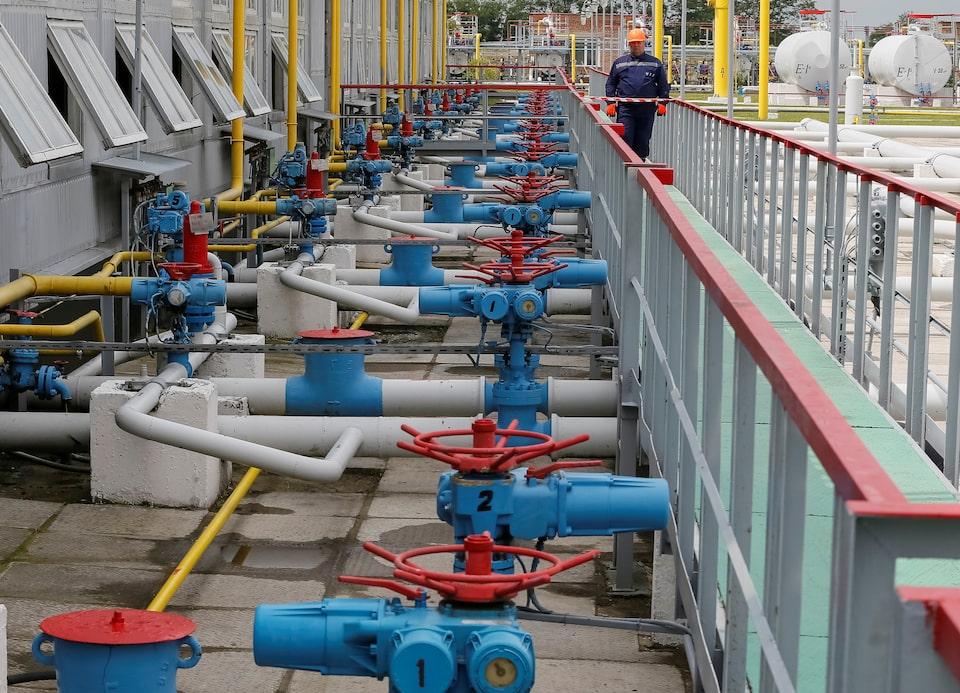
KYIV, Aug 6 (Reuters) - Ukraine's gas reserves are at their lowest in 12 years, with storage facilities currently less than a third full, analysis firm ExPro said on Wednesday. The estimate comes after Ukrainian President Volodymyr Zelenskiy earlier accused Moscow of deliberately undermining its preparations for winter following a Russian strike on a gas facility in Ukraine's southern Odesa region. Sign up here. Ukraine had 10 billion cubic metres of gas in its underground storage facilities as of August 5, pumping one bcm of gas to storage in the past 19 days, ExPro said on Wednesday. Ukraine's energy ministry has said the country needs around 13 bcm of gas in storage for the winter season. Ukrainian storage facilities are 32.3% full, ExPro said, with reserves down 9% from a year earlier. It is not yet clear how Wednesday's Russian attack on the Odesa region's gas interconnector, which is used to supply U.S. and Azeri gas via Bulgaria and Romania, will affect its future gas collection. Ukraine had been forced to ramp up gas withdrawals from storage and increase imports over winter and spring after Russian missile attacks damaged production facilities in the east of the country. The energy minister has said Ukraine had to import at least 4.6 bcm of gas for the 2025/26 winter heating season. https://www.reuters.com/business/energy/ukrainian-gas-reserves-their-lowest-12-years-analyst-expro-says-2025-08-06/