2025-08-06 11:15
LONDON, Aug 6 (Reuters) - Miner and trader Glencore (GLEN.L) , opens new tab said on Wednesday that its long-term strategy could involve the sale of its 16.4% stake in enlarged global agribusiness Bunge Global (BG.N) , opens new tab some time in the future. Glencore became the owner of the 16.4% stake after Bunge closed a long-delayed deal to merge with Glencore-backed grain handler Viterra in July, two years after announcing the $34 billion mega-deal. Sign up here. "The agriculture business is not necessarily consistent with our business model," Glencore CEO Gary Nagle told a media call on Wednesday after the company released its first-half financial results. "Having a 16.4% shareholding in Bunge is probably not something that would be for Glencore in the long term." He added that this did not mean Glencore would be in a rush to sell the stake, and if it ever decided to do that "we would do it in absolute collaboration and conjunction with Bunge, its board and its management". The merger with Viterra enhanced Bunge's grain exporting and oilseed processing businesses in the United States and expanded Bunge's export capacity and physical grain storage and handling footprint in major wheat suppliers Canada and Australia, according to analysts. Glencore's aim is to maximise the value of this investment, while the possible "exit of that at some stage in the future would be done very smartly and carefully to ensure that we preserve that value," the CEO added. Glencore said on July 2 that its 16.4% stake in enlarged Bunge had a market value of $2.6 billion at the deal close, and that those shares were viewed by the miner as a surplus capital. https://www.reuters.com/world/americas/glencore-says-long-term-strategy-may-involve-sale-bunge-stake-2025-08-06/
2025-08-06 11:09
LONDON, Aug 6 (Reuters) - What matters in U.S. and global markets today By Mike Dolan , opens new tab, Editor-At-Large, Finance and Markets Sign up here. A mix of disappointing results from some major semiconductor chip names, a service sector hiccup and another slight ebb in hopes for interest rate cut have caused early week stock market ebullience go a bit flat. In the thick of a mostly upbeat earnings season, Wall Street stocks ended in the red on Tuesday, dented in part by continued tariff tensions and the ISM's survey showing a flat-lining of services activity last month. But index futures were back up marginally ahead of Wednesday's bell. * Chips stocks were side-swiped as Advanced Micro Devices (AMD.O) , opens new tab reported disappointing data center revenue, a segment including artificial intelligence chips, causing shares in the California-based company to slump 4% overnight. Another AI darling, Super Micro (SMCI.O) , opens new tab, plunged 17% as it missed estimates in its battles with larger server makers. Better news for AI enthusiasts came from ChatGPT maker OpenAI, which is in early talks about a share sale that could value it at a whopping $500 billion. * Despite the dour ISM services reading, Federal Reserve easing speculation declined slightly, with markets now only pricing in an 80% chance of a cut next month compared to essentially 100% at this time yesterday. President Donald Trump said on Tuesday he will decide on a nominee to fill a coming vacancy on the Fed's Board by the end of the week and narrowed the possible replacements for Fed Chair Jerome Powell to a list of four. * Meanwhile, the tariff saga continues, with new levies set to come into effect on Thursday. Trump also said sectoral tariffs on pharmaceuticals and semiconductors would be announced in the next week, with a small initial tariff on pharma imports eventually increasing to 250%. The U.S. standoff with India looks to be at an impasse, meantime, while Swiss President Karin Keller-Sutter was set to meet Secretary of State Marco Rubio on Wednesday to negotiate the severe 39% tariffs it faces. In today's column, I discuss why the Bank of England's slow and shallow easing cycle has become the third-longest since World War Two. Today's Market Minute * ChatGPT maker OpenAI is in early-stage discussions about a stock sale that would allow employees to cash out and could value the company at about $500 billion, a source familiar with the matter said. * Since 2023, India has ramped up efforts to police the internet, including Elon Musk’s X. A Reuters investigation looks at the behind-the-scenes battle between the world's richest person and authorities in the world's most populous country. * The U.S. trade deficit narrowed in June due to a sharp drop in consumer goods imports, and the trade gap with China shrank to its lowest point in more than 21 years. * The divergences that run through the U.S. equity and bond markets have come into sharp relief in recent days. Find out why navigating the U.S. markets’ split personalities is so challenging in ROI columnist Jamie McGeever’s latest column. * Exxon Mobil and Chevron's bumper oil and gas output in the second quarter served as a sobering reminder to their European rivals of the ferocious challenge the latter face in their attempts to close the production gap that has expanded in recent years, writes ROI Energy columnist Ron Bousso. Chart of the day Trade data and business surveys are the latest inputs to the Atlanta Fed's rolling "GDPNow" model estimate, which nudged higher this week to show annualized real GDP growth running at 2.5% for the third quarter - a modest slowdown from the 3% recorded for Q2. The U.S. trade deficit narrowed in June to a two-year low on a sharp drop in consumer goods imports, and the trade gap with China shrank to its lowest in more than 21 years, as Trump's tariff campaign starts to have an impact. The Budget Lab at Yale now estimates the average overall U.S. tariff rate has jumped to 18.3% - the highest since 1934 - from 2-3% in January. Today's events to watch * New York Federal Reserve's global supply chain pressure index for July (10 AM EDT) * Fed Board Governor Lisa Cook, Boston Fed President Susan Collins and San Francisco Fed President Mary Daly all speak * U.S. corporate earnings: Walt Disney, AIG, MetLife Paycom, Global Payments, Corpay, Fortinet, Uber, McDonald's, Airbnb, DoorDash, Emerson, McKesson, Occidental, Corteva, STERIS, Atmos, Texas Pacific, Cencora, NRG, Rockwell, Dayforce, CF Industries * U.S. Treasury auctions $42 billion of 10-year notes Want to receive the Morning Bid in your inbox every weekday morning? Sign up for the newsletter here. You can find ROI on the Reuters website , opens new tab, and you can follow us on LinkedIn , opens new tab and X. , opens new tab Opinions expressed are those of the author. They do not reflect the views of Reuters News, which, under the Trust Principles , opens new tab, is committed to integrity, independence, and freedom from bias. https://www.reuters.com/business/finance/global-markets-view-usa-2025-08-06/
2025-08-06 10:32
MUMBAI, Aug 6 (Reuters) - The Indian rupee edged higher on Wednesday, helped by the central bank keeping its key rate steady, though impending higher tariffs on shipments to the United States are likely to keep the currency under pressure. The rupee (.MERCINR) , opens new tab closed at 87.7325 against the U.S. dollar, up 0.1% from 87.8000 on Tuesday. Sign up here. The Reserve Bank of India's six-member rate-setting panel voted unanimously to hold the repo rate at 5.50% and maintain a "neutral" policy stance, even as economists expect steep U.S. tariffs on Indian goods and subdued inflation to open room for limited further easing. India faces the imposition of a 25% tariff on its shipments to the U.S. from Friday, and President Donald Trump has warned of "very substantial" additional levies because of New Delhi's oil imports from Russia. The rupee may breach the 88-mark next week based on the market signals on tariff threat, a trader with a state-owned bank said. It slid 1.18% against the dollar in the week through August 1, its sharpest weekly decline in nearly three years and would likely have hit a new record low if not for central bank interventions, according to traders. "Downward pressure on rupee after the 25% tariff also is a likely reason for not cutting rates," said Amit Bivalkar, founder director at Sapient Finserv. When the RBI cuts the repo rate, there is a risk of currency weakness as foreign investors may shift their capital to markets with higher interest rates. Sustained foreign outflows have been one of the reasons for the rupee’s weak performance this year, according to traders and analysts. India recorded net outflows of $800 million in the current financial year starting April through the end of July 31 due to outflows in the debt segment, the RBI governor said in his monetary policy announcement. https://www.reuters.com/world/india/india-rupee-rises-rbi-rate-pause-us-tariff-pressure-persists-2025-08-06/

2025-08-06 10:16
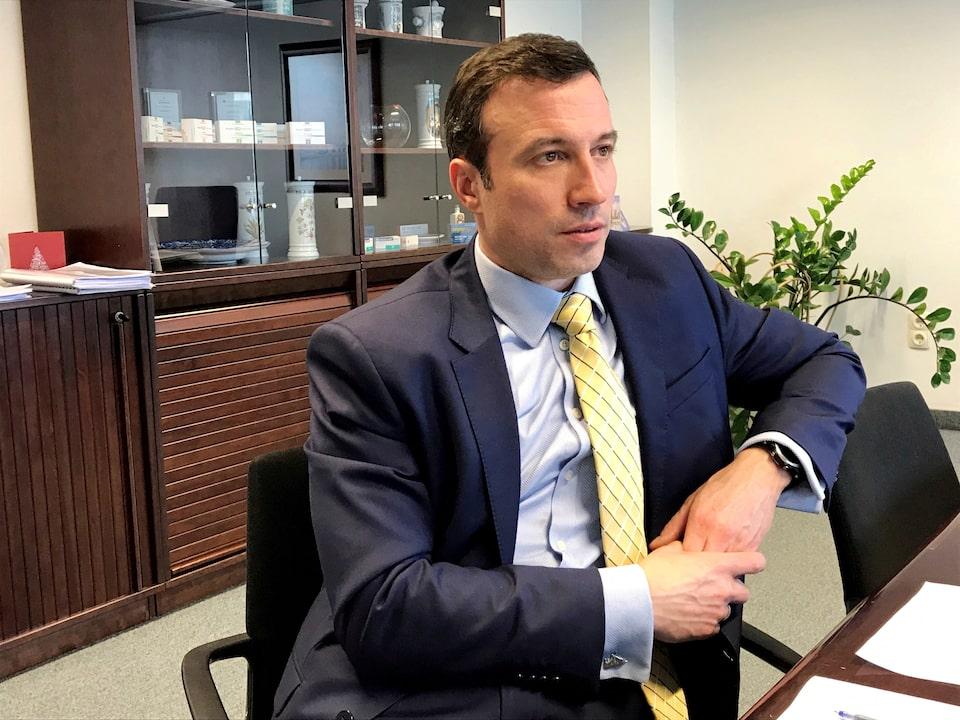
Drug Vraylar exempt from US tariffs, CEO confirms Tariffs may hinder some exports, women's healthcare expansion Orban slams Hungary subsidy to rival biotech firm for plant BUDAPEST, Aug 6 (Reuters) - Higher U.S. tariffs may make it challenging for Hungarian pharmaceutical company Richter (GDRB.BU) , opens new tab to export some products to the United States, but they won't apply to its flagship antipsychotic drug Vraylar, CEO Gabor Orban said on Wednesday. President Donald Trump said on Tuesday the United States would initially place a "small tariff" on pharmaceutical imports before hiking it to 150% within 18 months, and eventually to 250%, to help boost domestic production. Sign up here. However, a framework agreement between the U.S. and the European Union sets out that if the United States raises tariffs following its import investigation, they will be capped at 15%. Orban, speaking on an earnings call, said the 15% tariff was painful and would harm the competitiveness of the European pharmaceutical sector. Still, Orban said the tariffs do not affect Richter's flagship product, Vraylar, an antipsychotic drug produced and sold in the U.S. by AbbVie (ABBV.N) , opens new tab for the treatment of schizophrenia and bipolar disorder. Richter's total royalty income from Vraylar sales was 229 billion forints ($665.58 million) in 2024, up 18% from the previous year. Less than $50 million worth of Richter's exports to the U.S. will be impacted by the tariffs, but that could limit or halt some of its drug exports and affect plans for U.S. expansion in women's healthcare, Orban said. "There is no point in moving Richter to the U.S." he said. MAINTAINS FULL-YEAR FORECAST However, some parts of production, such as filling up syringes, could be shifted to U.S. partners to exempt those drugs from tariffs, he said. Gabor Orban also criticized the Hungarian government for giving a state subsidy to one of Richter's foreign competitors that is building a manufacturing plant in the town of Godollo, just outside Budapest. Orban did not name the company, but his remarks come after Foreign Minister Peter Szijjarto announced in April the government would give 7.5 billion forints ($21.80 million) to Singaporean pharma company Hongene Biotech, which is building its first European plant in Godollo. Richter reported second quarter results earlier on Wednesday, showing 11% growth in pharma revenue to 238 billion forints ($691.74 million) year-on-year. The company maintained its full-year forecast of around a 10% growth in revenue and adjusted profit, or EBIT, excluding the effect of foreign currency exchange rates. ($1 = 344.0600 forints) https://www.reuters.com/business/healthcare-pharmaceuticals/hungarys-richter-says-some-us-exports-face-tariff-challenges-flagship-drug-2025-08-06/
2025-08-06 09:27
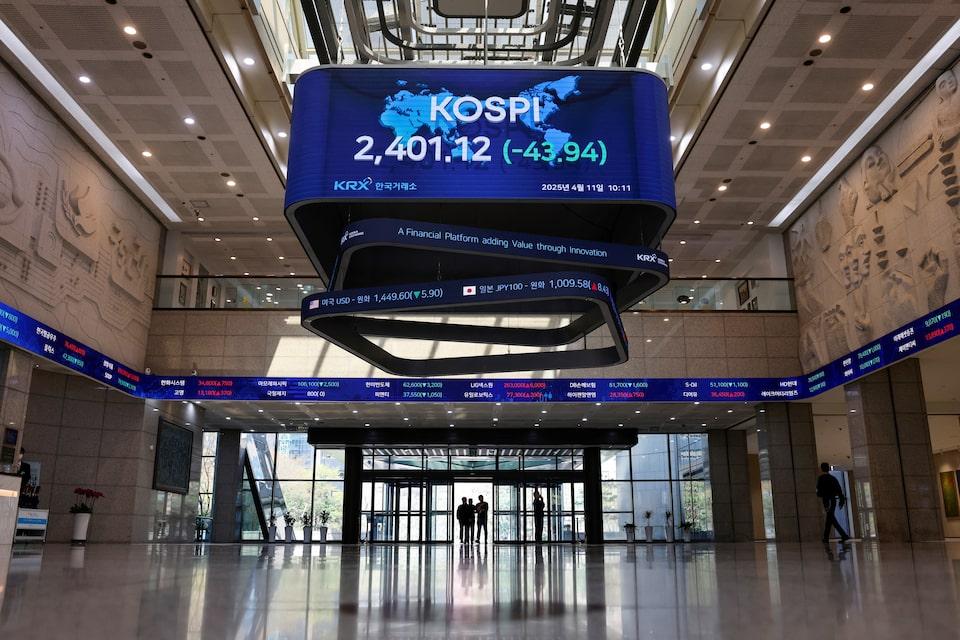
Investor fund flows surged into Seoul market in July Long-awaited corporate governance reforms lure foreign buyers Analysts cool on stock gains as details of policy reforms emerge SINGAPORE, Aug 6 (Reuters) - South Korea's tax policies have thrown the outlook for Asia's best-performing major stock market into doubt, with investors assessing the impact of higher corporate tax and trading levies on the country's long-promised reforms. Foreign investment flows into South Korean equities totalled $4.52 billion in July, LSEG data showed - the fastest pace in almost a year and a half - as the prospect of corporate reforms and a trade deal with the Trump administration lured overseas money. Sign up here. However, the KOSPI index (.KS11) , opens new tab, which had risen 33.3% so far this year, leading gains across the region, experienced its sharpest one-day drop since April on Friday. The index slumped 3.9% following the announcement of tax measures. Foreign analysts are uncertain if the "Korea discount" - a steep valuation gap with other Asian markets - will narrow as the government begins to implement reforms, but some institutional investors regard the changes as positive in the long run. Many of the country's biggest multinationals, the family-owned conglomerates known as chaebols, tightly control voting power and lack independent boards to safeguard minority investor interests. "We've been victims of poor corporate governance in Korea for over a decade," said Jonathan Pines, head of Asia ex-Japan at Federated Hermes. "Even though the market is up significantly, we believe it has further to go," he said. "The news flow is likely to remain positive, and Korean market valuations are still among the cheapest in the world." Korean stocks trade at a 12-month forward price-to-earnings ratio of 10.1, the lowest of any major market in Asia, according to data from Goldman Sachs. The investment bank gives the country an "overweight" rating and a target level of 3,500 in the next year, implying a 9.4% gain from current levels. South Korean equities gained momentum after the Financial Services Commission introduced its Corporate Value-Up Programme in February last year, aimed at improving corporate governance standards. The rally last month culminated with the announcement of a trade deal between Seoul and Washington on July 31, with a summit planned this month to finalise the agreement. However, tax reforms last Friday prompted mixed reactions. The government raised the peak corporate tax rate to 25% from 24% and the securities transaction tax to 0.20% from 0.15%. "While in general we think that tax changes do not impact markets for very long, we do think these measures are 180 degrees opposed to the sentiment of the 'Korea Up' programme, which was meant to boost valuation," Citi said in a note dated August 3, cutting its allocation. "Given how important this programme was in the recent large KOSPI outperformance, we think more downside is likely." Since then, the index has recovered some ground, advancing 2.5% this week. The reforms "proved underwhelming for the market", J.P. Morgan analysts said in a note. "Positive news on reform implementation, additional earnings improvements or repatriation flows will be needed to further the re-rating." Others were more sanguine. The creation of a separate tax rate for dividend income could boost the payout ratio of Korean companies, Societe Generale analysts said. "While the taxation details came with some negative surprises, we view the tax reform as a win-some-lose-some event, and not entirely a lose-lose situation," they said. Activist investors and corporate governance advocates remain hopeful about reforms under President Lee Jae-myung. Manoj Jain, co-CIO of Hong Kong-based Maso Capital, remains cautiously optimistic. "In conversations with management teams, pleasingly, we have sensed a change in tone where boards are now more receptive to shareholder views and feedback," Jain said. "We are in the second inning in terms of corporate governance reform," said Namuh Rhee, chairman of the Korean Corporate Governance Forum. "The biggest headwind is strong lobbying by chaebol and their lobbying agencies." The government may yet amend its tax plans. Jung Chung-rae, the leader of the ruling Democratic Party, said on Monday the party will hold internal discussions over the proposed levies. Finance minister Koo Yun-cheol, facing a grilling from Korean opposition lawmakers in parliament on Wednesday, said he would listen to public opinion, including a suggestion from a lawmaker to revise the rules constituting "large shareholders" subject to capital gains taxes. https://www.reuters.com/sustainability/sustainable-finance-reporting/blowout-south-korea-stock-rally-knife-edge-over-tax-plans-2025-08-06/
2025-08-06 08:12
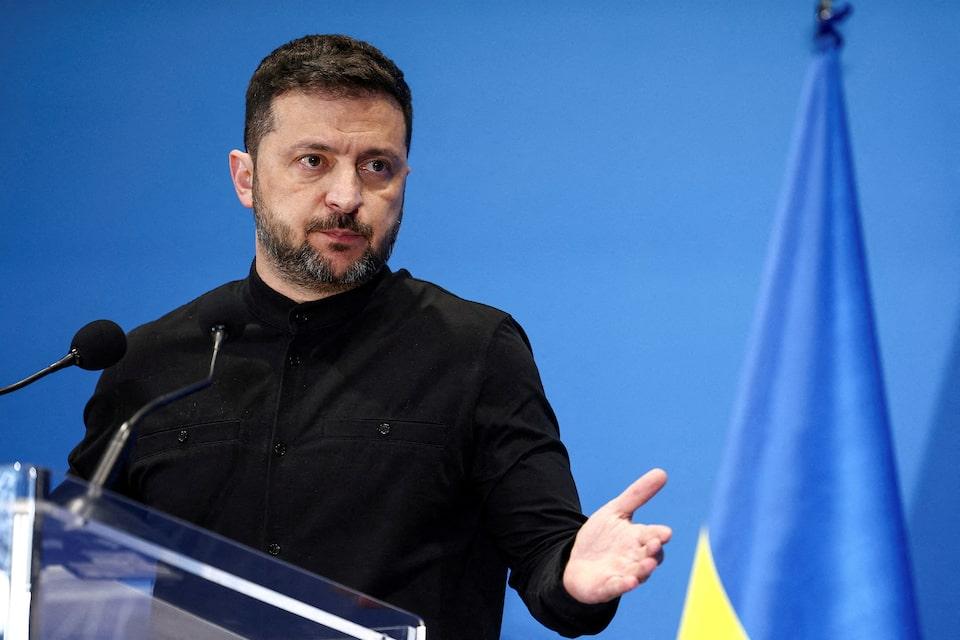
KYIV, Aug 6 (Reuters) - Russia has struck a gas facility in Ukraine's southern Odesa region, undermining preparations for winter, President Volodymyr Zelenskiy said on Wednesday. He said that gas infrastructure had been attacked in the village of Novosilske on the border with Romania, where the Orlovka interconnector, through which Ukraine receives gas via the Transbalkan route, is located. Sign up here. "This was a deliberate blow to our preparations for the heating season, absolutely cynical, like every Russian blow to the energy sector," Zelenskiy said on Telegram. Reuters could not independently confirm details of the attack and there was no immediate comment from Russia. Ukraine has faced a serious gas shortage since a series of devastating Russian missile strikes this year, which significantly reduced domestic gas production. Russia has repeatedly denied targeting civilians since launching its full-scale invasion of Ukraine more than three years ago, but says infrastructure such as energy systems are legitimate targets because they help Ukraine's war effort. Earlier on Wednesday, the governor of the southern Odesa region reported an attack on gas infrastructure and the main gas pipeline, saying that work was under way to pump gas out of the pipeline. Ukrainian energy officials did not say whether the interconnector was damaged and whether gas would continue to be pumped. According to the Ukrainian transit operator, 0.4 million cubic metres of gas was scheduled to be pumped through Orlovka on Wednesday. Last month, Ukraine pumped a small test volume of Azerbaijani gas through the Transbalkan route for the first time and announced plans to significantly increase gas imports from Azerbaijan's SOCAR energy firm. The Transbalkan route allows gas delivery from Greece via Bulgaria and Romania to Ukraine. Kyiv has called the route "extremely important", as it provides access to liquefied gas from Greek and Turkish LNG terminals, Azerbaijani and Romanian pipeline gas and, potentially, to Bulgarian offshore gas. https://www.reuters.com/business/energy/zelenskiy-says-russia-hit-gas-facility-odesa-region-undermine-preparation-winter-2025-08-06/