2025-08-06 03:28
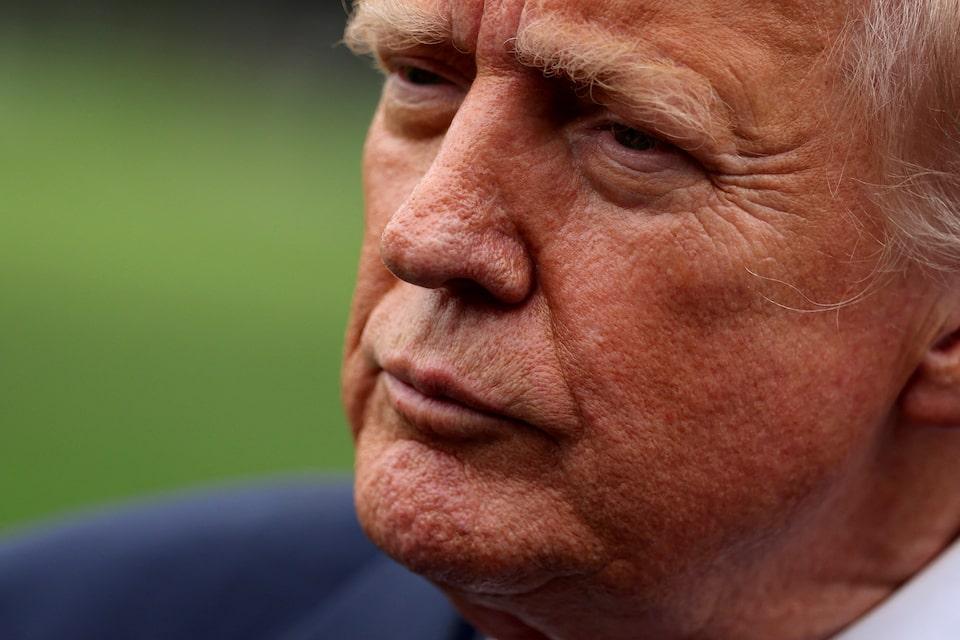
Kugler's open Fed governor seat is a "pleasant surprise," Trump tells CNBC Person who fills Kugler's seat may also be Fed chief nominee Bessent ruled out because he wants to stay in top Treasury job WASHINGTON, Aug 5 (Reuters) - U.S. President Donald Trump said on Tuesday he will decide on a nominee to fill a coming vacancy on the Federal Reserve's Board of Governors by the end of the week, and had separately narrowed the possible replacements for Fed Chair Jerome Powell to a short list of four. "I'll be making that decision before the end of the week," Trump said of his plans to name a replacement for Fed Governor Adriana Kugler, who last week unexpectedly announced she was leaving as of this Friday to return to her academic position at Georgetown University. Sign up here. Trump, in comments to reporters at the White House, distinguished between picking Kugler's replacement for a term that only lasts until January, and the selection of Powell's replacement once he leaves the top Fed job in May. But with the Fed board's other seats occupied with people, including Powell, whose terms run for years longer, Trump's choice of Kugler's replacement could have implications for his selection of a chair, a process Trump said has been narrowed to economic adviser Kevin Hassett, former Fed governor and Trump supporter Kevin Warsh, and two other people. Trump did not name those people, but one is thought to be current Fed Governor Christopher Waller. "We're also looking at the Fed chair, and that's down to four people right now ... Two Kevins and two other people," Trump said. Trump earlier in the day said in an interview with CNBC that he had removed Treasury Secretary Scott Bessent from consideration for Fed chair because Bessent wanted to remain in the top Treasury job. In the CNBC interview, Trump said Kugler's decision to vacate her seat early was a "pleasant surprise" that gives him an immediate opening to fill with a person who could also be promoted to take Powell's place. Kugler's replacement would, at least initially, be appointed for just the few months remaining in Kugler's term. But Trump could be explicit he plans for that person to then be nominated to a full 14-year term after that time, and to also be his choice to replace Powell, giving his nominee several months and several policy meetings to begin to influence the policy debate. "A lot of people say, when you do that, why don't you just pick the person who is going to head up the Fed? That's a possibility too," Trump said in the CNBC interview. The president has been critical of Powell for not cutting interest rates since Trump returned to power in January, and contemplated trying to fire him, even as Fed policymakers balance evidence of both a slowing economy and a weakening job market against the fact inflation remains well above the central bank's 2% target and is expected to move higher. The Fed is charged by Congress to maintain stable prices and maximum employment, and is potentially facing a situation where the two goals conflict with each other, posing a painful set of tradeoffs. The nominee to fill Kugler's seat will need to be confirmed by the Senate, and would require another Senate vote for a full 14-year term early next year. The nomination for the next Fed chief would require a separate Senate confirmation process. James Fishback, the CEO of Azoria investment firm and a former advisor at efficiency department DOGE, spoke to Trump on Monday to pitch himself as a temporary Fed pick, and a presidential aide requested informative material from him, according to a source with knowledge of the interactions. The White House did not immediately respond to a request for comment about Fishback. 'ANOTHER LEVEL OF PROBLEMS' Kugler's departure was announced the same day Trump, angered over data that showed job growth slowing in the first months of his administration, fired Bureau of Labor Statistics Commissioner Erika McEntarfer while alleging without evidence that BLS was manipulating the jobs data to make him look bad. Economists have warned since Trump returned to the White House in January that his combination of import tariffs and erratic trade policy would likely lead to a labor market slowdown and higher inflation, a broadly shared outlook that has been among the factors keeping the Fed from lowering rates until the inflation impact becomes clearer. The central bank last week held its policy rate steady in the 4.25%-4.50% range, though Waller dissented on the grounds the inflation risk from tariffs appeared modest at best, while the job market and growth in general appeared to be weakening. The release on Friday of the jobs report for July, with weak monthly employment gains and downward revisions to prior months, appeared to validate those concerns and led to increased market bets the Fed would cut rates at its September 16-17 meeting. The firing of the BLS commissioner touched off a global wave of concern about the continued integrity of U.S. government data, with Trump's actions being given a fire-the-messenger interpretation by much of the economics and statistics community. The president's choice now to head the statistics agency and potentially to lead the Fed will be scrutinized all the more carefully, said Michael Strain, director of economic policy studies at the conservative American Enterprise Institute. "Imagine if one of your concerns is that there's a lackey in charge of the agency and the numbers are fake. That's ... another level of problems," Strain said of the BLS. "Maybe he sees this independence thing really matters. Maybe he's got somebody from the outside saying 'Look, Mr. President, if you appoint somebody who's perceived to be a lackey as the Fed chair, take the BLS freakout and multiply by 1,000." https://www.reuters.com/world/us/trump-set-fill-fed-board-vacancy-by-weeks-end-has-narrowed-chair-search-four-2025-08-05/

2025-08-06 03:00
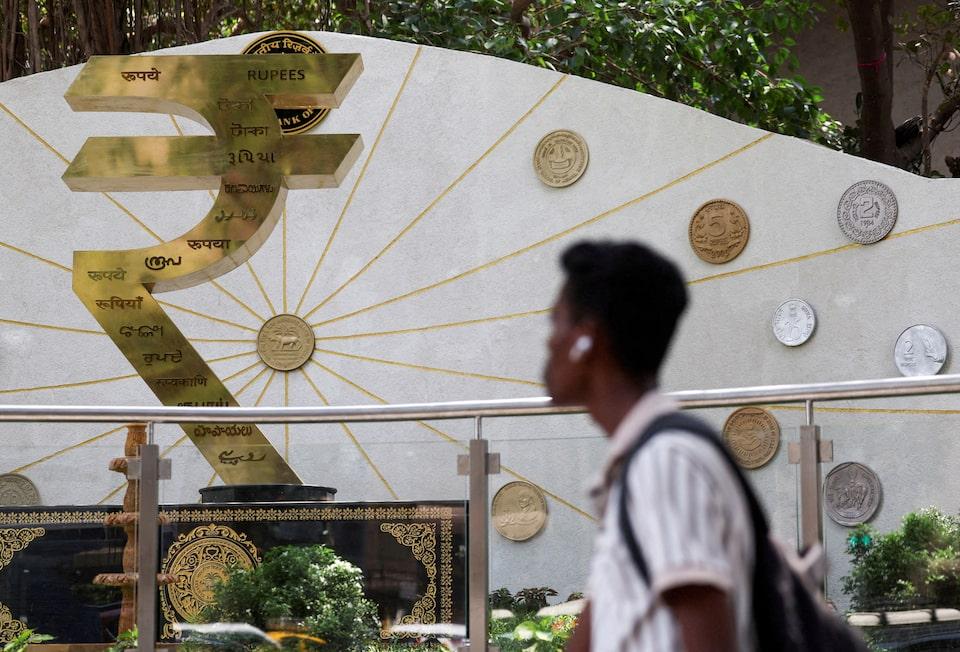
MUMBAI, August 6 (Reuters) - The Indian rupee is likely to remain under pressure ahead of the central bank's interest rate decision on Wednesday, after nearing an all-time low following President Donald Trump's fresh threats of steep tariffs on Indian goods. The 1-month non-deliverable forward suggests the rupee will open slightly weaker against the U.S. dollar from Tuesday’s level of 87.80. Sign up here. The currency dropped as much as 87.8850 on Tuesday, just shy of its record low of 87.95 hit in February. Bankers said the rupee avoided hitting a fresh lifetime low, thanks to likely dollar sales by the Reserve Bank of India through state-run banks. The central bank had to step in after the rupee slid following Trump's threat of substantial tariffs on Indian goods over Russian oil purchases. "The RBI probably wanted to avoid headlines about the rupee hitting a new low on the same day Trump was ramping up tariffs," an FX trader at a private bank said. "87.90–88 is the key zone to watch. If the RBI does cut rates today, we'll most likely break past that, and the central bank may allow some weakness." About three-quarters of the 57 participants in a Reuters poll expect the RBI to leave the policy rate unchanged at 5.50%. The rest anticipate a 25-basis point cut, following a larger-than-expected 50-bp reduction in June. Citibank, ANZ, DBS, State Bank of India and ICICI Bank are among those expecting a rate cut. At the previous policy, SBI was the only one to predict a 50-bps reduction. Monetary policy operates with lags, and postponing a rate cut until inflation falls further or growth weakens more visibly could result in deeper and more persistent economic damage, SBI said in a note. "We expect RBI to continue frontloading with a 25 bps cut in August policy." KEY INDICATORS: ** One-month non-deliverable rupee forward at 87.94; onshore one-month forward premium at 11.25 paise ** Dollar index up at 98.78 ** Brent crude futures up 0.6% at $68.1 per barrel ** Ten-year U.S. note yield at 4.22% ** As per NSDL data, foreign investors sold a net $224.9 million worth of Indian shares on August 4 ** NSDL data shows foreign investors bought a net $45.9 million worth of Indian bonds on August 4 https://www.reuters.com/world/india/us-tariff-threat-keep-rupee-ropes-ahead-rbi-rate-call-2025-08-06/
2025-08-06 00:13
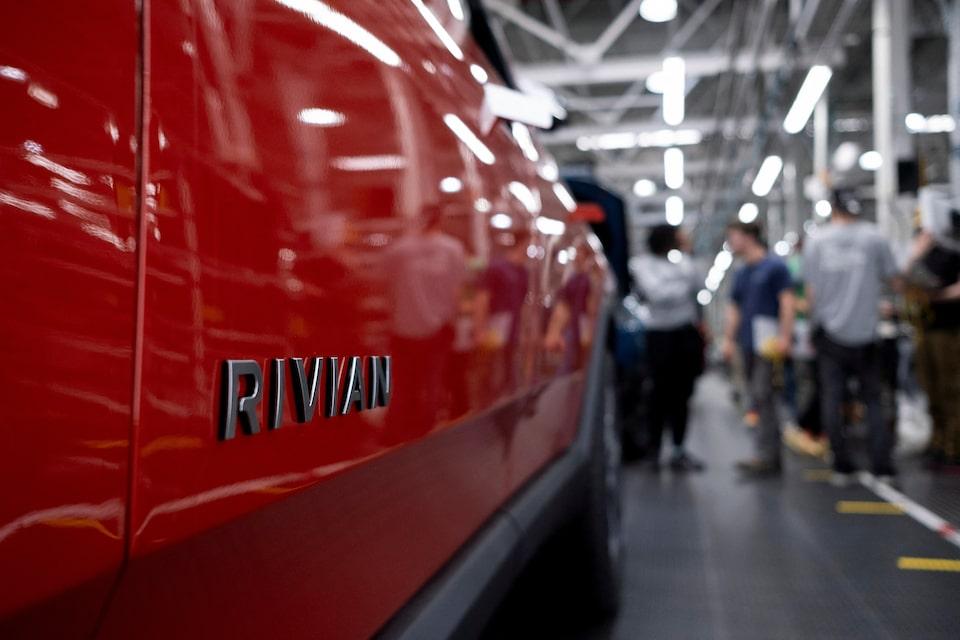
China export curbs hurt Rivian's production in Q2, raising costs Regulatory credit revenue decline affects Rivian's loss forecast Lucid cuts FY production forecast Lucid's tariff-related costs hurt profit margin Aug 5 (Reuters) - Rivian (RIVN.O) , opens new tab and Lucid (LCID.O) , opens new tab posted disappointing quarterly earnings on Tuesday and provided a grim outlook for the year as the electric vehicle makers take a hit from policy shifts and trade tensions that have disrupted the industry. Shares of Rivian fell about 4% after the bell, while Lucid shares dropped 7%. Sign up here. EV makers are navigating a bumpy road under U.S. President Donald Trump's administration, which has decided to take away consumer tax credits, impose high tariffs on imports of auto parts and remove emission fines for makers of gas vehicles. Add to that, China's curbs on the export of heavy rare earth metals - essential components for motors - have disrupted supply chains and affected production in the U.S. Rivian flagged higher costs in the June quarter, hit by disruptions to rare earth supply, and increased its adjusted core loss forecast for the year as income from the sale of regulatory credits dries up. Its cost of revenue for each vehicle produced rose about 8% to $118,375 per unit sold from a year earlier, according to Reuters calculations. "That's really reflecting a much lower production volume, which was largely driven because of challenges we had within our supply base as a result of a lot of the changes in policy," CEO RJ Scaringe told Reuters. "Therefore, our costs look higher, but it's not as if our bill of materials grew or as if we became operationally less efficient." Lower production in the June-quarter led to a $14,000 impact per vehicle sold to cost of good sold, CFO Claire McDonough said in a call with analysts. The company will shut down production for three weeks in September, after a one-week pause in the second quarter, to integrate components and prepare for the launch of its smaller and cheaper R2 SUV next year that is seen as crucial to its success. While Lucid said it managed to largely avoid the rare earth supply disruption by using some magnets from its inventory, its profit margin was hurt by tariff-related costs in the second quarter. The luxury EV maker cut its annual production forecast. The $7,500 federal EV tax credit expires at the end of September, eliminating a key competitive advantage that has driven demand, but analysts anticipate a surge in third-quarter sales as customers rush to make purchases before losing access to the incentive. "We're definitely expecting that there is some softening in demand (in the fourth quarter)," Lucid's interim CEO Marc Winterhoff told Reuters. The company has planned countermeasures to make it "palatable" for consumers, he said, without disclosing details. The elimination of penalties for automakers not meeting fuel economy standards by Trump's administration has drastically reduced demand for regulatory credits, which companies like Rivian and Lucid sell to traditional automakers to help them avoid emissions fines. Rivian largely blamed a tapering in the value of U.S. regulatory credits - expected to be about half of the $300 million it estimated - for the higher loss estimate and said it no longer expected revenue from such sales in the second half of the year. Rivian said it expected its adjusted core loss to be between $2 billion and $2.25 billion this year, compared with $1.7 billion to $1.9 billion previously forecast. Rivian anticipates gross profit this year to roughly break even. It earlier expected a modest profit. Rivian said on Tuesday it expected record deliveries in the third quarter across its consumer and commercial segments as demand is pulled forward. Apart from its SUVs and pickups, Rivian makes electric delivery vans for fleets, including Amazon.com, which is its largest shareholder. https://www.reuters.com/business/autos-transportation/rivian-lucid-warn-bumpy-road-ahead-policy-changes-hurt-2025-08-05/
2025-08-05 23:07
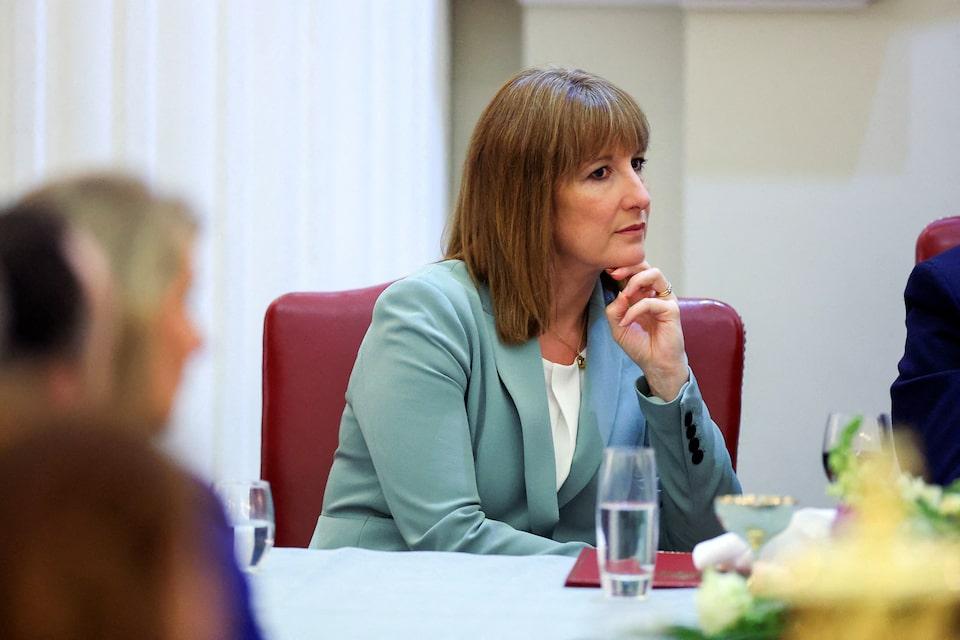
Britain struggling to meet mounting demands for spending Reeves set to miss target of covering spending with tax revenues May need to find 50 billion pounds of savings or extra taxes LONDON, Aug 6 (Reuters) - British finance minister Rachel Reeves faces an "impossible trilemma" of big tax hikes, spending cuts or a change to fiscal rules that she has said are non-negotiable, a leading think tank said on Wednesday. Reeves looks on course for a projected 41 billion-pound ($54 billion) overshoot later this year of her target to cover day-to-day spending with tax revenues by the end of the decade, the National Institute of Economic and Social Research said in a report. Sign up here. If she also wants to restore a previous 9.9 billion pound fiscal buffer, Reeves might need to find more than 50 billion pounds of savings or extra taxes in the annual budget statement which is due in the autumn, NIESR said. Reeves and Prime Minister Keir Starmer are struggling to meet mounting demands for spending from the already stretched public finances as they struggle to speed up Britain's economic growth. Reeves last year raised taxes by 40 billion pounds, something she has said she will not repeat. NIESR nudged up its forecast for British economic growth for this year to 1.3% from its forecast of 1.2% made in May. But it cut its projections for all the following years up to 2030, largely due to the impact of U.S. President Donald Trump's trade tariffs on the global economy. The forecasts are significantly weaker than those of the Office for Budget Responsibility, whose projections underpin the government's tax and spending plans. For example, NIESR expects 1% growth in 2028 compared with the OBR's 1.7%. Economists with several banks expect Reeves will face a roughly 20 billion-pound shortfall when the OBR publishes its next forecasts alongside her budget statement probably in October or November. Much of that shortfall is due to government U-turns on plans to cut welfare for the long-term sick and fuel subsidies for retired people. Stephen Millard, NIESR's deputy director for macroeconomics, said the difference between those forecasts and NIESR's 41 billion-pound estimate of the shortfall probably lay largely in the think tank's lower forecasts for economic growth. In May, NIESR said Reeves was on course for an even bigger 57 billion-pound miss against her balanced current budget target. Millard said the reduced shortfall reflected stronger data on government revenue. The think tank said British inflation was likely to average 3.3% over 2025 before falling to 2.8% and 2.2% in the next two years. It expects the BoE to cut interest rates on Thursday and in November and added a further early-2026 cut to its outlook. NIESR said living standards would edge up in the 2025/26 tax year for most households but fall for the poorest 10% who are hit harder by higher rent, food and energy costs and a freeze in the threshold for starting to pay income tax. ($1 = 0.7535 pounds) https://www.reuters.com/world/uk/uks-reeves-heading-impossible-choices-this-years-budget-think-tank-says-2025-08-05/
2025-08-05 22:47
Aug 5 (Reuters) - Three years after Russian President Vladimir Putin launched his full-scale invasion of Ukraine, the United States and European Union still import billions of euros worth of Russian energy and commodities, ranging from liquefied natural gas to enriched uranium. India this week lashed out at what it called Western double standards, after facing renewed threats from U.S. President Donald Trump over its surging purchases of Russian crude oil. Sign up here. Here are the main commercial ties that the U.S., Europe, and India maintain with Russia, and their evolution over the last four years: EUROPE IMPORTS FROM RUSSIA Since the beginning of the war, trade between the EU and Russia has drastically contracted due to EU sanctions and import restrictions on some products. Imports from Russia fell by 86% from the first quarter of 2022 through the first quarter of this year, according to the latest data from Eurostat. Imports of goods from Russia in the first quarter of 2025 totaled 8.74 billion euros ($10.11 billion), down from 30.58 billion euros four years earlier. Since January 2022, the EU has imported 297 billion euros' worth of Russian goods. The EU, however, continues to purchase oil, nickel, natural gas, fertilizer, iron, and steel from Russia. * OIL Four years ago, Russia was the largest supplier of petroleum products to the EU, but the EU ban on maritime imports of Russian crude oil reduced its share to 2.01% in 2025 from 28.74% in 2021. Oil imports fell to 1.48 billion euros in the first quarter of 2025 from 14.06 billion euros four years ago. * NATURAL GAS Russia's share in natural gas plummeted to 17% in the first quarter of 2025 from 48% in 2021's first quarter. * IRON AND STEEL Russia's share in non-EU iron and steel imports slumped to 7.71% in the first quarter of 2025 from 18.28% four years ago. * FERTILIZERS As for fertilizers, a sector in which the European Parliament voted in May to impose prohibitive tariffs, Russia remained, as of the first quarter of 2025, the largest exporter to the European Union. Its share fell slightly from 28.15% to 25.62% in the last four years. INDIA IMPORTS FROM RUSSIA In contrast to Europe, India's imports from Moscow surged to $65.7 billion in 2024 from $8.25 billion in 2021, data from the Indian Commerce Ministry website showed. * OIL Crude oil has been the biggest driver of the growth in India's imports from Russia, jumping to $52.2 billion in 2024 from $2.31 billion in 2021. * COAL PRODUCTS India's imports of coal and coal-related products from Russia surged to $3.5 billion from $1.12 billion in 2021. * FERTILIZERS India's fertilizer imports from Russia rose to $1.67 billion in 2024 from $483 million in 2021. U.S. IMPORTS FROM RUSSIA U.S. imports , opens new tab from Russia fell to $2.50 billion in the first half of 2025 from $14.14 billion four years earlier, according to U.S. Census Bureau and U.S. Bureau of Economic Analysis data. Since January 2022, the U.S. has imported $24.51 billion of Russian goods. * FERTILIZERS Last year, the U.S. imported around $1.27 billion of Russian fertilizers, up slightly from $1.14 billion in 2021. * URANIUM, PLUTONIUM The U.S. imported enriched uranium and plutonium from Russia worth around $624 million in 2024, down from $646 million in 2021. * PALLADIUM Russia exported palladium to the United States for around $878 million in 2024, down from $1.59 billion in 2021. ($1 = 0.8641 euros) https://www.reuters.com/world/three-years-into-war-us-and-europe-keep-billions-trade-with-russia-2025-08-05/
2025-08-05 22:30
WASHINGTON Aug 5 (Reuters) - President Donald Trump said on Tuesday that the United States would initially place a "small tariff" on pharmaceutical imports before hiking it to 150% within 18 months and eventually to 250% in an effort to boost domestic production. "In one year, one and a half years maximum, it's going to go to 150% and then it's going to go to 250% because we want pharmaceuticals made in our country," Trump told CNBC in an interview. Sign up here. He did not specify the initial tariff rate on pharmaceuticals. Trump said last month that pharmaceutical tariffs could reach as high as 200%. He said in February that sectoral tariffs on pharmaceuticals and semiconductor chips would start at "25% or higher," rising substantially over the course of a year. Trump said on Tuesday that he plans to announce tariffs on semiconductors and chips in the "next week or so," but gave no further details. The United States has been conducting a national security review of the pharmaceutical sector, and the industry has been preparing for possible sector-specific tariffs. The administration has not announced when the results of that probe will be released. Several drugmakers have pledged multibillion-dollar investments in U.S. manufacturing as Trump threatens import tariffs, with AstraZeneca recently committing $50 billion to expand its American operations. PhRMA, the main lobbying group for the industry, did not immediately respond to a request for comment. A framework agreement between the United States and the EU sets out that tariffs on pharmaceuticals and semiconductors are currently zero, but if the United States raises tariffs following its import investigation, they will be capped at 15%. https://www.reuters.com/business/healthcare-pharmaceuticals/us-initially-impose-small-tariff-pharma-imports-trump-says-2025-08-05/