2025-08-05 15:29
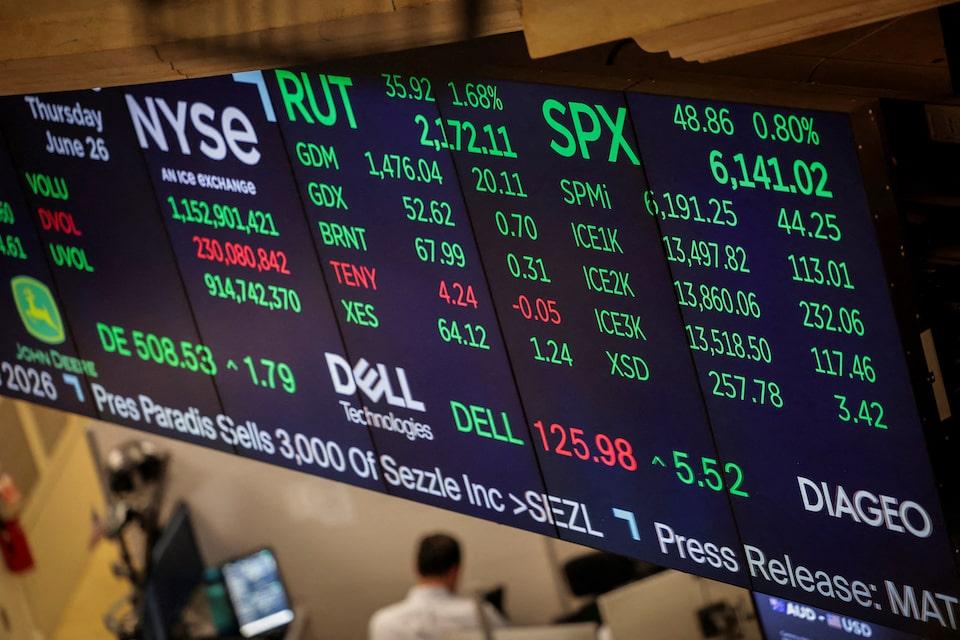
Aug 5 (Reuters) - Wells Fargo Investment Institute on Tuesday downgraded U.S. small-cap equities to "unfavorable" from "neutral", pointing to its heavy tariff exposure, elevated interest rates and weak earnings record. The broader U.S. equity market has rebounded on easing trading tensions and strong corporate earnings since hitting its lows in April following Trump's "Liberation Day" tariffs. Sign up here. However, the small-cap Russell 2000 index (.RUT) , opens new tab has not had the same pace of recovery, having fallen 0.9% this year, including session movements, whereas the large-cap S&P 500 index (.SPX) , opens new tab has gained 7%. "Interest rates above their levels during past economic cycles should leave this group vulnerable", said strategists at Wells Fargo, adding that small caps are more exposed to tariff frictions as they have less flexible supply chains and thinner margins than their larger competitors. Among the 545 companies in the index that have reported quarterly earnings so far, about 25% have missed analysts' expectations, compared to about 15% in the large-cap segment, as per LSEG I/B/E/S estimates. "A poor earnings track record and an elevated portion of index components with no profits have continued to plague...the Russell 2000 index," Wells Fargo added. The investment institute, a subsidiary of Wells Fargo bank (WFC.N) , opens new tab, also downgraded its stance on the U.S. energy and communication services sector and the broader commodities asset class to "neutral" from "favorable". While Wells Fargo foresees a turbulent second half of 2025 amid tariff-related headwinds, it remains optimistic about the economy's trajectory, expecting momentum to strengthen in 2026, with trade uncertainties unlikely to pose a major threat. https://www.reuters.com/business/wells-fargo-downgrades-us-small-cap-equities-unfavourable-2025-08-05/
2025-08-05 14:55
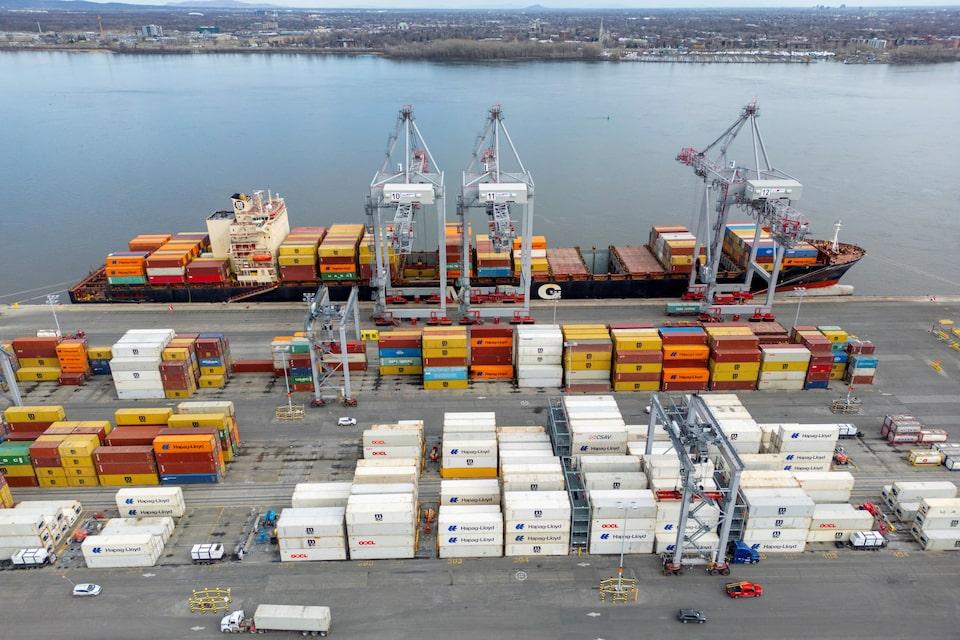
Canada's merchandise trade deficit rises to C$5.9 bln in June Imports up 1.4% on one-time import of high-value equipment Trade surplus with the U.S up to C$3.9 bln on crude oil exports On a yearly basis, trade surplus with the U.S. drops by a half OTTAWA, Aug 5 (Reuters) - Canada's merchandise trade deficit widened in June to C$5.9 billion ($4.24 billion) as imports grew faster than exports due to a one-time high-value oil equipment import, data showed on Tuesday. The deficit observed in June is the second highest on record after the deficit expanded to its largest in history in April to C$7.6 billion, when the impact of U.S. tariffs first started to weigh. Sign up here. Canada's exports to the U.S. as a share of total exports shrank to 70% in June from 83% in the same period a year ago while its surplus with the U.S. contracted by a half in the same period, data showed. Analysts polled by Reuters had predicted the trade deficit to increase to C$6.3 billion in June from a downwardly revised C$5.5 billion in May. Total imports were up 1.4% in June to C$67.6 billion from a drop of 1.6% in the prior month, Statistics Canada said, the first increase in imports after three consecutive monthly decreases. Excluding the one-time oil product import, total imports were down 1.9% in June. Canada's total exports grew 0.9% in June to C$61.74 billion following an increase of 2% in May, its second consecutive increase, Statscan said, led primarily by an increase in crude oil exports. In volume terms, however, exports were down 0.4% in June. The U.S. President Donald Trump cranked up the tariffs on Canada to 35% from this month from 25% on goods which were non-compliant with a free trade deal. Canada is also struggling with a slew of sectoral tariffs on steel, aluminum and automobiles. This has chewed into its massive trade surplus with the U.S. as exporters drove away from what the world's biggest market to other regions from Europe and Middle East to as far as the Indo-Pacific. Exports to the U.S. in June, however, increased by 3.1% in June, mainly led by higher crude oil prices due to tensions in the Middle East. But on a year-over-year basis, exports to the U.S. were still 12.5% lower when compared with the same period a year ago. Overall exports of aluminum were down 11.3% and iron and steel products by 11.4% in June, coinciding with higher tariffs on these products from the U.S., data from StatsCan showed. After reaching a record high in May, exports to countries other than the United States were down 4.1% in June, representing the first decline since February, Statscan said, but still hovered around near record levels. "The headline story really is the impacts of the tariffs," said Stuart Bergman, chief economist at Export Development Canada. The Canadian dollar slightly weakened further after the data and was trading down 0.2% to 1.3804 against the U.S. dollar, or 72.44 U.S. cents. Yields on the two-year government bonds were up 0.6 basis points to 2.703%. https://www.reuters.com/world/americas/canadas-trade-deficit-widened-june-second-largest-record-2025-08-05/
2025-08-05 13:38
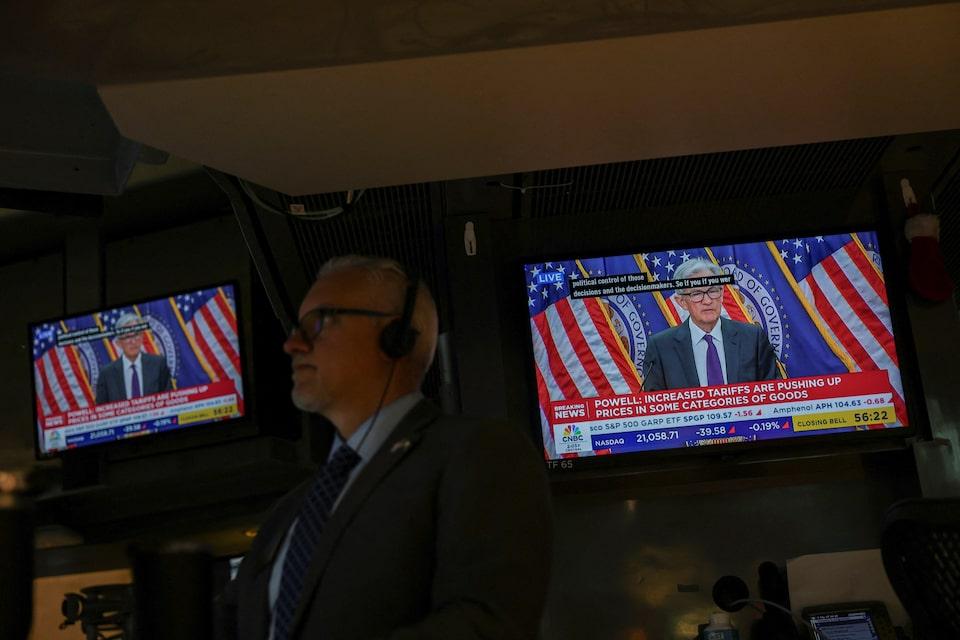
Reuters poll graphic on euro-dollar forecasts - BENGALURU, Aug 5 (Reuters) - The U.S. dollar will weaken steadily over the coming months on mounting concerns over the Federal Reserve's independence, the credibility of official statistics, ballooning fiscal debt and rising bets on interest rate cuts, a Reuters survey of foreign exchange analysts showed on Tuesday. Underscoring those concerns, President Donald Trump's dismissal of the Bureau of Labor Statistics commissioner last week over unproven claims of data rigging - following record downward revisions to job numbers - prompted a swift reversal of recent dollar (.DXY) , opens new tab gains from Trump's tariff deal with the EU. Sign up here. While there was a modest pullback from a crowded short-dollar trade, the greenback is still down nearly 9% this year against a basket of major currencies. Trump's erratic tariff moves, repeated attacks on the U.S. central bank and Fed Chair Jerome Powell and rising debt levels have made investors rethink holding U.S. assets and raised the term premium - compensation demanded for holding long-term debt. Reflecting that sentiment, foreign exchange strategists, who have maintained a bearish dollar outlook since at least April, forecast in an August 1-5 Reuters poll that the euro would gain around 2% to $1.17 by the end of October and continue to rise to $1.18 in six months. The euro would then rise to $1.20 in a year - the highest survey median since October 2021. "We've been trading in this environment of U.S. exceptionalism and the U.S. being far and away the strongest economy in the world. That just isn't the case anymore in my view," said Erik Nelson, head of G10 FX strategy at Wells Fargo. "There are underlying structural concerns - Fed independence, data quality, you name it. When it comes to the economic backdrop, all that is heading in the wrong direction. The temptation for the foreseeable future will be to sell the dollar on rallies." An overwhelming majority, 89 of 100 top policy experts in a separate Reuters survey, raised concerns over the accuracy of U.S. government statistics days before Trump fired BLS Commissioner Erika McEntarfer. FED INDEPENDENCE Investor nerves have been further frayed by Trump's repeated attacks on Powell, who has so far resisted the president's demands for steep rate cuts - and Fed Governor Adriana Kugler's early resignation, potentially shaking up an already-fractious succession process for the Fed's leadership. Powell's term as Fed chief expires next May. "For Trump to place one of his nominees as governor, who could then be elected Chair next year - I believe markets would take it quite poorly. Naturally, there will be a lot of scrutiny on how many members switch to the dovish side or whether they remain more cautious and fail to align with a new dovish Chair," said Francesco Pesole, FX strategist at ING. "Should markets interpret Fed independence as having been materially compromised, that would be quite a compelling argument for a weaker dollar." Interest rate futures are currently betting on roughly three Fed rate cuts by the end of this year, with the first move happening in September - a sharp increase from just the one or two reductions in borrowing costs anticipated weeks earlier. The European Central Bank is priced for just one cut or no cuts. While a still-resilient U.S. economy and the risk of tariff-driven inflation have pared some of the dollar's gains - net-short dollar positions had reached a two-year high in late June - the greenback's slide may only slow but not reverse. Over 60% of strategists, 26 of 42, expected dollar net-shorts in Commodity Futures Trading Commission positioning to either rise or hold steady by the end of October, the survey showed. But a growing minority, over a third of respondents versus 17% in July, now predict a decrease in net-short bets. "Short-dollar has been one of the most consensus trades this year, and most investors still expect long-term depreciation to continue. But near-term views have become less bearish, and therefore positioning is more likely to move towards fewer net shorts over the next few months," said Jason Draho, head of asset allocation in the Americas at UBS Global Wealth Management. (Other stories from the August foreign exchange poll) https://www.reuters.com/business/trumps-attacks-fed-data-integrity-weigh-us-dollar-forecasts-reuters-poll-2025-08-05/

2025-08-05 13:36
Aug 5 (Reuters) - Wall Street futures opened higher on Tuesday, supported by ongoing optimism over potential Federal Reserve interest rate cuts, while investors assessed a fresh batch of corporate earnings. The Dow Jones Industrial Average (.DJI) , opens new tab rose 26.4 points, or 0.06%, at the open to 44200.07. The S&P 500 (.SPX) , opens new tab rose 6.7 points, or 0.11%, to 6336.63, while the Nasdaq Composite (.IXIC) , opens new tab rose 38.5 points, or 0.18%, to 21092.097. Sign up here. https://www.reuters.com/business/snapshot-wall-street-opens-higher-rate-cut-hopes-earnings-spotlight-2025-08-05/
2025-08-05 13:23
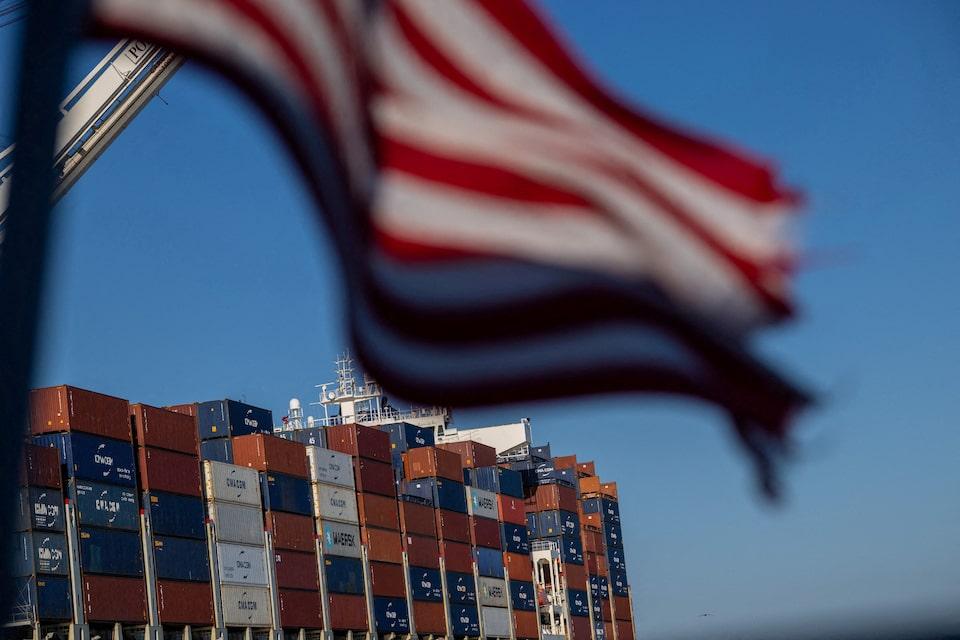
Aug 5 (Reuters) - Global freight forwarder Expeditors International of Washington (EXPD.N) , opens new tab reported second-quarter profit and revenue above Wall Street estimates on Tuesday, helped by higher airfreight and ocean container volumes and bigger custom fees. Airfreight tonnage and ocean container volume increased 7% each year-over-year for the quarter ended June 30, as companies rushed to import before new U.S. tariffs kick in. Sign up here. The company also benefited as increasingly complex trade policies allowed it to charge shippers higher processing fees. U.S. importers have increasingly turned to customs brokers to keep up with President Donald Trump's ever-changing trade policies. But the booming demand has made these services more expensive, industry players previously told Reuters. Revenue from Expeditors' customs brokerage segment rose 10.5% to $1.02 billion, up from $927 million a year earlier. "Airfreight business increased on growth in tonnage and higher rates in most regions, and particularly as customers sought to ship technology and other high-value inventory ahead of trade deadlines," CEO Daniel Wall said. "Ocean business also grew largely on increased volumes, particularly exports out of South Asia, as customers relocated sourcing to that region and moved freight in advance of extended tariff deadlines," he added. The Bellevue, Washington-based company reported quarterly revenue of $2.65 billion, beating analysts' estimate of $2.44 billion, according to data compiled by LSEG. Its second-quarter profit of $1.34 per share was also above estimates of $1.24 per share. Still, the company expects freight market conditions to remain volatile through the rest of the year. https://www.reuters.com/business/expeditors-posts-upbeat-results-higher-freight-volumes-customs-fees-2025-08-05/
2025-08-05 13:19
HARARE, Aug 5 (Reuters) - Zimbabwe's platinum miners are owed millions of dollars in unpaid exports income under the government's foreign currency retention rules, the mining chamber has said, hurting operations in a sector battling to recover from a price collapse. The southern African country requires all exporters to retain only 70% of their proceeds in foreign currency, with the balance being converted to local currency. Sign up here. The world's third largest producer of platinum group metals after neighbour South Africa and Russia, says it needs the foreign currency to fund vital imports and repay foreign loans. Platinum producers in Zimbabwe, who include Valterra Platinum, Impala Platinum's (IMPJ.J) , opens new tab Zimplats (ZIM.AX) , opens new tab and Mimosa, a joint venture between Impala and Sibanye Stillwater (SSWJ.J) , opens new tab, exported PGM mattes and concentrates worth $690 million in the first half of this year, government data shows. However, the government has not been paying the miners the local currency equivalent of their export earnings since January, an official at the mining chamber told Reuters. Deputy finance minister Kuda Mnangagwa confirmed that the government had fallen behind on paying the miners. "There were issues of cash flow constraints, particularly in the first quarter of the year when our revenue collections are at their lowest," Mnangagwa told Reuters on Tuesday. He added that the government was talking to platinum miners to ensure "that these delays don't burden their operations". Platinum group metals, used to make catalytic converters that curb vehicle emissions, are Zimbabwe's second most valuable mineral export, behind gold. Zimbabwe exported gold worth $1.8 billion during the first half of 2025, up from $870 million during the same period last year, thanks to record high bullion prices. Gold producers have also complained about Zimbabwe's foreign currency retention rule, which they say eats into their income when part of their export proceeds are converted into an overvalued local currency. https://www.reuters.com/world/africa/zimbabwe-platinum-miners-owed-millions-unpaid-export-earnings-2025-08-05/