2025-08-05 10:59
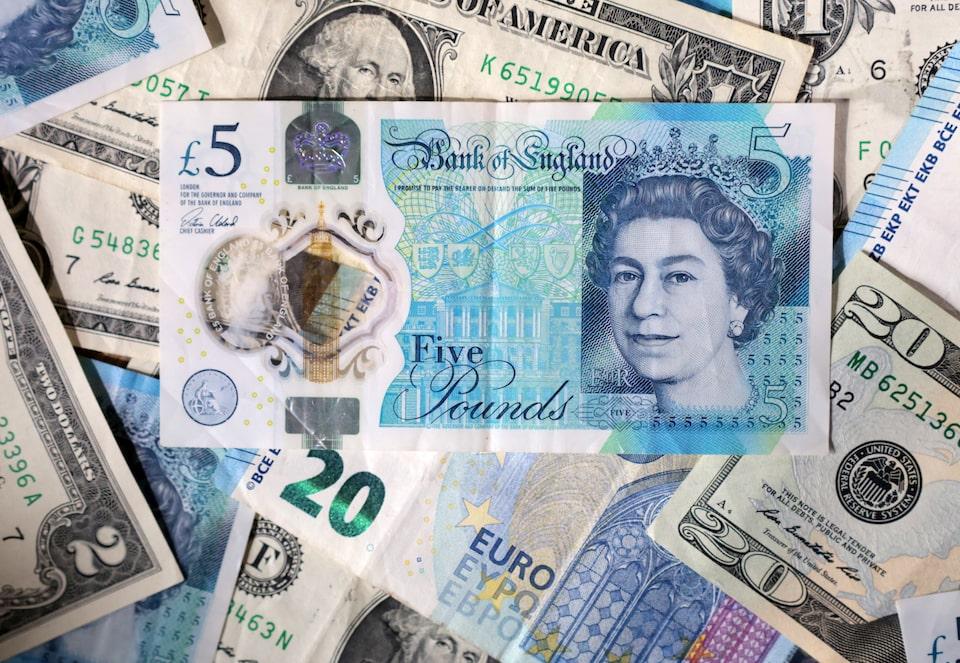
Traders boost bets on Fed easing moves extending through 2026 Goldman Sachs expects Fed to deliver 3 consecutive rate cuts Fed could harden its view to protect independence, analysts say Investors still concerned about the tariff impact Aug 5 (Reuters) - The dollar edged up against the euro and the yen, but remained within striking distance of Friday’s lows, after weak U.S. jobs data boosted bets on Federal Reserve rate cuts and triggered a sharp selloff in the greenback. Investors are awaiting services data from the Institute for Supply Management (ISM), which should show a mild improvement supporting the greenback. Sign up here. Goldman Sachs expects the Fed to deliver three consecutive 25 basis-point rate cuts starting in September, with a 50 basis-point move possible if the next jobs report shows a further rise in unemployment. It also sees the European Central Bank as having concluded its easing cycle. Economists raised their growth forecasts for the euro area and Japan following relatively benign trade agreements, while arguing that Friday’s U.S. jobs report confirmed the economy is hovering near stall speed. Meanwhile the firing of the head of the Bureau of Labor Statistics (BLS) on Friday, and the resignation of Fed Governor Adriana Kugler, could harden the views of the FOMC to ensure its independence is protected, analysts said, recalling that the new appointee will be just one vote on the Fed’s Federal Open Market Committee (FOMC). The euro was last down 0.25% at $1.1544, after hitting on Friday $1.15855. The dollar index , which measures the U.S. currency against six counterparts, was up 0.30% at 98.864, after touching a one-week low earlier in the session at 98.609. "Traders likely inferred that the (U.S. jobs) report gave President Donald Trump even more justification to 'fire' Jay Powell," said Thierry Wizman, global forex and rates strategist at Macquarie Group. "Alternatively, it gave Trump even more support for giving the Chairmanship to someone that would be more 'structurally' dovish," he added, arguing that Friday's employment report shifted the outlook for where the Fed Funds rate target will be one year from now. Sterling edged higher against the dollar, as traders expect the Bank of England to maintain its rate guidance at this week’s policy meeting. It was last up 0.05% at $1.3291 . RATE CUTS Money markets are now pricing in a 92% chance of the Fed cutting rates in its next meeting in September, compared with 63% a week earlier. They also indicate 130 bps of rate cuts by October 2026, 30 bps more than the levels seen on Friday before U.S. jobs data. The Japanese yen was down 0.34% at 147.6 per dollar after minutes of its June policy meeting showed a few Bank of Japan board members said the central bank would consider resuming interest rate increases if trade frictions de-escalate. "The pressure to hike (rates) could also come from a wish to help support and stabilise the Japanese government bonds (JGB) market," said Derek Halpenny, head of research global markets at MUFG, mentioning a weak outcome of a JGBs auction. "But JGB market instability remains a downside risk for the yen," he added. The focus remains on tariff uncertainties, after the latest duties imposed on imports from scores of countries last week by Trump stoked worries about the health of the global economy. The 15% tariff that European Union goods face when entering the U.s. is all-inclusive, a senior EU official said on Tuesday. The Swiss franc extended losses for a second day, weakening 0.25% to 0.8103 per dollar after dropping 0.5% in the previous session. However it was still above the levels seen before Friday's economic figures, at around 0.8128. Switzerland is looking to make a "more attractive offer" in trade talks with Washington, to avert a 39% U.S. import tariff on Swiss goods that threatens its export-driven economy. https://www.reuters.com/world/middle-east/dollar-rises-versus-euro-yen-before-us-economic-data-2025-08-05/
2025-08-05 10:34
LONDON, Aug 5 (Reuters) - What matters in U.S. and global markets today By Mike Dolan , opens new tab, Editor-At-Large, Finance and Markets Sign up here. For all the fog surrounding Friday's payrolls data and the accuracy of the statistics, some Federal Reserve officials - unlike the White House - appear to be taking them at face value and are chiming in with souped up market easing expectations. Markets are now almost fully priced for a quarter-point Fed rate cut next month. That and the forecast-beating corporate earnings season, which saw tech and defence firm Palantir (PLTR.O) , opens new tab surge another 6% after the bell overnight, have allowed Wall Street stock indexes to recover all of Friday's steep losses - with futures still in positive territory early Tuesday as a stream of tech and pharma sector updates due later. * San Francisco Fed President Mary Daly said on Monday mounting evidence of a softening U.S. job market and few signs of persistent tariff-driven inflation meant the time was nearing for rate cuts. Wall Street banks have jumped the gun, with Goldman Sachs now expecting three 25 basis-point cuts from September, with a 50 bps move possible if the unemployment rate rises in the next report. With another heavy week of debt sales kicking off later, 10-year Treasury yields came within a whisker of three-month lows on Tuesday. But the dollar (.DXY) , opens new tab strengthened slightly. * Speculation remains about potential changes to U.S. tariffs before the new levies kick in on August 7. Switzerland said it was seeking to secure a better deal than the whopping 39% tariff it was hit with on Friday, and European Union trade chief Maros Sefcovic said he was in contact with U.S. officials Howard Lutnick and Jamieson Greer to turn July's framework trade deal into practice. EU officials added that the 15% goods tariff Europe faces is "all-inclusive," unlike the deals some other countries have struck with Washington * Stocks in Asia and Europe were broadly firmer on Tuesday, with the earnings season in full swing. Japan's Nikkei advanced as the yen weakened, with the Bank of Japan meeting minutes keeping rate rise expectations on the back burner as policymakers monitor fallout from U.S. tariffs. China and Hong Kong stocks climbed for a second consecutive session after a private-sector survey showed strong recovery in China's services activity in July. ake sure to check out today's column, where I explore why the latest curve ball thrown at markets – uncertainty about economic data – is so tough to price. Today's Market Minute * U.S. President Donald Trump again threatened on Monday to raise tariffs on goods from India over its Russian oil purchases, while New Delhi called his attack "unjustified" and vowed to protect its economic interests, deepening the trade rift between the two countries. * A record number of Chinese companies are seeking a U.S. listing this year as onerous domestic listing rules and the prospect of better valuations convince them to brave volatile Sino-U.S. relations and U.S. calls for strict oversight of Chinese firms. * South Korea will prepare measures to help companies cope with higher U.S. tariffs and expand into new markets, the Finance Ministry said on Tuesday, as it kicked off a task force to prepare the new administration's economic policy plans. * Trump's decision to fire a top labor official following weak jobs data doesn’t just send ominous signals about political interference in independent institutions, writes ROI columnist Jamie McGeever, it is also a major strategic own goal. * Asia's imports of seaborne thermal coal ticked up in July, but the increase was driven by the developed economies of North Asia and not heavyweights China and India. Find out more from ROI columnist Clyde Russell. Chart of the day For investors seeking to lock into two super cycles - AI and defence, Palantir Technologies has been the catch-all winner. The data analytics and defense software firm is getting a boost from President Donald Trump's focus on national security and a shift in the Pentagon's software-buying process towards commercial and "non-traditional" providers. Last week, the U.S. Army said it might purchase services of up to $10 billion from the company over a decade. Rising another 6% overnight after the firm raised its annual revenue forecast for the second time this year, Palantir's stock has been the standout performer of the past year - even putting the likes of Nvidia in the shade. Its market cap has soared to more than $363 billion - more than six times what it was this time last year. Today's events to watch * U.S. June international trade balance (8:30 AM EDT), July service sector surveys from S&P Global (9:45 AM EDT) and ISM (10:00 AM EDT): Canada June trade balance (8:30 AM EDT) * U.S. corporate earnings: AMD, Super Micro Computer, Pfizer, Amgen, Marathon, DuPont De Nemours, Caterpillar, News Corp, Fox, Apollo, Arista, Molson Coors, DaVita, Aflac, Assurant, Eaton, ADM, Progressive, International Flavors and Fragrances, Match, Mosaic, Duke Energy, Devon Energy, Broadridge, Jacobs, Henry Schein, Cummins, Gartner, TransDigm, Zoetis, Yum! Brands * U.S. Treasury auctions $58 billion of 3-year notes Want to receive the Morning Bid in your inbox every weekday morning? Sign up for the newsletter here. You can find ROI on the Reuters website , opens new tab, and you can follow us on LinkedIn , opens new tab and X. , opens new tab Opinions expressed are those of the author. They do not reflect the views of Reuters News, which, under the Trust Principles , opens new tab, is committed to integrity, independence, and freedom from bias. https://www.reuters.com/business/finance/global-markets-view-usa-2025-08-05/
2025-08-05 10:30
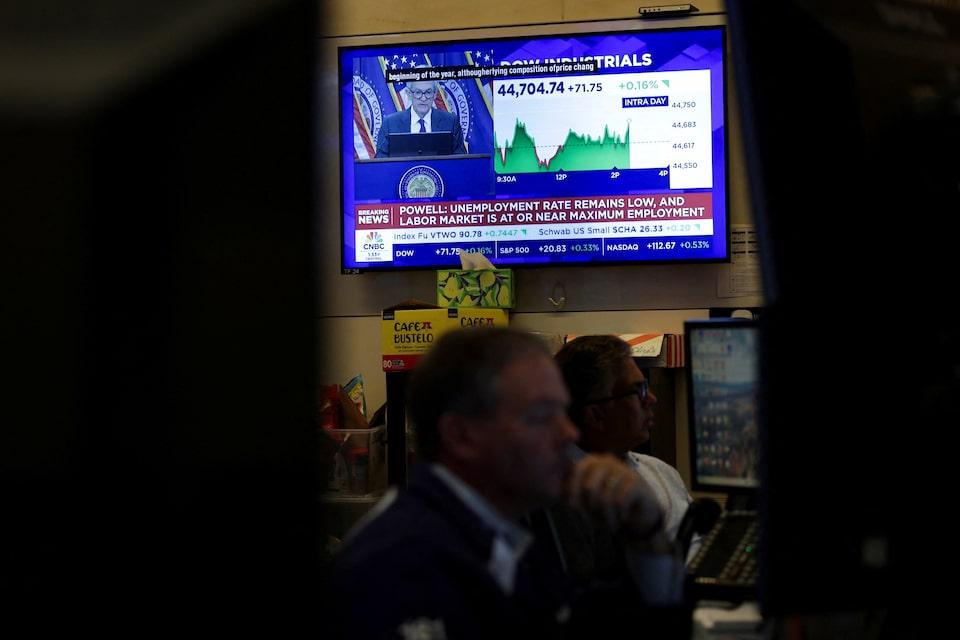
MUMBAI, Aug 5 (Reuters) - The Indian rupee extended its decline on Tuesday on the back of escalating trade tensions with the United States, although likely central bank intervention prevented the currency from breaching record low levels. The rupee closed at 87.8000 to the U.S. dollar, down 0.2% from Monday's close of 87.6550. The local currency fell to a low of 87.8850 on Tuesday, just shy of an all-time low of 87.95 hit in February. Sign up here. The Reserve Bank of India helped absorb some tariff-related pressure on the rupee through interventions conducted by state-run banks, a trader at a state-owned lender said. U.S. President Donald Trump on Monday again threatened to substantially raise tariffs on Indian goods, citing the country's continued purchases and resale of Russian oil, after announcing a surprise 25% tariff on Indian imports last week. In response, India's foreign ministry said it would take "all necessary steps" to protect national interests and economic security, escalating a trade row between the two countries. "As fears of more expensive crude oil loom, the Indian rupee stands at a crossroads amid rising geopolitical tensions," said Abhishek Goenka, chief executive of IFA Global. Traders and analysts said that persistent foreign outflows may accelerate, putting further strain on the rupee if talks stall. The RBI's interest rate decision on Wednesday could also influence the currency's trajectory. Meanwhile, Asian currencies traded mixed as the dollar recouped some of its losses on Tuesday. The Philippine peso dropped 0.6% after inflation hit the lowest in nearly six years. The Malaysian ringgit gained more than 0.2%, while the Indonesian rupiah was little changed. The dollar index was down 0.3% at 98.967, as of 1007 GMT. https://www.reuters.com/world/india/rbi-intervention-shields-rupee-record-low-after-trump-tariff-threat-2025-08-05/
2025-08-05 10:23
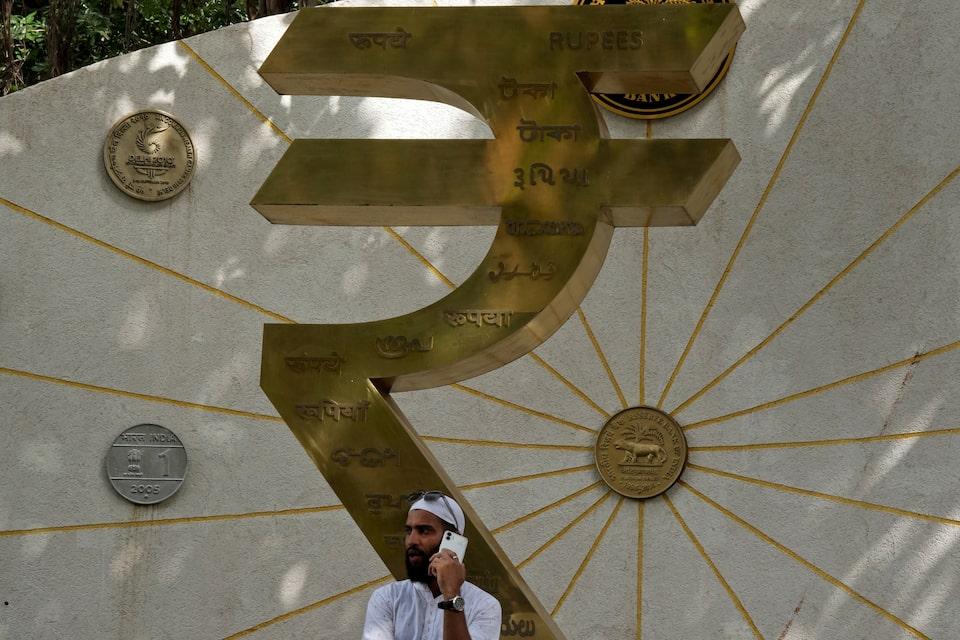
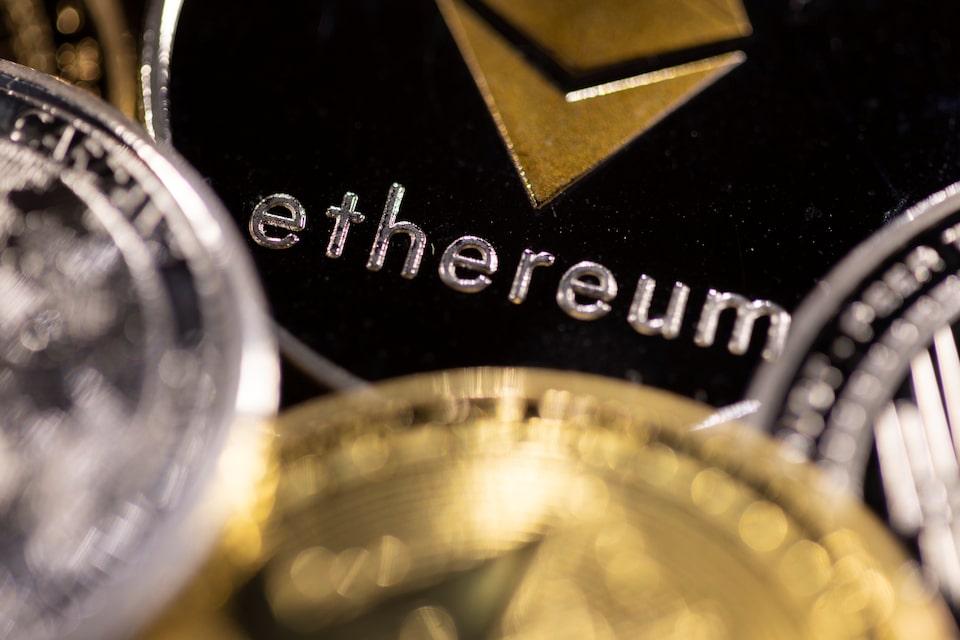
Small-cap firms add ether to treasuries, drawn by staking yields At least $3.5 billion worth of ether held by companies Ether seen as middle ground between bitcoin and riskier tokens Regulatory gray areas, volatility still limit broader adoption Aug 5 (Reuters) - Some companies are favoring ether over bitcoin as an inflation hedge as the cryptocurrency hits a sweet spot between affordability and credibility, while being underpinned by a strong blockchain backbone. Corporate treasuries held at least 966,304 ether tokens on their balance sheets at the end of July, worth nearly $3.5 billion, according to a Reuters analysis of regulatory filings and disclosures. That compares with just under 116,000 at the end of 2024. Sign up here. The second-largest cryptocurrency has become the token of choice for those looking for more active returns. Unlike bitcoin, which solely relies on price appreciation, ether can be used in staking, a practice where holders lock up their tokens to support the ethereum network in exchange for rewards. Staking can offer yields of about 3% to 4%. "Ether balances growth potential with the legitimacy of a blue-chip asset. It is large enough to be institutional-grade, yet early enough in adoption to benefit from future upside," said Sam Tabar, CEO of Bit Digital (BTBT.O) , opens new tab, which has ether on its balance sheet. The cryptocurrency also powers the ethereum blockchain, which supports a wide range of applications including lending platforms, trading protocols and stablecoins, making it a core component of the crypto financial system. "Holding ether is more like owning oil, whereas bitcoin is more one-dimensional, like gold. Ether is the foundation of decentralized finance, not just a pure store of value," said Anthony Georgiades, general partner at VC firm Innovating Capital. Still, challenges such as regulatory uncertainty and price volatility, which affect the assets' fair value, continue to hinder adoption. CAUTION AMID HYPE After disclosing plans to accumulate ether earlier this year, shares of Peter Thiel-backed BitMine and gaming media network GameSquare (GAME.O) , opens new tab jumped as much as 3,679% and 123%, respectively, underscoring how eager investors are to chase crypto-linked momentum. But analysts have cautioned against unfettered optimism. "The share price response has the hallmarks of the meme craze," said Dan Coatsworth, investment analyst at AJ Bell. The inherent volatility of crypto tokens also makes it a poor fit for boards with a low risk appetite, which could curb ether's appeal beyond core industry players. "Most CFOs would not swap liquid cash for ether. It remains a niche tool best left to 'tech-forward' treasuries that can tolerate swings and complexity," said Anuj Karnik, founder and managing director at Straitsberg, a Singapore-based treasury advisory firm. "Treasury best-practice values liquidity, predictability and regulatory certainty above all. Most corporate leaders view crypto holdings today as experimental 'alternative' allocations, not mainstream policy." Also, while the Securities and Exchange Commission has softened its stance on staking activities, the regulatory framework around the practice is still evolving. Key questions include whether rewards should be taxed as income, how to treat locked tokens on balance sheets and whether offering staking services could trigger custodial obligations. "Every staking reward could be landing in a compliance gray zone," said Michael Ashley Schulman, partner and chief investment officer at Running Point Capital Advisors. Still, despite the risks, some companies continue to double down, raising capital through share sales or debt offerings to fund their ether purchases. BitMine sold a $182 million stake to Cathie Wood's ARK Invest in July. GameSquare CEO Justin Kenna also told Reuters his company might sell stock to invest in ether. "We're not in the business of being overly dilutive. But we'll continue to be opportunistic," Kenna said. https://www.reuters.com/business/small-public-companies-snap-up-ether-new-crypto-gold-rush-even-risks-linger-2025-08-05/
2025-08-05 09:56
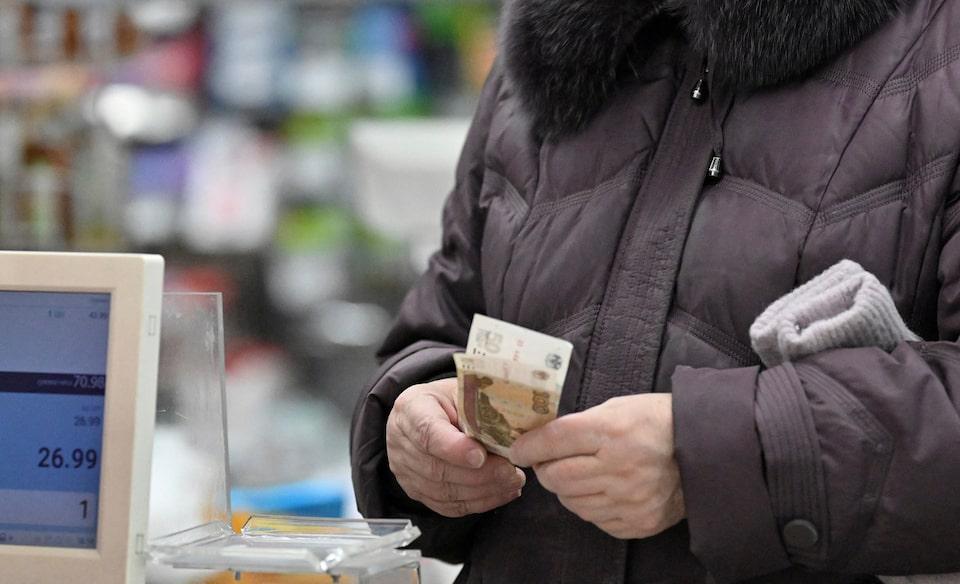
MOSCOW, Aug 5 (Reuters) - Russia will continue to support the rouble with net sales of foreign currency, according to new figures from the Finance Ministry released on Tuesday, ahead of U.S. President Donald Trump's deadline to show progress towards peace in Ukraine. The Finance Ministry said it will cut its foreign currency sales from its rainy day National Wealth Fund to 0.3 billion roubles ($3.75 million) a day from August 7 to September 4, down from 0.82 billion roubles previously. Sign up here. The measure will reduce the state's overall daily net forex sales, which combine forex operations by the ministry and the central bank, by 5% to 9.24 billion roubles a day from August 7. Under a complex set of foreign currency operations, the central bank buys and sells forex to ensure a steady supply on the domestic market and also on behalf of the finance ministry, which runs the National Wealth Fund. The ministry said it will sell 6.2 billion roubles of foreign currency during this period, compared with 18.77 billion roubles previously. Trump has said that from August 8 he will impose new sanctions on Russia as well as on countries that buy its energy exports, unless Moscow takes steps to end its 3-1/2 year war with Ukraine. The rouble weakened initially in response to Trump's threats but has since rebounded. The rouble traded 0.2% weaker at 79.95 to the U.S. dollar at 0930 GMT on Tuesday. ($1 = 79.9000 roubles) https://www.reuters.com/markets/europe/russia-will-still-prop-up-rouble-august-trump-deadline-looms-2025-08-05/
2025-08-05 09:41
(Reuters) - Sterling edged higher against the dollar and fell versus the euro on Tuesday, as traders expect the Bank of England to maintain its rate guidance at this week’s policy meeting. The BoE is widely expected to cut its key interest rate to 4% from 4.25% on Thursday and to lower it once more before the end of the year, despite consumer price inflation rising to close to double the central bank's 2% target in June. Sign up here. Traders priced in over a 90% chance of an easing move this week and 86 bps of rate cuts by December 2026. The pound was up 0.05% at $1.3290 against the dollar . The greenback rose against the euro and the yen, but remained within striking distance of Friday’s lows. “Given the stagflationary character of the data, we expect ‘gradual and careful’ to stay as the main forward guidance, with a highly uncertain vote split,” said Citi. “We expect this situation to remain until the autumn budget, after which contractionary tax increases, in our base case, should pave the way for sequential rate cuts.” Britain borrowed more than expected in June, adding to speculation about the need for new tax hikes by finance minister Rachel Reeves later this year. “We suspect that it (the BoE) will (maintain its gradual and careful rate guidance), although any change here would almost certainly be greeted by a bout of pound weakness,” said Enrique Diaz-Alvarez, chief economist at Ebury. The British currency was last up 0.3% at 86.85 pence per euro. It fell to 87.69 pence last week, its weakest against the single currency since May 2023. Yields on UK gilts snapped a 5-day losing streak on Tuesday, with the 10-year up 2.5 bps at 4.53%. “Risks are two-sided: a faster or more pronounced loosening of the labour market could warrant cumulative or larger cuts, whereas sticky underlying (services) inflation and only gradual signs of labour-market slack could extend the pause between cuts beyond current expectations,” said Nikolay Markov economist at Pictet Asset Management. https://www.reuters.com/world/uk/sterling-firms-against-dollar-markets-look-boe-rate-guidance-2025-08-05/