2025-08-05 00:46
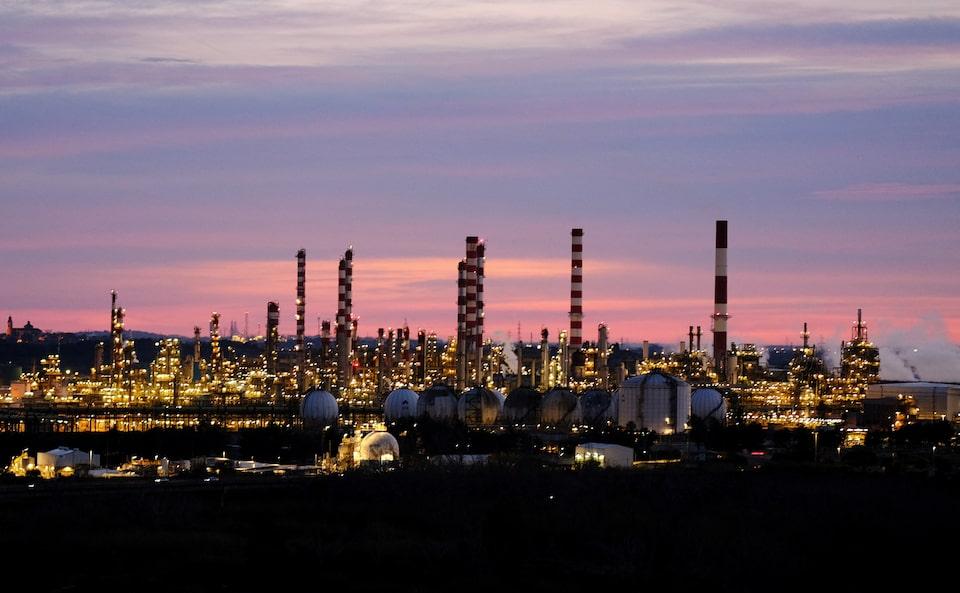
Aug 5 (Reuters) - Oil prices were little changed on Tuesday after three days of declines on mounting oversupply concerns after OPEC+ agreed to another large output increase in September, though the potential for more Russian supply disruptions supported the market. Brent crude futures were unchanged at $68.76 a barrel by 0036 GMT while U.S. West Texas Intermediate crude was at $66.27 a barrel, down 2 cents, or 0.03%. Sign up here. Both contracts fell by more than 1% in the previous session to settle at their lowest in a week. The Organization of the Petroleum Exporting Countries and its allies, together known as OPEC+, pumps about half of the world's oil and had been curtailing production for several years to support the market, but the group introduced a series of accelerated output hikes this year to regain market share. In its latest decision, OPEC+ agreed on Sunday to raise oil production by 547,000 barrels per day for September. It marks a full and early reversal of the group's largest tranche of output cuts, amounting to about 2.5 million bpd, or about 2.4% of global demand, though analysts caution the actual amount returning to the market will be less. At the same time, U.S. demands for India to stop buying Russian oil as Washington seeks ways to push Moscow for a peace deal with Ukraine is increasing concerns of a disruption to supply flows. U.S. President Donald Trump is threatening to impose 100% secondary tariffs on Russian crude buyers. This follows a 25% tariff on Indian imports announced in July. India is the biggest buyer of seaborne crude from Russia, importing about 1.75 million bpd of Russian oil from January to June this year, up 1% from a year ago, according to data provided to Reuters by trade sources. "India has become a major buyer of the Kremlin's oil since the 2022 invasion of Ukraine. Any disruption to those purchases would force Russia to find alternative buyers from an increasingly small group of allies," ANZ senior commodity strategist Daniel Hynes wrote in a note. Traders are also awaiting any developments on the latest U.S. tariffs on its trading partners, which analysts fear could slow down economic growth and dampen fuel demand growth. https://www.reuters.com/business/energy/oil-little-changed-after-hitting-one-week-low-oversupply-concerns-linger-2025-08-05/
2025-08-05 00:38
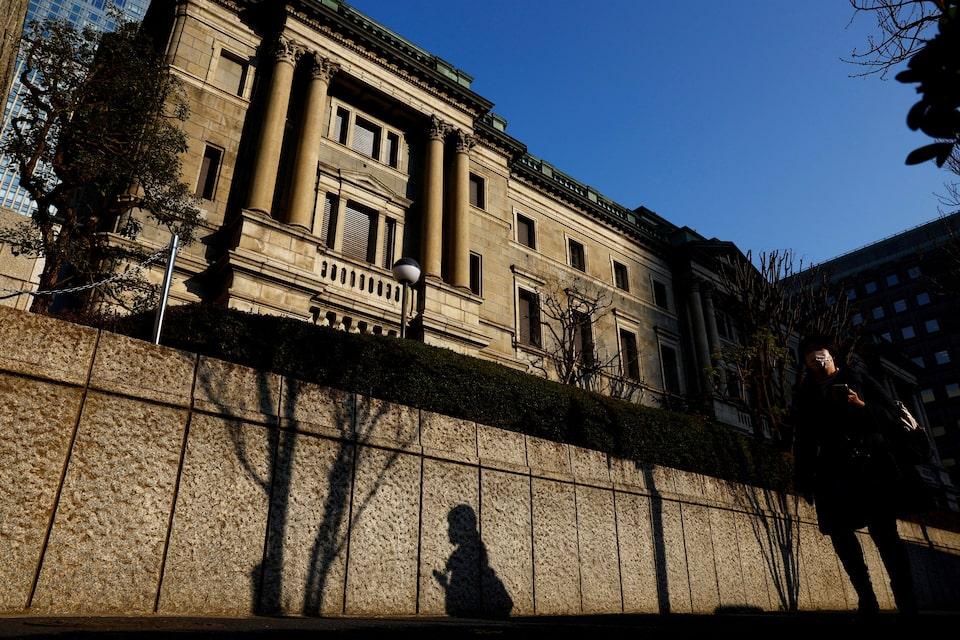
TOKYO, Aug 5 (Reuters) - A few Bank of Japan board members said the central bank would consider resuming interest rate increases if trade friction de-escalates, minutes of its June policy meeting showed on Tuesday. "Given high uncertainties, the BOJ would likely pause rate hikes for the time being. But it also must respond flexibly and nimbly, and return to a rate-hike phase depending on U.S. policy developments," one member was quoted as saying. Sign up here. At the June 16-17 meeting, the BOJ kept interest rates steady at 0.5% and decided to decelerate the pace of its balance sheet drawdown next year, signalling its preference to move cautiously in removing remnants of its massive stimulus. Many members said the central bank must keep interest rates steady due to downside risks to the economy from U.S. tariffs, even though inflation was somewhat overshooting forecasts, the minutes showed. "As wages had been solid and prices had been slightly higher than expected, the Bank would likely shift away from the current wait-and-see approach and consider resuming rate hikes, if trade friction de-escalates," a few members were quoted as saying. https://www.reuters.com/business/some-boj-saw-scope-resume-rate-hikes-if-trade-friction-eases-june-minutes-show-2025-08-05/
2025-08-05 00:37
Shipping changes boost revenue but hit profitability Shares fall some 4% in post-market trading SAO PAULO, Aug 4 (Reuters) - Latin American e-commerce giant MercadoLibre (MELI.O) , opens new tab on Monday missed analysts' estimates for second-quarter net profit and core earnings, as increased free shipping in Brazil drove sales up but also hit margins. MercadoLibre, Latin America's largest company by market value, reported net income of $523 million for the quarter through the end of June, down 1.5% year-on-year and below the $596 million expected by analysts in an LSEG poll. Sign up here. Shares in MercadoLibre, which operates an online marketplace and the fintech Mercado Pago, fell some 4% after the bell. The firm, based in Uruguay, sells products in around 20 Latin American countries. Net revenue of $6.8 billion was up 34% year-on-year, beating the estimate of $6.7 billion, with sales measured by gross merchandise value rising 37% on a forex-neutral basis. In early June, MercadoLibre cut the threshold for purchases eligible for free shipping in Brazil, after also lowering shipping costs for companies and users selling on its platform in May, amid fierce competition in the country's e-commerce segment. Brazil, the firm's main market, together with Mexico helped MercadoLibre to increase total items sold by 31% in the quarter, the fastest pace year-on-year since mid-2021. However, that also hurt margins, said Chief Financial Officer Martin de los Santos. "We don't want to miss the growth opportunities ahead of us," he said in an interview. "That might generate some short-term margin pressure, but we are very optimistic about the long-term trajectory of our profitability." Earnings before interest and taxes (EBIT) reached a record high of $825 million, but also missed the $869 million forecast. The EBIT margin stood at 12.2%, down from 14.3% a year earlier. The CFO said that among the main impacts on margins were investments in free shipping and related marketing, and growth in its so-called 1P business, which sells directly to customers. "We expect a negative reaction given the earnings miss, however, we do not expect sustained underperformance as downward revisions should be limited," Santander analysts, including Ruben Couto, wrote in a note to clients. Asked if similar free-shipping policies could take place in other countries, MercadoLibre commerce head Ariel Szarfsztejn, who is set to become chief executive next year, told an analysts' call that the firm "will evaluate, and we will decide eventually which policies we want to bring where." In its earnings report, MercadoLibre also said deeper currency-related losses, mainly due to Argentina's peso, and a higher tax rate hit its net profit in the quarter. The firm's fintech arm grew its credit portfolio by 91% to $9.3 billion, while the 15-to-90-day default ratio fell 1.5 percentage point to 6.7%, the lowest since it started to release the figure seven years ago, the CFO said. https://www.reuters.com/business/autos-transportation/mercadolibre-misses-profit-estimates-brazil-free-shipping-boost-hurts-margins-2025-08-04/

2025-08-04 22:40
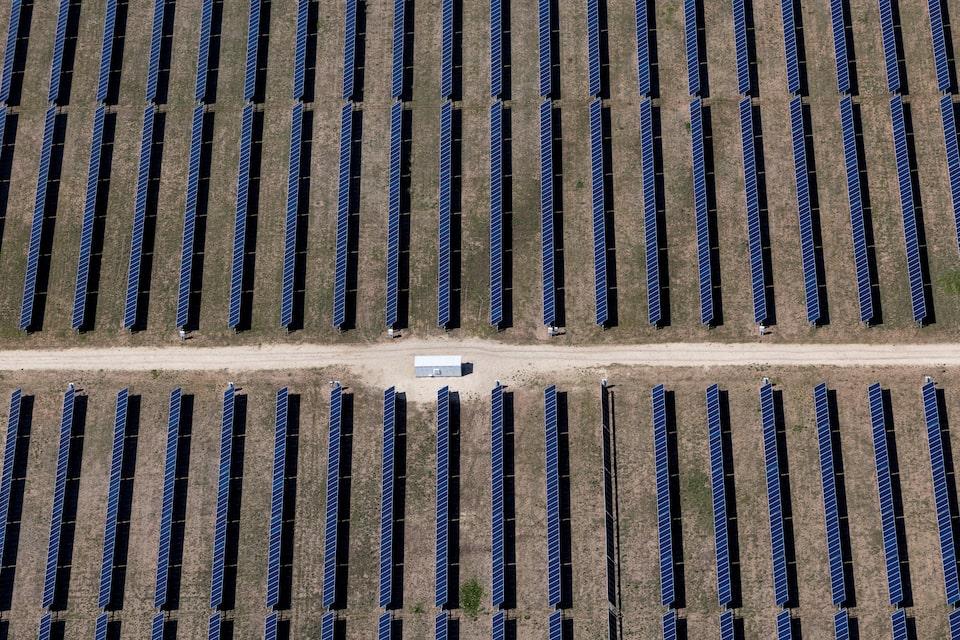
Grassley and Curtis oppose changes to renewable energy tax credit rules Trump directed Treasury to limit 'safe harbor' provision for projects Senators use holds to negotiate with executive branch Aug 4 (Reuters) - Two Republican senators have put holds on three of U.S. President Donald Trump's Treasury Department nominees over a White House effort to make it harder for companies to claim tax credits for wind and solar energy projects, according to a government document and a source familiar with the matter. The senators, Chuck Grassley of Iowa and John Curtis of Utah, hail from states with large renewable energy industries and support federal tax credits that bring down the cost of wind farms and solar arrays. Sign up here. Grassley published his announcement in the Congressional Record on Friday. A source familiar with the situation confirmed Curtis' hold to Reuters on Monday. In his announcement, Grassley said he was putting a hold on the Treasury nominees - Brian Morrissey, who was nominated to serve as Treasury's general counsel, Francis Brooke, nominated to be assistant secretary, and Jonathan McKernan - until he was certain the tax credit rules adhered to the law. The senators had tried to negotiate a longer timeline for wind and solar tax credits ahead of the passage of the One Big Beautiful Bill Act, but ultimately joined Republicans in backing a final draft that phases out clean energy subsidies years earlier than planned as part of their budget megabill. The new law requires projects to begin construction within a year or enter service by the end of 2027 to qualify for the credits. Under longstanding Treasury Department rules, a project is considered to have begun construction after spending just 5% of project costs. But days after signing the legislation into law, Trump last month directed Treasury to limit that "safe harbor" provision unless a substantial portion of a facility has been built, reportedly a promise he made to conservative Republicans. The agency has until August 18 to write new rules. "What it means for a project to 'begin construction' has been well established by Treasury guidance for more than a decade. Moreover, Congress specifically references current Treasury guidance to set that term's meaning in law," Grassley wrote. "This is a case where both the law and congressional intent are clear." Under Senate rules, a single senator can hold up a nominee even if the other 99 want to move forward. https://www.reuters.com/business/energy/republican-lawmakers-slow-trump-treasury-picks-over-wind-solar-credits-2025-08-04/
2025-08-04 22:32
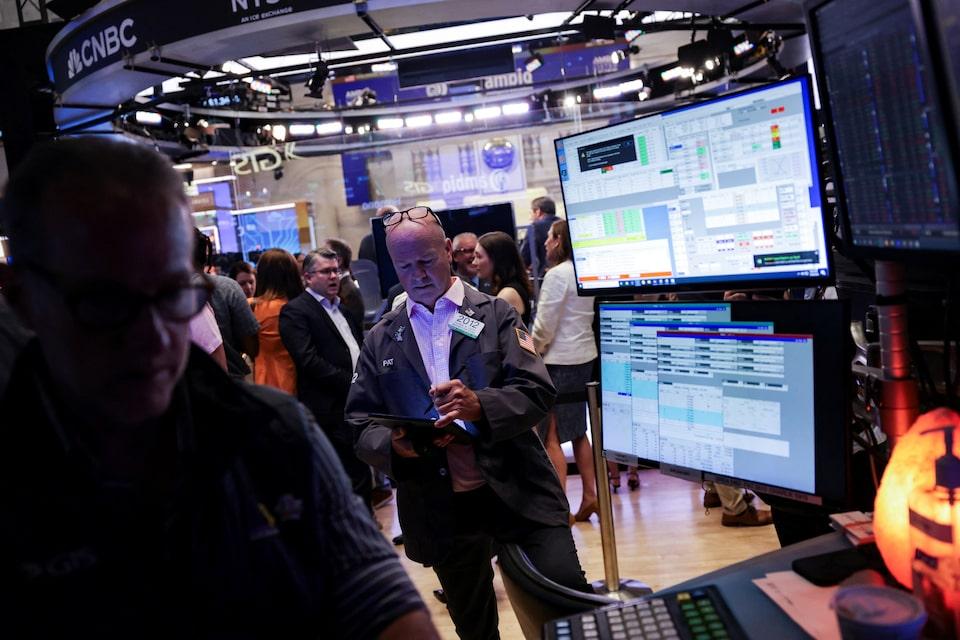
Tesla rises on 96 million share award to CEO Musk Spotify to raise premium subscription price, shares jump Indexes: Dow up 1.34%, S&P 500 up 1.47%; Nasdaq up 1.95% NEW YORK, Aug 4 (Reuters) - All three major U.S. stock indexes scored their biggest daily percentage increases since May 27 on Monday as investors sought bargains after the previous session's selloff and ramped up bets for a September interest rate cut after Friday's weaker-than-expected jobs data. Tesla (TSLA.O) , opens new tab shares rose 2.2% after the electric vehicle maker granted CEO Elon Musk 96 million shares worth about $29 billion. Sign up here. Friday's selloff followed bleak July jobs data that was accompanied by steep downward revisions for May and June. "Today is just a little bit of dip-buying. It does show a pretty healthy sign of folks out there looking for an opportunity to get in," said Mike Dickson, head of research and quantitative strategies at Horizon Investments in Charlotte, North Carolina. "It's a little concerning in the sense the labor market ... definitely appears to be weaker than people expected. A bit of an offset to that is the renewed rate cut expectations. There's a high probability we're getting a September cut." Odds for a September rate cut now stand at about 84%, according to CME Fedwatch. Market participants see at least two quarter-point cuts by the end of this year. The S&P 500 and Nasdaq had hit a string of record highs recently. The Dow Jones Industrial Average (.DJI) , opens new tab rose 585.06 points, or 1.34%, to 44,173.64, the S&P 500 (.SPX) , opens new tab gained 91.93 points, or 1.47%, at 6,329.94 and the Nasdaq Composite (.IXIC) , opens new tab climbed 403.45 points, or 1.95%, to 21,053.58. Investors were still digesting U.S. President Donald Trump's firing of Bureau of Labor Statistics Commissioner Erika McEntarfer on Friday as he accused her of faking the weak jobs numbers. Also on Friday, Fed Governor Adriana Kugler unexpectedly resigned, which could open the door for changes from Trump. Trump has been pushing the Fed to cut rates. On the trade front, Trump said on Monday he will substantially raise tariffs on goods from India over its Russian oil purchases, while New Delhi said it would take measures to safeguard its interests and called its targeting by the U.S. president "unjustified." Second-quarter U.S. earnings season is winding down, but investors still look forward to reports this week from companies like Walt Disney (DIS.N) , opens new tab. Among rising shares on Monday, Spotify (SPOT.N) , opens new tab gained 5% as the music streaming platform announced plans to raise the monthly price of its premium individual subscription in select markets from September. Joby Aviation (JOBY.N) , opens new tab jumped 18.8% after the company said it will acquire helicopter ride-share company Blade Air Mobility's (BLDE.O) , opens new tab passenger business for up to $125 million. Blade Air shares rose 17.2%. Among the day's decliners, Class A shares of Warren Buffett's Berkshire Hathaway (BRKa.N) , opens new tab fell 2.7% as investors took in a $3.8 billion write-down and a dip in quarterly operating profit that the firm disclosed on Saturday. Advancing issues outnumbered decliners by a 4.48-to-1 ratio on the NYSE. There were 136 new highs and 51 new lows on the NYSE. On the Nasdaq, 3,487 stocks rose and 1,090 fell as advancers outnumbered decliners by a 3.2-to-1 ratio. Volume on U.S. exchanges was 15.05 billion shares, compared with the 18.37 billion average for the full session over the last 20 trading days. https://www.reuters.com/business/indexes-post-biggest-daily-pct-gains-since-may-27-rebound-friday-selloff-2025-08-04/
2025-08-04 22:17
Aug 5 (Reuters) - The U.S. Commodity Futures Trading Commission (CFTC) said on Monday it would allow trading of spot crypto asset contracts that are listed on a futures exchange registered under the regulator. The CFTC, which regulates U.S. derivatives markets, will enable immediate trading of digital assets at the Federal level in coordination with the Securities and Exchange Commission's "Project Crypto", CFTC acting chairman Caroline Pham said. Sign up here. The CFTC invited , opens new tab stakeholders to comment on how to list the spot crypto asset contracts in a designated market. "This is a significant development, not just for the U.S. but for global markets," said Saad Ahmed, head of Asia Pacific at Gemini. "It brings crypto one step closer to the structure and standards of traditional markets - an important shift that could drive broader participation from institutions and more sophisticated market participants globally." The digital assets industry has seen progress this year under U.S. President Donald Trump, as bills like the GENIUS Act and CLARITY Act have provided more regulatory certainty. Shortly after taking office in January, Trump ordered the creation of a crypto working group tasked with proposing new regulations, making good on his campaign promise to overhaul U.S. crypto policy. SEC Chair Paul Atkins last week outlined several pro-crypto initiatives, including directing staff to develop guidelines to determine when a crypto token qualifies as a security, and proposals for various disclosures and exemptions. The two regulators' approach marks a significant victory for the crypto industry, which has long advocated for tailored regulations. "The hope continues to be that a broader range of assets beyond bitcoin and ethereum entrench themselves on U.S. venues over the next 24 months, and moves like this ultimately help along that process," said Joseph Edwards, head of research at Enigma Securities. Trump's embrace of digital assets is in stark contrast to former President Joe Biden's regulators, who, in a bid to protect Americans from fraud and money laundering, cracked down on the industry. The Biden administration sued exchanges Coinbase (COIN.O) , opens new tab, Binance, and dozens more, alleging they were flouting U.S. laws. Trump's SEC has since dropped those cases. Bitcoin , the world's largest cryptocurrency, last traded 0.68% lower at $114,077.05 on Tuesday, though it has risen more than 20% for the year so far. Ether fell 2% to $3,621.70. https://www.reuters.com/legal/government/cftc-allow-listed-spot-crypto-trading-registered-exchanges-2025-08-04/