2026-02-11 07:12
MOSCOW, Feb 11 (Reuters) - Russia's largest liquefied natural gas producer Novatek (NVTK.MM) , opens new tab said on Wednesday its 2025 net profit fell by more than 60% to 183 billion roubles ($2.37 billion). Novatek has been placed under the Western sanctions over Ukraine and has struggled to fully utilise its new liquefied natural gas producing plant, Arctic LNG-2. Sign up here. The plant, located on the Arctic Gydan peninsula, which juts into the Kara Sea, began production in December 2023, but Novatek was only able to deliver its first cargo to the first end-buyers, in China, last August. The company said its last-year normalised net profit, which excludes the impact from the foreign exchange fluctuations, fell to 207 billion roubles and was negatively affected by undisclosed one-off non-cash items, the effect of which amounted to 301 billion roubles. Net income also plunged despite a 1% rise in hydrocarbon production last year to 1.84 million barrels of oil equivalent. ($1 = 77.2000 roubles) https://www.reuters.com/business/energy/russia-lng-producer-novatek-says-2025-net-profit-fell-over-60-2026-02-11/
2026-02-11 07:12
France invests in Imerys' Emili lithium mine project Project cost revised, commercial production set for 2030 Environmental concerns shadow critical mineral mining efforts PARIS, Feb 11 (Reuters) - France will invest 50 million euros ($59.61 million) in a minority stake in Imerys' (IMTP.PA) , opens new tab lithium mine project, and could be joined by other investors in the country's flagship project for the battery metal, Imerys said. The minerals group first announced the Emili project in 2022, with the aim of producing 34,000 tonnes annually of lithium hydroxide that could cover the lithium requirements for some 700,000 electric vehicles annually. Sign up here. The French state's investment will help cover feasibility studies before a final investment decision on the mine, currently projected to enter production in 2030, Imerys said on Wednesday. The company expects to bring in more investors to finance the lithium project, CEO Alessandro Dazza told reporters. It would not necessarily maintain a majority stake but would see itself as the logical choice to operate the future site, he said. TOTAL PROJECT COST RAISED TO 1.8 BILLION EUROS Imerys increased its forecast of the total cost of the project to 1.8 billion euros from 1 billion initially, though Dazza said he expected the final amount to be "significantly" below the current estimate. The Emili project involves developing an underground mine beneath an existing kaolin mine in central France, along with a processing facility. Imerys had said in late October that it was in exclusive talks with a potential investor to sell a minority stake in the project. The timeline for the start of production was pushed back last year to 2030 from 2028, partly due to public debate over the project's environmental impact. ($1 = 0.8389 euros) https://www.reuters.com/business/energy/france-invest-50-mln-euros-stake-imerys-lithium-project-2026-02-11/

2026-02-11 07:04
LONDON, Feb 11 (Reuters) - The dollar is sliding again against the euro and yuan, just as European and Chinese leaders are seeking to boost the global role of their currencies, taking advantage of the rising dollar doubts. The latest exchange rate shifts seem to be playing out as desired for all parties, especially Washington. With the Lunar New Year holidays looming, China's offshore yuan has surged to its best levels against the dollar in almost three years. The greenback has lost 6% against the renminbi since the start of last year. Sign up here. The euro's 15% surge against the dollar over the same period is even more pronounced, as the exchange rate stalks the five-year high above $1.20 set last month. These moves are in line with the recent jawboning by leaders in both areas. Only last Thursday, European Central Bank sources said the ECB was planning to back up its long-standing call for a 'global euro' by working to extend euro liquidity to more countries, making it cheaper and easier to use euros overseas and bolstering the currency's international role. Then on Tuesday this week, Austria's central bank chief Martin Kocher said the ECB must be prepared for a big shift. "We are seeing more interest in the euro by counterparts and I think that's one of the reasons why we're seeing some appreciation of the euro, why the euro is becoming more of a safe haven." Meantime, China's president, on February 1, , opens new tab amid a flurry of top level trade visits and calls for an 'equal, multipolar world', firmly restated Beijing's desire for a 'powerful currency' used more widely in global trade, finance and world reserves. Both regions appear to sense a rethink among global investors about the dollar's overwhelming dominance in world finance after a year of aggressive, disruptive U.S. diplomacy and trade policy - and now seems to be the moment to act. But welcoming a weaker dollar exchange rate is one thing. The implications of a new world order in which many in the U.S. administration embrace a weaker dollar is something else. All parties should tread carefully. The running assumption for over a year is that Washington is comfortable with the dollar depreciation that comes with the type of shift in cross-border investments required for a true global trade reset or reduction of global imbalances. Trump referred to January's sharp dollar drop as "great". And Treasury Secretary Scott Bessent may have wheeled out the decades-old, slightly tarnished 'strong dollar' mantra, but he has also routinely qualified the phrase as not necessarily referring to prevailing exchange rates. He argues that a "strong dollar" refers to policies that eventually bring strength. At the same time, questions remain about whether there are any implicit agreements regarding exchange rates embedded in the multiple bilateral trade deals Trump has been engaged in, especially across Asia. But regardless of what is happening behind the scenes or what leaders' plans truly are for currency internationalization, markets are reluctant to shake off the dollar's New Year relapse. EURO AND YUAN WEIGHTS Curiously amid all the dollar angst, the euro/yuan exchange rate has barely budged since last April's U.S. tariff shock. For two regions so highly interconnected by trade, that stability is important, even if the dollar continues to decline further against both of them. For example, the yuan accounts for 15.5% of the ECB's trade-weighted euro basket, , opens new tab close to the 17.4% weighting for the dollar. Likewise, the euro's 18% share of China's trade-weighted yuan basket is also almost on par with the dollar's portion. While the euro's weight in the Federal Reserve's broad dollar trade-weighted basket , opens new tab is a whopping 21%, more than twice the yuan's 10%, the likelihood is that any dollar weakness against either currency will quickly feed through to the other. For cross-border investors, especially those in government bonds, the prospect of steady multi-year currency appreciation makes a considerable difference when choosing between higher-yielding Treasury bonds and European or Chinese equivalents. Charles Gave at Gavekal Research points out that the 220-basis-point premium on five-year U.S. Treasury yields over equivalent Chinese bonds would effectively be eaten up by another 10% drop in the dollar against the yuan between now and 2031, making the lower-yielding China debt more attractive. And given that Chinese inflation has been running at least 200 bps below that in the United States for more than five years, that appreciation is fundamentally justified, Gave added. Reports this week that Chinese regulators prodded their own banks and investors to rethink their heavy concentration in U.S. Treasuries has only added to the negative dollar drumbeat. For euro debt, the currency calculations for investors will be even more compelling, not least because exchange rate strength may force the ECB to eventually lean into further easing. So maybe everyone is happy with a weaker dollar after all, and there's no real need for some grand bargain or new accord to unwind more than a decade of overvaluation? That could be true. But markets can snowball very quickly. Watch this space closely. Enjoying this column? Check out Reuters Open Interest (ROI), , opens new tab your essential new source for global financial commentary. Follow ROI on LinkedIn, , opens new tab and X. , opens new tab Plus, sign up for my weekday newsletter, Morning Bid U.S. and listen to the Morning Bid daily podcast on Apple , opens new tab, Spotify , opens new tab, or the Reuters app , opens new tab. Subscribe to hear Reuters journalists discuss the biggest news in markets and finance seven days a week. https://www.reuters.com/markets/euro-yuan-global-ambitions-hasten-dollar-drop-2026-02-11/
2026-02-11 06:29
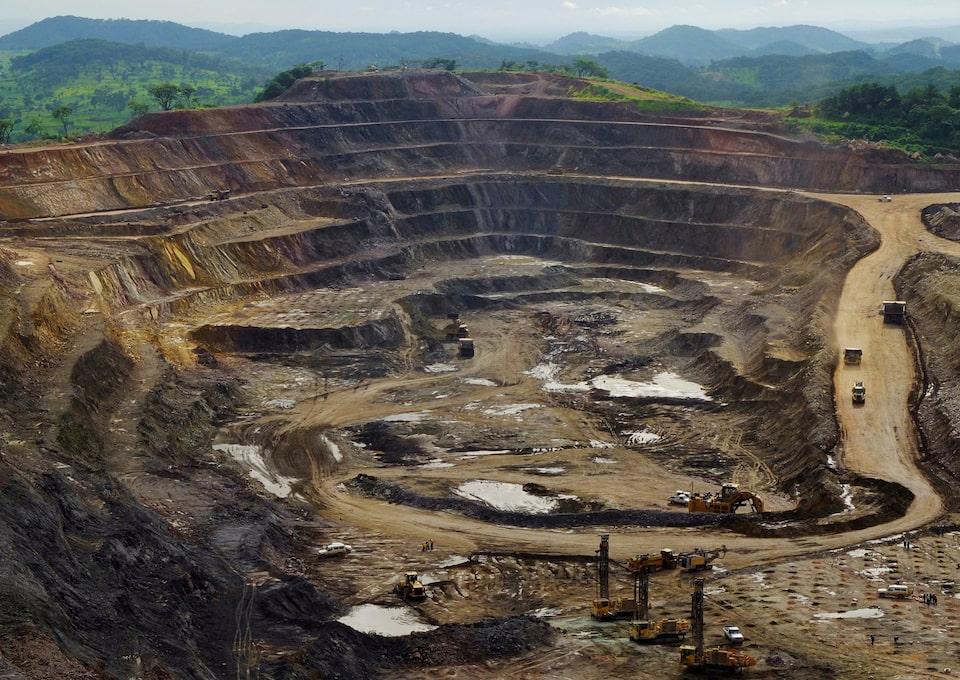
LONDON, Feb 11 (Reuters) - U.S. President Donald Trump has just unveiled "Project Vault", a $12 billion critical minerals stockpile intended to cushion U.S. manufacturers from supply disruption. But to fill the Vault with the 60 minerals currently classified as critical, the U.S. realises it is going to need a lot of help. Sign up here. Friend-shoring is back with a vengeance as the U.S. seeks to build a metallic alliance to loosen China's chokehold on the metals that sit at the heart of modern technology. Indeed, the U.S. has more friends than ever. Fifty-four countries were represented at the February 4 ministerial meeting on critical minerals in Washington. Eleven new bilateral deals and a trilateral agreement with the European Union and Japan were signed. The multilateral outreach is a stark contrast to Trump's recent unilateral rhetoric, but to quote , opens new tab U.S. Vice President JD Vance, when it comes to critical minerals, "we're all on the same team". LOCKING IN SUPPLY China's export restrictions on a growing number of arcane but critical metals such as gallium, germanium and rare earths have added a sense of urgency to U.S. mineral policy. Funding a new stockpile is the easy part. Securing the desired amount of metal is much harder, particularly if China is the dominant global supplier. One solution is to invest in the mines themselves, using off-take deals to lock in future supply of raw materials. It's even better if the mines are already in production. Greenland may have grabbed the headlines recently. But its large reserves of rare earths are untapped and locked in rock beneath the Arctic ice. That is why the real critical minerals action has been taking place in central Africa. CONTESTING THE CONGO The Democratic Republic of Congo is the world's largest cobalt producer, a growing copper powerhouse and hosts a wide array of other metals on the U.S. Geological Survey's critical minerals list. Since the U.S. brokered a pact between Congo and its neighbour Rwanda to ease tensions along the border, U.S. agencies have been rushing to secure mineral rights. A consortium led by private equity fund Orion Resource Partners and the U.S. International Development Finance Corp (DFC) is in talks to buy a 40% stake in Glencore's (GLEN.L) , opens new tab copper and cobalt operations in the country. The DFC also plans to buy into a joint venture between Swiss trade house Mercuria and Congo's state mining entity Gecamines to market the government's share of national production. U.S. buyers would have rights of first refusal. This is just part of a multi-faceted campaign aimed at countering China's dominant role in one of the world's most resource-rich countries. It's also a template for others, which explains the big turnout in Washington last week. RESHAPING THE MARKET The proposed FORGE alliance, or the Forum on Resource Geostrategic Engagement to give it its full title, is not just about securing critical minerals but also about reshaping the market. "We know that today the international market for critical minerals is failing," Vance told the Washington meeting. It is "a market distorted beyond recognition, one that punishes strategic investment, one that punishes diversification, and one that punishes long-term planning." Vance didn't name any names but the Chinese elephant in the room loomed large. China's dominance of critical mineral supply chains allows it both to restrict production, as it has been doing recently, and to flood the world with surplus to crush prices and potential competitors. The proposed answer is a preferential trade zone with enforceable floor prices and price-gap subsidies to protect against such predatory practices. The mitigation of price risk will, it is hoped, entice more private capital into both mining and processing. METALS WORLD The Trump administration has made no secret of its antipathy to global multilateral institutions, but when it comes to critical minerals it has no choice but to form its own one. While federal money has been pouring into new domestic mining projects, the reality is that many will take months if not years to produce first metal. That's too long a wait given China's proven ability to starve key manufacturing sectors of critical inputs. Moreover, the list of critical minerals is a long one and no one country can boast exploitable reserves of all of them or the processing capacity to convert mineral to metal. That includes even China. Its grip on supplies of finished products such as rare earth magnets belies a dependency on imports of raw materials from countries like the Congo. The U.S. re-embrace of a multilateral mineral policy is an acknowledgment of the complexity of modern metallic supply chains. But they all start in the ground. And if you don't have your own deposits and mines, you'd best find a friend who does. Andy Home is a Reuters columnist. The opinions expressed are his own Enjoying this column? Check out Reuters Open Interest (ROI) for thought-provoking, data-driven commentary on markets and finance. Follow ROI on LinkedIn , opens new tab and X , opens new tab. And listen to the Morning Bid daily podcast on Apple , opens new tab, Spotify , opens new tab, or the Reuters app , opens new tab. Subscribe to hear Reuters journalists discuss the biggest news in markets and finance seven days a week. https://www.reuters.com/markets/commodities/us-turns-multilateral-search-critical-mineral-security-2026-02-11/
2026-02-11 06:07
LITTLETON, Colorado, Feb 11 (Reuters) - Europe's appetite for natural gas could climb more steeply than expected this year after skimpy snow coverage across key mountainous regions ate into hydropower production potential. Snow coverage in key parts of Italy and Austria is well below normal so far in 2026, resulting in a steep drop in the main source of fuel for hydropower plants in those regions. Sign up here. Local utilities mainly use natural gas plants to offset declines from hydro dams, which are the largest overall power source in Austria and the second largest form of dispatchable power in Italy. Gas-fired power output so far this year is already up sharply from where it stood at this point in 2025, climbing by 24% in Italy and 17% in Austria, according to data from LSEG. If snow accumulation continues to undershoot historical averages, power firms will likely sustain that elevated level of gas generation and further tighten regional gas inventories - already at multi-year lows - in the process. For major LNG exporters like the U.S. and Qatar, the prospect of higher gas demand in Europe offers bumper profit potential. But the upbeat gas outlook could still be undone if heavy regional snows and rains fall in the coming weeks. EAST-WEST DIVIDE A recent map of Europe's snow coverage - or lack thereof - underscores the severity of the shortfall in key areas. While much of Scandinavia, Russia and Central Europe currently have ample snow coverage, most of Western and Southern Europe do not have much snow, including in areas currently hosting the Winter Olympics in northern Italy. Thankfully for Olympians, ski resorts can create artificial snow to keep the games running. But utilities looking to manage power flows can only count on the real stuff to act as a reservoir for future hydropower production during the winter and then channel the runoff into rivers and dams to generate electricity as the snow melts. So far in 2026, Italy's run-of-river hydro dam power output is down around 22% from a year earlier and is the lowest for the year-to-date period since at least 2023, LSEG data shows. LSEG's forecasts for future hydro production are also stunted, with estimated output through April projected to be around 13% below the long-term average. In Austria, the projected shortfall is even steeper, with production through April expected to come in around 40% below the long-term average. Forecasts for the broader Danube catchment area - which spans from southern Germany through Hungary and Romania - are roughly in line with the long-term average, despite sub-par readings so far this year. GAS CRUTCH Utilities in Austria and Italy are accustomed to patchy hydro generation and have frequently relied on gas plants to plug any shortfalls. Utilities in Turkey are increasingly following similar generation trends, with periods of elevated gas-fired power output coinciding with bouts of low-hydro dam production. However, with regional natural gas inventories already at multi-year lows, power firms across Europe may start to see the cost of replacement gas supplies trend higher as storage farms, utility networks and gas exporters manage system throughput. Regional benchmark natural gas prices are already well above where they finished 2025, with prices averaging around 34 euros per megawatt hour (MWh) so far in 2026 compared with around 27 euros/MWh in December last year. Further price gains could be seen on the back of any widespread cold snaps across Europe - which boost overall heating demand - or if there are any disruptions to LNG export flows from the U.S. or other suppliers. Such spells of gas inflation will eat into the margins of utilities and may further lift the energy bills for consumers. But if snow accumulations remain scarce across key hydro markets, power firms may have little choice but to pay up for the gas they need to keep the lights on this winter and spring. The opinions expressed here are those of the author, a columnist for Reuters. Enjoying this column? Check out Reuters Open Interest (ROI), your essential new source for global financial commentary. Follow ROI on LinkedIn , opens new tab and X , opens new tab. And listen to the Morning Bid daily podcast on Apple , opens new tab, Spotify , opens new tab, or the Reuters app , opens new tab. Subscribe to hear Reuters journalists discuss the biggest news in markets and finance 7 days a week. https://www.reuters.com/markets/commodities/europes-low-snow-cover-sets-stage-even-higher-gas-burn-2026-02-11/

2026-02-11 06:04
First-quarter net profit surges to 746 million euros Siemens Gamesa's operating loss narrows to 46 million euros Siemens Energy shares have risen more than ten-fold since 2024 Shares indicated to open 4.3% higher FRANKFURT/DUESSELDORF, Feb 11 (Reuters) - Siemens Energy (ENR1n.DE) , opens new tab on Wednesday said net profit nearly tripled in the first three months of its fiscal year, boosted by AI-driven demand for gas turbines and grid equipment as well as a narrower loss at its struggling wind division. The results reflect robust demand for large gas turbines and grid technology, both critical for the global build-out of data centres to power AI technology, as well as an improved performance at wind turbine maker Siemens Gamesa. Sign up here. The AI boom has helped increase Siemens Energy's stock more than ten-fold over the past two years, giving it a market value of 130 billion euros ($155 billion). "Sustained high demand in our gas turbines and grid technologies businesses is making a significant contribution to overall performance," Chief Executive Christian Bruch said. "Also in the wind business, there are early signs of a modest improvement." Shares of the company, now Germany's sixth most valuable listed firm, were indicated to open 4.3% higher in pre-market trading. Net profit for the quarter ending December came in at 746 million euros ($889 million), up from 252 million a year earlier, beating the 732 million forecast in an LSEG analyst poll. Siemens Gamesa, which has been plagued by quality issues, narrowed its operating loss to 46 million euros, compared with 374 million in the same period last year, helped by improved productivity. ($1 = 0.8389 euros) https://www.reuters.com/business/energy/siemens-energy-net-profit-nearly-triples-demand-gas-turbines-grids-rises-2026-02-11/