2026-01-27 11:13
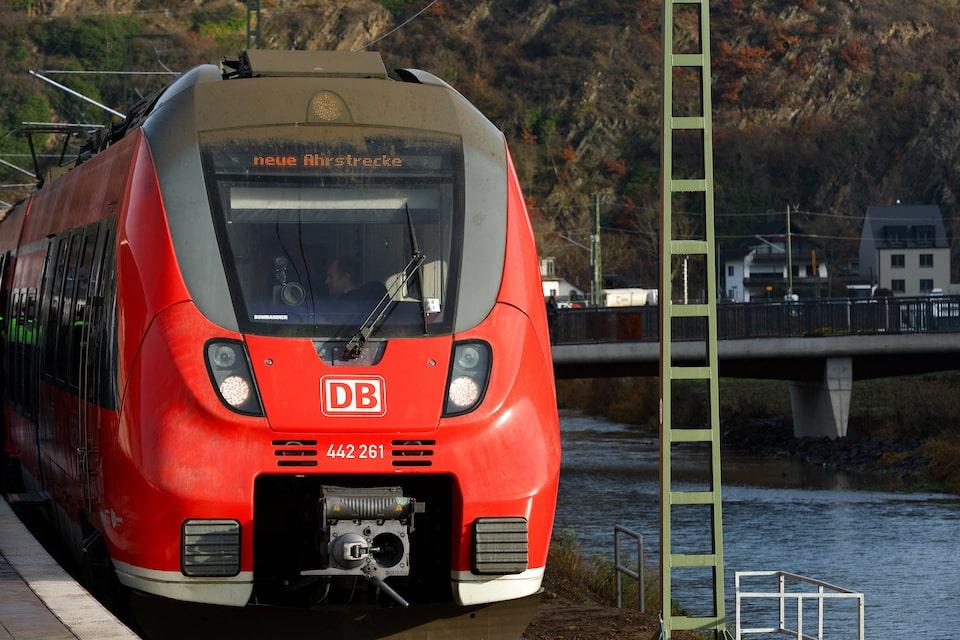
BERLIN, Jan 27 (Reuters) - The head of Germany's struggling state railway Deutsche Bahn (DBN.UL) aims to save up to 500 million euros ($593 million)annually through changes to the top management as part of a restructuring programme, she told journalists on Monday night. Speaking at a press event in Berlin, Deutsche Bahn CEO Evelyn Palla did not specify when that target would be achieved. Sign up here. There will be a significant streamlining and greater responsibility for the operational units under the restructuring plan that foresees a second wave of changes from this summer. Palla, who took office in October, has already reduced the size of the management boards at Deutsche Bahn's holding company and its subsidiaries. In December, she said that at least 30% of the jobs at the holding company, out of around 3,500 currently, would be cut. The CEO primarily wants to improve punctuality, which is damaging the company's image, but she also aims to turn around the operating result. ($1 = 0.8431 euros) https://www.reuters.com/business/german-railway-ceo-aims-500-mln-euros-annual-savings-top-management-changes-2026-01-27/
2026-01-27 11:13
Exports still below capacity due to logistics bottlenecks Coal miners say rail performance improving India, Pakistan top takers of South Africa's coal Jan 27 (Reuters) - Coal exports from South Africa's Richards Bay Coal Terminal rose 11% to 57.66 million metric tons in 2025, the highest in four years, as freight rail performance improved. South Africa's coal shipments are still significantly lower than the 76 million tons recorded in 2017, mainly due to state-owned freight rail and port operator Transnet's limited capacity to haul commodities to export markets. Sign up here. Transnet has struggled because of a shortage of locomotives and spares, as well as cable theft and vandalism of its infrastructure. This has forced some minerals exporters to resort to trucking to port, with some commodity cargo now going through Mozambique. Major coal exporters including Thungela Resources (TGAJ.J) , opens new tab and Exxaro Resources (EXXJ.J) , opens new tab have, however, pointed to an improving freight rail performance since the second half of 2024. RBCT, which has the capacity to handle 91 million tons of coal exports annually, said in a performance update on Tuesday that 7,157 trains were offloaded at the terminal in 2025, up from 6,342 the year before. The average number of trains also increased to 20 per day, from 17 daily the previous year. Asia remains the top destination for South Africa's coal, although its share of total shipments declined to 79.8% in 2025 from 84.5% the year before. India is the single largest importer of South Africa's coal, accounting for 25.75 million tons, or 45% of total shipments. The portion of South Africa's coal exports heading to Europe edged up to 7.2% last year, from 6.8% in 2024, as exports to the Netherlands increased, RBCT data shows. Shipments to the Middle East almost doubled to 3.54 million tons, with coal exports to Israel increasing by 1 million tons to 1.78 million tons, the data shows. https://www.reuters.com/world/africa/south-africas-richards-bay-coal-exports-up-11-rail-improvements-2026-01-27/

2026-01-27 09:11
Yen's decline raises concerns over Japan's financial health Japan's debt at 230% of GDP, highest in developed world Tokyo last intervened in currency markets in July 2024 TOKYO, Jan 27 (Reuters) - The spectre of coordinated yen buying by Tokyo and Washington has propped up Japan's currency, but history suggests the impact of an actual intervention could be limited, especially because Prime Minister Sanae Takaichi is basing her snap election campaign on expanded stimulus measures. With a vote for the lower house of Parliament in less than two weeks serving as a mandate on Takaichi's mission to reflate the economy, Japanese authorities are openly hinting at stepping into the markets for the first time since July 2024. Sign up here. The yen's protracted decline this year has become a symbol of the market's escalating worries over Japan's financial health. Its relentless march lower has come as Japanese government bond yields have soared to record highs, which would ordinarily be supportive of the currency. "The currency is reacting aggressively," said Toshinobu Chiba, a Tokyo-based fund manager at Simplex Asset Management, who believes the yen could spiral to as weak as 180 per dollar for the first time since 1986, a year after the Plaza Accord , opens new taballowed for a major depreciation of the dollar, if Takaichi scores a big election win and has a mind to expand her stimulus plans. Chiba, like many market participants, expects dollar-yen levels beyond 160 to trigger an initial round of intervention, "but there's not so much impact the Ministry of Finance can have on the market." That's because "most investors do not trust Japan's fiscal control," he said. "It's a sovereign credit issue." Japan's government debt already stands at roughly 230% of gross domestic product, the highest in the developed world. Now Takaichi - along with her main political opponents - has pledged to suspend the consumption tax on food - the source of around 5 trillion yen ($32.36 billion) in revenue a year - without saying how she will make up the shortfall. Fears of a fiscal blowout came to a head last week, with long-dated JGB yields vaulting to record highs, while stocks suffered their most severe selloff in three months - all while the yen tested record troughs versus the euro and Swiss franc. A "Sell Japan"-style market rout that is self-reinforcing and spans asset classes is not something Takaichi can afford as she heads into an election. So on Friday, with traders offloading the yen despite hawkish signals from the Bank of Japan, the currency suddenly spiked and then spiked again several hours later, in what appeared to be the result of rate checks from both the BOJ and the Federal Reserve Bank of New York. From around 159.20 per dollar late in the Tokyo afternoon, the yen ultimately vaulted to as strong as 153.30 per dollar by Friday's close. It last traded at 154.75 on Tuesday. Joint action is rare, but it would come at a time when Washington is vocally supportive of a stronger yen against the greenback. Japan's top currency diplomat, Atsushi Mimura, has declined to comment on the reported rate checks - a traditional precursor to actual intervention - saying only that policymakers would maintain close coordination with their U.S. peers and respond "appropriately." Even with the potential for added firepower, the impact of a yen intervention has limits - and is generally considered a way to slow or smooth currency moves rather than reverse their direction, particularly when there is a clear driver such as a fear of a fiscal catastrophe. Tokyo spent a combined 15.3 trillion yen on intervention in 2024 - an unprecedented amount - to stem a wave of yen selling as the monetary policy paths of the Fed and the BOJ diverged sharply. But following a bout of intervention in late April that year, the yen was plumbing new lows less than two months later. Japan's next move into the currency markets in July 2024 was more successful, but mainly because it came right ahead of U.S. Federal Reserve Chair Jerome Powell's unexpected dovish pivot in Jackson Hole, Wyoming, in August of that year. Today, policymakers are worried not only about the two-year suspension of the food tax; they are also concerned that the levy will be politically difficult to reinstate. The increases in the consumption tax since 2014, while exceedingly unpopular, have been a big part of what has improved Japan's fiscal health in recent years, said Chris Scicluna, head of research at Daiwa Capital Markets Europe. "The snap election is very much crystallising in investors' minds the risks that Japan's public finances just are not going to put on a sustainable path," he said. "They've got some favourable tailwinds" in the long-awaited return of inflation and reasonable economic growth, Scicluna added. "Unfortunately, the politics is getting in the way." ($1 = 154.5200 yen) https://www.reuters.com/world/asia-pacific/crisis-confidence-yen-looms-over-japan-pm-takaichis-election-gamble-2026-01-27/

2026-01-27 09:06
FRANKFURT, Jan 27 (Reuters) - The European Central Bank said on Tuesday it was changing guidelines to allow it to lend to banks that are being wound down, tackling a long-standing issue in the European Union's framework for handling bank failures. The ECB said banks that are in resolution would now be given access to the central bank's liquidity provision "provided they meet certain conditions", such as having enough capital. Sign up here. A 2017 run on Spain's Banco Popular exposed a hole in EU rules that bar the ECB, the euro zone's central bank, from supporting a failing lender while the EU's Single Resolution Board organises a rescue. It was one of just two cases in which the EU's decade-old resolution framework has been applied, the other being the resolution of some European units of Russia's Sberbank following sanctions against Russia in 2022. https://www.reuters.com/sustainability/boards-policy-regulation/ecb-changes-guidelines-allow-lending-failing-banks-during-resolution-2026-01-27/

2026-01-27 08:36
SEOUL, Jan 27 (Reuters) - South Korean shares swept to their biggest daily jump in three weeks on Tuesday as the global AI boom drove a sharp tech rally, taking the sting out of U.S. President Donald Trump's threat to impose higher 25% tariffs on Korean goods. Trump said on Monday he was increasing tariffs on South Korean imports into the United States related to autos, lumber and pharmaceuticals to 25%, from 15%, accusing the country's legislature of "not living up" to its trade deal with Washington. Sign up here. The news initially pulled down the benchmark KOSPI (.KS11) , opens new tab by 1%, but that just lured buyers looking for exposure to Asia's best-performing market in 2025, a title it won on the back of surging AI-driven demand in the tech sectors. On Tuesday, that tech euphoria helped the index rally 135.26 points, or 2.73%, to close at 5,084.85, its biggest one-day increase since January 5. Heavy lifters were Samsung Electronics (005930.KS) , opens new tab and SK Hynix (000660.KS) , opens new tab, the two chipmakers dominating in memory chips critical for AI-linked data centers. Samsung rose 4.87%, while SK Hynix soared 8.70% to a record high. South Korea’s automakers clawed back early losses, with shares of Hyundai Motor (005380.KS) , opens new tab closing down 0.81%. Sister company Kia Corp (000270.KS) , opens new tab finished 1.1% lower after dropping as much as 6% earlier. Hyundai Mobis (012330.KS) , opens new tab fell 1.1% having lost as much as 5.7% intraday. The won was down 0.3% at 1,447.9 per dollar as of 0832 GMT, also retracing initial losses of 0.6%, coming off a near one-month high hit on Monday. "Some investors took today as an opportunity to buy-on-the-dip as many who missed out on the recent rally were waiting for some kind of correction," said Lee Sung-hoon, an analyst at Kiwoom Securities. "Market participants are well aware of how political situations related to tariffs unfold so not many are regarding this as something that could actually hurt corporate earnings." South Korea scrambled on Tuesday to assure the U.S. it remained committed to implementing a trade deal, and announced plans to send a top trade envoy to Washington soon to meet U.S. Trade Representative Jamieson Greer. It was not immediately clear when Trump's threatened tariff hike would take effect, or what specifically triggered the U.S. President's directive. https://www.reuters.com/business/autos-transportation/shares-south-korean-automakers-slide-after-trump-post-raising-tariffs-2026-01-27/

2026-01-27 07:51
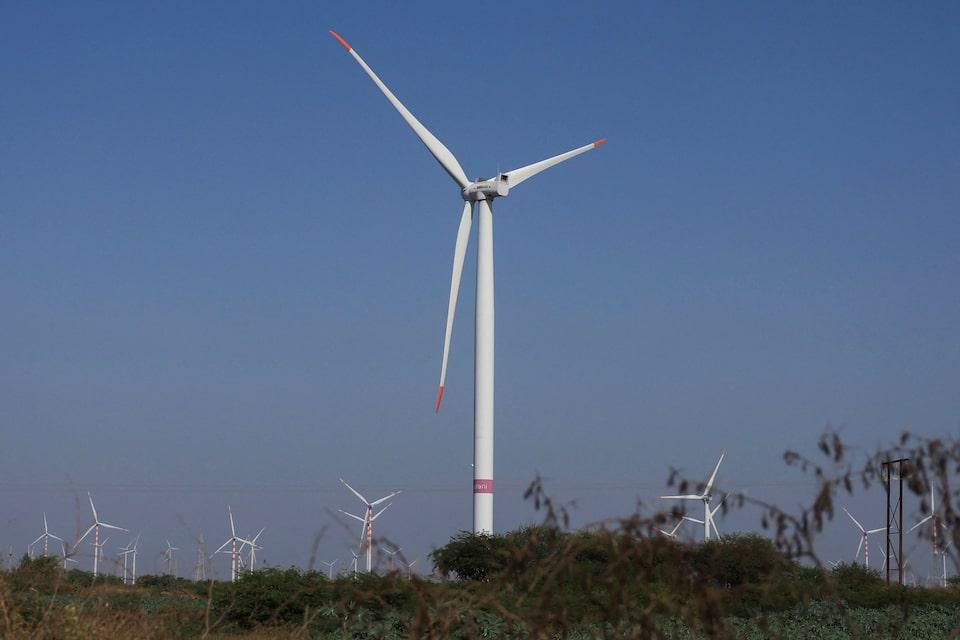
GOA, India, Jan 27 (Reuters) - India's energy infrastructure offers potential investment opportunities worth up $500 billion in the South Asian nation's quest to become independent in production of energy, Prime Minster Narendra Modi said on Tuesday. "We are moving away from energy security to energy independence ... There is a $500 billion opportunity in India's energy infrastructure," Modi told delegates at the India Energy Week conference. Sign up here. India is building energy infrastructure to meet demand, he said, looking towards affordable refining and transport options. In natural gas, Modi added, "We are aiming to make LNG transportation vessels domestically." The South Asian nation aims to become the world's No. 1 in refining capacity, he said. India is currently the third largest energy consumer and importer of crude. It aims to boost to $100 billion the opportunities on offer in oil exploration, in the effort to lift the area under exploration to 1 million square kilometre (386,000 sq. miles). https://www.reuters.com/business/energy/india-flags-potential-investments-500-billion-energy-sector-2026-01-27/