2025-08-04 21:15
Aug 4 (Reuters) - TASER maker Axon Enterprise (AXON.O) , opens new tab raised its full-year revenue forecast on Monday, betting on continued demand for its software products and security devices. Shares of Axon were up 3.5% in aftermarket trading. Sign up here. The Arizona-based company — known for its law enforcement technology, including TASER energy weapons, body-worn cameras, and digital evidence management systems — has benefited from rising corporate spending on executive security and increased federal investment in immigration enforcement. Axon now expects 2025 revenue to be between $2.65 billion and $2.73 billion, up from its earlier forecast of $2.60 billion to $2.70 billion. Analysts on average expect $2.66 billion, according to data compiled by LSEG. For the quarter ended June 30, Axon reported adjusted earnings of $2.12 per share, well above analysts’ average estimate of $1.46. Quarterly revenue came in at $668.54 million, compared with expectations of $631.56 million. https://www.reuters.com/business/axon-raises-annual-revenue-forecast-strong-security-demand-2025-08-04/
2025-08-04 21:03
ORLANDO, Florida, Aug 4 (Reuters) - Investors shrugged off last week's worries over the U.S. economy to drive a powerful, tech-led rebound across global stocks on Monday, although U.S. Treasuries prices held onto Friday's gains, suggesting a fair degree of caution persists. More on all that below. In my column today I look at why rather than firing the head of the Bureau of Labor Statistics, President Donald Trump could have claimed that the weak jobs data and dramatic market reaction vindicated his stance that the Fed should cut rates. Sign up here. If you have more time to read, here are a few articles I recommend to help you make sense of what happened in markets today. Today's Key Market Moves Stocks bounce back, bonds more cautious After getting slammed on Friday by unexpectedly poor U.S. employment figures, U.S. and world stocks rebounded on Monday. Whether this is a short-term technical recovery or the resumption of the bull run of recent months remains to be seen. In isolation, the positive start to the week has been pretty impressive. Wall Street more than recovered the ground it lost on Friday, led by the Nasdaq and Russell 2000, as investors bet that both tech and small caps would be among the big winners in a lower interest rate world. The global recovery was probably overdue. The MSCI All Country index's rise on Monday snapped a six-session losing streak, its worst run in nearly two years. While Friday's slump in U.S. bond yields reflected deepening growth fears and contributed to the huge equity selloff, the further drift lower in yields on Monday supported equity sentiment. The feel good factor could prove fleeting though. The U.S.-centric issues that drove last week's selloff - growth fears, tariff concerns and unusually high levels of policy uncertainty - haven't disappeared. Trump said on Monday he will substantially raise tariffs on goods from India over its Russian oil purchases, while Switzerland says it is ready to make a "more attractive offer" to Washington to avert the steep 39% tariffs it is facing. Investors are increasingly nervous about political interference in independent U.S. institutions after Trump fired Bureau of Labor Statistics Commissioner Erika McEntarfer for allegedly rigging the jobs data. This comes amid Trump's verbal attacks on Fed Chair Jerome Powell for not cutting interest rates, and as he prepares to announce his nomination to replace Fed Governor Adriana Kugler, who surprisingly resigned on Friday. Looking ahead to Tuesday, the U.S. earnings calendar heats up again and purchasing managers index data will give an insight into how the service sectors in many of the world's major economies fared in July. Trump scores major own goal with labor official firing U.S. President Donald Trump's decision to fire a top labor official following weak jobs data obviously sends ominous signals about political interference in independent institutions, but it is also a major strategic own goal. Trump has spent six months attacking the Federal Reserve, and Chair Jerome Powell in particular, for not cutting interest rates. The barbs culminated in Trump branding Powell a "stubborn MORON" in a social media post on Friday before the July jobs report was released. The numbers, especially the net downward revision of 258,000 for May and June payrolls growth, were much weaker than expected. In fact, this was "the largest two-month revision since 1968 outside of NBER-defined recessions (assuming the economy is not in recession now)," according to Goldman Sachs. This sparked a dramatic reaction in financial markets. Fed rate cut expectations soared, the two-year Treasury yield had its steepest fall in a year, and the dollar tumbled. A quarter-point rate cut next month and another by December were suddenly nailed-on certainties, according to rate futures market pricing. This was a huge U-turn from only 48 hours before, when Powell's hawkish steer in his post-FOMC meeting press conference raised the prospect of no easing at all this year. Trump's constant lambasting of "Too Late" Powell suddenly appeared to have a bit more substance behind it. The Fed chair's rate cut caution centers on the labor market, which now appears nowhere near as "solid" as he thought. Trump could have responded by saying: "I was right, and Powell was wrong." Instead, on Friday afternoon he said he was firing the head of the Bureau of Labor Statistics, Commissioner Erika McEntarfer, for faking the jobs numbers. Trump provided no evidence of data manipulation. So rather than point out that markets were finally coming around to his way of thinking on the need for lower interest rates, Trump has united economists, analysts and investors in condemnation of what they say is brazen political interference typically associated with underdeveloped and unstable nations rather than the self-proclaimed 'leader of the free world.' "A dark day in, and for, the U.S.," economist Phil Suttle wrote on Friday. "This is the sort of thing only the worst populists do in the worst emerging economies and, to use the style of President Trump, IT NEVER ENDS WELL." UNCERTAINTY PREMIUM It's important to note that major – even historic – revisions to jobs growth figures are not necessarily indicative of underlying data collection flaws. As Ernie Tedeschi, director of economics at the Budget Lab at Yale, argued on X over the weekend: "BLS's first-release estimates of non-farm payroll employment have gotten more, not less, accurate over time." It should also be noted that the BLS compiles inflation as well as employment data, so, moving forward, significant doubt could surround the credibility of the two most important economic indicators for the U.S. - and perhaps the world. Part of what constitutes "U.S. exceptionalism" is the assumption that the experts leading the country's independent institutions are exactly that, independent, meaning their actions and output can be trusted, whatever the results. Baseless accusations from the U.S. president that the BLS, the Fed and other agencies are making politically motivated decisions to undermine his administration only undermine trust in the U.S. itself. "If doubts are sustained, it will lead investors to demand more of a risk premium to own U.S. assets," says Rebecca Patterson, senior fellow at the Council on Foreign Relations. "While only one of many forces driving asset valuations, it will limit returns across markets." This furor comes as Fed Governor Adriana Kugler's resignation on Friday gives Trump the chance to put a third nominee on the seven-person Fed board, perhaps a potential future chair to fill that slot as a holding place until Powell's term expires in May. Whoever that person is will likely be more of a policy dove than a hawk. Policy uncertainty, which had been gradually subsiding since the April 2 'Liberation Day' tariff turmoil, is now very much back on investors' radar. What could move markets tomorrow? Want to receive Trading Day in your inbox every weekday morning? Sign up for my newsletter here. Opinions expressed are those of the author. They do not reflect the views of Reuters News, which, under the Trust Principles , opens new tab, is committed to integrity, independence, and freedom from bias. https://www.reuters.com/business/global-markets-trading-day-graphic-2025-08-04/
2025-08-04 20:53
Aug 4 (Reuters) - Diamondback Energy (FANG.O) , opens new tab missed analysts' estimates for second-quarter profit on lower crude oil prices and the shale producer cut its forecast for full-year capex. Shares of the company fell 2.7% in extended trading on Monday. They are down nearly 11% so far this year, through last close. Sign up here. Diamondback cut the upper end of its current year capital budget by $200 million to bring it to between $3.4 billion and $3.6 billion, dragged down by prolonged volatility and uncertainty. The company, which dropped four rigs to 13 rigs in the April-June quarter, said on Monday there was no compelling reason to increase activity this year. Diamondback in May said that a combination of global economic uncertainty and rising OPEC+ supply has brought U.S. oil production to a tipping point. It had also warned that it could reduce activity further if oil prices declined further. The Midland, Texas-based company posted an adjusted profit of $2.67 per share for the three months ended June 30, compared with analysts' average estimate of $2.82, according to data compiled by LSEG. Brent crude averaged 20% lower in the quarter from a year earlier, pressured by U.S. tariffs and their impact on global growth, OPEC+ supply gains and geopolitical tensions. Prices briefly topped $80 per barrel after Israel targeted Iran's nuclear sites in June, but slid to $67 by the end of the period. Diamondback said its average realized crude price, excluding hedges, for the quarter stood at $63.23 per barrel, down about 20% from last year. Production almost doubled at 919,879 barrels of oil equivalent per day (boepd) following its $26 billion acquisition of private rival Endeavor Energy Resources. The company raised its full-year production forecast to between 890,000 and 910,000 boepd, from between 857,000 and 900,000 boepd, on the back of gas demand. https://www.reuters.com/business/energy/shale-producer-diamondback-misses-profit-estimate-cuts-capex-forecast-2025-08-04/

2025-08-04 20:43
Aug 4 (Reuters) - Coterra Energy (CTRA.N) , opens new tab beat Wall Street estimates for second-quarter profit on Monday, as higher production and a rebound in U.S. natural gas prices offset weaker oil prices. Shares of the company rose 1.3% in after-hours trading. Sign up here. The Houston-based shale producer saw increased output across the Permian and Anadarko basins, with total production rising 17% to 783,900 barrels of oil equivalent per day (boepd) in the quarter. While gains from production helped lift results, they were partially offset by weaker crude prices, with the average benchmark Brent crude price falling over 20% from a year earlier amid U.S. tariffs, weak global demand and increased supply from OPEC+ producers. Coterra's average realized price for oil — the price it received for each barrel produced — fell to $62.80 per barrel, from $79.37 per barrel last year. Meanwhile, a rise in U.S. natural gas prices helped cushion the impact of weak oil prices. The company's average realized prices for natural gas jumped over 74% to $2.20 per thousand cubic feet (Mcf) in the second quarter. Coterra also announced a new supply agreement to deliver 50 million cubic feet of natural gas per day to the CPV Basin Ranch Energy Center — a proposed 1,350 megawatt combined-cycle natural gas power plant — under a seven-year deal beginning in 2028. The facility is being built in the Permian Basin, and the deal marks Coterra's first supply deal in the top U.S. oil patch, as the company looks capitalize on growing demand for natural gas. Coterra posted an adjusted profit of 48 cents per share for the three months ended June 30, compared with analysts' estimates of 45 cents per share, according to data compiled by LSEG. https://www.reuters.com/business/energy/coterra-energy-beats-profit-estimates-strong-output-higher-gas-prices-2025-08-04/

2025-08-04 20:33
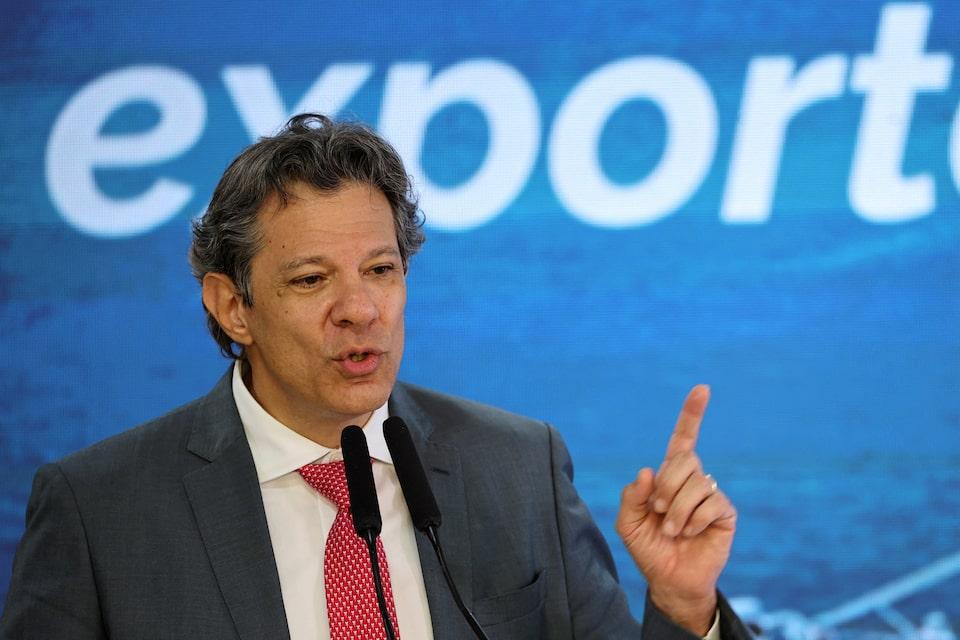
BRASILIA, Aug 4 (Reuters) - Brazil's benchmark interest rate of 15% is overly restrictive and there is room to reconsider the timing of monetary easing, Finance Minister Fernando Haddad said on Monday. "The current level is more restrictive than necessary," Haddad told BandNews TV. "There is room today to rethink the trajectory of the rate-cutting cycle." Sign up here. Policymakers paused their tightening cycle last week, keeping rates at their highest level in nearly two decades and signaling they will remain steady for a "very prolonged" period as the central bank seeks to bring inflation back to target. Private economists surveyed weekly by Brazil's central bank expect a first interest rate cut in March, according to the latest poll released on Monday. Haddad said annual inflation "has everything in place" to fall below 5% by December. The central bank forecasts inflation at 4.9% this year, above the official target of 3% with a tolerance band of 1.5 percentage points in either direction. Haddad also emphasized that Brazil's contingency plan for steeper U.S. tariffs, which has yet to be decided by President Luiz Inacio Lula da Silva, will have only a small impact on the country's primary budget. "At this moment, we are not considering any contingency measures that would breach the country's fiscal framework," Haddad said. Brazil will have no difficulty redirecting beef and coffee exports to other markets after the U.S. imposed 50% tariffs on those products, said the minister. But he noted that the broader impact of the levies on other sectors is a concern for the government, particularly for those producing customized goods for the U.S. market. Haddad said government purchases could help support some affected sectors, such as fruits, but added that this would not apply across the board. He also pointed to subsidized credit lines as another potential form of support. https://www.reuters.com/world/americas/brazil-interest-rate-overly-restrictive-room-earlier-cuts-minister-says-2025-08-04/
2025-08-04 20:25
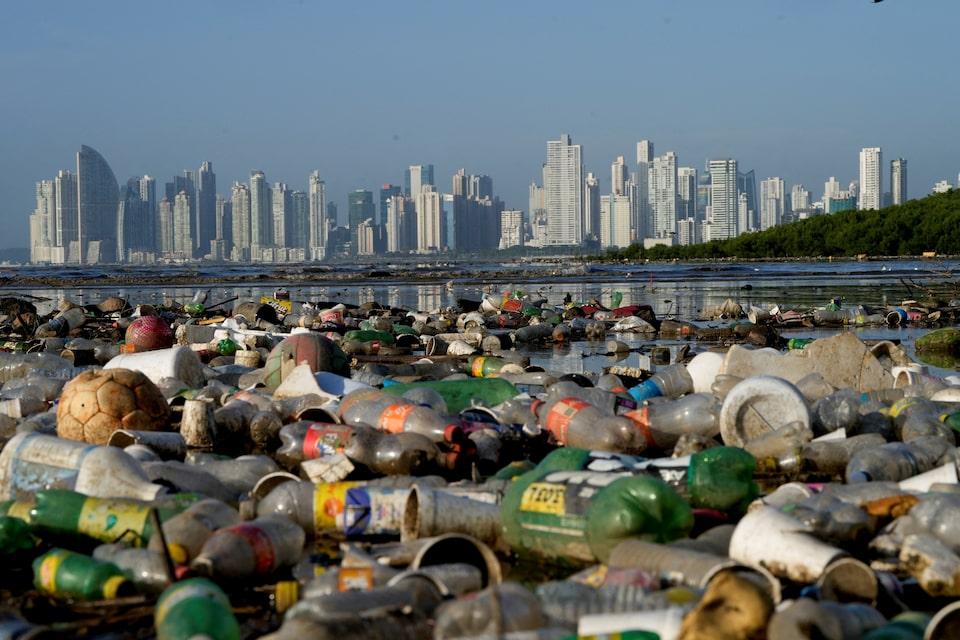
Talks resume in Geneva on Tuesday on treaty to curb plastics pollution Oil states challenge treaty provisions, push for voluntary measures US seeks treaty focused on waste disposal, not production limits Small island states demand funding for pollution cleanup GENEVA, Aug 4 (Reuters) - Hopes for a "last-chance" ambitious global treaty to curb plastic pollution have dimmed as delegates gather this week at the United Nations in Geneva for what was intended to be the final round of negotiations. Diplomats and climate advocates warn that efforts by the European Union and small island states to cap virgin plastic production - fuelled by petroleum, coal and gas - are threatened by opposition from petrochemical-producing countries and the U.S. administration of President Donald Trump. Sign up here. Plastic production is set to triple by 2060 without intervention, choking oceans, harming human health and accelerating climate change, according to the OECD. "This is really our last best chance. As pollution grows, it deepens the burden for those who are least responsible and least able to adapt," said Ilana Seid, permanent representative of Palau and chair of the Alliance of Small Island States (AOSIS). Delegates will meet officially from Tuesday for the sixth round of talks, after a meeting of the Intergovernmental Negotiating Committee (INC-5) in South Korea late last year ended without a path forward on capping plastic pollution. The most divisive issues include capping production, managing plastic products and chemicals of concern, and financing to help developing countries implement the treaty. Delegates told Reuters that oil states, including Saudi Arabia and Russia, plan to challenge key treaty provisions and push for voluntary or national measures, hindering progress toward a legally binding agreement to tackle the root cause of plastic pollution. Government spokespeople for Saudi Arabia and Russia were not immediately available for comment. Andres Del Castillo, senior attorney at the Center for International Environmental Law (CIEL), a non-profit providing legal counsel to some countries attending the talks, said oil states were questioning even basic facts about the harm to health caused by plastics. "We are in a moment of revisionism, where even science is highly politicized," he said. The U.S. State Department told Reuters it will lead a delegation supporting a treaty on reducing plastic pollution that doesn't impose burdensome restrictions on producers that could hinder U.S. companies. A source familiar with the talks said the U.S. seeks to limit the treaty's scope to downstream issues like waste disposal, recycling and product design. It comes as the Trump administration rolls back environmental policies, including a longstanding finding on greenhouse gas emissions endangering health. Over 1,000 delegates, including scientists and petrochemical lobbyists, will attend the talks, raising concerns among proponents of an ambitious agreement that industry influence may create a watered-down deal focused on waste management, instead of production limits. The petrochemical industry said it continues to support a global treaty and has been urging the U.S. administration and Congress to "lean in" in negotiations. Stewart Harris, spokesperson for the International Council of Chemical Associations, said the U.S. in particular has an opportunity "not just at the negotiating table, but really on the implementation of the agreement" to promote the use of new technologies in mechanical recycling and advanced recycling, which turns plastic waste into fuels, plastics and other products, globally. Republican and Democratic U.S. lawmakers sent separate letters to U.S. Secretary of State Marco Rubio on Monday pushing for divergent approaches. A group of House of Representatives Republicans led by Representative Dan Crenshaw of Texas urged the U.S. delegation to push for a treaty that focuses on expanding recycling technology, while a group of Senate Democrats led by Senator Jeff Merkely of Oregon pushed for a deal that includes plastic production caps. Two-thirds of the Senate is needed to ratify a treaty. ISLAND STATES VULNERABLE Small island states are particularly impacted by plastic waste washing ashore, threatening their fishing and tourism economies. They stress an urgent need for dedicated international funding to clean up existing pollution. "Plastics are a concern for human health because (plastic) contains about 16,000 chemicals, and a quarter of these are known to be hazardous to human health," said Dr. Melanie Bergmann of the Alfred Wegener Institute in Germany. Jodie Roussell, global public affairs lead at food giant Nestle (NESN.S) , opens new tab and a member of a 300-company coalition backing a treaty to reduce plastic pollution, told Reuters that harmonizing international regulations on packaging reduction and sustainable material use would be the most cost-effective approach. French politician Philippe Bolo, a member of the global Interparliamentary Coalition to End Plastic Pollution, said that a weak, watered-down treaty that focuses on waste management must be avoided. Bolo and a diplomatic source from a country attending the talks said the potential of a vote or even a breakaway agreement among more ambitious countries could be explored, as a last resort. Inger Andersen, executive director of the United Nations Environment Programme, however, said countries should push for a meaningful pact agreed by consensus. "We're not here to get something meaningless... you would want something that is effective, that has everybody inside, and therefore everybody committed to it," she said. https://www.reuters.com/sustainability/climate-energy/oil-producer-pressure-trump-rollbacks-threaten-global-treaty-plastics-pollution-2025-08-04/