2026-01-27 07:49
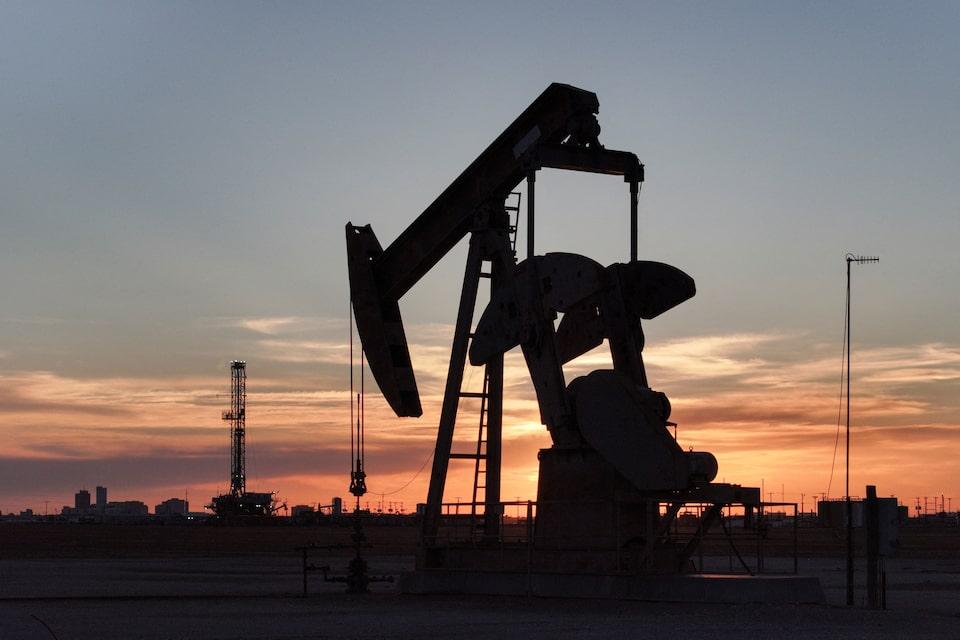
US storm disrupts Gulf Coast crude production, refineries US Gulf Coast crude exports hit zero on Sunday after storm Tengiz oilfield's recovery slower than expected, less than half production restored Middle East tensions persist with US naval deployment HOUSTON, Jan 27 (Reuters) - Oil prices settled 3% higher on Tuesday as producers reeled from a winter storm that hobbled crude production and drove U.S. Gulf Coast crude exports to zero over the weekend. Brent crude futures settled up $1.98 or 3.02%, at $67.57 a barrel. U.S. West Texas Intermediate crude settled up $1.76 or 2.9%, at $62.39 a barrel. Sign up here. U.S. oil producers lost up to 2 million barrels per day or roughly 15% of national production over the weekend, analysts and traders estimated, as a severe winter storm swept across the country, straining energy infrastructure and power grids. Severe weather has boosted crude futures, with short-term risks tilted to the upside on fears of supply disruptions, said Fawad Razaqzada, market analyst at City Index. "The cold weather in the U.S. will likely cause quite significant drawdowns in oil stocks over the next few weeks, particularly if this weather persists," said Tamas Varga, an oil analyst at brokerage PVM. Exports of crude oil and liquefied natural gas from U.S. Gulf Coast ports tumbled to zero on Sunday amid frigid weather, ship tracking service Vortexa said. Exports rebounded on Monday with flows coming in above seasonal norms as ports reopened, said Samantha Santa Maria-Hartke, head of market analysis at Vortexa. Kazakhstan's biggest oilfield, Tengiz, is likely to restore less than half of its normal production by February 7 as it slowly recovers from a fire and power outage, two sources familiar with the matter told Reuters. "The recovery of Tengiz production seems to be happening slower than earlier expected, keeping the oil market tighter," said Giovanni Staunovo, an analyst at UBS, adding that the weaker U.S. dollar was lending some support. However, the CPC, which operates Kazakhstan's main exporting pipeline, said it returned to full loading capacity at its terminal on the Russian Black Sea coast after maintenance was completed at one of its three mooring points. SUPPLY RISKS PERSIST DUE TO MIDEAST TENSIONS A U.S. aircraft carrier and supporting warships have arrived in the Middle East, two U.S. officials told Reuters on Monday, expanding President Donald Trump's capabilities to defend U.S. forces, or potentially take military action against Iran. "With Trump saying last week that the U.S. has an 'armada' heading towards Iran, geopolitical tensions are rising, and that is keeping oil prices supported in the near-term outlook," said Razaqzada of City Index. Tensions between Tehran and Washington coupled with no news on the Ukraine-Russia peace deal are keeping a floor under crude, said Dennis Kissler, senior vice president of trading at BOK Financial. Meanwhile, OPEC+ is set to keep its pause on oil output increases for March at a meeting on February 1, three OPEC+ delegates told Reuters. https://www.reuters.com/business/energy/oil-slips-even-us-winter-storm-curbs-crude-output-2026-01-27/
2026-01-27 07:40
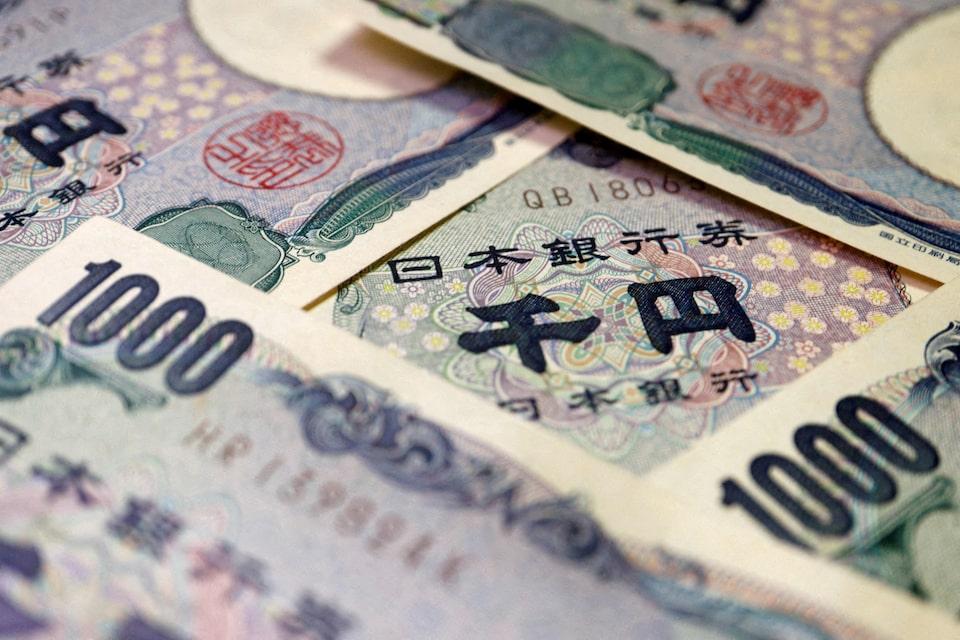
TOKYO, Jan 27 (Reuters) - Currency intervention would be justified if it is aimed at arresting rapid moves in the yen, Yoshinobu Tsutsui, head of Japan's biggest business lobby Keidanren, said on Tuesday. "We welcome the fact that the demerits caused by excessive yen weakness have been arrested to some extent," Tsutsui told a news conference, when asked about the yen's rebound after the New York Federal Reserve conducted so-called rate checks. Sign up here. The direction of Japanese and U.S. monetary policy would also affect the yen's future moves, Tsutsui said. "We hope the Bank of Japan would respond appropriately on this front," he said, without elaborating. "If there are rapid, volatile yen moves, then intervention would be justified," Tsutsui said. https://www.reuters.com/world/asia-pacific/fx-intervention-justified-if-yen-moves-rapid-japan-business-lobby-head-says-2026-01-27/
2026-01-27 07:35
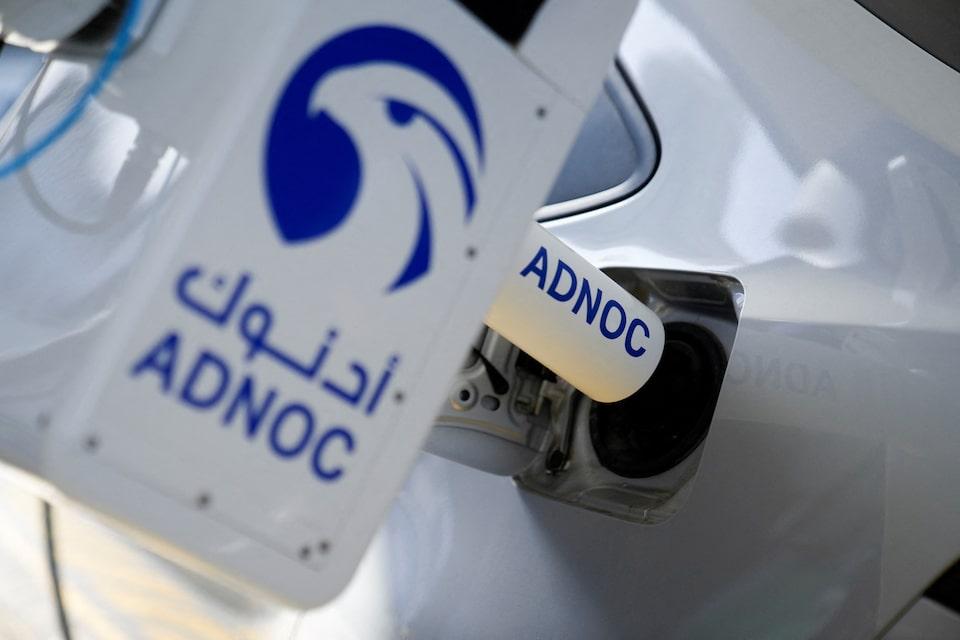
SOUTH GOA, India, Jan 27 (Reuters) - The head of Abu Dhabi National Oil Company (ADNOC) said global oil demand will remain above 100 million barrels per day through 2040, while demand for both liquefied natural gas (LNG) and electricity will grow by 50% or more. Managing Director and CEO Sultan Ahmed Al Jaber told the India Energy Week conference on Tuesday that electricity demand will be driven by the need to power cooling systems as well as AI infrastructure and data centres. Sign up here. "Demand at this scale and pace requires investment in all forms of energy," Al Jaber said. "The biggest risk is not over supply, it is underinvestment." ADNOC now counts India as its top market for LNG, and Al Jaber said the Abu Dhabi state firm is also expanding its gas portfolio to Asia and Africa. This month, India signed a $3 billion deal to buy LNG from the United Arab Emirates, making it the UAE's top customer, as the leaders of both countries held talks to strengthen trade and defence ties. The deal will see ADNOC Gas (ADNOCGAS.AD) , opens new tab supply 0.5 million metric tons of LNG a year to India's Hindustan Petroleum Corp (HPCL.NS) , opens new tab for 10 years beginning in 2028. ADNOC will also invest in India's renewable energy sector, Al Jaber said. https://www.reuters.com/business/energy/oil-demand-hold-above-100-million-bpd-through-2040-says-adnoc-ceo-2026-01-27/
2026-01-27 07:31
SINGAPORE/BEIJING, Jan 27 (Reuters) - Chinese importers secured at least eight cargoes of canola from Canada after Canadian Prime Minister Mark Carney's visit to Beijing earlier this month, two trade sources told Reuters. The Panamax cargoes of about 520,000 metric tons of Canadian canola are expected to be shipped between February and April, two traders with direct knowledge of the deals said. Sign up here. Carney travelled to China this month and reached an initial trade deal with Beijing that would slash tariffs on Chinese electric vehicles in exchange for lower levies on Canadian canola. https://www.reuters.com/world/chinese-importers-snap-up-more-canadian-canola-cargoes-after-carneys-visit-2026-01-27/

2026-01-27 07:10
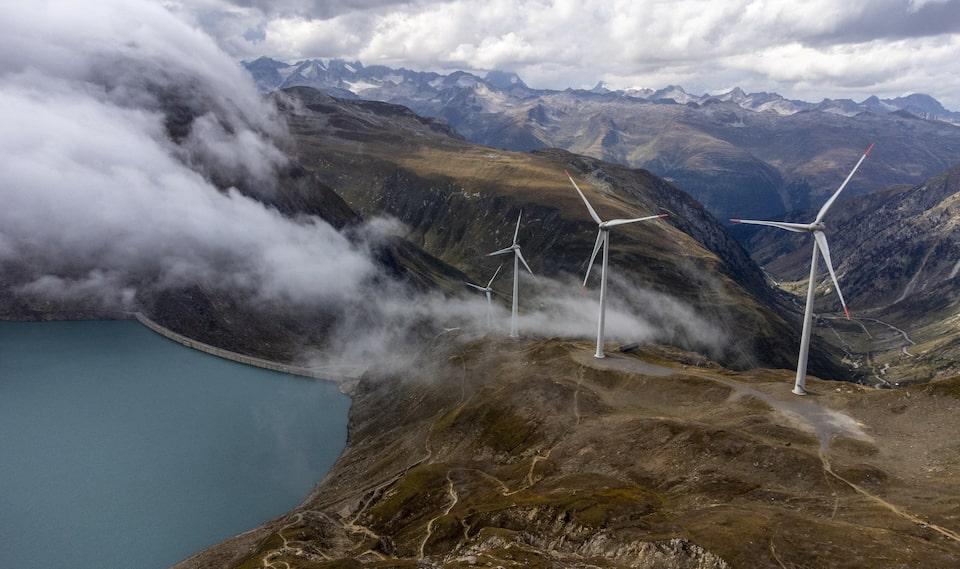
LONDON, Jan 27 (Reuters) - European countries have agreed to jointly develop a vast offshore wind network, marking a pivotal step in the region's push to both trim its dependence on U.S. natural gas imports and tackle rising renewable energy costs. At the North Sea Summit on Monday, ministers from Britain, Belgium, Denmark, France, Germany, Iceland, Ireland, Luxembourg, the Netherlands and Norway signed an agreement to develop 100 gigawatts (GW) of offshore wind capacity in shared economic waters. That’s enough to supply more than 50 million households. Sign up here. The deal builds on a 2023 pledge to construct 300 GW of offshore wind by 2050, conceived after the energy‑price shock triggered by Russia’s 2022 invasion of Ukraine and the subsequent disruption of gas flows to Europe. While this latest announcement is years in the making, it lands at a delicate moment for Europe’s relationship with the U.S., given the recent transatlantic spat over Greenland. U.S. President Donald Trump’s transactional diplomacy and his pursuit of “energy dominance” have sharpened European concerns about their heavy reliance on U.S. liquefied natural gas (LNG), which replaced most of the volumes previously supplied by Russia. U.S. gas accounted for 57% of all LNG imports into the EU and Britain in 2025 and around a quarter of the region’s total gas imports. Wind power has long been the cornerstone of Northern Europe’s strategy to slash its fossil fuel dependency, with onshore and offshore wind generating 19% of EU electricity in 2025, according to industry group WindEurope. Yet the region currently operates only about 37 GW of offshore wind across 13 countries, meaning the planned 100 GW expansion would profoundly reshape Europe’s power market. Investor enthusiasm for clean energy globally has waned in recent years due to rising capital costs, supply‑chain constraints and unease over China’s dominant position in renewables manufacturing. Trump’s explicit hostility toward green energy - especially wind power - further dented sentiment as the U.S. government scrapped numerous projects this past year. Meanwhile, Europe’s cost‑of‑living crisis, which has been intensified by high energy prices, has turned climate policies into political flashpoints, fuelling resistance to net‑zero plans. ECONOMIES OF SCALE Cost concerns were clearly as much a driver of the European offshore wind pact as worries about overreliance on the U.S. The new plan thus contains several elements that could reduce development costs and ultimately lower consumer electricity prices. The most important of these is the scale of the commitment, which can help trim costs by providing the offshore wind supply chain with greater demand certainty. This, in turn, should encourage investment in homegrown manufacturing. WindEurope says industry players have pledged to cut costs by 30% between 2025 and 2040, predicting the plan will create 91,000 jobs and generate 1 trillion euros ($1.19 trillion) in economic activity. A key feature of the agreement is its blueprint for connecting wind farms to multiple countries through a network of bidirectional cables and interconnectors. This should allow power to flow where it is needed most, improving efficiency by giving operators flexibility to respond to changing supply‑and‑demand patterns across several markets. Such cross‑border “arbitrage” should also help reduce episodes of “negative pricing” – periods when excess wind power forces operators to curtail output and governments to compensate them. "When it is windy in Germany, it may not be windy in the UK, so if Germany can't use all of the power, the UK can take some instead of wasting it," said Jordan May, senior analyst at consultancy TGS 4C. What’s more, the multi-nation plan will cover multiple time zones, meaning countries will peak at different hours. This should make it easier to match supply with demand, potentially reducing the need for gas‑fired power, May added. Finally, Europe may gain from Trump’s antipathy toward wind. The U.S. sector has experienced a dramatic downturn under this administration. The International Energy Agency last year cut its 2030 U.S. offshore wind forecast by more than 50%. Reduced American demand for vessels, components and engineering services could ultimately lead to lower prices for European operators. Still, unlocking these efficiency gains will require European governments to develop complex new regulations to align different national subsidy regimes and power market rules. That process could take years and face political resistance in some countries. UNPREDICTABLE COSTS The cost of switching to renewables has become a point of contention in Europe. But these costs are highly uncertain, as forecasting in this area is hardly a science, whether one is looking at fossil fuels or green energy. Offshore wind demands heavy upfront investment but tends to have lower long‑term operating costs. Gas‑fired plants, on the other hand, are cheaper to build but are also exposed to volatile global gas prices. Moreover, debates about the cost of renewables often fail to consider the cost of doing nothing, which is enormous. Europe’s power demand is expected to nearly double by mid‑century, meaning the region will need to upgrade and expand its aging transmission and distribution grids regardless of which technology dominates. The longer European leaders wait, the more expensive this is likely to be. Europe’s joint offshore wind plan offers a pathway to building more homegrown power and industrial capacity while reducing reliance on foreign fossil fuels. While that’s important, its ultimate success will depend on whether it lowers electricity costs for European consumers. The opinions expressed here are those of the author, a columnist for Reuters. Enjoying this column? Check out Reuters Open Interest (ROI), , opens new tab your essential new source for global financial commentary. Follow ROI on LinkedIn, , opens new tab and X. , opens new tab And listen to the Morning Bid daily podcast on Apple , opens new tab, Spotify , opens new tab, or the Reuters app , opens new tab. Subscribe to hear Reuters journalists discuss the biggest news in markets and finance seven days a week. ($1 = 0.8417 euros) https://www.reuters.com/sustainability/climate-energy/europes-offshore-wind-pact-is-hedge-against-us-gas-reliance-2026-01-27/
2026-01-27 07:01
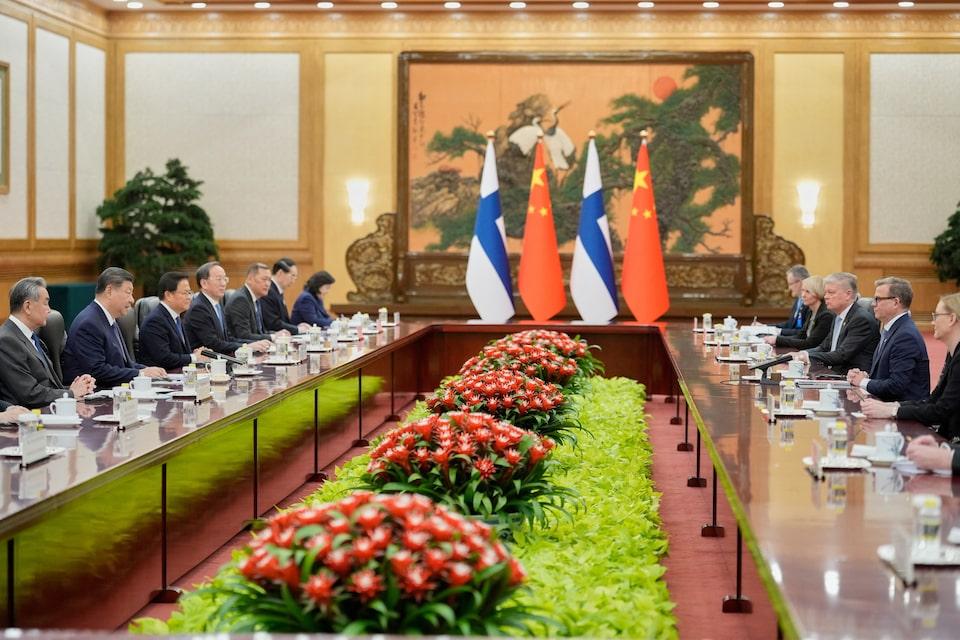
Xi urges Finland to promote China-EU relations Arctic security a strategic concern for Finland, NATO, China Finland-China talks in 2024 addressed undersea cable incidents, North Korea's actions BEIJING, Jan 27 (Reuters) - China's President Xi Jinping told Finland's Prime Minister Petteri Orpo on Tuesday that Beijing was ready to work with Helsinki to uphold a U.N.-centred international system and advance a multipolar world based on economic globalisation, according to state news agency Xinhua. Xi also said Beijing hoped Finland would play a constructive role in promoting the healthy and stable development of China-EU relations, Xinhua reported. Sign up here. Orpo's visit to China comes as U.S. President Donald Trump's volatile foreign policy decisions and confrontational approach toward allies push European countries to diversify their foreign relations. It also comes amid heightened attention on Arctic security at the World Economic Forum in Davos, Switzerland, last week, after Trump's threat to seize Greenland and prevent China and Russia from expanding their influence in the region. Those threats appeared to have eased after Trump said the U.S. had secured permanent access to the Danish territory, but Arctic security remains a growing strategic concern for Finland, its NATO partners and China. The Arctic is becoming increasingly important to international trade as shrinking ice packs open up new and faster shipping routes, cutting transit times between Asia and Europe nearly in half. Speaking on the sidelines of Davos last week, Finland's President Alexander Stubb said he wanted NATO to agree to an Arctic security deal at its July summit, similar to the big increase in defence spending that it committed to last year. One-third of Finland's territory lies above the Arctic Circle, while China calls itself a "near-Arctic state" and has ambitions to build a "Polar Silk Road". Xi also called on Tuesday for the two sides to collaborate more in areas including energy transition, agriculture, and forestry, and welcomed Finnish enterprises to "swim freely" in the "vast ocean" of China's market. Orpo, who is in Beijing from January 25 to 28, told Xi that he looked forward to continued discussions on bilateral cooperation and international issues. Orpo referenced the "candid and constructive talks" Xi had with President Stubb during a 2024 state visit to Beijing. In talks with Xi then, Stubb raised an ongoing string of incidents involving damage to undersea power cables, gas pipelines and telecoms in which Chinese-registered ships have been implicated. A Chinese ship captain is facing allegations of criminal damage in a Hong Kong court in one of the cases. Stubb in 2024 also raised the issue of North Korean support for Russia's invasion of Ukraine, which he said NATO and the EU considered a provocation. As Stubb had in the earlier meeting, Orpo invited Xi to visit Finland at a mutually convenient time, and said Finland's speaker of parliament, Jussi Halla-aho, had invited top lawmaker Zhao Leji to visit. https://www.reuters.com/world/china/xi-says-china-finland-should-uphold-international-system-advance-multipolar-2026-01-27/