2025-08-02 17:30
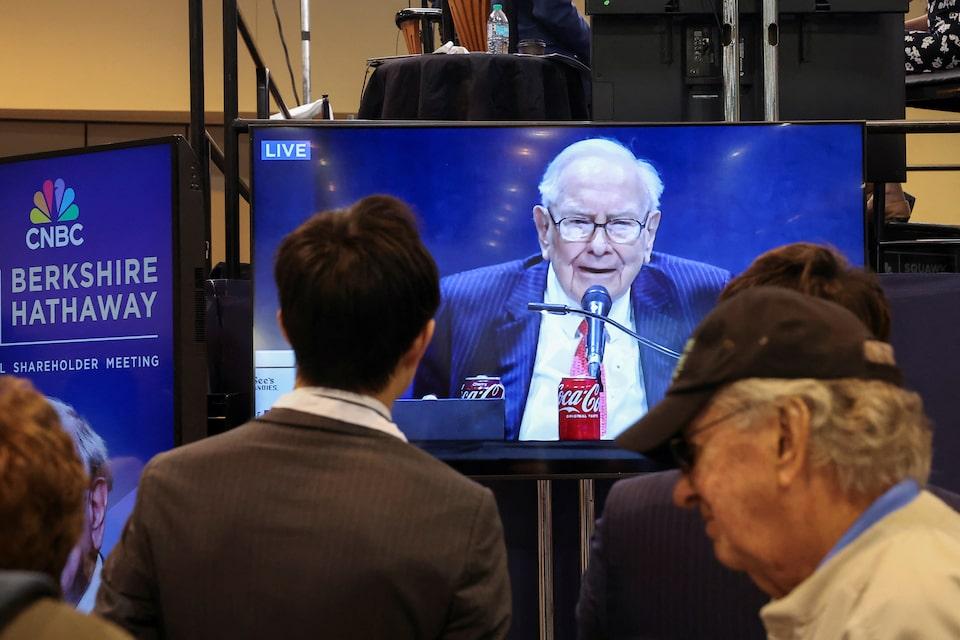
Uncertain economics contributed to Kraft Heinz write-down Operating profit down 4%, net income down 59% Stock has lagged after Buffett said he would step down Aug 2 (Reuters) - Warren Buffett's Berkshire Hathaway (BRKa.N) , opens new tab said on Saturday it took a $3.76 billion write-down on its stake in Kraft Heinz (KHC.O) , opens new tab during the second quarter, an acknowledgment the decade-old investment hasn't worked out. Berkshire also reported a 4% decline in quarterly operating profit as insurance underwriting premiums fell. The write-down and lower gains from common stocks caused a 59% drop in overall net income. Sign up here. Buffett's conglomerate signaled it remains cautious about market valuations, amid uncertainty about tariffs and growth in the broader economy. It reported a near-record $344.1 billion cash stake, and sold more stocks than it bought for an 11th straight quarter. As of mid-July, Berkshire hadn't repurchased any of its own stock since May 2024. Buffett, 94, has led Omaha, Nebraska-based Berkshire since 1965, though he plans to step down at year-end. "Investors are getting antsy and want to seek activity, and nothing is happening," said Kyle Sanders, an analyst at Edward Jones. "Buffett definitely views the market as overvalued, and will sit back and wait for something to come to him." Uncertainty about trade policies, including tariffs, has become a headwind as delayed orders and shipments led to declining revenue at most of Berkshire's consumer businesses. Jazwares, which makes the popular Squishmallows plush toys, saw revenue fall 38.5% in the year's first half. Analysts viewed overall results as lackluster. "Berkshire and the economy are at an inflection point," said Cathy Seifert, a CFRA Research analyst. "I don't think the market will embrace the combination of mediocre results, a lack of stock buybacks, and Berkshire's recent share underperformance amid a management transition." Seifert and Sanders rate Berkshire "hold." KRAFT HEINZ Second-quarter operating income fell to $11.16 billion, or about $7,760 per Class A share, from $11.6 billion a year earlier. Results included $877 million of currency losses as the U.S. dollar weakened. Net income, including gains and losses on stocks such as Apple (AAPL.O) , opens new tab and American Express (AXP.N) , opens new tab, fell to $12.37 billion from $30.35 billion. Revenue fell 1% to $92.52 billion. Buffett views unrealized investment gains and losses, including on stocks Berkshire has no plans to sell, as often meaningless to understanding his company. The $3.76 billion after-tax write-down for Berkshire's 27.4% Kraft Heinz stake, equal to $5 billion before taxes, followed the struggling food company's announcement it would consider strategic alternatives, which could include a breakup. Berkshire had carried Kraft Heinz on its books at above-market value but said economic and other uncertainties, and its longer-term plans to remain an investor, made the gap "other-than-temporary." The write-down is Berkshire's second for Kraft Heinz, following a $3 billion write-down in 2019. Buffett acknowledged at the time that Berkshire overpaid in the 2015 merger of Kraft Foods and H.J. Heinz, one of his biggest investment missteps. Kraft Heinz has suffered as more shoppers favor healthier and private-label alternatives. Its approximately 200 brands include Oscar Mayer, Kool-Aid, Velveeta and Jell-O. Berkshire also carries another big investment, its 28.1% stake in Occidental Petroleum (OXY.N) , opens new tab at $5.3 billion above fair value, but reported no need for a write-down. LAGGING THE MARKET Shares of Berkshire have fallen more than 12%, and lagged the Standard & Poor's 500 (.SPX) , opens new tab by about 22 percentage points, since Buffett announced on May 3 he would step down as chief executive at year end. Vice Chairman Greg Abel, 63, will succeed him, though Buffett will remain chairman. Analysts said the premium embedded in Berkshire's stock price because of the presence of Buffett, arguably the world's most well-known investor, has eroded, while growth may slow in the insurance sector, a major Berkshire profit center. The lack of new investments has also been a drag. Analysts believe Berkshire's BNSF unit could buy CSX (CSX.O) , opens new tab to create another transcontinental railroad, after Union Pacific (UNP.N) , opens new tab agreed on July 29 to buy Norfolk Southern (NSC.N) , opens new tab. Buffett transformed Berkshire over six decades from a troubled and since-closed textile company into a $1.02 trillion conglomerate. Berkshire owns several insurers and reinsurers, electric utility and renewable energy businesses, several chemical and industrial companies, and familiar consumer brands such as Dairy Queen, Fruit of the Loom and See's Candies. BIG BEAUTIFUL BILL Berkshire said the 12% quarterly decline in insurance underwriting profit stemmed primarily from reinsurance businesses and some smaller insurance businesses. Geico, its best-known insurance business, saw pre-tax underwriting profit rise 2%, as a 5% increase in premiums offset a smaller rise in accident losses. The car insurer has been ceding market share to State Farm and Progressive (PGR.N) , opens new tab, while focusing on improving underwriting quality and technology and cutting jobs. Analysts said higher tariffs could be a headwind for Geico if the cost of auto parts rose, potentially increasing losses from accident claims. BNSF is also cutting expenses. Lower fuel costs helped boost quarterly profit 19% gain, though revenue and cargo volumes barely changed. The energy business, Berkshire Hathaway Energy, posted a 7% profit increase. Berkshire said it is evaluating the impact of the One Big Beautiful Bill Act, signed last month by U.S. President Donald Trump, on the "economics and viability" of its renewable energy, storage and technology-neutral projects. https://www.reuters.com/sustainability/boards-policy-regulation/berkshire-takes-38-billion-kraft-heinz-write-down-operating-profit-falls-2025-08-02/
2025-08-02 13:22
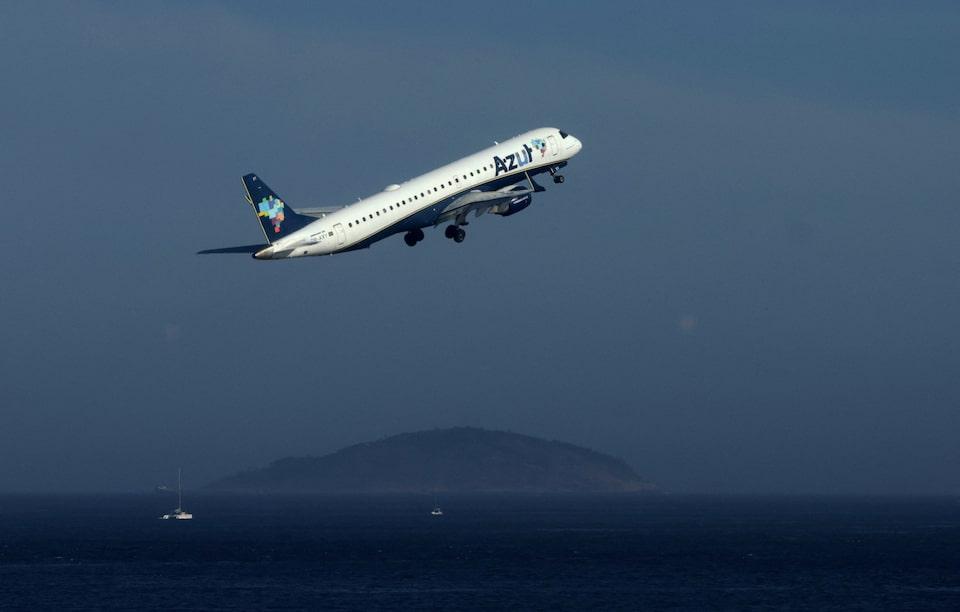
SAO PAULO, Aug 2 (Reuters) - Brazilian airline Azul said it signed an agreement with certain stakeholders for a $650 million investment in a future capitalization deal, according to a late Friday securities filing. The airline's so-called "backstop commitment agreement" must be approved by the U.S. court overseeing its bankruptcy proceedings, the filing said. Sign up here. In May, Azul filed for Chapter 11 bankruptcy protection in the United States after months of trying to restructure mostly pandemic-era debt. https://www.reuters.com/world/americas/brazils-azul-secures-650-million-investment-commitment-2025-08-02/
2025-08-02 12:57
Initial flows will be 4.3 mcm/day, rising to 6 mcm The gas will boost Syria's power supply by 750 MW KILIS, Turkey, Aug 2 (Reuters) - Azerbaijan will export 1.2 billion cubic metres (bcm) of gas annually through Turkey to Syria from the BP-operated (BP.L) , opens new tab Shah Deniz gas field in the Azeri Caspian Sea, a senior official at Azeri state energy company SOCAR told Reuters on Saturday. Turkey supported rebel forces in neighbouring Syria throughout the 13-year civil war that ended with the ousting of Bashar al-Assad in December and has become one of the new Syrian government's main foreign allies. Sign up here. Ankara is now positioning itself to be a major player in Syria's reconstruction. SOCAR Vice President Elshad Nasirov was speaking at a ceremony in the southern Turkish city of Kilis, close to the Syrian border, as Turkey and Azerbaijan launched natural gas exports to Syria. Azerbaijan's Economy Minister Mikayil Jabbarov said the project followed agreements in April and July between Azerbaijan President Ilham Aliyev and Syria's new President Ahmad al-Sharaa. Gas will be transported through Turkish territory to Syria under a coordinated arrangement, Jabbarov said. "By launching gas exports to Syria, Azerbaijan has demonstrated that it is capable of exporting gas not only to the West, but also to the East and the South," he said at the event. Turkish Energy Minister Alparslan Bayraktar said deliveries were expected to reach around 6 million cubic metres (mcm) per day. While the current delivery plan foresees exports of 1.2 bcm annually, Bayraktar said there was potential to supply up to 2 bcm per year in the first phase. The gas will be used to restart power plants in Syria with a combined capacity of 1,200 megawatts, Bayraktar said. Syrian Energy Minister Mohammad al-Bashir said the gas supplies would support basic energy needs in areas affected by conflict. He said the gas would allow for an additional four hours of electricity per day in those areas by increasing generation by around 750 MW. Al-Bashir also said that while the agreement foresees daily deliveries of 6 mcm, the initial volume would be around 3.4 mcm per day. https://www.reuters.com/business/energy/azerbaijan-export-12-billion-cubic-metres-gas-syria-through-turkey-annually-2025-08-02/
2025-08-02 09:54
LAGOS, Aug 2 (Reuters) - Nigeria’s Dangote Group has appointed David Bird, a former Shell executive and ex-CEO of 0Q8 refinery in Oman, as chief executive of its refinery and petrochemical division, the company said on Saturday, as it accelerates its pan-African growth strategy. Bird, whose appointment took effect on August 1, brings over three decades of industry experience, including a 14-year stint at Shell (SHEL.L) , opens new tab where he oversaw the $12 billion Prelude FLNG project. His appointment comes as Dangote’s $20 billion refinery complex in Lagos, the world’s largest single-train facility, ramps up output following its commissioning in January 2024. Sign up here. Nigeria's Business Day was first to report on Bird's appointment on Friday. Despite expanding output, the Lagos refinery has faced operational setbacks, including design flaws and unit upsets, prompting a shift to a more diverse crude slate. Bird said, in a LinkedIn post, that his focus would be on boosting efficiency and expanding the company’s footprint across Africa. Dangote also plans to list its refining business on the Lagos and London stock exchanges, although it has not given a timeframe. Dangote, which exported 220,000 bpd in July - led by jet fuel and gasoil - according to S&P Global's Commodities at Sea Data, plans to increase the refinery's capacity to 700,000 bpd and launch a CNG-powered truck fleet to strengthen domestic distribution. Chairman Aliko Dangote, Africa’s richest man, is also seeking regulatory approval for a deep-sea port in Ogun state to support logistics. https://www.reuters.com/business/energy/dangote-appoints-ex-shell-executive-lead-refinery-amid-expansion-drive-2025-08-02/

2025-08-02 09:54
KYIV, Aug 2 (Reuters) - Ukraine's military said on Saturday that it had struck oil facilities inside Russia, including a major refinery as well as a military airfield for drones and an electronics factory. In a statement on Telegram, Ukraine's Unmanned Systems Forces said they had hit the oil refinery in Ryazan, about 180 km (110 miles) southeast of Moscow, causing a fire on its premises. Sign up here. Also hit, the USF said, was the Annanefteprodukt oil storage facility in the Voronezh region that borders on northeastern Ukraine. The statement did not specify how the facilities were hit, but the USF specialises in drone warfare, including long-range strikes. There was no immediate comment from Russia on the reported attacks on its infrastructure sites. Separately, Ukraine's SBU intelligence agency said its drones had hit Russia's Primorsko-Akhtarsk military airfield, which has been used to launch waves of long-range drones at targets in Ukraine. The SBU said it also hit a factory in Penza that it said supplies Russia's military-industrial complex with electronics. At the start of Russia's full-scale invasion in 2022, Ukraine had no response to Moscow's vast long-range strike capacity but it has since built up a fleet of long-range kamikaze drones able to carry explosive warheads for many hundreds of kilometres (miles). Russia's defence ministry said in its daily report that its defence units had downed a total of 338 Ukrainian drones overnight. Its reports do not say how many Ukrainian drones were launched at any given time. For its part, Ukraine's air force said it had downed 45 of 53 Russian drones launched towards its territory overnight. On Ukraine's eastern battlefront, Russia's defence ministry said, Russian forces had captured the village of Oleksandro-Kalynove in the Donetsk region on Saturday. Reuters could not immediately verify the battlefield report. Russian forces now control almost 20% of Ukraine in its east and south after three-and-a-half years of grinding war. https://www.reuters.com/business/aerospace-defense/ukraine-says-it-hit-russian-oil-facilities-military-airfield-2025-08-02/

2025-08-02 08:41
KILIS, Turkey, Aug 2 (Reuters) - Azerbaijan will export 1.2 billion cubic metres of gas annually to Syria from the BP-operated (BP.L) , opens new tab Shah Deniz gas field in the Azeri Caspian Sea, a senior official at Azeri state energy company SOCAR told Reuters on Saturday. SOCAR Vice President Elshad Nasirov was speaking in southern Turkey, close to the Syrian border, as Turkey and Azerbaijan launched natural gas exports to Syria. The launch was marked at a ceremony in the city of Kilis, attended by ministers and other officials from Azerbaijan, Turkey, Syria and Qatar. Sign up here. Azerbaijan's Economy Minister Mikayil Jabbarov said the project followed agreements in April and July between Azerbaijan President Ilham Aliyev and Syria's transitional president Ahmad Al-Sharaa. Gas would be transported through Turkish territory to Syria under a coordinated arrangement, Jabbarov said. “By launching gas exports to Syria, Azerbaijan has demonstrated that it is capable of exporting gas not only to the West, but also to the East and the South,” he said at the event. Turkish Energy Minister Alparslan Bayraktar said deliveries were expected to reach around 6 million bcm per day, with potential to supply up to 2 billion bcm annually in the first phase. The gas would be used to restart power plants in Syria with a combined capacity of 1,200 megawatts, Bayraktar said. Turkey, which supported rebel forces in Syria throughout the 13-year civil war that ended in December with the ousting of Bashar al-Assad, has become one of the new Syrian government's main foreign allies while positioning itself to be a major player in Syria's reconstruction. Syrian Energy Minister Mohammad Al-Bashir said the gas supplies would support basic energy needs in areas affected by conflict. https://www.reuters.com/business/energy/azerbaijan-export-12-billion-bcm-gas-syria-through-turkey-annually-says-socar-2025-08-02/