2026-01-27 06:44
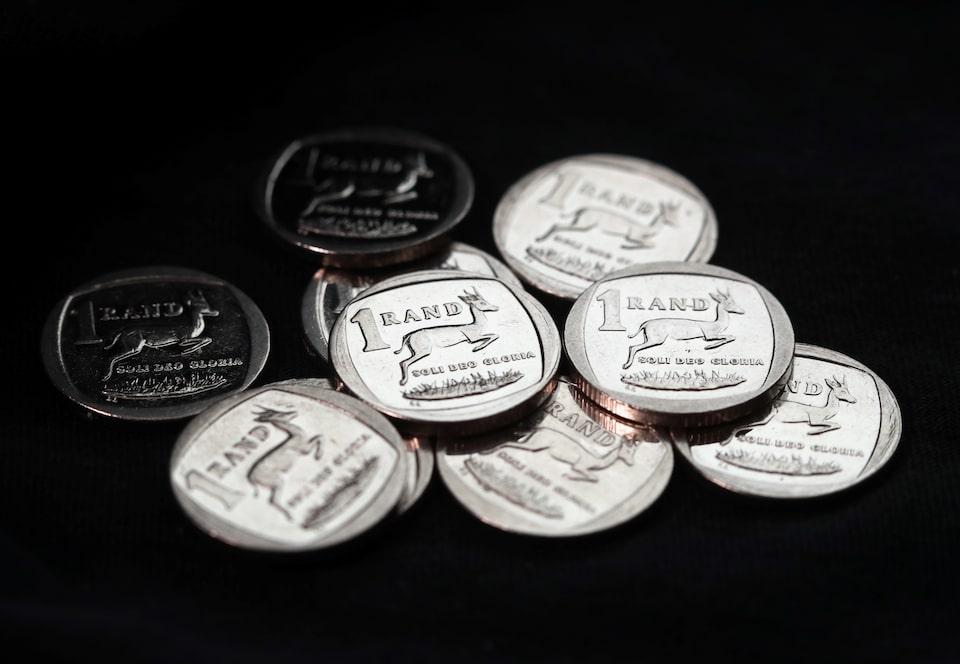
JOHANNESBURG, Jan 27 (Reuters) - The South African rand edged up in early trade on Tuesday, supported by stronger precious metal prices ahead of local central bank data expected to offer insight into the country's economic outlook. At 0556 GMT, the rand was trading at 16.0150 per dollar , roughly up 0.2% on Monday's close. Sign up here. Gold and other key precious metal exports such as platinum hit record highs on Monday, helping the rand break through 16 to the dollar for the first time since June 2022. The yellow metal rose on Tuesday but platinum fell back. At around 0700 GMT, the South African Reserve Bank will publish its composite leading business cycle indicator (ZALEAD=ECI) , opens new tab for November, which collects data including vehicle sales, business confidence and money supply in Africa's most industrialised nation. Investors' focus will pivot to South Africa's first interest rate announcement of 2026 on Thursday, which could be a close call as eighteen of 26 analysts polled by Reuters expect the central bank to leave its repo rate unchanged, but eight predict a 25-basis-point rate cut to 6.50% (ZAREPO=ECI) , opens new tab. Other domestic releases this week include producer inflation (ZAPPIY=ECI) , opens new tab numbers on Thursday, while money supply (ZAM3=ECI) , opens new tab, private sector credit (ZACRED=ECI) , opens new tab, trade balance (ZATBAL=ECI) , opens new tab and budget balance (ZABUD=ECI) , opens new tab figures are all due on Friday. South Africa's benchmark 2035 government bond was flat in early deals, with the yield at 8.11% https://www.reuters.com/world/africa/south-african-rand-boosted-by-stronger-precious-metal-prices-ahead-central-bank-2026-01-27/
2026-01-27 06:31
JAKARTA, Jan 27 (Reuters) - Sovereign wealth fund Danantara Indonesia will take over land seized from 28 firms linked to floods and landslides in Sumatra, a spokesperson for the country's forestry task force told reporters on Tuesday. President Prabowo Subianto revoked the firms' business permits last week for alleged environmental breaches that worsened the impact of deadly floods in Sumatra late last year. Sign up here. The handover is under way, task force spokesperson Barita Simanjuntak said, adding there would be a "comprehensive process" to minimise the impact of the permit removals on workers and surrounding communities. The companies operate across sectors ranging from forestry, oil palm and cocoa to power generation and mining. Pulp maker Toba Pulp Lestari, one of the firms that had its permit revoked, will cooperate with the government, company director Anwar Lawden said, adding it had not received an official letter revoking the permit. The area of land taken over from the 22 plantation and forestry firms on the list was around 1 million hectares (2.47 million acres), the government has said previously. A Danantara spokesperson said the fund could not immediately comment. https://www.reuters.com/business/environment/land-seized-28-firms-linked-sumatra-floods-will-be-managed-by-indonesias-2026-01-27/
2026-01-27 06:30
Jan 27 (Reuters) - The world's largest oil company, Saudi Aramco (2222.SE) , opens new tab, has launched a $4-billion four-tranche bond, drawing robust demand from investors for its first foray into global debt markets this year. The state-owned oil behemoth issued $500 million, $1.5 billion, $1.25 billion and $750 million in bonds with maturities of three, five, 10 and 30 years respectively, the fixed-income news service IFR said on Monday. Order books for the offering exceeded $21 billion, showing strong investor appetite, enabling Aramco to tighten the spread on the three-year bonds to 60 basis points (bps) over U.S. Treasuries from an initial guidance of 100 bps, IFR said. The five-year tranche was priced at 80 bps over Treasuries, narrowing from an indicative spread of 115 bps. The 10-year and 30-year bonds were finalised at 95 bps and 130 bps, respectively, compared to initial pricing of around 125 bps and 165 bps over U.S. Treasuries, IFR added. Aramco last tapped debt markets in September, raising $3 billion with a sale of sukuk, or Islamic bonds, following a bond sale in May for $5 billion. Sign up here. It had stayed away from the debt markets for three years until it returned to raise $6 billion in July 2024. Long a cash cow for the Saudi government, Aramco said last August it was cutting costs company-wide and looking to divest assets as crude prices fell and its debt rose. Aramco's total dividends for 2025 are expected to be about $85.4 billion, a drop of roughly 30% from 2024, as payouts linked to free cash flow dwindled. The government owns nearly 81.5% of Aramco directly, while the sovereign wealth fund PIF controls another 16%. Reuters had reported on Aramco's cost-cutting and divestment measures ahead of its chief financial officer's confirmation on an earnings call, including a planned sale of gas plants. Aramco has also raised funds via other avenues. Last year, it signed an $11-billion lease and leaseback agreement involving its Jafurah gas processing facilities with a consortium led by Global Infrastructure Partners (GIP), part of BlackRock. In 2024, the Saudi government raised $12.35 billion by floating a stake of 0.64% in Aramco. Citi, Goldman Sachs, HSBC, JPMorgan and Morgan Stanley were active bookrunners, while Abu Dhabi Commercial Bank, Bank of China, BofA Securities, BSF Capital, Emirates NBD Capital, First Abu Dhabi Bank, Mizuho, MUFG, Natixis, Riyad Capital, SMBC and Standard Chartered were passive bookrunners for the debt sale. https://www.reuters.com/business/energy/saudi-aramco-taps-global-debt-markets-with-4-billion-bond-issue-2026-01-27/
2026-01-27 06:22
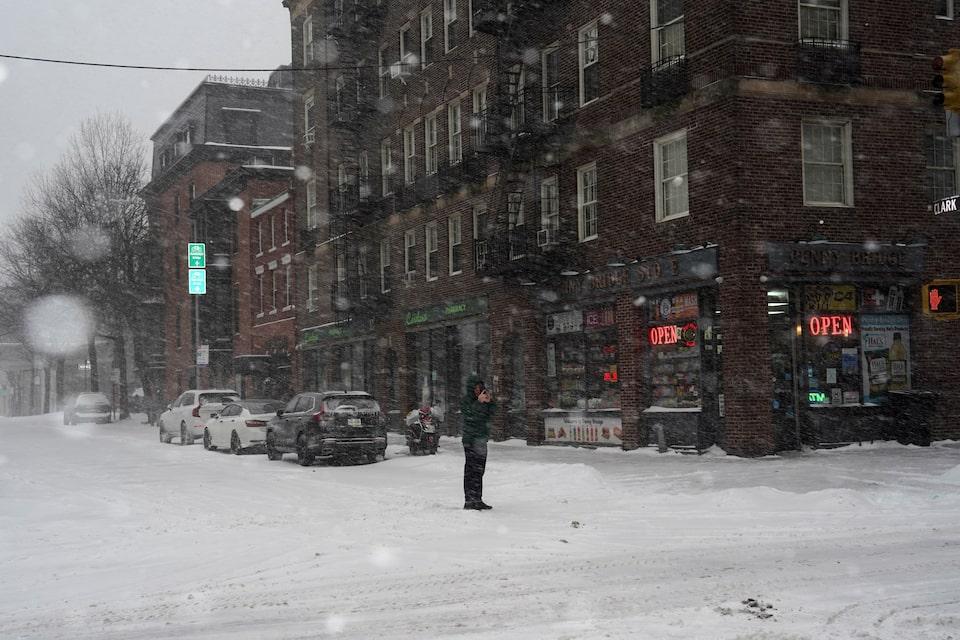
Jan 29 (Reuters) - A severe winter storm that brought heavy snow, sleet and freezing rain has left more than 296,000 homes and businesses without power across a swath of the U.S., from the Ohio Valley and mid-South region to New England. The hardest-hit utilities included Nashville Electric Service (NES) in Tennessee, where 95,687 of 463,455 customers were without power, and Entergy, with more than 77,451 of its 3.05 million U.S. customers affected, according to PowerOutage.us. Sign up here. "We continue to make progress in restoration efforts in the last hour. More than 930 lineworkers from seven states are working around the clock and have restored power to 127,000 customers," NES said in a post on X late on Wednesday. The storm is set to become the costliest severe weather event since the Los Angeles-area wildfires in early 2025, with preliminary damage and economic losses estimated at $105 billion to $115 billion, AccuWeather said. "Entergy Mississippi is taking to the skies flying drones and helicopters up to 5,000 feet in the air... to better help scan our region for damages, improving the speed in which we can restore power for our customers," Entergy said in a release on Wednesday. Here are the major outages by state: https://www.reuters.com/business/energy/more-than-847000-us-customers-without-power-winter-storm-freezes-much-us-2026-01-26/
2026-01-27 06:15
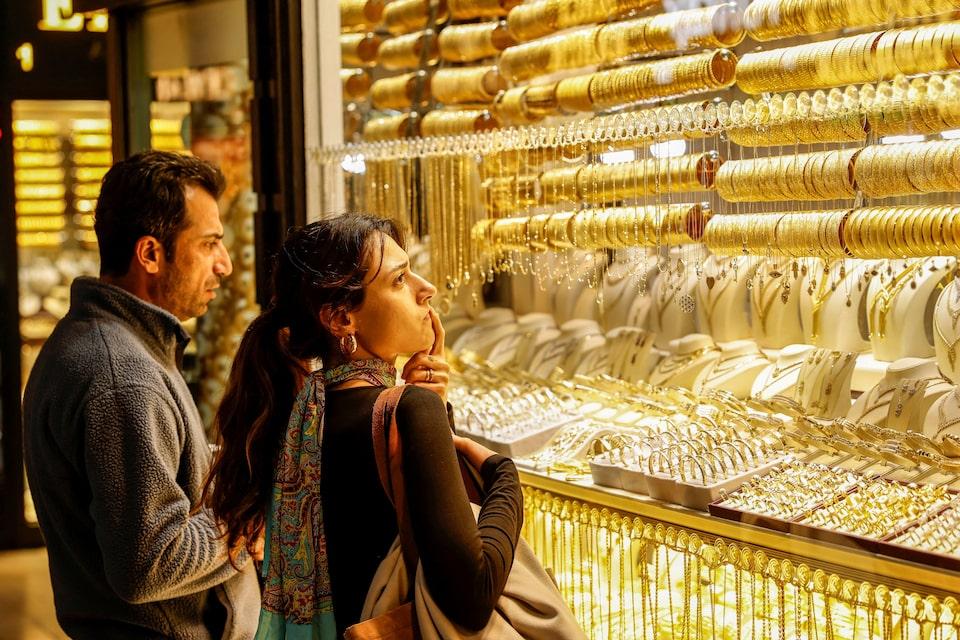
Silver up more than 57% so far this year Citi upgrades short-term silver price forecast to $150 per ounce US Federal Reserve policy meeting starts on Tuesday Jan 27 (Reuters) - Gold prices jumped more than 3% to scale an all-time high on Tuesday as persistent economic and geopolitical uncertainty drove investors to the safe-haven metal. Spot gold hit a peak of $5,181.84 per ounce as of 03:57 p.m. EST (2057 GMT). Prices breached the key $5,000 mark for the first time on Monday. Sign up here. U.S. gold futures for February delivery settled little changed at $5,082.60 per ounce. Gold has already surged more than 18% so far this year, building on last year's record rally, driven by a combination of factors such as rising geopolitical and economic uncertainty, expectations of U.S. interest-rate cuts and increased central bank purchases amid a global de-dollarization trend. "Rallies normally end because the drivers that took people into the gold market originally dissipate - and that's just not the case," said Michael Widmer, commodities strategist at Bank of America. Concerns mounted as President Donald Trump announced plans on Monday to impose new tariffs on South Korean imports, while the risk of a partial U.S. government shutdown loomed ahead of the January 30 funding deadline. Markets are focused on the U.S. Federal Reserve's two-day policy meeting starting Tuesday, with interest rates expected to be unchanged and investors watching Fed Chair Jerome Powell's press conference on Wednesday amid mounting worries about the central bank's independence. FEDWATCH/ Meanwhile, Deutsche Bank and Societe Generale now forecast gold prices to reach $6,000 per ounce by the end of the year. CME Group said on Tuesday that its metals complex reached a single-day record of 3,338,528 contracts on January 26, surpassing the previous record of 2,829,666 contracts set on October 17, 2025. Spot silver jumped 7.7% to $111.84 an ounce after hitting a record high of $117.69 on Monday. It has already surged more than 57% so far this year, after recording a 146% gain last year. "There's going to be a lot of volatility ahead, with risks of sharp pullbacks (in silver)," said Bank of America's Widmer, adding that strong fundamentals and exchange-traded-fund inflows could support a $170 price target. Citi upgraded its short-term silver price forecast to $150 per ounce from $100 earlier. Spot platinum fell 5.1% to $2,616.05 per ounce after hitting a record $2,918.80 per ounce in the previous session, while palladium lost 3.2% to $1,919.08. https://www.reuters.com/business/gold-silver-rise-near-record-highs-lingering-safe-haven-demand-2026-01-27/
2026-01-27 06:12
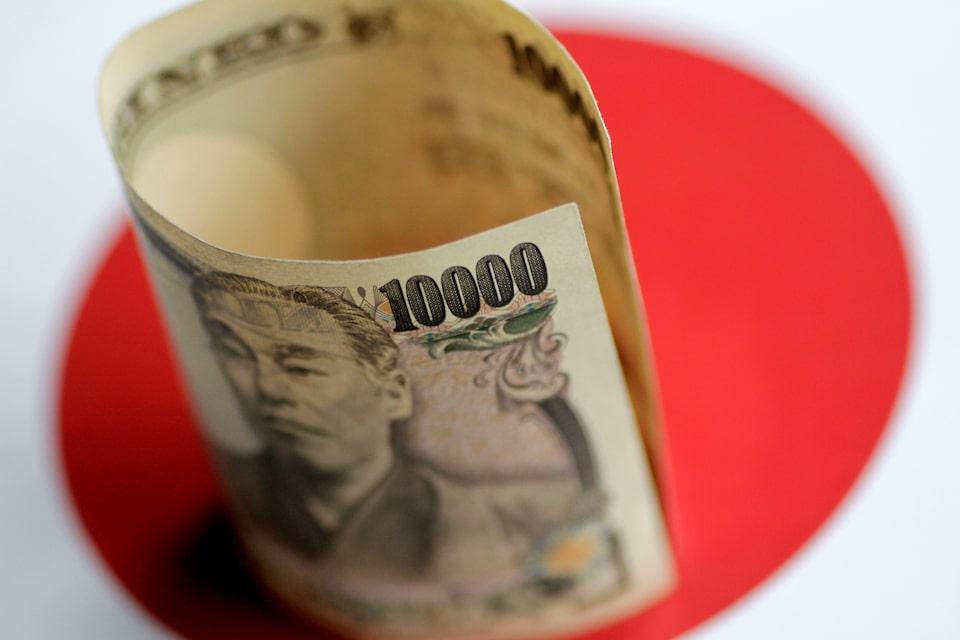
Dollar slips for fourth straight day Yen rises above 153 to the dollar Traders on alert for coordinated currency intervention Fed rate decision looms amid worries about independence British pound climbs to highest since October 2021 NEW YORK, Jan 27 (Reuters) - (This Jan 27 story has been refiled to clarify analyst comment on possible U.S. involvement in yen intervention in paragraph 17) The U.S. dollar fell for a fourth straight day on Tuesday, slipping to a four-month low, as traders kept watch for possible coordinated currency intervention by U.S. and Japanese authorities and a Federal Reserve interest rate decision. Sign up here. The dollar has been under intense pressure this month from factors including U.S. President Donald Trump's policymaking and concerns about Federal Reserve independence. In addition, disagreement between Republicans and Democrats over funding for the Department of Homeland Security after the fatal shooting of a second U.S. citizen by federal immigration officers in Minnesota, has raised concerns of another U.S. government shutdown. Meanwhile, Trump accused South Korea's legislature of "not living up" to its trade deal with Washington, and he said late on Monday he would increase tariffs on imports from Asia's fourth-biggest economy into the U.S. such as autos, lumber and pharma to 25%. Trump has also in recent days said he would impose a 100% tariff on Canada if it follows through on a trade deal with China. 'TARIFF MAN' SHOWS NO SIGN OF REGRETS The Korean won strengthened 0.45% against the dollar to 1,439.14 per dollar. "With the 'tariff man' showing no sign of repentance and the U.S. government headed into another shutdown, economic policy uncertainty is soaring once again, leading to an intensification in the ‘Sell America’ trade that has dominated markets for the better part of a year," Karl Schamotta, chief market strategist with payments company Corpay in Toronto, said. "Positive fundamentals should eventually reassert themselves, but for now, no one is willing to catch the falling chainsaw that is the U.S. dollar," he said. Against a basket of currencies, the dollar fell 0.48% to 96.64, hovering near September's 3-1/2-year low, and down from an earlier high of 97.287, in volatile trading. Investors will watch the Fed's two-day meeting this week for clues to the path of monetary policy. "The big risk, as we see it, is not in the rate decision. We're pretty confident that the Fed is going to hold rates unchanged. But Trump is not going to like that," said Nick Rees, head of macro research at Monex. Trump could announce his candidate for Chair Jerome Powell's successor soon after the rate decision, especially if the president does not support the central bank's decision, Rees said. YEN INTERVENTION WATCH Much of the foreign exchange market's focus has also been on the yen, which has rallied by as much as 3% over the last two sessions on talk of the U.S. and Japan conducting rate checks - often seen as a precursor to official intervention. That has helped the yen slip below 153 to the dollar. It was last trading at 152.96. Parisha Saimbi, EM Asia FX and local markets strategist at BNP Paribas, said possible U.S. involvement suggests that there may be "multiple parties" prepared to intervene, which is different from previous intervention episodes in recent years. While there has been no confirmation of rate checks from officials in Japan or the U.S., a person familiar with the matter told Reuters that the New York Federal Reserve had checked dollar/yen rates with dealers on Friday. Japanese authorities said on Monday they have been in close coordination with the U.S. on foreign exchange. The euro was last 0.7% higher at $1.19635, trading around levels last seen in June 2021. Similarly, sterling added 0.8% to $1.3786, its strongest since October 2021. The Australian dollar rallied 0.8% to $0.69705, its highest since February 2023. https://www.reuters.com/world/asia-pacific/yen-strength-intervention-risk-keeps-dollar-check-2026-01-27/