2025-08-01 10:27
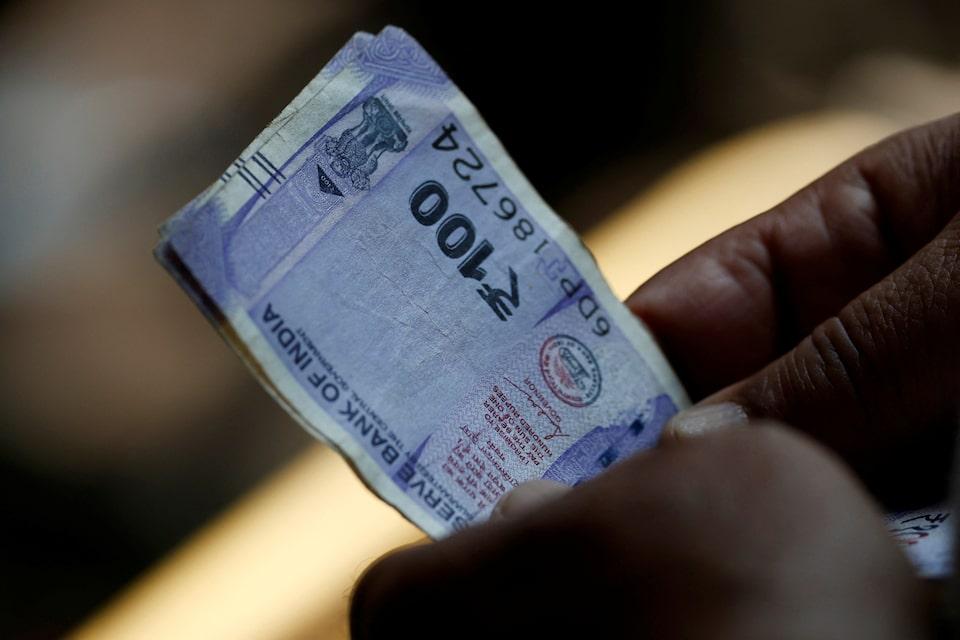
MUMBAI, Aug 1 (Reuters) - The Indian rupee nudged higher on Friday, supported by likely intervention from the Reserve Bank of India, but still logged its worst weekly drop since late 2022 due to worries over U.S. tariffs and sustained foreign portfolio outflows. The rupee closed at 87.54 against the U.S. dollar on Friday, a tad higher than its close at 87.5950 in the previous session. On the week, the currency declined 1.2%, its worst performance since December 2022. Sign up here. The South-Asian currency fell to 87.74 on Thursday, just shy of its all-time low of 87.95 in February, following President Donald Trump's announcement of a steeper-than-expected 25% tariff on Indian imports. Firm intervention by the central bank on Friday helped the rupee find some footing, but traders and analysts expect a depreciation bias in the near term. Consistent foreign outflows from local stocks alongside elevated corporate dollar demand are likely to keep the local currency under pressure, traders said. Foreign investors net sold $2 billion of Indian equities in July. India's equity benchmarks, the BSE Sensex (.BSESN) , opens new tab and Nifty 50 (.NSEI) , opens new tab were lower on the day and logged their fifth consecutive weekly fall. Meanwhile, Asian currencies fell after the U.S. imposed sweeping new tariffs on dozens of trading partners. The Korean won led losses with a near 1% fall. The Reserve Bank of India's monetary policy decision and developments related to U.S. trade tariffs will be the key drivers for the rupee next week. "The market now firmly believes that tariffs are transactional rather than ideological," ING said in a note. "Perhaps the biggest risk now is that of secondary sanctions on the likes of China, India and Turkey as Washington tries to turn the screws on Russia and those buying its cheap oil," the brokerage added. The dollar index was up 0.1% at 100.1, as investors await key U.S. labour market data later on Friday to gauge the future path of policy rates in the world's largest economy. (This story has been corrected to change the rupee closing level to 87.54 from 87.53, in paragraph 2) https://www.reuters.com/world/india/rupee-steadies-cap-rough-week-dominated-by-trumps-tariff-jolt-2025-08-01/
2025-08-01 10:22
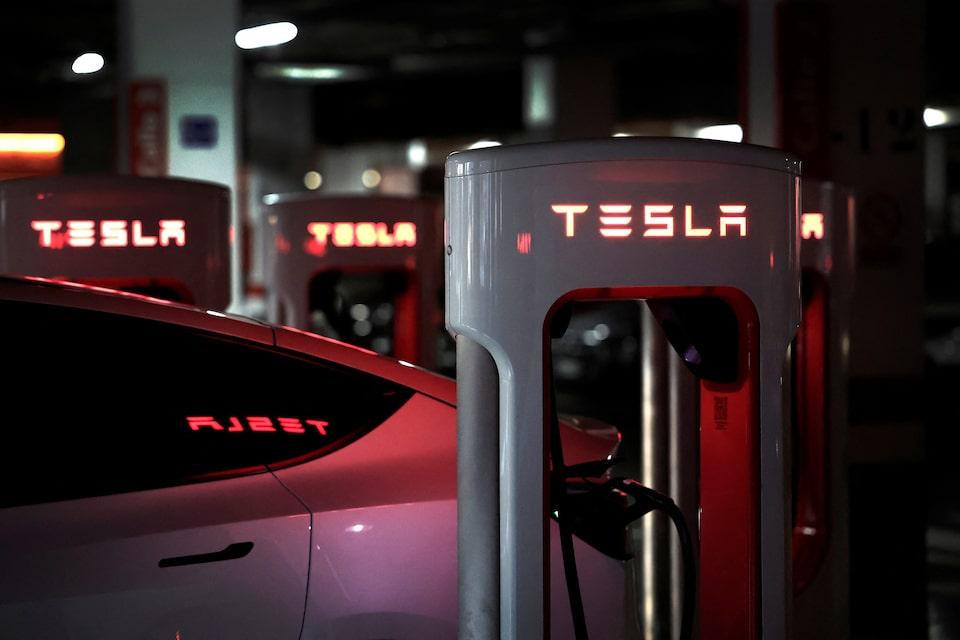
Aug 1 (Reuters) - Tesla's (TSLA.O) , opens new tab new car sales in Spain rose 27% in July from the same month in 2024 to 702 vehicles, registration data released by industry group ANFAC showed on Friday, while sales of electrified cars as a whole skyrocketed, with a 155% rise. Sales of Tesla cars in Spain were up 1.1% in the first seven months of 2025 from the same period a year earlier, while total sales of electrified vehicles, a category that includes both fully electric vehicles and hybrids, were up 93%. Sign up here. https://www.reuters.com/business/autos-transportation/new-tesla-sales-spain-rise-27-july-other-ev-sales-more-than-double-2025-08-01/
2025-08-01 10:03
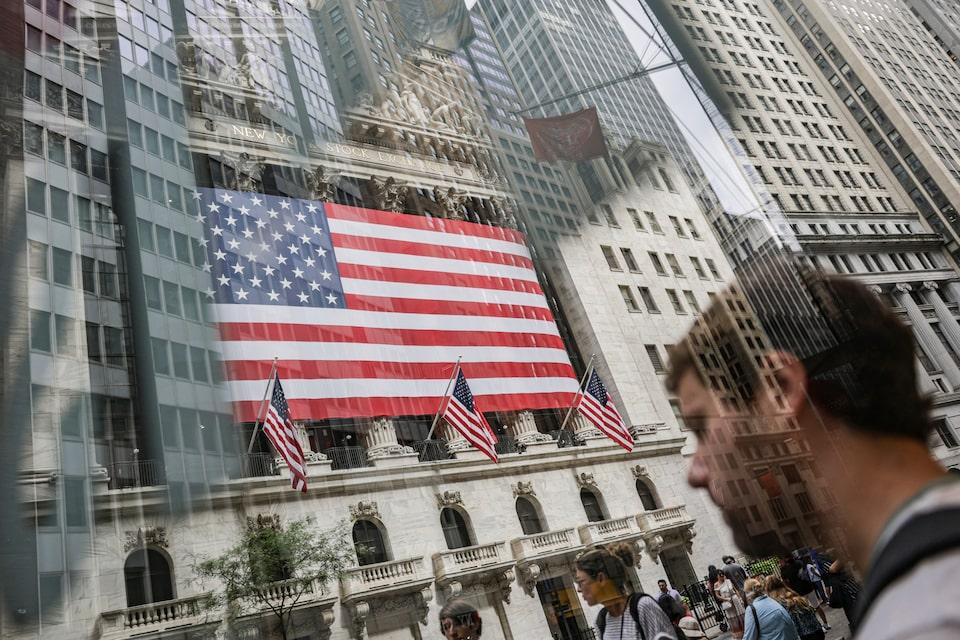
Investors scale back U.S. exposure amid tariff uncertainty Dollar's role as global reserve currency questioned U.S. tech sector optimism counters bearish sentiment NEW YORK, Aug 1 (Reuters) - A rebound on Wall Street and in the dollar has not allayed investor concerns about the ability of U.S. assets to outperform overseas markets, with a fresh tariff salvo once again denting market optimism after a string of trade deals struck by the Trump administration perked up sentiment for equities to set record highs. The sliding dollar, down about 8% this year against a basket of major currencies, and the ballooning fiscal deficit are shaking the conviction that U.S. financial markets will deliver world-beating returns. Sign up here. For more than a decade, the concept of "American exceptionalism" - the conviction that the United States' democratic system plus its huge and liquid capital markets offer unique rewards - has been little challenged by investors. But ongoing uncertainty surrounding tariffs is rattling confidence. While the deals struck by Donald Trump with the European Union, Japan and South Korea have delivered some relief, the U.S. president late on Thursday slapped dozens of trading partners with steep tariffs. A market shakeout earlier this year caused by Trump's first tariff announcements triggered a re-evaluation. The U.S. market's standing appears "a little bit bruised," said Lori Heinel, global chief investment officer at State Street Investment Management. "The overhang of the (government) debt makes it less attractive to have dollar-based assets," she added. In a survey conducted in late May and June, market research consultancy CoreData found that many institutional investors and consultants, collectively overseeing $4.9 trillion in assets, are scaling back exposure to the U.S. Among respondents, 47% are cutting their strategic, long-term allocations to U.S. markets. While investors have become more upbeat on the outlook for Europe, as well as for China and other emerging markets, bullishness toward U.S. markets now lags those regions. That, said Michael Morley, head of CoreData US, marks “a massive reversal” from attitudes two years ago. The latest wave of tariffs on exports from dozens of trading partners, including Canada, Brazil, India and Taiwan, sent global markets tumbling on Friday. The announced duties were "somewhat worse than expected," analysts at Societe Generale said in a note. "Markets responded more negatively to the August 1 announcement than to other news in the past two months, but the reaction was far less severe than on April 2," they said. TARIFF IMPACT OVERDUE? Investors began reconsidering their allocations following Trump's "Liberation Day" tariff announcement on April 2, reassessing the allure of "brand USA" and fretting about a new recession. The Trump administration then paused tariff rollouts and subsequently began announcing deals that cap tariffs at lower levels than initially proposed. Stocks rebounded, with the S&P 500 (.SPX) , opens new tab soaring 27.2% from its April 8 close to its July 31 close, setting a series of new records. CoreData, however, found that 49% of institutions believe that markets now are too complacent about the impact of U.S. tariffs. U.S. consumer prices increased by the most in five months in June, according to Consumer Price Index data, suggesting that tariffs are boosting inflation. Other data points to a moderation in economic activity, and second-quarter growth was mainly strong because imports were weak. Global asset manager Man Group, which manages roughly $193 billion, is wary of overweighting U.S. assets. “This is an opportunity for investors to take some profits, rebalance and go to neutral on the U.S.," said Kristina Hooper, chief market strategist at Man Group. BEYOND TARIFFS The dollar's status as the global reserve currency may be in question as the U.S. forfeits the role of free trade facilitator, said Thierry Wizman, global FX and rates strategist at Macquarie Group, adding the firm expects to sell the dollar on any rally. After suffering its worst first-half performance since 1973 this year, the dollar posted its first monthly gains for 2025 in July, as investors regained confidence in the wake of trade deals. Also contributing to the reassessment of U.S. market supremacy is the risk of monetary policy being politicized. Trump has repeatedly called for lower interest rates and threatened to remove Federal Reserve Chair Jerome Powell. A recently approved tax and spending bill, meanwhile, will add trillions to the government's debt, exacerbating longstanding deficit concerns. Investors are likely to respond by seeking higher compensation for the risk of owning long-dated Treasury securities "There's very, very real risk that yields go significantly higher because of the deficit," said Man Group's Hooper. U.S. INNOVATION For many, the buoyant U.S. stock market and optimism surrounding the U.S. tech sector have made it hard to turn bearish. "The bottom line is that the U.S. has some of the most innovative and profitable companies in the world, and the deepest capital markets," said Kelly Kowalski, head of investment strategy at MassMutual. Anxiety about the demise of U.S. pre-eminence is "overblown," she said. Concerns over weaker foreign demand for U.S. debt have eased in recent weeks. After selling a net $40.8 billion of Treasuries in April, foreigners resumed buying to the tune of $146 billion in May, the latest government data showed. Also, while European stocks handily beat their U.S. counterparts in March, that gap has narrowed with every new trade deal announced. As of the end of July, Europe's STOXX 600 was roughly neck and neck with the S&P 500. "The big factor in the room has nothing to do with policies, but technology," said Richard Lightburn, deputy chief investment officer at macro hedge fund MKP Capital Management. "It still feels like early innings for AI adoption and integration." Anthony Saglimbene, chief market strategist at Ameriprise Financial, continues to recommend a slight overweight to U.S. stocks relative to other global markets. "Call it 'exceptionalism' or just 'clarity.' The macro environment in the U.S. is comparatively more stable." (This story has been corrected to change the company's name to State Street Investment Management, from State Street Global Advisors, in paragraph 5) https://www.reuters.com/business/never-mind-wall-street-records-investors-rethink-us-market-supremacy-2025-08-01/
2025-08-01 09:52
PARIS, Aug 1 (Reuters) - The trade deal between the European Union and the United States should not impact the business of French nuclear fuels company Orano, as so far the U.S. has not imposed tariffs on uranium products, its CEO Nicolas Maes told reporters on Friday. Under the deal announced last Sunday, the EU agreed to purchase nuclear energy products along with U.S. liquefied natural gas and oil worth in total $750 billion over the next three years. Sign up here. "We have looked at the material, and for all the deals that have been signed so far between the U.S. and other regions of the world, and isotopes, uranium, enriched uranium are exempted," Maes said. However, he said the deal's provision for exports of nuclear fuel from the U.S. to Europe was surprising, given that the U.S. is an importer, rather than exporter of the fuel it needs for its nuclear power plants. "The U.S. market is structurally importing nuclear material and not exporting," Maes said. He also said Orano's plans to expand the company's nuclear enrichment facilities in Oak Ridge, Tennessee, should not be affected by either the trade deal or U.S. President Donald Trump's executive order deregulating the nuclear sector. Trump signed an executive order In May to reduce regulations and fast-track new licences for nuclear reactors and power plants and reinvigorate uranium production and enrichment in the country. Maes said that Orano will maintain its nuclear safety standards but the order may result in easier dialogue between the nuclear safety authority and the utilities during the permitting process. He repeated an earlier comment that a final investment decision on the project is expected in 2027. https://www.reuters.com/business/energy/nuclear-fuels-producer-orano-does-not-expect-any-impact-eu-us-deal-2025-08-01/
2025-08-01 09:06
Aug 1 (Reuters) - As Donald Trump's latest round of tariff turmoil ripples through markets and the global economy, U.S. company results continue to trickle in, policymakers in Britain and Mexico decide on rates, and oil exporting countries meet to adjust output quotas. Here's your weekahead from Bill Schomberg and Karin Strohecker in London, Kevin Buckland in Tokyo and Alden Bentley in New York. Sign up here. 1/RESULTS AND REFINANCING A raft of bellwether blue chips are reporting to Wall Street with Caterpillar (CAT.N) , opens new tab due on Tuesday, then Disney (DIS.N) , opens new tab, and McDonald's (MCD.N) , opens new tab on Wednesday. All are in the Dow 30 index, which has been flirting with record highs. Beats or upbeat outlooks from these could help lift this bellwether over the line. It is the only benchmark that has yet to hit a new peak after April's tariff panic. Some data points will help gauge the health of the world's largest economy, with durable goods orders out on Monday, and the ISM services purchasing managers' index on Tuesday. Meanwhile, U.S. Treasury auctions for benchmark 10-year and 30-year bonds will show if strong demand seen in shorter-dated papers in recent days can be replicated further out the curve. 2/SLOWING STIMULUS It's been a challenge for Beijing: how do you stir animal spirits while pivoting the world's number two economy to one built on consumers instead of factories? Trade data on Thursday and inflation figures two days later will give the latest reading on how arduous the task remains. The numbers come on the back of a closely-watched Politburo meeting, where policymakers vowed a crackdown on crippling domestic price wars but not offering much concrete new stimulus - much to the chagrin of domestic investors. Analysts say that's a good thing, chalking up slowing support measures to a stronger-than-expected economy and smoother-than-anticipated tariff negotiations with Washington. Meanwhile, trade talks with the U.S. ended without a breakthrough though look on track for an extension to the August 12 deadline. 3/JOBS AND PRICES Rising inflation and falling employment will be at the heart of the Bank of England's conundrum when policymakers meet on Thursday to set interest rates. Analysts expect a quarter-point cut to 4% and another "gradual and careful" message about its following moves. Markets are pricing another cut before year-end and one more in 2026. But some analysts think the BoE might have to call a halt to the process perhaps as soon as next week, given the warning signals about inflation. Another three-way split among policymakers looks likely amid differences over which danger is most pressing. The BoE is expected to assess the impact of its push to run down government debt stockpiles ahead of a September decision on the pace of sales over the following 12 months. 4/TRADE AND RATES Mexico's central bank policymakers also meet on Thursday to decide on interest rates, and are expected to deliver another 25-basis-point cut to lower rates to 7.75% - which would be a three-year trough. But the outlook is clouded - minutes from the July meeting confirm a shift in the easing cycle, notably, policymakers pre-committing to more easing as they face persistent inflation and weak domestic demand. And the outlook for Mexico's trade relationship with its northern neighbour is adding to uncertainty. Mexican President Claudia Sheinbaum said on Thursday she secured a pause on new tariffs coming into effect and a 90-day period to work on a trade deal. 5/SECONDARY SANCTIONS The Organization of the Petroleum Exporting Countries and allies led by Russia are meeting on Sunday to decide on increasing oil output for September. Expectations are the group will raise output by 550,000 barrels per day in what would be its last move for now - though the decision comes at a delicate moment for energy markets. Analysts are trying to sift through the fog of what the economic impact - and change in crude oil demand - will be in the wake of Trump's tariff onslaught. Looming even larger is the question of secondary sanctions on Russian oil exports from Washington: Trump said on Monday that Russian President Vladimir Putin had only 10 to 12 days to reach a deal to end the war in Ukraine before Washington would impose such curbs, short circuiting the previous 50-day timeframe set on July 14. https://www.reuters.com/business/take-five/global-markets-themes-graphic-2025-08-01/
2025-08-01 08:50
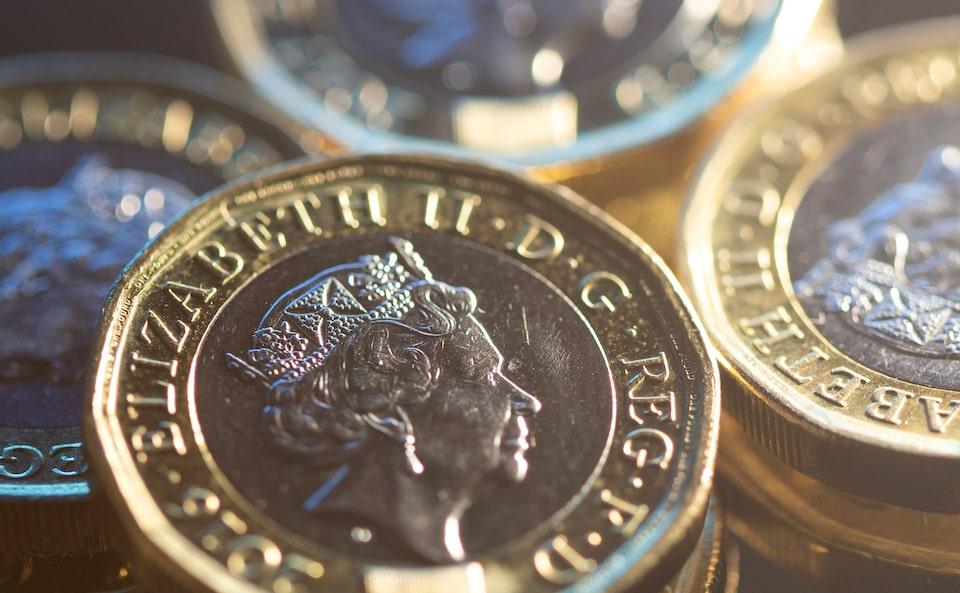
LONDON, Aug 1 (Reuters) - The pound held steady on Friday, having posted its worst monthly performance against the dollar in three years, as the U.S. currency rallied after President Donald Trump imposed new tariff rates on dozens of trade partners. Sterling lost nearly 4% in value in July, its biggest monthly decline since September 2022's so-called "mini-budget crisis" that drove the currency to a record low against the dollar and sparked turmoil across the UK bond market. Sign up here. The Bank of England meets next week and is widely expected to cut interest rates by a quarter point to 4%, their lowest in 2-1/2 years. The pound was last flat on the day at $1.3203, near its lowest since mid-May, having struck a near four-year high of $1.3787 just a month ago. Friday's U.S. nonfarm payrolls report is likely to be key in either cementing the dollar's recent rally or bringing it to an end. A reading above the 110,000 increase forecast in a Reuters poll of economists could give the dollar an even bigger boost, especially as the worst fears over the impact of U.S. tariffs have ebbed. "This dynamic is unlikely to change ahead of the weekend either, with little of note in the UK calendar for today. That leaves U.S. events top of mind for sterling traders, with uncertainty the dominant theme," Monex analysts said. The biggest catalyst driving the pound down has been the deterioration in UK economic data. The BoE, among the more conservative of the major central banks when it has come to lowering borrowing costs, is now expected to deliver more rate cuts in the coming six months than either the European Central Bank or the Federal Reserve, based on money markets. https://www.reuters.com/world/uk/sterling-steadies-after-worst-monthly-performance-since-2022-2025-08-01/