2025-08-01 07:53
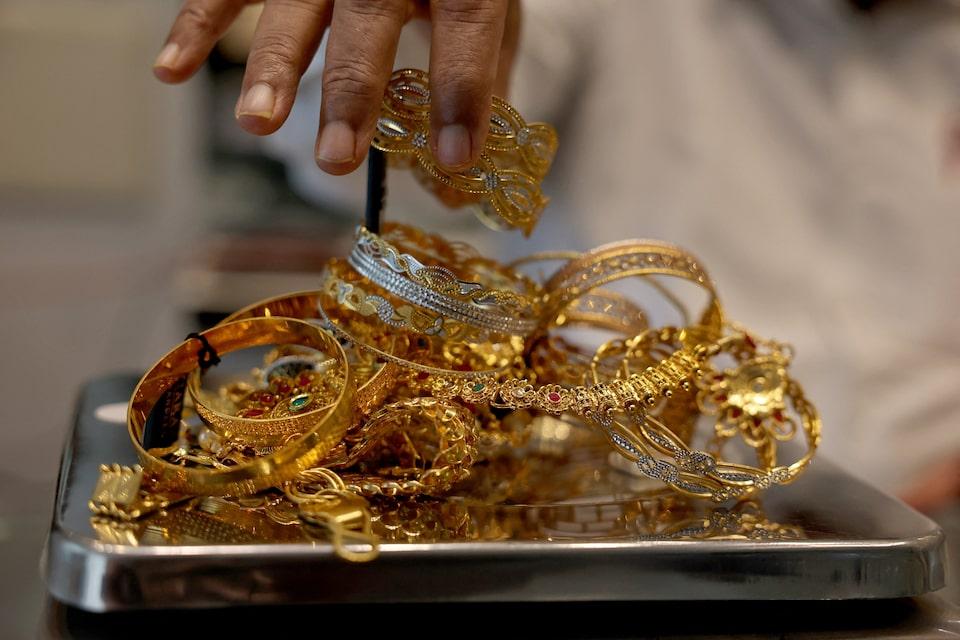
Trump hits dozens of countries with steep tariffs US dollar index hovers near two-month high Silver, platinum, palladium set for weekly losses Aug 1 (Reuters) - Gold prices held steady on Friday, but is poised for a third consecutive weekly loss pressured by a stronger dollar and diminished expectations for U.S. rate cuts, while uncertainty from U.S. tariffs on trading partners offered support. Spot gold was steady at $3,288.89 per ounce, as of 0733 GMT. Bullion is down 1.4% so far this week. Sign up here. U.S. gold futures edged down 0.3% to $3,339.90. The dollar index (.DXY) , opens new tab hit its highest level since May 29, making gold more expensive for other currency holders. "Gold remains weighed by reduced bets for Fed rate cuts for the rest of 2025. This week's U.S. GDP, weekly jobless claims, and PCE figures also shored up the Fed's reluctance to commit to a rate cut," said Han Tan, chief market analyst at Nemo.Money. Fed held rates steady in the 4.25%-4.50% range on Wednesday and dampened expectations for a September rate cut. U.S. President Donald Trump slapped steep tariffs on exports from dozens of trading partners, including Canada, Brazil, India and Taiwan, pressing ahead with his plans to reorder the global economy ahead of a Friday trade deal deadline. "The precious metal should, however, remain supported amid the still-uncertain impact from U.S. tariffs on global economic growth," Tan said. U.S. inflation increased in June as tariffs on imports started raising the cost of some goods. Focus now shifts to U.S. jobs data, due later on Friday, as investors assess the Federal Reserve's policy trajectory, with July job growth expected to have slowed and the unemployment rate projected to rise to 4.2%. Gold, often considered a safe-haven asset during economic uncertainties, tends to perform well in a low-interest-rate environment. Physical gold demand in key Asian markets improved slightly this week as a pullback in prices sparked buying interest, though volatility kept some buyers cautious. Spot silver fell 0.7% to $36.50 per ounce, platinum lost 0.8% at $1,278.40 and palladium was down 0.2% to $1,188.28. All three metals were headed for weekly losses. https://www.reuters.com/world/china/gold-set-third-weekly-loss-amid-stronger-dollar-reduced-fed-rate-cut-hopes-2025-08-01/
2025-08-01 07:50
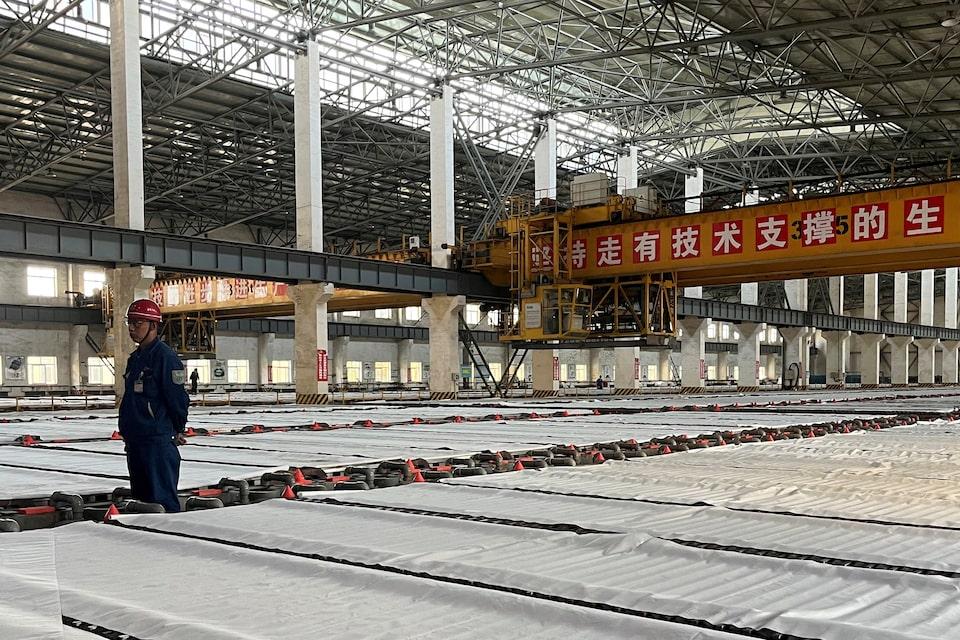
China 2025 refined copper output growth estimated at 7.5%-12% Increase will take China's share of global output to nearly 60% Analysts revise up forecasts for China's copper demand BEIJING, Aug 1 (Reuters) - China's refined copper output is set to hit a record high in 2025, analysts say, as its giant smelting sector powers through a global shortage of copper ore that is forcing some overseas competitors out of business. Refined copper production in China, which already accounts for more than half of the world's output of the metal, will climb between 7.5% and 12% this year and surpass last year's record high of 13.64 million metric tons, according to estimates from five analysts. Sign up here. Copper is vital for power, construction and manufacturing, and growing output in the world's top producer and consumer is sucking in scarce copper concentrate, the main ingredient for smelters, increasing pressure on struggling competitors and cementing China's dominance over the industry. Available concentrate began tightening in late 2023 as anaemic supply growth was worsened by mine closures and rapidly expanding smelting capacity, particularly in China. That pushed processing fees - what smelters are paid to turn concentrate into metal - to record lows, slashing profitability and forcing some smelters outside China to pause production. Chinese smelters have managed to grow output faster than concentrate imports by running down inventories and using scrap from the government's consumer goods trade-in programmes, said Alice Fox, commodities strategist at Macquarie Group. "Chinese refined production has been impressively strong year to date despite tight concentrates and low treatment charges," Fox said. China's refined copper output grew 9.5% in the first half of the year, with many of its state-of-the-art smelting plants partly offsetting losses with growing revenue from byproducts, particularly sulphuric acid and rare elements. China's copper concentrate imports, meanwhile, grew 6.4% in the first half of the year, well ahead of the 0.3% to 0.87% increase in global ore supply analysts had forecast for 2025. That left smelters in other regions with insufficient copper ore to process. China's Sinomine Resource Group (002738.SZ) , opens new tab said last month it had temporarily paused operations at its Tsumeb plant in Namibia because of a concentrate shortage. Glencore (GLEN.L) , opens new tab put its Philippine copper smelter into maintenance in February, citing challenging market conditions. Analysts expect global refined copper output to grow between 0.9% and 2% this year. With China's output rising faster, its share of global refined copper production will rise to 57% this year, according to consultancy Benchmark Mineral Intelligence (BMI). BETTER DEMAND The growth in China's output is being driven by stronger-than-expected exports plus growing investment in the power grid sector, both of which are leading analysts to revise up their copper demand forecasts. BMI increased its forecast for China's copper demand growth this year to 3.8%, versus a forecast of 2.9% at the beginning of the year. Macquarie increased its forecast to 4.2% from 2.4%. The big output jump is also expected to pull down China's refined copper imports, which in 2024 stood at 3.74 million tons or about 20% of national demand. BMI forecasts the imports will fall by 8% in 2025. Refined copper imports have already dropped 8.6% in the first half of the year, partly as traders sent more cargoes to the United States to beat the copper tariffs that U.S. President Donald Trump has been threatening since February. That rush to front-run shipments to the U.S. supported the market against the growing supply, with benchmark copper prices still up 8.8% so far this year. Trump on Wednesday surprised markets with pared back tariffs of 50% on copper pipes and wiring, short of the sweeping restrictions threatened and leaving out copper ores, concentrates and cathodes. The weaker-than-expected tariffs are unlikely to impact Chinese copper production or demand, according to BMI's Zhao Yongcheng. https://www.reuters.com/markets/commodities/china-2025-copper-output-set-hit-record-high-despite-feedstock-shortages-2025-08-01/
2025-08-01 07:33
COPENHAGEN, Aug 1 (Reuters) - Norway's biggest utility, state-owned Statkraft, said on Friday it had agreed to sell its renewables portfolio in Canada, Enerfin Canada, to Atlantica Sustainable Infrastructure for an undisclosed sum. Statkraft said the deal included Enerfin Canada's staff, two operating wind farms totalling 236 megawatt installed capacity and a 0.8 gigawatt portfolio of six wind and solar projects under development. Sign up here. The transaction is expected to close before the end of this year, Statkraft added. The company has said it will restructure its portfolio after heavy losses. https://www.reuters.com/sustainability/climate-energy/norways-statkraft-sells-renewables-portfolio-canada-2025-08-01/

2025-08-01 07:24
Mitsui, Marubeni, Itochu benefit from food businesses Buffett's Berkshire Hathaway holds minority stakes in Japanese trading houses TOKYO, Aug 1 (Reuters) - Higher profits at the diversified food businesses run by Japanese trading houses offset weaker performances at their commodities units, disclosures by Mitsui, Marubeni and Itochu showed on Friday. This diversification from the traditional commodity trading businesses at Itochu (8001.T) , opens new tab, Marubeni (8002.T) , opens new tab, Mitsui (8031.T) , opens new tab is part of what drew Warren Buffett's Berkshire Hathaway (BRKa.N) , opens new tab to take minority stakes in the companies. Sign up here. Profits at Mitsui (8031.T) , opens new tab for the three months ended on June 30 fell 31% from a year earlier partly because of weaker iron ore prices but income at its lifestyle unit, including overseas shrimp and broiler processing as well as domestic foods, grew by around 1 billion yen, accounting for 8% of the total 191.6 billion yen ($1.3 billion) the company earned. Marubeni's food and agriculture business saw a profit increase of 4 billion yen for the same period to 35.5 billion yen, or 23% of its 154.4 billion yen total. Income at the company's metals and mineral resources unit fell by 6 billion yen to 28.7 billion yen. Itochu's profits from its food business rose by nearly 10 billion yen to a record 28.8 billion yen while profits at its FamilyMart convenience store chain rose by 4.5 billion yen to 15.4 billion yen. Combined, they made 16% of Itochu's 284 billion yen quarterly net profit, highest so far. Mitsui, Marubeni and Itochu kept their full fiscal year profit forecasts unchanged on Friday at 770 billion yen, 510 billion yen and 900 billion yen, respectively. ($1 = 150.4600 yen) https://www.reuters.com/markets/asia/food-businesses-offset-commodity-price-hits-japanese-trading-houses-2025-08-01/
2025-08-01 07:11
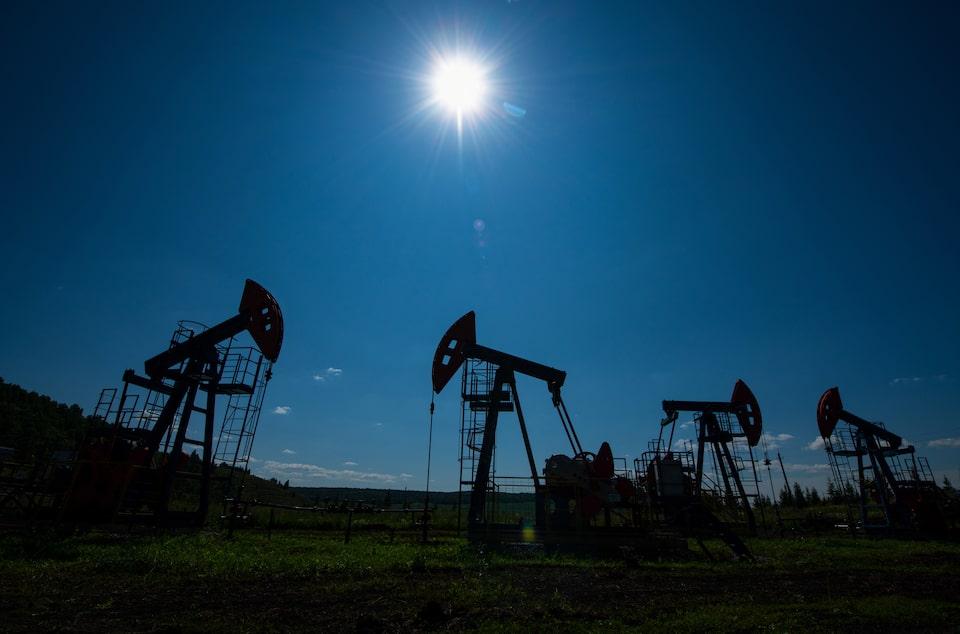
Aug 1 (Reuters) - Oil prices were little changed on Friday after falling more than 1% in the previous session as traders digested the impact of higher U.S. tariffs that may curtail economic activity and lower global fuel demand growth. Brent crude futures were down 7 cents, or 0.1%, to $71.63 a barrel at 0656 GMT. U.S. West Texas Intermediate crude was down 10 cents, or 0.14%, to $69.16 a barrel. Sign up here. Still, Brent prices are set to gain 4.9% for the week while WTI is set to climb 6.4% after U.S. President Donald Trump earlier this week threatened to place tariffs on buyers of Russian crude, particularly China and India, to try to pressure Russia into halting its war against Ukraine. "We think the resolution of trade deals to the satisfaction of the market – more or less, barring a few exceptions – has been the key driver for oil price bullishness in recent days, and further progress on trade talks with China in future could be a further confidence booster for the oil market," said Suvro Sarkar, energy sector team lead at DBS bank. On Friday though, investors were more focused on Trump's imposition of new, and mostly higher, tariff rates on U.S. trading partners set to go into effect from August 1. Trump signed an executive order on Thursday imposing tariffs ranging from 10% to 41% on U.S. imports from dozens of countries and foreign territories including Canada, India and Taiwan that failed to reach trade deals by his deadline of August 1. Some analysts have warned the levies will limit economic growth by raising prices, which could weigh on oil consumption. On Thursday, there were signs that existing tariffs are already pushing prices higher in the U.S., the world's biggest economy and oil consumer. U.S. inflation increased in June as tariffs boosted prices for imported goods such as household furniture and recreation products. This is supporting views that price pressures could pick up in the second half of the year and delay Federal Reserve interest rate cuts until at least October. Maintaining interest rates could also impact oil as higher borrowing costs can limit economic growth. At the same time, Trump's threats to impose 100% secondary tariffs on Russian crude buyers have supported prices because of concerns that would disrupt oil trade flows and remove some oil from the market. DBS' Sarkar said that India's slowing of Russian imports may lead to some supply curtailment, but that that would be mostly negated by Chevron resuming oil production in Venezuela, record U.S. production, and growing U.S. supply. JP Morgan analysts said in a note on Thursday that Trump's warnings to China and India of penalties on their ongoing purchases of Russian oil potentially put 2.75 million barrels per day of Russian seaborne oil exports at risk. The two countries are the world's second- and third-largest crude consumers, respectively. "The Trump administration, like its predecessors, will likely find sanctioning the world's second-largest oil exporter unfeasible without spiking oil prices," the analysts said, referring to Russia. https://www.reuters.com/business/energy/oil-steadies-concerns-about-tariff-impacts-vie-with-russian-supply-threats-2025-08-01/
2025-08-01 07:11
BOJ elaborates in report risk from persistent food inflation Shift in inflation bias, receding gloom from tariffs also key Ueda warns of uncertainty but notes policy rate still very low BOJ de-activates rate hike pause, wage outlook key TOKYO, Aug 1 (Reuters) - The Bank of Japan laid the groundwork this week for resuming interest rate hikes by spelling out explicitly for the first time the risks that persistent food price rises fan broad-based inflation. While markets took a dovish reading of BOJ Governor Kazuo Ueda's commentary after Thursday's policy meeting, much of his guidance suggests the bank is inching back towards action after a period of waiting and watching, analysts say. Sign up here. A shift in the board's inflation bias and its less gloomy view on the impact of U.S. tariffs also underscore the BOJ's resolve to pull the trigger once it is convinced the damage from higher levies will be within its expectations. Such hawkish signals in the BOJ's quarterly report, which represents the board's consensus view on the policy outlook, were qualified by Ueda's comments suggesting he was in no rush to raise interest rates. Still, Ueda said Japan was making some progress towards durably hitting the BOJ's 2% inflation target and stressed that its policy rate - at 0.5% - remains very low. "It's not as if we will wait until underlying inflation is firmly at 2%. Our decision is dependent on how likely underlying inflation will reach that level," Ueda told a news conference on Thursday when asked about the next rate-hike timing. All in all, the signals show the BOJ is preparing for another rate hike, while leaving all options open on the exact timing, analysts say. "The outlook report clearly shows the BOJ is starting to lay the groundwork for a rate hike," said Naomi Muguruma, chief bond strategist at Mitsubishi UFJ Morgan Stanley Securities. "The BOJ seems confident about prospects for durably hitting its inflation target," she said. "It may not be in a rush, but signaling that every policy meeting from now will be live." The BOJ holds its next policy meeting in September and another in October, when the board conducts a quarterly review of growth and price forecasts. It holds its final meeting for this year in December. A Reuters poll last month showed a majority of economists expect another rate hike by year-end. Swap rates indicate a 54% chance the BOJ will raise rates to 0.75% in October and a 71% chance in December. SECOND-ROUND EFFECTS When the BOJ compiled its previous outlook report on May 1, Ueda signalled a pause in its rate-hike cycle as President Donald Trump's April announcement of sweeping "reciprocal" tariffs jolted markets and stoked fears of global recession. Thursday's report showed signs the BOJ has ended that pause, as markets restored some calm and Japan's trade agreement with the U.S. in July reduced some uncertainty. For one, the BOJ removed the word "extremely" in describing uncertainty over U.S. trade policy. While Ueda stressed the need to await more data on the impact from U.S. tariffs, he said the risk of the economy "falling off the cliff" has diminished. The board also revised up its inflation forecast and said risks to the price outlook were balanced - a more neutral stance from that of May 1 describing risks as skewed to the downside. Furthermore, the BOJ report for the first time included a detailed assessment of how rising food costs - once seen as transitory - may lead to broad-based price rises. "It is possible that price rises will persist for longer than expected" as companies are passing on not just raw material but labour and distribution costs, the report said. A steady rise in the price of items like food, which consumers buy frequently, may induce "second-round effects" on underlying inflation, the BOJ said in the strongest warning to date on mounting price pressure. To be sure, food prices are among several factors the BOJ looks at in judging whether underlying inflation - or price rises driven by domestic demand - will durably hit its 2% target and justify raising rates. Other measures show underlying inflation remains short of 2%, Ueda said, brushing aside the view the BOJ may be behind the curve in addressing the risk of too-high inflation. But he said the BOJ must keep an eye out on how food prices and headline consumer inflation, which has remained above its target for well over three years, could affect inflation expectations. In exiting a decade-long stimulus last year and raising rates to 0.5% in January, the BOJ pointed to growing signs companies were shedding their long-held aversion to price hikes. Such change in corporate behaviour may be accelerating. A total of 1,010 food and beverage items saw prices rise in August with more than 3,000 items likely to see higher prices in October, think tank Teikoku Databank said on Thursday. "Food inflation will undoubtedly persist, which is probably why the BOJ highlighted the risk so clearly in the report," said veteran BOJ watcher Mari Iwashita. "Once there's more clarity that wage hikes will continue, the BOJ might go ahead and raise rates." https://www.reuters.com/business/boj-gears-up-hike-rates-again-leaves-free-hand-timing-2025-08-01/