2025-08-01 06:52
EBIT excluding nuclear fell 9.4% vs a year earlier Higher gas distribution failed to offset lower energy sales prices Engie to pursue existing projects in US, but more cautious on new FIDs, CEO says PARIS, Aug 1 - French utility Engie (ENGIE.PA) , opens new tab posted a 9.4% fall in half-year earnings on Friday, as higher income from natural gas distribution failed to offset lower energy prices and hydropower production. Europe's largest gas network operator said first-half earnings before interest and tax (EBIT), excluding nuclear, came to 5.1 billion euros ($5.82 billion), compared to 5.6 billion euros a year earlier. Sign up here. "These results are solid in normalising market conditions and in an uncertain economic and geopolitical context," said CEO Catherine MacGregor. Engie said last month that a colder 2025 had resulted in an increase of 6.5 terawatt-hours (TWh) of gas distributed versus the prior year. However, that was tempered by a 2.1 TWh drop in French hydropower production due to less rain, and a 2.2 TWh drop in nuclear production, after Belgium permanently retired Engie's Doel 1 nuclear plant in February and took the Tihange 3 plant offline in April for life-extension upgrades. Engie has sought in recent years to exit the nuclear business, refocus on its core natural gas holdings and reinvest the profits into renewables. The lower rainfall affected profit at the group's renewables and flexible power unit, which includes batteries and gas-fired power plants as well as hydropower plants, with EBIT down 13.4% to 1.98 billion euros in the first half. Engie said it continues to invest in new projects, and is moving ahead with three wind and solar projects that have already received a final investment decision in the United States, after President Donald Trump signed the annual U.S. budget into law. "Our clients and counterparties in the U.S. have adapted to the new market reality, notably by adding contractual clauses that better share residual risks, which will allow us to proceed with these three projects with confidence in the coming weeks and months," MacGregor told journalists on a call. U.S. projects at earlier stages are being treated more cautiously, however, as certain green tax credits under the Biden-era Inflation Reduction Act have been rolled back, increasing costs, she said. ($1 = 0.8757 euros) https://www.reuters.com/sustainability/climate-energy/engie-first-half-profit-falls-lower-gas-price-2025-08-01/

2025-08-01 06:52
Tech stocks in South Korea, Taiwan fall after new U.S. tariffs Uncertainty persists as U.S.-China trade deal unresolved Investors expect higher average tariffs even after more deals Aug 1 (Reuters) - U.S. President Donald Trump's Friday tariff deadline brought little reprieve for markets, with stocks around the world taking a hit as investors fretted over the cost of disrupting global supply chains and the outcome of talks with China. For traders inured to Trump's repeated threats, his follow-through on blanket tariffs for dozens of nations may be a wake-up call, as the deadline to strike trade deals with the United States expired and new levies arrived right on cue. Sign up here. Trump's new tariff rates include a 35% duty on many goods from Canada, 50% for Brazil, 25% for India, 20% for Taiwan and 39% for Switzerland. The new export duties are below the "Liberation Day" tariffs unveiled on April 2, but several countries are still in talks with the United States, fueling uncertainty. Investors are also still on edge over whether the United States and China will be able to clinch a deal to avert a tariff of 55% before their trade truce ends on August 12. "The market – even before yesterday evening's announcements – looked complacent on the risk of a U.S.-led global growth slowdown, which we think is to come given tariff pressures," said Andreas Bruckner, European equity strategist at Bank of America. It is a reminder that a U.S. president who has consistently advocated protectionist policies for decades now has the power to force higher costs on companies across complex global supply chains that took just as long to build. The MSCI All Country World Index (.MIWD00000PUS) , opens new tab is up 21.2% from April lows, but has fallen for the past six consecutive sessions. Trump hit Taiwan with a tariff of 20% on Friday, higher than the 15% the United States agreed with Japan and South Korea, though the government said it would continue to negotiate for a lower duty. Taiwan and South Korea are critical links in the supply chain of advanced logic chips and memory chips, respectively. Stocks in Asia Pacific's biggest tech hardware producers suffered the brunt of the selling, with South Korea's Kospi index (.KS11) , opens new tab dropping as much as 3.8% and Taiwan's benchmark index (.TWII) , opens new tab down as much as 1.6% before recovering. Taiwan Semiconductor Manufacturing Company (2330.TW) , opens new tab shed 1.7%, as its supplier Tokyo Electron's shares (8035.T) , opens new tab plunged 18% after the company cut its profit forecasts by a fifth. Tech shares across the globe felt the heat too, with Europe's tech index (.SX8P) , opens new tab dropping 2.3%. Shares of the world's biggest supplier of computer chip-making equipment, ASML (ASML.AS) , opens new tab, were down 2.7%. The tech-heavy Nasdaq index (.IXIC) , opens new tab shed 2.2%, easing from record highs. The sector shrugged off better-than-expected earnings from Apple (AAPL.O) , opens new tab and focused instead on a warning from CEO Tim Cook that U.S. tariffs would add $1.1 billion in costs over the period. "We're worried about consumer electronics companies ... anywhere that's facing large-scale consumer electronics, be it PCs or consoles or smartphones, those are the areas where we're a bit more concerned about tariffs," said Ben Barringer, global technology analyst at Quilter. Weaker-than-expected results from Amazon.com's (AMZN.O) , opens new tab cloud-computing unit added to the gloom. Just in the last two weeks of July, global companies have reported a combined loss of $10.8 billion to $12 billion from tariffs. Automotive, aerospace and pharmaceutical sectors are among the worst hit. The average tariff rate is going from about 2.5% to 15.3%, said Prashant Bhayani, chief investment officer for Asia at BNP Paribas Wealth Management. "That's a steep change," he said. "But if everyone's getting tariffed, it's more about that relative (level), because that affects how much you get, and perhaps relative to your competitors." The latest tariffs also rattled currency markets, with the Swiss franc hitting a six-week low against the dollar at one point, after Trump set a 39% tariff on Swiss imports, one of the highest tariff rates in his global trade reset. The South Korean won weakened past 1,400 per dollar for the first time since May 19 and the Taiwan dollar breached 30 against the greenback for the first time since June 4. Most of the currencies recouped their losses after the dollar fell broadly on data showing U.S. job growth slowed much more than expected in July. But even after the tariff deadline, some market participants said they expected agreements to remain in flux. "It is tempting to think that a large part of the tariff uncertainty is behind us now, but we remain cautious," said Wei Yao, head of research, Asia Pacific, at Societe Generale. "Deals are far from finalized. The framework agreements reached so far are very vague on details, and in some cases, the U.S. has a different interpretation from the other side." https://www.reuters.com/business/retail-consumer/investors-see-few-winners-tariff-storm-lashes-global-markets-2025-08-01/
2025-08-01 06:41
Trump hits dozens of countries with steep tariffs US dollar index hovers near two-month high Silver, platinum, palladium set for weekly losses Aug 1 (Reuters) - Gold prices ticked higher on Friday, supported by uncertainty stemming from a slew of U.S. tariffs slapped on trading partners, although a stronger dollar kept bullion on track for a weekly loss. Spot gold was up 0.2% at $3,299.08 per ounce, as of 0553 GMT. Bullion is down 1.2% so far this week. Sign up here. U.S. gold futures edged up 0.1% to $3,351.60. The dollar index (.DXY) , opens new tab hit its highest level since May 29, making gold more expensive for other currency holders. "Gold has been in a $3,250 to $3,450 range for about two months now, and we see it heading towards the bottom end of the range and perhaps breaking it," said Marex analyst Edward Meir, adding that the dollar's strength was driven by the Federal Reserve's hawkish stance, which also weighed on the bullion. The Fed held interest rates steady in the 4.25%-4.50% range on Wednesday and dampened expectations for a September rate cut. Trump signed an executive order on Thursday imposing "reciprocal" tariffs ranging from 10% to 41% on imports from dozens of countries and foreign locations ahead of a Friday trade deal deadline. He increased duties on Canadian goods to 35% from 25% for all products not covered by the U.S.-Mexico-Canada trade agreement, but gave Mexico a 90-day reprieve to negotiate a broader deal. "If various countries cannot renegotiate these tariff rates lower, we could see (gold) prices move higher again if trade tensions increase," Meir said. Meanwhile, U.S. inflation increased in June as tariffs on imports started raising the cost of some goods. Focus now shifts to U.S. jobs data, due later in the day, to gauge the Fed's policy trajectory. Gold thrives in a low-interest rate environment as it is a non-yielding asset. Spot silver fell 0.1% to $36.69 per ounce, platinum was up 0.4% at $1,295.76 and palladium rose 1.1% to $1,203.72. All three metals were headed for weekly losses. https://www.reuters.com/world/china/gold-heads-weekly-loss-stronger-dollar-2025-08-01/

2025-08-01 06:35
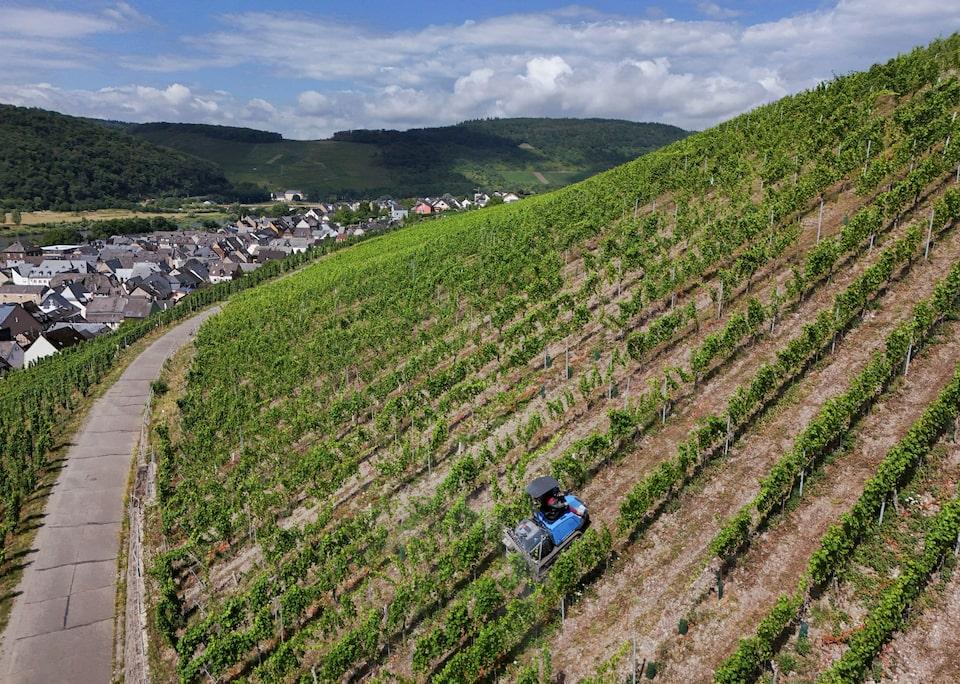
European companies face shipment delays and reassess supply chains Luxury brands and big firms adapt with pricing power or production shifts Smaller firms struggle with tariff impact, seek new markets or strategies Trump tariffs highest since 1930s, impacting global trade Champagne and perfume producers face unique challenges due to tariff constraints LONDON/MARSEILLE, France, Aug 1 (Reuters) - As U.S. President Donald Trump's new tariff regime clicks into gear on Friday, producers around Europe are feeling the impact, some holding back shipments, others hiking sticker prices or taking a hit to margins. Some fear they won't survive at all. The United States will impose a 15% tariff on most European exports from Friday, part of a wider barrage of levies set to redraw global trade. While down from even more elevated threatened rates, the tariffs are the highest since the 1930s. Sign up here. "Companies are waking up to the fact that we're dealing with an historically higher tariff rate," said International Chamber of Commerce Deputy Secretary General Andrew Wilson. "It's difficult to see that moving unless there are catastrophic consequences of the U.S. economy." He added the chamber was seeing shipment delays and companies reassessing supply chain strategies. Trading with the United States was now "hellishly more difficult." "The complexity of doing business with the U.S. has gone to levels nobody could have imagined," he said. In Germany's Moselle Valley, winemaker Johannes Selbach said tariffs were damaging for the industry on both sides of the Atlantic. They had been hoping for zero-for-zero tariffs, but face 15% for now, with sector specific talks ongoing. "The tariffs hurt the Americans and they hurt us," Selbach said in a warehouse surrounded by crates of wine with "USA" written on them in black letters. "Thousands of families who produce wine in Europe and thousands of families in the importing, wholesaling, retailing, restaurant business in the U.S. are dependent on the flow from both sides," he said, adding jobs and profits would be hit. Different sectors face varying degrees of pain. Higher-end luxury brands have more pricing power to adapt to the tariffs. Big companies can swallow some margin loss or shift some production into the United States, though often not all of it. Even big consumer firms like Procter & Gamble (PG.N) , opens new tab have flagged U.S. price hikes to deal with the tariff impact. Adidas (ADSGn.DE) , opens new tab said it could increase prices. Reuters' global tariff tracker shows at least 99 out of nearly 300 companies monitored have announced price hikes in response to the trade war, most from Europe. Trump has said the tariffs are a response to persistent U.S. trade imbalances and declining U.S. manufacturing power, and that the moves will bring jobs and investment to the nation. WE CANNOT RELOCATE CHAMPAGNE VINES Diverging U.S. tariffs globally remain a challenge, however, with big manufacturing centers like Mexico, Canada, India and Vietnam having higher rates than others like South Korea or Europe. Smaller players often can't make quick changes to production and supply chains. Hugo Drappier, a champagne maker who runs his own firm Champagne Drappier, pointed out that the bubbly beverage could only be produced in a particular region of France. "It's an industry that employs a lot of workers who can't be relocated, precisely because the work is done here. We don't have the option of relocating champagne vines elsewhere in the world," he said. He said some orders had been held up due to tariff uncertainty, though he retained hopes that trade talks were becoming more positive, with the 15% rate better than previous threats of 30%. Laurent Cohen, CEO of family-owned perfumery Corania, based in a northern suburb of French city Marseille, is scouring for new markets and ways to maintain business in the United States, which accounts for a quarter of sales. That may mean a hit to margins and higher U.S. prices, he said. "I praise the fact that we are no longer in a state of uncertainty," he said, referring to the U.S. trade deal. "But with 15% customs duty on our products - which are affordable perfume products - we will now have to show immense ingenuity to keep on going in the U.S. market." https://www.reuters.com/world/europe/europe-inc-wakes-up-trumps-new-tariff-reality-2025-08-01/
2025-08-01 06:29
U.S. currency hits new highs after levies raised for some countries, including Canada Yen on back foot after Bank of Japan signals no hurry to resume rate hikes U.S. monthly jobs data due later in the day TOKYO, Aug 1 (Reuters) - The dollar headed for its best week in almost three years against its major peers, maintaining momentum on Friday after U.S. President Donald Trump imposed new tariff rates on dozens of trade partners. The dollar also gained on non-tariff catalysts, with the yen touching a four-month low, extending a steep decline from Thursday after the Bank of Japan signalled it was in no hurry to resume interest rate hikes. Sign up here. That prompted Japanese Finance Minister Katsunobu Kato to say on Friday that officials are "alarmed" by currency moves. The yen last changed hands at 150.46 per dollar after earlier dipping to 150.915 per dollar, its weakest since March 28. The U.S. dollar index - which measures the currency against a basket of six major peers including the euro, yen, Swiss franc and Canada's dollar - is on course to rise 2.4% this week, its best weekly performance since a 3.1% rally in September of 2022. On Friday, it ticked up 0.1% to 100.14, its highest since May 29. Some countries fared much worse than others in tariff rates, hurting their currencies. Canada received a 35% levy instead of an earlier threatened 25%, briefly pushing the loonie down 0.12% to C$1.3872, its lowest since May 22 versus its U.S. peer. The Swiss franc eased as much as 0.26% to 0.8120 per dollar after Trump set a 39% duty on Swiss imports, up from the 31% he previously mooted. Asian emerging markets got swept up in the selloff as the tariff fallout rippled through the region. The Philippine peso slumped to its weakest level in six months, while Taiwan's dollar hit its lowest since early June. South Korea's won sank to levels last seen in mid-May. The euro remained pinned near an almost two-month low around $1.1428, as it continues to be weighed down by what markets see as a lopsided trade agreement with Washington. That wasn't far from Wednesday's low of $1.1401, a level not seen since June 10. "In the short-term, you can make the case for more dollar strength," said Mike Houlahan, director at Electus Financial in Auckland. "The lion's share of the tariff news has washed through." "The big move of the week has really been the euro getting rerated downwards," he said. "The net result would be the EU-U.S. trade deal is a further headwind for the euro." The EU's framework trade agreement with the U.S., struck on Sunday, was quickly criticized by French leaders and the German head of the European Parliament's trade committee as being unfair for Europe. PAYROLL DATA TO COME The U.S. dollar stayed strong even though Trump continued his attacks on Federal Reserve Chair Jerome Powell overnight, calling him a "terrible" Fed Chair and calling his own decision to appoint Powell to the position a "mistake". Trump's repeated threats to fire Powell and calls for the Fed to drastically cut rates have put the central bank's independence in question, hurting the dollar in recent months. The Fed shrugged off that pressure on Wednesday by holding policy steady, citing "somewhat elevated" inflation and a "solid" labour market. That view of employment will be tested later in the day with the release of the closely watched monthly payrolls data. Economists forecast that employment growth dropped to 110,000 new jobs in July from 147,000 new jobs the previous month, a notable slowdown but one that is not expected to be particularly worrying. "Data-wise, the U.S. looks resilient," said Shoki Omori, chief desk strategist at Mizuho Securities. "If the U.S. economy is already operating above potential, that bump can translate into a slightly higher neutral rate of interest, which is supportive for front-end bond yields and therefore the U.S. dollar," he said. https://www.reuters.com/world/africa/dollar-strong-trump-imposes-new-tariff-rates-yen-slide-spurs-government-warning-2025-08-01/
2025-08-01 06:14
HANOI, Aug 1 (Reuters) - Flooding triggered by heavy rain has left at least 14 people dead or missing in Vietnam's northern province of Dien Bien, state media reported on Friday. Floodwater rose quickly on Thursday night after hours of heavy rain, inundating houses in low-lying areas and causing flash floods and mudslides in mountainous parts of the province, Tien Phong newspaper reported. Sign up here. The mountain village of Xa Dung suffered the heaviest casualties, with one death and six missing, the report said. Traffic and power lines to several parts of the province have been cut off due to the floods, according to a statement from the provincial People's Committee. Two children in Hang Pu Xi village have been buried in mudslides and rescuers are yet to find their bodies, according to the statement. Media reports said ongoing heavy rain in the province is hindering the search for the missing. https://www.reuters.com/business/environment/flooding-leaves-14-dead-missing-vietnams-dien-bien-2025-08-01/