2025-07-31 20:43
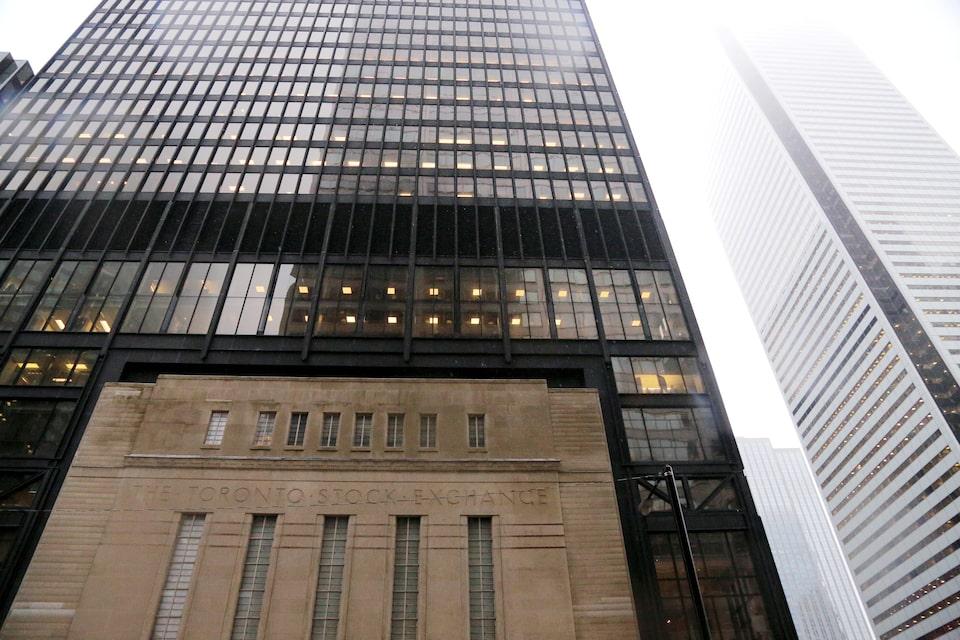
TSX ends down 0.4% at 27,259.78 For July, the index advances 1.5% Energy falls 1.2% as oil settles lower Canada Goose tumbles 14.3% after quarterly loss July 31 (Reuters) - Canada's main stock index gave back on Thursday some of its monthly gain, with energy and technology shares declining as investors assessed corporate earnings and uncertain prospects for a trade deal between Canada and the United States. The S&P/TSX composite index (.GSPTSE) , opens new tab ended down 110.18 points, or 0.4%, at 27,259.78, extending its pullback from a record closing high on Tuesday. For the month, the index was up 1.5%, its third straight monthly gain. Sign up here. "While corporate profits are in the spotlight this week and today ... we still have a relatively favorable backdrop as the U.S. and Canadian economies are holding up ok despite some of the trade uncertainty that still persists, especially in Canada," said Angelo Kourkafas, senior global investment strategist at Edward Jones. Canadian decreased by 0.1% in May on a monthly basis but preliminary estimates showed the economy regaining the lost ground in June and posting annualized growth of 0.1% for the second quarter. The Bank of Canada has projected a second-quarter contraction of 1.5%. U.S. President Donald Trump has intensified his trade war with Canada ahead of his August 1 deadline for a tariff agreement, saying it would be "very hard" to make a deal with Canada after it gave its support to Palestinian statehood. The energy sector fell 1.2% as the price of oil settled 1.1% lower at $69.26 a barrel. Technology lost 1% and industrials were down 0.8%. Bombardier (BBDb.TO) , opens new tab shares dipped 0.7%. The business jet maker reported a slight drop in second-quarter revenue, though its net income beat analyst expectations. Luxury goods maker Canada Goose Holdings (GOOS.TO) , opens new tab posted a bigger-than-expected quarterly loss. Its shares tumbled 14.3%, while shares of Bausch Health Companies (BHC.TO) , opens new tab ended 7.7% lower after the pharmaceutical firm reported its quarterly results. Of ten major sectors, only materials (.GSPTTMT) , opens new tab, which includes metal mining shares, ended higher. It rose 0.5% as the price of gold clawed back some recent declines. https://www.reuters.com/markets/europe/tsx-pares-monthly-gain-tech-energy-shares-fall-2025-07-31/
2025-07-31 20:39
NEW YORK, July 31 (Reuters) - U.S. gasoline demand in May fell to the lowest for that month since the coronavirus pandemic of 2020, data from the Energy Information Administration showed on Thursday, indicating consumers cut back on fuel purchases despite lower prices. Product supplied of finished motor gasoline, the EIA's proxy for demand, averaged about 9.06 million barrels-per-day in May, down 3.6% from last year, marking a major reversal in fuel consumption in the world's largest gasoline market. Sign up here. U.S. President Donald Trump has credited himself for lowering gasoline prices, which had surged to a record high in 2022 due to supply disruptions caused by Russia's invasion of Ukraine. Analysts, however, have said a slow start to the U.S. summer driving season, partly due to economic uncertainty from Trump's economic policies, is driving the decline. Gasoline prices fell 8.3% over the 12-month period ended June, the latest Consumer Price Index report showed, as U.S. crude prices tumbled more than 20% amid concerns over lackluster demand and a trade war with China. "Uncertainty, in my opinion, is the larger issue," said Patrick De Haan, head of petroleum analysis at market tracker GasBuddy. "The tariff/trade situation has left consumers feeling a bit pessimistic," he said. "Look for a rebound in June/July from the May figures, though I doubt they'd be better than 2024." Gasoline demand averaged 9.40 million bpd in May last year, which was the highest for any month since the pandemic, data from the EIA showed. https://www.reuters.com/business/energy/us-gasoline-demand-may-hits-lowest-seasonal-level-since-2020-eia-says-2025-07-31/

2025-07-31 20:34
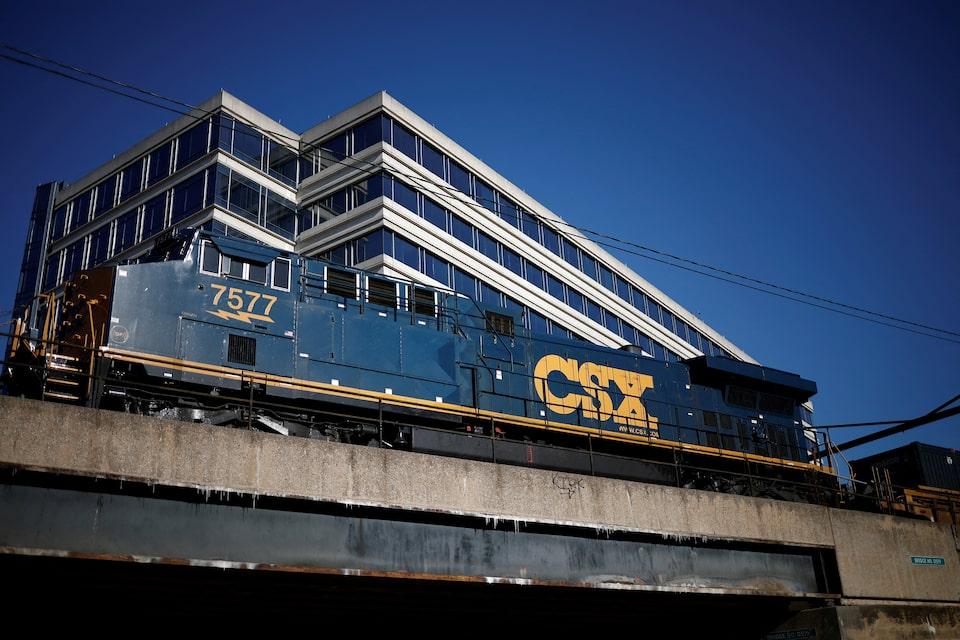
July 31 (Reuters) - Railroad operator CSX (CSX.O) , opens new tab is working with Goldman Sachs (GS.N) , opens new tab to explore strategic options following a merger between its two major rivals, Bloomberg News reported on Thursday, citing people familiar with the matter. Union Pacific (UNP.N) , opens new tab said on Tuesday it would buy smaller rival Norfolk Southern (NSC.N) , opens new tab in an $85 billion deal to create the first U.S. coast-to-coast freight rail operator and reshape the movement of goods from grains to autos across the country. Sign up here. Reuters reported last week that CSX was in talks to bring on financial advisers. "We welcome all opportunities that would allow us to deliver value for our shareholders, drive pro-growth and serve our customers better," CSX CEO Joe Hinrichs said on a post-earnings call last week. Goldman Sachs did not immediately respond to a Reuters request for comment. CSX declined to comment. https://www.reuters.com/business/csx-working-with-goldman-sachs-explore-strategic-options-bloomberg-news-reports-2025-07-31/
2025-07-31 20:32
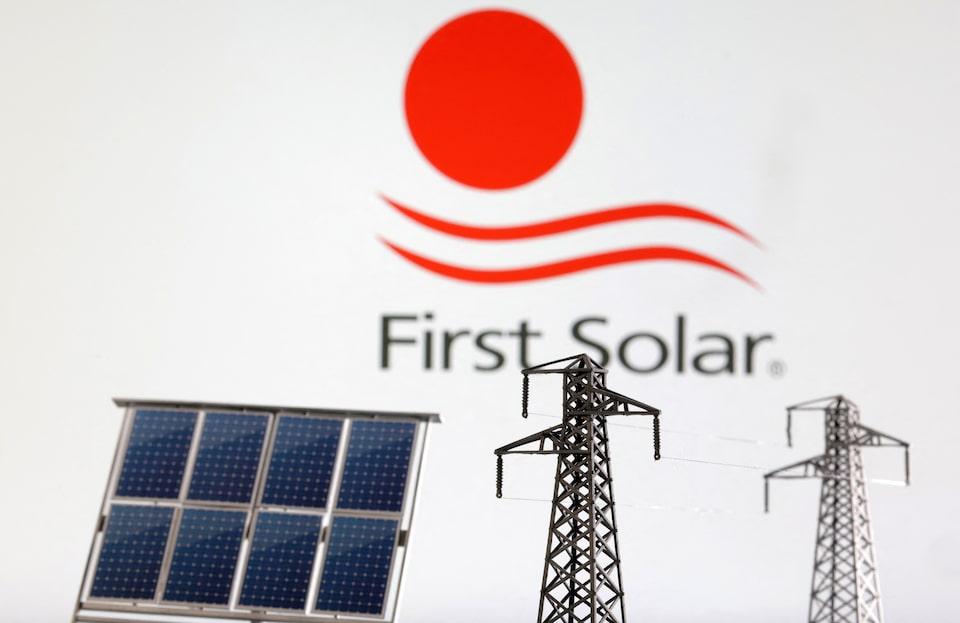
July 31 (Reuters) - First Solar (FSLR.O) , opens new tab raised its annual sales forecast on Thursday, as the U.S. solar panel maker expects higher prices for its products following additional tariffs on foreign-made panels. Shares of the Tempe, Arizona-based company rose over 4% after the bell. Sign up here. The solar industry, which has grappled with lackluster demand and high interest rates, is now bracing for the impact of U.S. President Donald Trump's policies related to renewable energy as well as his plans to impose tariffs on most imports. While Trump's sweeping tax and spending bill - dubbed the "One Big, Beautiful Bill Act" (OBBBA) - aims to phase out solar and wind tax credits by 2028, the U.S. tariffs are expected to improve the outlook for solar companies. "In our view, the recent policy and trade developments have, on balance, strengthened First Solar's relative position in the solar manufacturing industry," CEO Mark Widmar said. Earlier this month, U.S. solar panel makers, including First Solar, asked the U.S. Commerce Department to impose tariffs on imports from Indonesia, India and Laos, as they sought to protect their recent investments and better compete with Chinese rivals. The industry is also expected to benefit from rising demand for power as corporations and governments increasingly adopt cleaner sources of power to combat climate change. First Solar now expects current-year net sales to be between $4.9 billion and $5.7 billion, compared with its previous projection of $4.5 billion and $5.5 billion. Analysts, on average, estimated the company's 2025 net sales at $5.07 billion, according to data compiled by LSEG. https://www.reuters.com/sustainability/climate-energy/first-solar-raises-annual-sales-outlook-expects-higher-prices-due-tariffs-2025-07-31/
2025-07-31 20:27
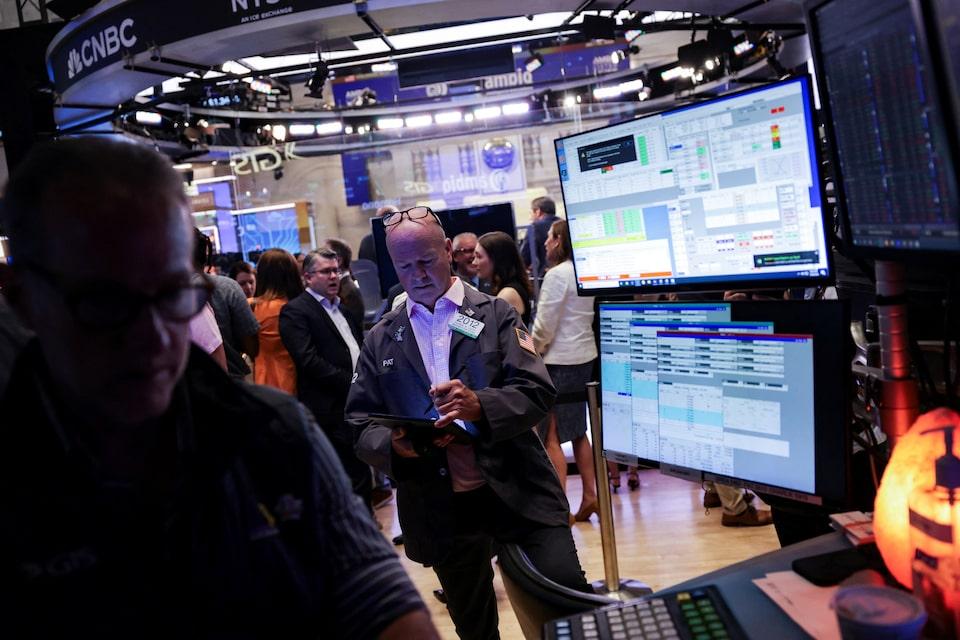
Microsoft, Meta rise after quarterly results Semiconductor stocks weak Economic data shows inflation rise, stable labor market Indexes off: Dow 0.74%, S&P 0.37%, Nasdaq 0.03% NEW YORK, July 31 (Reuters) - U.S. stocks closed lower on Thursday as early gains faded, following the latest round of corporate earnings and economic data, as investors awaited results from megacaps Amazon and Apple due after the closing bell. Microsoft (MSFT.O) , opens new tab shares rose 3.5% after it posted a strong earnings report and briefly surpassed the $4 trillion market cap threshold, becoming only the second publicly traded company to ever touch the milestone after Nvidia (NVDA.O) , opens new tab. Sign up here. Meta Platforms (META.O) , opens new tab surged 11.3% to close at a record high of $773.44 as AI-driven growth in its core ad business powered a bullish revenue forecast. Still, other AI-related names were weaker on the session. Names such as chipmakers Broadcom (AVGO.O) , opens new tab, which lost 2.9%, and Nvidia, off 0.8%, weighed on the PHLX semiconductor index <.SOX>. The chip index dropped 3.1% for its biggest daily percentage decline since April 16. "Looking at the market action today, you have haves and have-nots, and so you have a couple tech companies, like a lot of the semiconductor-related and semi-cap equipment-related stocks are doing pretty poorly," said Ellen Hazen, chief market strategist at F.L. Putnam Investment Management in Lynnfield, Massachusetts. "But then, of course, Microsoft is doing pretty well, and the same thing with Amazon and Meta, which are doing really well." Of the 297 companies in the S&P 500 that have reported earnings through Thursday morning, 80.8% have topped analyst expectations, according to LSEG data, compared with the 76% beat rate over the past four quarters. After the closing bell, Amazon shed 2.6% in extended trade after reporting quarterly results. The Dow Jones Industrial Average (.DJI) , opens new tab fell 330.30 points, or 0.74%, to 44,130.98, the S&P 500 (.SPX) , opens new tab lost 23.51 points, or 0.37%, to 6,339.39 and the Nasdaq Composite (.IXIC) , opens new tab lost 7.23 points, or 0.03%, to 21,122.45. The S&P 500 had risen as much as 1% and the Nasdaq as much as 1.5% earlier in the session. The Nasdaq has not logged a move of at least 1% in either direction since July 3 while the S&P last recorded a daily 1% move on June 24. Earlier economic data from the Commerce Department report showed inflation picked up in June, with new tariffs pushing prices higher and stoking expectations that price pressures could intensify in the coming months, while weekly initial jobless claims signaled the labor market remained on stable footing. Investors will now eye Friday's non-farm payrolls report and a looming tariff deadline, as U.S. President Donald Trump was expected to issue higher final duty rates for countries that have not reached an agreement, although Mexico was granted a 90-day reprieve. U.S. stocks have rallied after a sharp selloff that began in early April after Trump announced a bevy of sharp tariffs, only to rebound as deals have been struck with many trading partners on duty levels. For the month, the S&P 500 gained 2.17%, the Nasdaq rose 3.7%, and the Dow climbed 0.08%. The Dow, S&P 500 and Nasdaq recorded their third straight monthly gain. Drug stocks were also weaker after the White House said Trump sent letters to the CEOs of 17 major pharmaceutical companies, urging immediate action to lower the cost of prescription drugs for Americans. The NYSE Arca pharmaceutical index (.DRG) , opens new tab slumped 2.9%, its biggest drop since May 14 and fourth straight session of declines. Declining issues outnumbered advancers by a 1.55-to-1 ratio on the NYSE, and by a 1.98-to-1 ratio on the Nasdaq. The S&P 500 posted 35 new 52-week highs and 28 new lows while the Nasdaq Composite recorded 70 new highs and 141 new lows. Volume on U.S. exchanges was 19.65 billion shares, compared with the 18.01 billion average for the full session over the last 20 trading days. https://www.reuters.com/business/equities-stall-early-enthusiasm-ebbs-amazon-apple-earnings-due-2025-07-31/
2025-07-31 20:08
July 31 (Reuters) - U.S. planemaker Boeing (BA.N) , opens new tab sent a new contract offer on Thursday to the union representing roughly 3,200 factory workers at Boeing's defense division, mostly in the St. Louis area. It contains some minor compensation changes that would benefit senior union members, the company said. The offer also keeps current overtime policies, which Boeing had proposed modifying in the last contract offer. Sign up here. If the contract is not passed by Sunday, a $5,000 lump sum bonus will not be offered again, according to Boeing. Members of the International Association of Machinists and Aerospace Workers overwhelmingly rejected a contract offer from Boeing on Sunday. The offer sent to members of IAM District 837 included a 20% general wage increase over four years, the bonus, and more vacation time and sick leave. That offer was insufficient, the IAM union said at the time. “We have carefully considered and responded to the feedback from our employees and the union," Dan Gillian, a Boeing vice president, said in a statement. He called the contract "the richest we’ve ever proposed for IAM 837." The IAM declined to comment. The workers assemble Boeing's fighter jets and the MQ-25, an aerial refueling drone being developed for the U.S. Navy. Boeing's defense division is expanding manufacturing facilities in the St. Louis area for the new U.S. Air Force fighter, the F-47, after it won the contract this year. The Next Generation Air Dominance fighter jet program, initially conceived as a "family of systems" centered around a sixth-generation fighter jet, is meant to replace the F-22 Raptor. https://www.reuters.com/business/world-at-work/boeing-makes-new-contract-offer-st-louis-defense-workers-2025-07-31/