2026-01-26 23:47
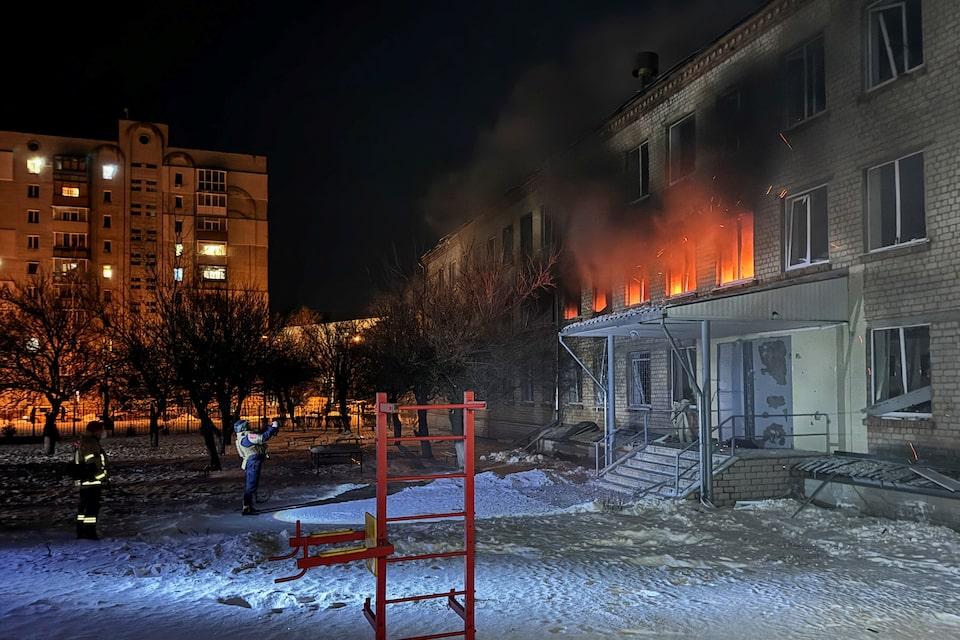
Drone strike on train kills five in northeast Overnight drone attack on southern city kills three Zelenskiy denounces terrorism, calls for more pressure on Russia Attack comes as Ukraine prepares for new US-brokered talks KYIV/ODESA, Ukraine, Jan 27 (Reuters) - A Russian drone strike on a passenger train in northeastern Ukraine killed five people, prosecutors said on Tuesday, an attack denounced as terrorism by President Volodymyr Zelenskiy as he called for intensified pressure on Moscow. The attack set a train ablaze hours after Russian drones hammered the southern city of Odesa overnight, killing three people and wounding 25 as Moscow intensified its strikes aimed at pushing Kyiv to give up fighting. Sign up here. In Kyiv, Energy Minister Denys Shmyhal said 710,000 residents remained without power in the aftermath of Moscow's attack on the capital last week. Russia has waged a winter campaign of strikes on energy infrastructure even as Kyiv has been under pressure to agree to a U.S.-backed peace deal to end the nearly four-year war. In northeastern Kharkiv Region, prosecutors said fragments of five bodies had been found at the scene of the strike on the train by a village. Photographs posted online showed at least two carriages in flames next to a snow-covered railbed. "In any country, a drone strike on a civilian train would be considered in exactly the same way – purely as terrorism," Zelenskiy wrote on the Telegram messaging app. "Our cause – and this is what should unite all normal people in the world – is to ensure the progress of protecting life. This is possible through pressure on Russia." Zelenskiy had earlier decried a "brutal" attack by more than 50 drones on Odesa as Ukrainian and Russian negotiators prepare for new talks on Sunday. "Every such Russian strike erodes the diplomacy that is still ongoing and undermines the efforts of partners who are helping to end this war," Zelenskiy wrote on X. Odesa Governor Oleh Kiper said two children and a pregnant woman were among the wounded in the strikes on the city. Dozens of residential buildings, a church, a kindergarten and a high school were damaged, he said. By midday on Tuesday, rescue workers were still digging through a mountain of rubble outside a building where emergency officials said two residents had been killed. It was ripped open across several floors. Resident Denys Tsybulskiy stood outside the building trying to reach his neighbour, who he said was trapped under the debris but had showed signs of using his phone. "He can't pick up the phone, he can't talk, but there's hope that he's laying there," he said. An elderly man looked on as rescuers carried away the body of his 52-year-old daughter. The overnight attack also led to the "colossal destruction" of an energy facility in the city, leading private power provider DTEK said in a statement. Odesa, on Ukraine's strategically critical Black Sea coast, has come under increasing attack in recent months. In Kharkiv, Ukraine's second-largest city, Mayor Ihor Terekhov said 40% of households had no electricity a day after a combined drone and missile attack. Ukraine's air force said Russian troops had launched 165 drones overnight - 135 of them neutralised by air defences. Russian and Ukrainian officials are expected to hold another round of U.S.-brokered talks on Sunday after meeting last weekend in Abu Dhabi. Writing on X, Zelenskiy urged Kyiv's allies to boost pressure on Moscow, which has demanded Ukraine cede land that Russian forces have been unable to capture before it stops fighting. "We expect the United States, Europe, and other partners not to remain silent about this and to remember that achieving real peace requires pressure precisely on Moscow." Ukraine is asking partners, particularly the U.S., for strong security guarantees in the event of a peace deal that would prevent Russia from attacking again. A source familiar with internal discussions told Reuters on Tuesday that the U.S. has told Ukraine it must sign on to a peace deal with Russia in order to get U.S. security guarantees. https://www.reuters.com/world/least-two-injured-russian-attack-dwellings-school-ukraines-kharkiv-2026-01-26/
2026-01-26 23:05
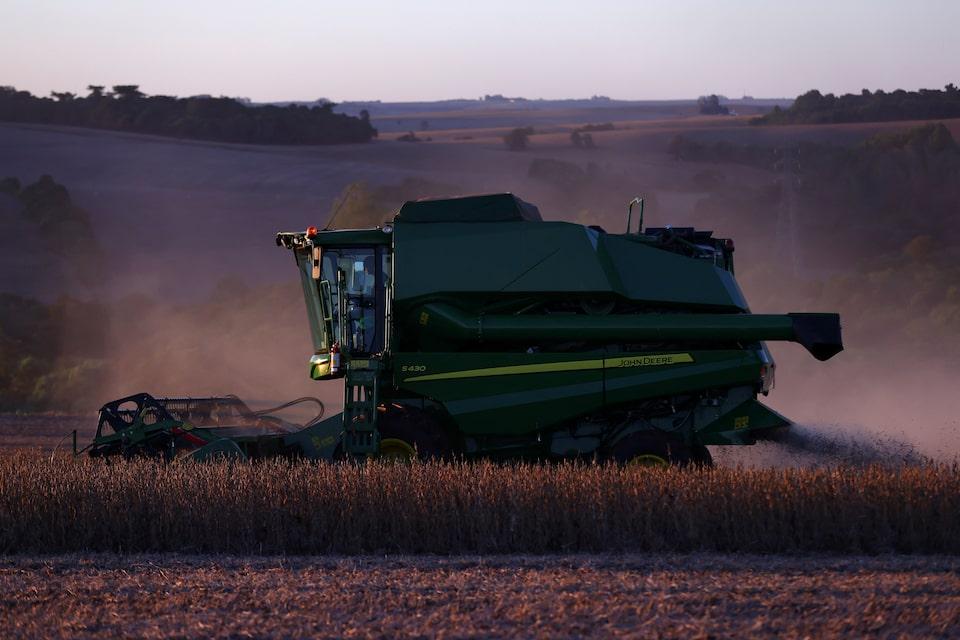
China favours Brazilian beans on bumper harvest, cheaper prices Strong crush margins, soymeal demand underpin H1 soybean demand China takes 12 mln T of U.S. soybeans, further buying uncertain Soybean trade in focus as Trump to visit China in April SINGAPORE/BEIJING/SAO PAULO, Jan 27 (Reuters) - China is expected to boost imports of Brazilian soybeans in the first half of 2026, as record production and competitive prices propel shipments, reinforcing South America's dominance in the world's biggest oilseed importer, even as U.S. supplies return. Private soybean processors in China are locking in deals for Brazilian soybeans to be shipped from February onwards as the harvest gathers pace, swelling supplies and squeezing prices, trade sources said. Sign up here. Such activity could hit demand for U.S. cargoes when the North American export season begins in September. Purchases of about 12 million tons of U.S. soybeans following a thaw in ties between Beijing and Washington since late October were made entirely by state-owned Sinograin and COFCO, as higher U.S. prices sidelined private traders. Even if Beijing orders more purchases by state-run grain traders and stockpiler Sinograin to meet trade deal commitments to Washington, China's 13% tariff on U.S. soybeans makes them costlier for private crushers than Brazilian supplies facing a duty of 3%. "China's current purchase volumes of U.S. soybeans are limited, sufficient only to maintain a positive political atmosphere ahead of the April meeting between the two countries' leaders," said Dan Wang, China director at Eurasia Group, a global political risk consultancy. "If the April meeting yields further tariff reductions and certain assurances on the Taiwan issue, China may commit to soybean purchases, but volumes are likely to remain limited." Crush margins for Brazilian soybeans shipped between March and June remain favourable to clinch deals, traders and analysts told Reuters. "We will probably see higher exports (from Brazil) to China in the period from March to June, higher than last year," said a trader for a large global company. "Brazil's soybeans are way cheaper than U.S. soy in this period." All the sources spoke on condition of anonymity as the matter is a sensitive one. Earlier, the market had expected China's purchases of Brazilian soybeans to decline this year, as it bought U.S. cargoes. EXPENSIVE U.S. SOYBEANS Chinese state-owned firms have bought about 12 million metric tons of U.S. soybeans since late October, fulfilling a U.S.-stated pledge, but volumes remain well below China's purchases of roughly 23 million tons in the 2024/25 crop year. On November 18, Brazilian soybeans for shipment in December to China were priced at $507.90 per metric ton, below $516.90 for U.S. Gulf supplies and $510.50 for U.S. Pacific Northwest origin, on a cost-and-freight basis, excluding tariffs. At those levels, China would have paid roughly $31 million to $108 million more for 12 million tons of U.S. soybeans than for Brazilian cargoes. China resumed U.S. soybean purchases after the leaders of both countries met in late October, with the White House saying China had also agreed to buy at least 25 million tons a year over the next three years, starting in 2026. On Thursday, U.S. President Donald Trump said he would visit China in April while his counterpart Xi Jinping would travel to the United States toward the end of 2026. BUMPER HARVEST IN SOUTH AMERICA Traders do not expect further U.S. bookings, citing higher prices and anticipated bumper crops in major producers Brazil and Argentina. "Our large crop makes our product cheaper than the U.S. one, and this tends to last until the arrival of the new U.S. soy from September," said Adelson Gasparin, a grain broker in southern Brazil, who expects China to keep up import levels. Brazilian soybeans shipped in February are at least 50 cents a bushel cheaper than U.S. Gulf shipments on a free-on-board basis and up to 75 cents cheaper for March shipments, say traders and analysts. As the harvest accelerates, Brazilian prices are likely to face further pressure. "I think the difference is going to widen out," said Dan Basse, president of AgResource Co. "Maybe to something like a dollar." Traders said some purchases are possible during the peak South American export season, though probably minimal unless China issues a directive to buy U.S. supplies or South American corn shipments flood ports in Brazil, they said. "I don't think it works without a government enforcement," said one trader. Brazil's 2025/26 soybean production is forecast at a record 182.2 million tons, according to agribusiness consultancy Agroconsult. Marcela Marini, senior grain and oilseeds analyst at Rabobank, expects Brazil to export about 85 million tons to China over the period from September 2025 to August 2026, an increase of 6 million tons over the prior year. China has booked roughly 42 million to 44 million tons of Brazilian soybeans for September to August, including 23 million to 25 million tons for February to August, two Asian traders said. China's pig herd remains large, defying government efforts to reduce overcapacity, and analysts say a meaningful decline is unlikely before the end of the second quarter, keeping soymeal demand strong in the first half of 2026. For 2024/25, China imported 109.37 million metric tons of soybeans, and imports for 2025/26 are expected to drop to 95.8 million, the farm ministry says. https://www.reuters.com/world/china/china-favour-brazilian-soybean-imports-h1-despite-renewed-us-inflows-2026-01-26/
2026-01-26 23:00
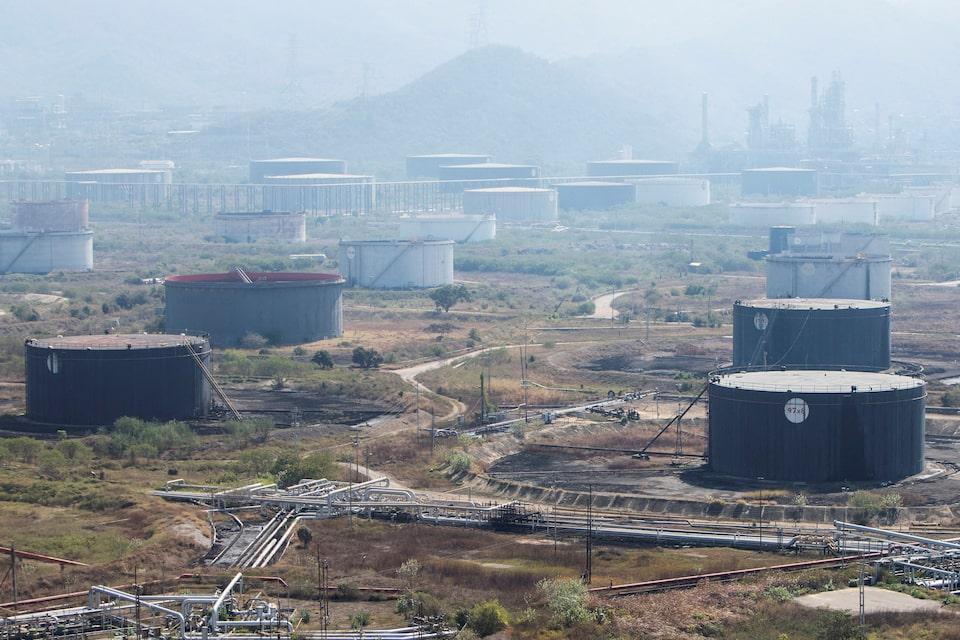
Small firms might be interested in new contract model Larger companies remain cautious on legislation Lawyers working to avoid vague language, contradictions HOUSTON/WASHINGTON, Jan 26 (Reuters) - A proposed reform of Venezuela's oil law is enough to encourage companies working in the country to expand and for some new entrants to begin investing, but deeper reforms would be necessary to attract the $100 billion the U.S. says is required to revamp the nation's energy sector, foreign and local executives and lawyers said. The U.S. has taken control of Venezuela's oil exports and revenue following a military incursion to capture President Nicolas Maduro earlier this month, and a naval blockade to stop oil shipments on sanctioned vessels since December. Sign up here. Oil is the Venezuelan government's main source of revenue. Washington has said it plans to control the country's energy resources and revenue indefinitely to ensure Caracas governs in a way that the U.S. considers is in line with its foreign policy targets. U.S. President Donald Trump is pushing U.S. oil companies to invest massively in the country's dilapidated industry to reverse decades of mismanagement and underinvestment. For many investors, one of the biggest obstacles to secure capital for Venezuela is a long-standing legal framework that gives state-run oil company PDVSA a monopoly on operating projects in the oil and gas sector. Interim President Delcy Rodriguez proposed a sweeping reform to the hydrocarbon law last week. Venezuela's authorities discussed it on Monday with lawmakers and oil executives from firms including U.S. producer Chevron (CVX.N) , opens new tab and India's ONGC (ONVI.NS) , opens new tab, sources close to the talks said. It is expected to be approved on Tuesday after the brief consultations. Chevron did not reply to a request for comment. ONGC could not immediately be reached for comment after working hours. The reform would give PDVSA's joint-venture partners more control over projects, direct access to proceeds from oil sales and more flexible operating conditions. Existing partners - which include Chevron along with European, Chinese and Russian companies - have been requesting those changes for years. PDVSA is currently the majority stakeholder in over 40 joint ventures, after a nationalization two decades ago saw many companies leave the country. The fast-tracked reform goes some way to ending the monopoly, but some vague language in the proposal, as well as some contradictory clauses on trading and taxation need to be ironed out, industry associations and lawyers said. Otherwise, large international energy companies would have little appetite for investment, they added. "You got to deal with what you have," said Ali Moshiri, CEO of Amos Global Energy Management, which has stakes in energy projects in Venezuela. "There is no option other than this... If you don't make this (industry) more attractive, the entire progress we want to make is going to come to a halt, including current operators." NEW MODEL TO COME The reform is expected to formalize a production-sharing contract model that Maduro pushed with little success in recent years, allowing about half a dozen companies to operate in some Venezuelan oilfields. The loosely regulated model would coexist with current joint ventures, but minority partners in those would gain autonomy to handle their share of output and even sell PDVSA's share if sale prices negotiated by them exceed those agreed by the state company and its customers. The reform would allow the government, at its discretion, to lower royalty rates to as low as 15% from the current 33%. That would reduce Venezuela's government take - among the highest in Latin America - which oil executives in the United States and elsewhere have flagged as problematic. The changes would also facilitate independent arbitration to resolve disputes, although it is unclear whether cases could go before international courts. Many other reforms, however, would be needed to reduce taxes and make the country competitive with other oil-producing nations, six lawyers and executives said. They asked for anonymity because of the topic's sensitivity in Venezuela. Those would need to include a reform of Venezuela's income tax law, they said. Other legislation that includes a provision for an oil "shadow tax" that secures the country no less than 50% of the value of each barrel produced would need to be removed, they said. Venezuela's oil ministry would gain precedence over Congress and other ministries on tax and ownership changes for projects, which some executives including Moshiri said was positive because it would speed up project approvals. Others viewed the move cautiously because an incoming government could reject it. Giving PDVSA's partners financial and operational control of projects was another reform international companies would find attractive, the executives added. That would include loading and exporting oil that corresponds to them and selling it where they want, known as equity lifting, which is common in other countries where international oil companies operate. "As long as the law allows equity lifting, that would be as good as for any place else, like a typical joint venture," Moshiri said. The new model of production-sharing contracts could be attractive for small and midsize companies, he and executives from companies in Venezuela have said. "This is sufficient enough for the transition, until there is a permanent government in Venezuela," Moshiri said. CHALLENGES REMAIN Some lawyers have raised a red flag, however, over the discretionary power the reform gives the government. Under the reform, the government would have no need to consult with Venezuela's National Assembly to approve contracts, lower royalties or transfer output commercialization to PDVSA's partners. "(This reform's) aim is to keep undermining the National Assembly's oversight capacity," said lawmaker Henrique Capriles. "What's behind this hydrocarbons law? The oil business won't change with a new law," he said. "The most serious problem the oil industry has faced, among many others, has been corruption." The reform is unclear on the rights of joint-venture partners, other experts said. That includes on important issues such as project ownership, investment and trading. There is also nothing in the reforms to tackle a structural crisis at PDVSA, they said. "The regulation of new oil contracts is confusing and ambiguous," said Boston-based lawyer Jose Ignacio Hernandez in a report last week. "The proposed reforms fail to strengthen the fragile regulatory framework significantly and, consequently, do not offer the legal certainty needed for rebuilding the oil industry." Venezuela's government has said the reform will boost output and give entry to companies interested in unexplored fields. Some analysts and company executives expect the largest U.S. producers to stay out of the new contract model until a clearer reform that can be greenlit by their legal departments is drafted and a National Assembly with more robust opposition takes office. The U.S. oil industry was initially supportive of the proposed law reform, but remained skeptical about its long-term durability, sources in Washington said. https://www.reuters.com/business/energy/venezuela-oil-reform-encourages-immediate-investment-still-needs-go-deeper-2026-01-26/
2026-01-26 22:54
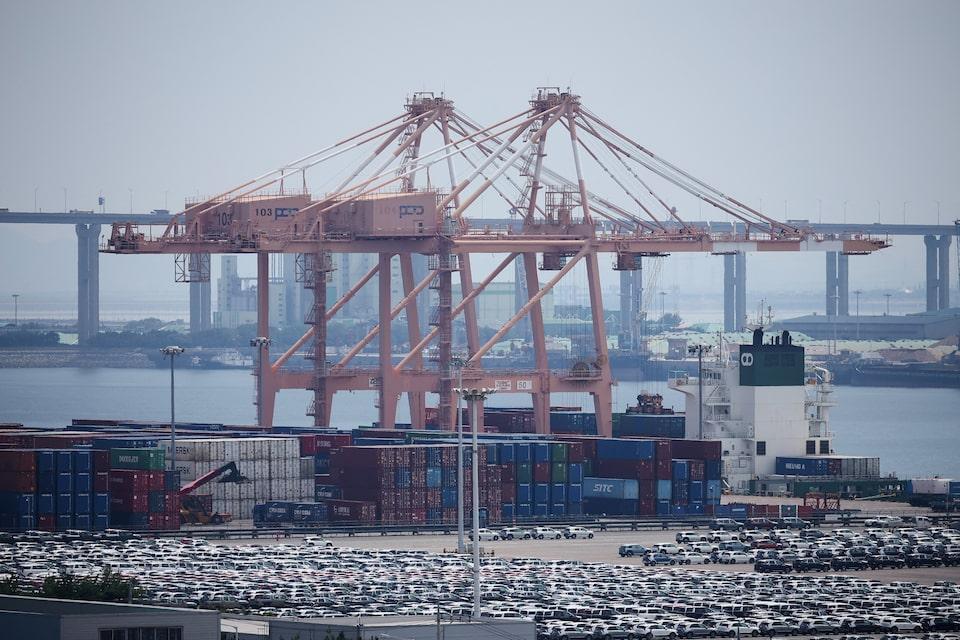
Trump accused South Korea legislature of not living up to trade deal US and South Korea reached a deal last year South Korea presidential office, ruling party vow to act Trump says tariffs will rise to 25% from 15% SEOUL/WASHINGTON, Jan 27 (Reuters) - South Korea scrambled on Tuesday to assure the U.S. it remained committed to implementing a trade deal after President Donald Trump said he would hike tariffs on autos and other imports from its ally, blaming a delay in enacting the pact agreed last year. Trump said on Monday that South Korea's parliament was not living up to its side of the deal by swiftly enacting the agreement he reached with President Lee Jae Myung to make huge investments in U.S. business projects in return for tariff cuts. Sign up here. For South Korea, the decision, which officials in Seoul said caught them by surprise, is the latest setback as it tries to navigate the alliance and trade partnership amid potential challenges to its security and financial stability posed by Trump's demands. Trump and Lee struck a deal in principle last July for Seoul to make $350 billion of investments in the U.S., despite concerns over the impact of such a large outflow from Asia's fourth-largest economy. "President Lee and I reached a Great Deal for both Countries on July 30, 2025 and we reaffirmed these terms while I was in Korea on October 29, 2025," Trump wrote on social media. Trump said South Korea's legislature had not enacted the deal and as a result: "I am hereby increasing South Korean TARIFFS on Autos, Lumber, Pharma, and all other Reciprocal TARIFFS, from 15% to 25%." It was not immediately clear when the hike would take effect. A source familiar with internal discussions between the countries said Trump may have been prompted by recent South Korean regulatory actions against Coupang (CPNG.N) , opens new tab, a U.S.-listed e-commerce company that has protested them as unfair and discriminatory. The countries have been in talks to address Washington's concerns about regulations on U.S. tech firms as part of the trade deal. South Korea's presidential Blue House said it was committed to implementing the deal and would continue to take the required steps to finalise it to stave off tariff hikes. Lee's chief policy aide convened an emergency meeting with officials and the industry minister, currently in Canada, would visit the U.S. soon and meet with Secretary of Commerce Howard Lutnick, the Blue House said. A top trade envoy will also visit Washington soon to meet U.S. Trade Representative Jamieson Greer, it added. The White House and Greer's office did not respond to requests for comment. South Korea's ruling Democratic Party said five bills that would enact the U.S. investment are now pending committee review and with backing from the opposition, parliament should be able to speed up their passage. It did not give a timeline for the vote. South Korea's benchmark KOSPI index (.KS11) , opens new tab fell 1.19% before reversing early losses to trade 2.2% higher, while the won weakened 0.5% against the dollar. Trump has upended global trade by imposing tariffs on imports from nearly every country since beginning his second term in office in 2025. In some cases, he has threatened tariff hikes and delayed them or not followed through. Choi Seok-young, a former South Korean trade negotiator, said Trump's tariff hike threat could be seen as "a political move in which the United States is exerting maximum pressure on South Korea in an effort to force concessions during the ongoing negotiations over non-tariff barriers." EXPORTS TO U.S. FALL IN 2025 South Korea's exports hit a record $709.4 billion in 2025, up 3.8% from 2024. U.S.-bound shipments stood at $122.9 billion, down 3.8% but still making it the second-biggest market after China. Auto exports to the U.S. stood at $30.2 billion, accounting for 25% of the total U.S. shipments, the biggest of any South Korean sector, but down 13.2% from 2024. After last year's agreement, Washington and Seoul set tariffs on U.S. imports of Korean autos and auto parts at 15%, down from 25%, matching their Japanese competitors. The 15% rate took effect on November 1. Higher tariffs would hit South Korean automaker Hyundai Motor (005380.KS) , opens new tab and its affiliate Kia (000270.KS) , opens new tab particularly hard. Shares in Hyundai and Kia were 0.4% and 1.7% lower respectively as of 0508 GMT, after steeper falls in earlier trade. Hyundai did not respond to a request for comment. General Motors (GM.N) , opens new tab, which produces about 500,000 vehicles annually in South Korea and exports most of them to the U.S., also did not comment. CURRENCY CONCERNS Under the deal struck last year, South Korea committed to pay $200 billion of the $350 billion in cash in phased installments capped at $20 billion a year in an effort to maintain won stability. Earlier this month, South Korea's Finance Minister Koo Yun-cheol told Reuters the government planned to implement the investment package as soon as possible, while noting that uncertainty over a U.S. Supreme Court ruling on Trump's tariffs expected soon could affect the process. He said the planned investment of $350 billion was unlikely to kick off in the first half of 2026, given the weak won currency. The prospect of large currency outflows has caused headaches for authorities in Seoul at a time when the won has slumped to trade at levels unseen since the global financial crisis from 2007 to 2009. https://www.reuters.com/world/asia-pacific/trump-says-he-is-raising-tariffs-certain-south-korean-imports-25-2026-01-26/
2026-01-26 22:45
Jan 26 (Reuters) - Exxon Mobil (XOM.N) , opens new tab said on Monday it has begun its commercial operation of carbon capture and storage, or CCS, with ammonia producer CF Industries (CF.N) , opens new tab in Louisiana, starting in 2025. The project will transport and store up to 2 million tonnes a year (MTPA) of carbon dioxide from CF Industries' Donaldsonville complex, the company said. Sign up here. Carbon capture is a process through which carbon dioxide (CO2) generated from industrial activity is stored underground. The process has been embraced by oil companies including Chevron (CVX.N) , opens new tab, Occidental Petroleum (OXY.N) , opens new tab and Talos Energy (TALO.N) , opens new tab. The energy major has also signed agreements with AtmosClear and Lake Charles Methanol II to handle up to a combined 2 MTPA of CO2 from their planned projects in Louisiana. Additionally, it expects to start CCS operations with Linde and Nucor later this year. Exxon plans to advance multiple CCS developments across Texas and Louisiana and is targeting a final investment decision on its first low-carbon data center by the end of 2026. The company expects three CCS projects to come online in 2026. https://www.reuters.com/sustainability/climate-energy/exxon-begins-commercial-ccs-project-with-cf-industries-louisiana-2026-01-26/
2026-01-26 22:23
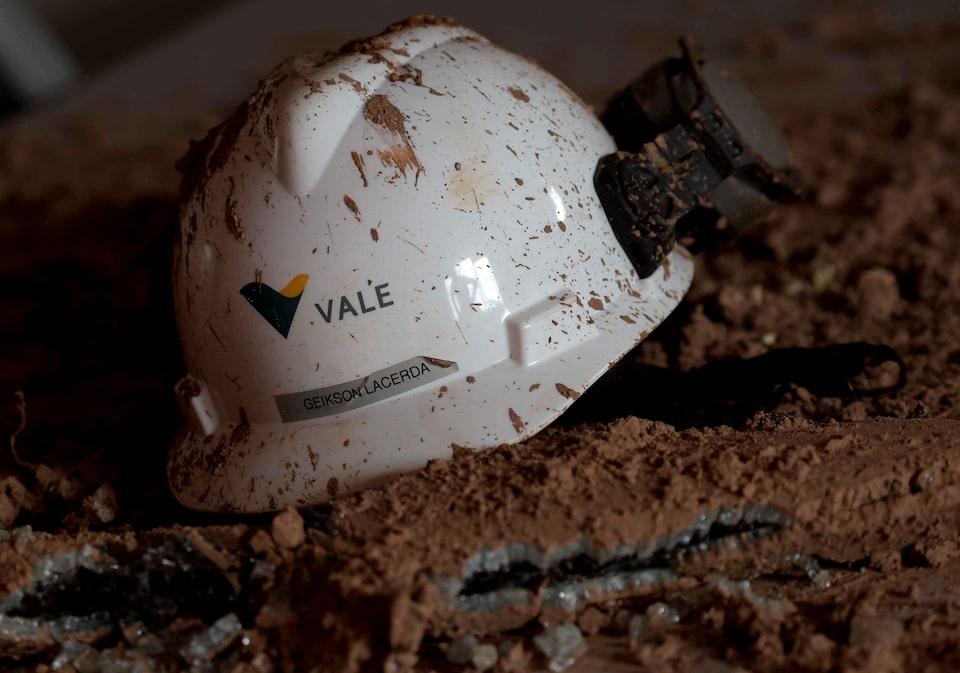
RIO DE JANEIRO, Jan 26 (Reuters) - Overflowing water in a mining area owned by Brazil's Vale (VALE3.SA) , opens new tab caused environmental damage as it reached the local Maranhao River, Minas Gerais state government said in a statement on Monday. The overflow on Sunday, in two nearby but separate areas hit by heavy rain and owned by Vale, also led to a flood at a site owned by steelmaker CSN (CSNA3.SA) , opens new tab. Sign up here. The incidents, near the towns of Ouro Preto and Congonhas, left no injuries, the companies and Minas Gerais' government said. Vale must implement emergency measures to clean the affected area and monitor the river, the state government said, adding the company will also have to submit an environmental recovery plan to restore the affected waterway. Vale did not immediately reply to a request for comment on the statement, but had previously said local communities had not been affected. The flooding occurred on the anniversary of the January 25, 2019 burst of Vale's Brumadinho dam, which unleashed an avalanche of muddy mining waste, killing an estimated 270 people while ravaging local rivers and communities. Vale said that there was no connection between the latest accident and the tailings dams it has in the region. https://www.reuters.com/business/environment/flood-vale-mining-pit-causes-environmental-damage-local-brazilian-river-2026-01-26/